Printing and Process: A Rare Collection of 18 Original Copper Plates and Lithographic Stones
Featuring original copper plates by Rembrandt van Rijn, Joan Miró, Henri Matisse, and Salvador Dalí, as well as original lithographic stones by Henri de Toulouse-Lautrec and Henri Fantin-Latour, our April 24th Prints & Multiples auction offers the rare opportunity to acquire part of the history and process of printmaking. These significant examples by the most well-regarded artists in the history of printmaking speak to the entire creation process, from composition and collaboration to the different phases of creative process and the life of the plates after the artist’s involvement.These plates have created some of the most recognizable prints in the history of printmaking and are now available as beautiful works of art themselves.
To create either a plate for etching or a lithographic stone involves making marks onto a prepared surface, fixing this image via chemical means, then inking and printing the resulting plate or stone. For etchings, a thin metal plate—most often copper, preferred for its softer qualities— is covered with a waxy, acid-resistant layer, the ground. Traditionally, a hard wax ground is used, such as for Lot 124, Matisse’s copper plate for Visage aux Yeux fixés vers le Sol (1946).
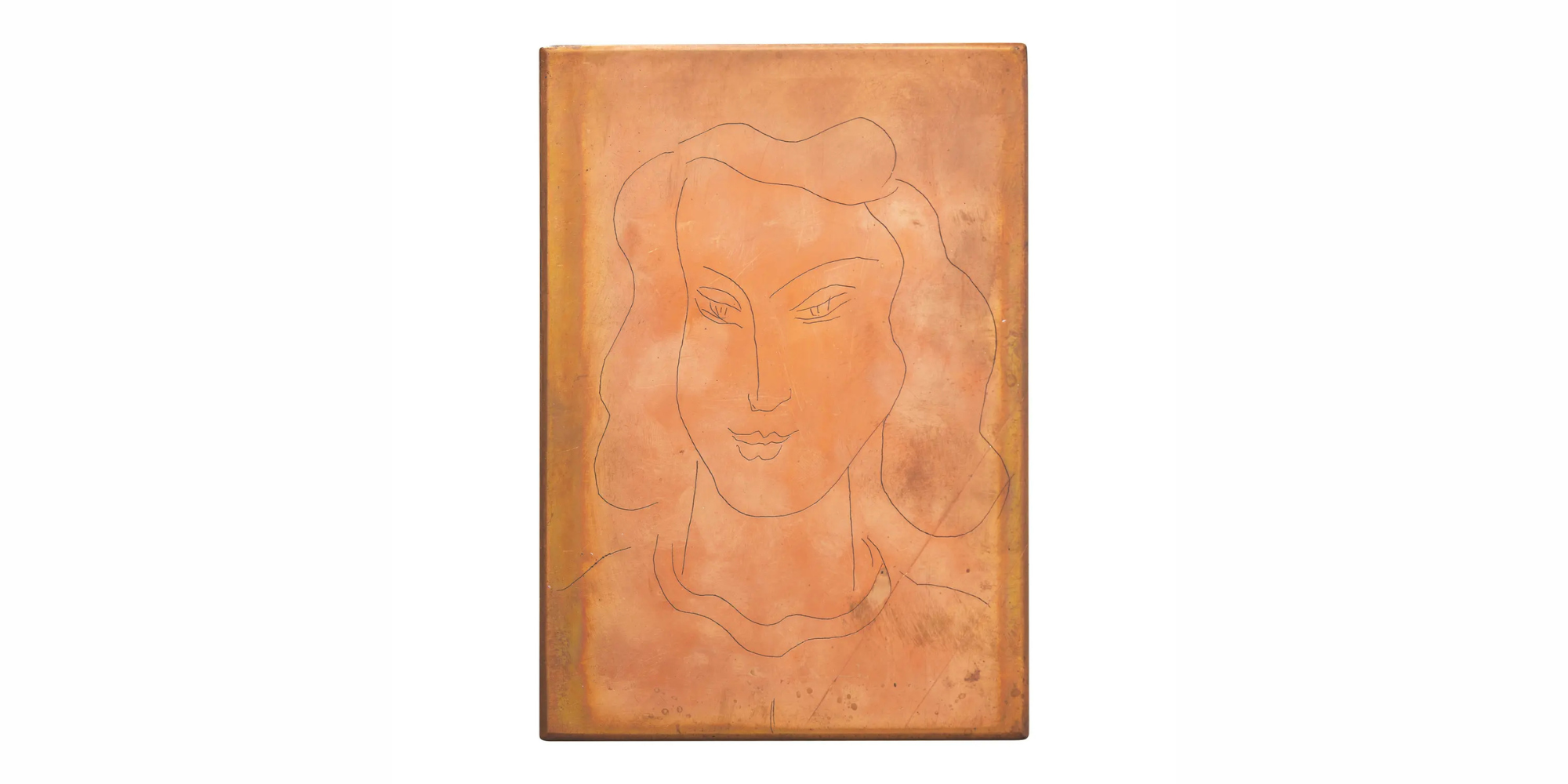
Lot 124 | Henri Matisse (French, 1869–1954) Original Copper Plate for Visage aux Yeux fixés vers le Sol, 1946, Estimate $15,000 – $20,000
Here, the artist drew directly onto the plate by pulling a sharp tool through the hard ground, directly exposing the copper. When the intended composition was complete, the plate was submerged in acid, incising the exposed lines into the metal plate. Once the remaining ground was cleaned off, the copper plate was prepared for printing by pushing the ink deeply into the exposed lines.
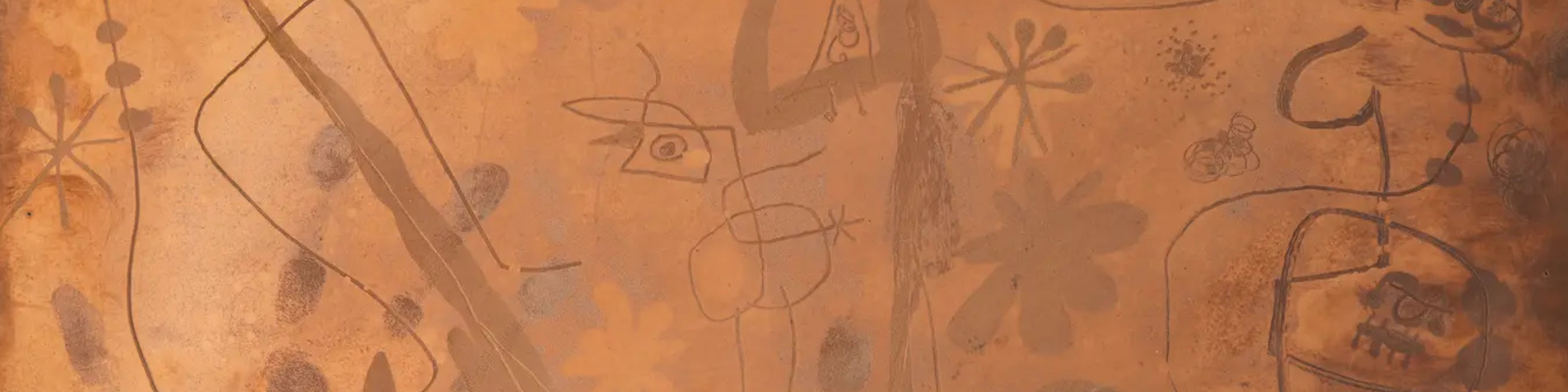
Soft-ground etching involves adding a fat such as tallow to the hard ground to make it more pliable. This process allows for a greater variation of marks and textures, as different materials can be used to mark the ground at varying pressures. For example, in Lot 125, one of the three copper plates used for Joan Miró’s etching,La Main (1947/53), the artist pressed his hand into the soft ground (see top plate below). In this example, you can see very clearly that a broad variation of etched marks can be produced with the softer, more workable ground.
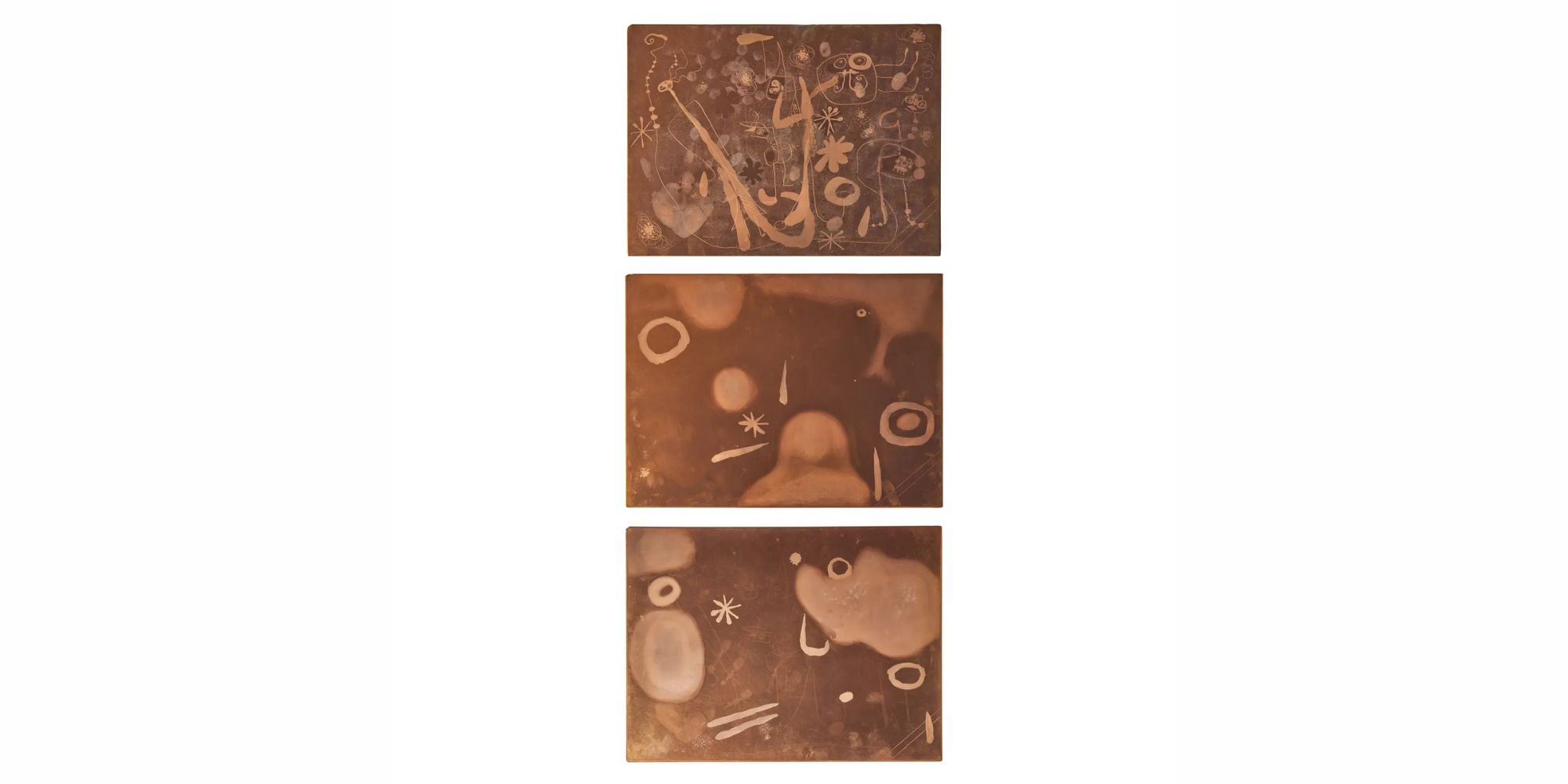
Lot 125 | Joan Miró (Spanish, 1893–1983) Three original copper plates for La Main, 1947/1953, Estimate $40,000 – $60,000
To make a lithograph, such as Henri Fantin-Latour’s Vénus et l'Amour, Lot 118, an artist first draws on a stone with an oil-based medium. The stone is traditionally limestone, though today other materials like aluminum may be used. Once complete, the image is treated with a solution of gum arabic and nitric acid that bonds the image to the surface of the stone. Once it is cleaned, the drawn area will accept ink while the negative space will repel it, allowing only the drawn composition to be transferred to the paper.
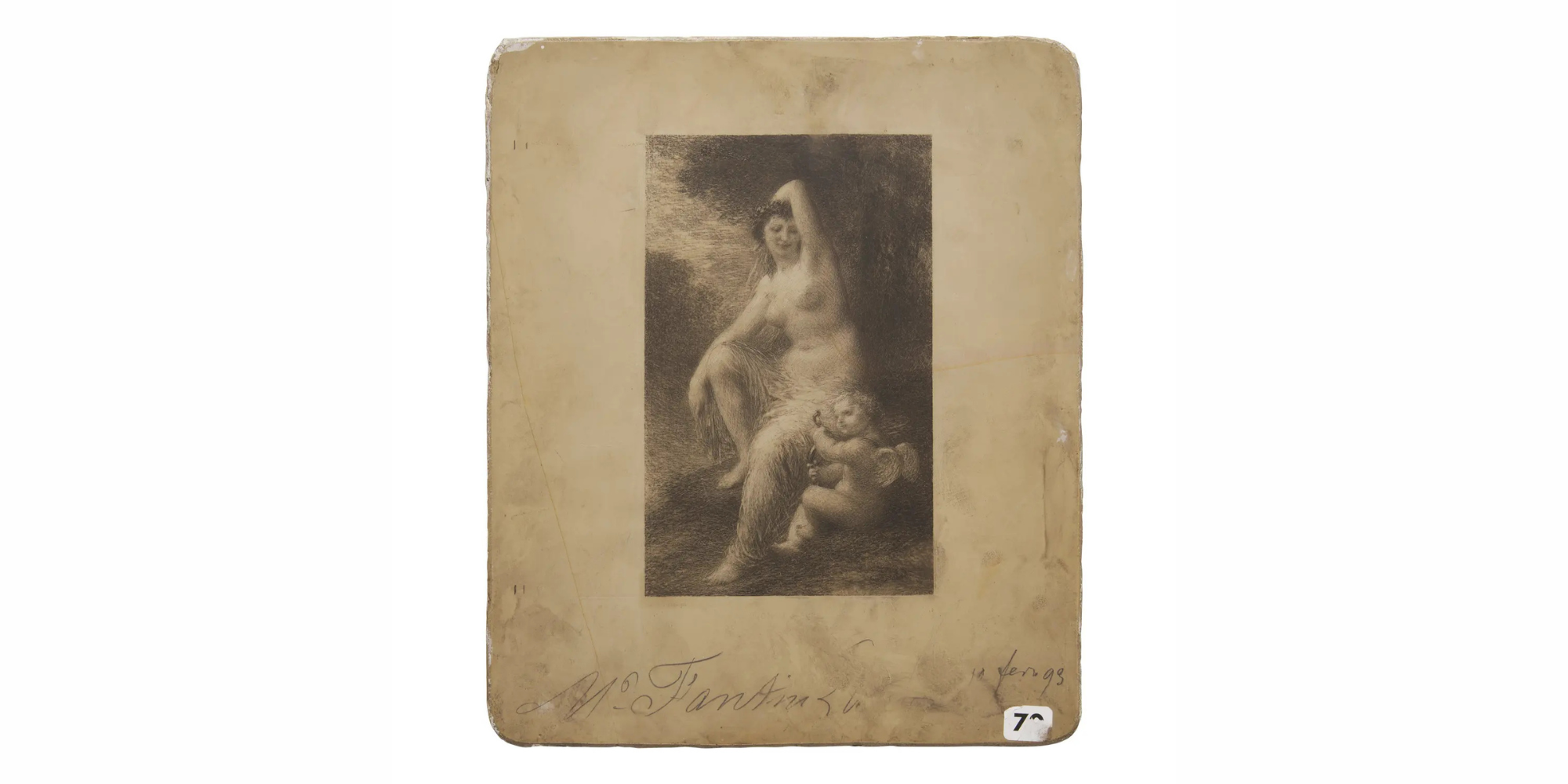
Lot 118 | Henri Fantin-Latour (French, 1836–1904) Original Lithographic Stone for Vénus et l'Amour (petite planche), Estimate $2,000 – $3,000
After the plates are created and the first edition is set, additional steps may follow to fine tune the composition or to extend the life of the plate. These can result in a ‘second state.’ Often even third, fourth, or fifth states can be produced. As an example, Henri de Toulouse-Lautrec’s lithographic stoneÉtude de Femme, Lot 119, features added text in its second state so it could be printed as a title page for a song sheet by Hector Sombre.
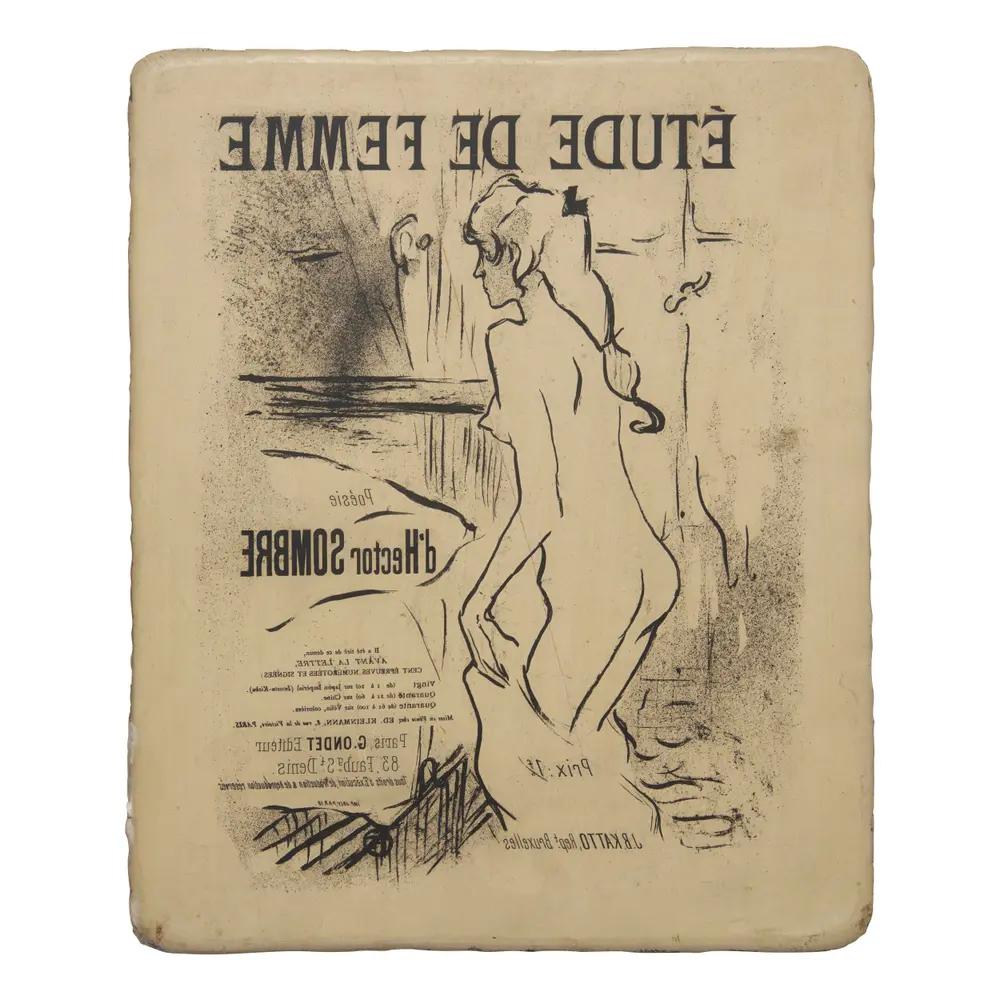
Lot 119 | Henri de Toulouse-Lautrec (French, 1864–1901) Original Lithographic Stone for Étude de Femme,1893, Estimate $7,000 – $9,000
When the published edition of a print is complete, often the artist or publisher will choose to ‘cancel’ the plate. To do this, marks are etched onto the plate signaling that future printed impressions are outside of the published edition. This will usually take the shape of a few lines through the image. However, artists often have different methods for different projects. As you will see in Matisse’s cancelled plate, Nu couchée s'appuyant sur le bras droit (1929), Lot 120, he has inscribed a dedication to printer Roger Lacourière’s wife, Madeleine, ‘en homage a Madame Lacouriére-H. Matisse’, which would be reversed if printed. These cancellation marks help to preserve the integrity of the published edition by preventing unauthorized future editions and, for this work by Matisse, provide additional historical context about the artist’s relationship with his collaborators.
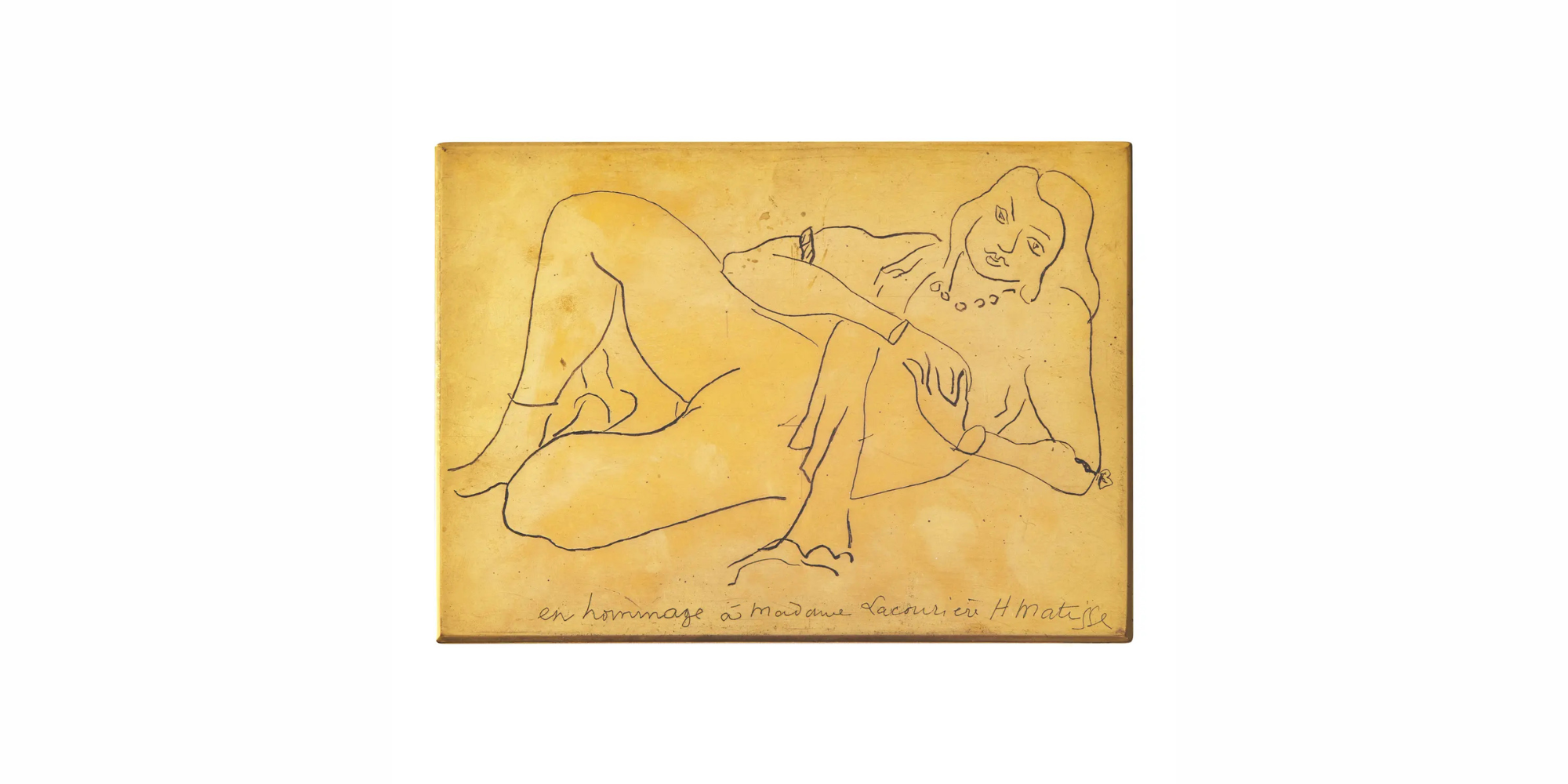
Lot 120 | Henri Matisse (French, 1869–1954), 'Original Copper Plate for Nu couchée s'appuyant sur le bras droit', 1929, Estimate: $15,000 - $20,000
Printing presses exert a great deal of pressure on the copper plates, flattening incised lines over time and leading to a loss of precision or tonality in the printed image. This can be seen especially in Rembrandt impressions. When comparing impressions pulled from the copper plate during the artist’s lifetime to impressions centuries later, the diminishing quality of the image can be extraordinary. For Rembrandt’s Woman at a Door Hatch Talking to a Man and Children (1641), Lot 135, Alvin-Beaumont, who acquired the plate in 1906, recognized its value as a work of history and art, and had the plate varnished for presentation rather than focus on reprinting. Other owners of Rembrandt’s plates, who wanted to print the images, took it upon themselves to deepen and sharpen the flattened lines with their own hand. This ‘reworking’ of the plate now helps us date the impressions and has become one of the largest driving factors in the prices of Rembrandt prints on the market with twentieth-century impressions generally being much less valuable than seventeenth-century impressions.
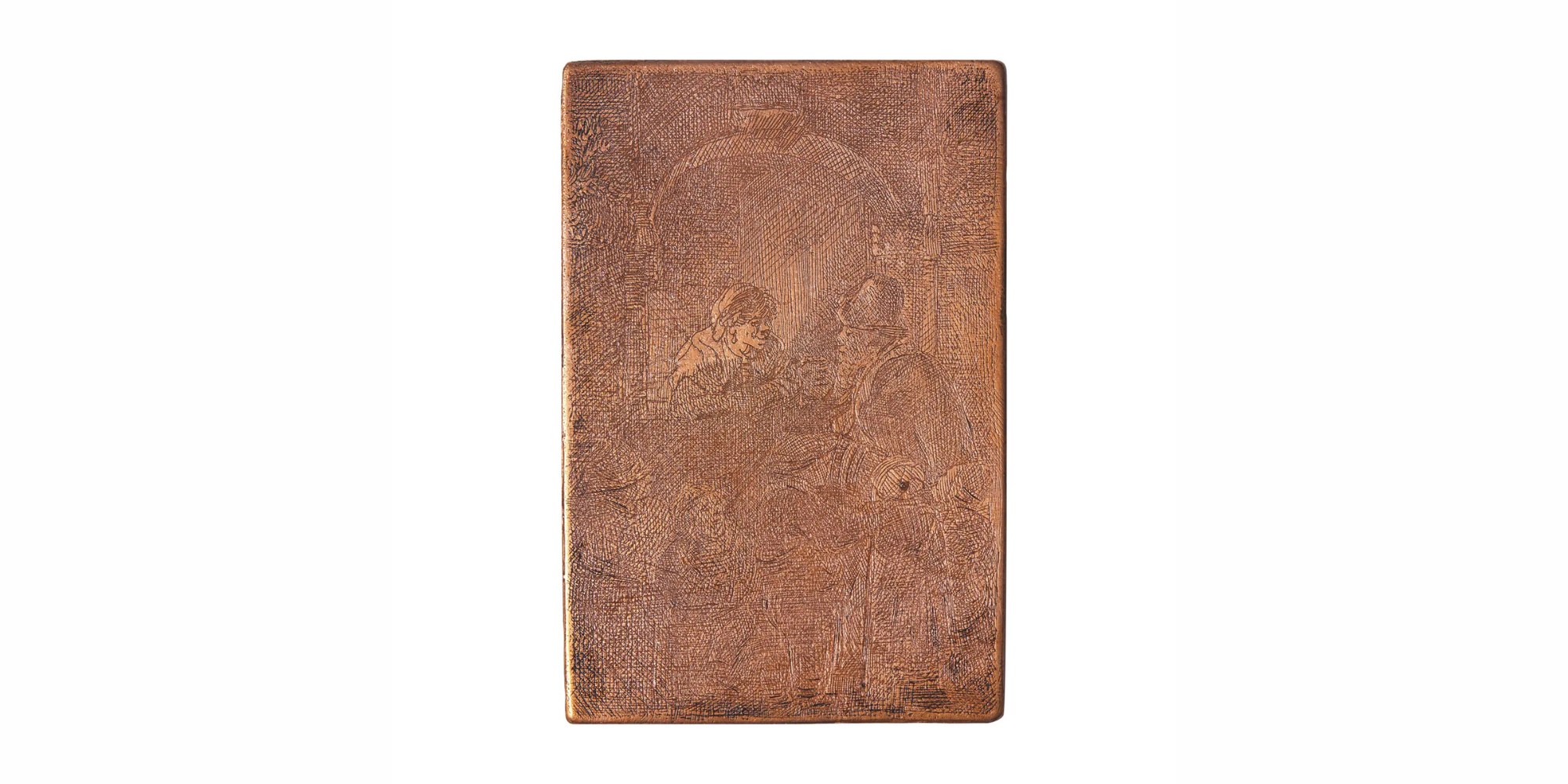
Lot 135 | Rembrandt van Rijn (Dutch, 1606–1669) Original Copper Plate for Woman at a Door Hatch Talking to a Man and Children ['The Schoolmaster'], 1641 Estimate $50,000 – $70,000
From hard-ground etching to soft-ground etching, from steel-faced copper to lithographic stones, and from cancelled to reworked plates, the story of the plates presented here is the story of the artist’s creation and refinement of ideas. These works detail the collaboration of the artist with the printer and reflect how the artist approached the creative process while recognizing and adapting to the unique considerations of working with the medium. They offer untapped opportunity to gain greater understanding of the makers and their work by providing singular access to the artist’s creativity and art historical legacy as defined and expanded through their printmaking.