A Major Work by Josef Šíma Resurfaces at Freeman’s Philadelphia
Freeman’s is pleased to announce the rediscovery of a rare and important painting by Josef Šíma, a leading figure in twentieth-century Czech art. After nearly a century out of public view, this masterwork surfaced in a Philadelphia collection and has been called “the rediscovery of the century” by Šíma scholar Rea Michalová, Ph.D.
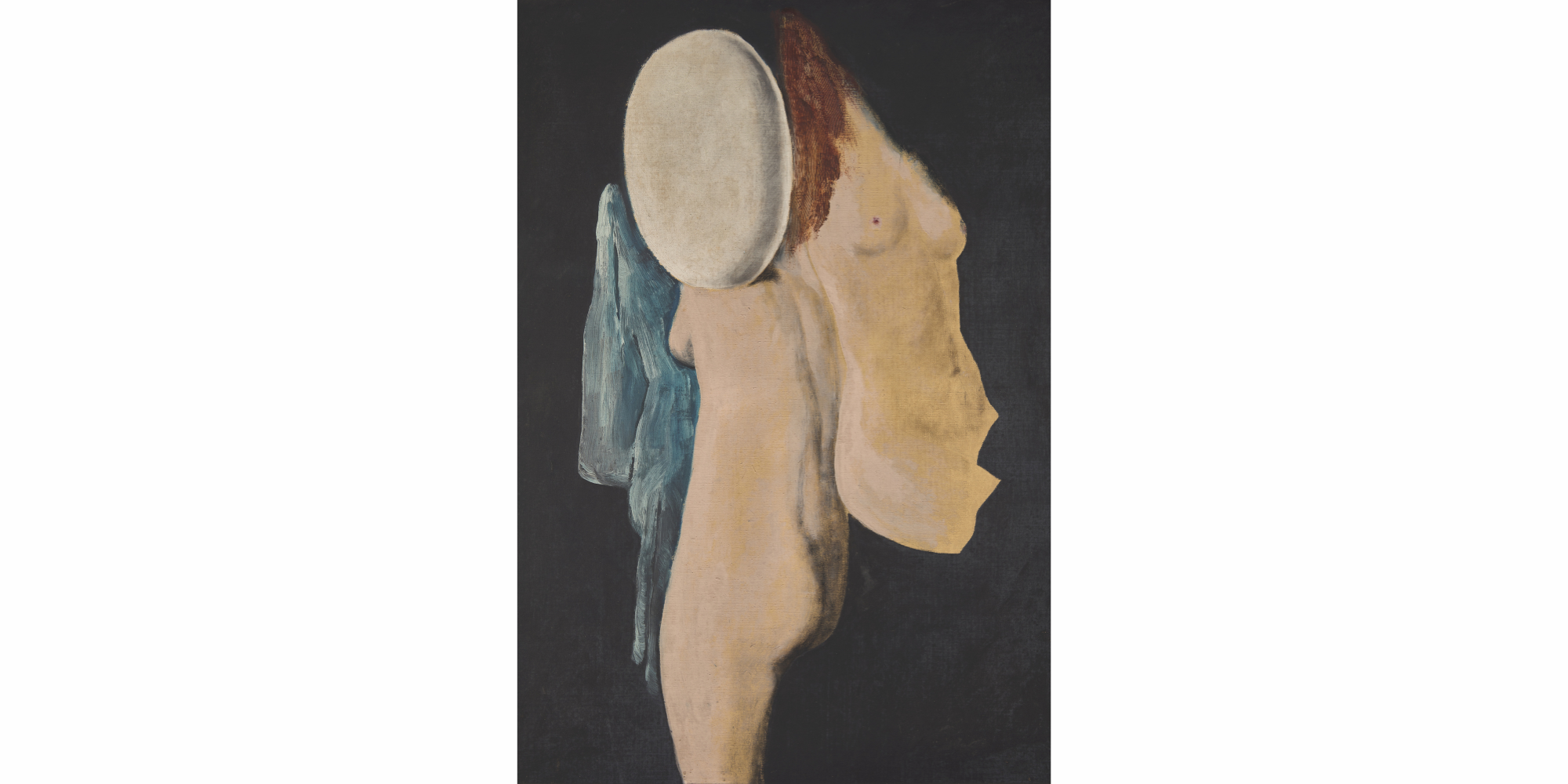
Josef Šíma (Czech, 1891-1971) | Europa, 1927 | Estimate: $300,000-500,000
Property from the Ingersoll Family Collection, Philadelphia, Pennsylvania
Titled Europa, the 1927 oil was painted in Paris and will be offered at auction at Freeman’s New York saleroom on April 29, 2026, as part of its Impressionist and Modern Art auction. Previously unknown to scholars, this work is a near twin to the iconic version in the Moravian Gallery in Brno—long considered Šíma’s most important painting.
Offering his reflections on this exciting rediscovery is Raphaël Chatroux, Vice President, Head of Department, Impressionist and Modern Art. “We are beyond excited to present this newly authenticated painting by Sima. It offers a compelling glimpse into the Parisian avant-garde but also reshapes our long-held assumptions about the artist’s working methods and creative process. His oils from the 1920s are exceedingly rare and highly sought after. This is a unique opportunity to acquire one of them: a quintessential work that was already celebrated during the artist’s lifetime.”
A Pivotal Year
1927 marked a decisive turning point in Šíma’s artistic evolution. Initially involved with Cubism, he began developing a new visual language rooted in myth, cosmology, and archetypal representation after meeting the poet and critic Pierre Jean Jouve. In his late 1920s compositions, the artist sought to express on canvas his desire to become one with the universe, and turned increasingly toward symbolism to explore an interior, unknown mystical world.
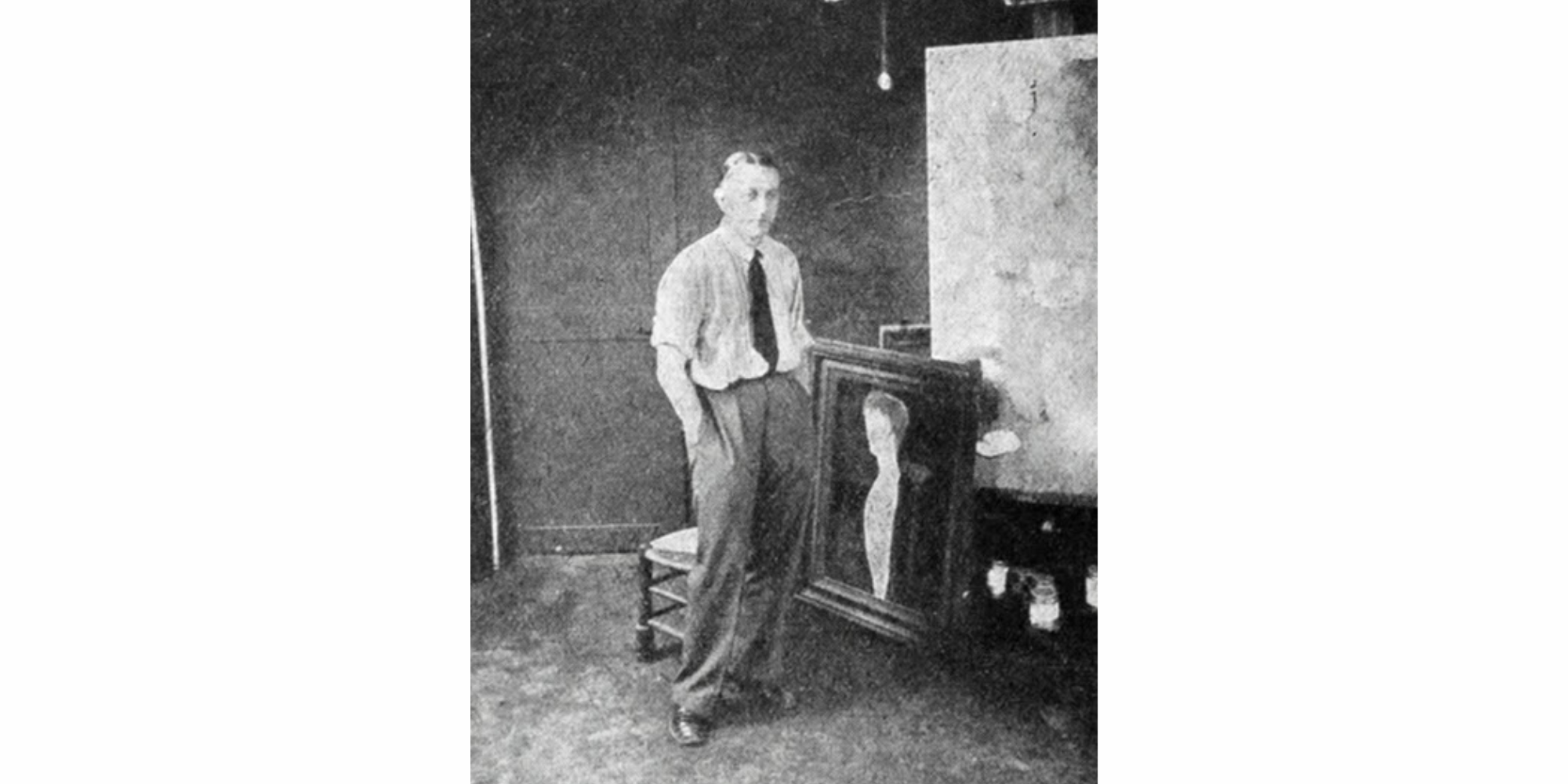
The artist in his studio 3, cour de Rohan, Paris, c. 1929
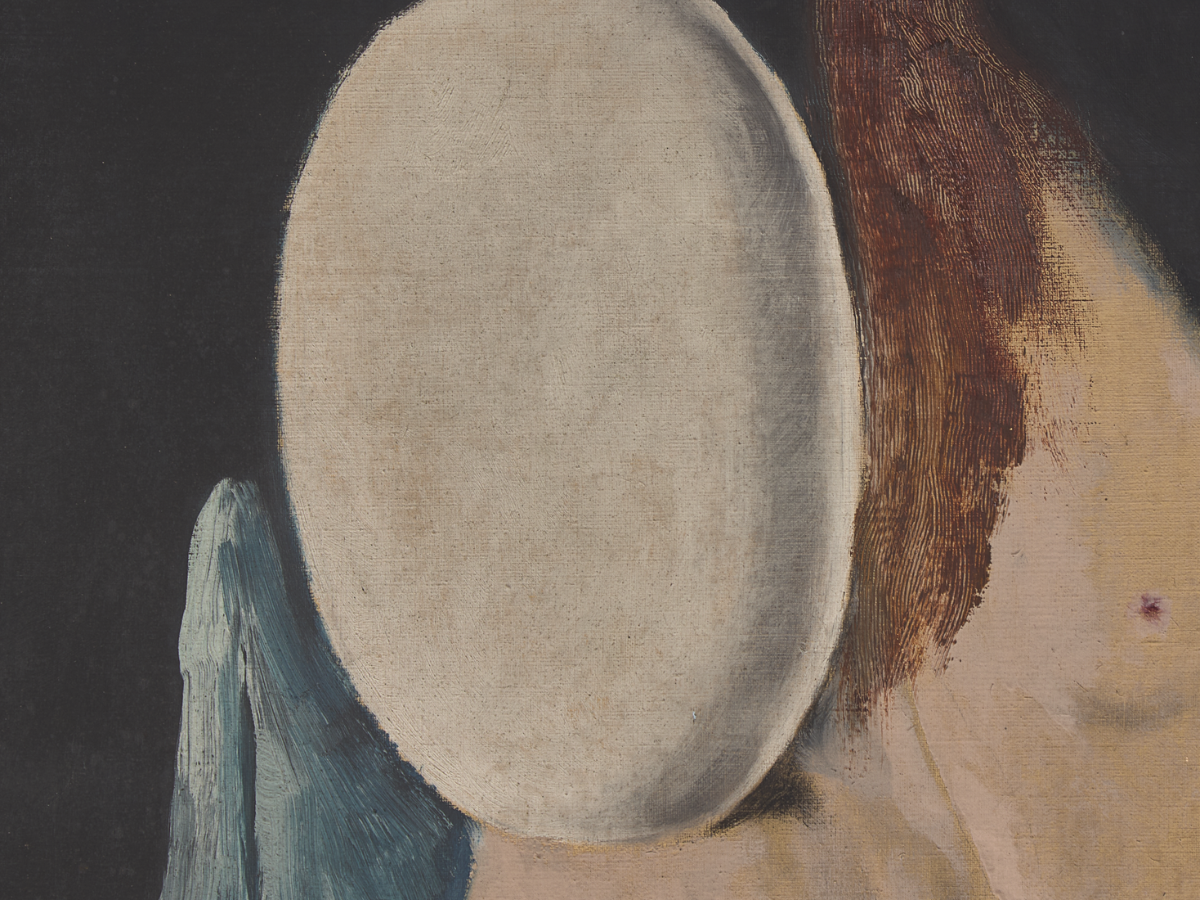
Europa embodies this breakthrough moment. The composition depicts two headless torsos over one of which hovers a monumental egg -one of the artist’s most potent symbols. Appearing in at least four other compositions from the same period, the egg represents both the origin of the world and the unity of existence. It is from this cosmic form that the figures emerged, interpreted as Adam and Eve, set against a black void evocative of primordial chaos.
A Landmark Rediscovery
First presented last season, Europa quickly drew global attention and scholarly debate for its resemblance to the Brno version, once thought unique. Freeman’s withdrew the painting from auction for comprehensive research and authentication.
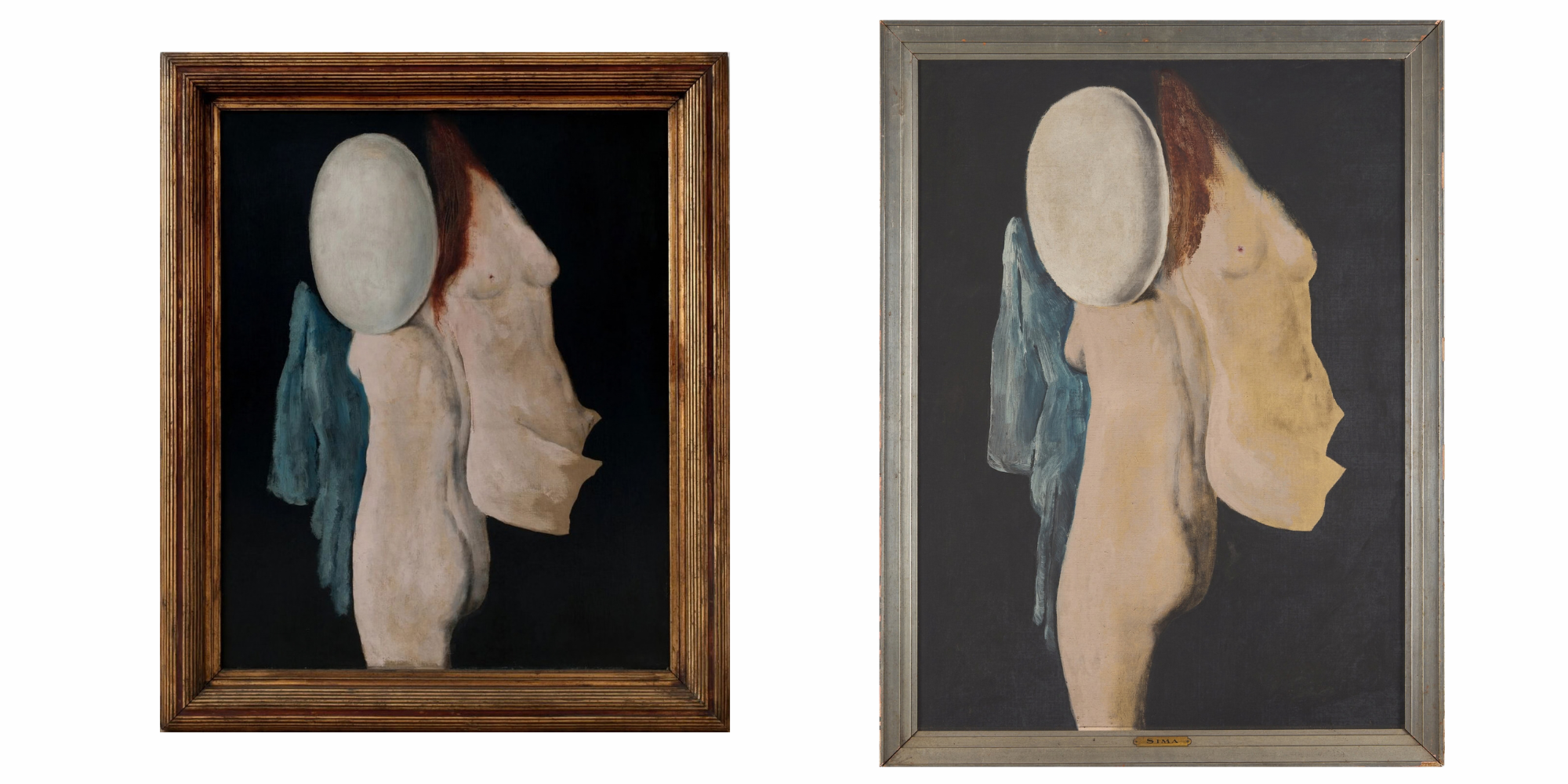
Left: Josef Šíma, Europa, 1927 (oil on canvas, 99.7 x 73cm)
Right: Josef Šíma, Europa, 1927 (oil on canvas, 80 x 65 cm)
After a year of rigorous study—including provenance research, forensic analysis, and advanced imaging—Freeman’s presents Europa as “unquestionably authentic.” This rediscovered painting stands as a major work of the European avant-garde and offers a rare insight into Šíma’s creative process. Dr. Michalová affirms: “Each work stands out as entirely unique in its artistic style, crafted with the same skill, finesse, and expressive delicacy, demonstrating confident artistic bravura without hesitation.”
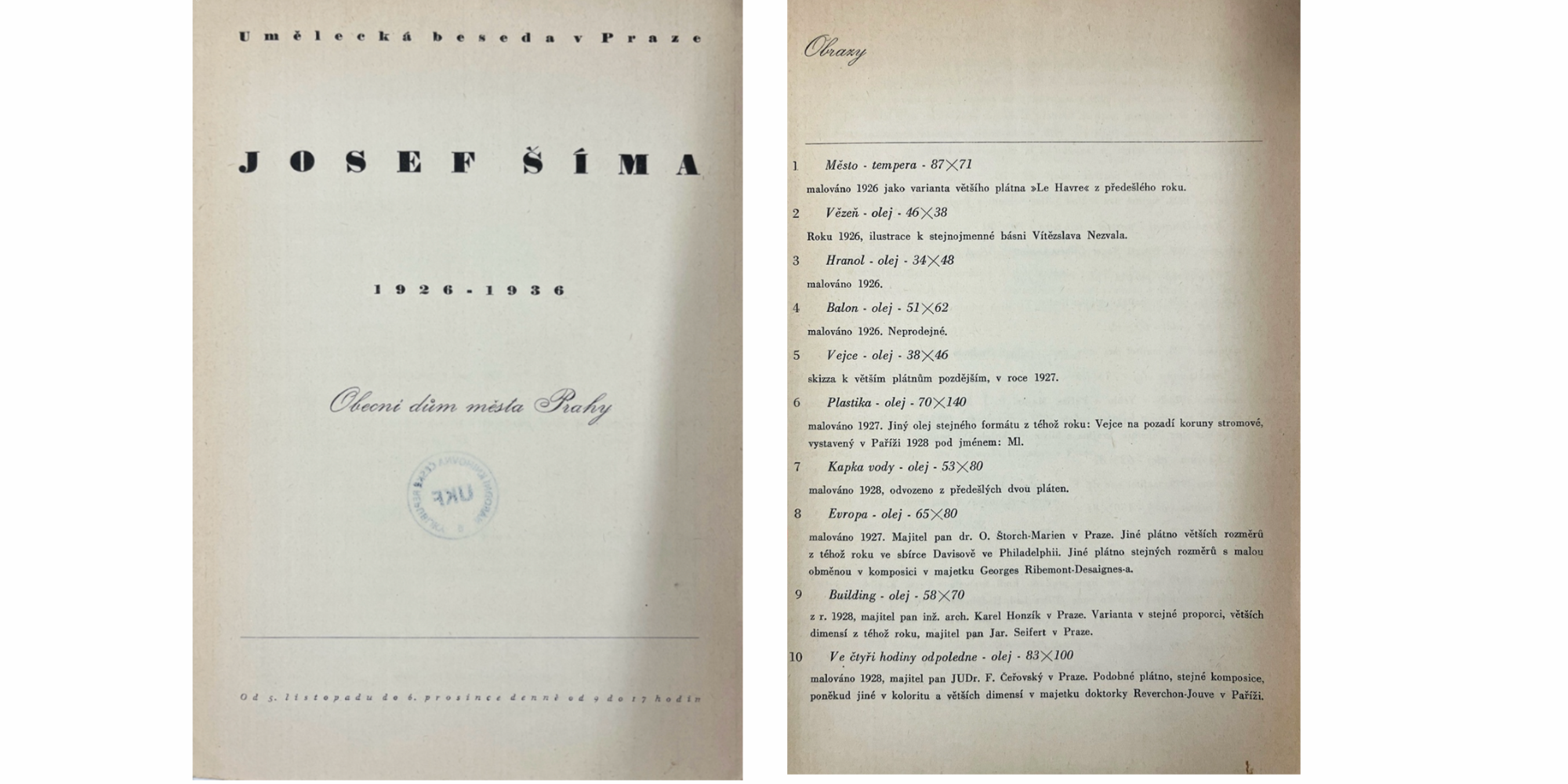
Exhibition checklist from the catalogue of the jubilee exhibition JOSEF ŠÍMA 1926–1936, organized by Umělecká beseda (Artistic Forum) in Prague from November 5 to December 6, 1936. This catalogue not only lists the exhibits displayed at the exhibition but also functions as a ‘working’, personal ‘inventory’ of Šíma, which, besides the works presented, in several cases also mentions other existing paintings with the same motif and their locations. Listed under #8 is the Moravian Gallery version of Europa. It later states the existence of ‘another larger canvas from the same year in the Davis Collection in Philadelphia.” A third canvas of the same size with slight variations in composition is also noted as in the collection of Georges Ribemont-Desaignes.
Archival research revealed that this specific version of Europa was already known during Šíma’s lifetime. Larger in size and slightly distinct in execution, it was first reproduced in 1928 in the Parisian art journal Cahiers d’Art, one of the leading publications promoting modern art in Europe, which firmly placed Šíma alongside Picasso, Matisse, and Chagall. The rediscovered painting also appears to correspond to the larger version of Europa mentioned in a 1936 Prague exhibition catalogue, which records another canvas of the same subject located in a Philadelphia collection.
Exceptional Provenance
The painting’s retraced provenance connects it to two influential figures in American cultural life. The first owner of Europa was the Ukrainian-born collector Bernard M. Davis, an eccentric and visionary patron known for championing emerging modern artists. The painting later entered the collection of Robert Sturgis Ingersoll, a prominent lawyer, philanthropist, and longtime director of the Philadelphia Museum of Art. Ingersoll was an early American collector of European modernism, acquiring works by artists such as Amedeo Modigliani, Chaïm Soutine, and Constantin Brâncuși. The painting has remained with the Ingersoll family ever since.
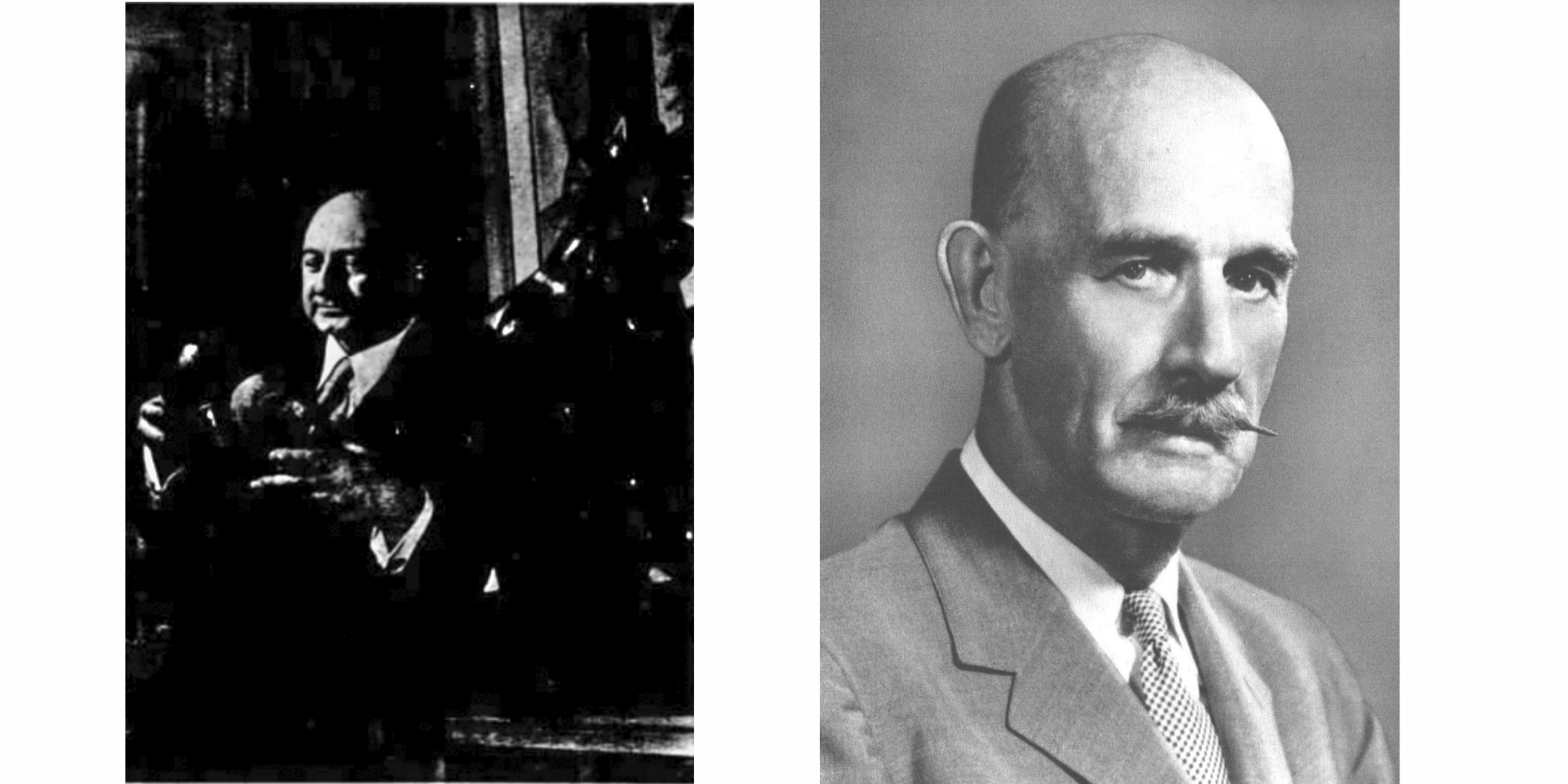
Left: Portrait of Bernard M. Davis (1892-1973), as published in The Philadelphia Inquirer, April 4, 1952.
Right: Robert Sturgis Ingersoll (1891-1973), last owner of Europa and President of the Philadelphia Museum of Art from 1948 to 1964.
Born in Bohemia and trained at the Academy of Fine Arts in Prague, Šíma was immersed in artistic culture from childhood. An admirer of Paul Cézanne's work, he became an influential member of the Czech avant-garde group Devětsil before moving to France, settling permanently in Paris in 1921. Naturalized as a French citizen in 1926, he emerged as one of the few Czech painters to achieve lasting international recognition.
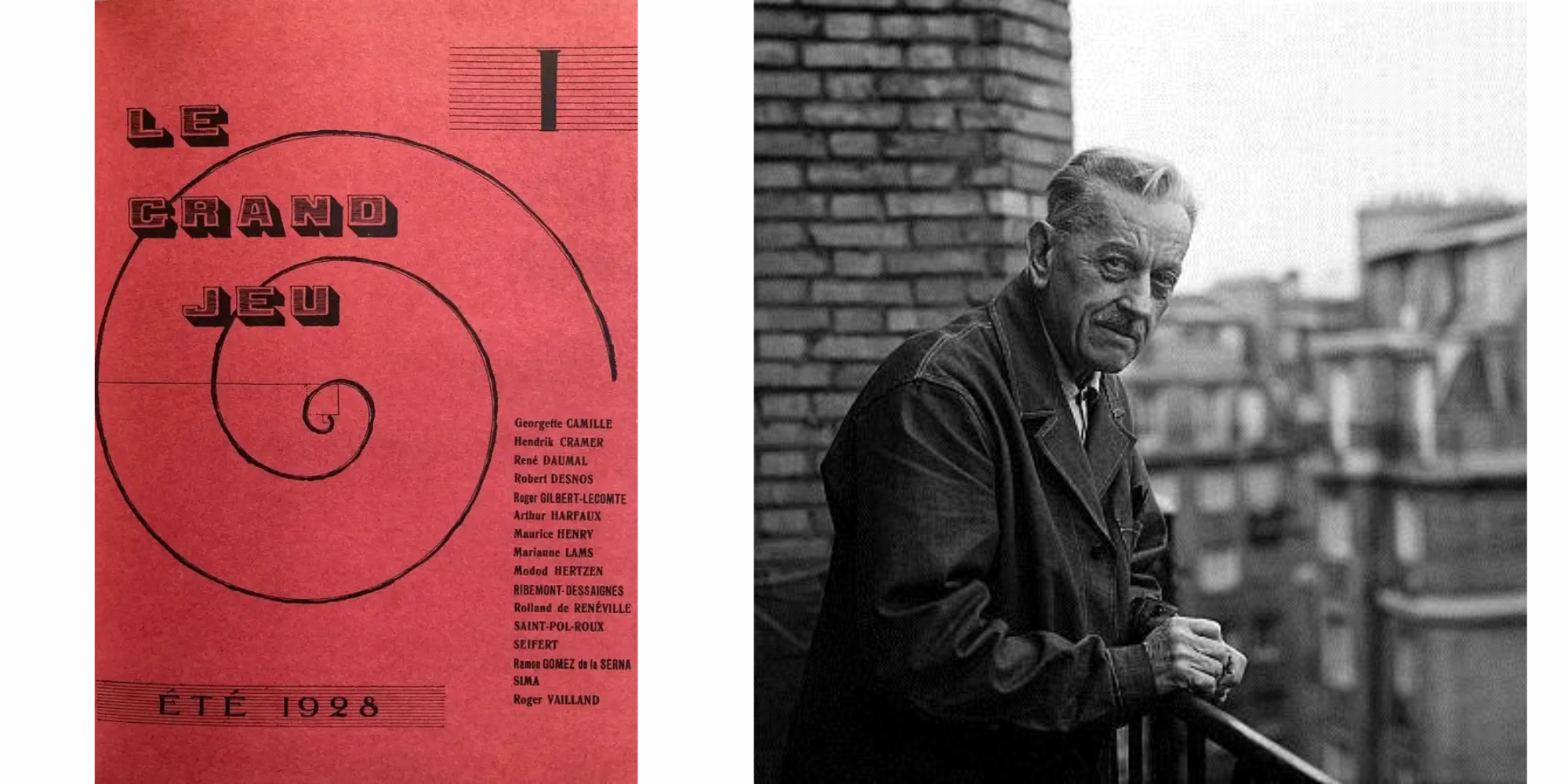
Left: Cover of Le Grand Jeu, the annual magazine which Šíma co-founded in 1928. Only three editions were made.
Right: Marie Michaela Šechtlová (Studio Šechtl et Voseček) Portrait of Josef Šíma in Paris, c. 1968
Although he was on friendly terms with the Surrealists in Paris, Šíma charted his own path and refused to align himself with the movement. In 1927, the same year he painted Europa, he co-founded Le Grand Jeu with a circle of young poets originating from Reims, dedicated to metaphysical and spiritual exploration through art and literature. In contrast, the Surrealists sought the unknown by channeling an imaginary, inner world that would carry personal meaning. Šíma and his peers aimed to break from reality to rediscover the pure, original state of existence from the origins of time. Šíma emerged as the group’s principal visual artist, and Europa ranks among the movement's most emblematic and defining images. “The rediscovery of this larger variant not only expands our understanding of Šíma’s creative process but also restores an important chapter of the European avant-garde — a moment when poetry, philosophy, and painting converged in search of new spiritual and artistic horizons,” says Michalová.
Censored for decades under the Communist regime in Czechoslovakia, Šíma was finally rehabilitated in 1968 with two major retrospectives in Paris and Prague. Today, his market is undergoing renewed attention, specifically in France and the Czech Republic, where his work (albeit from a later period) often resurfaces. His auction record was broken in 2024, and specialists suggest that Europa could set a new benchmark. As one expert recently observed: “Josef Šíma is on the rise and has not yet been completely discovered.”
Sale Preview
New York | 32 East 67th St
April 20-28: 10:00 AM – 5:00 PM
Chicago | 1550 W Carroll Ave
April 6-10: 10:00 AM – 4:00 PM, April 10: Extended Hours 5:00 PM – 8:00 PM
April 11: 11:00 AM – 3:00 PM
Freeman’s is a premier American auction house offering services in multiple categories including fine art, jewelry, design, books and manuscripts, furniture, decorative arts, antiquities, couture, and Asian works of art. With 16 regional locations nationwide, the firm provides auctions, appraisals, private sales, and art advisory services, connecting clients to the global art market. Freeman’s strives to bring art, history, and design to life by connecting people with extraordinary objects through exceptional service and expertise.