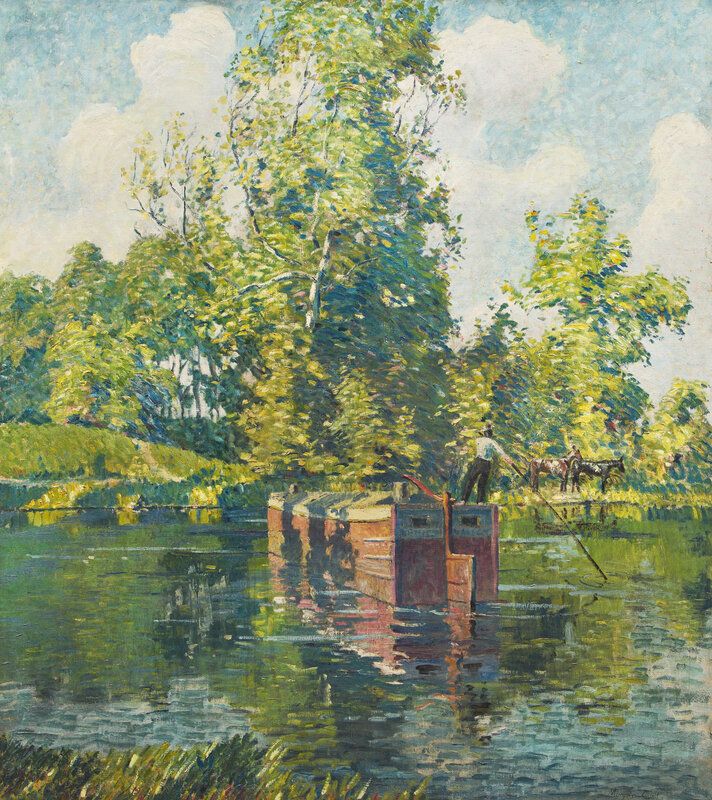
New & Noteworthy
Stay up to date with news, highlights, & features from across Freeman's.
Stay up to date with news, highlights, & features from across Freeman's.
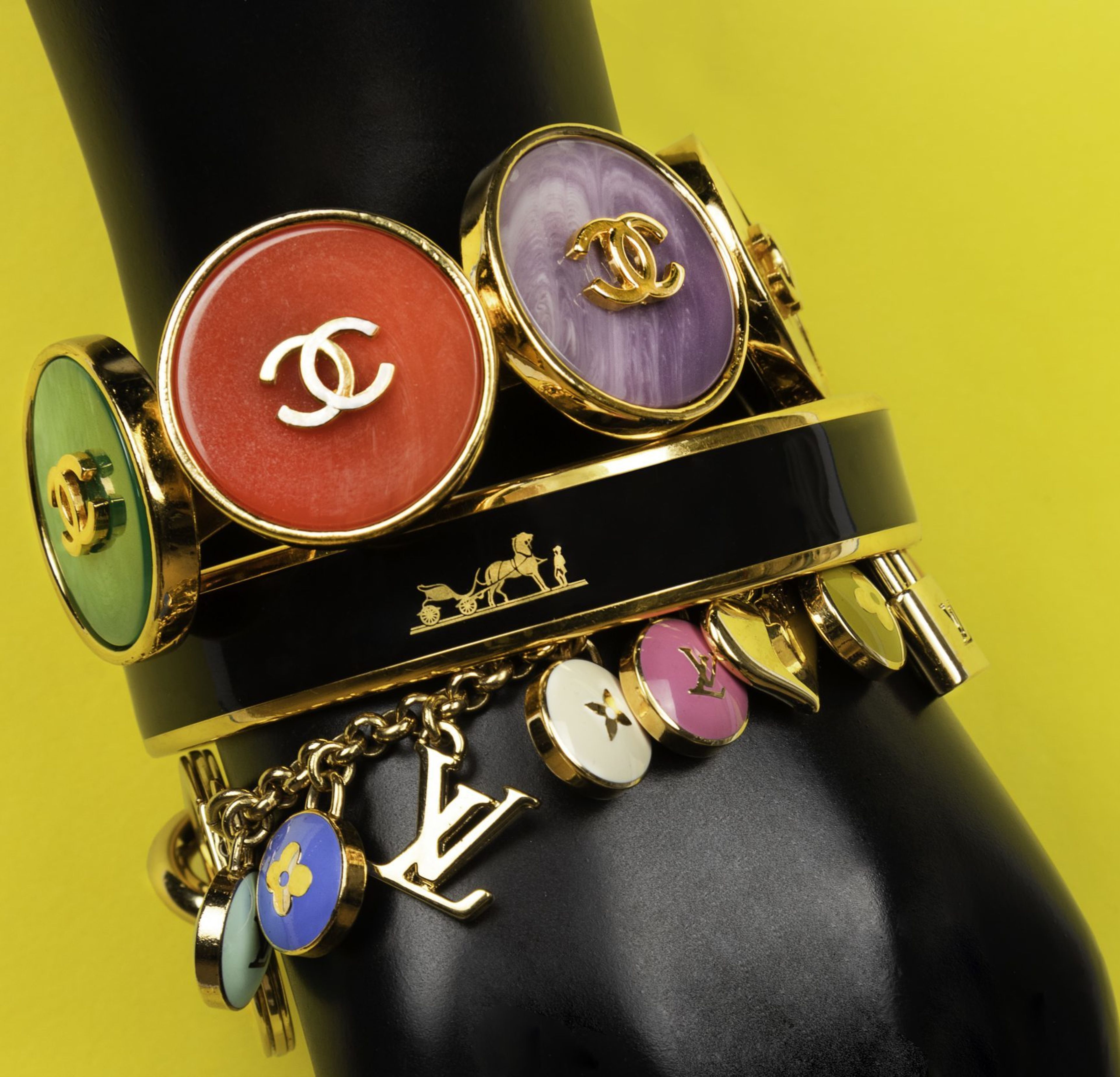
Coco Chanel, a titan of French fashion, developed a relationship to accessorizing and costume jewelry that reigned supreme in the early twentieth century. Costume jewelry has become synonymous with the brand because she used it in unconventional ways: she transformed entire looks through the layering and mixing of rare and common materials, and she challenged societal expectations about when and where jewelry should be worn. However, it should be noted that fellow competitors in the French luxury market, like Hermès and Louis Vuitton, were not entirely ignoring women’s accessories either. Hermès, at the time primarily a luxury manufacturer of leather harnesses and saddles for horseback riding, began an expansion of its women’s accessory line in the 1920s, beginning unsurprisingly with leather handbags. In fact, Hermès’ accessories began a visual exchange with one another in their design, with the Kelly leather bracelet debuting in the late 1930s, after actress Grace Kelly was spotted several times toting the Sac à dépêches, later renamed the Kelly bag. By the mid 1940s, Hermès was producing their now famous minimal, yet impeccably crafted, enamel bracelets in Austria. A design in direct opposition to Chanel’s preference for excess, the enamel bangle is truly a piece made in Hermès’ functional luxury ethos. In the early to mid-twentieth century, Louis Vuitton was preoccupied with solidifying its brand as the premier luxury manufacturer of steamer trunks, train cases, and travelling bags alike. It was not until the early twenty-first century that Louis Vuitton took to women’s jewelry, under the direction of Creative Director Marc Jacobs, in 2001. However, the house focused on integrating its travelling and voyager spirit into fine jewelry, opting for working with materials like diamonds and colored gemstones. Later, when Louis Vuitton ventured into costume jewelry, the designs similarly heralded the brand’s origins in luxury travel, basing designs off the iconic LV monogram leather pattern patented by Louis Vuitton in 1896. Costume jewelry from each house has featured in Couture Department sales of the past and present. As recently as March 19th, 2020 a bevy of Chanel costume jewelry went to auction and sold successfully in sale 740, Spring Fashion and Accessories, including lot 172 pictured here (Fig. 1). Additionally, the Louis Vuitton bracelet also made an appearance in lot 274 alongside a grouping of additional Vuitton costume pieces, each item exemplifying the voyager spirit of Louis’ classic monogram (Fig. 1). And the sleek, minimalist, and chic Hermès enamel bangle will appear in an upcoming sale alongside a variety of bangles, truly proving there is a costume piece for every buyer and every style (Fig. 1). Figure 1. Though the Chanel and LV bangle sold successfully in sale 740, keep an eye out for a variety of costume pieces, like a classic black and gold Hermes enamel bracelet
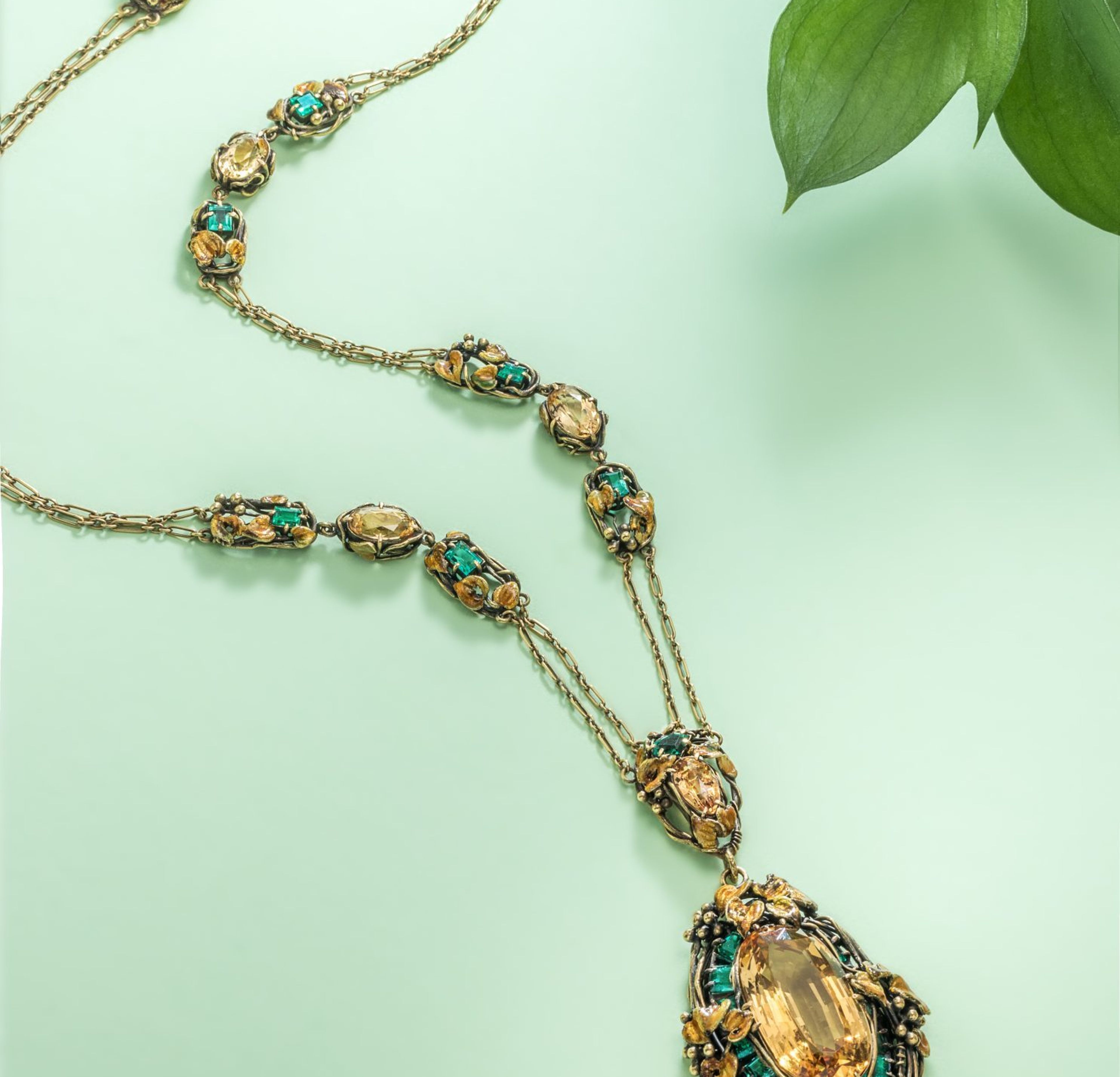
We all know Tiffany & Co – the iconic jewelry store, the little blue box, and of course Audrey Hepburn – but who was Louis Comfort Tiffany? Hindman Fine Jewelry & Timepieces cataloguer Hana Thomson dives a little deeper into this iconic and highly influential man and his impact on the jewelry world. Born February 18, 1848, Louis Comfort Tiffany grew up surrounded by jewelry and fine objects. His father, Charles Lewis Tiffany founded the eponymous Tiffany & Co. in New York in 1837. Louis Comfort Tiffany wanted to forge his own path and began studying art, and later turned to decorative work after seeing Arts & Crafts furniture at the Philadelphia Centennial Exposition in 1877. He was fascinated with how light interacted with colors and its effects in glass. He went on to found his own glass making company in 1885, constantly experimenting with new techniques and designs. Though he is best known for his works in glass, his oeuvre also included paintings, ceramics, mosaics, stained glass, bronze and metalwork, interior design, and eventually jewelry. Tiffany traveled to several places in Europe to exhibit his work, including the 1900 Paris Exposition Universelle alongside his father’s Tiffany & Co. booth. This European exposure introduced Tiffany to the flowing and natural Art Nouveau style that was gaining popularity in Europe by the 1880s. Back in America, Tiffany created his own, uniquely American version of this new style, incorporating local plants and wildflowers which he studied in his own garden. All of his designs were handmade by artisans in his studio. In 1902, Charles Lewis Tiffany passed away and left Tiffany & Co. to his son. Louis Tiffany had already begun exhibiting his decorative objects at the store on Fifth Avenue, as well as at various world’s fairs with the company. As artistic director of Tiffany & Co., Louis Tiffany had access to some of the world’s best artisans and jewelers. He began designing jewelry under the Tiffany & Co. brand, which aligned with the rest of his design sensibility and utilized the effects of light in the form of enamel and colored gemstones. Great emphasis was made on the imperfect, handmade quality of Arts & Crafts style, as well as the curving lines and natural inspiration from Art Nouveau. Tiffany hired two women, Meta Overbeck and Julia Munson, to help design and oversee the jewelry department. They utilized precious and semi-precious gemstones with unique color combinations, often using local sources for the gemstones. Offered from the Estate of Linda Zoe Jenkins, Roseville, Minnesota, Lot 81, Tiffany & Co., Art Nouveau, Topaz, Emerald and Polychrome Enamel Necklace is an extraordinary example of ‘Tiffany Art Jewelry’, combining semi-precious golden topaz gemstones with precious emeralds. The intricately wrought wirework settings and finely rendered enamel leaves of this necklace make it a beautiful example of the art jewelry that Tiffany made during his time overseeing the American jewelry house. A necklace of this quality, condition and design exemplifies Tiffany’s unique interpretation of the turn of the century design movements and sensibility and make it a collector’s piece not often seen at auction.
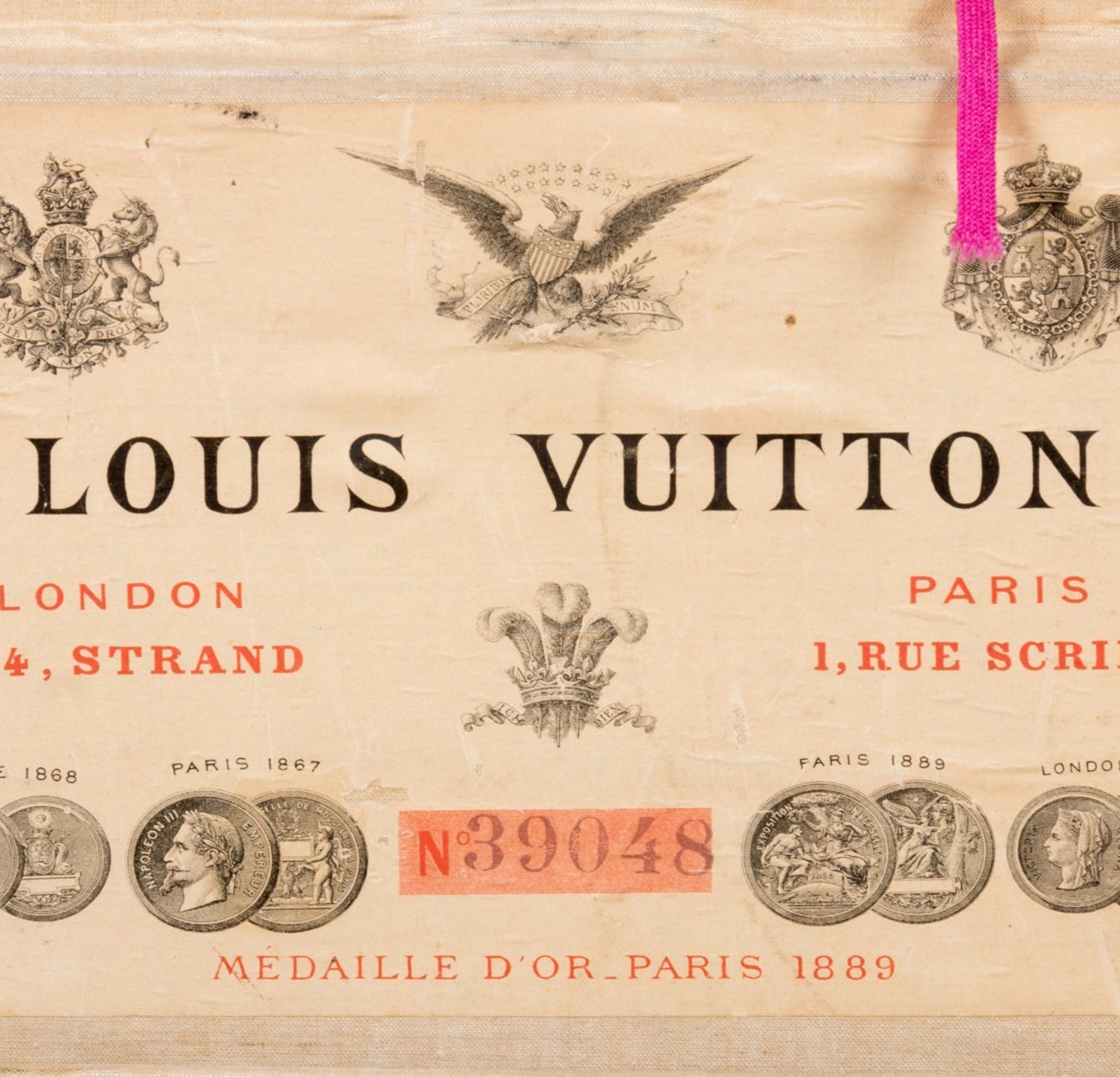
For many, when we hear the name Louis Vuitton our minds immediately think of the brand’s iconic monogram covering a variety of accessories, from handbags, to belts, and even a luxury water bottle holder. Initially, when the logo was patented in 1896, it was emblematic of a passion for travel, about which Louis Vuitton himself was very dedicated. Louis Vuitton is the center of a voyaging legend of sorts; his biography places a thirteen year old Vuitton travelling on foot from his hometown Anchay to Paris, a feat that is said to have taken him overall two years to complete. Upon his arrival in Paris in 1837, Vuitton began working for Paris’ premier box maker Monsieur Maréchal, eventually leaving at the age of 33 to begin his own box-making business, earning a favorable reputation among the city’s elite. Figure 1: Lot 280 from sale 740 sold for $4,00 and features Louis Vuitton’s original damier print. By 1858, Vuitton had not only mastered his craft, but began innovating in his field, creating his famous flattop trunks. The design lent itself to stacking trunks on top of one another, unlike the round top trunks (for water runoff) available on the market at the time, and thus an unprecedented demand for Vuitton’s product began. Vuitton’s shellac-embedded canvas provided the same weather protection as the rounded tops of competing trunks on the market, but were ultimately more functional due to their flat tops. Moreover, these initial trunks introduced the now iconic Louis Vuitton checkerboard “damier” pattern to the luxury market. After Louis Vuitton’s death in 1892, his son Georges Vuitton pushed the company to become the most sought after luxury travel brand in the world, creating the beloved monogram canvas for the company’s products in 1896, and opening a storefront on the Champs-Elysees by 1913. Figure 2: Lot 281 from sale 740 sold for $5,750 and features Louis Vuitton’s iconic monogram logo. While Louis Vuitton products are continually popular among buyers on the luxury secondary market, the monogram branding is difficult to ignore and not desire; it is the brand’s original luxury travel merchandise that excites enormous interest. Louis Vuitton’s steamer trunks are hotly sought after due to their iconic status. While a typical steamer trunk could fetch maybe a few hundred on the secondary market, Vuitton’s originals are worth significantly more, with estimates reaching into the thousands. Clients often place them in their homes as coffee tables, storage, or simply as works of art in their own right. As recently as March 19, 2020 two Louis Vuitton steamer trunks, lots 280 and 281 in sale 740 Spring Fashion and Accessories, sold well over their high estimates at $4,000 and $5,750 respectively. With lot 280 featuring a damier print (Fig. 1) and 281 boasting Vuitton’s monogram logo (Fig. 2), it is easy to see both iterations of the shellac canvas still have a large audience, even if the trunk’s function has changed significantly in our modern day.
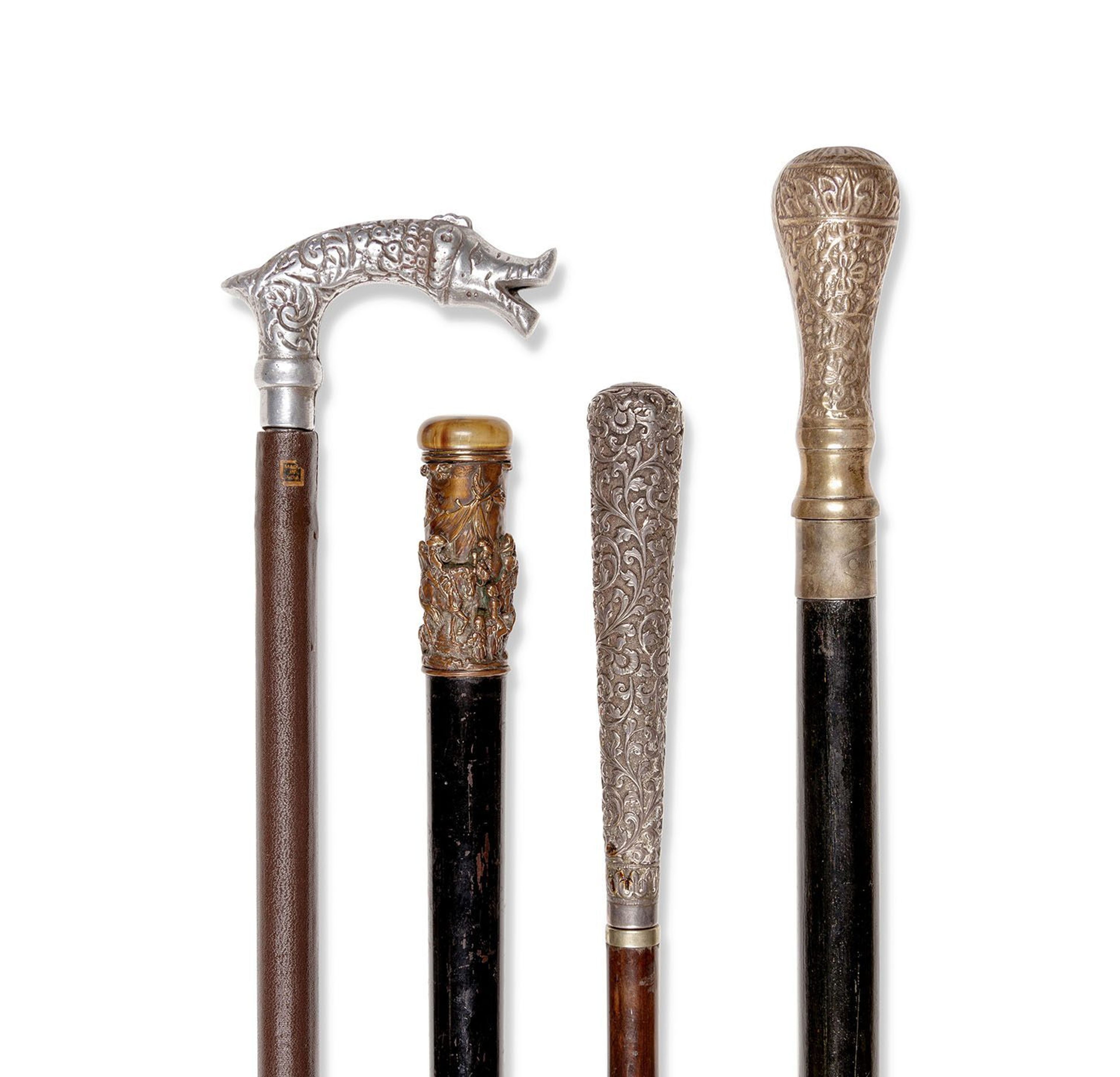
Walking sticks have been around for thousands of years. The earliest examples were used for the purpose of aiding someone on a long journey or in defending themselves from potential thieves along their journey. In the early 17th century, it became fashionable for men to carry them and rules of etiquette were meant to be followed if you were to carry one. In fact, by the early 18th Century, the city of London required special licensing in order to carry one. If you did not follow the rules, you could lose your privilege to carry. A Continental Diamond and Ruby-Inset Nephrite Handled Walking Stick At first glance, this stick is one of simple and elegant form, but upon closer inspection it reveals beautiful gems delicately inlaid into the knob-form nephrite jade handle. With diamonds and rubies, the maker paid careful attention to create the lovely floral decoration. Additionally, the white enameled band collar has been intricately engine-turned and further set with precious stones. The presence of nephrite jade, and the quality of the enamel work, suggest that this stick was likely manufactured in Russia during the late 19th Century. -$3000/5000 An Edwardian 12-Karat Gold Zoomorphic Walking Stick This impressive example of a zoomorphic walking stick shows a long-eared donkey with eyes inlaid with a red paste, closely resembling rubies. The makers, Charles Dimier and Charles Cook of London, paid close attention to detail, capturing the texture of the animal’s hair. This type of zoomorphic handle was commonly made by prominent jewelers in the late 19th and early 20th centuries, and they were overwhelmingly popular. Other zoomorphic figures included in this sale are an example of a dog, a fish and a frog. – $2000/3000 Four Decorative Walking Sticks This lovely group of canes shows the attention to detail given to the metal-worked handles of canes from the late 19th/early 20th Centuries. While beautiful from the outside, two of the examples in this group conceal an element oft desired by cane collectors throughout the world. Blades have been attached to the fish form example and the long tapered, silvered metal example. Estimate – $800-1200 A British Silvered Metal Mounted Brass ‘Royal Hussars’ Explorer’s Walking Stick The 10th Royal Hussars (aka Prince of Wales’ Own) was a British Army cavalry regiment that was formed in the early 18th Century (circa 1715). They aided the military in numerous wars including the Napoleonic War and the two World Wars. This walking stick bearing the insignia of this illustrious group also conceals a couple of important tools for any avid explorer. The top of the cane handle is a compass, which when removed from the top of the cane, reveals a concealed telescope tucked away in the upper section of the stick’s shaft. There are a number of similar “Explorer’s” sticks in this sale featuring similar tools and others concealing doctor’s tools, dental tools and more. Estimate – $600/800 An English Silver-Plate Mounted and Ebonized Masonic Orb System Walking Stick Masonic orbs are thought to have had their origins as a pocket watch fob. A number of other examples that have been converted to be the handle of a cane have come up at auction before. Each orb is made of six triangles that fold into one another. Each face of the triangles shows a different masonic symbol. When the triangles are fully folded out of the orb they present a cross. Some theories as to the origin of the orb is that it was made to illustrate the interior of the masonic temple, showing where members of status could be found. This lovely example has a beautifully engraved exterior showing intricate scrollwork. – $600/800 A Paris Liberation Cane This simple walking stick bears a small medallion on the top of its handle depicting a triumphant Eiffel Tower and inscribed LIBERATION / 1944 / WELCOME / PARIS 24 AOUT. Additionally, the handle pulls up and reveals a small, rolled American flag to be waved in the air in celebration of this great victory for the Allied powers at the end of World War II. Estimate – $100-200
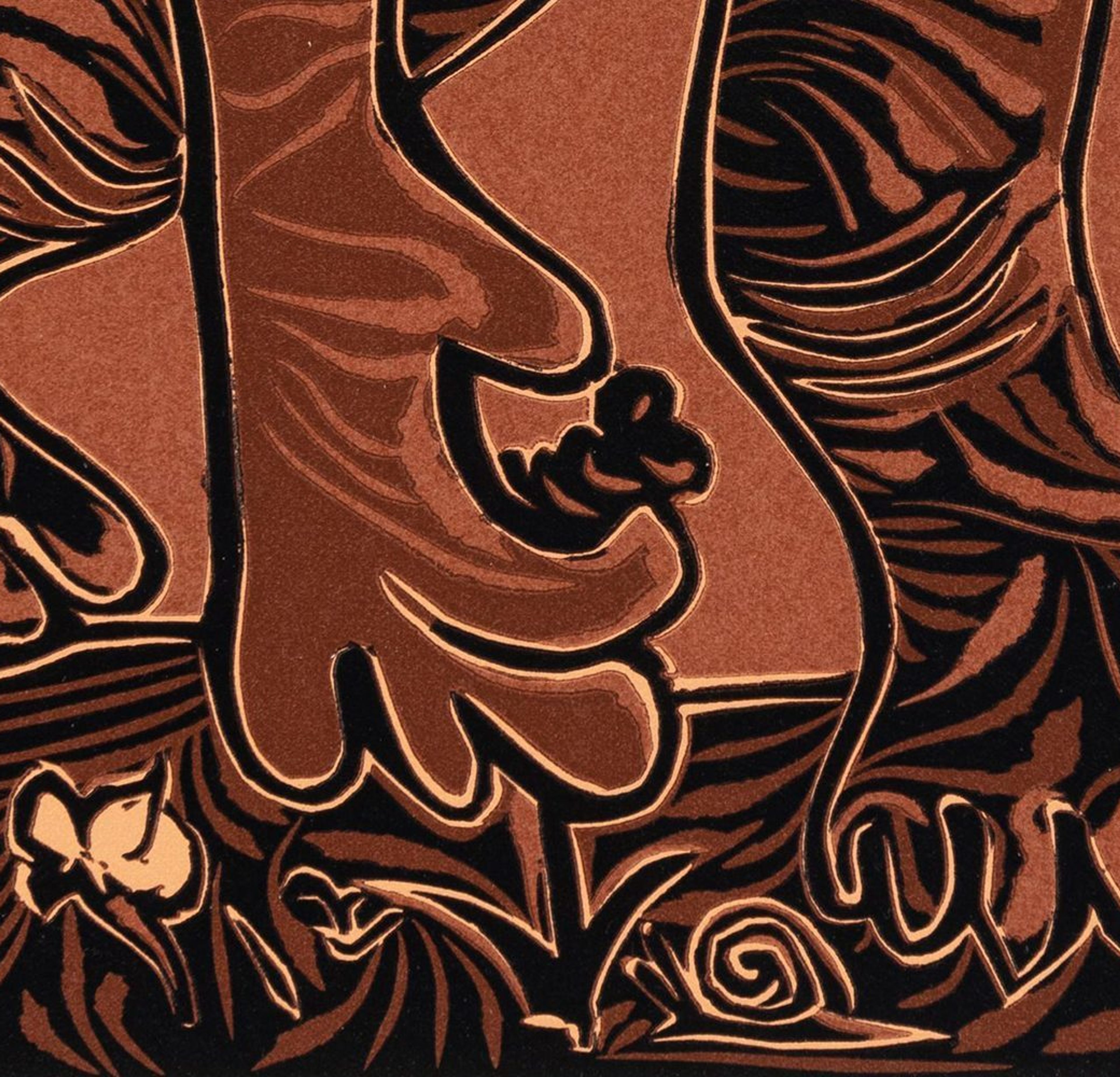
“Inspiration exists, but it has to find you working.” – Pablo Picasso Pablo Picasso was one of the most prolific printmakers of the 20th century. He was a master in copper plate etching and lithography, however a smaller portion of his oeuvre consists of nearly two hundred linocuts. In the late 1940s, at the height of his artistic career, living mostly in the South of France, Picasso was compelled to reinvent himself. He first turned his attention to the creation of ceramics at the Atelier Madoura in Vallauris which he promoted with linocut advertising posters. This led to another new passion: making linocuts in color. For assistance in this new process, he turned to master printer Hidalgo Arnera, a fellow Spanish expatriate living in the South of France. From 1958-1963 they collaborated together spending countless hours creating these linocuts. The process of printing a linocut, typically requires a cutting a separate block for each color printed. Picasso soon found this process too labor intensive and found a solution with Arnera in the “reduction” method. This method employed a single linoleum block, carved and printed, then recarved and printed multiple times in successive stages to add each different color of ink. Colors would be printed one on top of the other, slowly building colors onto the print starting with the lightest color and proceeding to the darkest. The advantage of the technique is that colors line up relatively easily at printing. The disadvantage is that the artist must be absolutely certain of his next move, before carving away more of the block and printing the next color, as this carving cannot be undone. Our Prints and Multiples auction will offer the first and third (final) states of Femme nue cueillant des Fleurs together with the tracing paper layer used to make edits to the linoleum block. As is the process with Picasso’s “reduction” method, the first state was printed with only one color. The artist then used glassine as tracing paper to trace the print and make line and color decisions as the work progressed and the block was recarved. This impression, likely the only impression of this single-color state in existence, still has the tracing paper attached leaving visible evidence of Picasso’s hand at work. Many impressions from the Arnera estate have entered museum collections since they provide a tangible glimpse at Picasso’s working process. The two linocuts presented here remained in Arnera’s estate until after his death in 2007 and are still in their original condition, having never been framed, clearly exhibiting the unique qualities of working proofs.
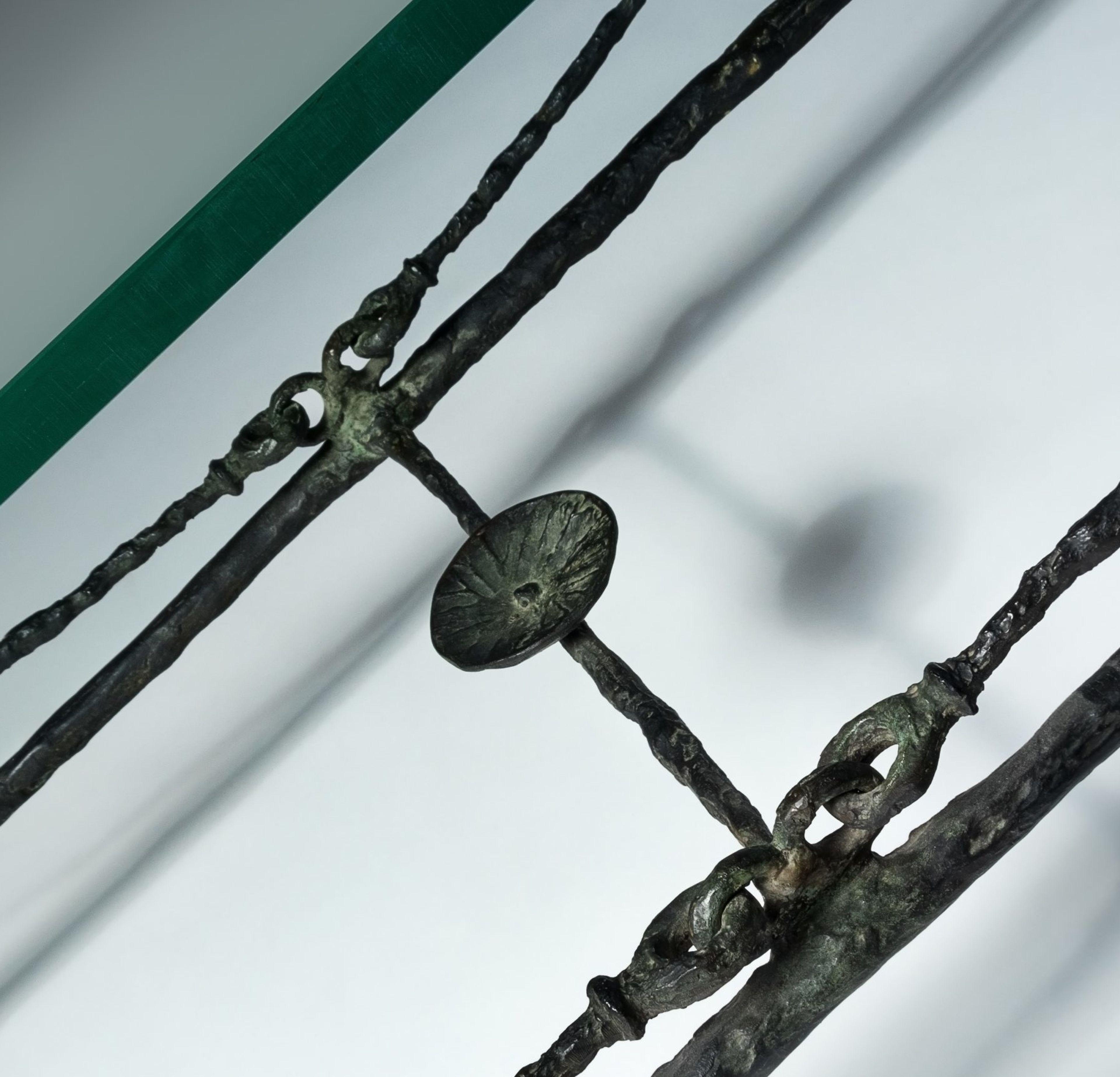
“I like creating useful things, things that serve a purpose.” Diego Giacometti’s humble nature as a designer and craftsman are fully encompassed in the design of La Table-Berceau, Première Version. The simplicity of form juxtaposed with the rich and deep texture fully embody the ethos of the designer. Raised in the Swiss countryside surrounded by an artistic family, Diego quickly adopted his natural surroundings as a primary source of inspiration. Consistently throughout his oeuvre, we find isolated elements of naturalistic inspiration consciously placed to draw our adoration to the material. While the use of animal iconography was most commonly used by the artist, La Table-Berceau, Première Version presents us with a single flower placed in the center, grounding us to the metal from the earth it came – connecting us back to the true original source material. “I like commissions – they’re fertile ground for the imagination, and always stimulate me.” Diego and his brother were represented over the course of their careers by an equally well-known gallery in New York which often served as de-facto home base for many European artists in New York City, before, during and after the Second World War. Pierre Matisse, the youngest son of Henri Matisse, soon realized his talent in in the arts through fostering artistic endeavors and championing the work of his peers and contemporaries. Pierre Matisse opened his gallery in 1931 after moving to New York in the twenties and quickly came to represent a host of the most famous and celebrated European artists of the twentieth century. Miro, Chagall, Dubuffet and both Alberto and Diego Giacometti, among many others, were introduced to the American market through his now iconic East 57th Street gallery. Pierre Matisse and Diego Giacometti worked closely for nearly four decades on numerous commissions both large and small. The present La Table-Berceau, Première Version being offered is a slight variation based off the custom example that Pierre Matisse personally commissioned Diego Giacometti to design for his gallery’s office. The present lot will include copies of the original written correspondence regarding the commission between Pierre Matisse, Diego Giacometti and the present owner. La Table-Berceau, Première Version will be featured in Hindman’s November 12 Modern Design auction.
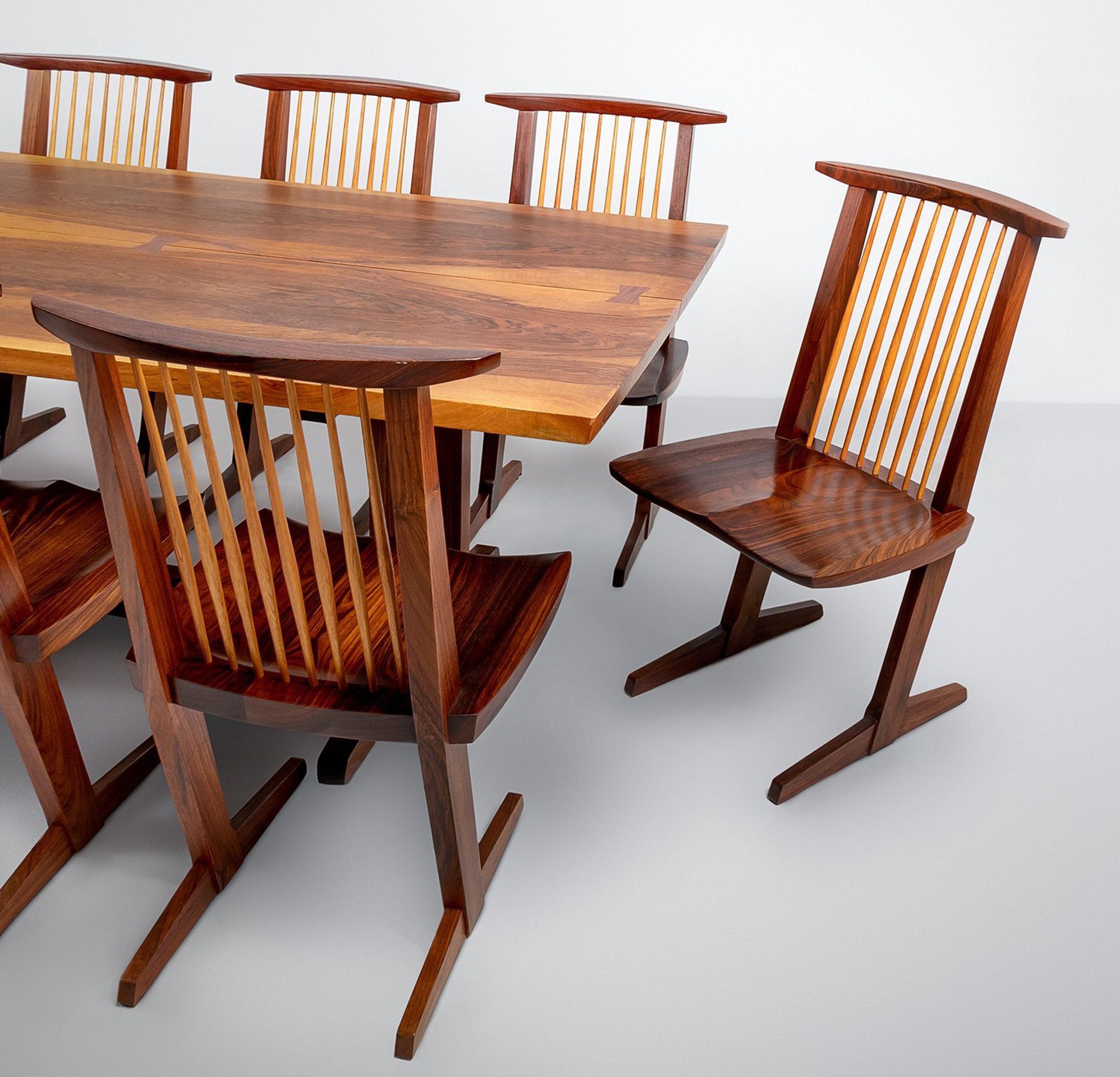
“I feel there’s a spirit in Trees that’s very deep – the spirit of a Tree lives on, I can give it a second life” Nakashima’s lifelong commitment to the Tree as his muse has always served as the starting point for each and every piece. The spiritual relationship and avowed respect for his chosen material directly informed his design practice, in turn, allowing nature to dictate form. The now iconic Conoid Chair and Frenchman’s Cove II Table are considered hallmarks in the woodworker’s legacy – serving as the purest visual forms of this symbiotic relationship. Commissioned between 1977-1981 by Barney A. Ebsworth, the table and chairs were situated amongst one of the most important Post-War Art collections of the 20th Century. These pieces are a representation of the woodworker’s apex and were executed in a material sparingly used by Nakashima. This set of eight Conoid chairs in East Indian rosewood and hickory were quite possibly the last set to be produced in this exquisite wood species as stated in a letter from Nakashima to Ebsworth in 1981 just before the international trade embargo on the material. “I can make an object that that lives and can live forever possibly – if used properly. So that’s my objective and that’s my happiness, is to find this relationship with a Tree” Nakashima’s vision lives on in these exemplary examples of the woodworker’s production – A deep understanding of the material and a profound sensitivity of our natural world. Barney A. Ebsworth with the Nakashima Family A Set of Eight Conoid Dining Chairs and a Frenchman’s Cove II Table will be sold in the November 12 Modern Design auction. Visit the sale page and browse the catalog now to learn more.
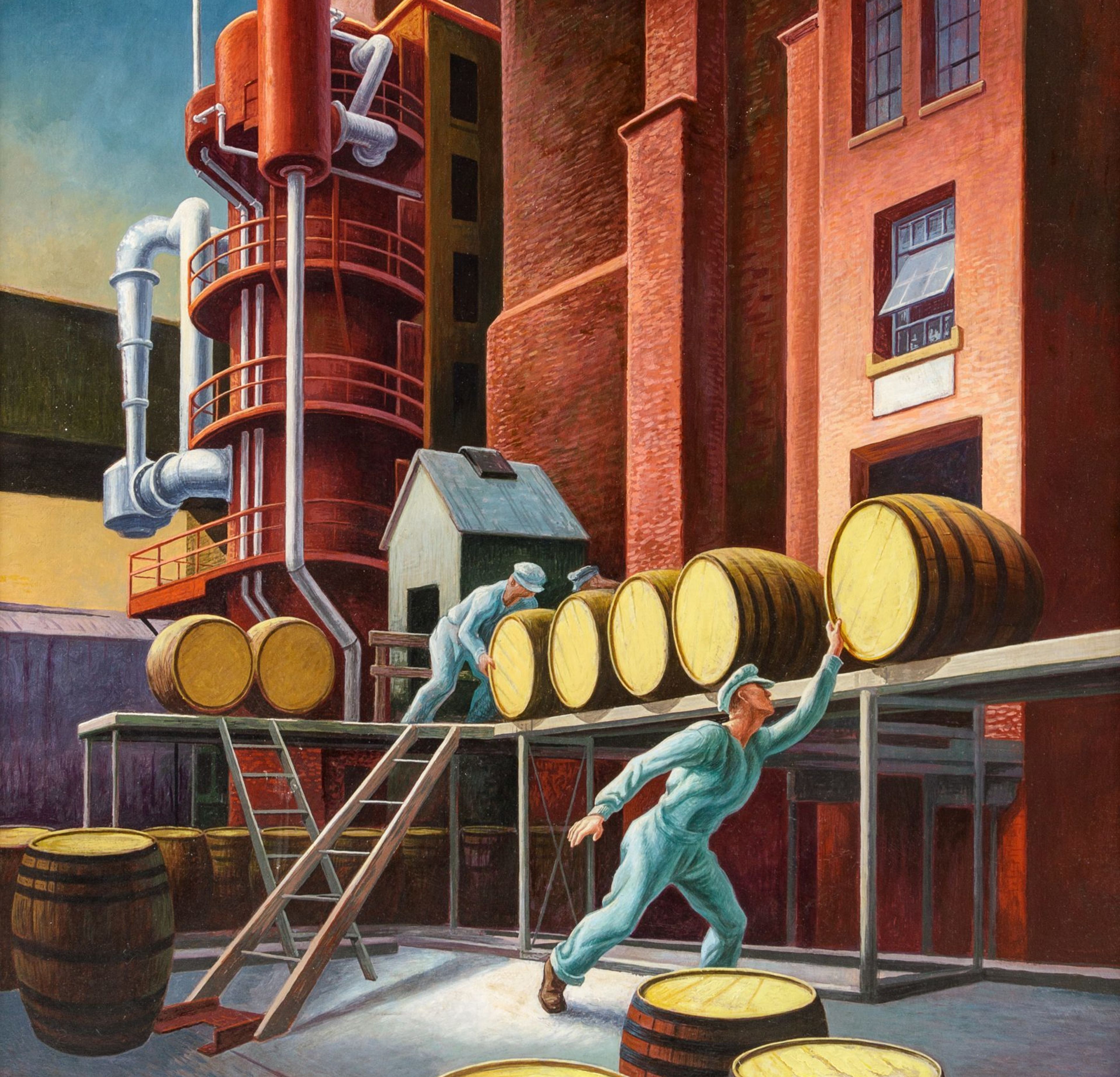
This painting Whiskey Going into the Rackhouse to Age or Whiskey Barrels, produced by Thomas Hart Benton in 1945, dates from the period of his greatest fame and prosperity, when his work was energetically promoted by the most innovative art dealer of the time, Reeves Lewenthal. Lewenthal had started his career as a reporter for the Chicago Tribune, but then drifted into promotional work, particularly representing artists. In doing so, he became convinced that the art world was operating on an outmoded business model and needed to adjust to the new realities of the modern age. In 1934 he started a print gallery, Associated American Artists, to test his ideas. Associated American Artists started in July 1934, when twenty-three artists met in Thomas Hart Benton’s New York studio. Despite its name, the gallery was not an artist’s association but a strictly commercial venture, and Lowenthal paid his artists a flat fee and then kept four fifths of the profit. Lewenthal publicly launched the project in October 15, 1934, in fifty large cities, and despite the ongoing depression it was a commercial success from the outset. Initially, the gallery was exclusively devoted to producing lithographs by major American artists. Lewenthal advertised his project in national magazines, and sold his prints in department stores in every region of the country as well as by mail order from his headquarters in New York City. His advertisements stressed the value of art as an indicator of the owner’s refinement and culture, and also stressed the patriotic significance of American subject matter. Whereas previous art dealers had made very small editions aimed for an exclusive high-priced market, Lowenthal produced relatively large editions, which were priced low and aimed at a middle-class audience. In the first offering the prints were priced at just $5 each, with a reduction of a dollar for each one if you purchased five at once. In 1939 AAA’s success led the business to expand from a cramped 42nd street loft, where it handled sales by mail, to a handsomely designed 30,000-square foot walk-in ground-floor gallery at 711 Fifth Avenue, with art deco styling and the most modern forms of recessed electric lighting. It inaugurated the new space with a major exhibition of the work of Thomas Hart Benton, accompanied by a substantial catalogue with text by Thomas Craven. Lewenthal soon established a large stable of American realist artists, including Benton, Grant Wood, John Steuart Curry, and Rafael Soyer. By 1941 Lowenthal did $500,000 a year in business, and by 1943-44 this had grown to a million dollars a month and he had 107 artists under contract. Impressively creative, Lewenthal was a leader in marketing approaches which were still not usual in this period, when most art galleries were family affairs. He produced major catalogues; he advertised in national magazines; he published color reproductions of works by the artists he represented, and he maintained close ties with American business leaders. One of Lewenthal’s innovations was to develop lucrative contrasts with major corporations for paintings which could be used for publicity and advertising purposes. His clients included such businesses as Esso, Abbott Laboratories, The American Tobacco Company, and the Scruggs-Vandervoort Barney Department Store in St. Louis. During World War II, he also arranged to do projects supporting the war effort, some commissioned by the army and navy, and others funded by large corporations. Other artists represented by AAA who took part in the commission were Joseph Hirsh, Zoltan Zepeshy, Lawrence Beal Smith Franklin Boggs, Aaron Bohrod, Paul Sample, Ernest Fiene, George Schreiber and Fred Ludekins. Benton, by far the most famous of the group, seems to have been the first to be hired, and several of the paintings Benton produced for these advertising commissions stand out as among his most celebrated works. For example, his painting of Tobacco Sorters, 1944, for the American Tobacco Company, is now in the Crystal Bridges Museum, Bentonville, Arkansas, and another painting from this series, Night Firing of Tobacco, 1943, recently sold for $2,652,500 at Christie’s (Christie’s sale 14315, November 21, 2017). This painting of Whiskey Barrels was produced about 1945 by Thomas Hart Benton as part of a commission by Hiram Walker-Gooderham & Worts Limited, for use in their Imperial Whiskey advertisements. Similarly to the iconic, Fluid Catalytic Crackers (1945, Massachusetts Institute of Technology), which resembles the work of Charles Sheeler in its precisionist rendering of an oil refinery, this work portrays a whiskey distillery with similar meticulous accuracy. In the foreground, three muscular men roll whiskey barrels down a platform, presumably to a warehouse where the liquor will be aged. Founder of Imperial Whiskey, Hiram Walker, pioneered the now de rigueur process of barrel-aging whiskey, which was made previously by pouring spirits over charcoal. Implicitly, the painting stresses two themes that were central to American mythologies of this period: the superiority of American technology and manufacturing, and the strength and manliness of the American worker. It’s worth noting that the painting was produced in 1945, the year World War II came to an end, when American patriotism was at its height, when abstract painting was not yet in vogue, and when Regionalists such as Benton were still dominant in American art. It was reproduced in a full-page advertisement in Life Magazine on June 3, 1946. After being used as an advertisement, this painting was stored away and forgotten until the 1980s, when it was rediscovered in a warehouse in Canada. On the verso, the painting carries a label filled out by Benton himself, providing the title, the value ($5,000, which would have been a year’s income for many Americans at the time), and the medium (oil-tempera), as well as a note that it should be handled carefully because of its “fragile surface.” The painting also carries a label indicating that it was included in the 26th Annual Art Director’s exhibition, presumably around 1946. The Hiram Walker & Sons Distillery remained in the Walker family until 1926 when it was purchased by Harry C. Hatch, who merged it and his own company, thereby creating Hiram Walker-Gooderham & Worts Limited. The company was acquired by British beverage company, Allied Domecq, in 1987; then was purchased by Pernod Ricard in 2005 and sold to Fortune Brands later that same year; Beam Global Spirits & Wine, Inc. split from Fortune Brands to become an independent publicly traded company called, Beam Inc., in 2011. Three years later, it was purchased by Suntory Holdings and was renamed Beam Suntory. The company is headquartered in Chicago and Imperial Whiskey is brewed in Bardstown, Kentucky about 15 miles from Maker’s Mark distillery, in Loretto, Kentucky. – Henry Adams Ruth Coulter Heede Professor of Art History Case Western Reserve University, Cleveland Whiskey Going into the Rackhouse to Age or Whiskey Barrels by Thomas Hart Benton will be featured in the October 17 American and European Art auction. The sale will also include the additional paintings (Lot 106-Lot 117) that were commissioned as part of a 1945-1947 advertising campaign for Hiram Walker Distilleries of Windsor, Canada and Peoria, Illinois. Many of the works in this session, including the Thomas Hart Benton subsequently appeared in issues of Life Magazine. While the details of the commissions are not fully known, one requirement for each artist was to include whiskey barrels in their work.
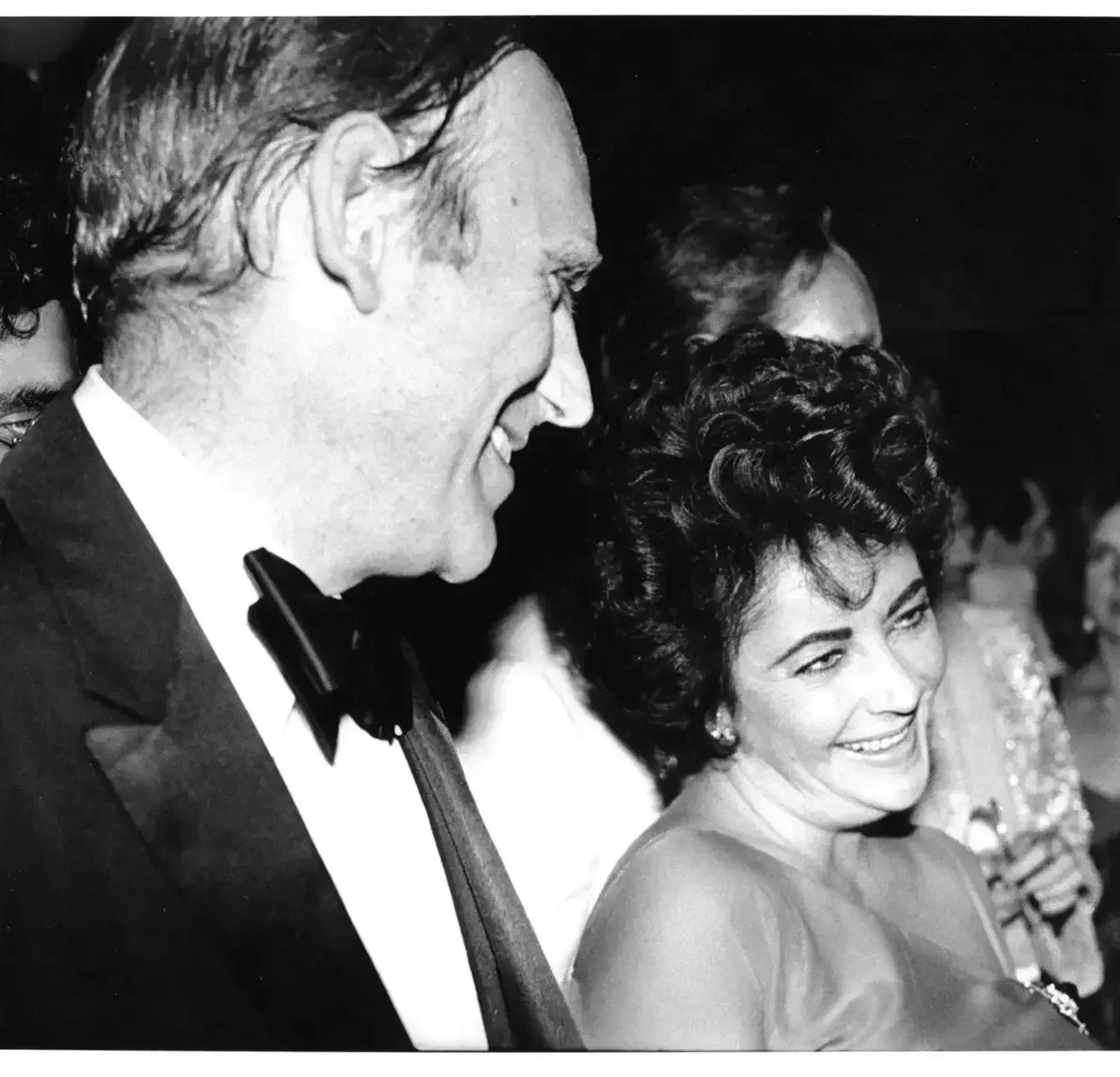
Richard Oldenberg & The Elite Orbit of Manhattan A distinguished collector and art world power broker, Richard Oldenburg was a central figure, both personally and professionally, of the elite art and cultural orbit of Manhattan in the latter half of the 20th century. Born in Stockholm, Sweden, Richard Oldenburg and his older brother, the famed Pop artist Claes Oldenburg, spent their earliest childhood years in Sweden, before moving to Chicago in 1936, when their father Gösta was named the city’s Swedish Consul General. Their mother, the former Sigrid Lindforss, was accomplished in her own right, having enjoyed a career in Sweden as an opera singer and, later, as an abstract painter. Career Success The two Oldenburg brothers would themselves go on to have careers of significant influence within the art world, though their paths would take quite different turns. After a tenure at Harvard Law School and time spent in military service, Richard embarked upon a career in book publishing at Doubleday and MacMillan. With Claes an emerging presence in the growing Pop Art scene, however, the art world was always close at hand. As Richard recalled in the Museum of Modern Art’s oral history, “through [Claes], I met Rauschenberg, Lichtenstein, Warhol, Segal, Rosenquist—everyone—because they were all in very close contact. It was a very exciting time. It was the whole emergence of the Pop Art movement.” Indeed, it was after a fortuitous meeting with a former colleague at the opening of Claes’s 1969 MoMA exhibition that Richard assumed the role of Director of Publications at the museum. So successful was he in his post that soon thereafter he was appointed MoMA's Director, a position he would hold from 1972 until 1994. The Cornerstones of the Art World Once Richard joined the museum, the two brothers were cornerstones of the art world: one creative, the other practical. Richard’s unique talents allowed him to thrive in his role as a cultural chief executive. Under his stewardship, the museum made tremendous strides, including an expansion that saw its exhibition space more than double, a transformative change for one of the world's leading institutions. Upon his retirement from the museum in 1994, Richard joined Sotheby’s, where he served as Chairman of North and South America until 2000. Richard’s interest in art extended far beyond the professional and he built an impressive personal collection of international scope. Across several sales in 2019, Freeman’s offered a selection of works from the Collection of Mr. and Mrs. Richard E. Oldenburg; notable among these pieces were works by Mimmo Rotella, Roy Lichtenstein, Ellsworth Kelly, and, of course, Claes Oldenburg.

Hindman’s September 26 Post War and Contemporary Art sale realized over $3.4 million and was led by an extraordinary session of rare and outstanding paintings by the Hairy Who? and the Chicago Imagists that surpassed presale estimates and broke four global auction records. This session included the top selling lot of the sale, Jim Nutt’s Plume, which realized $516,500 against a presale estimate of $200,000- $400,000. The painting broke a global record, being the most expensive work ever sold at auction by the artist. Other Chicago Imagists realizing global records include Gladys Nilsson, Karl Wirsum, and Art Green. Gladys Nilsson’s Dipdick…Adam and Eve after Cranach shattered expectations realizing $324,500 against a presale estimate of $20,000-$30,000. Karl Wirsum’s Doggerel III realized over triple its high estimate, selling for $212,500. Guarded Irregularities by Art Green, sold for almost double its presale estimate, realizing $45,000. Zack Wirsum, Senior Specialist of Post War and Contemporary Art, stated: “We are absolutely over the moon about the prices that the works by Hairy Who? and Chicago Imagists brought today. To be in a position to continue to set new precedents for the auction prices of these artists fills us with hometown pride. The entire auction was gangbusters with the majority of the lots offered selling above or towards the high end of the estimate, it was a truly phenomenal day in the Hindman salesroom.” More highlights from the sale include Larry Poon’s Untitled, which carried a presale estimate of $30,000 – $50,000 and sold for $131,250 and Personajes con Pajaro Negro by Wifredo Lam which realized $200,000 against a presale estimate of $40,000- $60,000. The Post War and Contemporary Art sale was immediately followed by Hindman’s Prints and Multiples auction, which was led by a strong session of Alexander Calder lithographs from the Terrance J. Dimoff Charitable Remainder Trust. This rare group realized $89,250, exceeding the high estimate for the collection. Additional highlights of the Prints and Multiples auction include Helen Frankenthaler’s Tales of Genji I which sold for $57,500 against an estimate of $30,000-$50,000 and a pair of Frank Stella relief collages which sold for $11,875 and $11,250 respectively. The Pop Session included a Roy Lichtenstein’s Crak! which sold for $15,000.
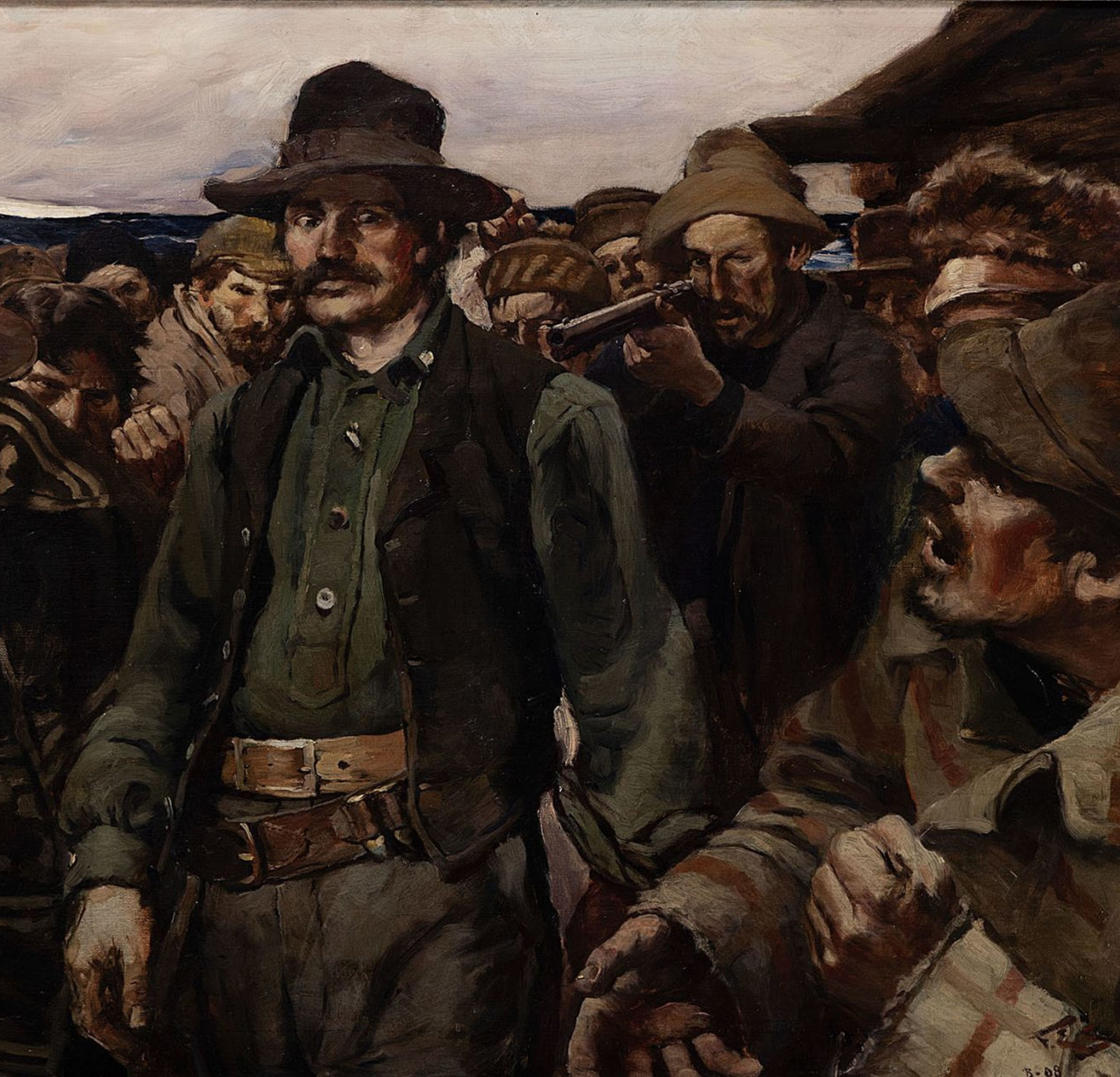
On October 10, 2019, Cowan’s will offer the collection of James B. Scoville in a single-owner auction at its Cincinnati salesroom. The spectacular collection offers perhaps the most complete snapshot of the latter half of the 19th century in the Great Plains of the United States. Across over 200 lots, the collection manages to seamlessly blend majestic Western art depicting the legend of the region with artifacts that provide a record of the realities of life for Native Americans at the time. “I’m not sure you could have assembled a better representation of the Great Plains in the 19th century if you had unlimited time and resources,” said Danica Farnand, Cowan’s director of American Indian & Western Art. “James’ fervent passion and incredible eye for quality created one of the most extraordinary collections we’ve ever had the pleasure of handling.” Born in Riverside, Ill. in 1924, Scoville was an outdoorsman from the earliest days of his childhood. He and his wife, Peggy, were avid hunters traveling the Great Plains to bow hunt, camping in their canvas replica teepee, in pursuit of deer, elk, and antelope often on horseback. A lifelong naturalist, he was a founding Director of Citizens for Conservation in his hometown of Barrington, Ill. This love of the outdoors sparked a passion of the history of the region, particularly in the 19th century. Scoville expressed this passion by meticulously curating a collection that could best depict that history. “James was an incredible storyteller,” said Farnand. “In his collection, he’s telling us the story of the Great Plains. These majestic Western Art pieces of sweeping landscapes, untamed wildlife, and the rough and tumble frontiersmen show the romanticized legend of the Plains. Understanding the legend is critical to putting the reality of history into context.” The top Western Art lot is expected to be a C. M. Russell (American, 1864-1926) watercolor over pen and ink on paper entitled Inspection of a Permit. Russell, was one of the finest artists produced by the American West. Born in St. Louis, Russell became fascinated with the West as a young boy and began filling his notebooks with sketches of Native Americans and cowboys. Adding to the value of this particular watercolor, is a hand-written inscription along the lower margin believed to indicate the piece was a personal gift to a friend. The lot is estimated to sell for $80,000 to $100,000. Other Western Art highlights include a WHD Koerner (German, 1878-1938) oil on canvas entitled Two Men in a Canoe, estimated to sell for $20,000 to $30,000; a Harvey Dunn (American, 1884-1952) oil on canvas entitled A Journey in the Badlands for $15,000 to $25,000; another C. M. Russell work, this one pen and ink with color on paper, entitled Looking for Trouble for $15,000 to $25,000; and a Frank Schoonover (American, 1877-1972) oil on canvas for $10,000 to $15,000. Highlights from the artifact portion of the auction include a vividly colored Cheyenne River Sioux pictorial beaded hide tobacco bag expected to sell for $30,000 to $50,000; an early plains pictorial beaded knife sheath with knife for $20,000 to $30,000; a Sioux quilled and beaded buffalo hide bowcase and quiver for $20,000 to $30,000; and a brightly colored Crow beaded hide rifle scabbard for $15,000 to $25,000. The auction will take place on Thursday, October 10 at 10:00 a.m. (ET) in Cowan’s Cincinnati salesroom.
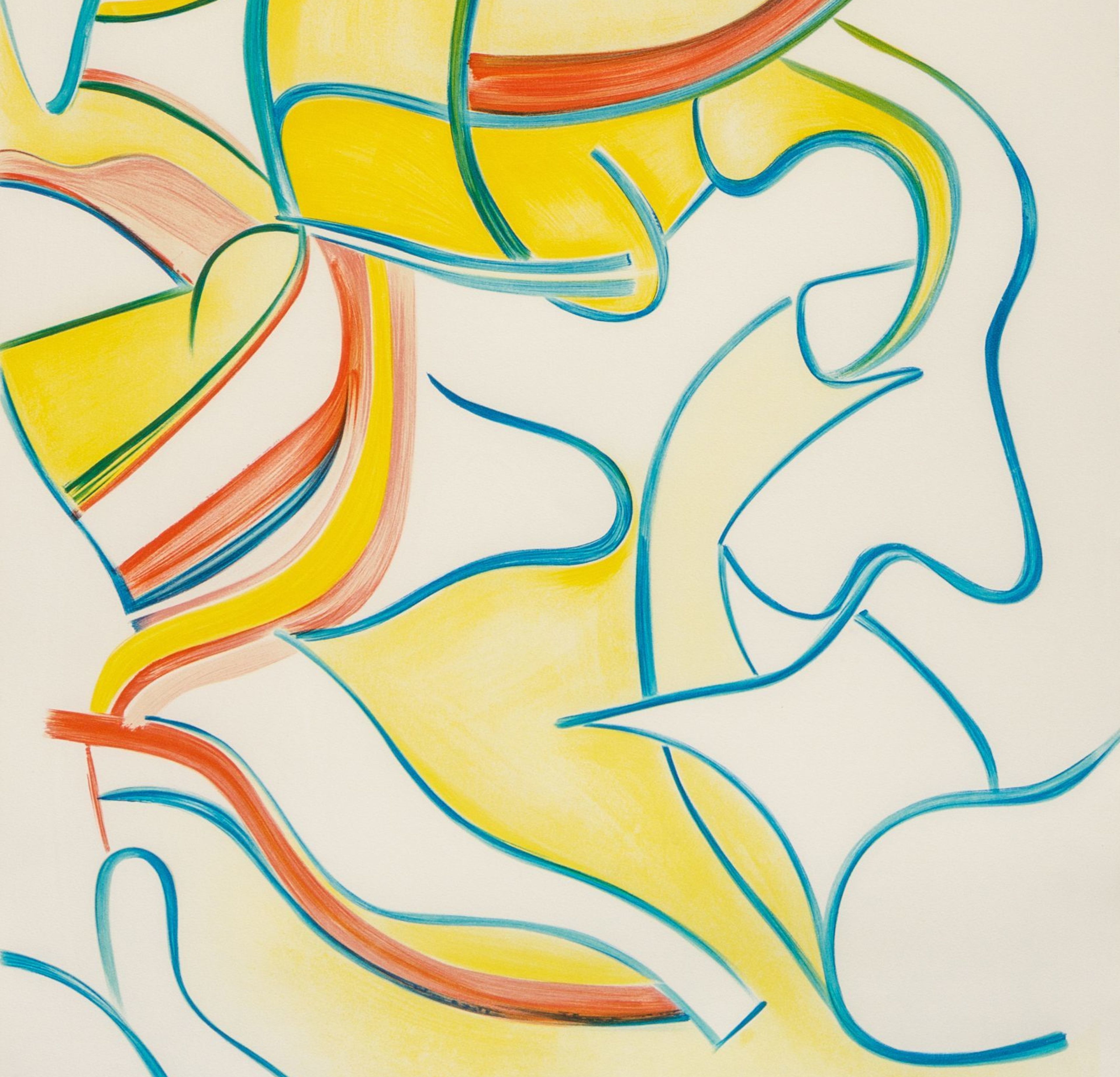
“Later, as I get older, it is such a nice thing to see a nice Matisse…When people say my later paintings are like Matisse, I say, ‘You don’t say,’ and I’m very flattered.” -Willem de Kooning, quoted in R. Storr, “At Last Light”, Willem de Kooning, the Late Paintings, the 1980s, New York, 1995, p. 71 A giant of Post War painting and a founder of Abstract Expressionism, Willem de Kooning had the inimitable ability to continually develop and refine his style over the course of his 60 year career. Unlike many of his contemporaries, his final style was lyrical and sinuous, bright and primary, deliberate and exacting. Quatre Lithographies embodies the primary color palette and pure reductive forms of this late style. For de Kooning, the 1980’s heralded a period of prolific output but also of renewed focus and clear thinking. Coming out of a decade of dark and self destructive behavior, by 1981 he was living full time in East Hampton with his ex-wife, Elaine de Kooning. Newly sober and surrounded by close friends and assistants, he began to paint again with his former exuberance. His studio at this time featured a new type of easel, devised by Elaine’s brother, that could rotate paintings 360 degrees and raise and lower them easily so that he could work on all parts of a canvas at once. This process helped imbue his late works with a sense of consistency that transforms itself into movement as the viewer’s eye travels throughout the composition. This lightness and movement is clearly reminiscent of the works of Henri Matisse, whom de Kooning clearly identified with late in his life. In 1980, he stated “Lately I’ve been thinking that it would be nice to be influenced by Matisse, I mean he’s so lighthearted. I have a book about how he was old and he cut out colored patterns and he made it so joyous. I would like to do that, too–not like him, but joyous, more or less ” (Willem de Kooning, quoted in M. Stevens and A. Swann, de Kooning: An American Master, New York, 2004, p. 589). He soon made the joyous, lyrical and sinuous lines of Matisse a part of his vernacular. Quatre Lithographies, published in 1986 by the French publisher Éditions de la Différence, embodies each element of this late style. You can feel the consistency imparted by the mechanical easel, the lightness of Matisse, the newfound sobriety and poignancy of form. Published as a portfolio of four in an edition of 150 (50 numbered in Roman numerals) this set is rarely seen complete. Of the very few lithographs created by de Kooning late in his career, this set is unequivocally the most finished, complete and visually engaging. It is easily the crowning achievement of the graphic works of Willem de Kooning. Available in Hindman’s September 26 Prints and Multiples auction, Quatre Lithographies is estimated at $80,000- $120,000. The auction will be conducted in the Chicago sale room at 2pm CT.
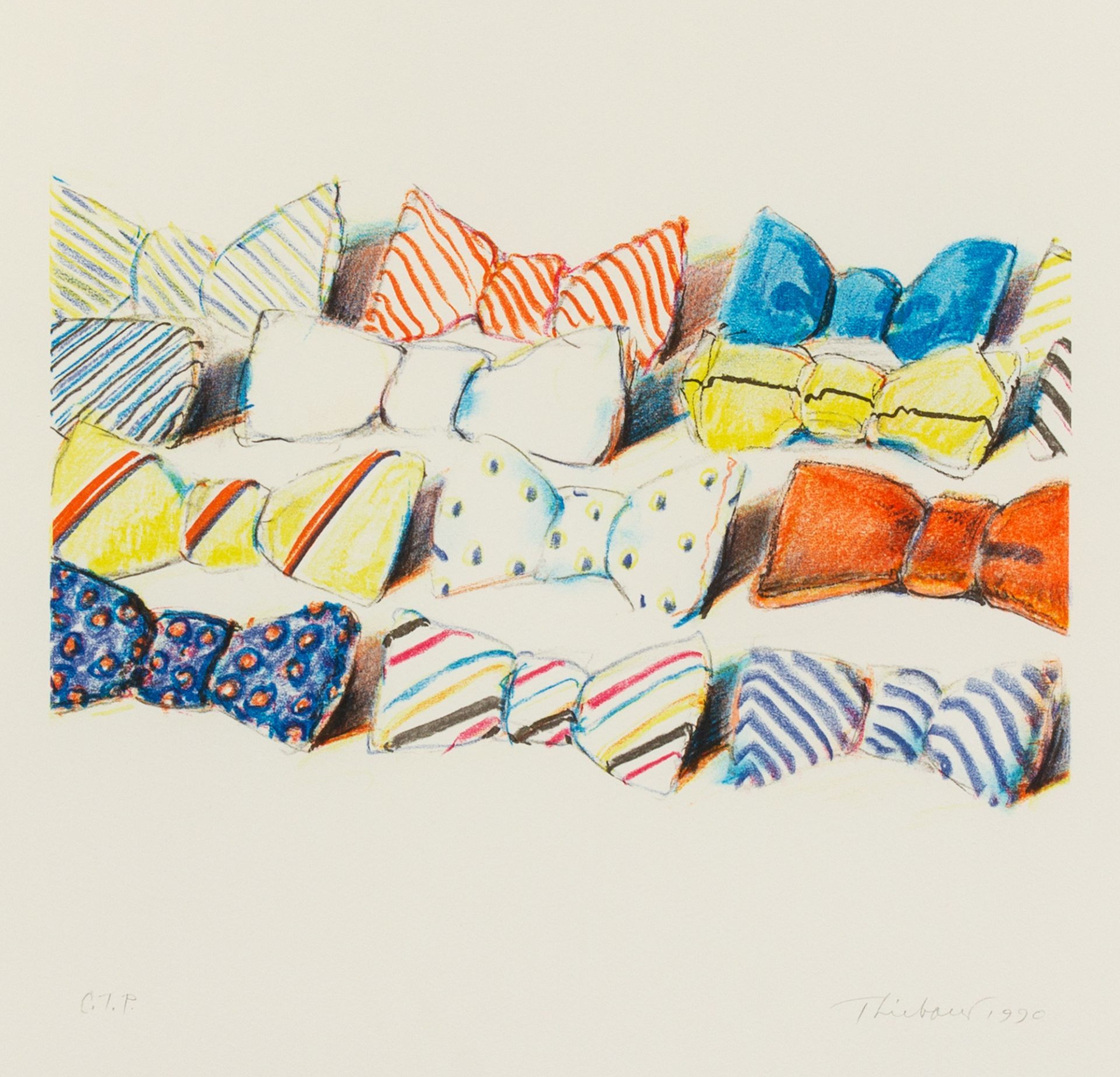
Prolific American painter and print maker Wayne Thiebaud is perhaps best known for his colorful, heavily-pigmented works depicting everyday objects including lipstick, paint cans and gumball machines. Associated with the pop art movement alongside contemporaries including Andy Warhol and Roy Lichtenstein, Thiebaud’s work actually predated classic pop artists. Born to a Mormon family in Mesa, Arizona, Thiebaud spent his adolescence in Long Beach, California. After working as a drawing apprentice at Walt Disney Studios, he attended Frank Wiggins Trade School in Los Angeles before working as a cartoonist and designer in California and New York. He later earned his bachelor’s degree from Sacramento State College in 1951 and his Master’s in 1952. Working as a professor at the University of California, Davis, Thibaud took a leave of absence in the late 1950’s, spending time in New York City where he befriended Elaine and Willem de Kooning and Franz Kline, leading to a heavy abstract influence in his work, as well as pop artists Robert Rauschenberg and Jasper Johns. Hosting his first solo exhibition in 1960 at the San Francisco Museum of Modern Art, he also enjoyed shows in New York City before gaining national recognition when Sidney Janis Gallery launched Pop Art in 1962. Well-known for his vibrant paintings and prints of everyday objects, Thiebaud often drew inspiration from items found in restaurants. Though Thiebaud never thought of himself as a “pop artist,” he often found his work displayed alongside the major pop artists of the day. One of his iconic works, Bow Ties (1990) is a lithograph in colors on wove paper, signed, inscribed and dated in pencil. The piece, depicting colorful bow ties in the artist’s signature exaggerated color scheme, Thiebaud uses shadow and space to create depth and contrast in the image. Available as the featured piece in Hindman’s upcoming Prints and Multiples sale, Bow Ties (1990) by Wayne Thiebaud is valued at $20,000 to $30,000. The sale will take place on Wednesday, May 22 at 2 p.m. at Hindman’s Chicago headquarters, with the catalog available for preview now.
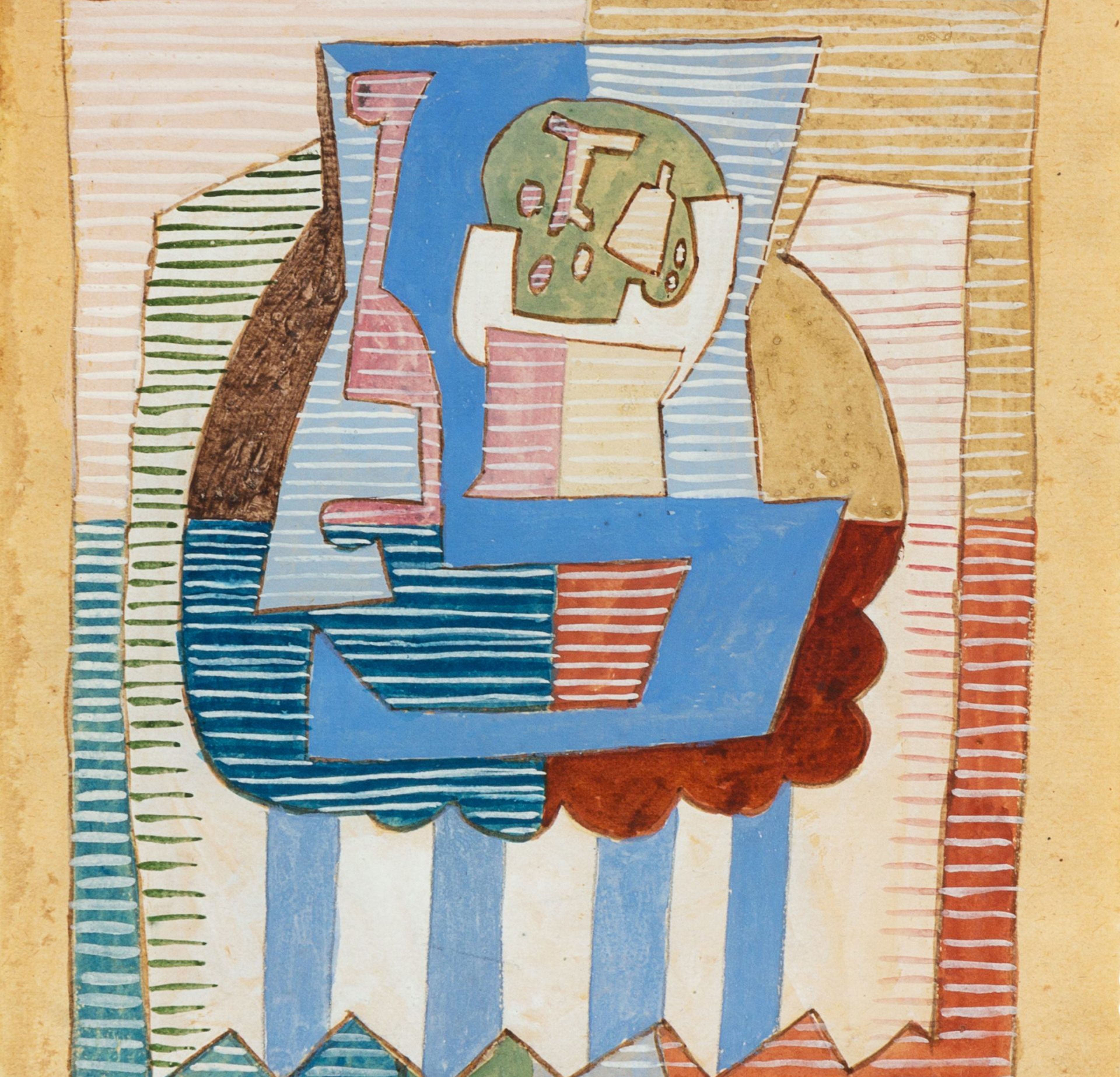
The 1920s was a period of personal contentment and artistic satisfaction for Pablo Picasso, a fresh beginning after the chaos of WWI. With a new home and studio in a chic Parisian arrondissement, Picasso’s days as a starving artist were behind him, and, as the decade progressed, his work and reputation grew exponentially. Stylistically during this time, Picasso vacillated between the two commanding yet fundamentally different artistic movements popular in avant-garde Paris: Cubism and Neo-Classicism. Picasso seamlessly switched between these styles, consistently confronting expectations and this flexibility and mastery of both genres allowed him to maintain his position as one of the leading characters in the story modern art. Picasso feverishly worked on dozens of small format gouache works during this time period and each are crucial to understanding the gradual progression from the artist’s purely abstract Cubist art to more neoclassical compositions that characterized the 1920s. On an intimate scale in the present work, Picasso continues to explore new ways to infuse configurations of everyday life with the impression of volume in from a flat space. The striated lines emphasize the figures in the forefront of the image creating depth and dimension. As friend and biographer John Richardson noted in his book, Picasso, An American Tribute, “No longer did Picasso feel obligated to investigate the intricate formal and spatial problems that preoccupied him ten years before. Instead he felt free to relax and exploit his cubist discoveries in a decorative manner that delights the eye…Never again did the artist’s style recapture the air of magisterial calm that is such a feature of this last great phase of Cubism,” (p. 52). A highlight in Hindman’s upcoming American and European Art sale, Abstract Composition (1920) by Pablo Picasso comes from a private Chicago estate and is valued at $200,000 to $400,000. The sale will take place on Thursday, May 23 at 10 a.m. at Hindman’s Chicago headquarters, with the catalog now available online for preview.
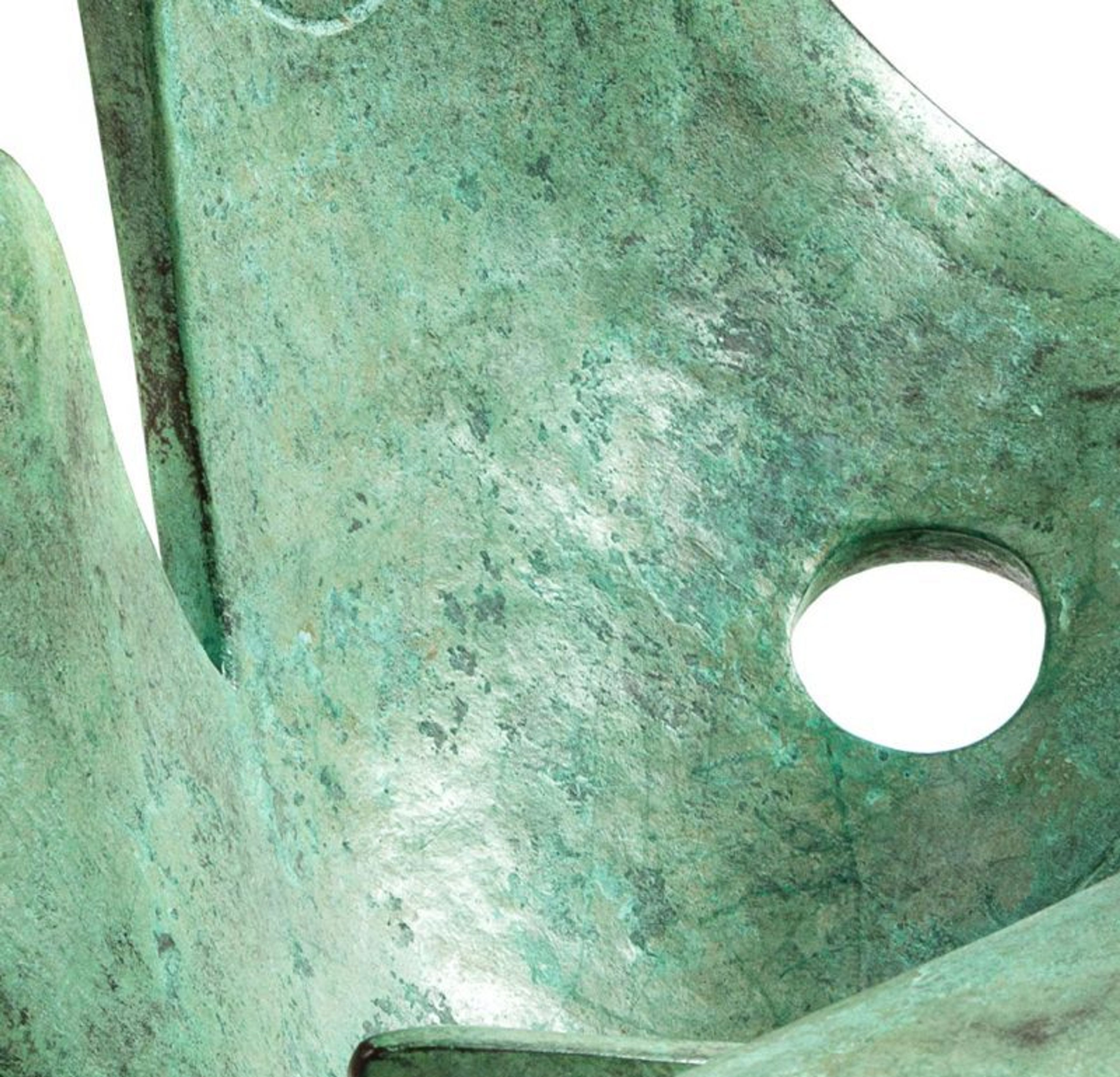
A pioneer in the Modernism movement, English artist and sculptor Dame Barbara Hepworth was one of the few female artists of her generation to rise to international acclaim. She was also a leading figure in the St. Ives artist colony during World War II, along with contemporaries such as Ben Nicholson and Naum Gabo. Born in Wakefield, Hepworth attended the Royal College of Art in London before traveling to Florence, Italy. After training under master sculptor Giovanni Ardini, she returned to London to exhibit her early work alongside then-husband and fellow sculptor John Skeaping. Her early work was shaped by abstraction, eventually leading her to involvement with the Paris-based Abstraction-Création movement. She also co-founded the Unite One art movement, seeking to unite Surrealism and abstraction in the British art world. At the outbreak of the Second World war in 1939, Hepworth, her second husband Ben Nicholson, and their children went to live in Cornwall. Finding her home in Trewyn Studios, she helped usher in St. Ives as a refuge for artists during the war. Co-founding the Penwish Society of Arts with nineteen, Hepworth created works that were exhibited in the British Pavilion at the XXV Venice Biennale in 1950. Today, Hepworth’s name graces two museums housing significant collections of her work in Cornwall and West Yorkshire, and pieces are on display around the world, from London, to New Zealand, to Northwestern University in Evanston. One of several pieces inspired by time spent in the Aegean Islands following the death of her eldest son Paul in 1953, Aegean (1956) is a bronze sculpture measuring at 11 x 9 x 11 inches. Obtained from a private collection in St. Louis, Aegean has been in private hands since 1962, making this the first time this piece has been available in more than 50 years. Available as the featured piece in Hindman’s upcoming Post War and Contemporary Art sale, Aegean (1956) by Barbara Hepworth is estimated at $100,000 to $150,000. The sale will take place on Wednesday, May 22 at 10 a.m. at Hindman’s Chicago headquarters, with the catalog available for preview now.
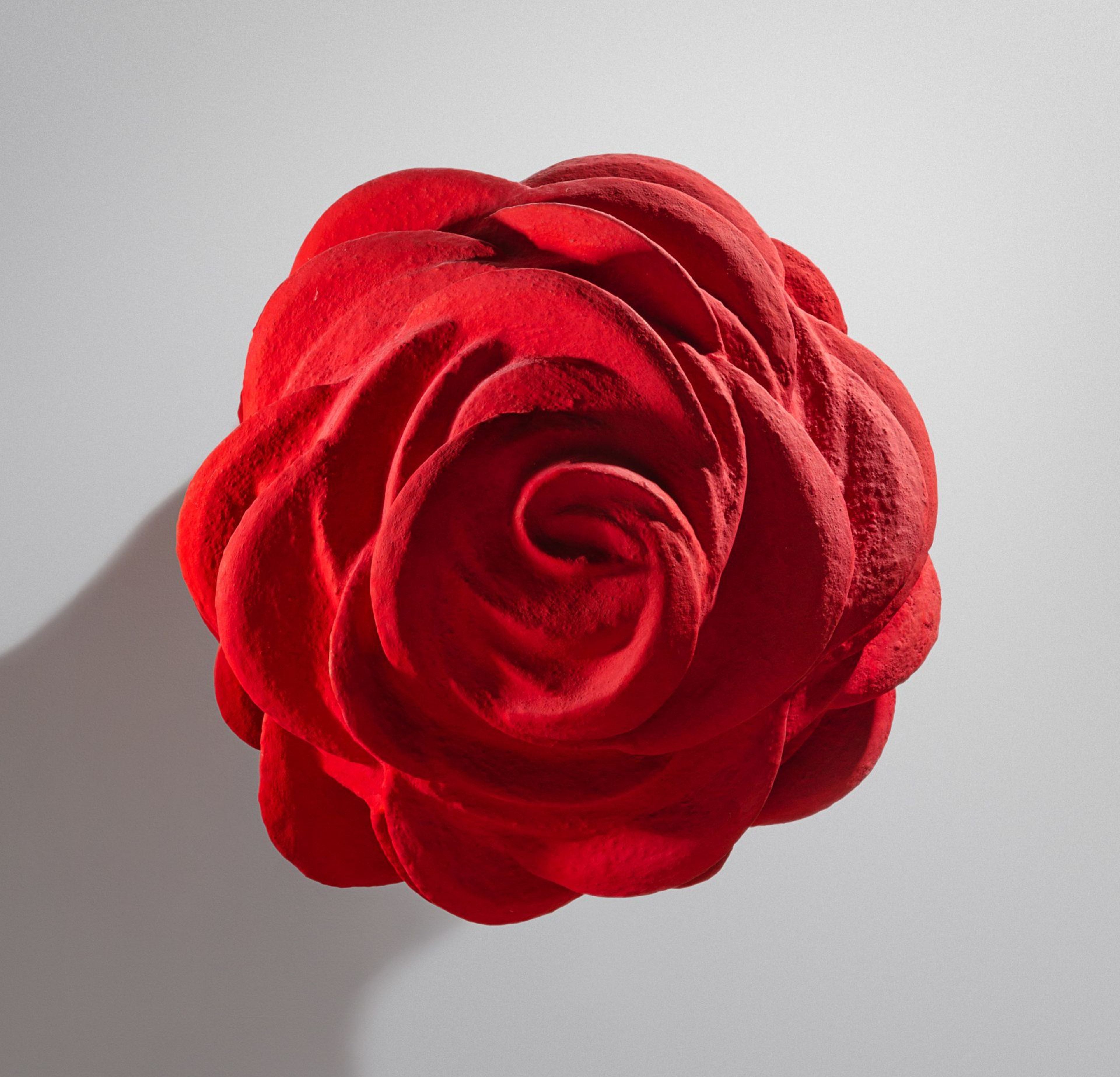
Bombay, India-born sculptor Anish Kapoor burst onto the art scene in the 1980’s with his striking geometric or biomorphic sculptures created from simple materials including plaster, granite, limestone and marble. Perhaps best known locally for his Cloud Gate (2006)sculpture, better known as “The Bean” in Chicago’s Millennium Park, Kapoor has worked primarily with polished stainless steel since 1995. Often recognized for his explorations of matter and non-matter, Kapoor’s designs use negative space and diverse materials to create the illusion that they are fading into the distance, sinking into the floor or distorting the space around them. According to Kapoor, “That’s what I’m interested in: the void, the moment when it isn’t a hole. It is a space full of what isn’t there.” World-renowned and often celebrated, he was the first Guest Artistic Director of the UK’s Brighton Festival and the first living artist to have a solo exhibition at the Royal Academy of the Arts. A resident of London, Kapoor’s works are held in collections around the world, including The Museum of Modern Art in New York City, the National Gallery of Art in Washington, D.C., the Tate Gallery in London and more. His first major body of work, called From 1000 Names to signify the objects’ infinite interconnectivity, features deeply pigmented powder works that sit on the floor or project from a wall, defining the surfaces they interact with and appearing to be partially submerged. Untitled from 1000 Names, (1984), imbued with a deep kumkuma red, captures the complexities and compelling contradictions of Kapoor’s seminal sculptural series. From a head-on vantage point, the work appears superficially floral but morphs into a vital feminine physicality when viewed at length. In profile, the work protrudes from or penetrates into the wall, cleverly opposing the enveloping front angle while the piece’s curved contours convey the motion and carriage of a drill bit. An artistic interpretation of powerful male and female properties, the piece speaks to the notion of godliness, demonstrating the possibility of omnipotence – the state of being all things at once. Simultaneously demanding reverence and invoking a sense of magic, the piece seems to levitate in a bold defiance of the physical world in which is resides. Untitled from 1000 Names (1984) by Anish Kapoor is available in Hindman’s upcoming Post War and Contemporary Art sale. The sale will take place on Wednesday, May 22 at 10 a.m. CST at Hindman’s Chicago headquarters.