New & Noteworthy
Stay up to date with news, highlights, & features from across Freeman's.
Stay up to date with news, highlights, & features from across Freeman's.
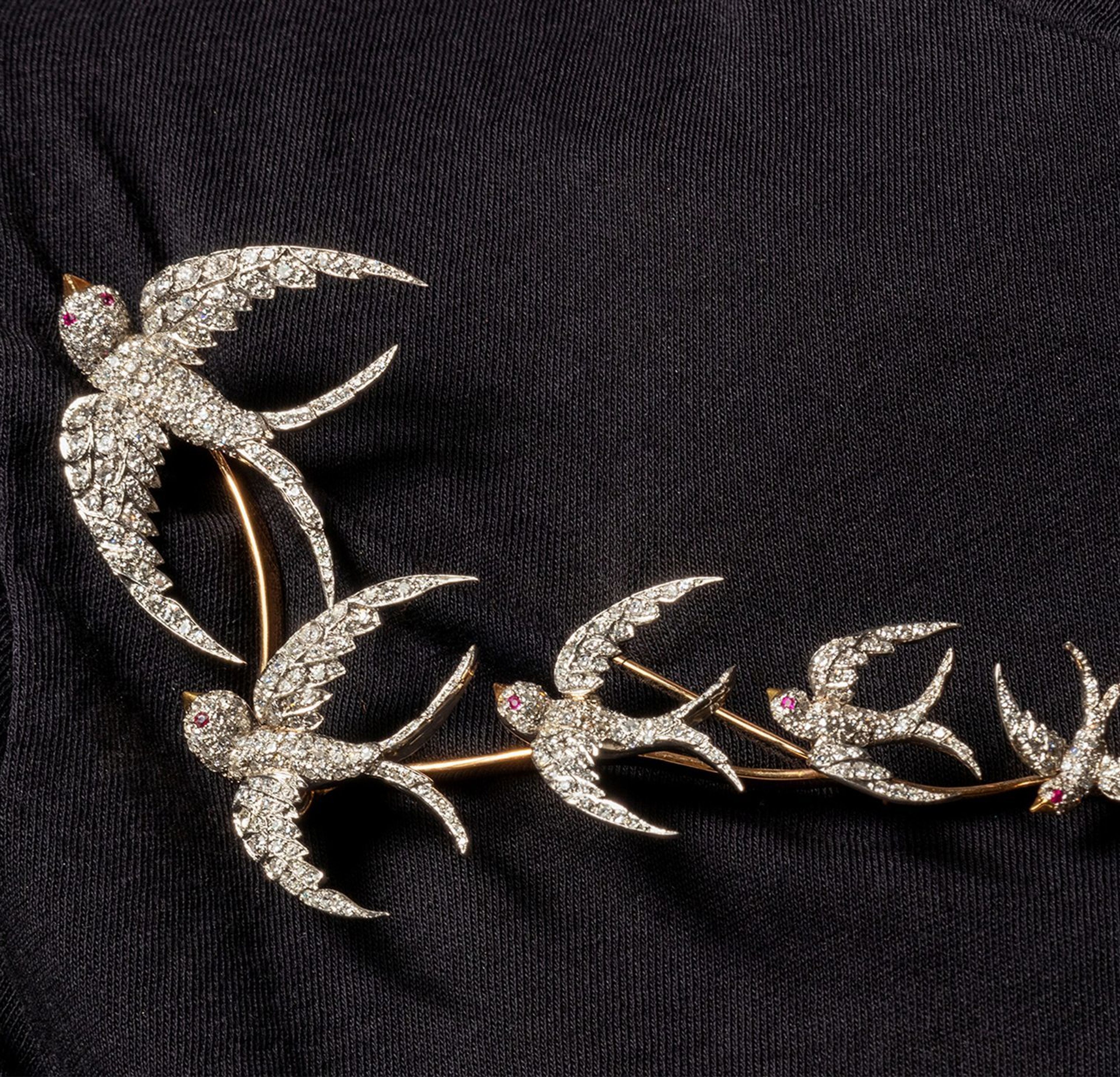
In honor of Women’s History Month, Hindman is delighted to present six female Specialists and the stunning works by female artists that inspire us all. Monica Brown, Senior Specialist, Fine Art Louise Bourgeois (French/American, 1911-2010), Toi et Moi, 2006. Estimate: $5,000 – $7,000. Included in Prints & Multiples sale on May 5, 2021. “When I think of iconic female artists, my mind immediately goes to Louise Bourgeois. The first time I saw one of her spider sculptures I was shocked that it was titled ‘Maman’. This push and pull between meaning and the viewers’ perception is something that I have always admired in her work. We are excited to handle this edition by the artist in our May 5th Prints and Multiples auction. To me, this small scale work embodies so much about Bourgeois – the musical staves printed on fabric hearken to her childhood steeped in tapestries and music, the words echo her constant investigation of the connection between two people. However, unlike her large scale spiders, this work is steeped in a softness and intimacy that I find incredibly moving.” Genevieve King, Associate Specialist, Decorative Arts & Collectibles Harriet Whitney Frishmuth, The Star, 1918. Estimate: $6,000-$8,000. Included in A Gentleman’s Pursuit on April 27, 2021. “Harriet Whitney Frishmuth (1880-1980) was an American sculptor known for her spirited renderings of the female form, particularly professional dancers. Born in Philadelphia, she moved to Europe as a teenager with her family, where she went on to study art in Paris and Berlin; she studied briefly with Auguste Rodin at the École des Beaux-Arts in Paris. She eventually moved back to New York City, where she established a successful career as a sculptor and educator, her work sought by museums and private collectors alike. Her work has been exhibited at the Metropolitan Museum of Art, the National Academy of Design, the Pennsylvania Academy of Fine Arts and the Paris Salon, among other distinguished venues and institutions. I learned during my research of her express disdain for the designation of “sculptress,” which I appreciate.” Danielle Lin, Specialist, American History, Decorative Arts & Collectibles American Anti-Slavery Society, Am I Not a Woman & A Sister, Belville, NJ: Gibbs, Gardner & Company, 1838. “I love this piece because even though it is a token, something metal and somewhat impersonal, the imagery and sentiment it bears humanizes the enslaved. The token, in my mind, is so closely associated with the women of the abolitionist movement, and many who went on to be pioneers for women’s suffrage as well. One of my favorite figures is Sarah Parker Remond who was a free woman of color who made her first public speech against slavery when she was just 16 years old. She was a member of the American Anti-Slavery Society and in 1858 traveled abroad to help garner support for the abolitionist cause. During the Civil War, she would appeal for the British to support the Union and afterwards fundraised for the newly emancipated people. She then became a medical doctor in Italy, practicing there until her death in 1894. Women had a prominent and important role in the global abolitionist movement from its earliest days. In the 18th century, women were significant organizers of the sugar boycotts of the 1790s and they also purchased and wore “Am I Not a Man and a Brother” Wedgwood Jasperware cameos which inspired this token. Women are credited with maintaining the momentum of the abolition movement in the 1820s and 1830s after the Slave Trade was abolished but slavery itself persisted, with the publication of essays and public involvement in anti-slavery societies, including the American Anti-Slavery Society which issued this token in 1838. The American Anti-Slavery Society was founded by prominent male abolitionists William Lloyd Garrison and Arthur Tappan, and Frederick Douglass and William Wells Brown became key leaders of the Society, but women were notable and influential members. The Society counted Lucretia Mott, Susan B. Anthony, Elizabeth Cady Stanton, Lydia Maria Child, Maria Weston Chapman, Abby Kelley Foster, Sarah Parker Remond, Lucy Stone, and others among their membership. Their involvement became a contentious issue, however, and the debate over whether they should be viewed as “coworkers, not subordinates” split the group. In 1840, the Society was invited to the World Anti-Slavery Convention in London, but a ruling was made to exclude the female members, forcing them to view the proceedings in the gallery and not participate.” Sally Klarr, G.G., Director, Senior Specialist, Jewelry & Timepieces Evelyn Clothier, Diamond Swallow En Tremblant Brooch. Estimate: $4,000 – $6,000. Included in the Important Jewelry auction on May 18, 2021. “I am pleased to have so many lovely pieces by Evelyn Clothier coming up for sale this spring. Most of her designs are whimsical (like the Flamingo Brooches we sold in our Palm Beach sale in February) and also some are inspired by antique jewelry. This particular brooch is very invocative of antique jewelry – made out of platinum and yellow gold, the diamond swallows are en tremblant meaning “to tremble”. Jewelry made in the 18th and 19th Centuries would sometimes have parts on a small spring to give movement to a section of a piece. This created an especially mesmerizing effect in candlelight that must have been quite romantic in the evenings. Evelyn Clothier jewelry is so well made to match antique styles like this and I love everything about this brooch! I am excited to show more of her pieces in our May 18th Important Jewelry auction.” Katherine Hlavin, Director and Specialist, Western & Wildlife Art Glenna Goodacre (American, 1939-2020), Butterfly Dancer, edition 18/20. Estimate: $2,000 – $3,000. Included in Western Paintings and Sculpture including Contemporary Native American Art Session I on May 6, 2021. “Glenna Goodacre had a remarkable career of being one of the preeminent female sculptors in America. Her bronzes, primarily of figures, always evoked a sense of emotion and power. One of her most noted bronzes is a monumental piece at the Vietnam Women’s Memorial in Washington, D.C. When I think of important sculptors in Western American art, Goodacre is always at the top of my list. “Butterfly Dancer” is a great example of how Goodacre incorporated grace and poise into her sculptures. This piece captures the essence of the Southwest, tying in Native American culture and the power of women.” Erin Rust, Specialist, American Indian Art & Artifacts, Native American, Prehistoric & Tribal Art Plateau Child’s Beaded Hide Cradleboard, with Pinto Horse, late 19th century. Estimate: $4,000-$6,000. Included in the Native American Art sale on April 16, 2021. “Native beadwork throughout the United States has been traditionally a woman’s art, adorning everything from clothing, to cradles, to daily work bags and horse regalia. The craft of beadwork evolved from the earlier tradition of using dyed quills, bird or porcupine, to decorate. When European glass beads were introduced by traders, the use of these colorful materials became the popular choice. The creative and technical skills that these women artists have, were and still are, praised in Native communities across the county. For me, this Plateau cradle showcases the artistic expression that goes into a beaded design. The Prancing Pony on the cradle speaks to the importance of the horse in Native cultures, and as an equestrian, really speaks to what fascinated me about Native American history and culture, and how I originally became interested in my field of study.”
Hindman is excited to partner with the Booth Western Art Museum to present an outstanding online auction, For the Love of Art, with bidding beginning on February 8. For the Love of Art will include a range of Western fine art, jewelry and books. The auction is an exciting opportunity to acquire pieces while supporting the world’s largest permanent exhibition space for Western art and their mission. Notable pieces include Robert Griffing’s painting, Wonderfully Expert (lot 9), which has a presale estimate of $18,000-23,000. Other highlights include Steve Penley’s John Wayne (lot 8), a mixed media work (estimate is $12,000-15,000), and Sonya Terpening’s Not One More Step (lot 6) (estimate is $9,000-12,000). We spoke with Seth Hopkins, Executive Director of the Booth Museum, about how the museum has moved to a new digital format for the auction and gala this year, and what bidders should pay attention to at this year’s event. Lot 9 | Robert Griffing (American, b. 1940) Wonderfully Expert, 2019 oil on linen Hindman Auctions: Tell us about Booth Western Art Museum’s annual Gala Weekend and how the format is different this year. Seth Hopkins: Due to the pandemic, we’ve adapted the gala and auction for a digital format. Normally the Booth Museum Gala weekend is the biggest annual gathering of Western art collectors and aficionados in the Southeast. There are always a number of friends from all around the country who converge on Cartersville, and it’s like a homecoming. Everyone has a great time renewing acquaintances, meeting the artists who come and buying art to support the museum. This year we are trying to replicate that experience digitally through a Zoom celebration that includes special music, a celebrity roast, interactive games and a live auction. Clearly the highlight of the event this year is the 70 lots of art, jewelry and books that are being auctioned on Hindman’s Digital Bid Room. HA: How many artists are represented and how are they selected? SH: Over 50 artists, most of whom donated the work in the auction, are featured in this year’s auction. The fact that these artists would donate their work to the museum shows they value the museum’s approach, which is to work with living artists, galleries, auction houses and collectors to grow the interest and appetite for Western art in the Southeast. We welcome any artist to submit work to our auctions, which are juried to ensure we maintain a high quality and puts the artist’s work in the best light. We sincerely thank Hindman for their support in presenting this auction. HA: Which artists are collector favorites, and are any represented in the Booth’s collection? SH: The rock stars in the auction this year include Atlanta’s own Steve Penley, Robert Griffing, one of the top painters of eastern Woodlands Indians, and Sonya Terpening, a wonderful watercolorist and oil painter from Texas. Also featured are Cowboy Artists of America members Michael Donahue, Paul Moore, Gary Niblett, and Bill Nebeker. There are also very fine works by Dan Bodelson, Dan Meiduch, Charlie Fritz Jason Rich, Clyde Morgan and Kathy Wipfler. Many of the artists represented in the auction are also in the museum’s permanent collection or have been featured in major temporary exhibitions over the years. HA: Is there anything else noteworthy about the artists in this year’s silent auction? SH: There is also a wonderful group of miniature works that would normally be grouped into a separate sale during the weekend but this year they are mixed in the silent auction. Many of these were created by artists who are instructors at our art academy. They are great artists in their own right but also choose to share their talents with students on a regular basis. Often times auctions of this type can offer great value at a relatively low cost, while supporting a deserving non-profit. Collectors looking to add depth to their traditional Western holding will find wonderful small to mid-size works by Dan Bodelson, Dan Meiduch, John Fawcett and Charlie Fritz, while buyers interested in more contemporary style works will find fresh works by Kim Wiggins, Amy Lay and Logan Maxwell Hagege. Lot 6 | Sonya Terpening (American, b. 1953) Not One More Step, 2020 transparent watercolor HA: Why do you think this genre appeals to collectors? SH: We believe Western art resonates with our audience, first because of the nostalgia from growing up with the television and later movie Westerns. There is also a universal appeal of the great American West with its wide-open spaces and majestic mountains that are often featured in the artwork. In helping new collectors get started, I tell them to be patient and to try to envision what types of artwork would make up a collection that they would want to live with over the long term. We actually offer couples collections counseling as one of the services at the museum where we help couples try to identify the overlap in their likes and dislikes when it comes to art. Once you have a sense of what you want to collect and what your budget might be, then you can move forward with more confidence when you see a piece you want to live with. HA: What is your advice to new collectors or those looking to deepen their collection? SH: When collectors ask me what to collect. I tell them to try to find pieces that pass the “Seth Hopkins’ Pink Fuzzy Slippers Test.” This test kicks in on Sunday morning when you are padding around your quiet home with a cup of coffee in one hand and the Times crossword in the other, and out of the corner of your eye you spy a work of art you are the custodian of for this generation and you get to LIVE with it. A grin creeps over your face because you get to see this art every day. That is the main reason to buy a piece of art, all else is secondary. With that in mind, I hope people all around the country will peruse the art in our benefit auction, graciously hosted by Hindman, and find something that passes the test for them. They will then have a wonderful piece of original art to enjoy along with the knowledge they are helping the Booth Museum accomplish its mission. Bidding for the sale will be open from February 8 at 10am through February 22 at 10am. For more information, please contact Diane Homesley at dianeh@boothmuseum.org or 770-387-1538 Featured image: Lot 8. Steve Penley (American, b. 1964), John Wayne, 2020, mixed media.

In honor of Black History Month, Hindman is pleased to highlight nine remarkable lots included in the upcoming African Americana sale presented by Cowan’s Auctions, a Hindman Company. A number of influential figures including Frederick Douglass, Booker T. Washington, Madam C.J. Walker, Marcus Garvey, Martin Luther King Jr., Huey Newton, Eldridge Cleaver, and Angela Davis are represented in the February 18 African Americana auction. Collectors can expect over 275 lots dedicated to themes such as slavery & abolition, militaria, civil rights, politics, art, literature, and more. Below are celebrated collectibles, relics and memorabilia exploring the intersection between Black History, Civil Rights, Art & Culture, and Music. Civil Rights Lot 178 |KING, Martin Luther Jr. (1929-1968). The Birth of a New Age. Cleveland: Stephens’ Recording Service, Memo Records, 1956. 33 rpm vinyl record (not tested for playback); original publisher’s illustrated cardboard sleeve (light scuffs, partial split to lower edge, light wear to extremities). A RARE RECORDING of the address King delivered in Cleveland on 7 August 1956, at the convention of the National Negro Funeral Directors Association when he was just 27. The recording was made by Carlton M. Stephens, a metallurgical engineer whose side business was producing records. Stephens corresponded with Dr. King throughout 1956 and early 1957 in a series of letters in which he requested permission, which Dr. King granted in a 27 September 1956 letter, and gave details and updates on the project. In a letter dated 20 December 1956, Stephens shares that “Sterling Hykes, local Negro artist of Kamaru House, designed the attractive jacket. It is modern, done in red, white, and blue,” adding “we took the liberty to add a few notes about Montgomery with the biography on the back. Material for this was collected and written by Mrs. Carriebelle J. Cook, local librarian and my wife.” Dr. King received $100 in proceeds from sales in a letter from Stephens dated 28 February 1957. (MLKP-MBU, Box 65, Howard Gotlieb Archival Research Center, Boston University, Boston, MA). VERY RARE: OCLC locates no copies and according to online records, no copy has ever sold at auction Estimate: $8,000 – $10,000 Lot 174 | [CIVIL RIGHTS]. Assorted Civil Rights ephemera. Comprising: CORE Comments. 3 issues (incomplete run). [Chicago]: Committee of Racial Equality, 1943-1944. 8.5 x 11 in. mimeographed newsletter, 3 issues numbering: Vol. 1 Number 12, September 1943; November 1943; 24 January 1944. –PECK, Jim (1914-1993), editor. CORE-Lator. 3 issues (incomplete run). New York: Congress of Racial Equality, 1959-1964. 8.5 x 11 in. newsletter, 3 issues number: Number 78, Fall 1959; Number 90, June 1961; Number 106, May-June 1964. — PECK, Jim, editor. Sit Ins: The Student Report. New York: Congress of Racial Equality, 1960. 6 x 8.5 in. booklet (soft vertical fold, abrasions with tape residue on front wrapper). With letters from 6 African American students about their experiences. — Freedom Riders Speak for Themselves: Mary Hamilton, Louise Inghram, and Others. Detroit: News & Letters, 1961. 5 x 7 in. booklet. — Southern Christian Leadership Conference: This is SCLC. N.p., [ca 1965]. 3.75 x 8.5 in. brochure with folding SCLC Organization Chart. — BOND, Julian (1940-2015). LEWIS, T.G., illustrator. Vietnam. [Tucson, AZ]: [Sixties Project], 1967. 8.5 x 11 in. comic book (staining at staples, small folds at lower right corner). Anti-war comic politician and civil rights leader Bond, who during his career helped to establish the Student Nonviolent Coordinating Committee (SNCC), helped found the Southern Poverty Law Center and served as its first president, and was the chairman of the NAACP from 1998-2010. — And 8 others. Together 19 works in 15 volumes, all in good to fine condition. Estimate: $1,000 – $1,500 Lot 229 | [Black Panthers] Black Panther. N.p., ca late 1960s-1970s. 25.25 x 15.5 in. (637 x 398 mm) hand-painted broadside on Hasko wooden tray (wood slats slightly separated at right edge, some chipping to paint). Hand-painted in black and orange with profile of a black panther and hand-lettered Estimate: $1,000 – $1,500 Art & Culture Lot 267 | [AILEY, Alvin (1931-1989)]. LINDQUIST, John, photographer. A group 54 photographs of African American performers and dance pieces. Including: Silver gelatin photographic stills of dancers, most performing at the Jacob’s Pillow Dance Festival in Beckett, Massachusetts, ca 1958-1980. Almost all of the photos are by John Lindquist who was staff photographer at the acclaimed dance festival from 1938-1980, and many of the images are stamped with his imprimatur. Photographs include Alvin Ailey at Jacob’s Pillow, 1958 (7) — Alvin Ailey & Co. at Jacob’s Pillow, including Carmen de Lavallade and James Truitte, 1958 (14) — Charles Moore (8) — Donald McKayle & Co. performing Rainbow Round My Shoulder (2) — Miscellaneous dancers, including Pearl Primus, Billy Wilson, Clay Taliaferro, and Jean-Léon Destiné (12) — Studies of Alvin McDuffie at Jacob’s Pillow by Stephen Driscoll, successor to John Lindquist (9, each 3 1/4 x 4 3/8 in.). Together, 54 photographs, 8 x 10 in. or smaller. Condition generally very good, with corner/edge wear to some prints. Estimate: $1,000 – $1,500 Lot 265| The Flaming Crisis with a Notable Colored Cast. Kansas City, MO: Quigley Litho. Co., [1924]. 28.25 x 42.25 in. movie poster. A large movie poster for the silent Western romance starring Dorothy Dunbar as Tex Miller, a beautiful cowgirl who falls in love with a young Black newspaperman convicted of murder on false evidence who has escaped the law. He defeats an outlaw band and gives himself to the law to discover that the real murderer confessed, allowing him to be reunited with Tex. Estimate: $700 – $900 Lot 258 | Jet: The Weekly Negro News Magazine [Vol. 1, Number 2]. Chicago: Johnson Publishing Company, 8 November 1951. 4 1/4 x 6 in. Illustrated throughout. (2 inner gatherings loose.) Original illustrated wrappers featuring Katherine Dunham (light soiling, spine split but covers attached). Also included in this lot, Jet: The Weekly Negro News Magazine. [Vol. 1, Number 5]. Chicago: Johnson Publishing Company, 29 November 1951. 4 1/4 x 6 in. Illustrated throughout. (1 central gathering loose.) Original illustrated wrappers featuring Josephine Baker (minor creasing). Two early issues of Jet magazine, founded in November 1951 by John H. Johnson (1918-2005). The magazine is considered one of the most influential African-American media businesses and chronicled the Civil Rights Movement including early events like the lynching of Emmett Till. RARE, with online records indicating that only one copy of each issue has seen the market. Estimate: $400 – $600 Music Lot 262 | EULA, Joe (1925-2004), artist. A group of two 1960s music posters featuring Eula artwork. Including: The Supremes, Lincoln Center, Philharmonic Hall, Friday, October 15, 1965. 25 x 38.25 in. concert poster (several small black marks on recto, minor wear). Distributed by Darien House Inc., New York, 1965. — Bobby Short, October 23, The Living Room. 25 x 38 in. concert poster (9.5 in. vertical tear at right bottom edge). Distributed by Darien House Inc., New York, 1966. Estimate: $400 – $600 Lot 261 | [FRANKLIN, Aretha, Harry BELAFONTE, James BROWN, Wilson PICKETT, The TEMPTATIONS]. Group of 9 programs. Comprising: Aretha Franklin. Program from “Lady Soul” 1968 UK concert tour. Sussex: Hastings Printing Co., [1968]. — Aretha Franklin / Exclusive Booking / QBC. Booking handbill/flyer from 1968 “Lady Soul” concert tour. New York: QBC, [1968]. — New Queen of the blues: Aretha Franklin. Program from 1968 “New Queen of the Blues” concert tour. New York: QBC, [1968]. The Biggest Show of Stars for ’61. Program featuring Fats Domino as headliner. N.p., [1961]. — Supersonic Show of Stars of 1961. Program featuring Jackie Wilson as headliner. N.p., [1961]. — The Temptations. Program from 1967 “With a Lot O’ Soul” US tour. New York: Raydell Publishing & Distributing Corp., 1967. — James Brown. Program from 1968 “I Got the Feelin” concert tour. New York: Moore Publicity, Inc., [1968]. — Wilson Pickett. Tour book from concert headlined by Wilson Pickett, with Sam & Dave, Junior Walker & the All Stars, and Billy Stewart. N.p., [ca 1960s]. — The Belafonte Folk Singers. Program. New York: Dunetz and Lovett, [ca 1960s]. Founded in 1957, the Belafonte Folk Singers followed Harry Belafonte while on tour. Together, 9 items, each 9 x 12 in. or smaller. Condition generally good, with some corner/edge wear. Estimate: $300 – $500 Lot 263 | Jazz Musician Photographs, Duke Ellington and Oscar Petersen. Three views of Duke Ellington and the caption noting his death; from May 28, 1974, AP Wirephoto. Publisher’s notes on verso. 7.5 x 10 in. Three photos of Oscar Peterson. First was from Examiner Reference Library, 1983 and used in publication April 22, 1986. (7.5 x 10 in.) Second was from Examiner Reference Library and used in publication in October 1989. Third has publisher’s lay-out markings and was received from the Library in April 1962. (both 8 x 10 in.) Estimate: $300 – $500 Cowan’s Auctions, a Hindman Company, is delighted to present its first dedicated various owner African Americana auction on Thursday, February 18 at 10AM ET. Click here to view all lots and register to bid. Featured image: Lot 273 | [BOXING] — [ALI, Muhammad (1942-2016)]. Sports Illustrated. Vol. 18, Number 23. Chicago: Time Inc., 10 June 1963.
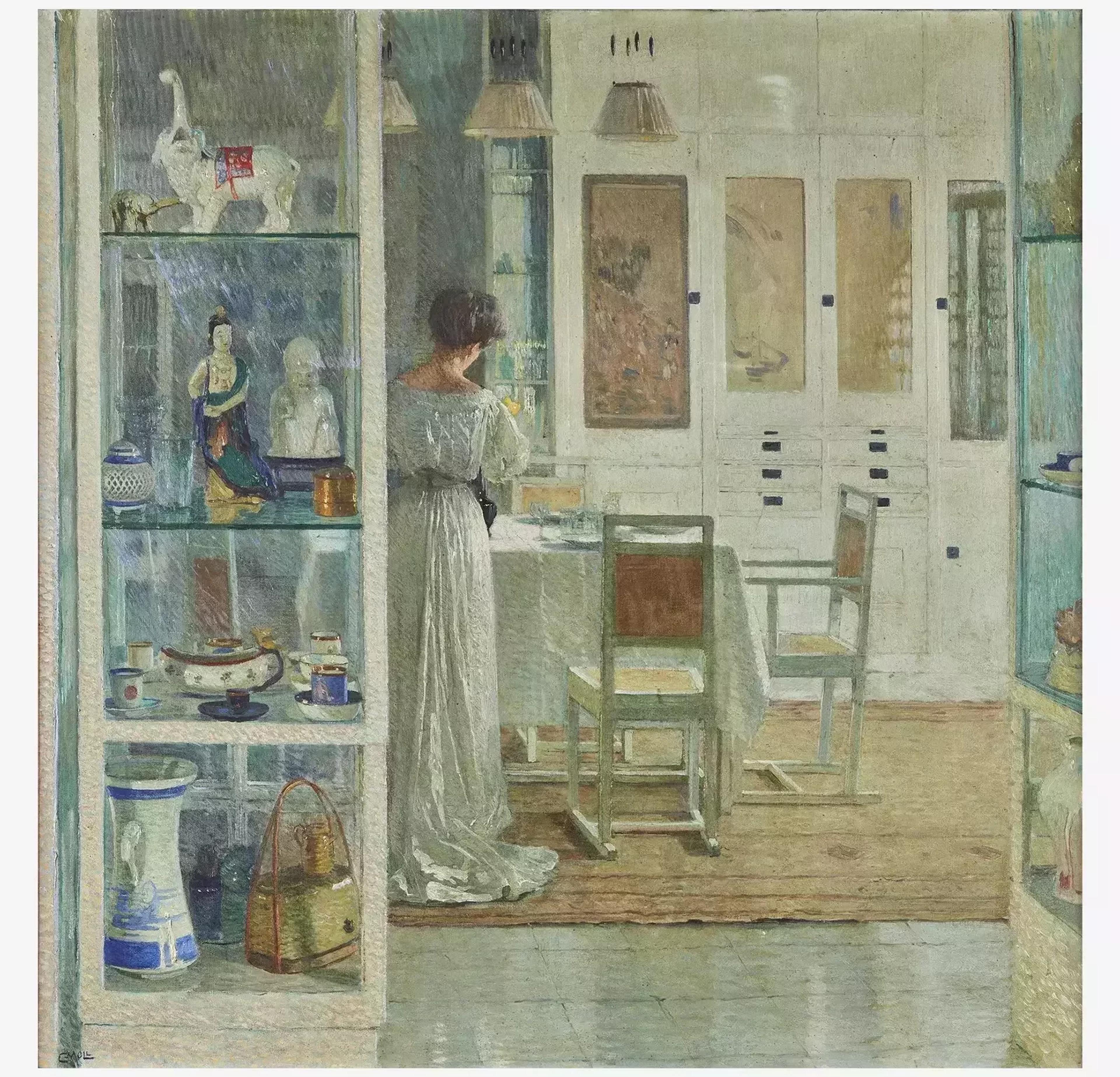
Carl Moll's Weißes Interieur Breaks Records A major work by Viennese artist Carl Moll resurfaced in 2021 after being unseen for over a hundred years. In February of 2021, Freeman’s set a new house record when Carl Moll’s Weißes Interieur (White Interior) sold for $4.75 million—over eight times the pre-sale high estimate. This sale shattered the previous world auction record of $385,653 for a Moll piece. Beforehand, the Freeman’s house record had stood at $3.1 million, set by the 2011 sale of an important Imperial white jade seal from the Qianlong period. Carl Moll was one of the cofounders of the Vienna Secession movement, a progressive group that pushed against the conservatism of the day. Mostly known for his landscapes, Moll is also revered for his serene and elegant interior scenes. Inspired by Johannes Vermeer, Weißes Interieur is a canvas marked by a sense of domestic tranquility, via its careful balance of color and diffuse light. Executed in 1905, the work depicts a solitary female figure in the center of a highly decorated living room: Berta Zuckerkandl (née Szeps)—an important art critic and one of the most influential Jewish figures in Vienna at the turn of the twentieth century. She was a fervent supporter of modern Austrian art, which she defended in the many articles she wrote as a journalist—as well as in her Salon, where she hosted many celebrities of the time, such as fellow Secessionist Gustav Klimt and Stefan Zweig. The living room in which Zuckerkandl is depicted is the one from her very first apartment in an affluent neighborhood of Vienna. It was decorated by Vienna's then–leading architect and designer, Josef Hoffmann, and was considered by many the epitome of modern design. This is exemplified by the symphony of sleek, straight, and pure lines, and shapes visible in the canvas. In the living room, Zuckerkandl and her husband housed an important collection of East Asian art, an “exotic” taste shared by many collectors and artists of the time. In early 1905, Weißes Interieur was exhibited in Berlin, and again at the Folkwang Museum in Essen in 1906. Its last public appearance—before its sale at Freeman’s—was at Vienna’s celebrated Kunstschau in 1908, where it was featured alongside Klimt’s iconic The Kiss. After this exhibition, the work remained within the same family, who moved from Germany to the United States in the mid-1970s. To mark its reappearance on the market, the painting was offered at a pre-sale estimate of $300,000–500,000—one of the highest figures ever attached to a work by Moll at auction.
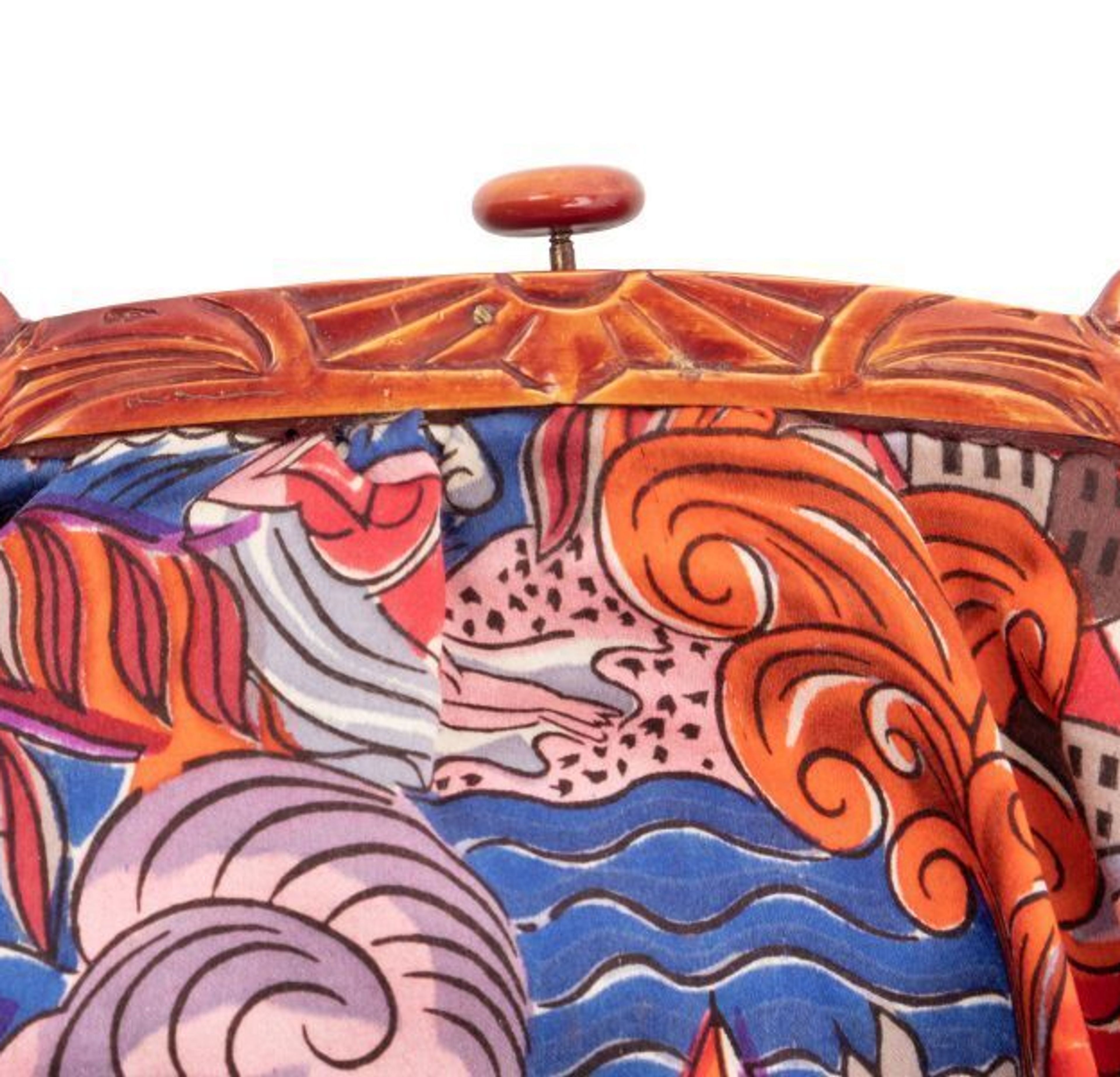
Born in Le Havre, France in 1877, Raoul Dufy made his career imbuing his Fauvist tendencies into painting, textiles, and decorative arts. His artistic practice was characterized by sanguine colors and graphic patterns, inspired by and developed through a series of relationships with influential makers of the twentieth century. It was a 1905 encounter with Henri Matisse’s Luxe, Calme et Volupté that sparked Dufy’s experimentations in color and line, which gave to his work a dreamlike quality for which he became known. Initially reproached by his contemporaries, Dufy’s work was dismissed as merely decorative and apolitical. However, it was precisely this joyful insouciance and mastery of diverse media that enabled his success in the decorative arts. Dufy’s colorful, immersive painting style translated well into printmaking, and earned him ongoing commissions by Paul Poiret beginning in 1910. The couturier believed in the unity of art and fashion, and became a patron and collaborator of Dufy’s, a relationship which would have a profound impact on the artist. Together they would open La petite usine, a woodblock printing factory in Paris where Dufy began some of his most formative explorations in textile design. He soon entered into a contract with textile manufacturer Bianchini-Férier in 1912, and continued to work with the firm for two decades. Through these collaborations, he developed his technical skills in woodblock printing and textile dyeing, and came to appreciate the possibilities of textiles. Thanks to Poiret and Bianchini-Férier, Dufy said, he found a practical application for his “axiom” of light and color, and that on silk, they could achieve melodic harmony.[1] Lot 35, Raoul Dufy “Deauville” Silk Fabric Bag, 1925 Lot 35 in Hindman’s Luxe Holiday sale features a handbag of printed silk by Dufy for Bianchini-Férier. Dated 1925, it depicts an abstracted scene of Deauville, a cosmopolitan resort town on the Norman coast. In vivid blues, orange and red, figures participate in maritime activities, surrounded by waves, quaint buildings, and sea creatures. The flattened plane abstracts the scene and gives it a fantastical air. Its clasp, likely bakelite, is decorated with Egyptianesque imagery, including symmetrical falcon-like creatures, perhaps representing Horus. The bag’s allusion to ancient Egypt was fashionable at this moment: created just two years after the discovery of Tutankhamun’s tomb, there was an appetite in popular culture for Egyptian antiquity. Lot 35, Raoul Dufy “Deauville” Silk Fabric Bag, 1925 Dufy designed this textile while travelling frequently around the Mediterranean, a joyful period amid the world’s unsettled conditions. Following the destruction of World War I, his work brought a welcome levity to visual culture. He rejected the rigidities of Art Deco and enlivened his work through vivid color and exotic locales. In this bag, the allure of escapism and vivid color are joined with the solidity of antiquity in playful juxtaposition. The reasons for which Dufy was criticized were precisely his strength, resulting in a decorative vision perfectly suited to fashion. Over the following decades, Dufy would earn his appreciation; his work was later described in Vogue, “celebrating freedom, caprice, love, joy, Dufy flatters our capacity to savor the sweet life — a flattery somewhat resistible in painting, perhaps; but stitch it into silk and ‘goodbye, melancholy.’”[2] [1] Dufy, Raoul, La Passion des Tissus (Paris: Klincksieck, 1993) [2] Schjeldahl, Peter, “The Illicit Joy of Dufy,” Vogue (New York, Nov. 1984), p. 454-457.
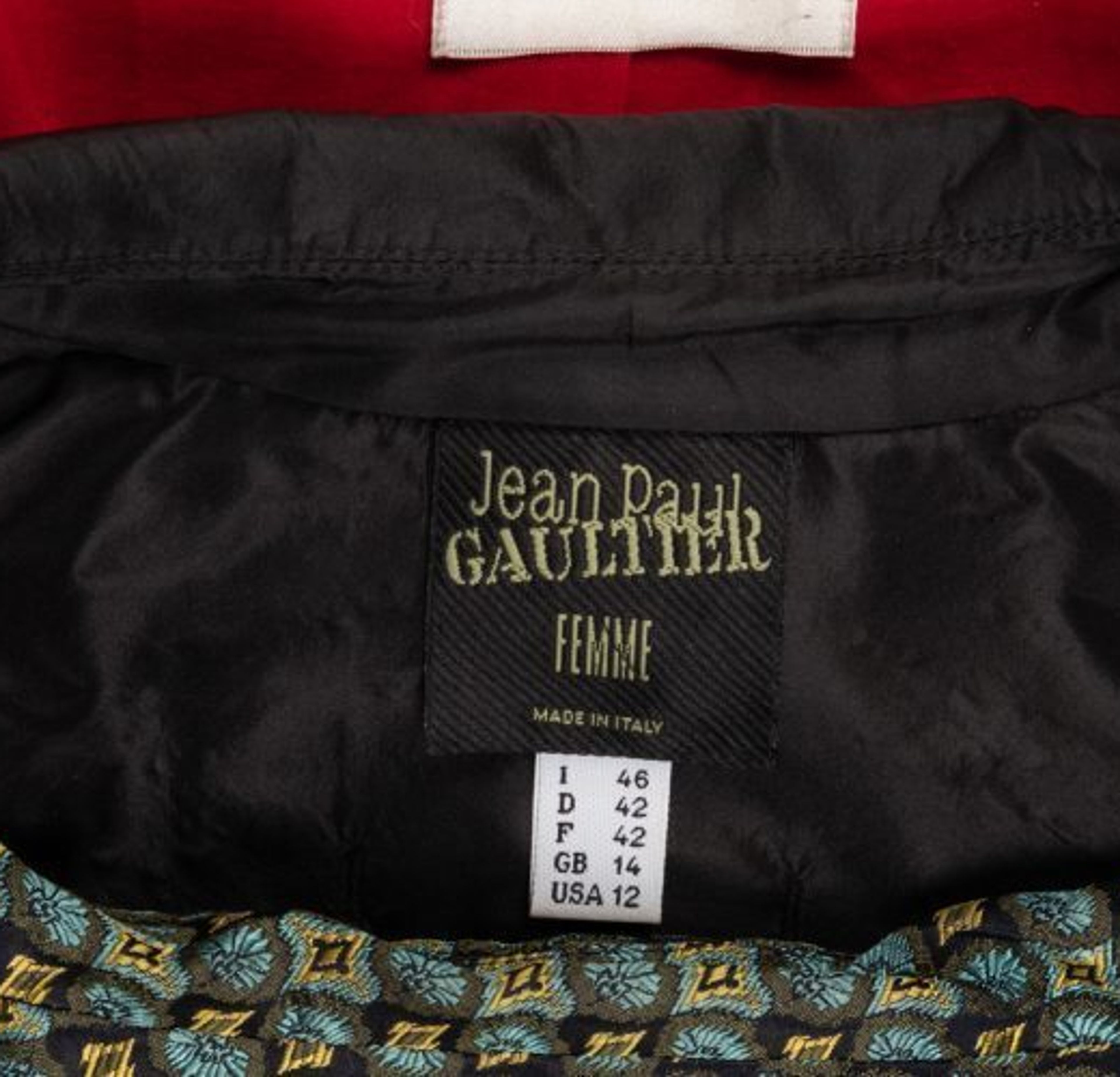
Lauded as “the first to blow a raspberry at the Paris fashion establishment,” Jean Paul Gaultier’s experimentations in couture have provoked shock, delight, and, at times, horror in the minds of his audiences.[1] Iconoclast and provocateur, Gaultier earned his reputation when he entered the mainstream in the early 1980s. His collections during this decade were among his boldest, mining the history of fashion and contemporary dress codes to challenge long standing social mores. He debuted designs that have since become mainstays of his oeuvre, introducing cone-shaped bras, skirts and corsets for men, and underwear-as-outerwear, setting the stage for a forty-year career in which he has playfully defied and rewritten the rules of Parisian couture. Lot 167, Collection of Three Designer Jackets and Coats, 1998-2006 Gaultier’s enduring interest in the corset began during his youth when he would spend time with his grandmother, learning about the lacing and reshaping of the feminine form. For him, the corset evoked “something extraordinary, fascinating and mysterious.”[2] This early exposure influenced his later reintroduction of elements of corsetry to his runway fashion. Though it had fallen out of favor in the late 1960s during the women’s liberation movement, Gaultier was interested in the corset’s potential to represent strength and empowerment. Lot 167 includes a 1998 Jean Paul Gaultier women’s jacket featuring seam detailing on the exterior to resemble boning. The silhouette makes reference to Christian Dior’s New Look debuted in 1947, but in its exposure of the “boning,” becomes skeletal and powerful.Gaultier’s use of such visual elements helped to change the associations of corsetry in popular culture, a transformation that, thanks to his collaboration with Madonna from 1990 onward, took place on the world stage. Lot 167, Collection of Three Designer Jackets and Coats, 1998-2006 Lot 177 features a men’s jacket from Gaultier’s spring/summer 1989 collection, with cutouts at the waist forming a corset, and lacing up the back. As the corset enabled Gaultier to explore femininity, so too does he use it to challenge masculinity. “He has played a crucial role in the redefinition of ‘woman’—and also ‘man’—in fashion,” writes fashion historian and curator Valerie Steele. “His is a very constructed approach. In it, the beauty ideal is denaturalized and can be seen to be artificial, a construction of masculinity and femininity, coolness or youth, but Gaultier shows the seams to indicate how it has been done.”[3] These jackets reveal the structure of the corsets so central to Gaultier’s work, and in doing so, introduce something playful to what fashion holds most elemental. Lot 177, Three Jean Paul Gaultier Pieces; Two Jackets, One Vest, 1990s Hindman is pleased to offer these garments, among others, by Jean Paul Gaultier in the Luxe Holiday: A Collectors’ Collection auction on December 11th. [1] This, and title, from “Jean Paul Gaultier: Enfant terrible of haute couture” in The Observer, 17 Oct. 1993 [2] Florence Müller, ‘Gaul’tier by Jean Paul’ in The Fashion World of Jean Paul Gaultier: From The Sidewalk to the Catwalk, ed. Thierry-Maxime Loriot (Montreal, 2011)p. 27 [3] Valerie Steele in The Fashion World, p. 153.
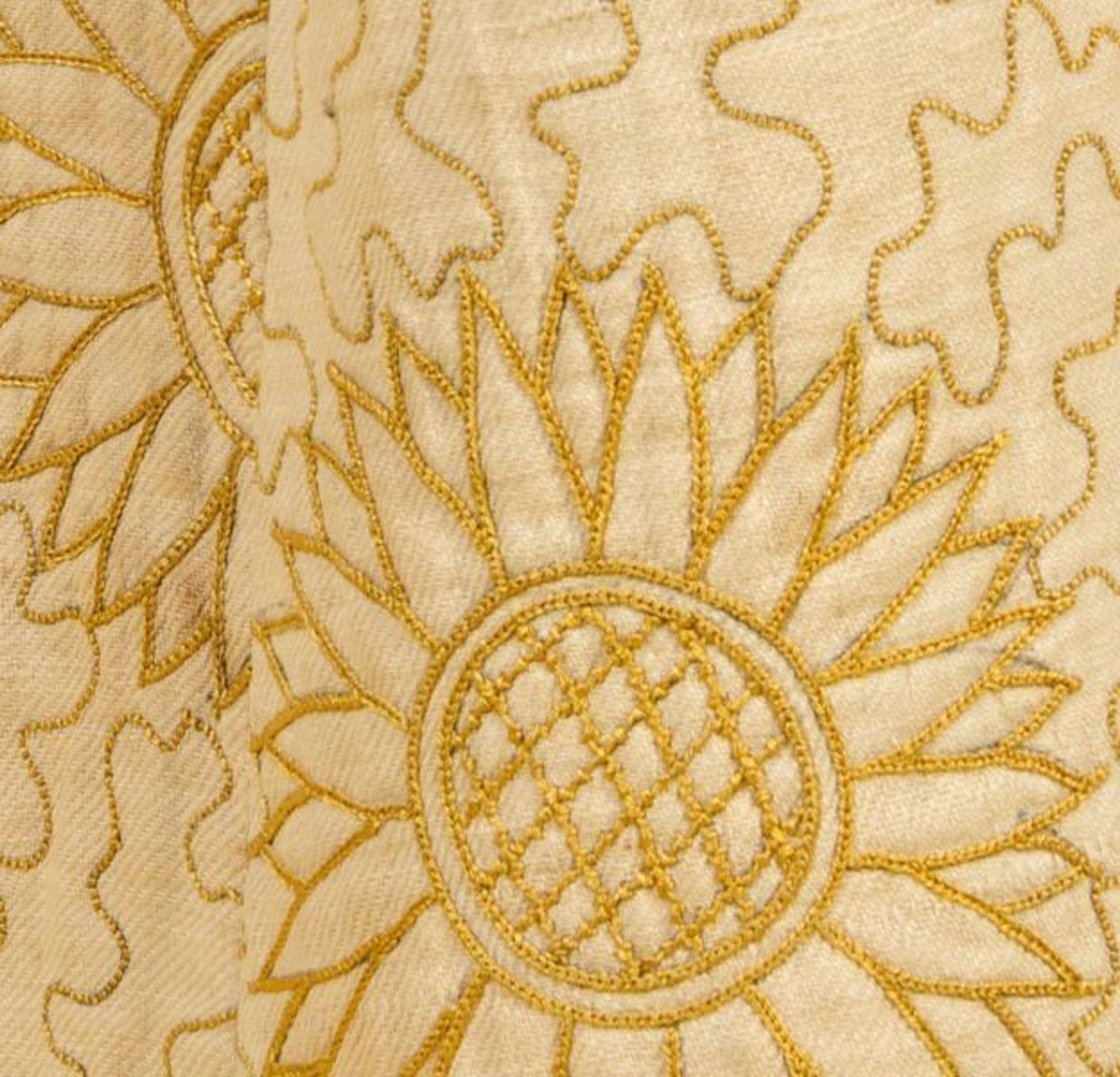
Against modernity and beholden to it, the Aesthetic movement of the late 19th century rebelled against the machine age and the “ugliness” of contemporary Victorian life. The movement privileged art for art’s sake, seeking to beautify all things, and plundered history for inspiration. Preeminent aesthete Oscar Wilde is known to have said, “What is beautiful looks always new and always delightful, and can no more become old-fashioned than a flower can.”[1] Indeed, his pronouncements on fashions and design influenced clothing trends throughout Europe and the United States. Lot 89, from the Mary D. Doering Archive, is an exquisite example of Aesthetic sensibilities in fashionable women’s dress. Embroidered with stylized yellow sunflowers and vines on white cotton twill, this wrapper (c. 1880) would likely have been worn informally as a housecoat or tea gown. It features a Watteau-pleat back which is held in place by a golden-yellow belt. This style was appropriated from the sacque dresses of the previous century, illustrated in the works of Watteau. Though this garment may have been worn with a corset, Watteau pleats were favored by Aesthetes for their ability to give a more naturalistic curve to the body. Corsets became a contested theme during this period: dominant Victorian silhouettes were shaped and molded, while aesthetes preferred styles inspired by Greco-Roman antiquity. To this, critics said, “had Venus herself been compelled by a cold climate to drape herself, we have little doubt she would have worn stays, to give her clothes the shape they lacked.”[2] The gentle slope of the Watteau back and delicate floral embroidery create a soft beauty in contrast to the more severe Victorian style. The origin of the Aesthetes’ appropriation of the sunflower is unknown, though the motif eventually became “the floral emblem of an aesthetic sensibility.”[3] Its resplendent shade was one that had been reviled as a signifier of shame or decay: in the West, yellow had long been the victim of chromatic denigration, from its association with opium dens in the Far East, Dickensian descriptions of sallow flesh, and sexual impropriety. For this very reason, it became central to Aesthetic style, for the movement embraced that which was subversive to dominant English culture. “The very act of declaring a color as unacceptable, antisocial, and unsuitable makes it irresistible to those who consider themselves outside of conventional society, and oblivious to orthodoxy’s strictures,” writes Jonathan Faiers. “Yellow’s popular perception as the color of shame, perversity, and an artistic sensibility so refined as to be ‘unhealthy,’ meant that toward the close of the nineteenth century the color entered into an epistemic contract (as did the color green) with what would latterly become known as the Aesthetic Movement, simultaneously linked to and identifying yellow as a color beyond the pale.”[4] Green and yellow became so linked to the Aesthetic sensibility that upon the opening of the Grosvenor Gallery, known as the movement’s “home,” it was mocked with the line, “Greenery, yallery Grosvenor Gallery.” In centuries prior, however, these shades had been associated with “Venus, felicity, and pleasure,” and so the sunflower’s vibrant hue made it a fitting symbol for the Aesthetes’ decadence.[5] It, along with the lily, was a favorite of Wilde’s: “It is because these two lovely flowers are in England the two most perfect models of design, the most naturally adapted for decorative art—the gaudy leonine beauty of the one and the precious loveliness of the other giving to the artist the most entire and perfect joy.”[6] His assertion of its simple beauty and perfection by design point to the sunflower’s popularity in textiles and interior decoration. Aesthetic philosophy dictated that the home, and all contained within it, should be designed completely and exquisitely. Wilde’s 1882 “House Beautiful” lecture given in Chicago proposed that dress and interior space should be harmonious. Women, as domestic creatures, were advised to dress to match their homes. A critic of contemporary fashion, Mrs. Eliza Haweis wrote in 1878 that, “A great change has come over the style of English dressing within the last, say, five years. The world of artists first started the idea of their wives and daughters dressing in harmony with [their] surroundings, and thence the grandes dames of fashion were influenced.”[7] Elements of aesthetic and artistic dress continued to enter the mainstream over the next decade, and this holistic approach to fashion and design was particularly attractive to wealthy American women. They listened attentively to Wilde’s lectures, and eagerly implemented these philosophies to display their husbands’ prosperity through the making of a beautiful home. In this dress, the embroidered chain stitches create the ground of an intentionally anti-modern silhouette. A woman, wearing this garment to receive her guests for tea, would have fit the Aesthetic ideal, achieving harmony between dress and interior space. These yellow sunflowers in their chromatic decadence embody Wilde’s maxim that “beautiful surroundings” should not be “marred” by “gloomy dress.”[8] Hindman is thrilled to present lot 89 among three centuries of historical dress from the Mary D. Doering Archive in Luxe Holiday: A Collectors’ Collection on December 11th [1] Wilde, Oscar, “The Philosophy of Dress,” New-York Tribune, 19 April 1885. [2] Douglas, J., The Gentlewoman’s Book of Dress (London: Henry and Company, 1895) p. 123-124. [3] Faiers, Jonathan, “Yellow is the New Red, Or Clothing the Recession and How the Shade of Shame Became Chic,” in Colors in Fashion, eds. Jonathan Faiers and Mary Westerman Bulgarella (London: Bloomsbury Academic, 2018) p. 95-106. [4] Ibid. [5] McNeil, Peter. “Fashion, Dress, and Interior Spaces,” in Berg Encyclopedia of World Dress and Fashion: Global Perspectives, eds. Joanne B. Eicher and Phyllis G. Tortora (Oxford: Berg, 2010) p. 218–225. [6] Oscar Wilde quoted in Ransome, Arthur, Oscar Wilde, A Critical Study (London: Methuen & Co., 1923) p. 69. [7] The Queen (24 August 1878) p. 139-140, cited in Cullen, Oriole. “Aesthetic Dress.” The Berg Companion to Fashion, ed. Valerie Steele (Oxford: Bloomsbury Academic, 2010). [8] O’Brien, K. H. F., “‘The House Beautiful’: A reconstruction of Oscar Wilde’s American Lecture,” Victorian Studies 17, no. 4 (1974), p. 414.
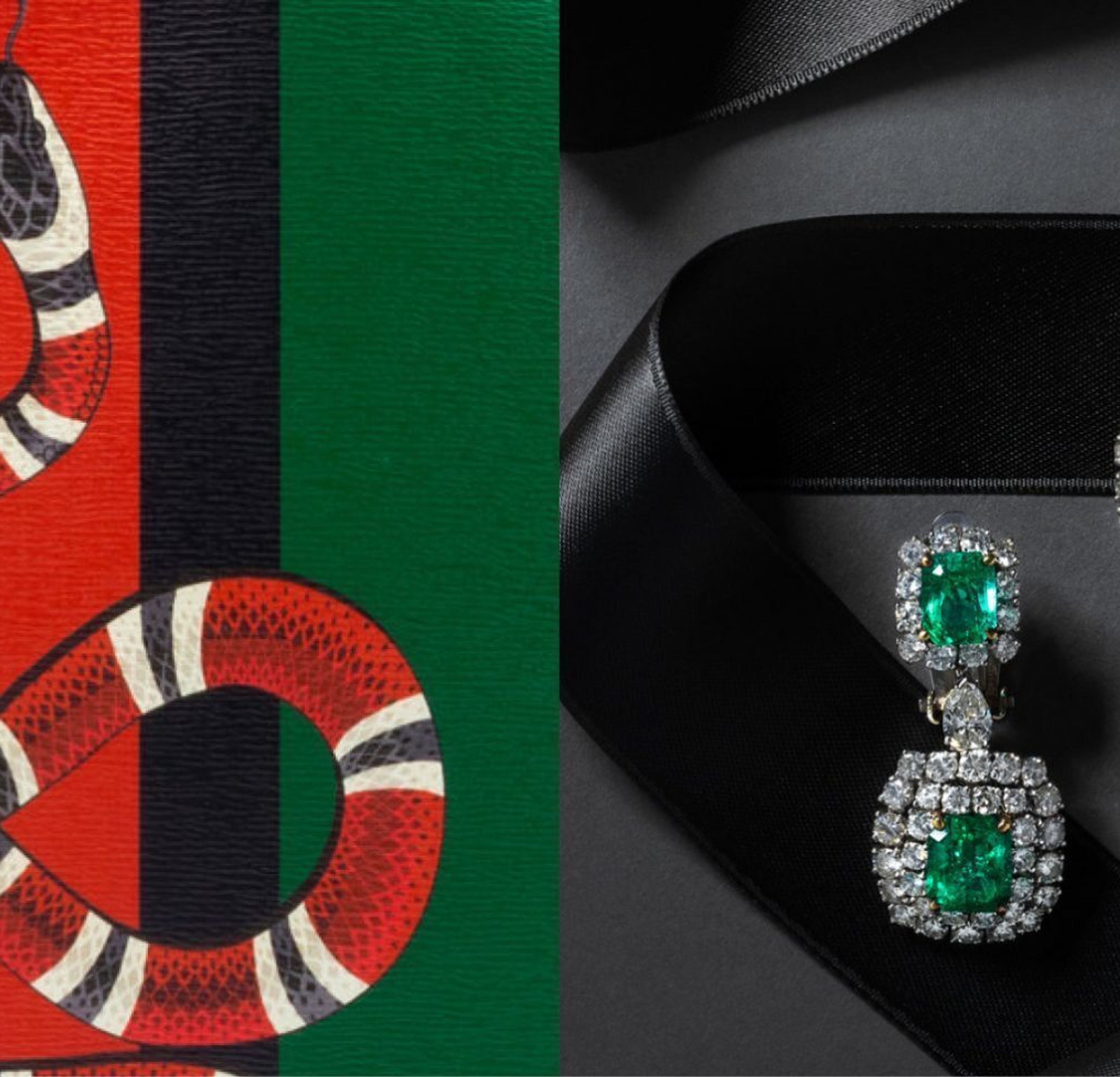
Please join us for a virtual preview of our upcoming December auctions: Luxe Holiday: A Collectors’ Collection Fine & Important Jewelry Join Senior Specialists Timothy Long, Couture & Luxury Accessories, Sally Klarr, Jewelry & Timepieces, and Katie Guilbault, Jewelry & Timepieces as they discuss the current market for luxury goods and preview highlights from the upcoming December auctions. Friday, December 4 12pm – 1pm | Zoom Please RSVP to Arrington Caison arringtoncaison@hindmanauctions.com | 312.447.3282 A Zoom link will be sent to you upon registration
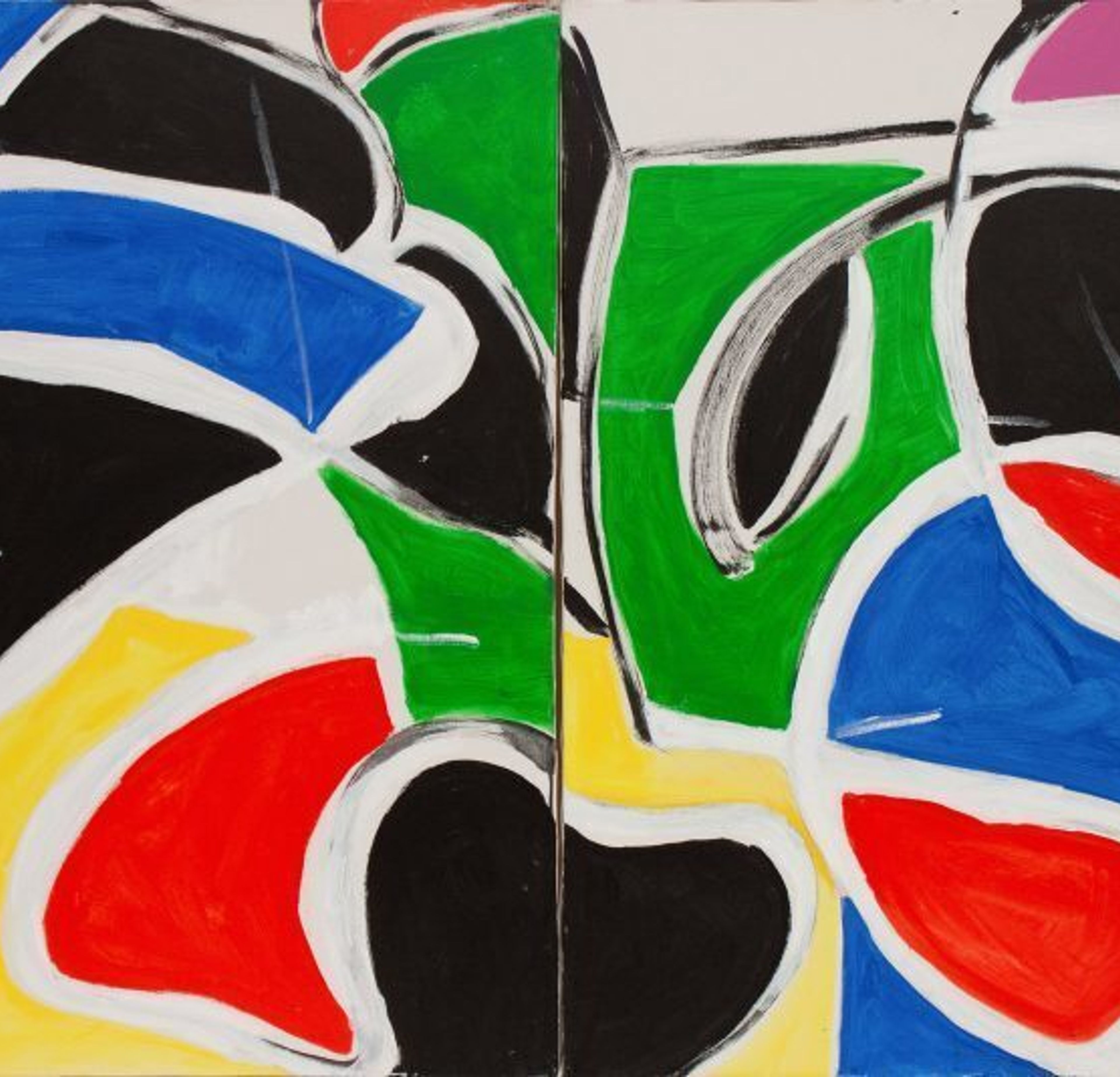
If Beatrice Mandelman (1912-1998) had remained in New York City, she would long since have joined the art historical canon alongside Lee Krasner, Helen Frankenthaler, Joan Mitchell and other famous female New York School painters, not to mention their male contemporaries. This would likely also be true for Bea’s husband, fellow artist Louis Ribak (1902-1979.) Mandelman was born across the Hudson in New Jersey, and was an active participant in the city’s bubbling modernist ferment. She studied in Paris with Fernand Léger, hung out with Willem de Kooning and Arshile Gorky, and she even vacationed with Jackson Pollock. But in 1944, just as the New York scene was emerging into international consciousness, making household names of many of their friends and essentially giving birth to the artworld as we now know it, Mandelman and Ribak decamped to New Mexico, where they became seminal members of the intense, vibrant milieu known as the Taos art colony. Lot 178 Beatrice Mandelman (American, 1912-1998) Jazz II- Spring (1725) , acrylic on canvas Rough, ready, and remote, Taos had been discovered a few decades earlier by a handful of artists from Chicago, New York, and Europe who utilized their classical academic training to heroically depict “cowboys and Indians” for a national, populist audience. The Taos Society painters didn’t necessarily let cultural or historical accuracy stand in the way of a good picture, and few of them had much sympathy for the modernist revolution that had already utterly transformed art in Berlin, Vienna, and Paris. But they nevertheless paved the way for subsequent waves of artists who not only employed the new modern aesthetics, but also included women – like Georgia O’Keeffe, and later, Bea Mandelman. By 1947, she and Ribak founded the influential Taos Valley Art School, which not only became a hub for the modern art community there, but drew avant-garde artists from both coasts. When the school was forced to close after funding dried up in 1953, the couple briefly moved back to New York, and while they continued to travel extensively throughout their lives, Mandelman mostly lived in and took inspiration from the majestic, high-altitude light and space of her adopted Taos homeland, working there steadily and exuberantly until her death from cancer in 1998. Like fellow émigrés O’Keeffe and her good friend Agnes Martin, Bea realized herself in this region, becoming a quintessentially New Mexican artist. It’s high time that more people outside of that state were familiar with her work. Lot 177 Beatrice Mandelman (American, 1912-1998) 50-Col-2-20/Sunshine, gouache and collage on paper Her impressive artistic development and prolific output tracks the trajectory of many of her contemporaries. Fundamental classical training evolved by incorporating the roiling stylistic and technical innovations that poured forth first from Europe, then took flight stateside. In earlier examples, you can see her pictures go from Ashcan School to Social Realist to Expressionist to Post-Cubist, then settle steadily into the so-called Abstract Expressionism that most aptly encompasses her mature style. However, even then strains of Color Field Painting, New Mexican Transcendentalism, Minimalism, Hard Edge, Op and even Pop Art can be discerned. She clearly kept tabs on what was going on around her, while defiantly going her own way. Thankfully, Bea had little use for conceptual Post-Modernism, and her mature work is distinguished by a confident ebullience and bold, musical lyricism that are all her own. Mandelman remained a dedicated high modernist, holding fast to rigorous non-objective formalism, ambitiously exploring its endless possibilities for decades. While any artwork necessitates facility or at least an awareness of both, painters can often be loosely classified as colorists (emphasizing hue and chroma, á la Mark Rothko) or structuralists (composition the primary concern, like Franz Kline.) Lot 179 Beatrice Mandelman (American, 1912-1998) Sun Series B-21, acrylic on canvas Bea is harder to pigeonhole. Her concerns appear to drift steadily back and forth between these polar emphases, and her hundreds of documented paintings, prints, and collages reveal a restless freedom to pursue whatever impulse drifted through her studio window, down from the perpetually breathtaking Sangre de Christo peaks that loom over Taos. Yet the work, often produced in tight series, still always demonstrates a quality of focused investigation. She paid for this kind of liberty by remaining lesser known and physically isolated from major urban art centers, taking advantage of the literal and metaphoric distances to elude certain inevitable pressures to conform to expectations – of peers, or the market. Mandelman was a modern artist to the bone, independent and committed to art for its own sake.
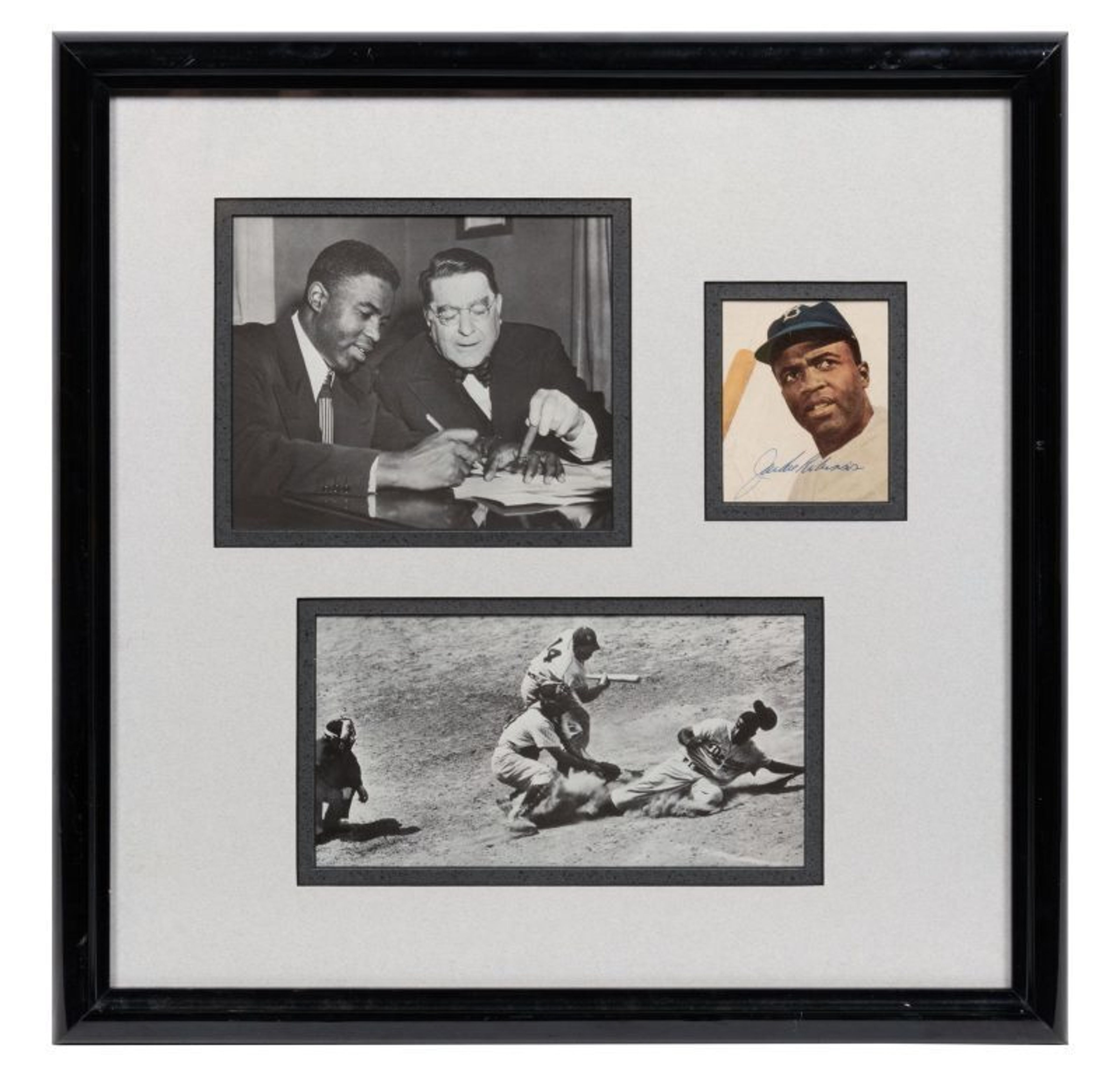
They were two trailblazers who broke barriers, while also changing the hearts and minds of America: Jackie Robinson and Muhammad Ali. Robinson broke baseball’s color line on April 15, 1947 – making his Major League debut with the Brooklyn Dodgers. Robinson’s contract with the Dodgers marked the end of professional baseball’s racial segregation that kept Black players isolated in the Negro Leagues since the 1880s. He was inducted into the Baseball Hall of Fame in 1962. Robinson also transformed American life outside of baseball. He influenced the civil rights movement with his character and philosophy of nonviolence, and also became a leader in business. Robinson was the first Black television analyst in MLB, the first Black vice president of a major American corporation, and he helped establish the African-American-owned Freedom National Bank in Harlem, New York. After his death in 1972, Robinson was posthumously awarded the Congressional Gold Medal and Presidential Medal of Freedom in recognition of his achievements. Born Cassius Marcellus Clay, Jr., Ali won a gold medal at 18 in the 1960 Rome Summer Olympics. Four years later, and against all odds, Ali captured the world heavyweight championship from Sonny Liston in what is still considered one of boxing’s greatest upsets. But 1966 was the year that changed his life, career – and our national history – forever, when he refused to be inducted into the military for the Vietnam War on religious and social grounds. At the peak of his career, he was convicted of draft evasion, faced five years in prison and was stripped of his boxing titles. He appealed the decision to the Supreme Court, which overturned his conviction in 1971. Until his death in 2016, Ali championed humanitarian causes across the globe and, like Robinson, earned the Presidential Medal of Freedom in 2005. Hindman is proud to offer two pieces that capture the spirit of these Civil Rights pioneers: A 2001 portrait of Muhammad Ali, “Athlete of the Century,” by LeRoy Neiman and a Jackie Robinson signed display. The Neiman is a limited-edition Artist’s Proof Serigraph that includes Remarques and Autographs of Both, is signed by Ali and Neiman and numbered AP 34/150. The Robinson display features a framed collage featuring a color photo inscribed (“Jackie Robinson”) in blue ink and comes with a Full Beckett Authentication Services Letter of Authenticity. These lots will be offered in the October 20, 2020 Sports Memorabilia Auction Lot 32 A 2001 Muhammad Ali “Athlete of the Century” LeRoy Neiman Artist’s Proof Serigraph with Remarques and Autographs of Both, limited edition, signed by Ali and Neiman and numbered AP 34/150. Property from the Collection of Larry Kieft, Elmhurst, Illinois $2,000 – $4,000 Lot 82 A Jackie Robinson Signed Display (Beckett LOA), framed collage featuring color photo inscribed (“Jackie Robinson”) in blue ink. Full Beckett Letter of Authenticity. 2 1/2 x 3 inches. $800 – $1,000
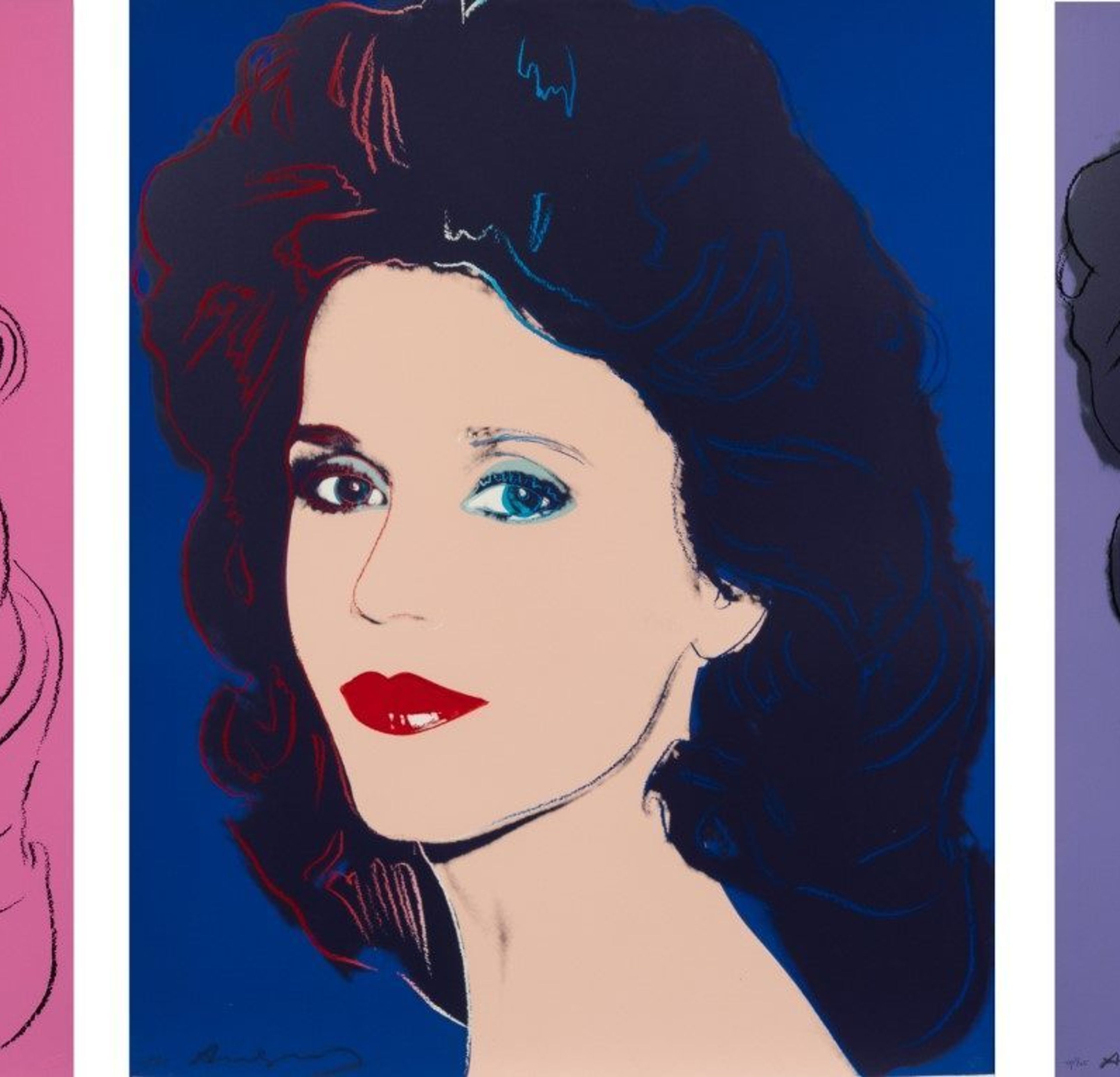
I’ve never met a person I couldn’t call a beauty. -Andy Warhol Fame, celebrity, politics, and repetition — themes synonymous with the artwork of Andy Warhol. Nowhere can this be seen more clearly than in his celebrity portraits. The artist began painting commissioned portraits in the early 1960’s and continued throughout his career creating a steady and constant stream of income which helped fuel his varied artistic endeavors. His portrait commissions would begin by taking polaroid photographs of the sitter which were then enlarged and silkscreened onto canvas or museum board. Jane Fonda’s portrait, presented here, was published to raise funds for her then husband Tom Hayden’s political campaign. He was creating an edition of 100, so Warhol knew that he needed to create an editioned image, however before choosing what exact color combination to use in the edition, he experimented with different colors, added drawn lines, or inserted color blocks. These unique experimental combinations he called Trial Proofs which he numbered and released in conjunction with the regular edition. The Trial Proof is an important concept in Warhol’s output as it firmly establishes the fact that later in Warhol’s career, he did not consider print making a machine-like process of reproducing images, but rather a dynamic means to creation. ‘Warhol was able to subvert the concept of the print as an identical unit. He used prints as other artists might use drawing – as a way to visualize ideas – and printmaking became a mechanical extension of his hand.’ (Donna de Salvo, God is in the Details: The Prints of Andy Warhol, in Feldman & Schellmann, 2003 pg. 19) The present lot consists of three of the 25 unique trial proofs that Warhol released for this image. Arranged as a triptych with connecting frames, this combination embodies the spirit of the most recognizable themes of Warhol’s career: fame, celebrity, politics, and repetition. This gridded style of portraiture is signature Warhol and imbues the sitter with his unmistakable commentary on fame itself. Andy Warhol (American, 1928-1987) Jane Fonda, 1982 three unique screenprints on Lenox Museum Board signed and numbered TP 10/25, TP 1/25 and TP 14/25 in pencil, respectively 39 3/4 x 31 3/4 inches (each). Provenance: Dorothy Blau Gallery, Inc., Bay Harbour Islands, Florida Literature:Feldman & Schellmann IIB.268 Provenance: Dorothy Blau Gallery, Inc., Bay Harbour Islands, Florida Literature:Feldman & Schellmann IIB.268

At the height of World War II transcendent folk troubadour Woody Guthrie emblazoned his trusty guitar with the heroic battle cry “This Machine Kills Fascists”, an explosive statement of the strength of the voice against violent oppression. This artful verbal salvo against authoritarianism, a most urgent update of Edward Bulwer-Lytton’s 19th century dichotomous dictum, comparing the efficacy of advocacy implements, composed communication more powerful still than steel when words sung load and not just penned. Channeling the timeless relevance of her predecessors in protest in her Truisms series, Jenny Holzer (American, b. 1950) automatizes this enduring proclamation, an extended magazine of explosive verse, rapidly reporting truth to treacherous power. Holzer first started playing with the words of Truisms while an independent philosophy and literature student in the radical late 70s New York City of CBGBs and Bronx park jams. Holzer shrewdly subverted contemporary cliché language creating a compilation of her own provocative maxims, resting in the Venn Diagram overlap of news flash, social commentary, self-help affirmation, one-liner punchline and manifesto thesis, skewering the constructs of over consumption culture. The concept was initially realized consciously as commercial printed alphabetized, type set arrangements of Holzer’s concocted adages, publicly peppering the pages through the city as confrontational broadsheets for widespread absorption. Unlike many of her text based artistic contemporaries who juxtaposed imagery with words, Holzer embraced pure symbology seeing the phrases themselves as composition enough. The delivery system was the variable, the content, the constant, to expand the bandwidth of the message reception ranging from the intimacy of a cookie’s fortune revealed to a global ad campaign’s call to action. Arguably Truisms conceptionally culminated with the 1982 installation of an electronic billboard version of the slogans set in Time Square, the glowing signifier of mass media commerce, stocker ticker scrolling a disruptive digital display of ideas as a currency of influence to the apex of audience. Untitled (from Truisms Series), 1985, is something of the play at home version of the stadium scale game show grandeur of the epic Time Square take over. A plastic housed LED console with yellow lit diodes, measuring 5 1/2 x 30 1/2 x 4 inches, transmitting 947 word segment of the original anthology of algorisms. Sequenced in a 20 odd minute loop with strategically static digestible pauses, reading individually as prescient alerts, collectively as a challenging poetic sermon, championing individuality and constructive change. By utilizing an established format for the mass presentation of information saturation to examine the medium of media, the poppy field is not the subjugator’s dreamy trap, but the following vivid anti-establishment stare behind the wizard’s curtain: CHANGE IS VALUABLE BECAUSE IT LETS THE OPRESSED BE TYRANTS CHASING THE NEW CHASING THE NEW CHASING THE NEW IS DANGEROUS TO SOCIETY CHILDREN ARE THE CRUELEST OF ALL CHILDREN ARE THE HOPE OF THE FUTURE CLASS ACTION IS A NICE IDEA WITH NO SUBSTANCE CLASS STRUCTURE IS AS ARTIFICAL AS P-L-A-S-T-I-C CONFUSING YOURSELF IS A WAY TO STAY HONEST CRIME AGAINST PROPERTY IS RELATIVELY UNIMPORTANT DECADENCE CAN BE AN END IN ITSELF DECCENCY IS A RELATIVE THING DEPENDENCE-CAN-BE-A-MEAL-TICKET DESCRIPTION IS MORE VALUABLE THAN METAPHOR DEVIANTS ARE SACRIFICED TO INCREASE GROUP SOLIDARITY DISGUST IS THE APPROPRIATE RESPONSE TO MOST SITUATIONS DISORGANIZATION IS A KIND OF ANTHESIA DON’T PLACE TOO MUCH TRUST IN EXPERTS DON’T RUN PEOPLES LIVES FOR THEM DRAMA OFTEN OBSCURES THE REAL ISSUES DREAMING WHILE AWAKE IS A FRIGHTENING CONTRADICTION DYING AND COMING BACK GIVES CONSIDERABLE PERSPECTIVE DYING SHOULD BE AS EASY AS FALLING OFF A LOG EATING TOO MUCH IS CRIMINAL ELABORATION IS A FORM OF POLLUTION EMOTIONAL RESPONSES ARE AS VALUABLE AS INTELLECTUAL RESPONSES ENJOY YOURSELF BECAUSE YOU CAN’T CHANGE ANYTHING ANYWAY ENSURE THAT YOUR LIFE STAYS IN FLUX EVEN YOUR FAMILY CAN BETRAY YOU EVERY ACHIEVEMENT REQUIRES A SACRIFICE EVERYONE’S WORK IS EQUALLY IMPORTANT EVERYTHING THAT’S INTERESTING IS NEW EXCEPTIONAL PEOPLE DESERVE SPECIAL CONCESSIONS EXPIRING FOR LOVE IS BEAUTIFUL BUT STUPID EXPRESSING ANGER IS NECCESARY EXTREME BEHAVIOR HAS ITS BASIS IN PATHOLOGICAL PSYCHOLOGY EXTREME SELF-CONCIOUSNESS LEADS TO PERVERSION FAITHFULNESS IS A SOCIAL NOT BIOLOGICAL LAW FAKE OR REAL INDIFFERENCE IS A POWERFUL PERSONAL WEAPON FATHERS OFTEN USE TOO MUCH FORCE FEAR IS THE GREATEST INCAPACITATOR FREEDOM IS A LUXURY NOT A NECCISITY GO ALL OUT IN ROMANCE AND LET THE CHIPS WHENEVER GOOD DEEDS ARE EVENTUALLY REWARDED GOVERNMENT IS A BURDEN ON THE PEOPLE GRASS ROOTS AGITATION IS THE ONLY HOPE GUILT AND SELF-LACERATION ARE INDULGENCES HABITUAL CONTEMPT DOESN’T REFLECT A FINE SENSIBILITY HIDING YOUR MOTIVES IS DESPICABLE HOLDING BACK PROTECTS YOUR VITAL ENERGIES HUMANISM IS OBSOLETE HUMOR IS A RELEASE IDEALS ARE REPLACED BY CONVENTIONAL GOALS AT A CERTAIN AGE IF YOU ARE TRUSTING YOU ARE CONFIDENT IN YOURSELF IF YOU AREN’T POLITCAL YOUR PERSONAL LIFE SHOULD BE EXEMPLRY IF YOU CAN’T LEACE YOUR MARK GIVE UP IF YOU HAVE MANY DESIRES YOUR LIFE WILL BE INTERESTING IF YOU LIVE SIMPLY YOU HAVE NOTHING TO WORRY ABOUT IF YOU LIVE SIMPLY YOU HAVE NOTHING TO WORRY ABOUT IF YOU UNDERSTAND THE PARTS YOU’LL UNDERSTAND THE WHOLE IGNORING ENEMIES IS THE BEST WAY TO FIGHT ILLNESS IS A STATE OF MIND IMPOSING ORDER IS MAN’S VOCATION FOR CHAOS IS HELL IN SOME INSTANCES IT’S BETTER TO DIE THAN TO CONTINUE INHERITANCE MUST BE ABOLISHED IT CAN BE HELPFUL TO KEEP GOING NO MATTER WHAT IT IS HEROIC TO TRY TO STOP TIME…..IT IS MAN’S FATE TO OUTSMART HIMSELF IT’S A GIFT TO THE WORLD NOT TO HAVE BABIES IT’s BETTER TO BE LONELY THAN TO BE WITH INFERIOR PEOPLE IT’S BETTER TO BE NAIVE THAN JaDeD IT’S BETTER TO STUDY THE LIVING FACT THAN TO ANALYZE HISTORY IT’S CRUCIAL TO HAVE AN ACTIVE FANTAST LIFE IT;S GOOD TO GIVE EXTRA MONEY TO CHARITY IT’S IMPORTANT TO STAY CLEAN ON ALL LEVELS IT’S IMPOSSIBLE TO RECONCILE YOUR HEART AND HEAD IT’S JUST AN ACCIDENT YOUR PARENTS ARE YOUR PARENTS IT’S NOT GOOD TO HOLD TOO MANY ABSOLUTES IT’S NOT GOOD TO LIVE ON CREDIT IT’S VITAL TO LIVE IN HARMONY WITH NATURE JUST BELIEVING SOMETHING VAN MAKE IT HAPPEN KILLING IS UNAVOIDABLE BUT IS NOTHING TO BE PROUD OF KNOWING YOURSELF HELPS YOU UNDERSTAND OTHERS KNOWLEDGE SHOULD BE ADVANCED AT ALL COSTS LABOR IS A LIFE-DESTROYING ACTIVITY LACK OF CHARISMA CAN BE FATAL LEARN THINGS FROM THE GROUND UP LEISURE TIME IS A GIGANTIC SMOKESCREEN LISTEN WHEN YOU BODY TALKS LOOKING BACK IS THE FIRST SIGN OF AGING AND DECAY LOVING ANIMALS IS A SUBSTITUTE ACTIVITY low expectations are good protection MANUAL LABOR CAN BE REFRESHING AND WHOLESOME MEN ARE NOT MONOGAMOUS BY NATURE MODERATION KILLS THE SPIRIT MONEY CREATES TAST MONOMANIA IS A PREREQUISITE OF SUCCESS MORALS ARE FOR LITTLE PEOPLE MOST PEOPLE ARE NOT FIT TO RULE THEMSELVES MOSTLY YOU SHOULD MIND YOUR OWN BUSINESS MOTHERS SHOULDN’T MAKE TOO MANY SACRIFICES MUCH WAS DECIDED BEFORE YOU WERE BORN MURDER HAS ITS SEXUAL SIDE MYTHS MAKE REALITY MORE INTELLIGIBLE NOISE CAN BE HOSTILE NOTHING UPSETS THE BALANCE OF GOOD AND EVIL OCCASIONALLY PRINCIPLES ARE MORE VALUABLE THAN PEOPLE OFFER VERY LITTLE INFORMATION ABOUT YOURSELF OFTEN YOUR SHOULD ACT SEXLESS OLD FRIENDS ARE BETTER LEFT IN THE PAST OPACITY IS AN IRRESISTIBLE CHALLENGE PAIN CAN BE A POSITIVE THING PEOPLE ARE BORING UNLESS THEY ARE EXTREMISTS PEOPLE ARE NUTS IF THEY THINK THEY’RE IMPORTANT PEOPLE ARE RESPONSIBLE FOR WHAT THEY DO UNLESS THEY’RE INSANE PEOPLE WHO DON’T WORK WITH THEIR HANDS ARE PARASITES PEOPLE WHO GO CRAZY ARE TOO SENSITIVE PEOPLE WON’T BEHAVE IF THEY HAVE NOTHING TO LOSE PHYSICAL CULTURE IS SECOND-BEST PLANNING FOR THE FUTURE IS ESCAPISM PLAYING IT SAFE CAN CAUSE A LOT OF DAMAGE IN THE LONG RUN POLITICS IS USED FOR PERSONAL GAIN POTENTIAL COUNTS FOR NOTHING UNTIL IT’S REALIZED PRIVATE PROPERTY CREATED CRIME PURSUING PLEASURE FOR THE SAKE OF PLEASURE WILL RUIN YOU PUSH YOURSELF TO THE LIMIT AS OFTEN AS POSSIBLE RAISE BOYS AND GIRLS THE SAME WAY RANDOM MATING IS GOOD FOR DEBUNKING SEX MYTHS RECHANNELING DESTRUCTIVE IMPULSES IS A SIGN OF MATURITY RECLUSES GET WEAK EVEN IF STRONG ORIGINALLY REDISTRIBUTING WEALTH IS IMPERATIVE RELATIVITY IS NO BOON TO MANKIND RELIGION CAUSES AS MANY PROBLEMS AS IT SOLVES REMEMBER YOU ALWAYS HAVE FREEDOM OF CHOICE REPETITION IS THE BEST WAY TO LEARN The limits of the technology of the day nostalgically dates the work somewhat to of a moment, still the substantive significance communicates directly to the now of screen time gluttony and tweeter feeds feeding fake news, ultimately sadly timeless. Indelibly so, Holzer’s revolutionary onslaught of axioms assault the viewers with weaponized words, theoretical truths that illicit a reflexive interpretation of what true is to you. Jenny Holzer (American, b. 1950) Untitled (from Truism series), 1985 electronic LED sign with yellow diodesedition 2/55 1/2 x 30 1/2 x 4 inches. Provenance: Cybernetic Data Products, Chatsworth, California Rhona Hoffman Gallery, Chicago Sold: Museum of Contemporary Art Benefit Auction, October 12, 1985 Private Collection, Chicago Rhona Hoffman Gallery, Chicago Private Collection Estimate: $20,000.00 – $40,000.00
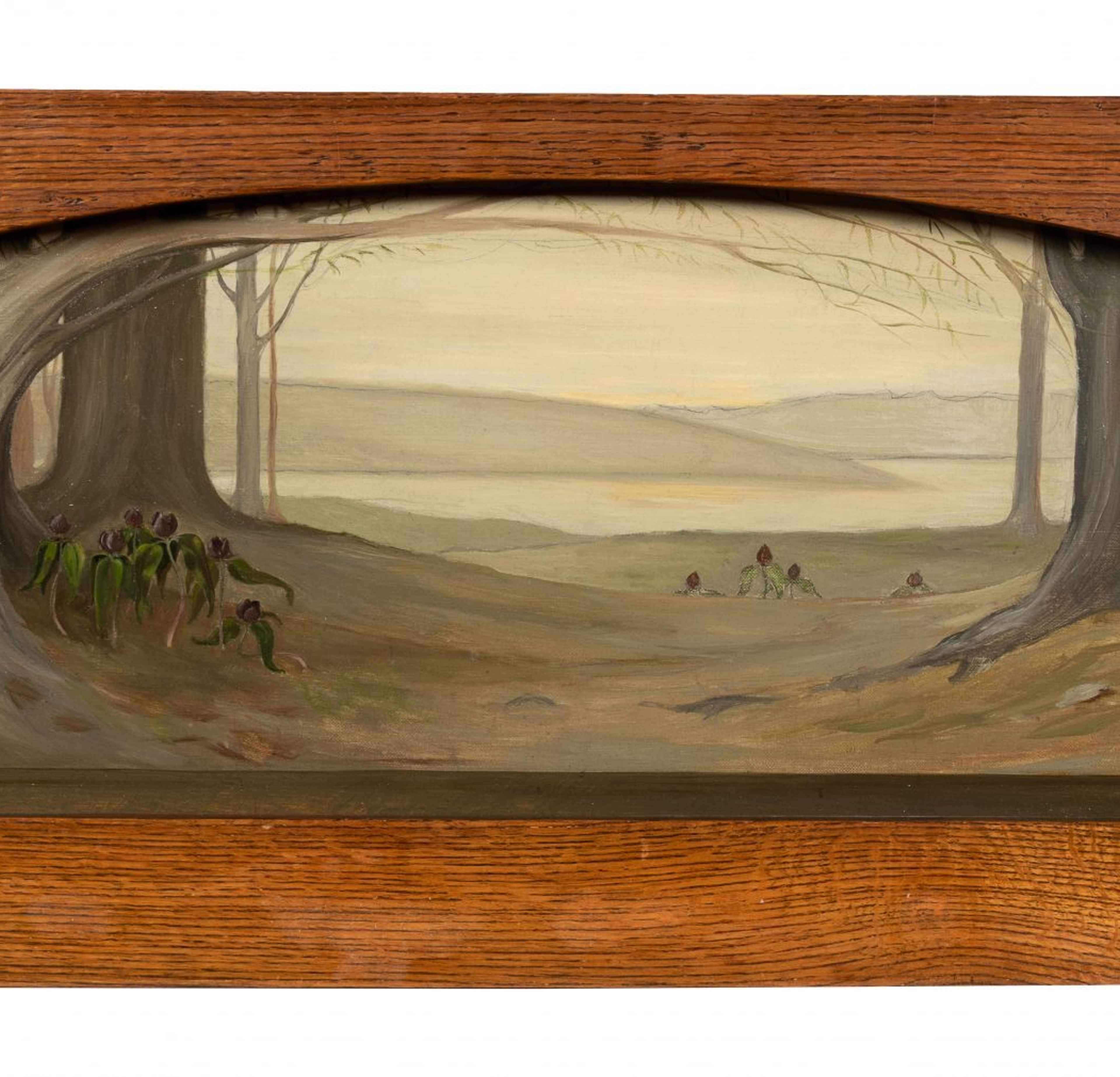
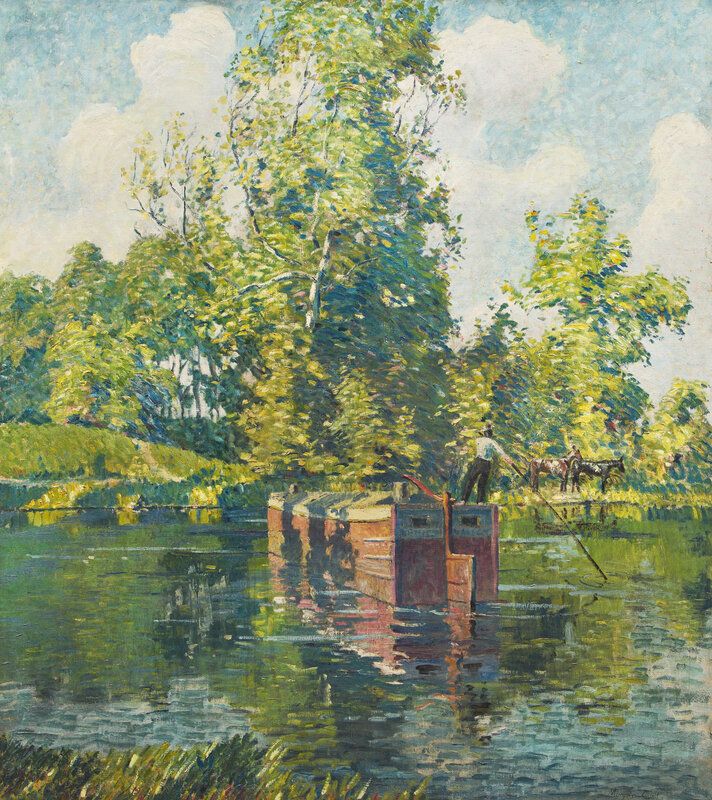
Painted in 1912 by a young Grant Wood, Decorative Landscape with Crocuses was created as a fireplace overmantel for the home of Charles and Kate Loomis of Cedar Rapids, Iowa. Charles Loomis and his brother ran a major construction company in the community. Wood embraced this tradition, creating works such as Fanciful Depiction of the Roundhouse (1920), Phantasy of Spring (1921), and Overmantel Decoration (1930). These artworks were similar to his panoramic stage backdrops for community theater performances, which he produced well into the early 1930s. In 1909, between his junior and senior high school years, Wood traveled to Minneapolis to enroll in summer classes offered by The Handicraft Guild of Minneapolis, Minnesota. Director and Instructor Ernest A. Batchelder taught the School of Design and Crafts’ Summer Session. It was during this time that Wood further immersed himself in the ideals of the American Arts & Crafts Movement, as a disciple under Batchelder. Batchelder was an important advocate of the English Arts and Crafts style and taught on the principles of decoration rather than imitation, tenets Wood readily absorbed. Wood later co-founded the Loomwood Craft Shop with Kate Loomis in Cedar Rapids, Iowa in 1911 and the shop stayed in operation into 1913. Likely as part of his work at the shop, Wood executed the present artwork. In Grant Wood and Marvin Cone: Artists of an Era, the author Hazel E. Brown states that Wood helped Kate Loomis, a Cedar Rapids resident, “…decorate her home, and over her mantel in an oak frame he placed his first signed painting—jack-in-the-pulpits in tree roots.” (H. Brown, Grant Wood and Marvin Cone: Artists of an Era, Ames, Iowa, The University of Iowa Press, 1972, p. 10) Despite the confusion of flower names, a label on the verso of the present artwork further attests to this being one of Wood’s first signed paintings. In fact, the flowers depicted are likely neither crocuses nor jack-in-the-pulpits, but instead may be prairie trilliums. Native to the midwestern states, prairie trilliums are shade-loving flowers that emerge in the spring, usually in woodlands. Wood was familiar with the flora and fauna of his native landscape and had ample opportunity to observe the flowers, which are characterized by each having three maroon petals and three green leaves perched atop a thick stem. The young artist shows the flowers in the bare forest earth, protected by an arching stretch of leafless branches that extend from trees to the left and right of the composition. Beyond the trees and flowers, a vista opens of patterned, curved hills. The curve of the painted branches and hills is echoed by the physical curve of the oak frame’s upper molding. The repetition of form, use of pattern, and simple composition attest to Batchelder’s teachings, which Wood had so recently learned. The artist would maintain these principles throughout his career, and the present painting is an early precursor to his later iconic work. Grant Wood (American, 1891-1942) Decorative Landscape with Crocuses, 1912 oil on canvas mounted on wood signed Grant Wood and dated (lower right) 15 x 34 inches. Property from the estate of Nancy Holmes, Cedar Rapids, Iowa Provenance: Charles Calvin Loomis and Kate L. Terry Loomis, Cedar Rapids, Iowa G. Stewart Holmes, Cedar Rapids, Iowa James T. Holmes, son of the above, Cedar Rapids, Iowa Exhibited: Cedar Rapids, Iowa, Cedar Rapids Art Association, Public Art Gallery, An Exhibition of Paintings and Sculpture by Mrs. Charles Dieman, Marvin D. Cone, and Grant Wood, April 14-28, 1920, no. 32, An Overmantel Decoration (Possibly) New York, Whitney Museum of American Art, Grant Wood: American Gothic and Other Fables, March 2-June 10, 2018, pp. 94-95, 203, pl. 8, illus. Literature: Hazel E. Brown, Grant Wood and Marvin Cone: Artists of an Era, Ames, Iowa, 1972, p. 10 James M. Dennis, Grant Wood: A study in American art and culture, New York, 1975, p. 21, 23, fig. 6. This painting will be included in Joseph S. Czestochowski’s forthcoming catalogue raisonné of the artist’s work by International Arts® at www.catrais.org. Estimate: $30,000-50,000
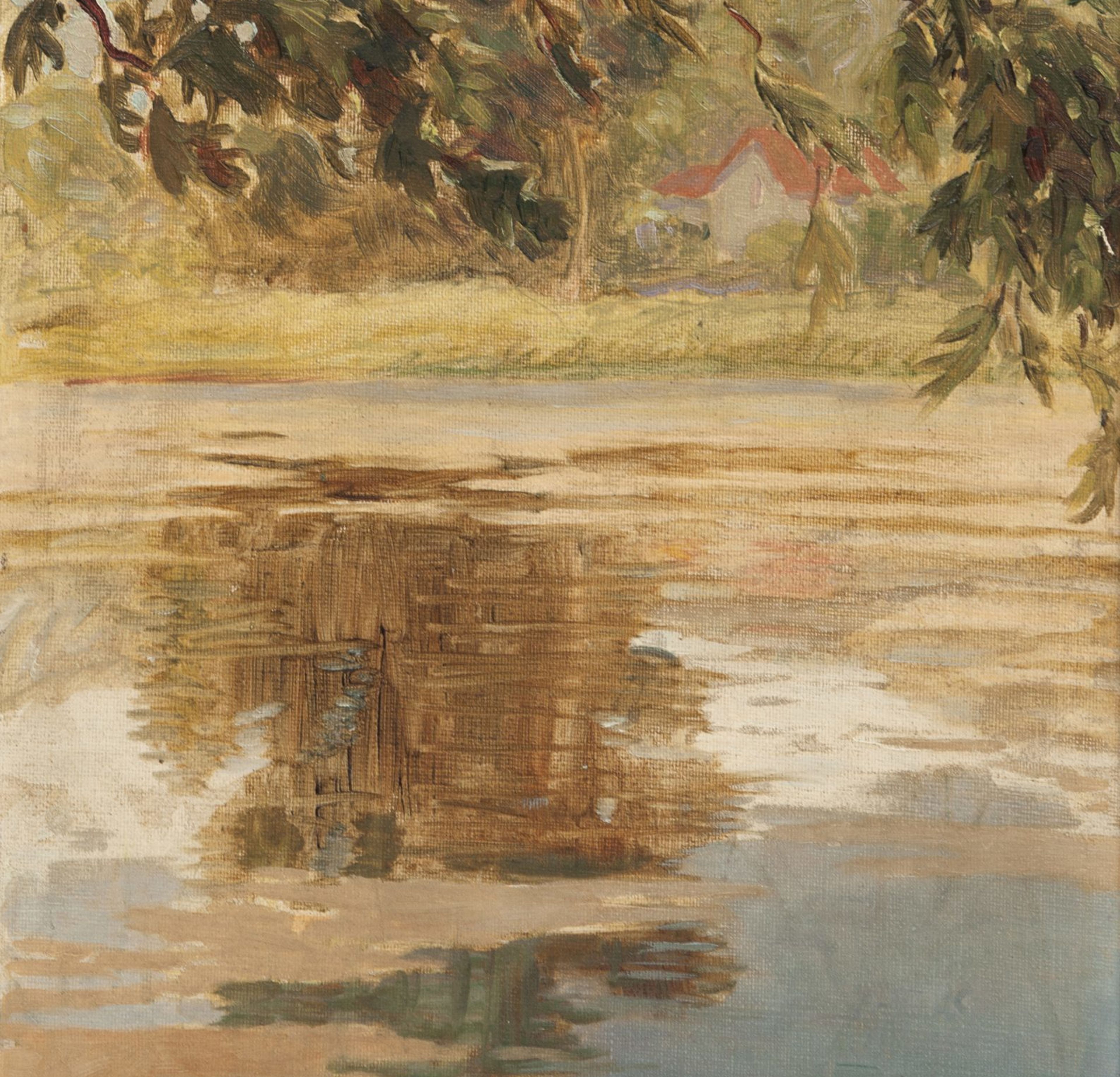
Reflections, Ville d’Avray stands as an early work by an artistically evolving Grant Wood. Prior to developing the unique style that gave rise to such iconic works as American Gothic, Wood primarily worked in an impressionistic manner. The young Wood was part of a generation that received training when impressionism was the dominant method of painting. After studying at various Midwestern art schools, including the Art Institute of Chicago, Wood and his friend Marvin Cone traveled to France in the summer of 1920, in order to continue their studies. It was during this trip that the present artwork was created. The pair of young artists settled in Paris, but traveled to the various suburbs surrounding the city, including Versailles and Ville d’Avray. The artist Jean-Baptiste-Camille Corot, a progenitor of impressionism, was a former resident of Ville d’Avray. Corot’s home included a pond that Wood painted several times, including the present artwork and Ville d’Avray, Paris, 1920 (Cedar Rapids Museum of Art, Iowa). The two paintings were exhibited upon the artists’ return from Paris in Paintings of Paris by Grant Wood and Marvin D. Cone, Public Library Art Gallery, Cedar Rapids Art Association, Cedar Rapids, Iowa, November 10-20, 1920. Cone executed a companion piece to Wood’s, titled Reflections, Corot’s Pond, (Cedar Rapids Museum of Art, Iowa), completed on the same June to August trip. It was on this same trip that Wood also introduced Cone to Winnifred Swift, and the two were married in 1921. According to Cone’s diary from the trip, Wood primarily worked outdoors, typically over the course of a few hours. The paintings were small for ease of transport and stylistically loose. However, Wood’s meticulous temperament prevented him from fully embracing the spontaneity of impressionism. Structure and form reigned supreme for the artist, with light and color of secondary importance. This emphasis on structure can be seen in Reflections, Ville d’Avray. Strong horizontal brushstrokes delineate the reflections in the pond and divides the water and grassy bank. The close-cropped tree branches in the upper foreground partially block the distant shore with its red-roofed building, creating a sense of circumscribed privacy. It is only the free, short brushstrokes that relate the painting to impressionism and carry it closely towards abstraction. The almost decorative quality in the present work hints at the later mature style for which Wood is best known. According to Joseph S. Czestochowski, this painting of Corot’s Pond is not the Cook’s Pond in Cedar Rapids, Iowa, which Darrell Garwood frequently referred to as “Corot’s Pond” in his book, Artist in Iowa, A Life of Grant Wood (New York, 1944, p. 53). Grant Wood (American, 1891-1942) Reflections, Ville d’Avray, 1920 oil on canvas board signed Grant Wood and dated (lower left) 15 x 13 inches. Property from the estate of Nancy Holmes, Cedar Rapids, Iowa This painting will be included in Joseph S. Czestochowski’s forthcoming catalogue raisonné of the artist’s work by International Arts® at www.catrais.org. Provenance: G. Stewart Holmes, Cedar Rapids, Iowa James T. Holmes, son of the above, Cedar Rapids, Iowa Exhibited: Cedar Rapids, Iowa, Cedar Rapids Art Association, Public Library Art Gallery, Paintings of Paris by Grant Wood and Marvin D. Cone, November 10-20, 1920, no. 12, (possibly) Estimate: $15,000-25,000
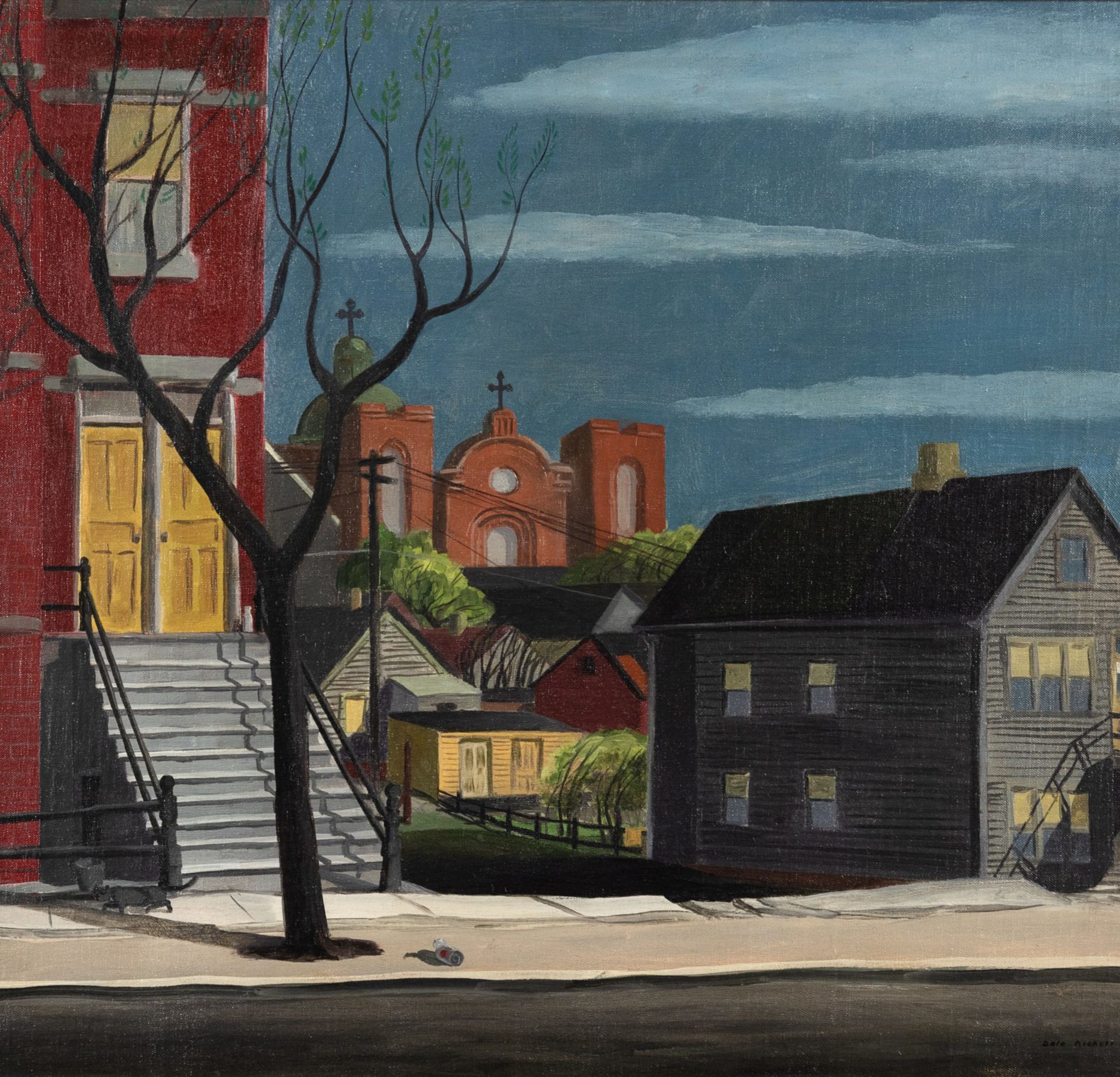
Chicago, 1934, stands as an early, unique example of Dale Nichols’ artwork. According to the Curator of Bone Creek Museum of Agrarian Art, which holds an extensive collection of the artist’s work, Chicago is distinctive for its urban setting, as Nichols is best known for his bucolic scenes of countryside red barns (Amanda Mobley Guenther, July 16, 2020). The painting is accompanied by a handwritten letter on Nichols’ personalized stationery, from the artist to a Mrs. Edwin N. Johnson. The letter is dated November 24, 1946 and in it Nichols testifies that Chicago is one of the very few paintings he executed “on the spot.” He was taken to the location by the illustrator Benjamin Stahl (1910-1987), and Nichols goes on to say in the letter that “The picture does not show the rather tough little boys that crowded about us while we worked.” Written 14 years after the artwork was painted, the artist cannot recall the exact location of the scene (“on the north side somewhere”). However, Chicago likely depicts an area in the Bucktown neighborhood. Possibly painted on the 1800 block of North Marshfield Avenue, St. Mary of the Angels Roman Catholic Church can be partially viewed from its location at 1850 North Hermitage Avenue. The two houses depicted in the painting still stand, but the view of the church through the stretch of green grass is blocked by two recently built condominiums. The artist would have to have stood facing slightly northwest for the angle and view of the church. Although Nichols simplified the ornate architectural details of the church, the two square towers and the rounded, vertical extension of the center portion of the front façade remain distinct. Both the dome and center portion of the front façade have been remodeled over the years, including brickwork that replaced the rounded extension. Chicago captures the particular architectural vernacular of the city’s neighborhood. Wooden houses like the one on the composition’s right were once common in Chicago. These were gradually replaced with dwellings such as the two-flat brick building on the left. The steep, elevated front steps of both homes speak to the Midwest’s deep winter snows and the city’s residents’ ingenuity to squeeze ever more living space in a small footprint. The building structures, with their rectangular blocks of windows and walls, and triangular roofs, reveal Nichols’ method of arranging geometric shapes to produce a formal composition. The artist also believed in using a single light source, typically the sun. Strong, dark shadows are cast by the branches of the tree and different elements of both houses. When transforming his geometric blocks into “realistic” objects, Nichols tried to paint them abstractly, in a way that expressed their inner reality. Although Chicago is at face value a painting of a city block, the structures and shadows convey a brooding, hard-bitten atmosphere populated by unseen residents. The artist’s artistic language is crystallizing into the formal elements for which he was later to become famous. The same year Chicago was produced, Nichols created his most famed painting, End of the Hunt (Metropolitan Museum of Art, New York), which became the basis for all his future works.

Ed Paschke (1939-2004) was the quintessential Chicago-based artist of the Imagist generation which emerged in the disruptive period of the late 1960s. His work centered on what critic James Yood called “The human figure under duress” as he described the salient theme of Imagist art. Other prominent Imagists mined the psychological surrealism of lowbrow popular culture. Ed Paschke relied on photo imagery drawn directly from mass media. He was interested in the adversarial relationship between individual identity and culture (which he defined as “symbols, metaphors, icons…and their baggage of referentiality”). He did not have a program, he was too inventive, the master Rule Breaker. In retrospect we see that he was working the grand theme of our age: The loss of self and hopeful redemption. His early work centers on outsider identity, using ironic, comic exaggeration of figures and their costumes (wearable defenses), freaks and their anatomical damages. These characters were the excluded ones, while the viewer is the eager insider observer: a little smug, a little horrified, a little amused, a little sympathetic, like a visitor at a zoo or an extreme entertainment event. As Paschke’s work develops, the viewer is gradually absorbed by the surrounding, immersive, fractured context, like electric flashes, in an abusive culture. In his late work, the individual is replaced by mythic icons of public power, layered with color shards, as if torn from signs. Outsider and insider are then mingled and subsumed. The individual, the autobiographical, the essence of human identity, vanishes. Or it may seem, but Paschke was not a nihilist. He chose ambiguity, contradiction and paradox over finality. Paschke held to a Law of Opposites, embracing the contradiction of one thing evoking its opposite alerting us to the “baggage” of ambiguous referentiality. That holds our attention and draws us close. We want to see Paschke’s art not only from the usual distance but also up close. We need to savor its surfaces and the paradox of image portraying the loss of self, and method asserting the redemption of self. Ed Paschke was a superb craftsman. His technical mastery of drawing and painting is evident on every inch of surface. His confident touch, the featherweight delicacy of his method and the gentle assurance of his marks reveal his skill and his patient, generous, temperament. It is as though he was in private conversation with his art and its characters. He used sponges to apply and rub paint, tiny pointed brushes, pure pigments straight from the tubes and ink, crayon, and pencil that scarcely touched the surface. The canvas -and its helpless inhabitants- never felt his hand, or if they did, it was a caress, a kiss, a protective palm, a slight tap. The surface reveals Ed’s truth. There is his love and empathy, to protect and rescue each of them and each of us. Boots, 1972, shows how visual concentration guided his pencil and crayons to an exacting, sculptural rendering that nevertheless retains a loose, almost casual, fading of edges. Thousands of bundled lines overlap, encircle and weave. They accumulate without effort. The boots are shown as in-use by an invisible wearer. Who? One thinks of bizarre militarism, maybe a crazed officer or costumed prankster. Elongated, too narrow, the boots convey oddness and tight discomfort. They are restrictive physical and psychological prosthetics. But the laces don’t bind. Instead they seem fluffy, almost like luminous chrysalises about to burst into butterflies — and freedom. Sky Blue, 1994, represents Paschke’s moving on from the large celebrity or historical icon portraits of a few years earlier (such as his Elvis and Lincoln). Here Paschke reinvents a human scale generalized androgynous face overlaid with tattoo-like symbols of little chicks. They may be either dreaded or soothing chicks but they fill the head. (they may refer to his father’s inspiring carvings of birds). On the upper right a larger chicken without a wattle is neither fully hen nor rooster. This ambiguity leads us again to Paschke’s paradoxical law of opposites that resist efforts to explain his imagery as a simple narrative. Paschke employs wide ovals and lines to merge with the painted head. Together they suggest the five senses. Other symbols float nearby. It’s an uncertain private dialogue about personal identity happening in broad daylight. The paint application is more varied in this work, sometimes thick, vigorous; sometimes water thin and dotted, evoking the presence of studio hands-on working and experiment. Sky Blue shows how Paschke’s commitment to inventive at-the-moment problem solving was guided by his career-long maxim: “Show life in the picture plane. Tracer, 1989: The jittery, glowing face of the iconic comic strip Dick Tracy is surrounded by a TV screen and to its left a full color mirror image (also indicated by reverse numbers on the frontal face) of a wannabe Dick Tracy, a Tracer. The duo reflects the essential oneness of the two faces. The merging of icon with “the common man “ suggests the projection of self into cultural identity or the absorption of self by a fictional, flickering icon. The delicately painted surface is a clue to Paschke’s encouraging empathy for a Tracer, the character under a big 1940s gangland Fedora. Spirit of Power, 1989, is a spectral image of a gun, one of many that Paschke made at this time. It’s an icon of gang violence and societal authority and defense, complicated further by the religious allusion of the INRI inscription and a cross. Meticulous rendering in several media, applied in succession, invite a visual delayering, as if peeling away the marks will reveal meaning. At this time Paschke was drawing over washes with ink dots that mimic his method of painting with the tips of small brushes, accumulating tone and illusion without obscuring the illumination from under-layers. There is a ritualist’s fondness for repetition in his method. It asks the viewer to participate in drawing and to contemplate the deceptive aura of an icon of sudden and terrible violence. -William Conger, Artist; Professor Emeritus, Art Theory and Practice, Northwestern University