
Condition Report
Contact Information
Lot 127
Lot Description
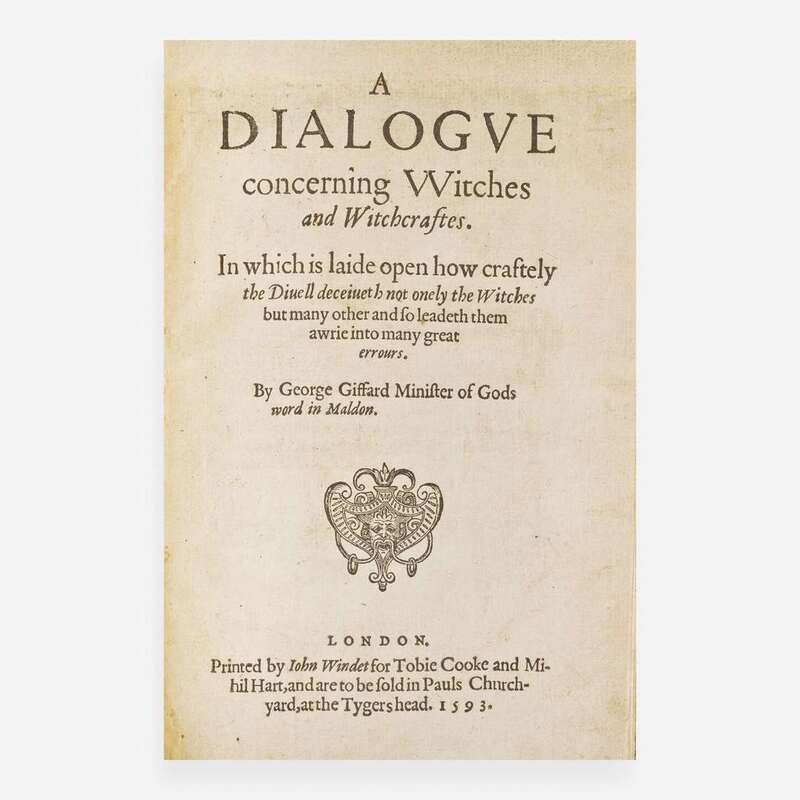
Rare First Edition of George Gifford's Classic Work on Witchcraft
Daniel: What doe you take your selfe to be bewitched?
Samuel: No, no, I trust no evill spirite can hurt me, but I heare of much harme done by them: They lame men and kill their cattle, Yea they destroy both men and children. They say there is scarce any towne or village in all this shire, but there is one or two witches at the least in it."
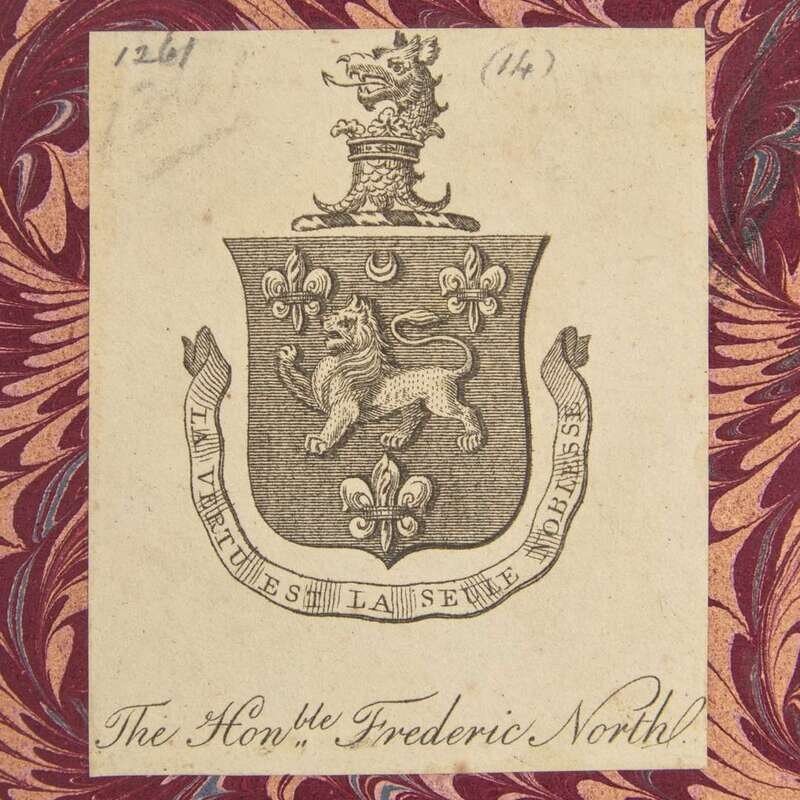
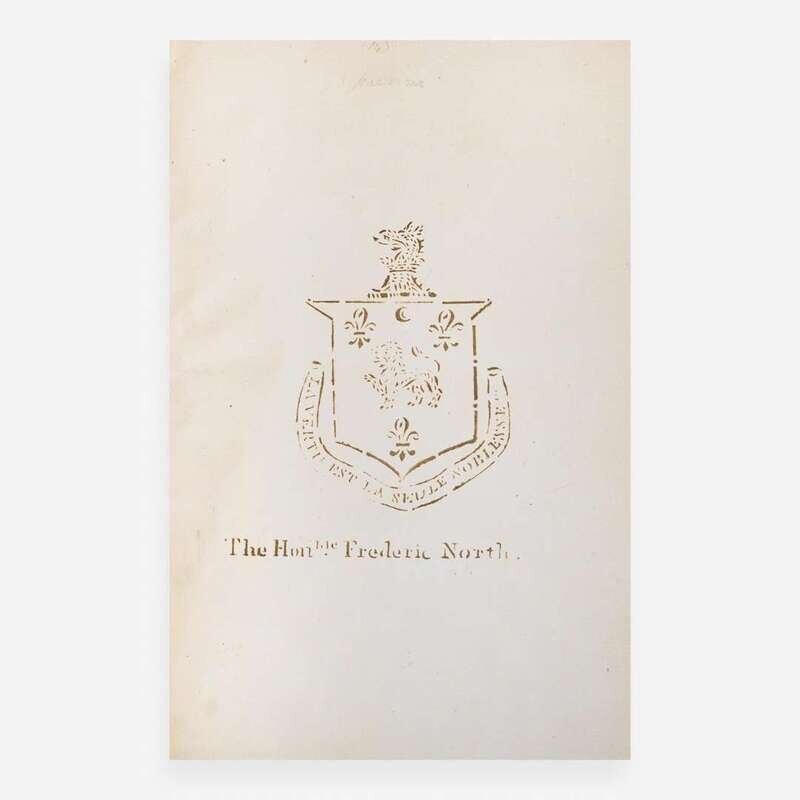
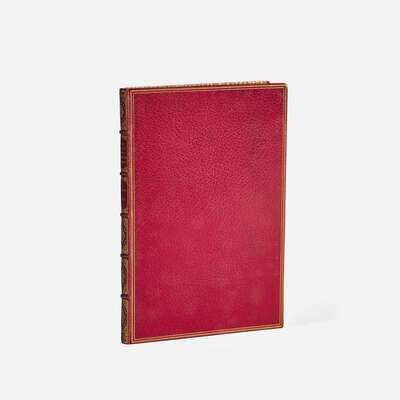
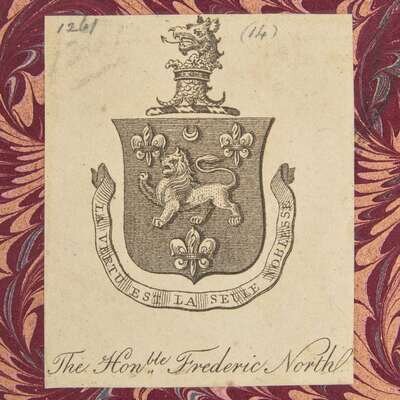
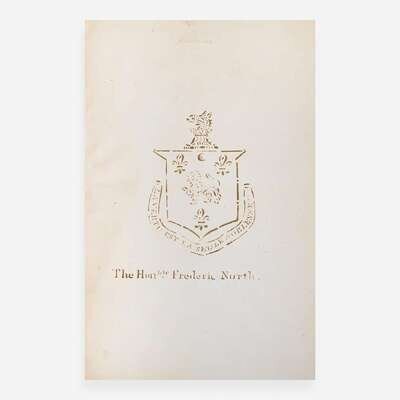
London: Printed by John Windet for Tobie Cooke and Mihil Hart, 1593. First edition. 8vo. Unpaginated (96 pp.). From the Library of British Prime Minister Frederick North, Lord North, and with his armorial book-plate on front paste-down. Sometime bound in full crimson levant, stamped in gilt; all edges gilt; gilt dentelles; marbled endpapers; by F. Bedford; top edge of title-page repaired with top of "A" in manuscript; trimmed close along top edge, shaving many letters in running headline; old ink pagination faintly present in several top corners; scattered marginalia; Lord North's armorial crest sometime illustrated in ink on third blank. Two typed letters from previous owner C.D. Irwin of Brookline, Massachusetts, to C.F. Libbie & Co., Booksellers, Boston, and to Cornell University Library, ca. 1920s, laid in. ESTC S105690
A rare first edition of Essex Puritan preacher George Gifford's classic work on witchcraft. Gifford (ca. 1548-1600) was one of the earliest writers to deal with the nature and implications of witchcraft, and this slim text was written for the common Christian believer in a plain language intended to appeal to a wide audience. The text is cast in the form of a dialogue between a man named Samuel, who believes his family is bewitched, and a man of religious authority named Daniel, who attempts to convince him of the errors of his beliefs. Gifford uses Samuel's voice to express common English beliefs about witchcraft, particularly that they had power over physical bodies and objects. In contrast, Gifford uses Daniel's voice to expose his own ideas regarding witches, particularly that while they may exist they have no real power themselves, but are conduits for the work of Satan. He argued that the best defense against witchcraft was not theological or legal, but a spiritual affirmation of God's power and care. Written at a moment of surging witch-hunts and trials in England, especially in Gifford's Essex, this work sought to guide the reader toward the truth of the Puritan gospel.
Frederick North, 2nd Earl of Guilford (1732-92), was a British statesman, 12th Prime Minister of England, from 1770-82, as well as Home Secretary and Chancellor of the Exchequer. Popularly known as Lord North, he led Great Britain through most of the American Revolution, but resigned after their defeat at Yorktown. He is remembered as the "man who lost America."
ESTC locates only six worldwide institutions with copies: The British Library; Cambridge University Library; Oxford University, Christ Church; Oxford University, Bodleian Library; Huntington Library; Massachusetts Historical Society. Rare Book Hub yields only this copy's sale at auction, in 1871.