
Condition Report
Contact Information
Lot 128
Lot Description
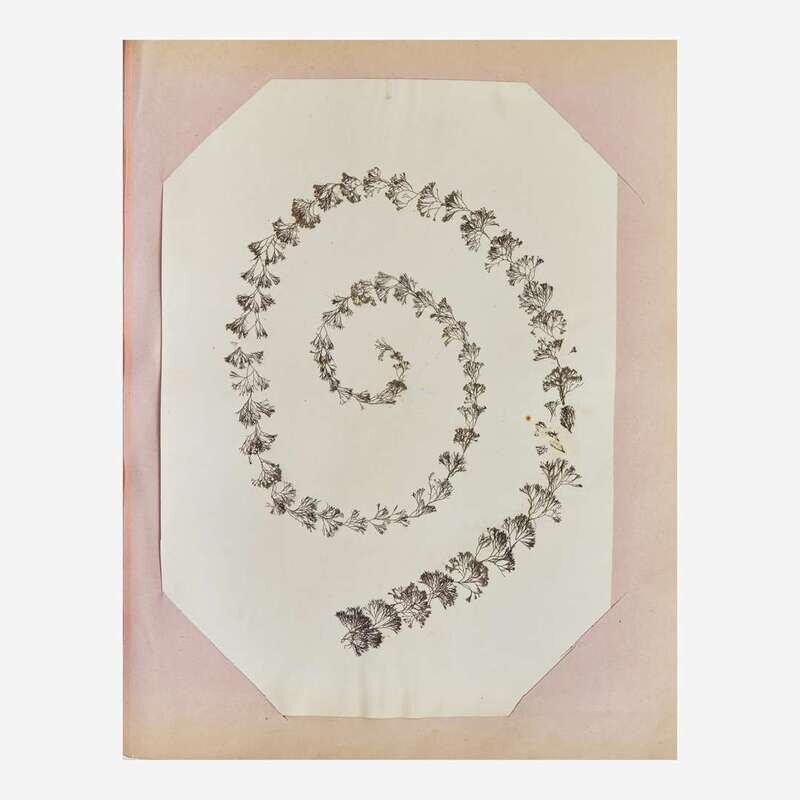
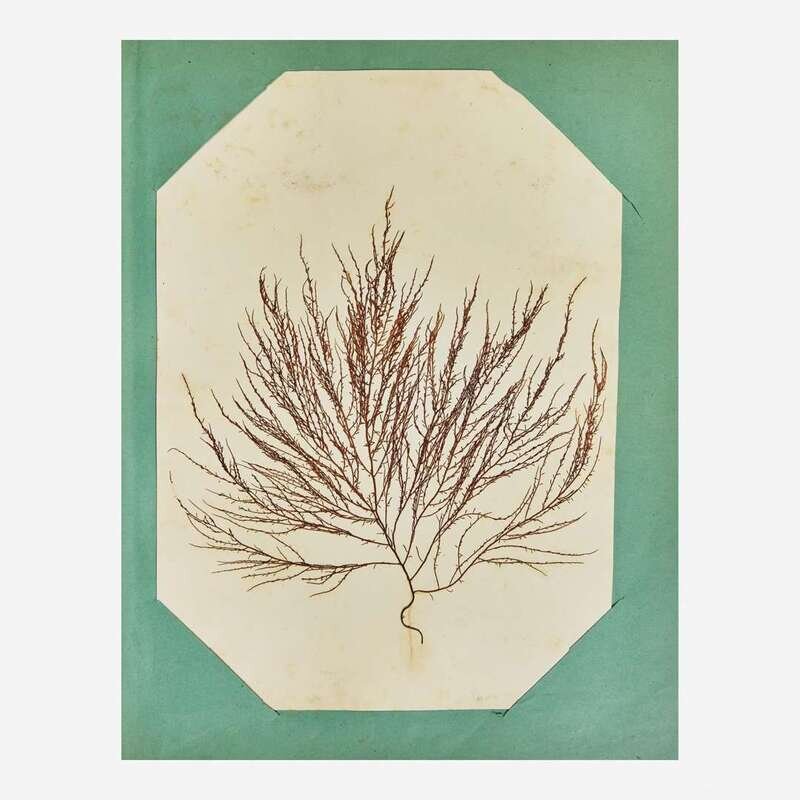
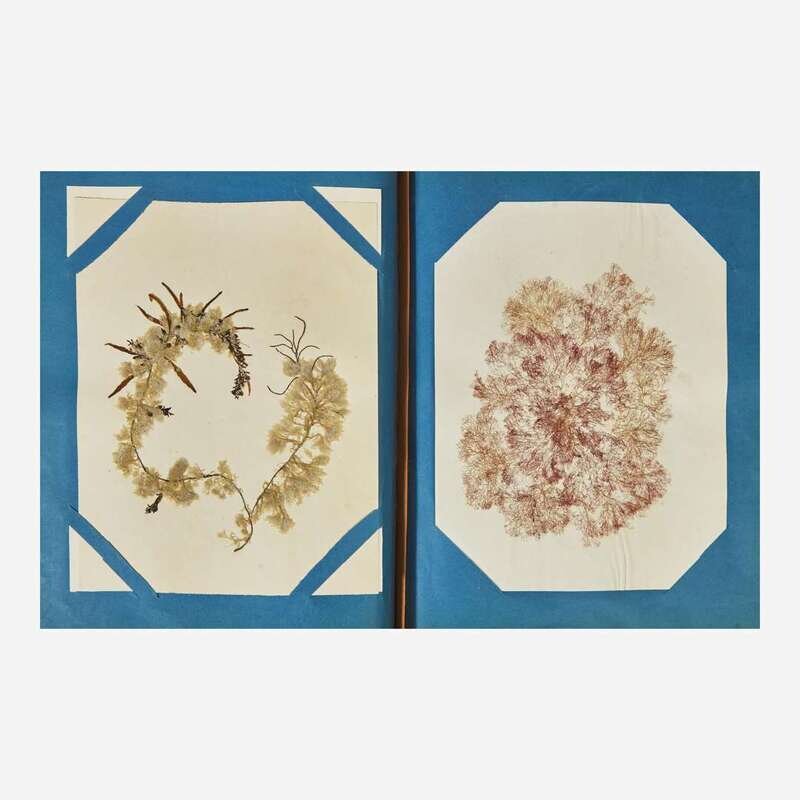
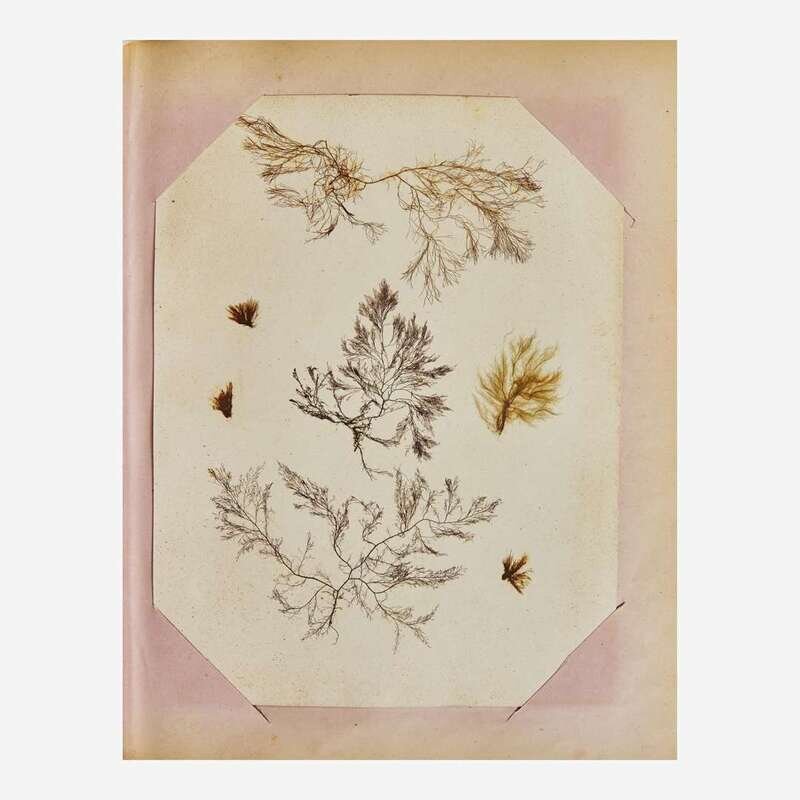
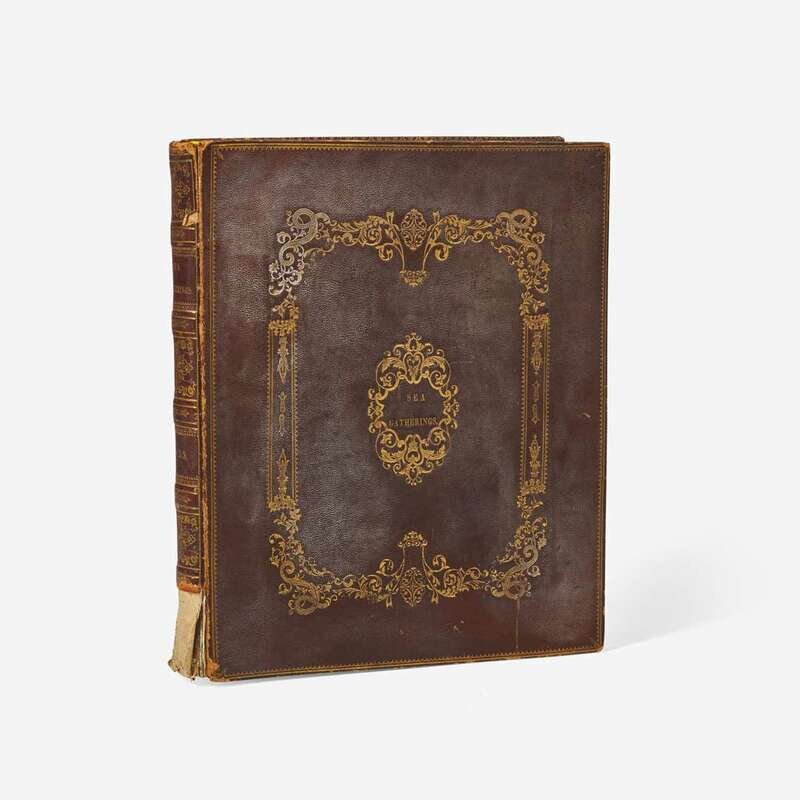
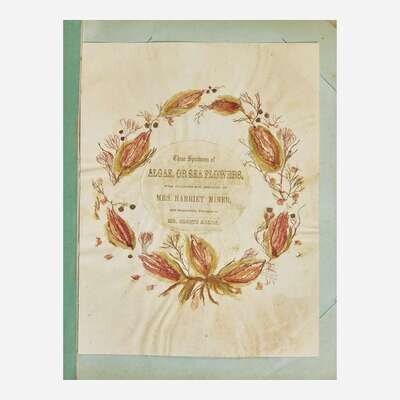
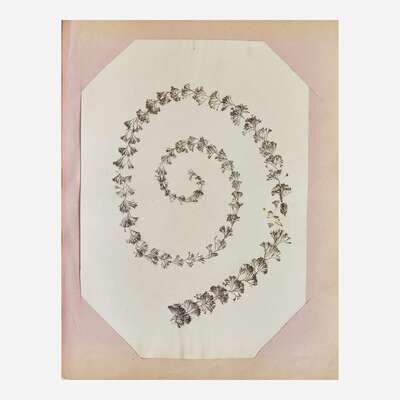
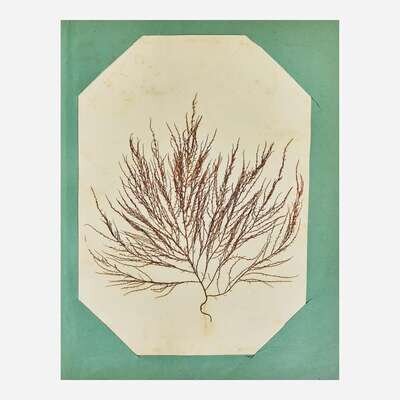
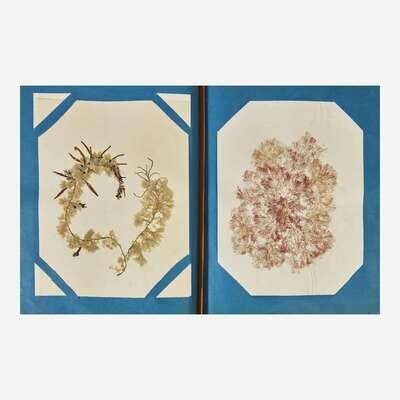
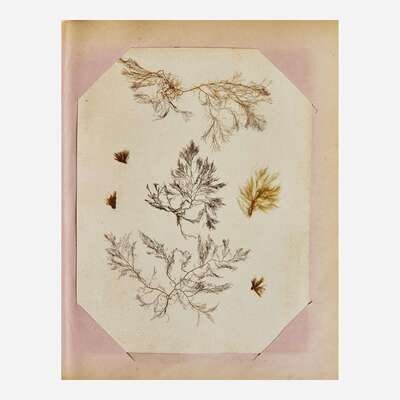
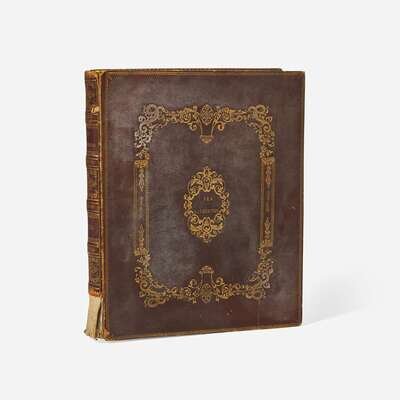
No place, ca. 1855. Folio album of approximately 114 pressed seaweed specimens; decoratively mounted onto 48 sheets, inserted at corners to larger multi-colored die-cut sheets; "title-leaf" at front with a circular label printed in gilt: "These Specimens of Algae, or Sea Flowers, were Collected and Arranged by Mrs. Harriet Miner, and Respectively Presented to Mr. Olcott Allen.", curiously mounted over the same text (printed in black), and decoratively adorned with similarly mounted seaweed specimens; two leaves of gilt printed text, one of E.L. Aveline’s “Flowers of the Ocean," the other an excerpt from John G.C. Brainard's, "The Deep." Presentation binding of full brown morocco, elaborately stamped in gilt, front board and spine lettered "Sea Gatherings", spine stamped "1855", extremities and joints worn, bottom spine panel perished, front and rear boards soiled; marbled endpapers; scattered light wear and creasing to larger sheets; specimen sheets lightly foxed; some scattered short closed tears.
Affectionately described as "Sea Flowers," this fascinating album of over 100 seaweed specimens was collected and aesthetically arranged by a Mrs. Harriet Miner as a gift for a Mr. Olcott Allen.
During the 19th century seaweed collecting was a popular activity for middle and upper class women, with albums similar to this proliferating throughout Victorian England, the United States, Canada, and elsewhere. An outgrowth of other types of collecting and scrapbooking such as pressed flowers, seaweed albums could take on varying types of arrangement, from the more scientific and categorical, to the more artistic, personal, and social--as seen here. Collecting seaweed, as can be imagined, was often a more physically demanding and time-consuming pursuit, as the compiler typically had to wade into tidewaters, and then carefully clean, dry, arrange, and mount each fragile specimen.
Due to their fragility these albums are typically scarce. A unique survival.