To request further details about this lot, please email Fineart@freemansauction.com
Please email Fineart@freemansauction.com for any additional information or questions you may have
Sale 6500
| New York
| New York
To request further details about this lot, please email Fineart@freemansauction.com
Please email Fineart@freemansauction.com for any additional information or questions you may have
Estimate$50,000 – $70,000
Provenance:
Paul Kasmin Gallery, New York
Lot Note:
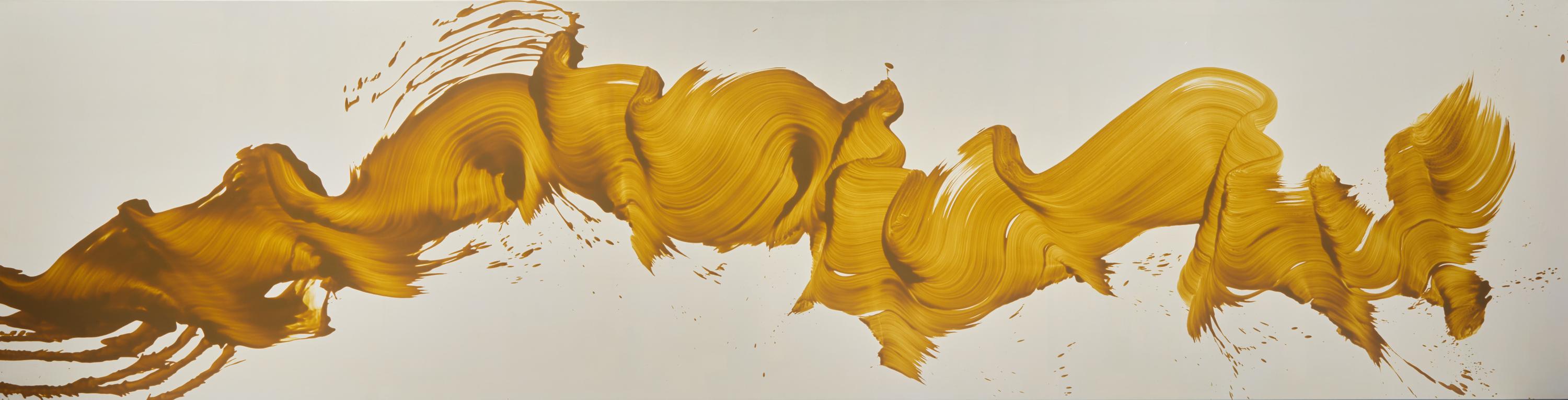
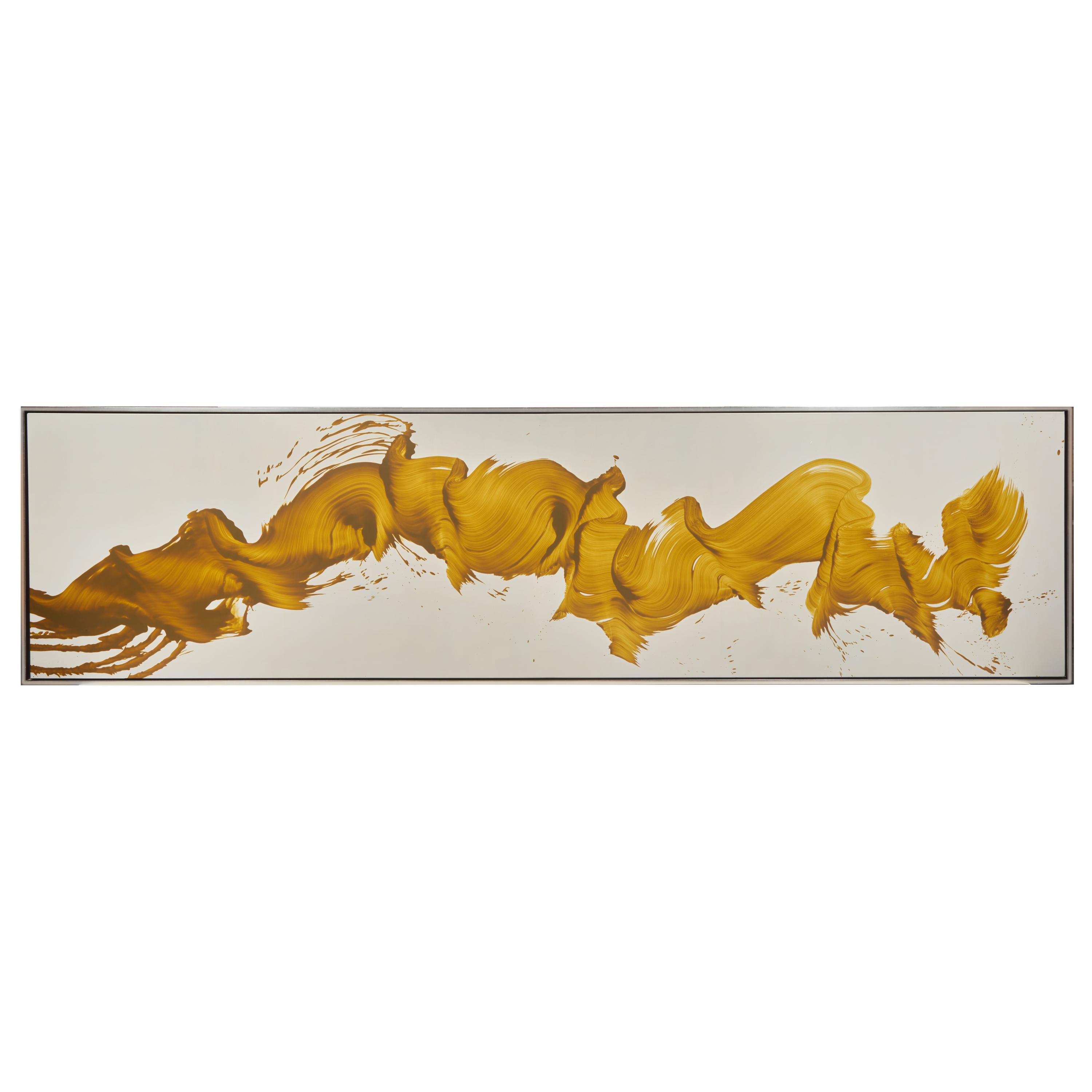
Jamie Nares has developed a painting practice that transforms the canvas into a stage for physical performance. Born in London and based in New York, Nares creates large-scale gestural paintings, as seen in Western (2001), that meld the boundaries between painting, performance, and time-based media.
At the heart of her practice is an emphasis on the physicality and the very act of painting itself. Employing long-handled brushes and squeegees–in this instance, long yellow gestural strokes in Western–the artist creates sweeping, fluid strokes across expansive canvases that necessitate movement by the viewer across the entire surface. In fact, these are not just large paintings: they are records of choreographed movements, capturing physical energy and the specific duration of each gesture. The resulting works feature bold, continuous marks that seem to freeze motion in time, transforming the static medium of painting into something that conveys the pulse of movement.
Nares' approach to materials reinforces this focus on process and physicality. Working primarily with oil paint, she uses both traditional brushes and unconventional tools, underscoring the tactile relationship between body, tool, and surface. Moreover, the scale of the works—Western spans just over 12 feet—demands that painting becomes a full-body activity, turning each canvas into essentially an arena for performance.
Indeed, this intersection of painting and performance connects to broader themes in Nares' work: expressly the exploration of both time and movement. Known also for the mesmerizing slow-motion film Street (produced in 2011) Nares considers the ways in which temporal experience can be captured, transformed and conveyed across myriad media. The paintings also function as temporal records, preserving specific moments and movements while inviting viewers to imagine the dynamic process of their creation
More broadly, Nares' work offers a fresh take on the legacy of Abstract Expressionism and technique of Action Painting, updating gestural abstraction for the twenty-first century. By explicitly connecting painting to both performance and documentation, Nares demonstrates how traditional media can engage with contemporary concerns about process, time, the body, as well as viewer engagement.
Framed: 41 x 154 1/4 x 2 1/8 inches
Please contact fineart@freemansauction.com for a detailed condition report.
The physical condition of lots in our auctions can vary due to age, normal wear and tear, previous damage, and restoration/repair. All lots are sold "AS IS," in the condition they are in at the time of the auction, and we and the seller make no representation or warranty and assume no liability of any kind as to a lot's condition. Any reference to condition in a catalogue description or a condition report shall not amount to a full accounting of condition. Condition reports prepared by Freeman's staff are provided as a convenience and may be requested from the Department prior to bidding.
The absence of a posted condition report on the Freeman's website or in our catalogues should not be interpreted as commentary on an item's condition. Prospective buyers are responsible for inspecting a lot or sending their agent or conservator to inspect the lot on their behalf, and for ensuring that they have requested, received and understood any condition report provided by Freeman's.
Please email Fineart@freemansauction.com for any additional information or questions you may have regarding this lot.