
In Conversation: Sandra Hindman
In anticipation of Freeman’s third annual Western Manuscripts and Miniatures auction on July 9, Christopher Brink, Associate Vice President, Head of Sale, and Senior Specialist, Books & Manuscripts, sat down with Senior Consultant, Medieval and Renaissance Manuscript Illumination, Sandra Hindman. Gain insights into market trends, Sandra’s expertise in the world of manuscripts and miniatures, and the ever-changing landscape of the category in the age of technology.
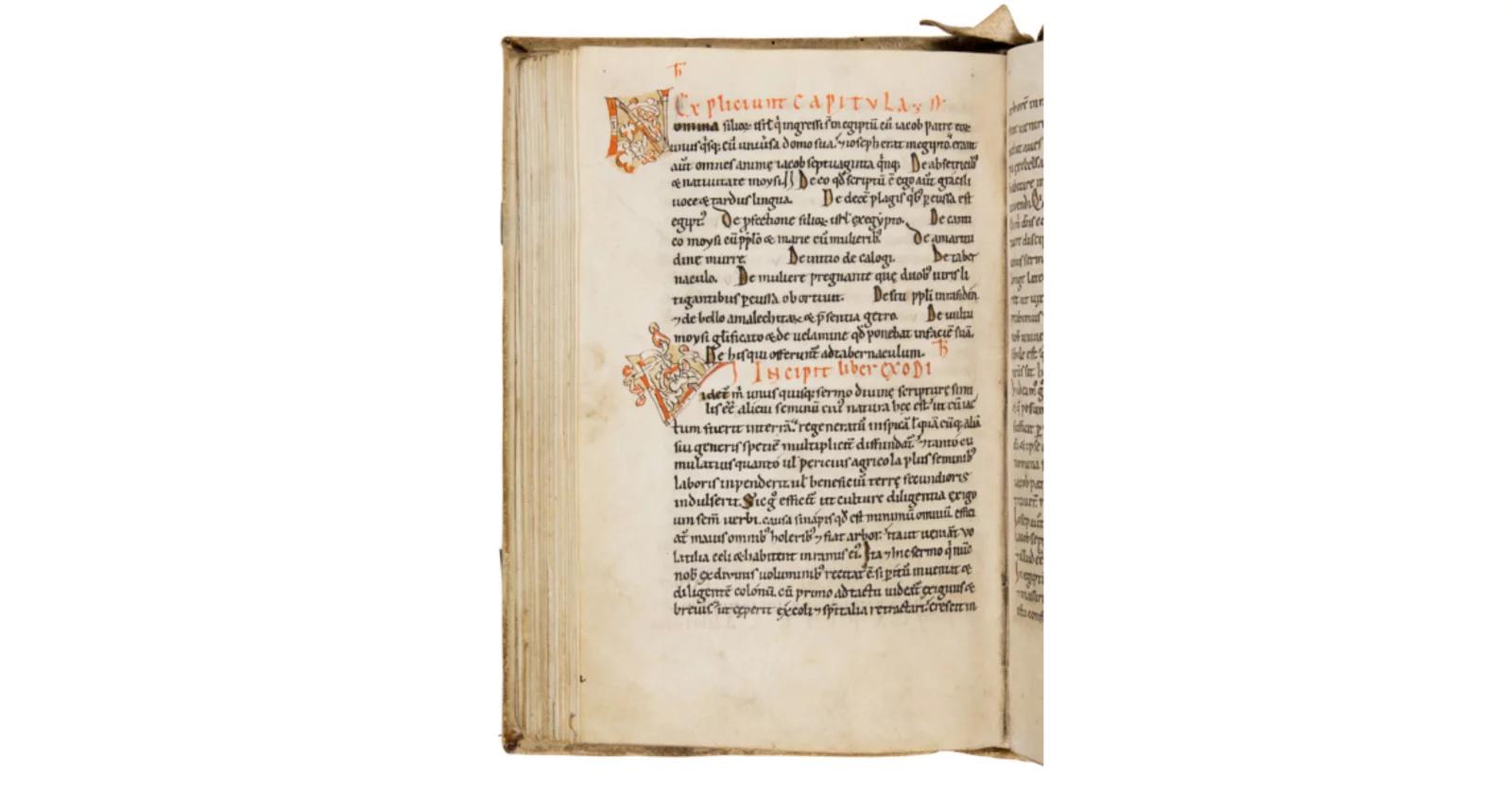
Lot 25 | ORIGEN OF ALEXANDRIA (c. 185–253) Homilia in Genesim, Homiliae in Exodum, in Latin, translation by Rufinus, decorated manuscript on parchment [Austria, Lambach Abbey? c. 1150–1175] | Estimate $150,000 - $200,000
Christopher Brink: Les Enluminures has played a pivotal role in shaping the market for medieval and Renaissance manuscripts—how have you seen collector interest evolve over the past few decades, particularly between institutional and private buyers?
Sandra Hindman: This is a big question because I’ve been doing this for nearly forty years now, and a lot has changed. I’m going to enumerate some of the changes.
1) There are fewer old-fashioned bibliophiles and more collectors who buy broadly from antiquity to contemporary, including manuscripts.
2) The pristine complete copy of a manuscript no longer reigns supreme, as clients (especially institutions) are interested in the interaction of the person in the book, that is, glosses, annotations, doodles, even signs of wear like dirt and finger (or paw!) prints, etc.
3) Institutions, especially in North America, are far more active than they were four decades ago, as they realize the value of manuscript material has for teaching both on the undergraduate and the graduate level. That’s just a brief glimpse at a very few of the changes.
CB: Your work often bridges scholarship and the marketplace. How do you balance academic rigor with the demands of presenting material to collectors and clients?
SH: For me, scholarship and the marketplace go together like my left arm and my right arm. Our clients appreciate the academic rigor that goes into our descriptions, and we never skimp on scholarly research and academic details. However, because we are interested in attracting new clients, those who might not be familiar with medieval manuscripts, we also try to present the material in “user-friendly” ways, answering questions that scholars might not ask: how long does it take to make a manuscript, are they only made and used by monks, why do they look so “new” or so well preserved, is a manuscript the same thing as an incunable? I’ve even written a little booklet organized as a “Q and A” with just these sorts of questions (and their answers). (Just ask and we’ll send it to you!).
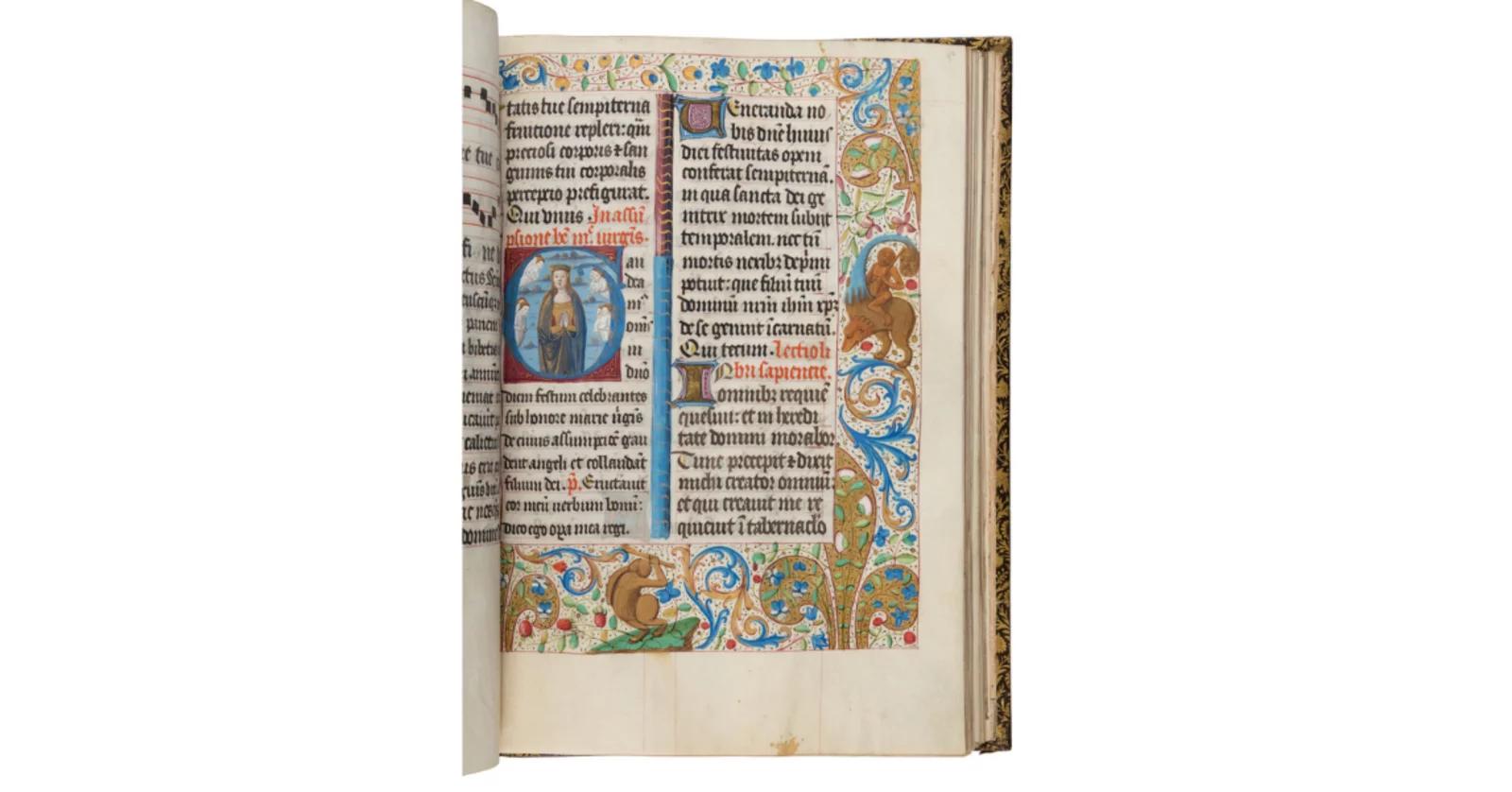
Lot 32 | PINK CANOPIES GROUP (Bruges, active c. 1390-1400) with ENGLISH ILLUMINATOR Book of Hours, in Latin, illuminated manuscript on parchment [Southern Netherlands, Bruges ?, c. 1390–1400 and England c. 1400] | Estimate $120,000 - $150,000
CB: Illuminated manuscripts are inherently unique objects—what qualities or points of connoisseurship do you find most critical when evaluating a work for sale or acquisition?
SH: Illuminated manuscripts are all about the art – painting in books. As in all fields of painting, the artist’s identity, the quality, and the condition of the work are the primary criteria for determining price. Who painted the pictures? How many are there? Is this an “A” artist or a “C” artist? Are the paintings in good condition (unlike Old Master paintings, one does not restore a manuscript painting – what you see is what you get)? Other factors come into play as well: what is the binding like? Is the manuscript “off the rack” or custom-made? Who was the patron? But the “art” is the most important.
CB: In an increasingly digital world, what continues to draw collectors to manuscripts and miniatures as physical objects, and have you seen technology change how these works are appreciated or studied?
SH: Perhaps unexpectedly, the digital world has increased rather than decreased interest in manuscripts and miniatures as physical objects. By bringing manuscripts to the screen, on a flat surface, in a new medium, digitalization has heightened curiosity about the very materiality of the object – the “real thing.” In a way, this reaction is not unlike theone that took place in the years after Gutenberg invented the printing press around 1455. Some thirty years after Gutenberg, the bookseller of Florence, Vespasiano da Bisticci, claimed that a printed book would be “ashamed” to be in the company of his manuscripts.
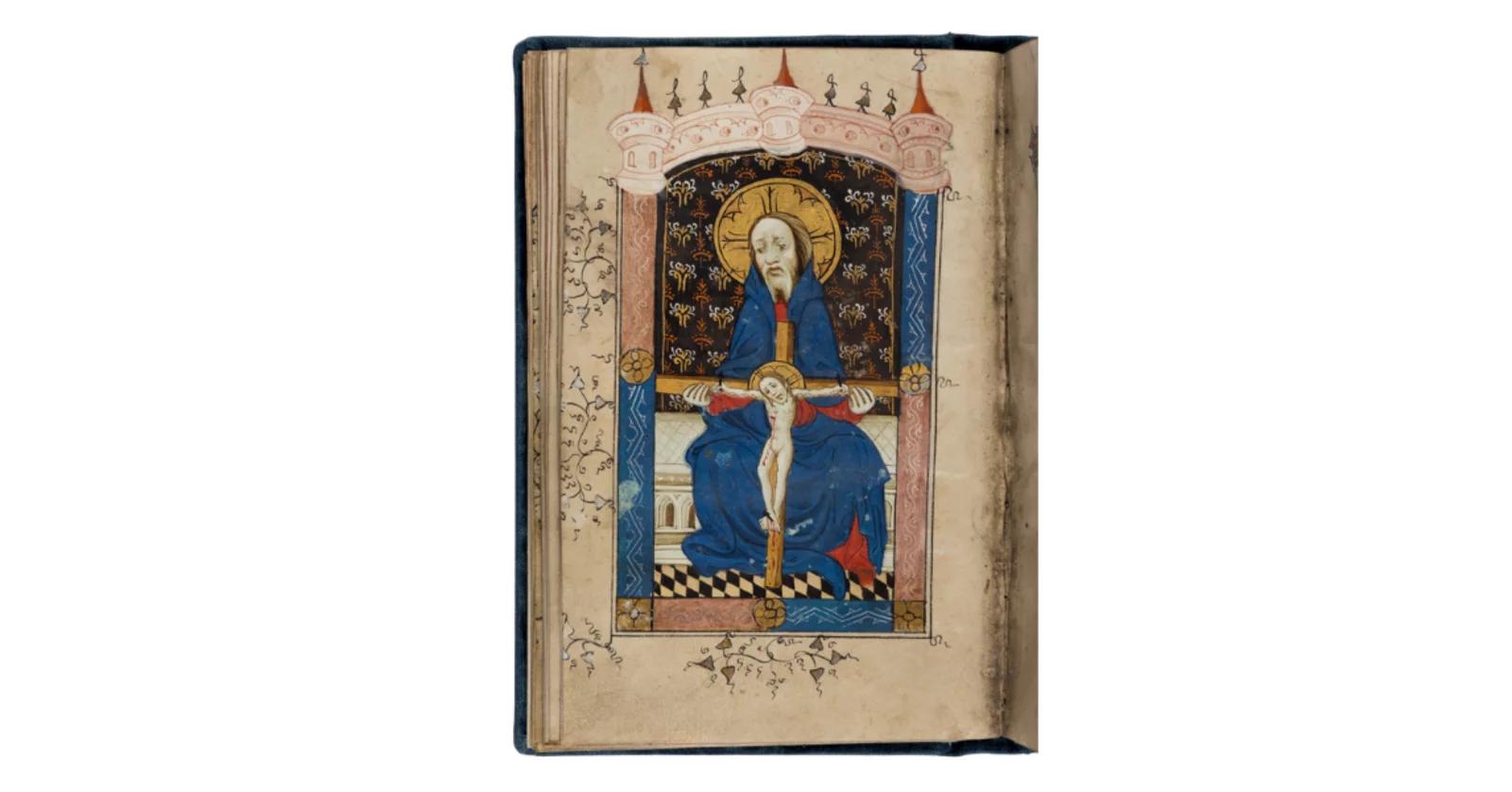
Lot 51 | WORKSHOP OF THE MASTER OF THE MISSAL OF TRAVAILLOT (active c. 1480–1500) Missal, in Latin, illuminated manuscript on parchment [France, Chaumont and Langres, c. 1482–1497] | Estimate $100,000 - $120,000
CB: Looking ahead, where do you see the greatest opportunities—or challenges—in the field of manuscript collecting, particularly for newer collectors entering the market today?
SH: Medieval manuscripts remain underpriced compared to other categories of art. Gone are the days when a medieval manuscript was the most expensive work of art ever sold (as it was in 1984!). Now, paintings by Leonardo, Picasso, Klimt, and Cezanne lead the list. So, collecting high-quality, well-painted medieval manuscripts remains an opportunity for the new collector. The challenge is that it’s more difficult to assess a medieval illuminated manuscript than a painting by a well-known artist, and comparables are harder to interpret. For this reason, new collectors need to put themselves in the hands of reliable experts, whether operating as independent dealers or within auction houses, who can demonstrate long-term familiarity with this “niche” market. It can be done – the golden opportunity awaits anyone with a serious interest!