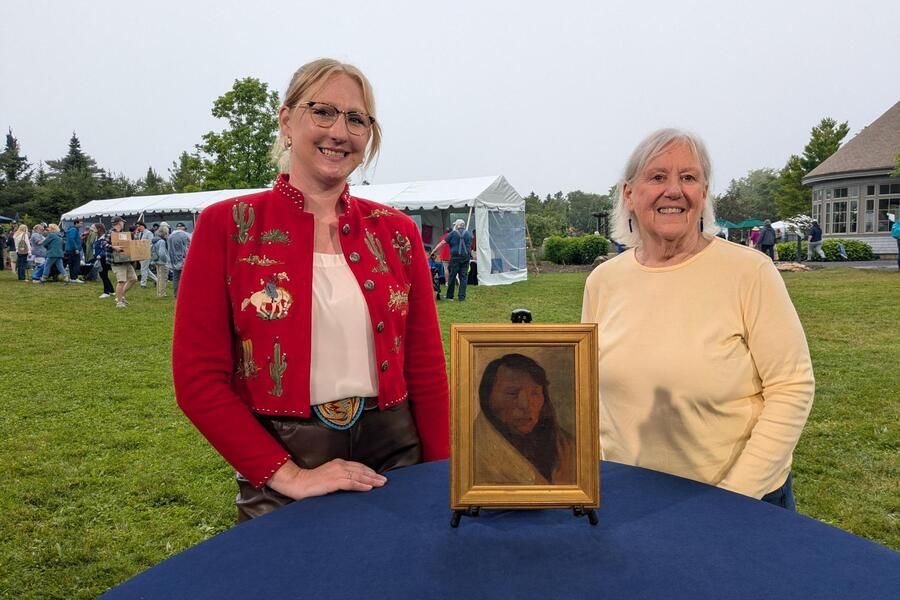
Specialist Spotlight: Erin Rust
Join us as we spotlight Erin Rust, Associate Vice President and Specialist in Native American Art, ahead of our Native American and Southwestern Jewelry auction on June 15. Learn about her journey in the world of Native American art and jewelry, notable achievements at Freeman’s, and her favorite lots from our upcoming sale.
Freeman’s: What originally attracted you to the world of Native American art and auction?What drew you to becoming a specialist and translating your passion into your career?
Erin Rust:Since childhood, I’ve always had a deep passion for Western history. My father, who did photography work for the American Indian Movement in the 1970s and is also a collector of Indigenous art, played a huge role in cultivating that interest. I grew up attending powwows, walking fields insearch of arrowheads, and being immersed in stories and objects connected to Native history. Combined with my love of horses, I was especially drawn to the history of the American West.
One of the first books I read repeatedly, and still have today, worn nearly to pieces,was about Sitting Bull. As a horse-crazy kid, I thought the idea of a society shaped in so many ways by horses was fascinating. From there, I checked out nearly every book in my elementary school library related to Native and Western history, often multiple times, and that curiosity only grew as I got older.
My degree is in Graphic Design, but I minored in History with a specialization in Native Studies. My thesis focused on the evolution of the horse in Plains culture during the Early Reservation period. During my senior year of college, I took a class focused on career paths for art majors that went beyond traditional roles. One visit took us to Cowan’s Auction, and I remember being completely captivated by both the material and the environment. I even made a note to introduce myself to Danica, though I never actually did. Instead, I went home and told my dad about the experience. He had always collected Native art, but after that, he really began buying at auction.
After college, I took a job creating marketing materials for a local equestrian farm that is a nationally award-winning breeder and trainer. After six years, though, I realized it wasn’t the career path I wanted long term. Around that time, my dad had gone to Cowan’s to pick up purchases from an auction and was speaking with Danica about potential opportunities. She mentioned there was an opening for a cataloger. I applied — and 9½ years later, here we are.
F:How did your career journey lead you to Freeman’s?
ER: I joined Cowan’s Auction in January 2017 as a cataloger, which gave me the opportunity to immerse myself in the material and develop expertise within the field. Over time, I cultivated a specialization in Native and Southwestern jewelry, an area where I saw both opportunity and strong collector interest. Since then, I’ve had the privilege of developing andshaping the Native and Southwestern Jewelry auctions, expanding both the range of materialwe offer and the audience for these sales. Through the merger with Freeman’s, I’ve continued building on that foundation while expanding the reach and visibility of this category.
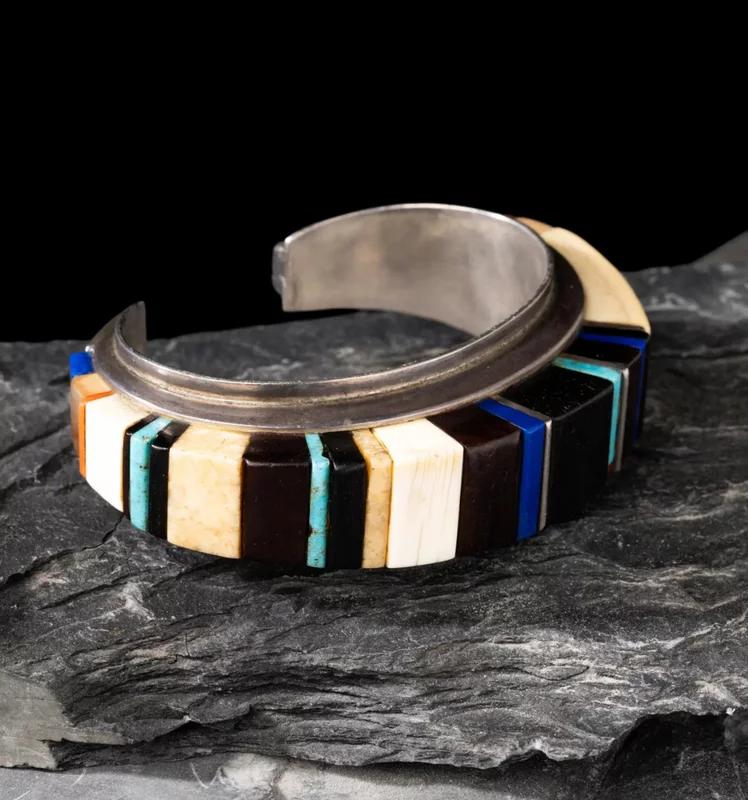
Lot 148 | Charles Loloma (Hopi, 1921-1991), Silver and Cobblestone Inlay Cuff Bracelet | Estimate $10,000 - $15,000
F:Are you personally a collector of native and southwestern jewelry? What are some of your favorites that you’ve acquired?
ER:I do have a small collection, nothing particularly major, but the pieces I own tend to be meaningful because of the stories and relationships connected to them.
The piece I wear most often is a Northern Cheyenne heart-shaped beaded belt buckle, gifted to me by a close family friend for good luck during my first year at Cowan’s. It’s one of those pieces that carries a lot of personal significance beyond the object itself.
Another favorite is a pair of long, bright yellow acrylic serpent earrings by Haíɫzaqv–Nuučaan̓uɫ artist Vina Brown, Copper Canoe Woman, which I purchased at the Santa Fe Indian Market. I love them because they’re bold and contemporary, and they reflect the incredible diversity and innovation happening in Indigenous jewelry and adornment today.
I think what draws me most as a collector is less the size or value of a collection and more the connection to the artist, the story, and the memories attached to each piece.
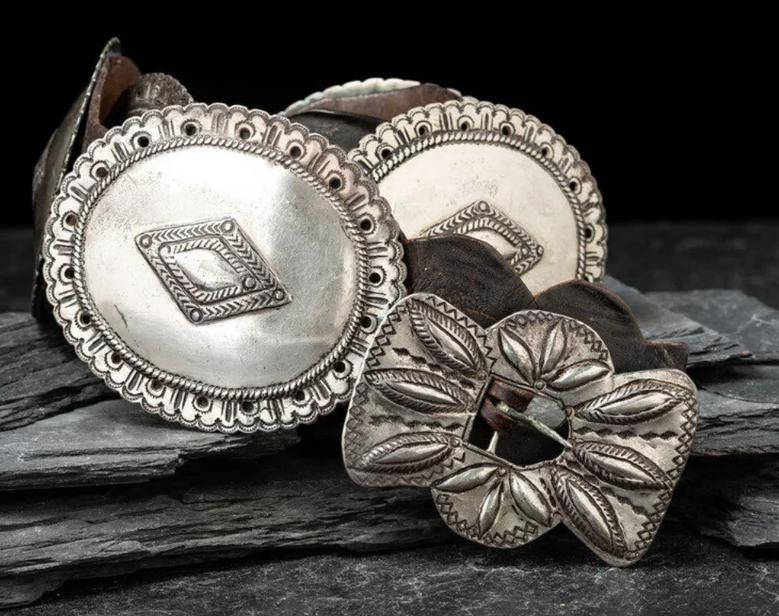
Navajo Second Phase Concha Belt, Collected by Hoffman Birney (1891-1958), Sold for $25,400
F: Can you describe a collection that you are proud to have brought to auction?
ER:One collection I’m especially proud to have brought to auction was the Hoffman Birney Collection, which was featured in Sale 1333, our Native and Southwestern Jewelry auction in July 2024.
Hoffman Birney (1891–1958) was an American author and New York Times book critic best known for his contributions to Western literature. Over the course of his career, he authored nearly two dozen works of fiction and several historical non-fiction books focused on the American West.
The collection consisted of 46 lots of early-historic Navajo jewelry that Birney acquired during his travels throughout the Southwest while researching his writing. What made the collection particularly exciting was not only the quality and rarity of the material, but also the direct connection between the objects and Birney’s life and work.
The collection ultimately hammered at $242,100, setting new benchmarks for historic Navajo jewelry at auction. Highlights included an ingot and turquoise cuff bracelet with Maltese Cross (Lot 162), which realized $22,860 including buyer’s premium, and a second phase concha belt (Lot 147), which achieved $25,400 including buyer’s premium.
I’m particularly proud of this collection because it combined strong provenance, exceptional material, and important historical context — and it demonstrated the growing interest and strength of the market for early historic Navajo jewelry.
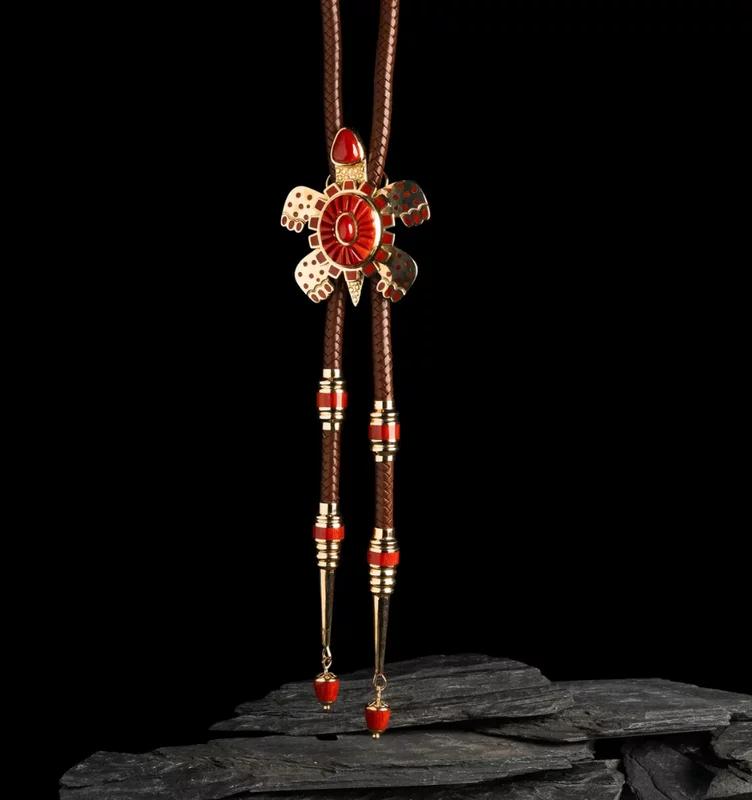
Lot 291 | Vernon Haskie (Dine, b. 1968), 14k Gold and Mediterranean Coral Turtle Bolo Tie | Estimate $6,000 - $8,000
F: Describe a typical workday for you at Freeman’s.
ER: A typical workday is a balance of research, client communication, and preparing material for upcoming sales. A large part of my day involves responding to emails and phone calls from collectors, consignors, and prospective clients regarding potential auction material, answering questions about objects, and discussing the market for Native and Southwestern jewelry.
I also spend significant time cataloging and researching property for upcoming sales — examining materials, identifying makers and tribal affiliations, researching provenance, and building the historical context that helps tell the story behind each object.
Beyond cataloging, my role involves evaluating consignments, working closely with clients throughout the consignment process, coordinating photography and sale presentation, and continually monitoring market trends to understand collector interests and pricing. Every day is a combination of scholarship, market knowledge, and relationship-building, which is one of the things I enjoy most about the work; no two days are ever exactly the same.
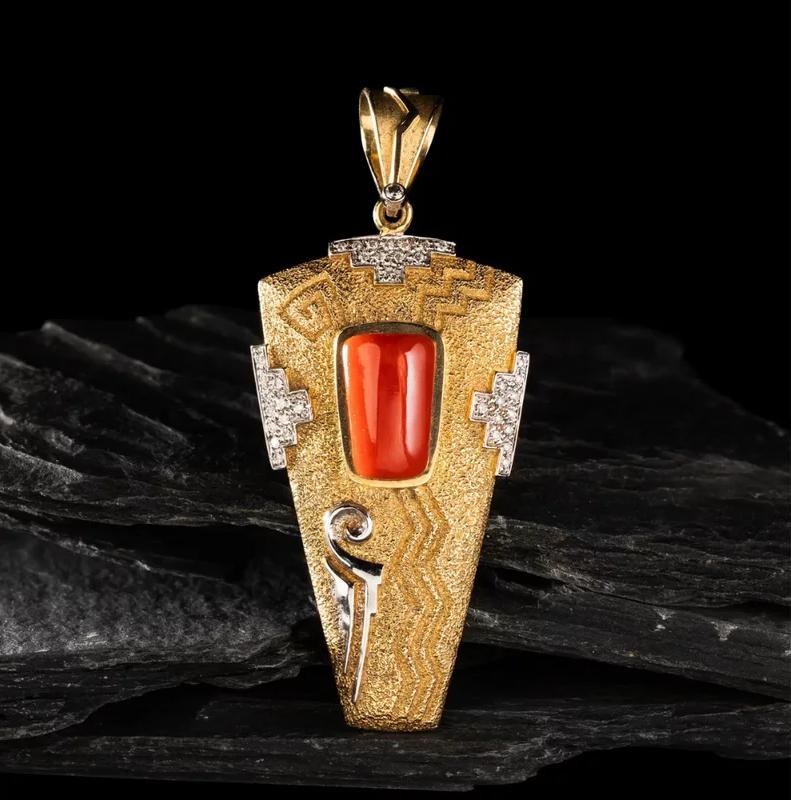
Lot 290 | Don Supplee (Hopi, b. 1965) 14K Gold Tufa Cast, Coral, Turquoise, and Diamond Pendant | Estimate $5,000 - $7,000
F: What are some market trends you’ve observed recently in the category of Native American Art and jewelry? Can you tell us about some of your favorite lots in our upcoming June 15 auction?
ER: Trends in Native and Southwestern jewelry have historically moved in parallel with popular culture and broader fashion trends, particularly when Western aesthetics become more visible in mainstream media. When interest in the American West rises, we typically see a corresponding increase in demand for Native jewelry and material culture. You can trace these cycles through different periods, from the popularity of classic Hollywood Westerns in the mid-20th century, to films like Little Big Man in the 1970s and Dances with Wolves in the 1990s, to the influence of the Yellowstone franchise and contemporary Western fashion trends today.
That said, the market is not driven solely by fashion. There has always been strong and consistent collector demand for early historic material, exceptional craftsmanship, and works by master artists. Within dedicated collecting communities, rarity, provenance, artistry, and historical importance continue to drive the strongest results.
One trend I find especially interesting right now is the growing crossover between collectors, fashion audiences, and younger buyers entering the market through contemporary Indigenous design. Social media, contemporary Native artists, and broader conversations about Indigenous representation have introduced new audiences to Native jewelry, fostering wider appreciation of both historic and contemporary works.
Native American and Southwestern Jewelry
Live Online | Chicago
Jun 15 | 9:00 AM CDT