Condition Report
Contact Information
Lot 1039
Sale 961 - American Historical Ephemera & Photography
Nov 30, 2021
10:00AM ET
Online / Cincinnati
Own a similar item?
Estimate
$300 -
500
Price Realized
$875
Sold prices are inclusive of Buyer’s Premium
Lot Description
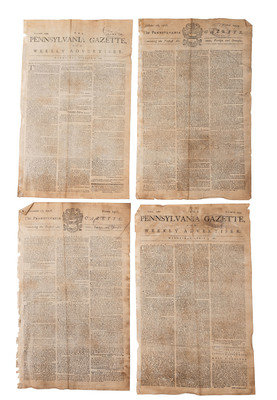
[COLONIAL] Late 18th Century receipts, including the Indian Queen Tavern, and copies of the Pennsylvania Gazette.
Lot of 15 items.
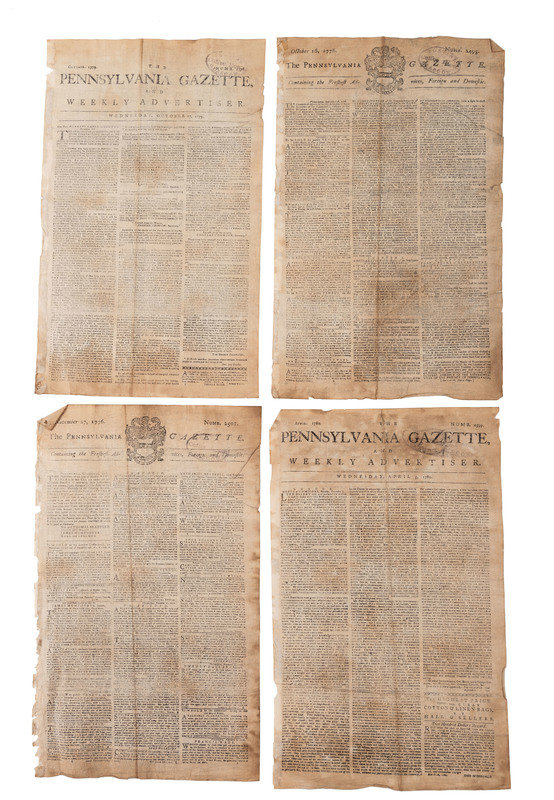
Four issues of the Pennsylvania Gazette (2pp only). Nov. 27, 1776, No. 2501; Oct, 16, 1776, No. 2495; April 5, 1780, No. 2599; and Oct. 27, 1779, No. 2576. The second two were published under The Pennsylvania Gazette and Weekly Advertiser.
The Oct. 1776 issue contains the Constitution of the Commonwealth of Pennsylvania; Chapter I - A Declaration of the Rights of the Inhabitants of the State of Pennsylvania; Chapter II – Plan or Frame of Government.
This is one of the most prominent newspapers of the 18th century, what some have compared to the New York Times of its day. It was published from 1728-1800. In 1729 Benjamin Franklin bought the paper and it was printed in his shop. He was also a contributor, often under an alias. But he also reported things such as his experiments with electricity in 1752 and other important early science.
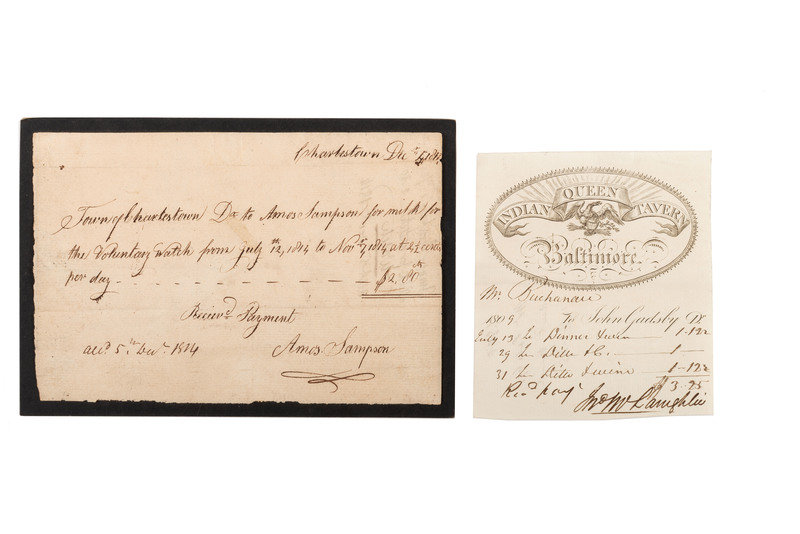
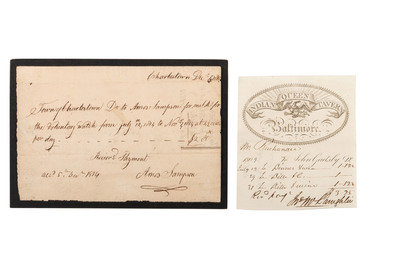
Receipt from John Gadsby’s Indian Queen Tavern, Baltimore. To Mr. Buchanan, listing purchases for July 1809. Paid and signed by John McLaughlin. John Gadsby (1766-1844) was born in England and came to the United States in 1795. He landed in Alexandria, VA, then a major port and would become the site of his first tavern. In 1805 he had lost his first wife and he married Peggy McLaughlin and sold his lease on the tavern. He moved to Baltimore, although why he did so is uncertain. Gadsby purchased the Indian Queen Hotel, a large tavern with all the “modern” (of the day) innovations. Gadsby and Peggy had a son in 1808, but Peggy died in 1812. Gadsby married Providence Langworthy, of the prominent Norris family. They attended many events at the Indian Queen Hotel and welcomed many notable guests (including Francis Scott Key, who reportedly finished the Star-Spangled Banner while staying there). Gadsby lost everything in the Panic of 1819, leaving Baltimore and moving on to Philadelphia then Washington (following the stagecoach line). There he opened the Franklin Hotel, again catering to the most distinguished men in society. He later opened the National Hotel on Pennsylvania Avenue. He retired in 1836. When he died in 1844 he was buried in the Congressional Cemetery.
Receipt/invoice to the town of Charlestown from Amos Sampson “for milk for the Voluntary Watch from July 12, 1814 to Nov. 1, 1814….” This would have been near the end of the War of 1812.4-3/4 x 7-1/4 in. Tipped on to cardstock.
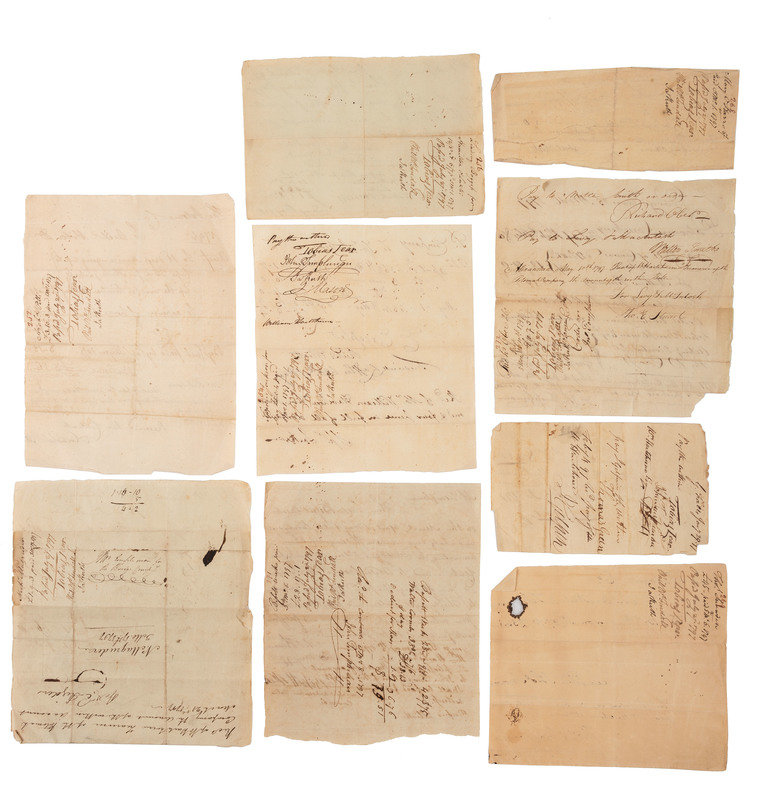
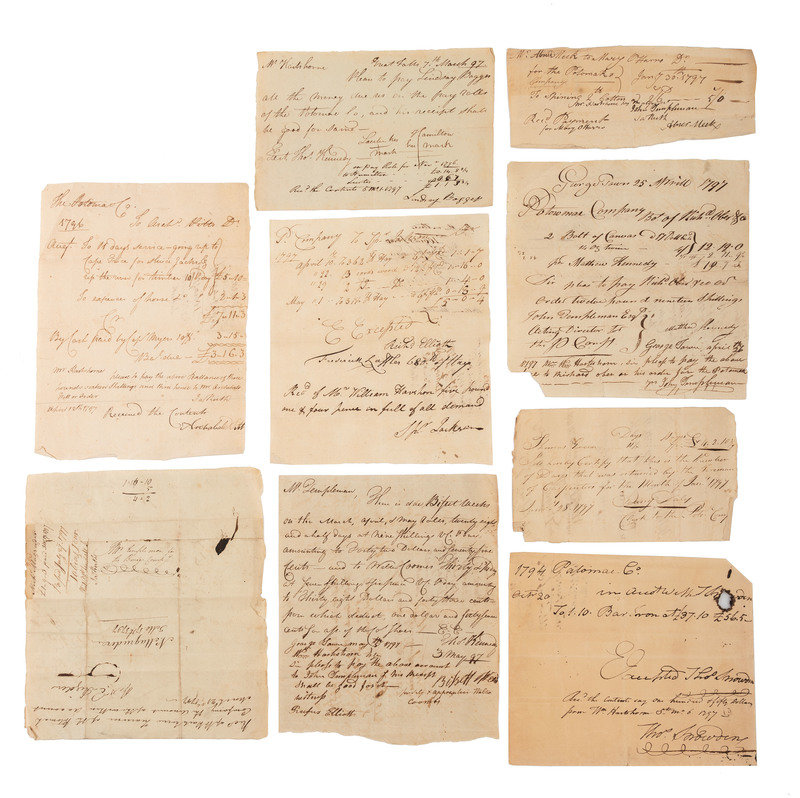
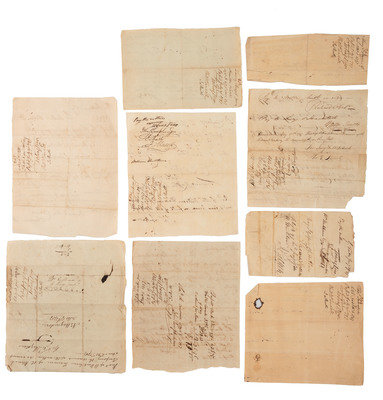
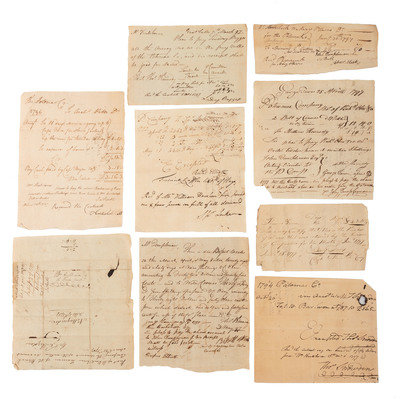
Group of nine (9) invoices/receipts from 1796-1797. All docketed on verso by Tobias Lear, one on Jan. 29, 1797, the others July 27, 1797. Includes receipts for days put in by carpenters, the cost to go up the river for timber, cost of wood and hay for the rented horses, paper, ink, canvas cloth, spinning #2 cotton, etc. Many associated with the Potomac Company.
Tobias Lear (1762-1816) was a fifth generation American born in Portsmouth, New Hampshire. During the Revolutionary War he attended Harvard College. Later, a family friend, Benjamin Lincoln, recommended him as a tutor for Martha Washington’s grandchildren and personal secretary to George Washington. This role evolved into much more over the years. He was at Mt. Vernon when Washington died and handled the funeral arrangements. He inherited an interest in Walnut Tree Farm. His employment is sporadic after Washington’s death, but he had allied with Thomas Jefferson and so had some appointments over the next decade. Lear committed suicide, but the reasons for it are unknown. For all his record-keeping, he did not leave a suicide note or a will.