Condition Report
Contact Information
Lot 1006
Sale 961 - American Historical Ephemera & Photography
Nov 30, 2021
10:00AM ET
Online / Cincinnati
Own a similar item?
Estimate
$200 -
300
Price Realized
$188
Sold prices are inclusive of Buyer’s Premium
Lot Description
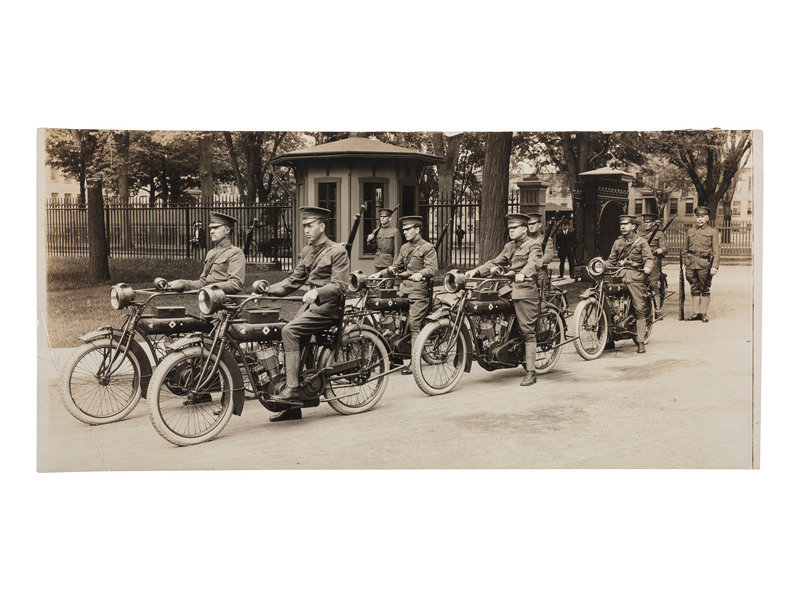
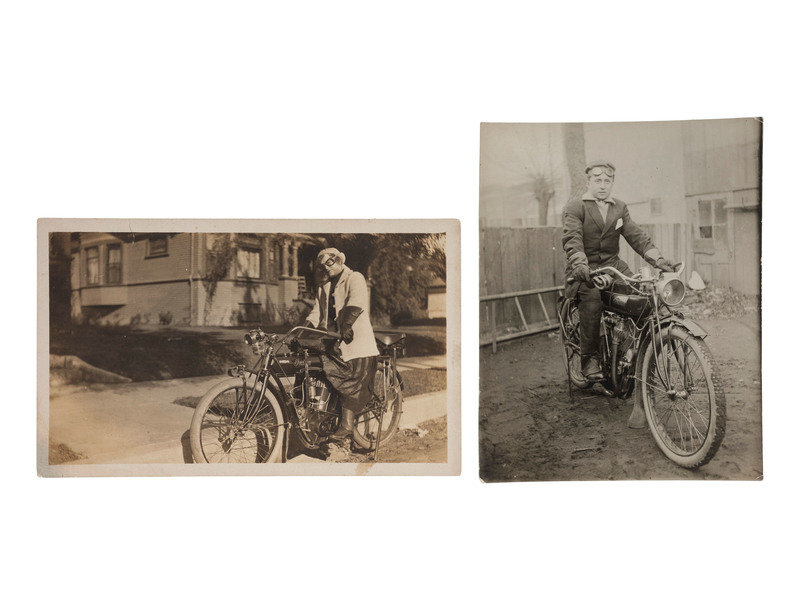
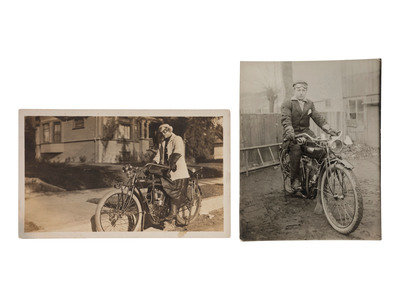
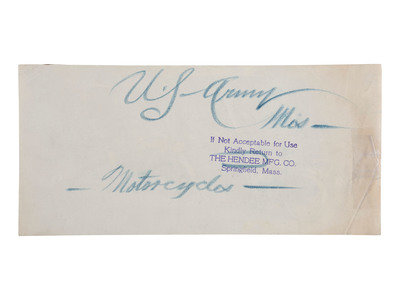
[EARLY PHOTOGRAPHY] -- [TRANSPORTATION]. A group of 3 photographs of Indian "motocycles."
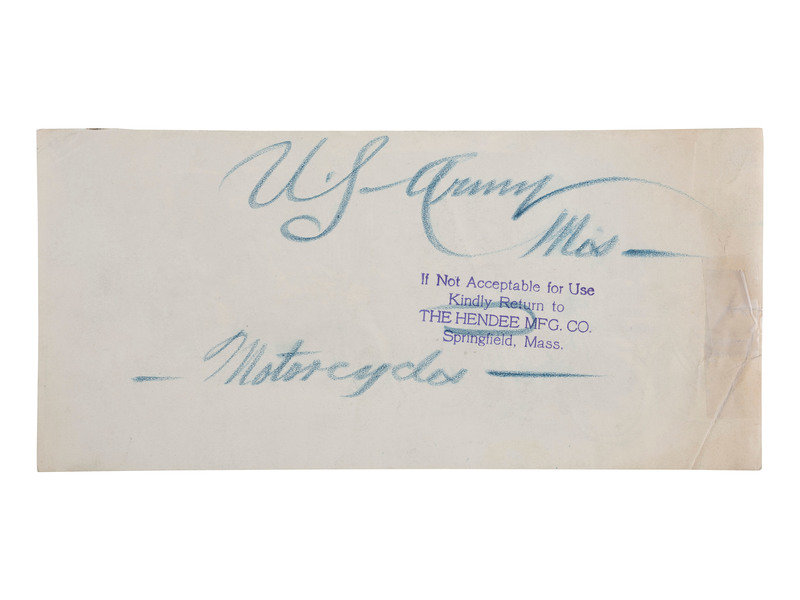
4-5/8 x 10 in. photo of seven soldiers on Indian motorcycles. Behind the Indian on the crossbar is “Signal” and crossed signal flags. The soldiers have their rifles slung on their backs. (tape repairs on verso on left edge)
3-5/8 x 4-3/4 in. photo of young man on an Indian. He wears gloves and has his goggles pushed up on his forehead.
3-3/8 x 5-1//2 in. photo of a woman on an Indian. She wears gloves, boot and goggles with her skirt. There is a passenger seat mounted on the rear of the bike.
In 1897, bicycle racer George M. Hendee founded a bicycle production company. He joined forces with cofounder Oscar Herdstrom, an endurance bicycle rider, to build gasoline-powered bikes to be used as pace bikes in races. This laid the foundation for motorized two-wheel vehicles. The bicycles also proved durable and reliable, establishing a reputation for quality workmanship that would serve Indian well over the early decades and help them get the lucrative military contracts.
In 1897, bicycle racer George M. Hendee founded a bicycle production company. He joined forces with cofounder Oscar Herdstrom, an endurance bicycle rider, to build gasoline-powered bikes to be used as pace bikes in races. This laid the foundation for motorized two-wheel vehicles. The bicycles also proved durable and reliable, establishing a reputation for quality workmanship that would serve Indian well over the early decades and help them get the lucrative military contracts.
Their first factory opened in 1901 in Springfield (MA). In 1923, the Hendee Manufacturing Company became the Indian Motocycle (no “r”) Company. Two decades later, the Sturgis, South Dakota-based Jackpine Gypies group held a race called the Black Hills Classic, and the annual Sturgis gathering was born.
Indians (and their predecessors) were supplied to the Armed Forces in both WWI and WWII. By this time Herdstrom had left (1913) and Hendee had retired (1916). But Indian and its reputation for quality continued under the next generation.