Condition Report
Contact Information
Auction Specialist
Lot 515
Sale 960 - American Historical Ephemera & Photography
Nov 15, 2021
11:00AM ET
Live / Cincinnati
Own a similar item?
Estimate
$500 -
700
Price Realized
$1,625
Sold prices are inclusive of Buyer’s Premium
Lot Description
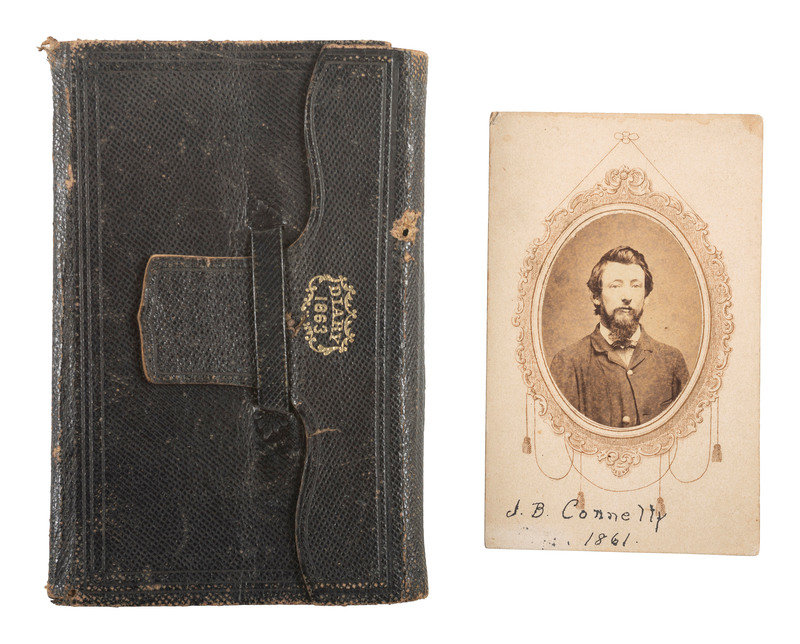
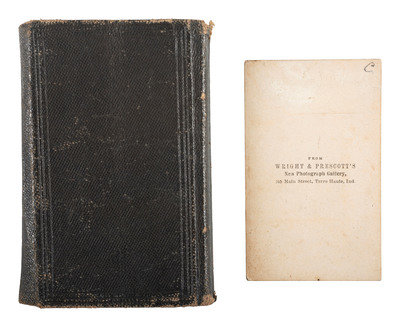
[CIVIL WAR]. Diary of Jesse B. Connelly, 31st Indiana Regiment, including description of the Second Battle of Murfreesboro (or Battle of Stones River).
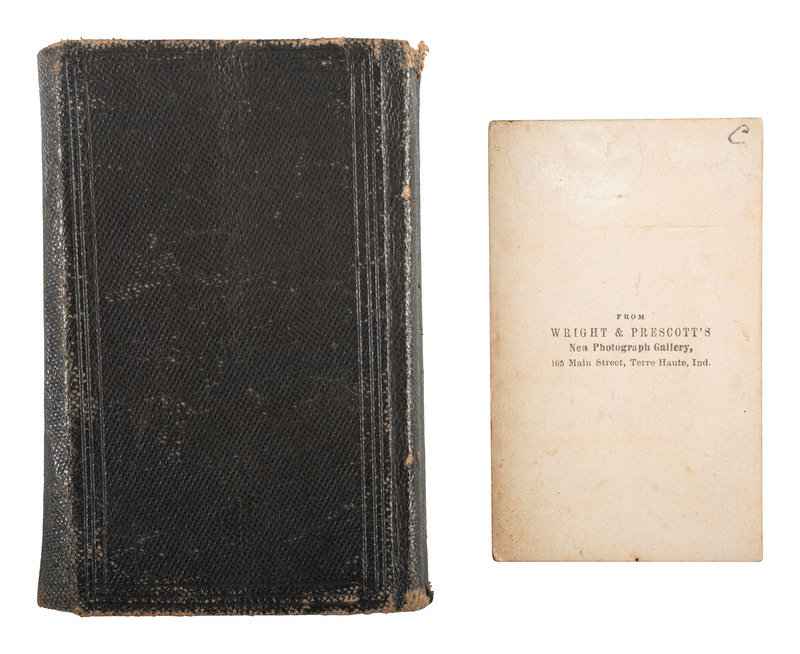
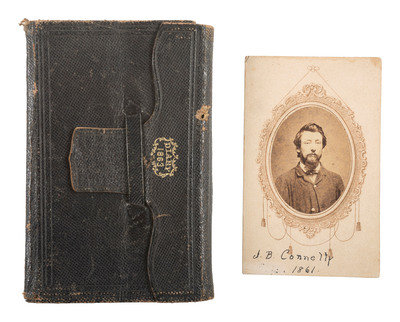
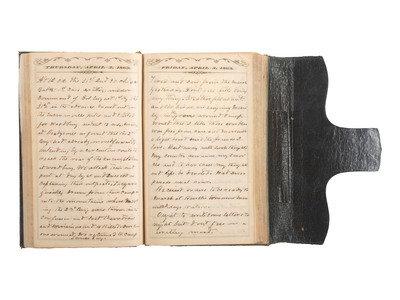
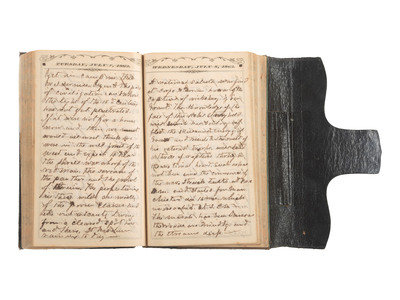
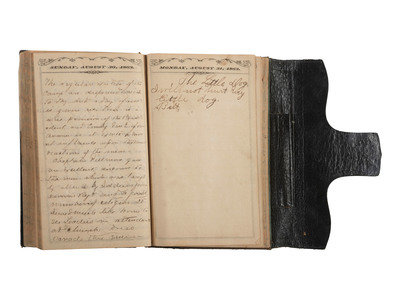
Pocket Diary 1863. Cambridgeport, Mass.: Denton & Wood, 1863. With day and date at top of each page, sections for accounts and other notes at the end, short almanac at the beginning.
[With:]
Cdv of Connelly, dated 1861, backmark of Wright & Prescott, Terre Haute, Indiana.
Jesse B. Connelly (1836-1920) was a native of Parke County, Indiana (now part of the Terre Haute MSA). He was educated at Bloomingdale Academy and Asbury College (now DePauw University). In September 1861 he enlisted in the 31st Indiana Volunteer Infantry for three years. He was promoted to 2nd Lieutenant in April 1862. He was injured in the Battle of Chickamauga but was unfit for field service and discharged in April 1864.
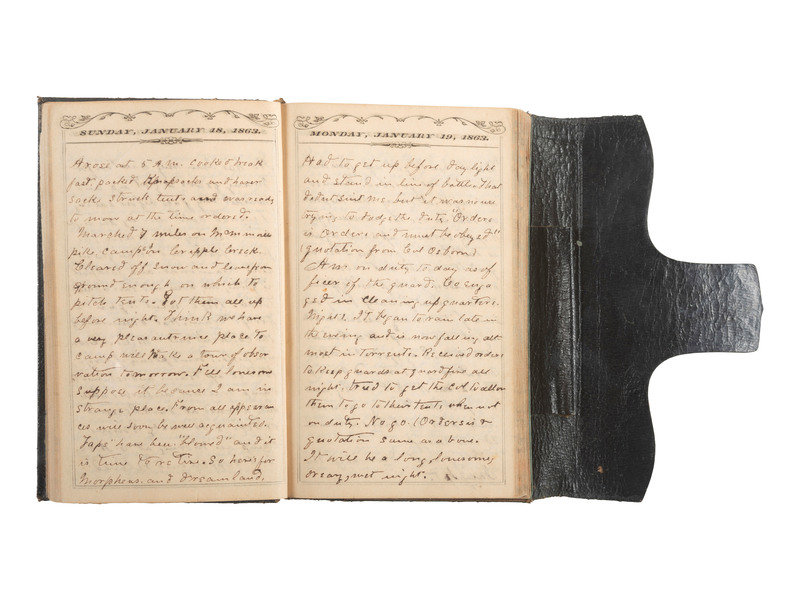
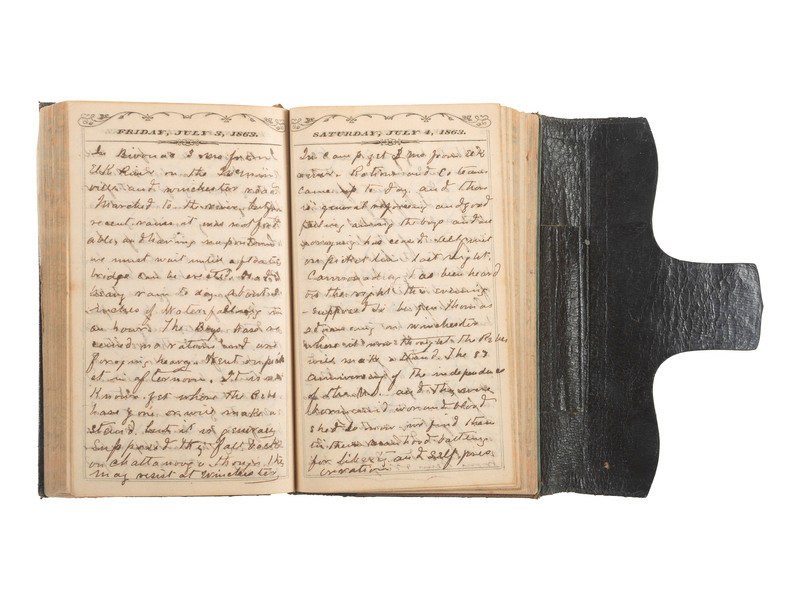
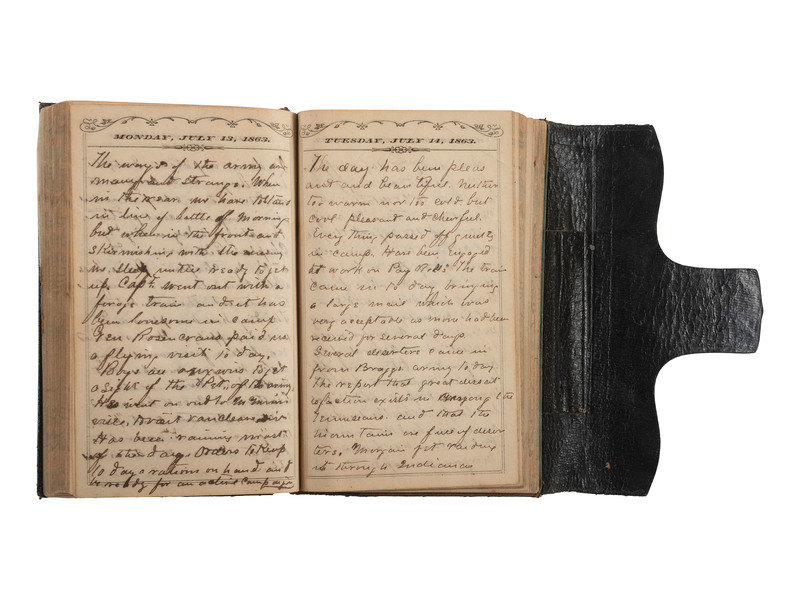
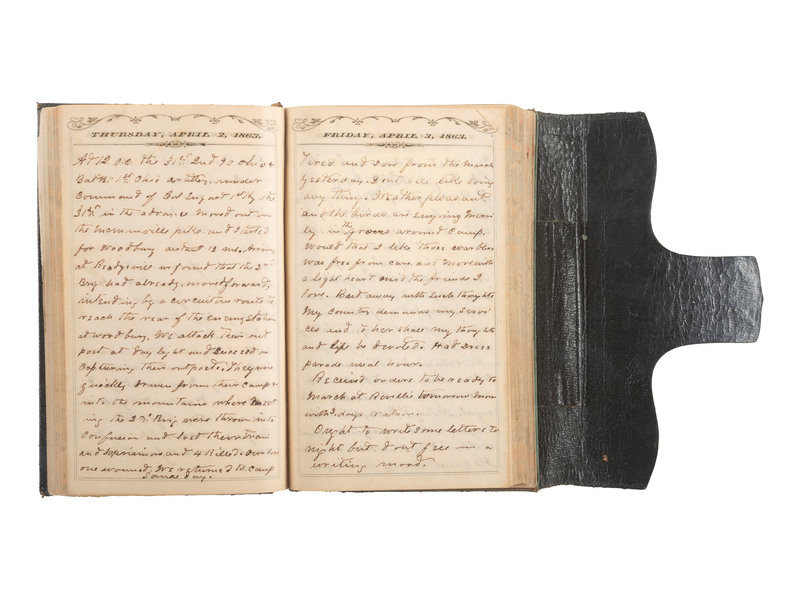
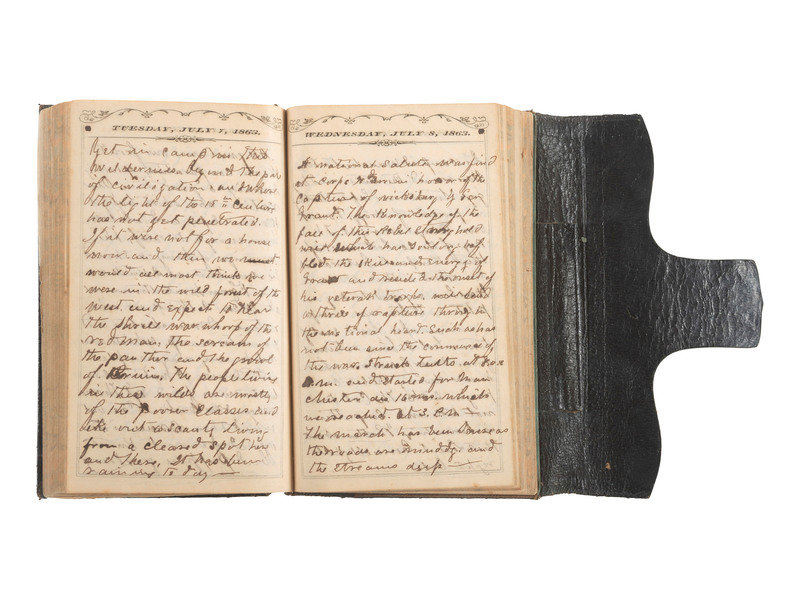
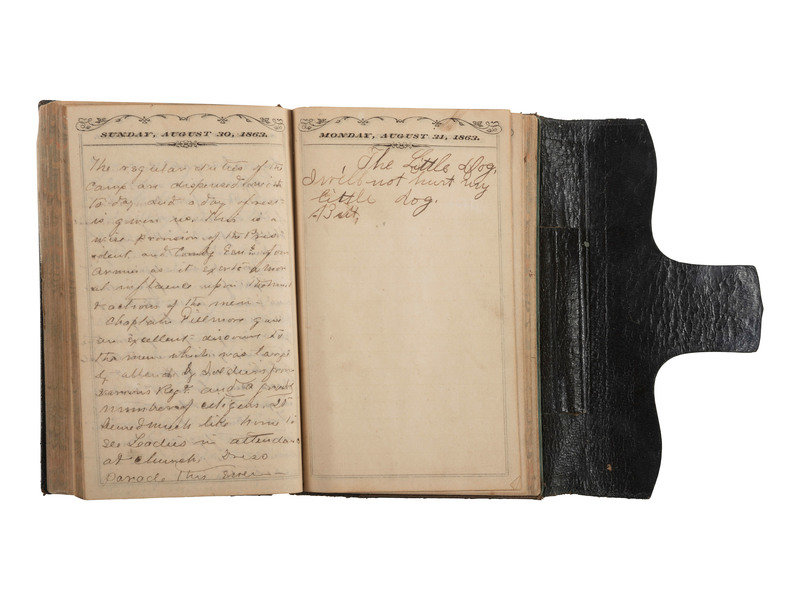
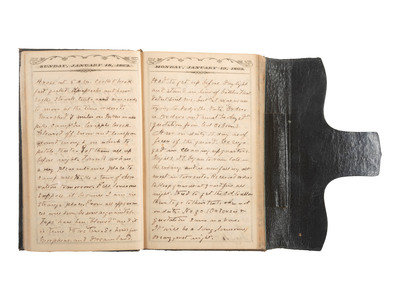
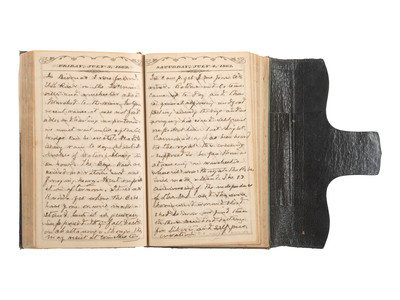
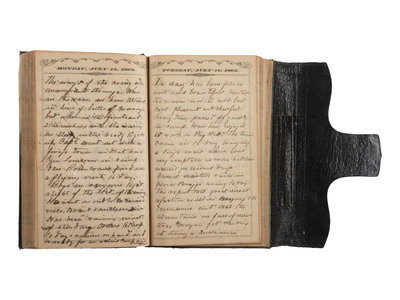
This diary has entries for Jan. 1 - Jan. 22. Jan. 23-26 pages missing; Jan. 27 - Feb. 1 has kid's writing and blanks; Feb. 2-3 missing Feb. 4-5 blank; FEb. 6-15 missing; Feb. 16-Mar. 25 blank; Mar. 26-27 missing; Mar. 29-31 blank; July 21-22 stuck together; most pages after Aug. 31 missing. It is relatively complete for January, April, May, June, July, August. He may have had two diaries for 1863 since the Jesse B. Connolly Collection at the Indiana State Library has another small 1863 diary.
Connelly was very literate, with entries nearly poetic. January 1: "The old year with all the joys and sorrows has passed away and with its histories unnumbered with the things of the past. Born when rebellion threatened the overthrow of the Government its advent was greeted with the groans and cries of freeman and [a]mid the requiem song was heard the groans of freemen fallen in defence of the country.
"The new year was born and yet the discordant sounds of war rand through the land. Instead of the greeting of a people happy prosperous and at peace there came the cries of anguish of hearts bereaved by the fortunes of war."
The new year continues with battle descriptions: Jan.2-3: "Last night we lay in line of battle in front of the enemy at Murfreesboro…. For 2 days had the battle raged in is fury along the lines as many a freeman had fallen a martyr to the principles of Liberty and Justice. …About 3PM the enemy advanced in force and attacked the left wing of the army a portion of which had crossed Stone River. For a while the enemy gained upon us but Rosecrans with seeming for[e]thought had massed his troops and artillery, in a favorable position to meet the advances of the enemy. The lost ground was soon regained and the enemy driven in disorder from the field. Night alone saved him from utter rout and defeat. During the engagement our Reg. lay under the fire of near 100 of our guns…. It was a trying ordeal but we stood to our post. When the Rebels began the retreat we were ordered to drive the enemy from a point of woods they occupied in our front. It was done at the point of the bayonet, in hands on style, Gen. Palmer leading the charge. This being accomplished we fell back to our old position and lay on arms during the night. The night was spent in gathering and conveying to the hospital the wounded both Union & Rebel."
The new year continues with battle descriptions: Jan.2-3: "Last night we lay in line of battle in front of the enemy at Murfreesboro…. For 2 days had the battle raged in is fury along the lines as many a freeman had fallen a martyr to the principles of Liberty and Justice. …About 3PM the enemy advanced in force and attacked the left wing of the army a portion of which had crossed Stone River. For a while the enemy gained upon us but Rosecrans with seeming for[e]thought had massed his troops and artillery, in a favorable position to meet the advances of the enemy. The lost ground was soon regained and the enemy driven in disorder from the field. Night alone saved him from utter rout and defeat. During the engagement our Reg. lay under the fire of near 100 of our guns…. It was a trying ordeal but we stood to our post. When the Rebels began the retreat we were ordered to drive the enemy from a point of woods they occupied in our front. It was done at the point of the bayonet, in hands on style, Gen. Palmer leading the charge. This being accomplished we fell back to our old position and lay on arms during the night. The night was spent in gathering and conveying to the hospital the wounded both Union & Rebel."
[page printed for January 4 begins with Jan. 3rd with Jan. 4 beginning near the bottom of the page and continues to Jan. 7, where the 5th begins] Jan. 4: “…Bragg retreated during Sat. night leaving 300 of his wounded in our hands. This closed the memorable battle of Stone[s] River resulting in the defeat and rout of a superior number of the rebels under this favorite Gen. by the Federals under Rosecrans. Another blow for freedom has been struck and victory perches on the banner of Liberty and Union. Parties have been detailed and sent out to collect and bury the dead many of which have lain on the field since Wednesday Dec. 30th, /62. Tis a horrible sight to wander over the different scenes of action and see the mangled and torn corps[es] of friend and foe lying in close proximity with lofty patriotism and firm determination depicted on the white upturned face of the former & rage and revenge on the latter, as if even in death they would fight and struggle for the mastery. To give a full description of those seven days of fighting and with their different phases, and the appearances of the field I leave to pens abler than mine….”
There may be a few pens abler than his, but he did continue to write after the war based on his extensive notes. In an article for the Rockville Republican, Dec. 22, 1886, for example, he describes the action they saw in late August 1862 through October 1862.
He also covered events in camp not directly related to battles. June 23: "I witnessed a sad and mournful scene to day, such as I never wish to see again. Pvt. John Lockman 1st Ky. was shot for desertion. He was a young man and from appearances intelligent."
On July 28 he notes: "News received to day of the capture of John Morgan. Let every man rejoice, Blow on wind instruments and sound the gong and build huge bonfires..."
After the war, he held a number of public offices, such as auditor and school board president. He married three times, with three children by his first wife, Mary Edwards.
There may be a few pens abler than his, but he did continue to write after the war based on his extensive notes. In an article for the Rockville Republican, Dec. 22, 1886, for example, he describes the action they saw in late August 1862 through October 1862.
He also covered events in camp not directly related to battles. June 23: "I witnessed a sad and mournful scene to day, such as I never wish to see again. Pvt. John Lockman 1st Ky. was shot for desertion. He was a young man and from appearances intelligent."
On July 28 he notes: "News received to day of the capture of John Morgan. Let every man rejoice, Blow on wind instruments and sound the gong and build huge bonfires..."
After the war, he held a number of public offices, such as auditor and school board president. He married three times, with three children by his first wife, Mary Edwards.