Condition Report
Contact Information
Lot 32
Sale 6560 - The Fathers and Saviors of Our Country: A Presidential Sale
Mar 26, 2026
10:00AM CT
Live / Chicago
Own a similar item?
Estimate
$1,500 -
2,500
Price Realized
$1,920
Sold prices are inclusive of Buyer’s Premium
Lot Description
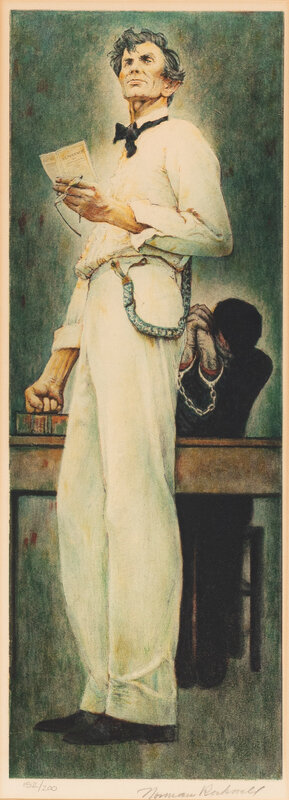
Norman Rockwell (American, 1894-1978)
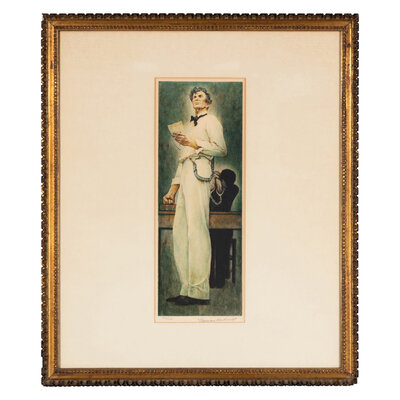
Lincoln for the Defense, 1962
color lithograph on Arches wove paper
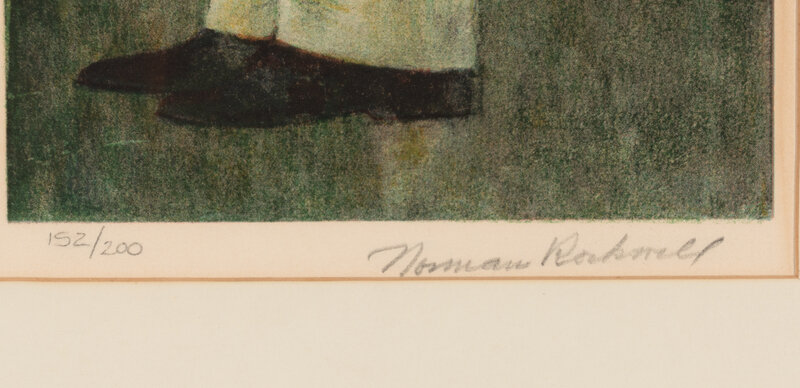
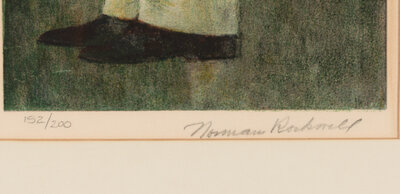
edition 152/200, signed Norman Rockwell (lower right)
Lincoln for the Defense, 1962
color lithograph on Arches wove paper
edition 152/200, signed Norman Rockwell (lower right)
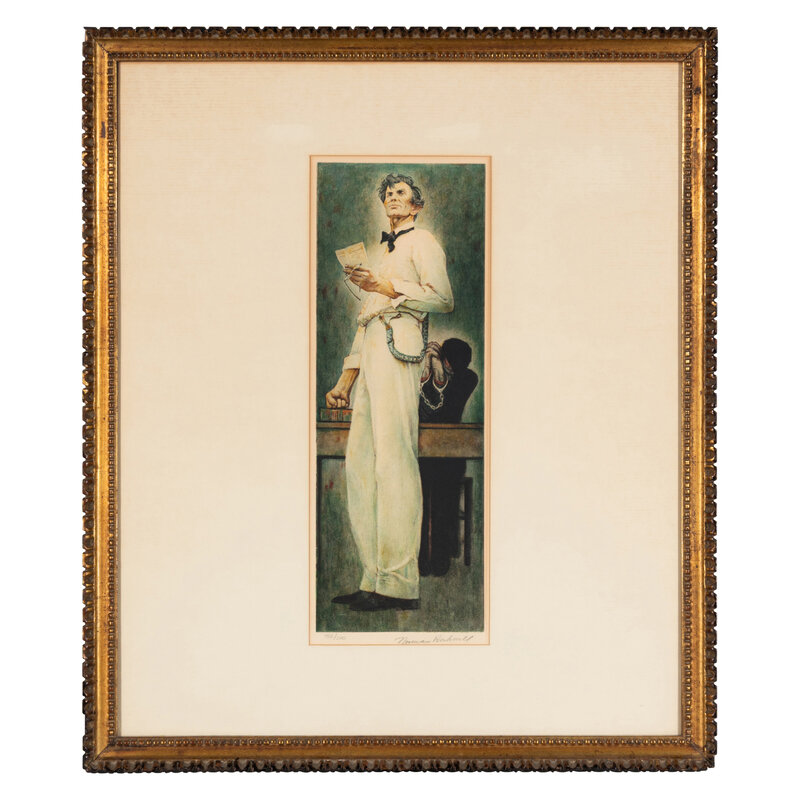
visible area 8 1/2 x 23 in.; overall 35 x 29 1/2 in.
matted and framed (unexamined out of frame)
Norman Rockwell's association with The Saturday Evening Post began with his first cover painting, Mother's Day Off, which appeared on the front of its 20 May 1916 issue. Over the following decades, Rockwell and The Saturday Evening Post became inextricably linked, with 323 original covers published between 1916 and 1963. His artwork, having steered and inspired Americans through the trials and tribulations of World War I, the Great Depression, World War II, the Cold War, and the early years of the space race, Rockwell's work came to symbolize a visual companion to the policies and virtues that had characterized American life through most of the 20th century.
Like many Americans, Rockwell himself was inspired by the life of Abraham Lincoln; the Great Emancipator's visage was echoed in the faces of those average Americans depicted in some of his most famous works, notably in Freedom of Speech (1943) and The Long Shadow of Lincoln (1945).
Lincoln for the Defense accompanied the article "Mr. Lincoln for the Defense" by Elisa Bialk in the 10 February 1962 issue of The Saturday Evening Post, which retold the famous story of Lincoln's defense of William "Duff" Armstrong, accused in the August 1857 murder of Jason Preston Metzger. A longtime friend of the family, Lincoln wrote in a letter to Armstrong's mother Hannah, "I am anxious that he should be given a fair trial... [in] gratitude for your long-continued kindness to me in adverse circumstances... [I] offer my humble services gratuitously in his behalf. It will afford me an opportunity to requite...the favors I received at your hand, and that of your lamented husband, when your roof afforded me a grateful shelter, without money and without price."
During the trial, witness Charles Allen claimed that he saw Armstrong murder Metzger from a distance of 150 feet by the light of the moon, upon which Lincoln produced an almanac showing that there would not have been sufficient moonlight that night for Allen to have witnessed the crime. He further showed that Metzger's injuries could have easily been the sole work of Armstrong's co-accused, a Mr. Norris. The jury acquitted Armstrong. Upon the outbreak of the Civil War, Armstrong enlisted in the Union Army, but was discharged at Lincoln's request in 1863 due to severe illness. He died in 1899.
This lot is located in Chicago.