Condition Report
Contact Information
Lot 31
Sale 6560 - The Fathers and Saviors of Our Country: A Presidential Sale
Mar 26, 2026
10:00AM CT
Live / Chicago
Own a similar item?
Estimate
$15,000 -
20,000
Price Realized
$76,800
Sold prices are inclusive of Buyer’s Premium
Lot Description
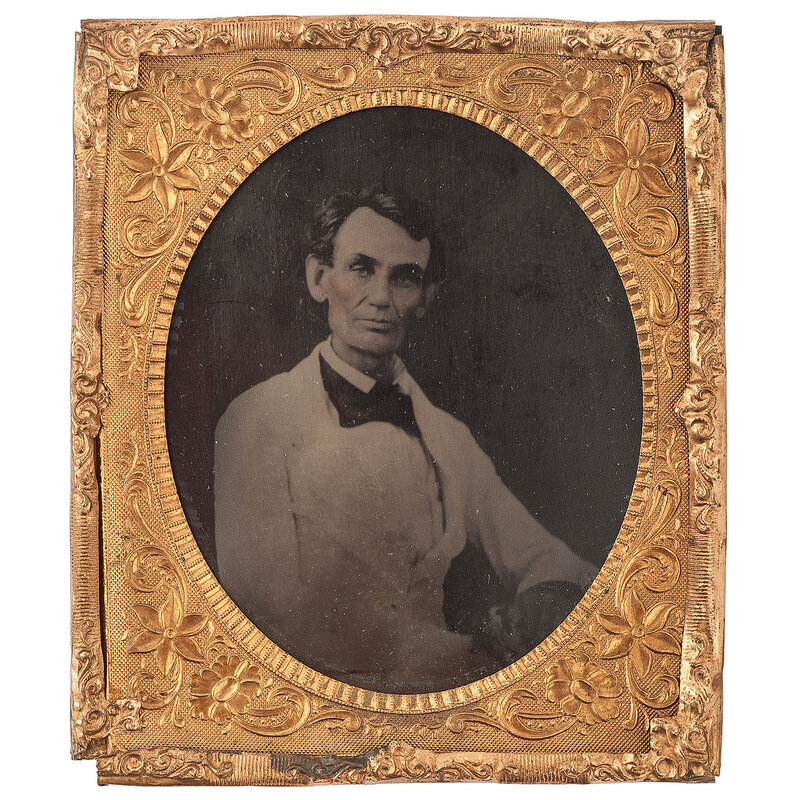
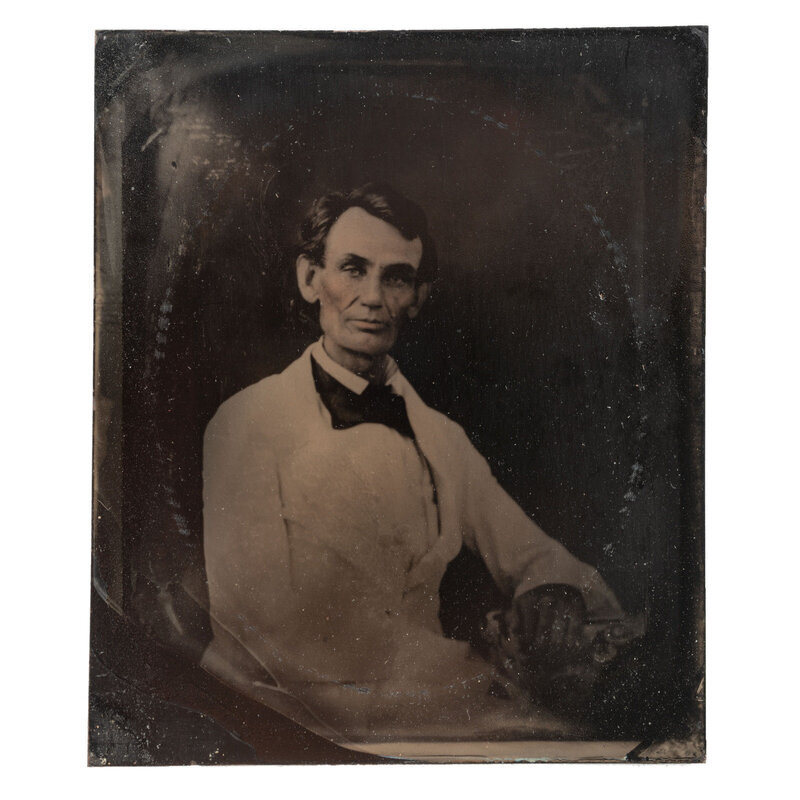
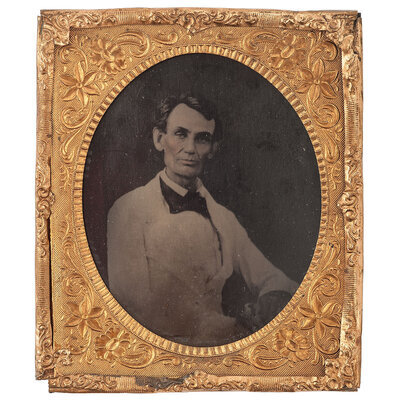
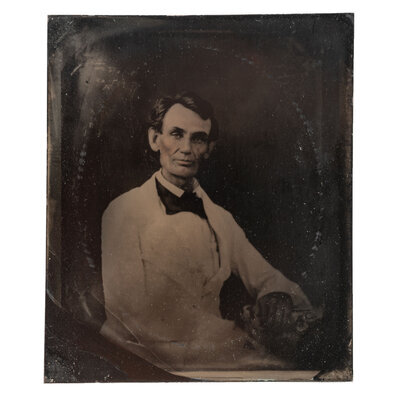
[LINCOLN, Abraham (1809-1865)]. A rare period tintype of Abraham Lincoln: The "Beardstown Portrait," 7 May 1858 [but ca 1860].
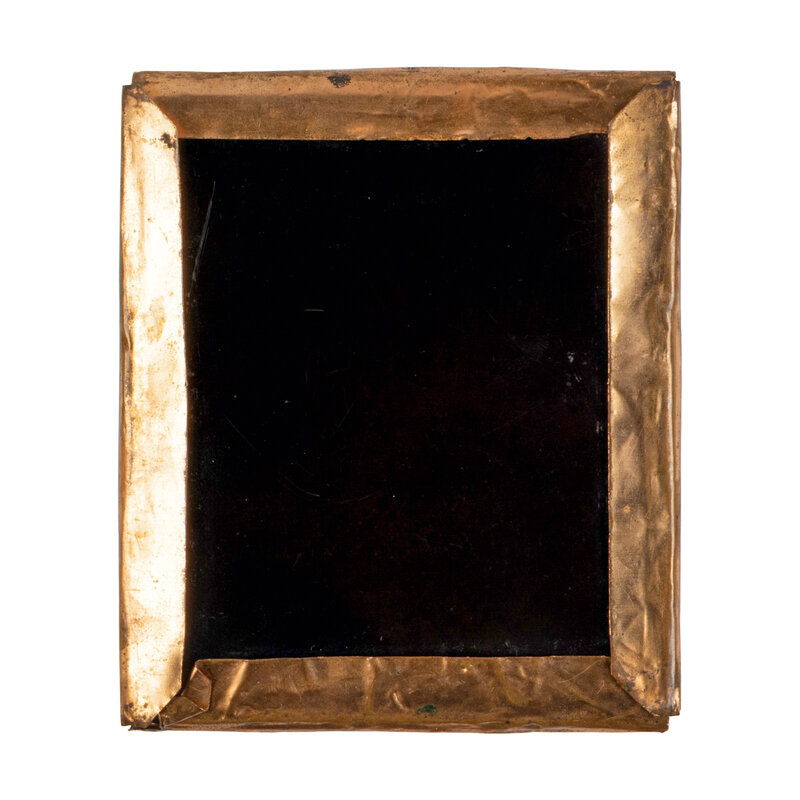
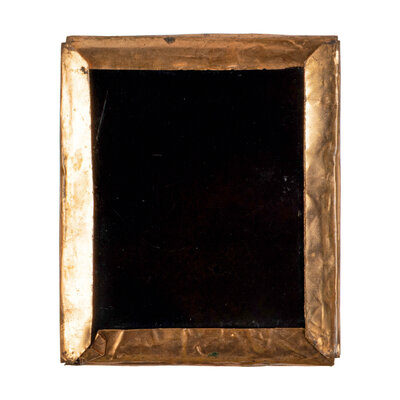
Sixth plate tintype, Lincoln's cheeks, and lips delicately tinted, with brass mat and preserver; lacking a case. Overall, 3 1/2 x 3 in.
ONE OF THE FINEST AND MOST IMPORTANT LINCOLN TINTYPES EXTANT.
Perhaps one of the most celebrated—and rarest—portraits of Abraham Lincoln is the image of the future president as a beardless lawyer, dressed in a white linen suit. The original photograph was taken on Friday, May 7, 1858, by the 18-year-old photographer Abraham Byers in his Beardstown, Illinois, studio. Aside from the original quarter-plate ambrotype curated at the University of Nebraska, the present tintype represents the only known extant period copy of this important sitting. No additional copies are illustrated in the standard photographic literature on Lincoln (see Lorant, Meserve, Hamilton, and Ostendorf).
Lincoln was in Beardstown at the time to defend Duff Armstrong, the son of a longtime family friend, who stood accused of the nighttime murder of Jason P. Metzker. The prosecution relied heavily on the testimony of an eyewitness who claimed to have observed the crime from a distance of 150 yards. In his defense, Lincoln famously introduced an almanac to demonstrate that the murder occurred on a moonless night, rendering such an observation impossible. The jury returned a verdict of not guilty after a single ballot, and the case soon entered legal lore as the “Almanac Trial.” Lincoln scholars have long regarded the Armstrong acquittal as his most celebrated courtroom victory.
Byers later recalled encountering Lincoln after the trial and requesting permission to make his portrait. Lincoln reportedly glanced down at his “old holland linen suit,” remarking that it was “dirty and unfit for a picture.” Byers persisted, and Lincoln ultimately agreed. The resulting likeness—captured using the ambrotype process—stands among the most compelling images of Lincoln prior to his presidency.
Hamilton and Ostendorf (pp.14-15, 370) record that Byers exposed two nearly identical ambrotypes. One survives today in the Special Collections of the University of Nebraska. The other was illustrated by Ida Tarbell in the November 1895 issue of McClure’s Magazine, where it was attributed to the collection of the Lincoln Monument Association. A search of the Association’s holdings has failed to locate the plate, and it is presumed lost.
The present sixth-plate tintype is a crisp and compelling copy of the Byers image. It is laterally reversed from the original ambrotype and printed on relatively thin japanned sheet iron, without an identifiable maker’s mark. Both the plate thickness and the surviving brass mat and preserver are consistent with photographic materials widely available in the years immediately before and after the Civil War.
Although tintypes of Lincoln were widely circulated during and after his lifetime—particularly for campaign purposes and later as mourning relics—the Beardstown portrait was not among those commonly reproduced. Given the exceptional clarity of the present plate, it is likely that this tintype was copied directly from the original Byers ambrotype. Its survival represents an important and recent discovery from a Colorado family.
PROVENANCE:
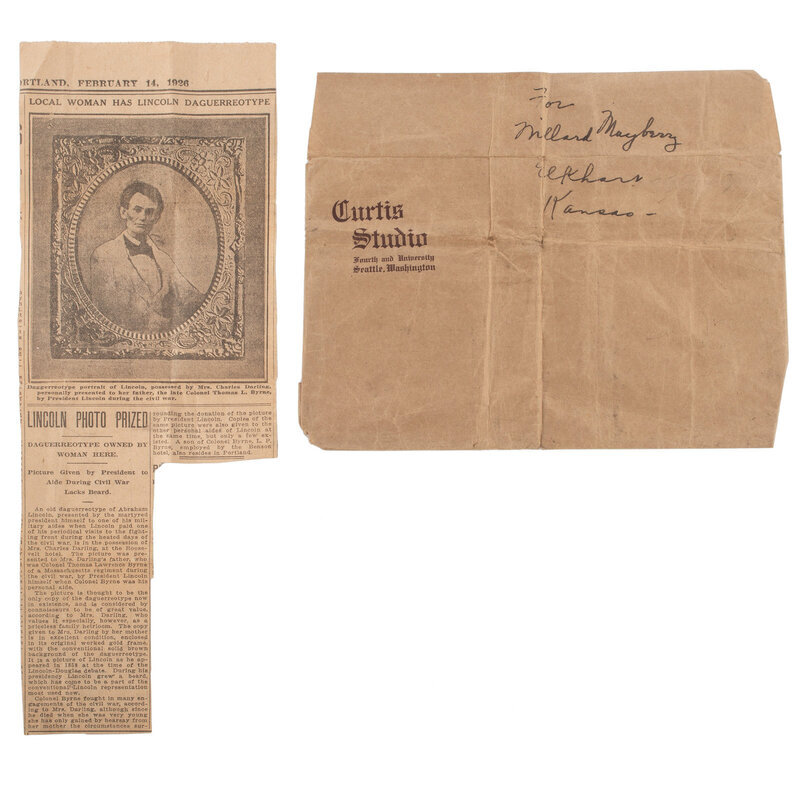
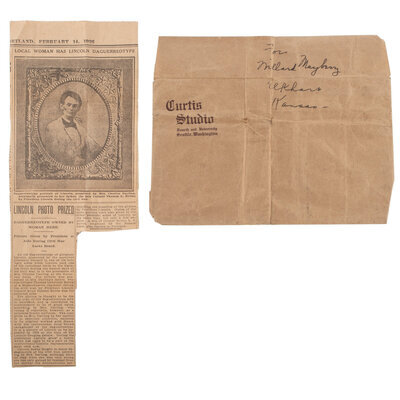
This Beardstown copy portrait descended in the family of Willard Mayberry (1902–1959) of Elkhart, Kansas. A newspaper publisher active in Republican politics, Mayberry served as secretary to fellow Kansan Alf Landon during Landon’s tenure as Governor and later during his 1936 presidential campaign. Mayberry’s descendants recall little about the acquisition of the tintype, other than that it had always been kept in the family lockbox. It was preserved in an envelope from the Seattle studio of the renowned photographer Edward S. Curtis, bearing the inked inscription: “For Willard Mayberry, Elkhart, Kansas.”
The envelope also contained a newspaper clipping from the February 24, 1926 issue of The Portland Oregonian. The article illustrates the tintype and identifies it as the prized possession of Mrs. Charles Darling of the Roosevelt Hotel. Mrs. Darling claimed that the tintype had been given by President Lincoln to her late father, Colonel Thomas Lawrence Byrne, who she asserted had served as a “personal aide” to Lincoln during the Civil War. She further stated that only a small number of such copies existed.
This account is demonstrably apocryphal. Civil War service and pension records identify Thomas Lawrence Byrne (1842–circa 1873) as an Irish-born machinist who enlisted in 1861 at the age of nineteen, serving as a Private—and later Sergeant—in Company B of the 11th Massachusetts Infantry. He was never an officer, nor did he serve as an aide to Lincoln. Byrne fought at First and Second Bull Run, where the regiment sustained catastrophic losses, and was wounded on the first day of Gettysburg. He was discharged in November 1863.
Following the war, Byrne resided in Massachusetts and was a member of GAR Post No. 11 (Abraham Lincoln) in Charlestown. By 1870 he had married and relocated to Humboldt, Kansas. He died only a few years later, leaving his wife Clara and three children. Upon Clara’s death, the Beardstown tintype passed to their daughter Mabel. Mabel Byrne later married Charles A. Darling, a dentist, and between 1900 and 1930 lived in Washington, Oregon, and California. Census records indicate that she worked and resided in hotels, suggesting a career in the hospitality industry. She died in Los Angeles in 1948.
While the precise circumstances under which Thomas Byrne acquired this extraordinary Lincoln rarity remain unknown, it is plausible that, as a veteran and member of the Abraham Lincoln GAR post, he preserved the image as a personal memento of the President he revered. The embellished family story recorded in 1926 likely reflects an effort to honor the memory of a father whose wartime service carried deep personal significance.
The means by which the tintype passed from Mabel Darling to Willard Mayberry is likewise undocumented. However, it is possible that Mayberry, in his role as Alf Landon’s secretary, encountered Darling during the 1936 presidential campaign while staying at a Los Angeles hotel where she worked.
REFERENCES:
Hamilton, Charles, and Lloyd Ostendorf. Lincoln in Photographs: An Album of Every Known Pose (1963), O-5; Lorant, Stefan. Lincoln: His Life in Photographs (1941); Mellon, James. The Face of Lincoln (1979), no. 6; Meserve, Frederick Hill. The Photographs of Abraham Lincoln (1944)
This lot is located in Chicago.