Condition Report
Contact Information
Lot 187
Sale 6560 - The Fathers and Saviors of Our Country: A Presidential Sale
Mar 26, 2026
10:00AM CT
Live / Chicago
Own a similar item?
Estimate
$1,000 -
1,500
Price Realized
$2,560
Sold prices are inclusive of Buyer’s Premium
Lot Description
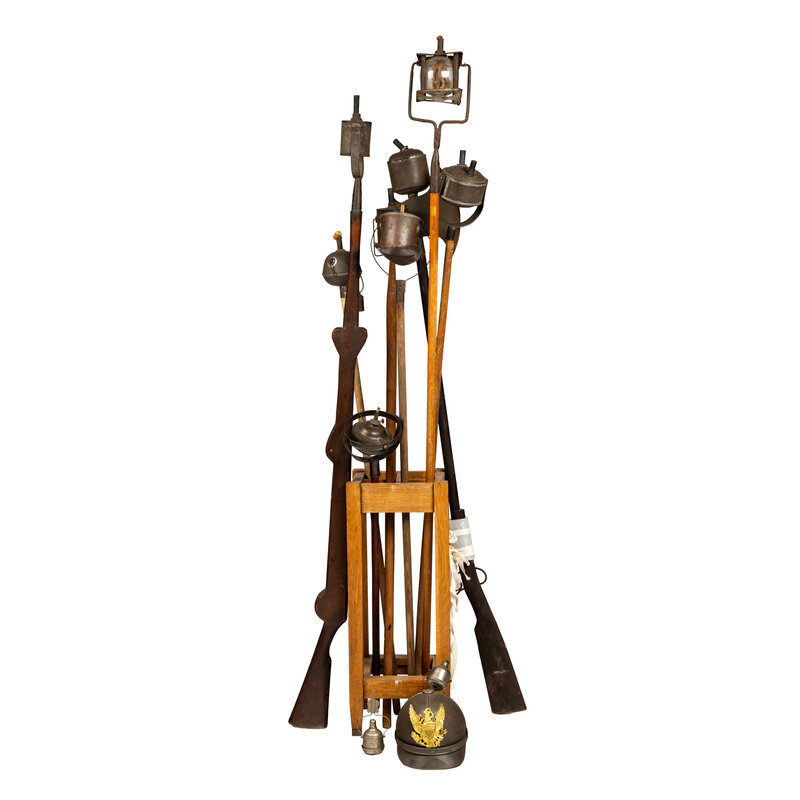
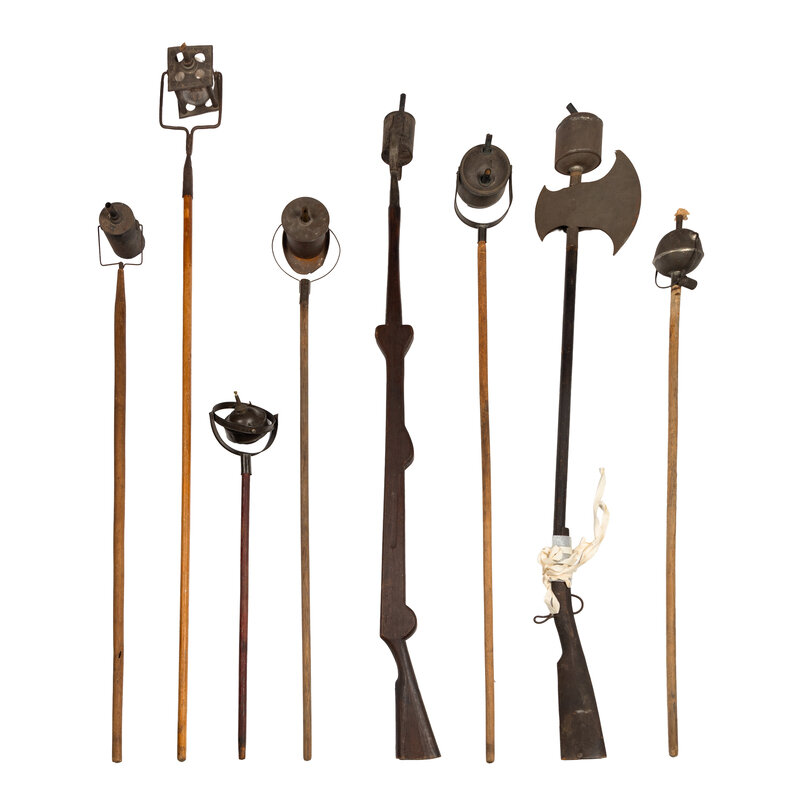
[PRESIDENTIAL CAMPAIGNS]. A group of 10 torches, ca 1860-1888, comprising:
Oscillating campaign torch. Ca 1860. -- Tin torch. Ca 1868. -- Double-burner tin torch. Ca 1877. -- Ballot box torch. Chicago: A & W Mfg. Co., ca 1880. -- 2 rifle torches. Ca 1880. -- Nickel-plated helmet and torch with thin metal eagle. Ca 1888. -- Ax torch. Ca 1884-1888. -- Nickel torch with nipple over burner. Ca 1888. -- Beaver hat torch. Ca 1888.
Tallest, approximately 73 in., most on contemporary wooden staffs, all appear unrestored and displaying wear commensurate with age and use. With a wooden stand.
Beginning with the 1860 presidential campaign, torchlit parades became a popular way to express support for a candidate. The practice began with the Wide Awakes, a youth organization organized by the Republican Party during Abraham Lincoln's first presidential campaign. At this time, it was common for them to carry pivoting whale-oil containers mounted on six-foot poles, marching without speaking, their eyes fixed ahead, the only sound being the boots stamping in unison on the cobblestone streets. Many of the original Wide Awakes fought for the Union during the Civil War, and the torchlit parade became a favorite symbol of the Republican Party after the war. The last significant instance of these parades took place in support of James A. Garfield's ultimately successful 1880 campaign against General Winfield Scott Hancock, though subsequent presidential contests would see the occasional resurgence of the practice, albeit in far smaller numbers.
This lot is located in Chicago.