Condition Report
Contact Information
Lot 118
Sale 6465 - Printed and Manuscript Americana
Jan 29, 2026
10:00AM ET
Live / Philadelphia
Own a similar item?
Estimate
$3,000 -
5,000
Price Realized
$10,240
Sold prices are inclusive of Buyer’s Premium
Lot Description
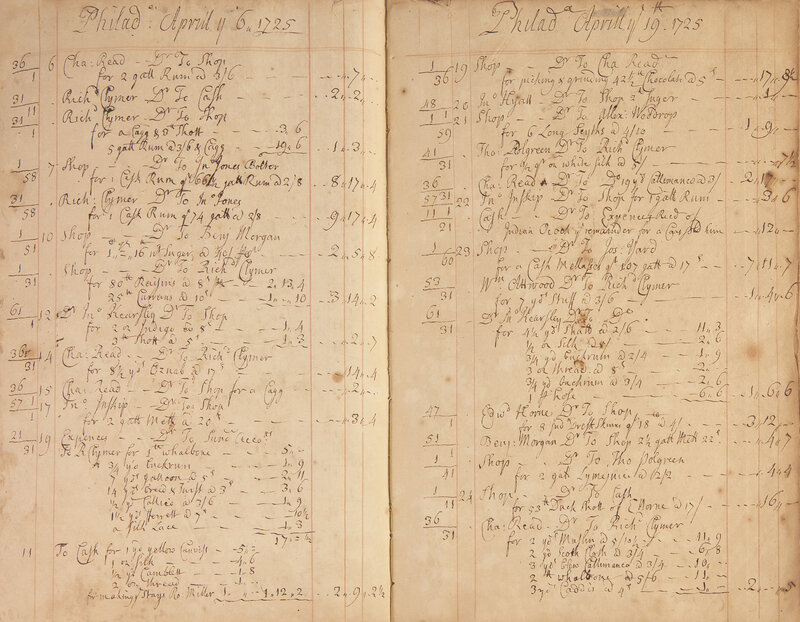
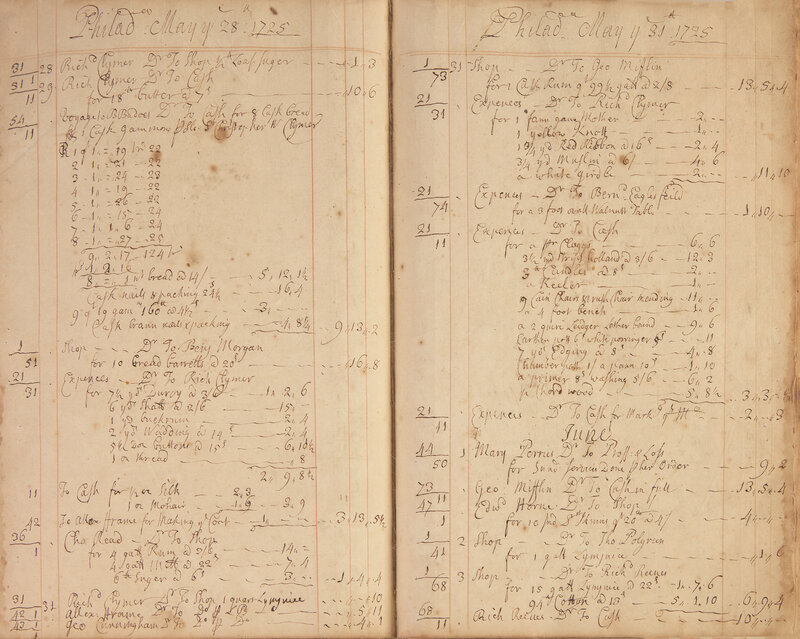
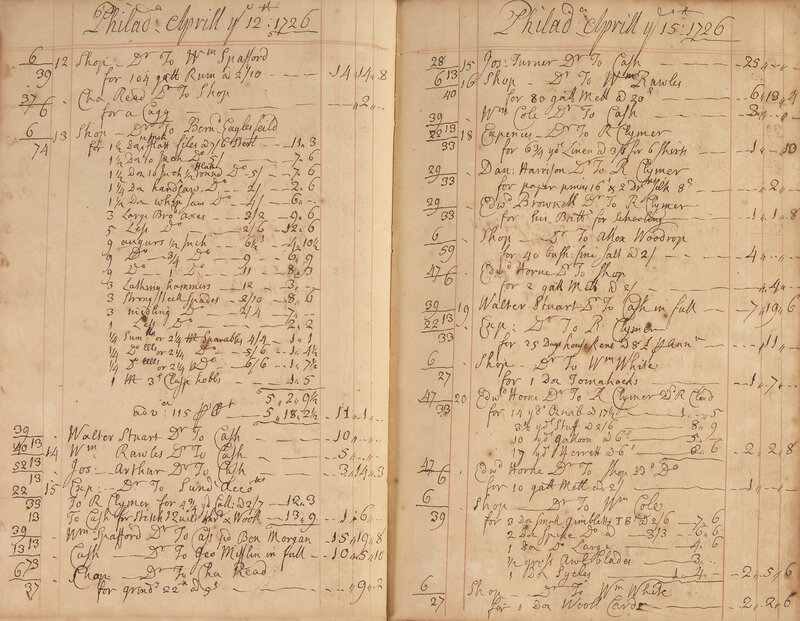
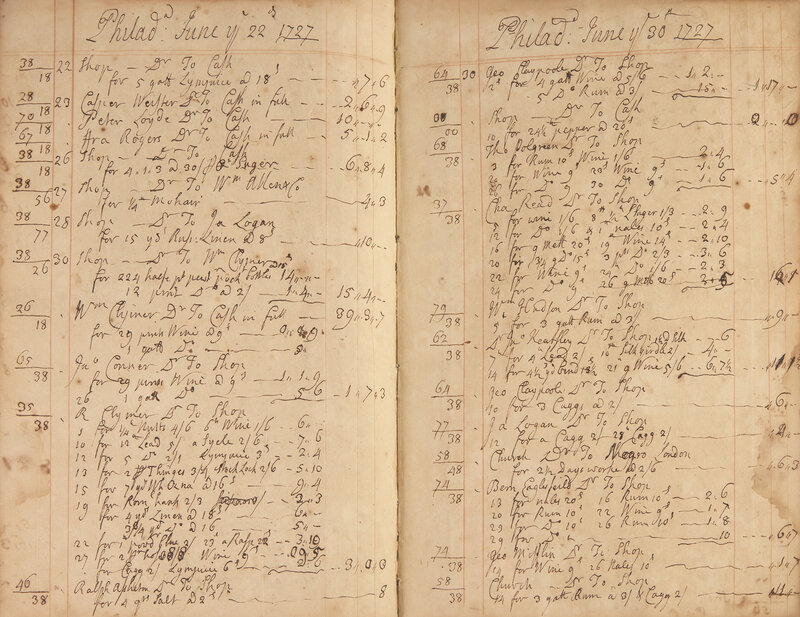
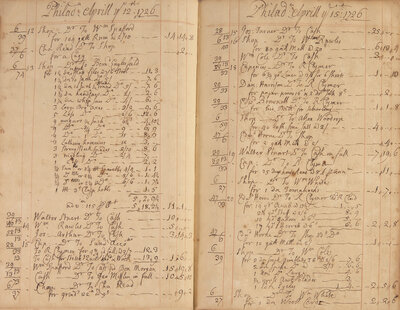
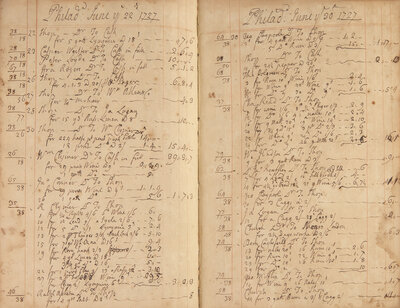
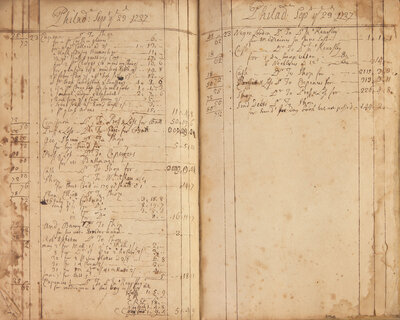
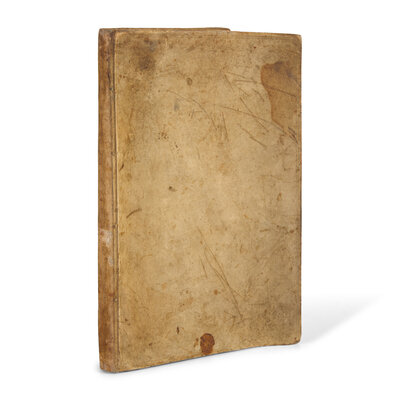
[Philadelphia] Early 18th Century Daybook for a Philadelphia Merchant
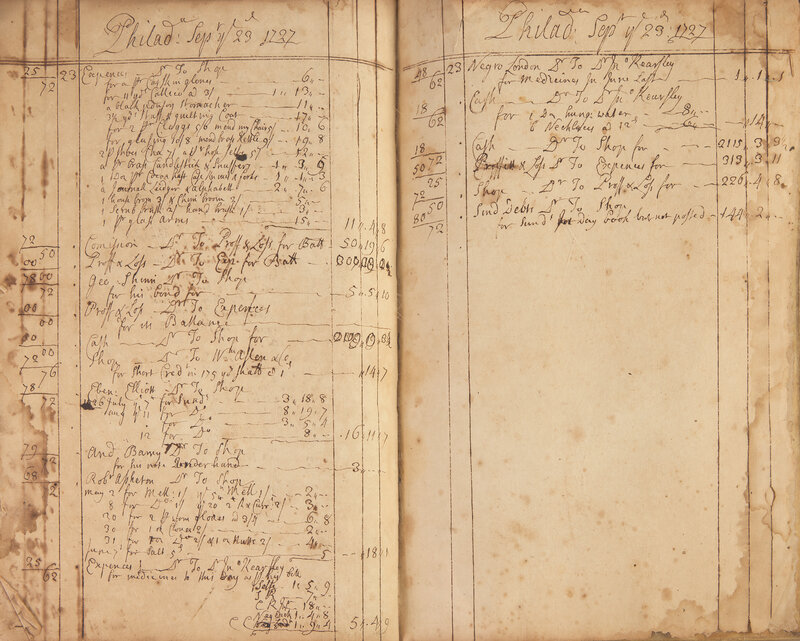
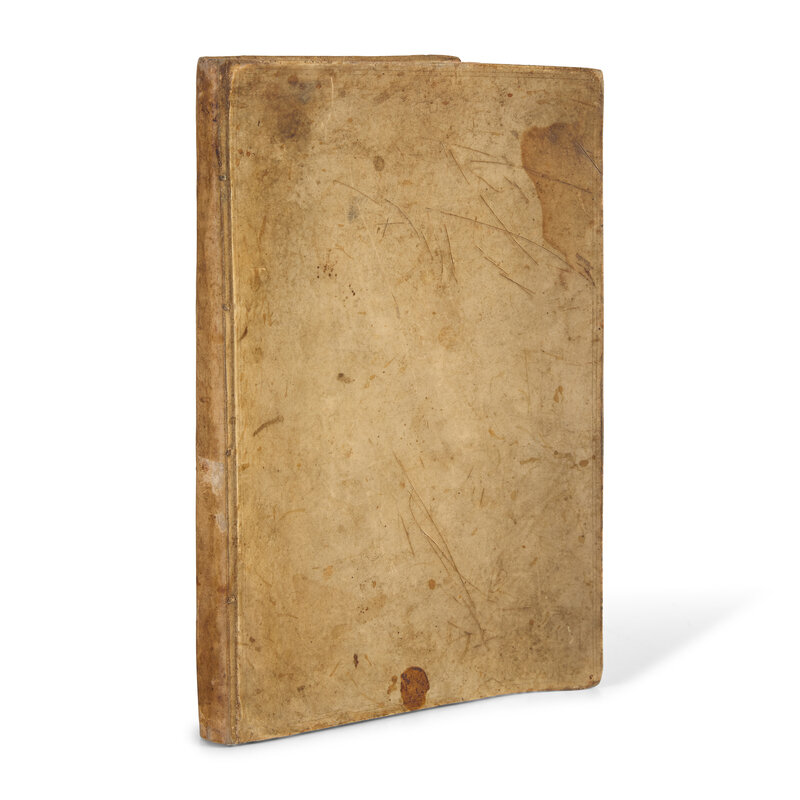
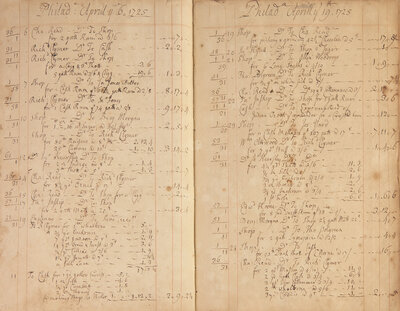
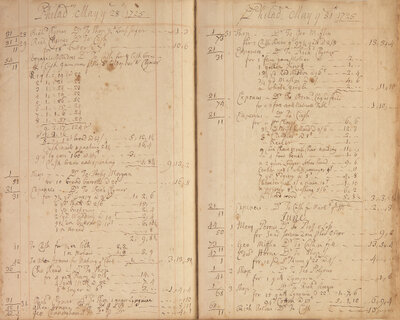
Philadelphia, March 25, 1725-September 23, 1727. Small folio. Manuscript daybook, comprising 135 full pages of business transactions with over 120 individuals and trading companies. Full contemporary vellum, soiled and scratched; scattered edge-wear and soiling to sheets; one sheet excised (from June, 1725).
An important record of early 18th century Philadelphia commerce and trade. This daybook records nearly two and a half years of business transactions with over 120 individuals, including prominent merchants, craftsmen, artisans, tradesmen, and political figures, as well as enslaved persons, and others yet to be identified. The unnamed merchant or recorder (referred to only as "Self", but entries within suggest they are possibly related to the Read family) rented their shop from William Hudson, prominent merchant and 17th mayor of Philadelphia (1662-1742), which was located somewhere close to the bustling Philadelphia waterfront along the Delaware River. Hundreds of transactions and exchanges for various goods and services are noted, from textiles, spirits, wine, tea, tobacco, spices, foodstuffs, tools, paper, household goods, and furniture, to expenses for marketing, shop repairs, the making and mending of clothing, the building of furniture, as well as for commercial voyages to Barbados and Bristol.
Several individuals appear as recurring patrons, the most frequent being shipping merchant and shipwright Richard Clymer (1685-1734)--the grandfather of Signer of the Declaration of Independence from Pennsylvania, George Clymer (1739-1813). Based on the evidence within, it is possible that the author of the manuscript and Clymer had reciprocal business arrangements, possibly through Clymer's outfitting or commissioning of ships for trade (a William Clymer, possibly his brother or son, is recorded as commanding ships to the aforementioned locations, with expenses noted for his freights). Their transactions count in the dozens over the entire period represented, recording the purchase of items such as rum, rice, vinegar, lime juice, fishhooks, bottles, butter, cotton, wadding, ship's flannel, calamanco, brass kettles, sugar, wine glasses, cheese, muslin, a child's calico gown, silk, hobnails, redwood, pork, and more. The second most frequent patron is Charles Read, Jr. (1686-1736), a prominent early merchant and public official who served as an assemblyman, alderman, sheriff, and as the 20th mayor of Philadelphia, from 1726-27 (also a close relation to Deborah Read, wife of Benjamin Franklin). Their dozens of transactions include the purchase of rum, ginger, cotton, wine, mohair, brass buttons, Osnaburg cloth, long pipes, and expenses for the mending of his shoes.
Other patrons of less frequency include about seven Philadelphia mayors: William Allen (1704-80), merchant, mayor in 1726, original owner of the land on which Independence Hall now sits, Justice of the Pennsylvania Supreme Court, and founder of Allentown; James Logan (1674-1751), William Penn's secretary and assistant, longtime colonial agent in Pennsylvania, mayor in 1722, and acting governor from 1736-38; Edward Shippen III (1703-81), mayor in 1744, merchant, founding member of the College of New Jersey (Princeton), Pennsylvania Hospital, and the American Philosophical Society; Thomas Lawrence (1689-1754), merchant, served six one-year terms as mayor up to the 1750s; Clement Plumsted (1680-1745), merchant, mayor in 1723, 36, and 41, proprietor of East Jersey; William Plumsted (1708-65), son of the above, mayor in 1750, 54, and 55, founding member of the College of Philadelphia (University of Pennsylvania); Isaac Morris, Sr. (1671-35), mayor in 1724, friend of William Penn, father of Isaac Norris, Jr. (1701-66).
Notably, several early artisans, craftsmen, furnituremakers, and tradesmen are represented, including: George Claypoole (1706-93) joiner and cabinetmaker, member of a multigenerational Philadelphia furniture-making family; Bernard Eaglesfield (d. 1732) joiner, cabinet and furniture maker, whose transactions include, "3 foot ovall walnut table," candlesticks, assorted tools, "expenses for putting up bedsteds…corner cupboard & picture frame", drawers, "folding pyne table", and coffin handles and screws; Caspar Wistar (1696-1752), established the first successful glass manufacturing operation in North America, patriarch of the Wistar family in America; Austin Paris (d. 1730), owner of a brass foundry; Patrick Baird, surgeon and apothecary owner; John Bringhurst (1691-1750), cooper; John Bryant, baker; George Cunningham, woodworker and carpenter; Thomas Ellis, glazier; Alexander Frame, tailor; Daniel Harrison, carpenter; Benjamin Morgan, cooper; Thomas Nixon, tailor; Richard Palmer, miller and carpenter; Chris Thompson, brick layer; Joseph Trotter, cutler; Alexander Woodropp, ironmaster and forge owner.
Some other notable individuals include: Dr. Thomas Graeme (1682-1772), Port Physician of Philadelphia (1727-41), Register-General, Master of Chancery (1724), Member of the Provincial Council (1726-38), Justice of the Supreme Court of Pennsylvania (1731); Dr. John Kearsley (1674-1777), physician, member of the American Philosophical Society, horse trader, owned a vinegar factory. Unapologetic Loyalist during the Revolution, he was arrested for attempting to send intelligence to the British and imprisoned, died incarcerated. Israel Pemberton, Sr. (1684-1754), prominent Quaker and father of Israel Pemberton, Jr. (1715-79); Joseph Turner (1701-83), merchant, partner with William Allen, seaman, member of City Council, 1729, alderman, 1741, Assembly, 1747, member of Benjamin Franklin's Junto, founding member of the College of Philadelphia (University of Pennsylvania), Loyalist during the Revolution.
A large majority of the above men, including several public officials, either owned slaves or participated in the slave trade. Three enslaved men are mentioned within, "Negro Dick," "Negro London," and "Negro Warwick". Based on the entries within, they were solely or jointly owned by Charles Read, Abraham Haines, and the unnamed author. Upwards of 15 entries relate to these men, either in their dealings with the shop, or in other capacities. These include expenses paid by the unnamed author to Dr. John Kearsley for medicine for Dick, to furnituremaker Bernard Eaglesfield for the construction of Dick's coffin, and expenses for Dick's burial (in 1727). Transactions related to London include a purchase by London from known slave trader Thomas Sobers, payment to the author for three days work by London at an unspecified church, and expenses to Dr. Kearsley for medicine for London. For Warwick, the possible transaction of his purchase is noted on September 16, 1726: "Expenses Dr to Cash for a Negro Named Warwick abt 17 yrs of age"; Warwick's expenses are noted as being paid by Haines, while a December 31, 1726 entry records "for Sund. Che & Exp on Negro Warwick as his running away…"
Early merchant records such as this are very uncommon to auction.
A near complete list of the names within and a sampling of their transactions is available upon request.
This lot is located in Philadelphia.