
Condition Report
Contact Information
Auction Specialist
Lot 38
Sale 6425 - American Historical Ephemera and Early Photography, including The Larry Ness Collection of Native American Photography
Part I - Lots 1-222
Oct 23, 2025
10:00AM ET
Part II - Lots 223-376
Oct 24, 2025
10:00AM ET
Live / Cincinnati
Own a similar item?
Estimate
$600 -
800
Price Realized
$840
Sold prices are inclusive of Buyer’s Premium
Lot Description
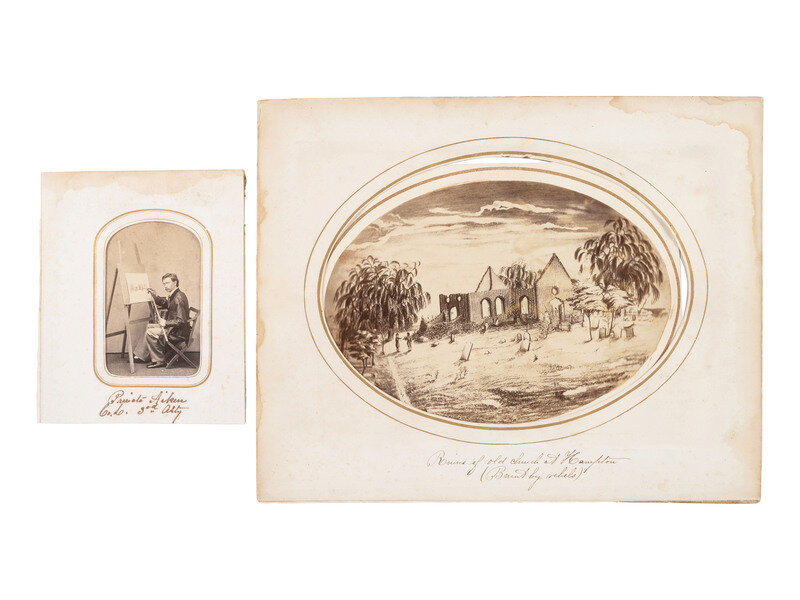
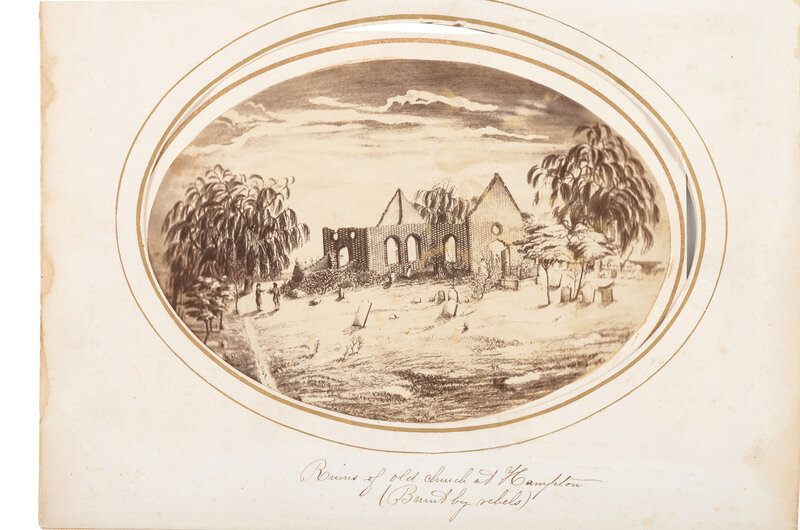
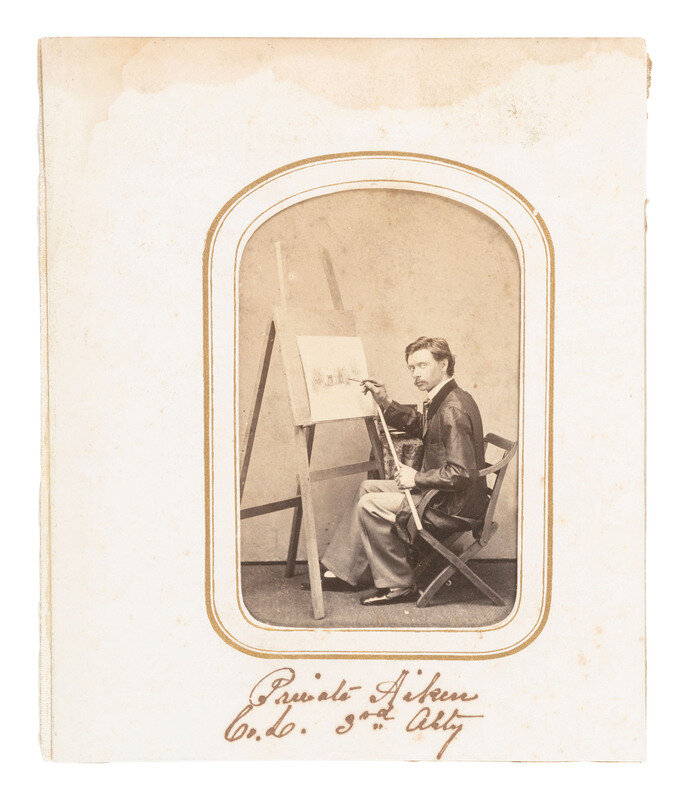
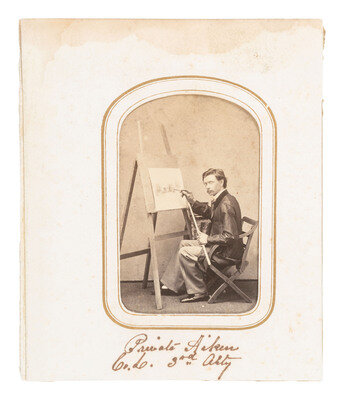
[CIVIL WAR]. Albumen photographs of soldier-artist William Aitken at work, and of the artwork he created.
A fascinating pairing of albumen photographs featuring an artist at work and the artwork he created, comprising:
CDV portrait of an artist identified on disbound album page as "Private Aiken / Co. L. 3rd Arty," posed at work on a sketch of ruins. Fortress Monroe, VA: Kimberly Bros., n.d.
7 1/8 x 5 in. oval albumen photograph of a sketch captioned on disbound album page, "Ruins of old church at Hampton (Burnt by rebels)." Uncredited, n.d. The sketch appears to resemble that of the sketch upon which the artist in the above mentioned portrait appears to be working. The "old church" pictured is likely St. John's Episcopal Church, which was set ablaze, along with nearby homes and businesses, by Confederate forces in August of 1861 in their efforts to keep Union forces from occupying the town of Hampton.
William Aitken (listed in HDS as "William Aitkens") enlisted as an artificer on 8 August 1863, and mustered into Company L of the 3rd Pennsylvania Heavy Artillery that same day. That regiment was headquartered at Fort Monroe, VA, where the CDV in this lot appears to have been produced. Aitken mustered out with his regiment there on 9 November 1865.
Though Aitken is listed in most of his military and pension records as having been a machinist, the 1880 Federal Census lists him as a portrait artist, and his death certificate lists him as a photographer. A newspaper announcement of his death also reports that he opened and operated a thriving photo gallery and art studio in Monongahela after the war. In his pension application forms, Aitken cited numerous health concerns keeping him from doing manual labor, so it is likely that he turned to his artistic skills as a way to make a less physically taxing living in his postwar life. His headstone at Monongahela Cemetery simply calls him "Artist Aitken."