Condition Report
Contact Information
Lot 7350
Sale 2009 - Arms, Armor and Militaria Online
Lots Open
Jun 26, 2024
Lots Close
Jul 9, 2024
Timed Online / Cincinnati
Own a similar item?
Estimate
$1,500 -
2,000
Price Realized
$900
Sold prices are inclusive of Buyer’s Premium
Lot Description
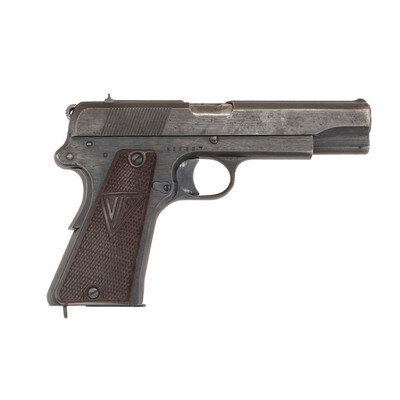
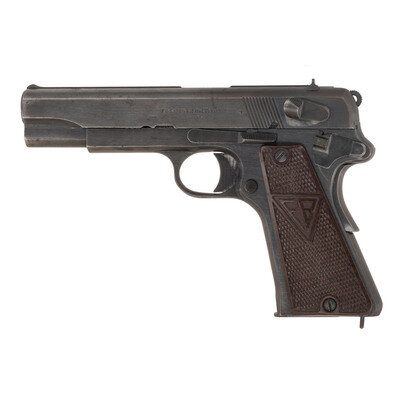
** FB Radom wz.35 P.35(P) Vis Waffenampt Marked Three Lever Pistol
World War II
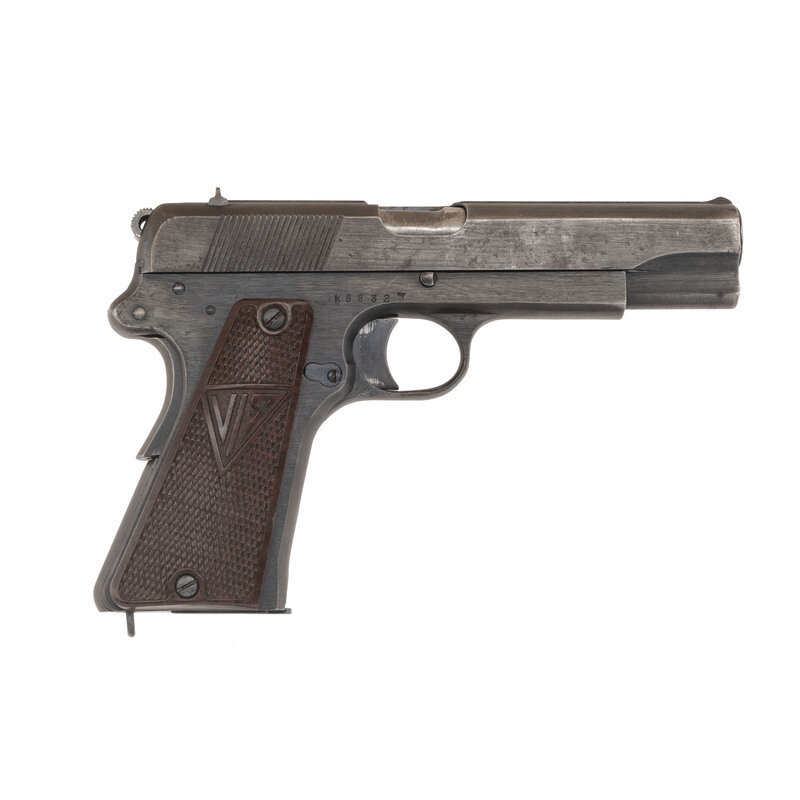
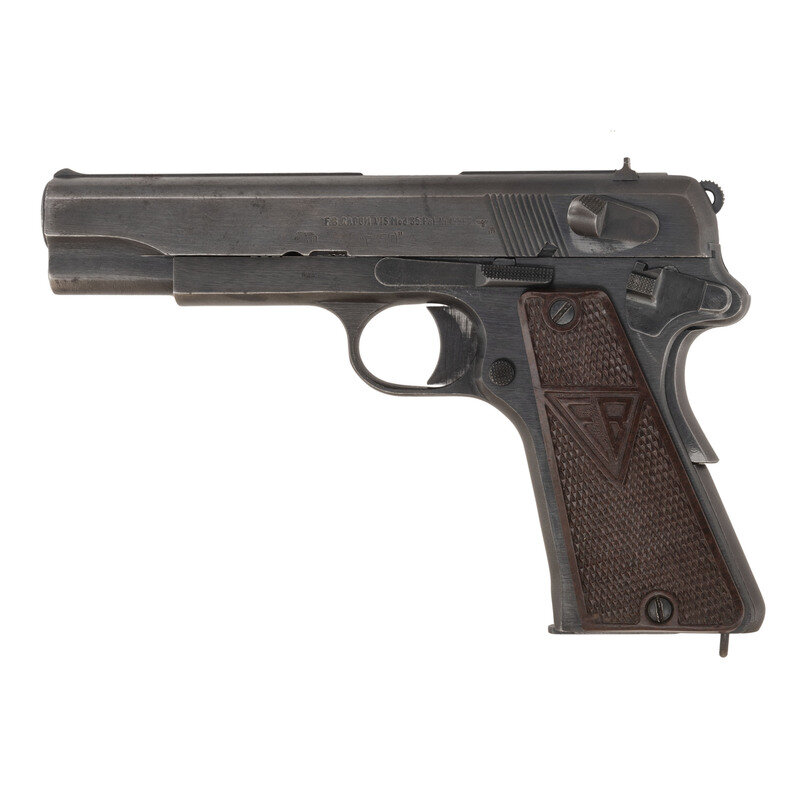
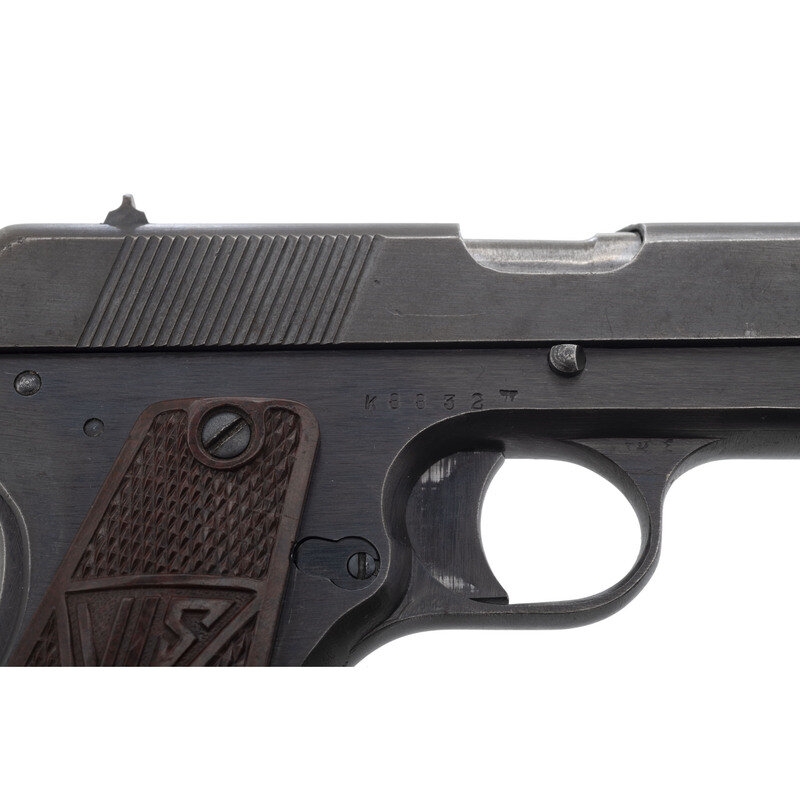
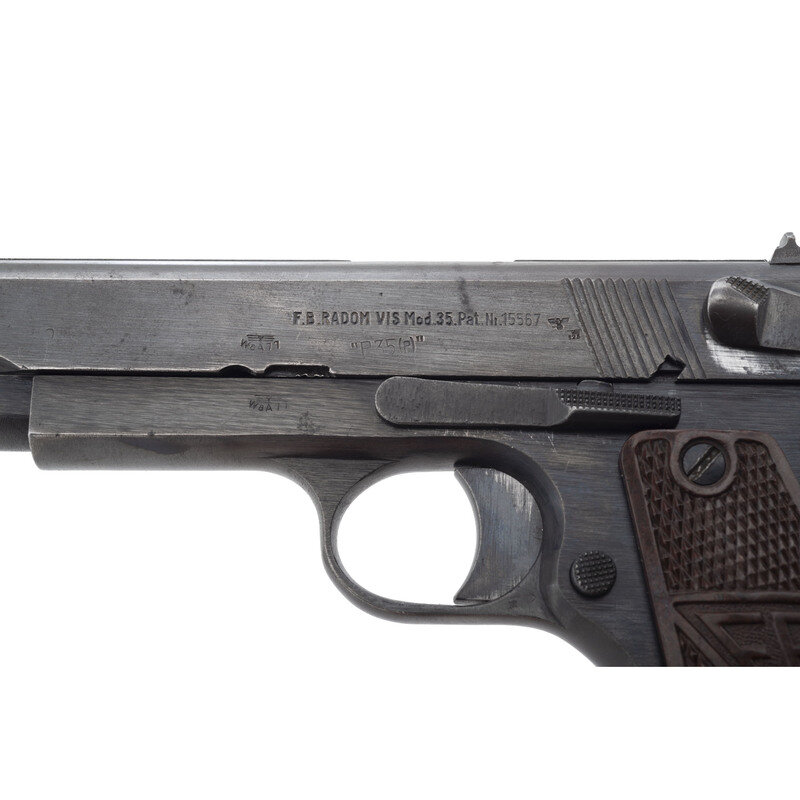
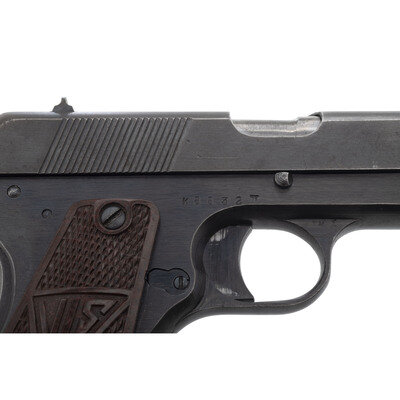
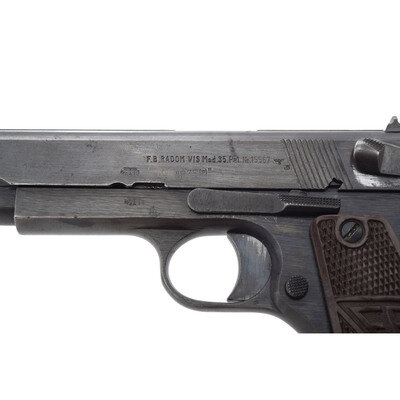
9mm Para. 4.7" barrel length. SN: K8832. Blued metal finish overall mounting brown Bakelite grip panels showing FB marking to the left panel and VIS to the right. Single action short recoil operated autoloading pistol fed by detachable single-stack magazines. Item lacks the stock slot but retains the takedown latch, consistent with the Grade II Vis 35s produced under German occupation. The slide is struck "P.35(P)" on the legend below the marking F.B. RADOM VIS Mod. 35 Pat. Nr.15567. Along with the K-prefix serial number, this indicates early production of the Grade II pattern pistols. Further markings include WWII German Eagle test proofs on the slide and left barrel lug. Further marks include the standard Radom {Eagle/WaA77} Waffenampt on the left slide, left frame, and {Eagle/77} beside the serial number on the right frame. Slide has been additionally struck with the {Eagle/623}marking assigned to Steyr produced and assembled arms. A similar mark appears on the right side of the barrel lug. Rough metal finish is consistent with wartime manufacturing standards. Serial numbers match where observed on the frame, interior slide, and on the barrel lug. A barrel gauge reading of 8,82 is struck onto the underside of the barrel near the breech block. Comes with one magazine that is has been struck with an X along the rear surface near the floorplate.
Designed on the basis of John M. Browning's Colt 1911 pistol, the wz. 35 Vis successfully replaced the swinging link of the earlier design with wedge-driven unlocking, and employed further simplifications and reinforcement that produced one of the finest handguns of World War II. Piotr Wilniewczyc and Jan Skrzypiński developed the handgun to serve the army of independent Poland, with the first mass produced examples leaving the factory by 1936. Approximately 49,400 examples were produced before the Invasion of Poland in 1939, with a further 313,000 built for the Germans under occupation. Nazi Germany determined that Polish factory workers might smuggle completed handguns out of the Radom factory and into the hands of resistance fighters, so they transferred final assembly of the arms to Steyr, hence the presence of Steyr markings on completed samples.
Having failed to ameliorate the innumerable reasons for the Poles to resist their oppressive rule, the Germans would later find themselves under fire from Vis 35 handguns assembled from parts smuggled out of the factory by members of the Polish Home Army. Despite its excellent qualities, production ceased in 1945, and the pistol was replaced in production by the Soviet Tokarev design following Poland's occupation by the USSR and consequent Communist takeover of the government.