Condition Report
Contact Information
Lot 7019
Sale 2009 - Arms, Armor and Militaria Online
Lots Open
Jun 26, 2024
Lots Close
Jul 9, 2024
Timed Online / Cincinnati
Own a similar item?
Estimate
$400 -
600
Price Realized
$900
Sold prices are inclusive of Buyer’s Premium
Lot Description
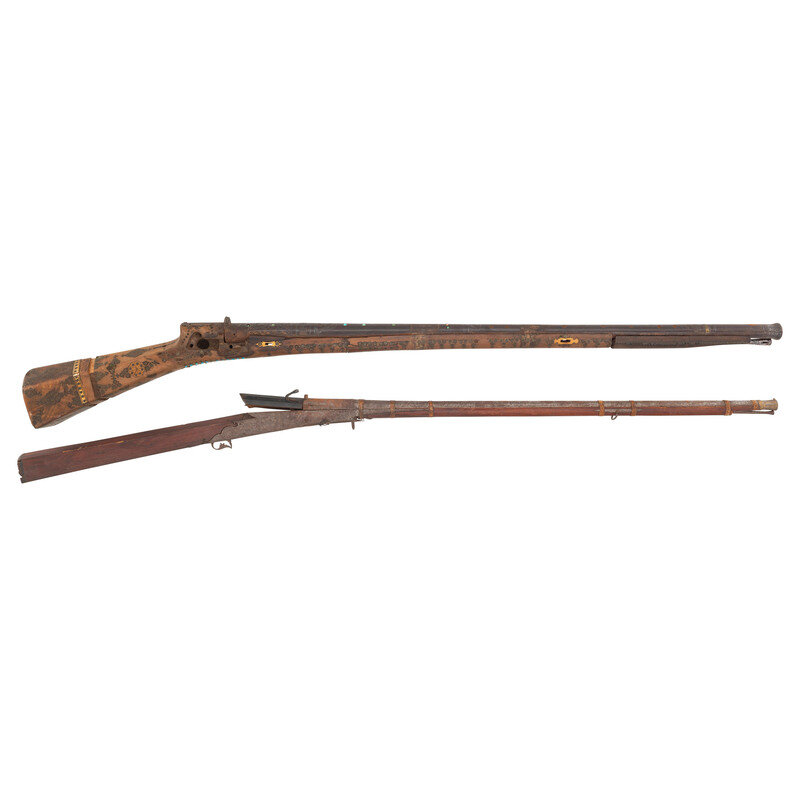
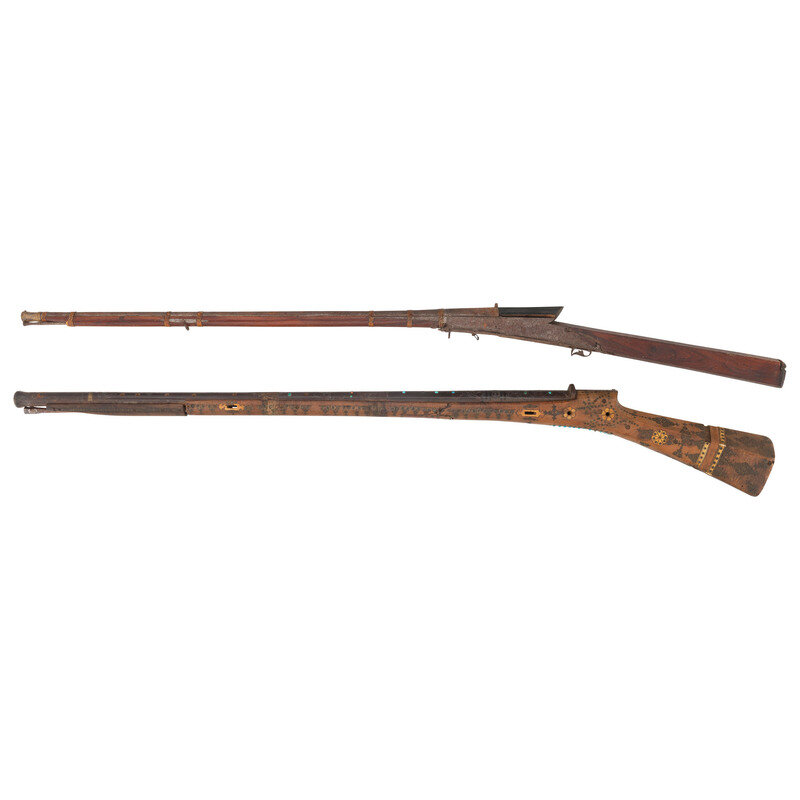
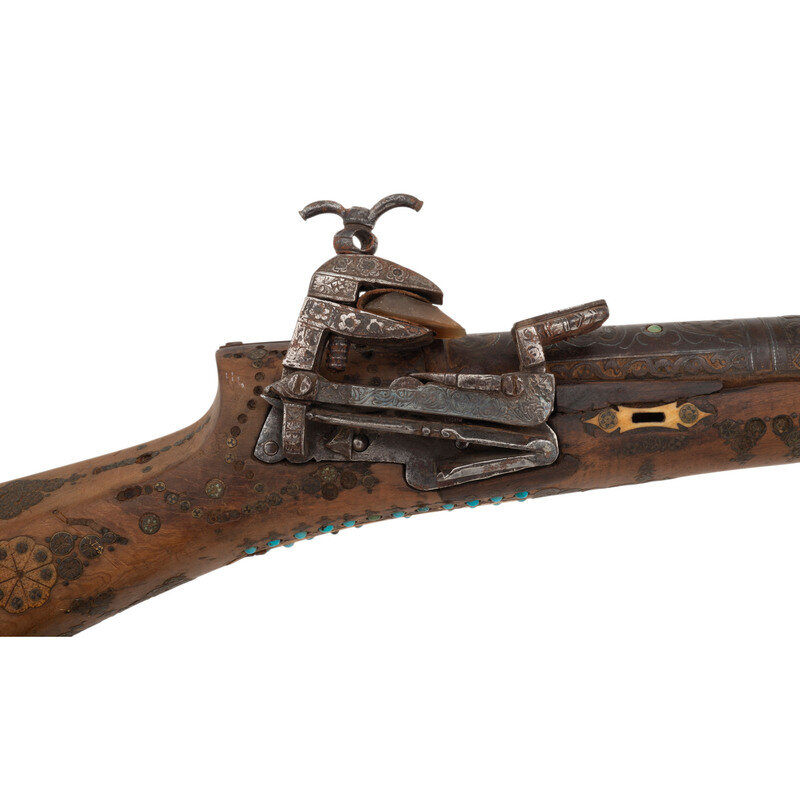
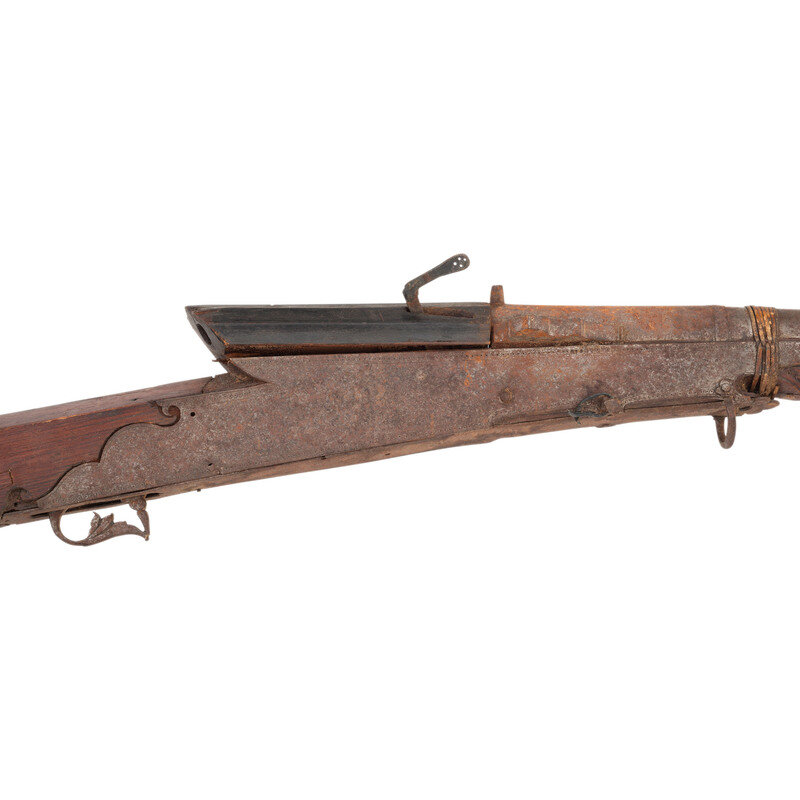
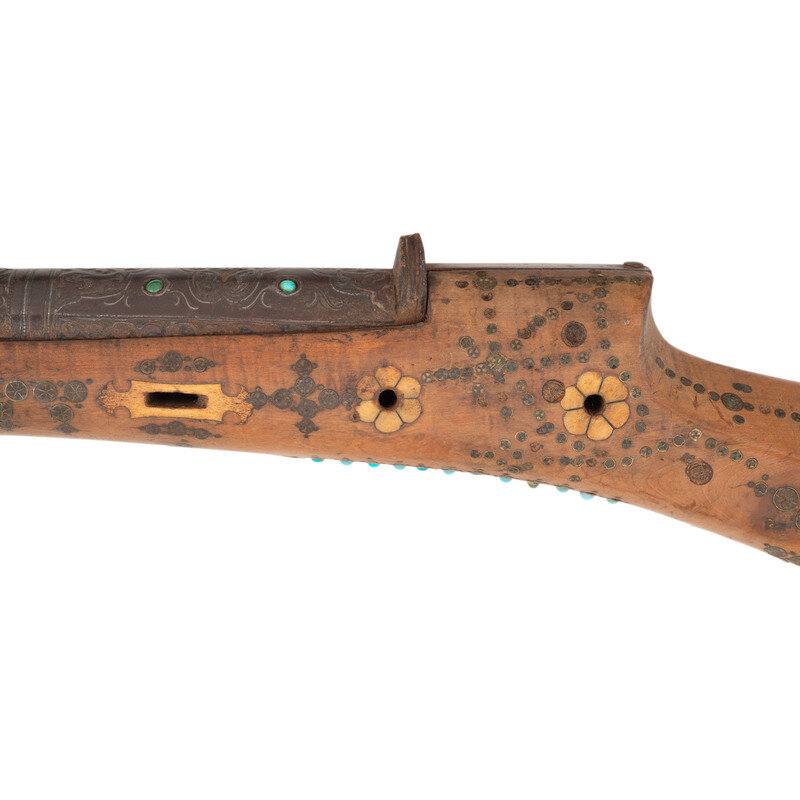
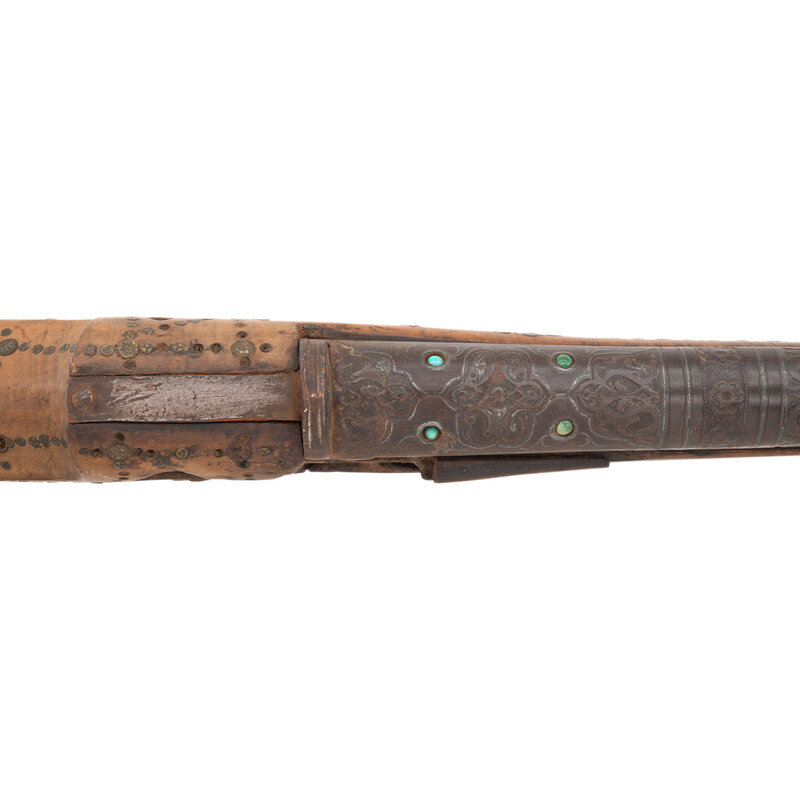
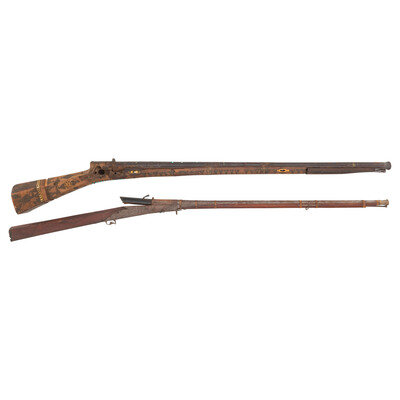
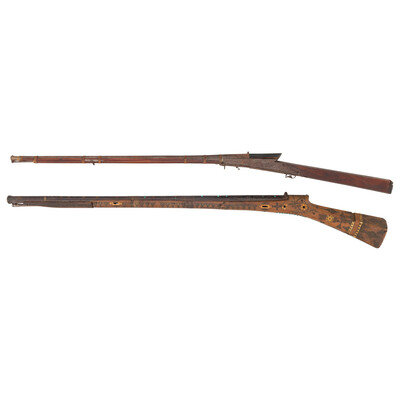
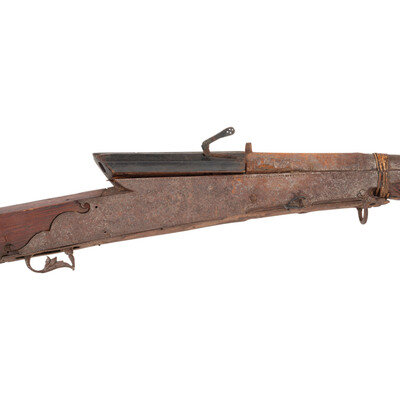
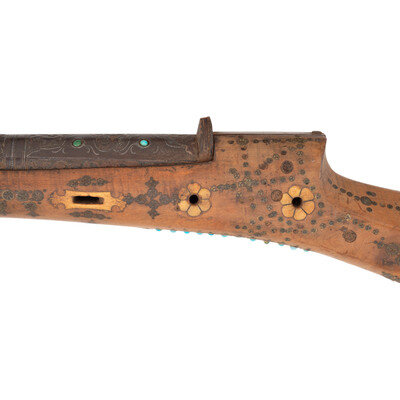
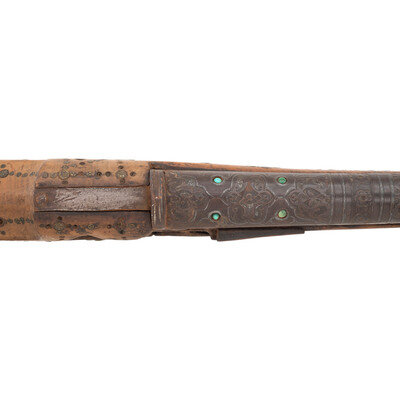
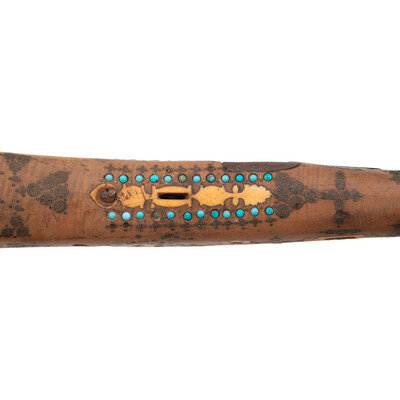
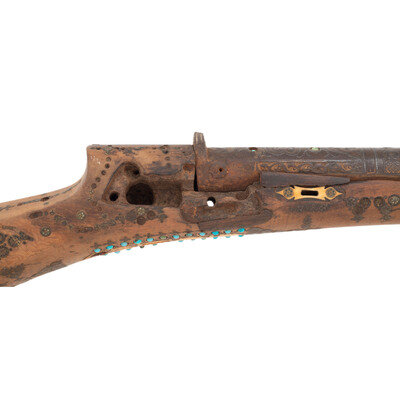
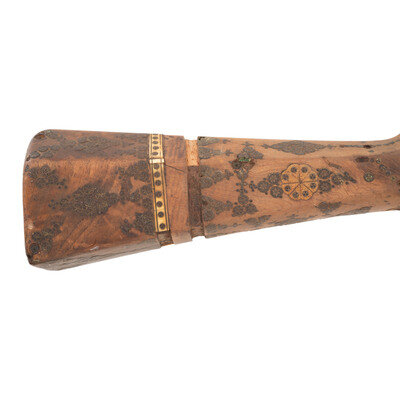
Lot of 2 Ottoman and Indian Muskets Including: Heavily Inlaid Shishana and Toradar
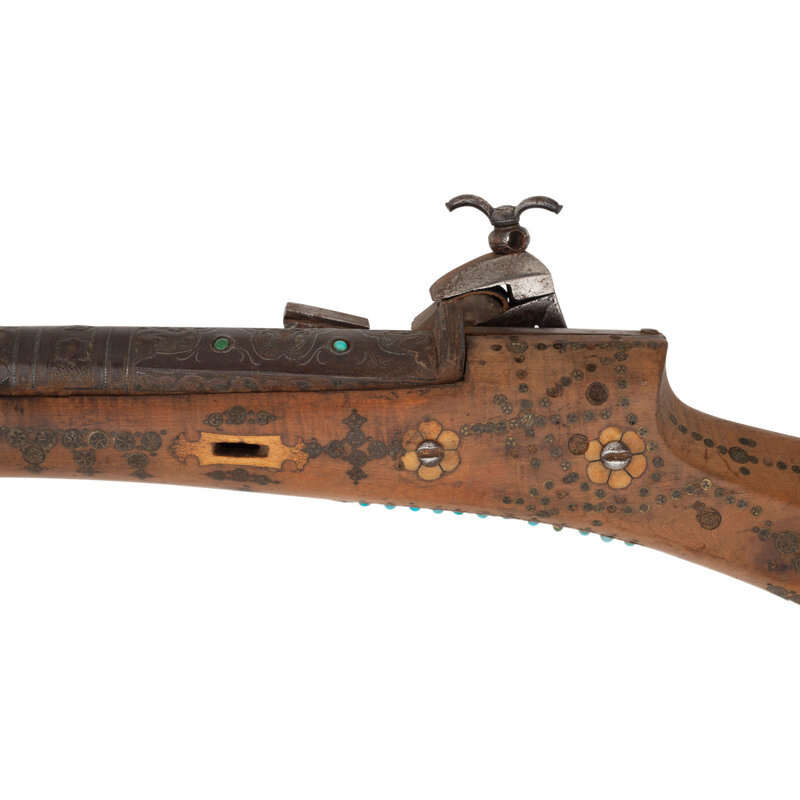
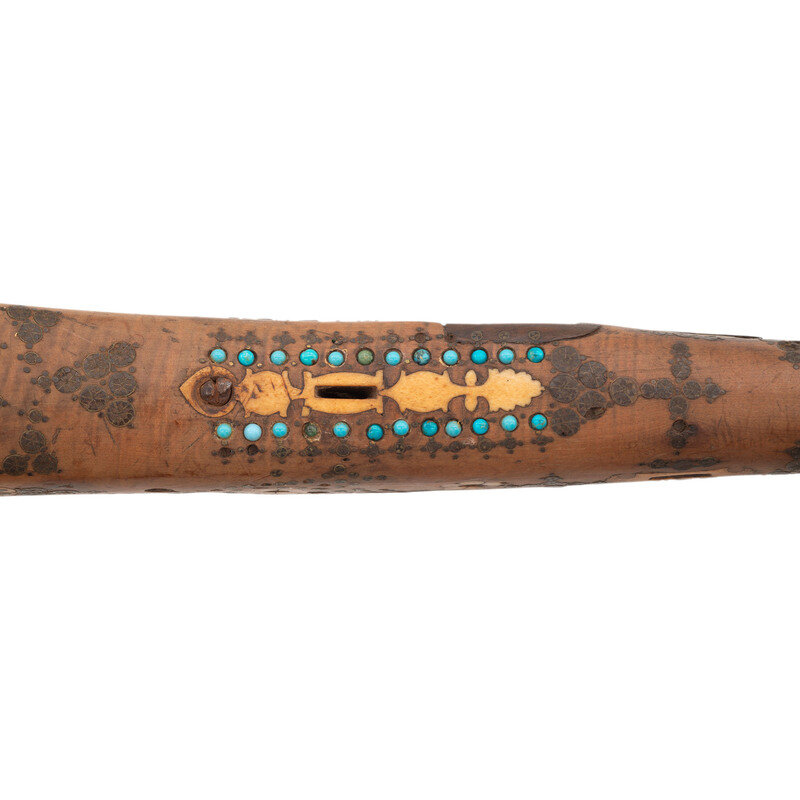
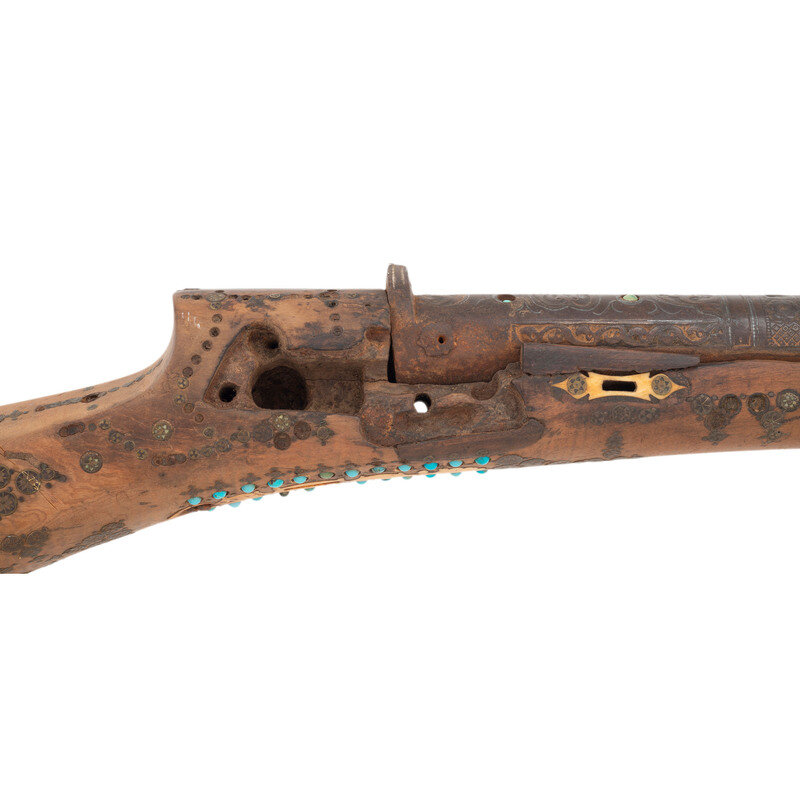
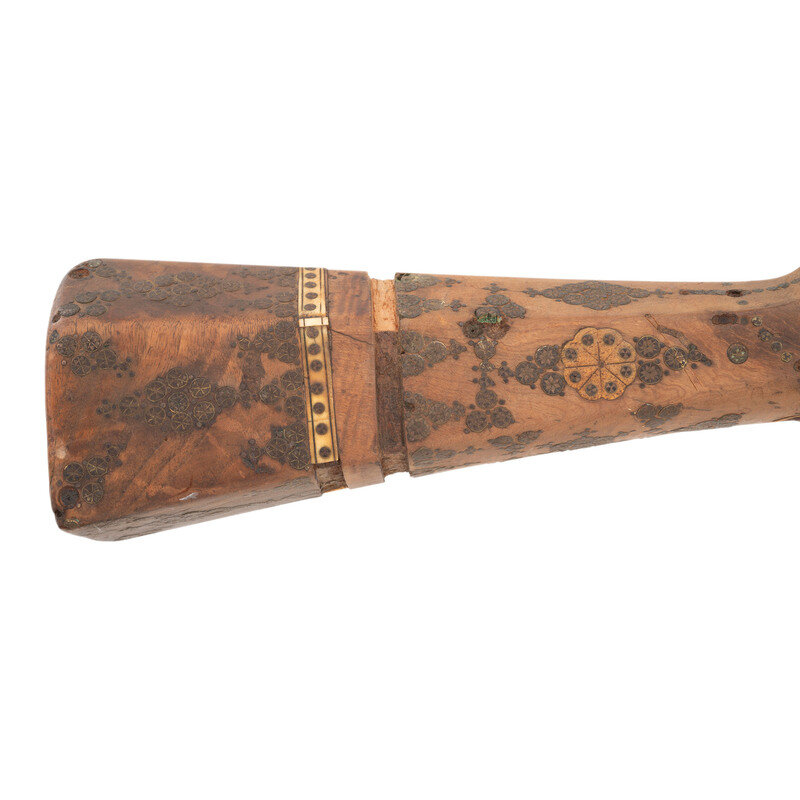
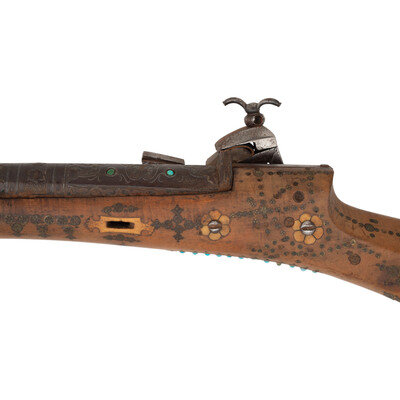
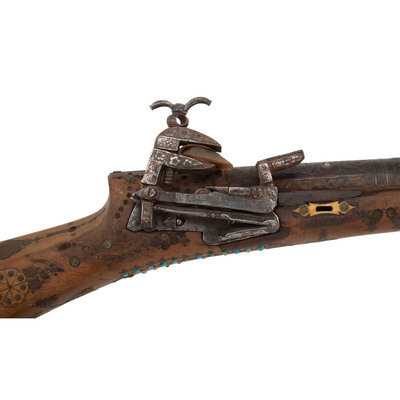
1.) Shishana - About .70 caliber flared muzzle. 36" barrel length. SN: NSN. Browned metal finish. Hardwood stock (most likely Turkish walnut) has a hexagonal butt and full length forend, with elaborate wire, ivory, turquoise, and coral inlay overall to both stock and barrel. Barrel is also chiseled with Arabesque motifs and has a gold band toward muzzle. Miquelet action musket with a primitive peep sight and dovetail cutout to muzzle. Lock is chiseled with floral motifs and has very strong spring. Item is missing components including trigger, barrel bands, stock pins, and many inlays.
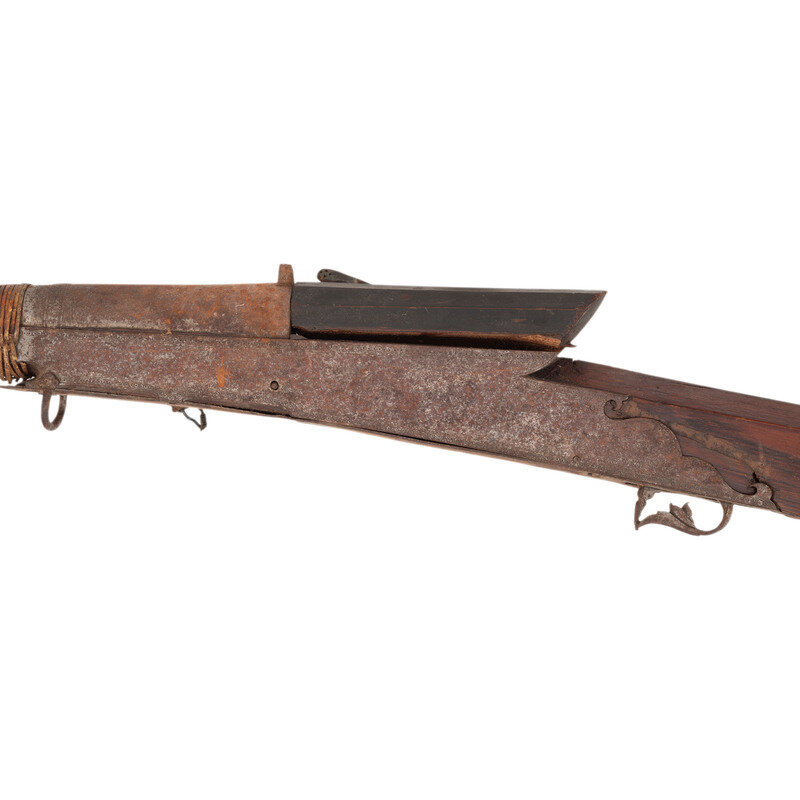
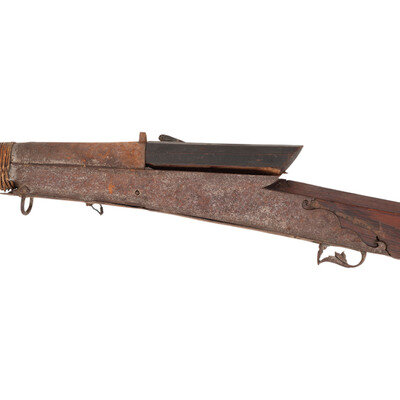
2.) Toradar - About .46 caliber. 31.5" barrel length. SN: NSN. Bright or browned steel finish that is mostly bare and covered by oxidation. Hardwood stock with a straight hexagonal butt that has a carved horn buttplate, and forearm that is simple carvings forward of frame. Matchlock musket with fixed notch rear sight and bead front sight. Item features flared muzzle with gold accented engravings, wire barrel bands, and double sling loops. Barrel is engraved with what appears to be Indo-Persian text, and frame fittings have simple punch dot borderwork.
Toradar muskets are believed to have been used by the Mughal Empire from the early 16th century up until the mid to late 19th century. According to Gahir & Spencer's Visual History of Arms and Armor (2006), when the Portuguese reached India in 1498, they brought firearms with them including matchlocks. Expert native armorers were quickly able to copy the Portuguese firearms and began producing their own matchlock muskets incorporated with regional symbolism and motifs. These native muskets became known as the toradar, and were used widely because they were simple and cheap to make.
This lot is located in Cincinnati.