Condition Report
Contact Information
Lot 56
Lot Description
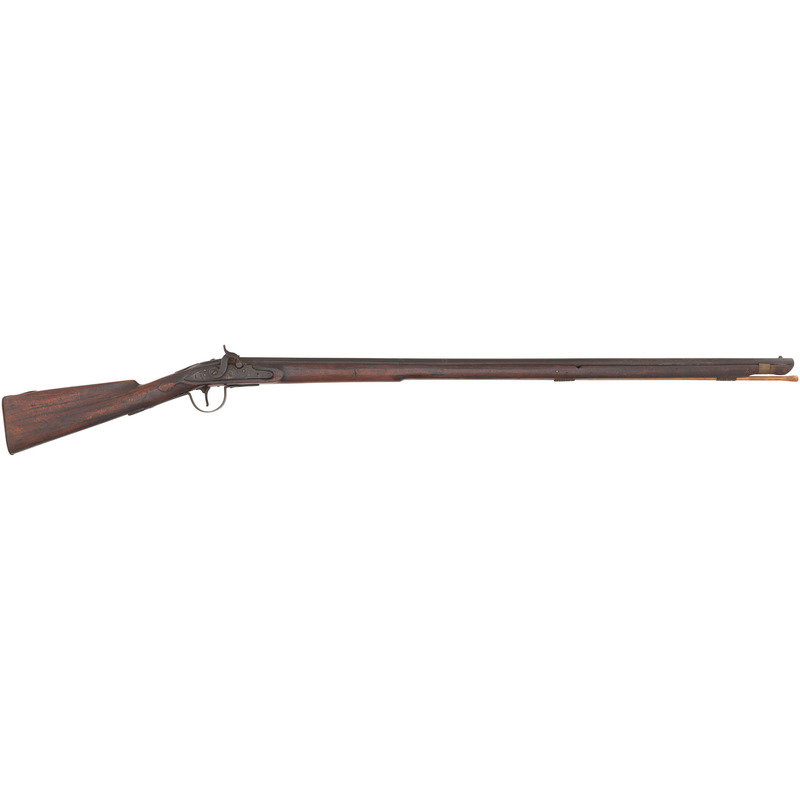
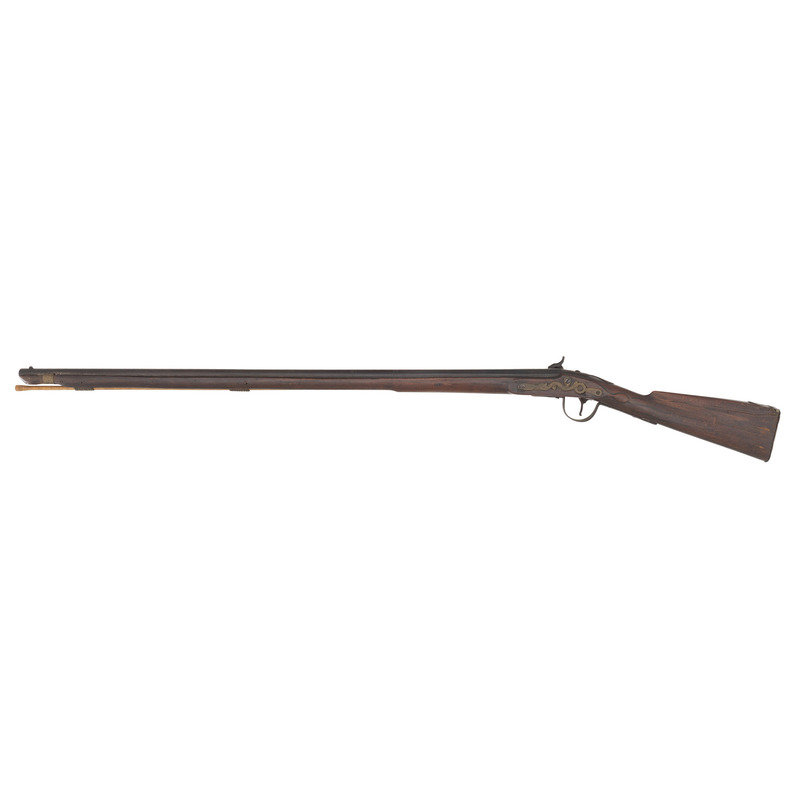
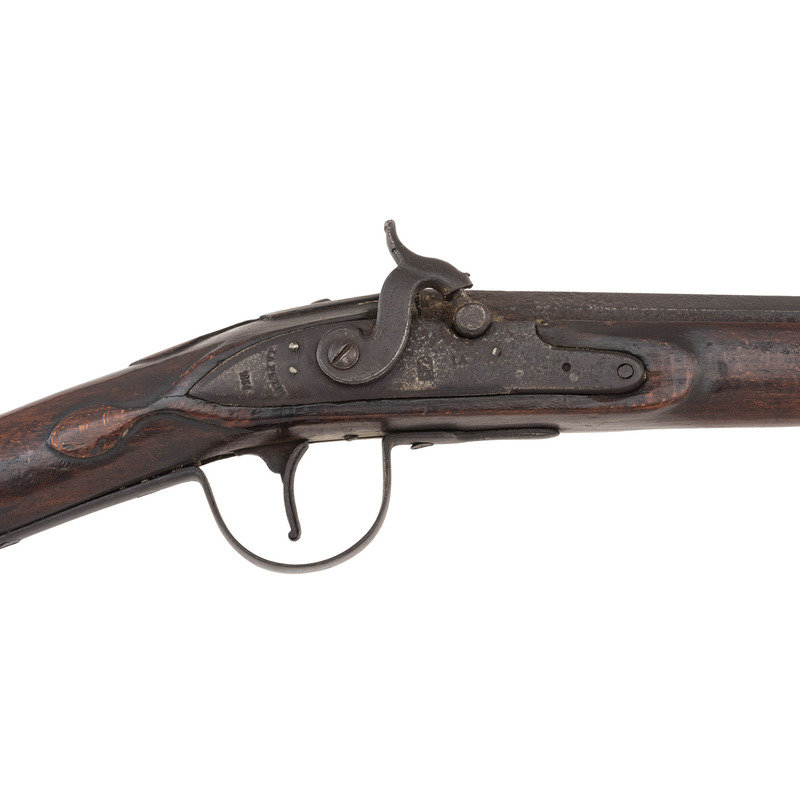
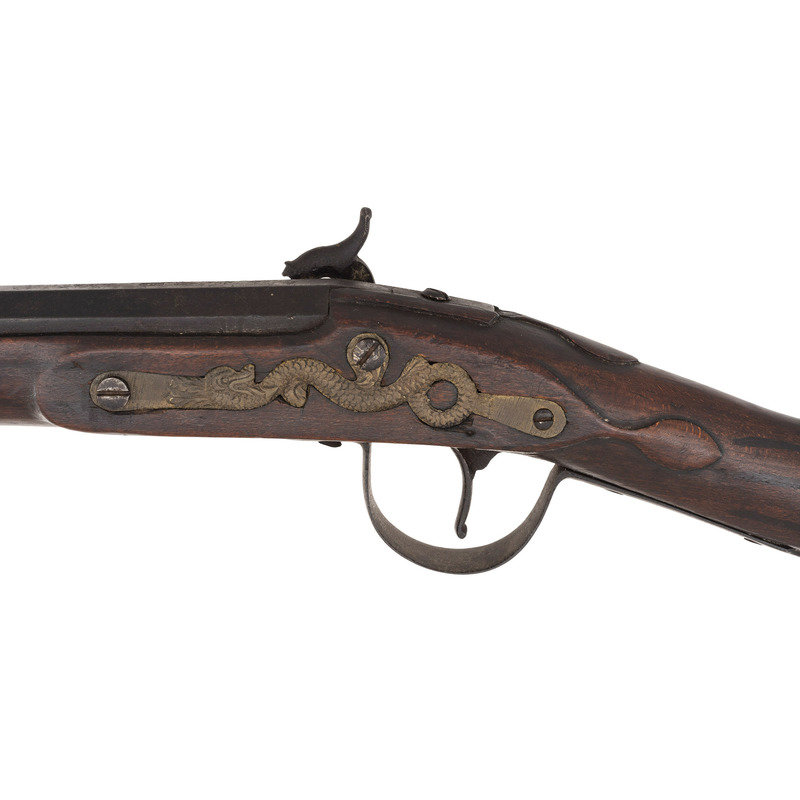
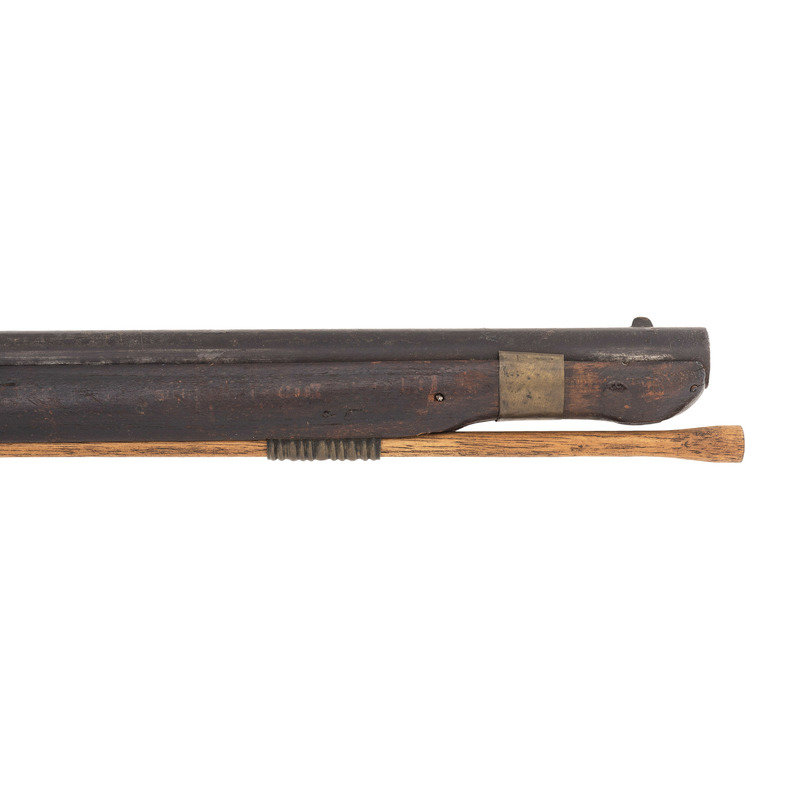
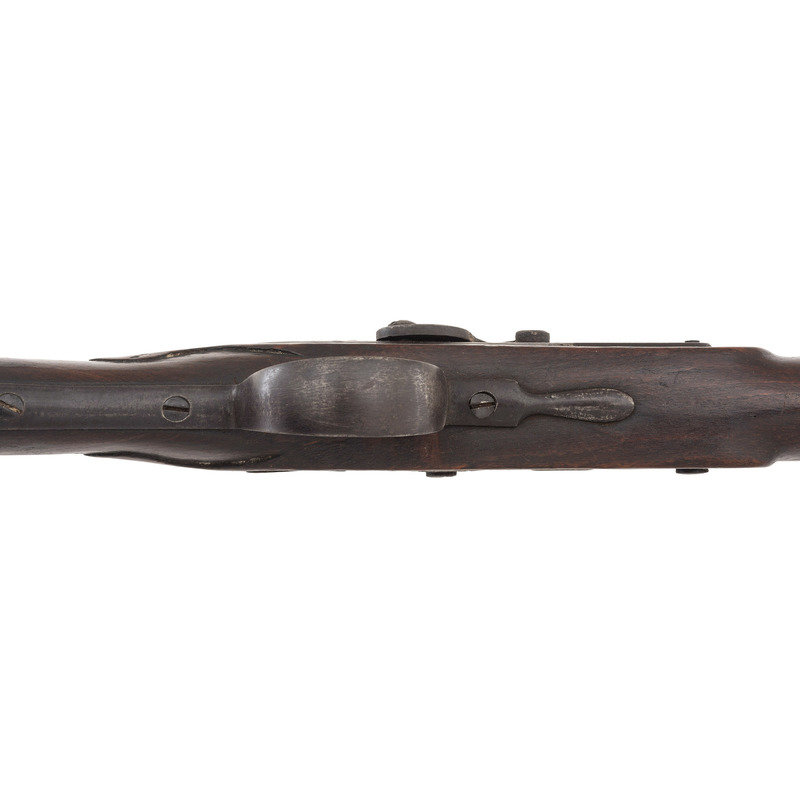
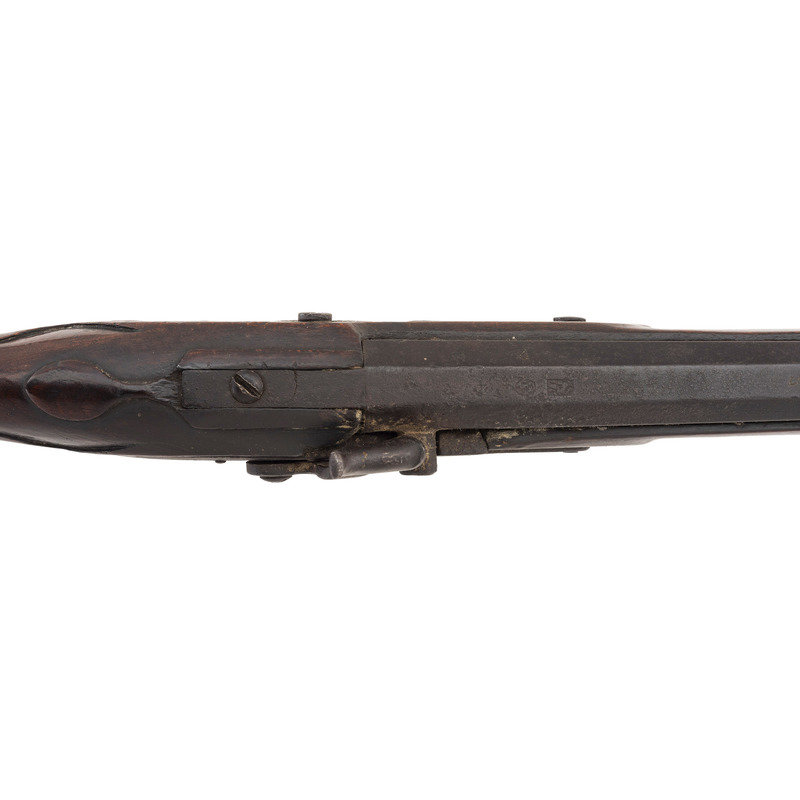
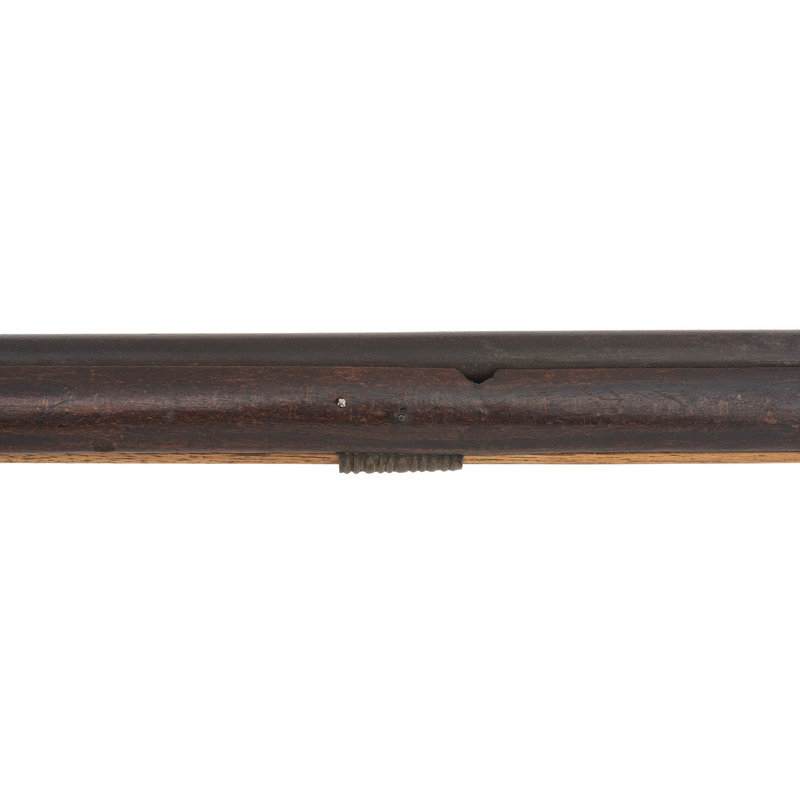
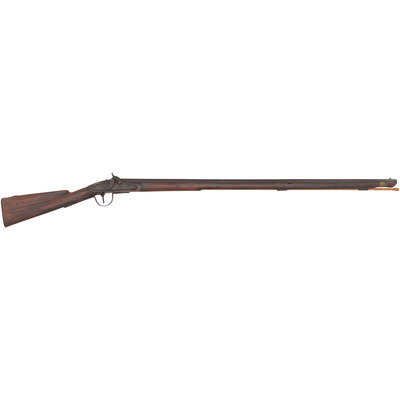
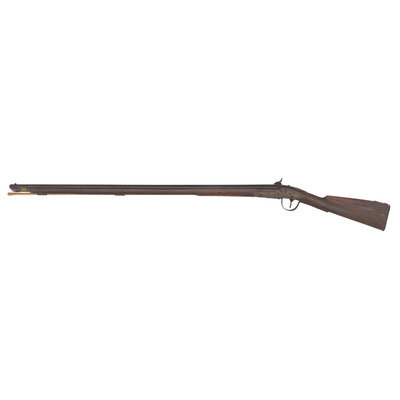
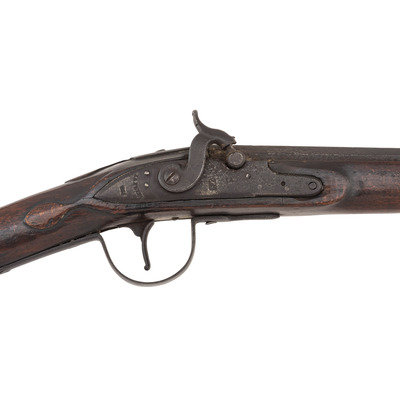
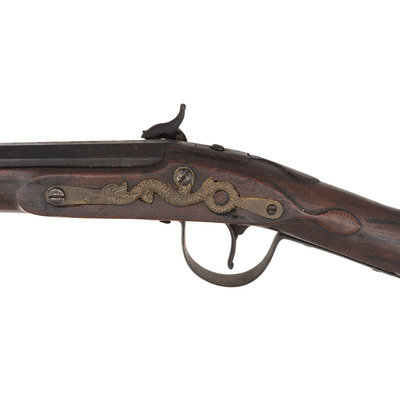
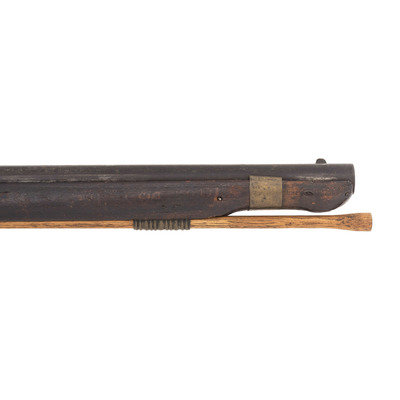
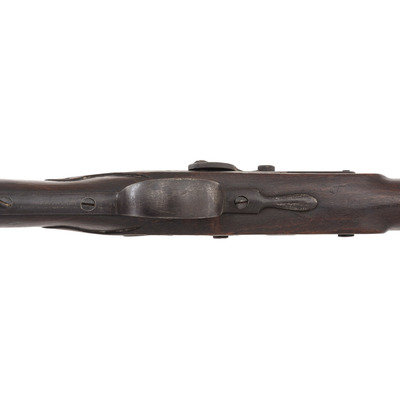
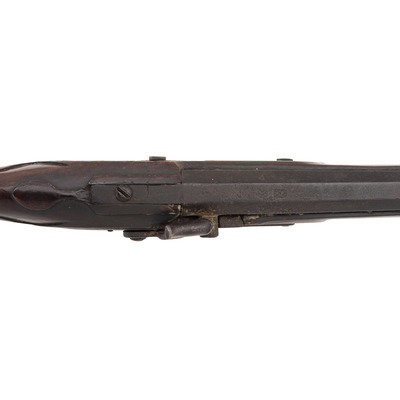
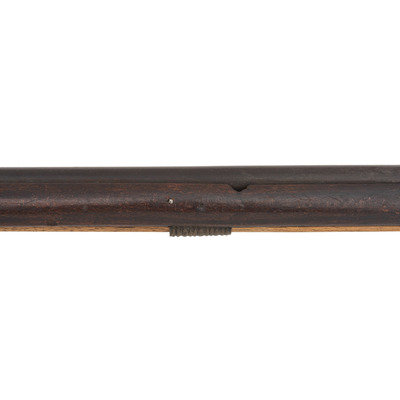
.66 caliber. 40" pinned 3-stage octagon to round barrel. SN: NSN. Browned finish, brass and iron furniture, full-length beech stock. Slightly rounded flint lock altered to percussion with a drum bolster and somewhat crudely executed percussion hammer. Lock marked "IA" for John Jacob Astor and with the "{Tombstone Fox/IA}" mark of his American Fur Company forward of the hammer. Tail of lock marked "J.A. PETRY" in a vertical arc and dated "1854". Top flat of barrel marked with the "E/LG/*" in an oval Liege proof house mark, another "{Tombstone Fox/IA}" and "LONDON". The left angled breech flat has a pair of Birmingham commercial proof marks. Traditional trade gun furniture includes the ubiquitous three-screw brass "serpent" sideplate, oversized iron triggerguard, screwed flat brass buttplate and two corrugated brass ramrod pipes. Beech stock with traditional raised carved apron around the tang and at the tails of the lock mortise and counterpane and is equipped with sheet brass reinforcement 2" from the tip to reduce spitting of the forend. A classic example of a Belgian-made interpretation of the classic English Northwest trade gun. This gun was produced by Belgian maker J. Auguste Petry who worked in Liege circa 1842-1867 (Stockel). The presence of the Birmingham proofs indicates that this gun was imported to England prior to being sold. Interestingly although the gun is marked to the American Fur Company, that company failed some dozen years prior to the date on the lock, thus presenting an interesting conundrum to the collector. The use of beech rather than walnut as the stock wood is a good example of some of the minor differences often found between English-made and Continental-made trade guns and military arms of the period.