Condition Report
Contact Information
Lot 55
Lot Description
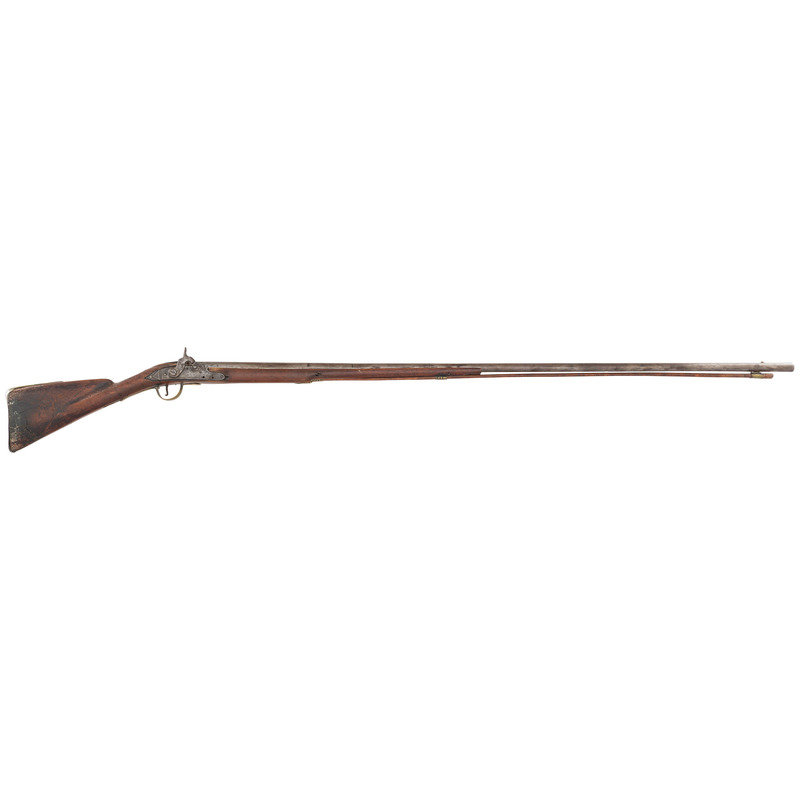
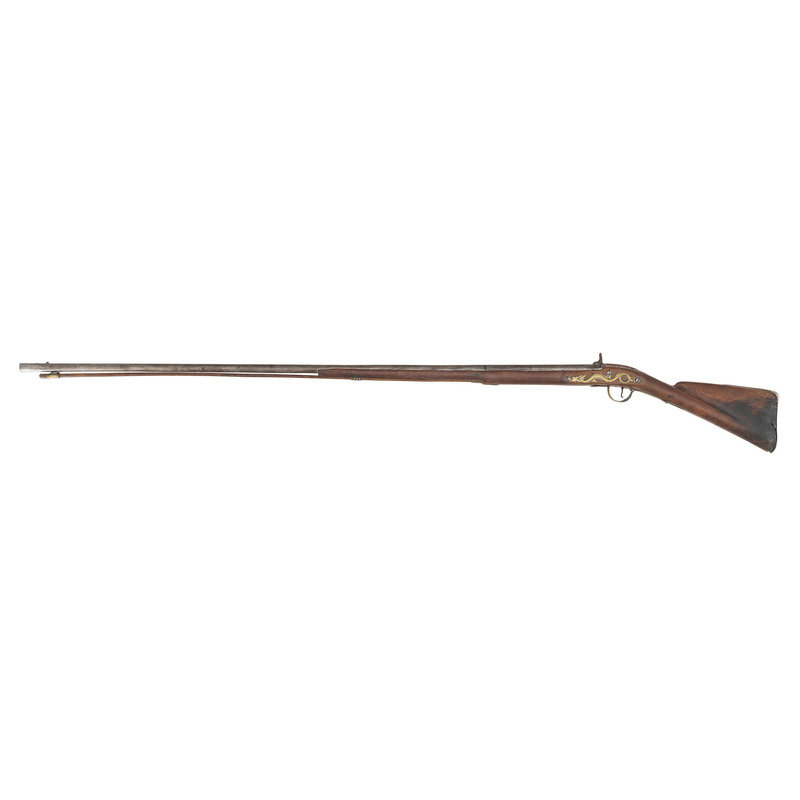
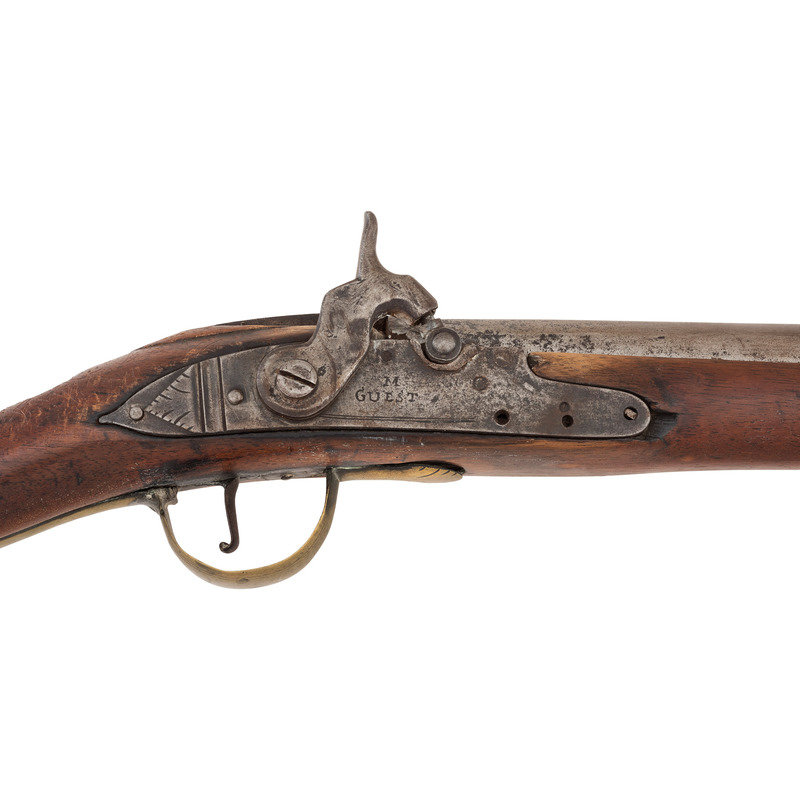
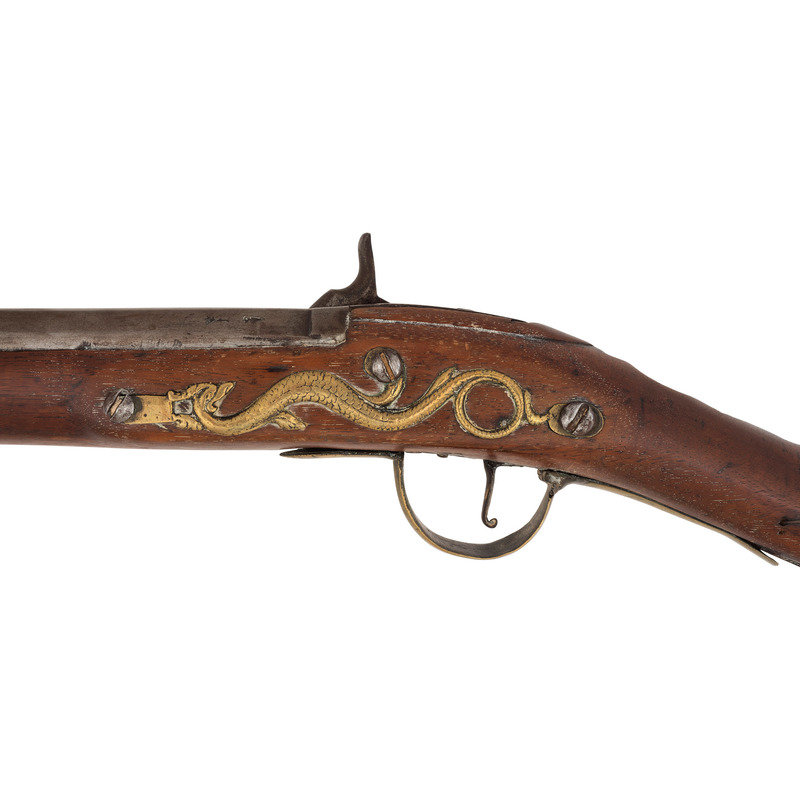
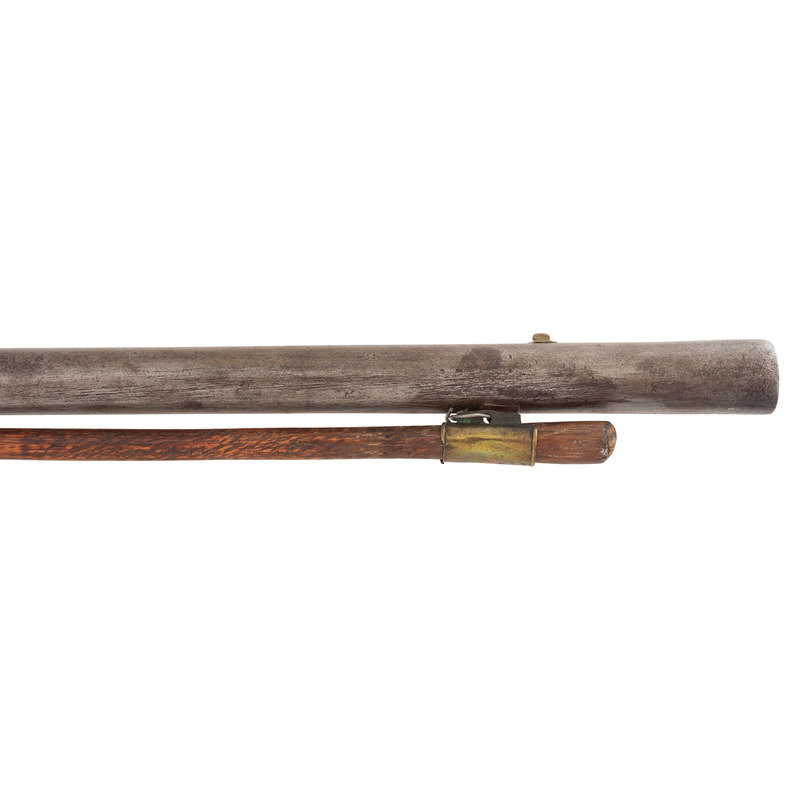
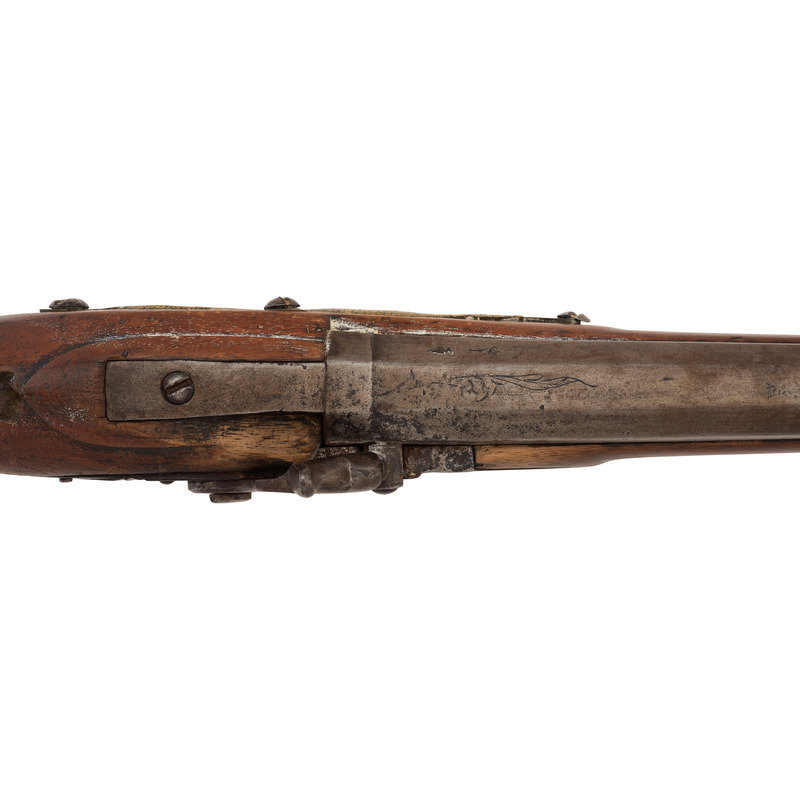
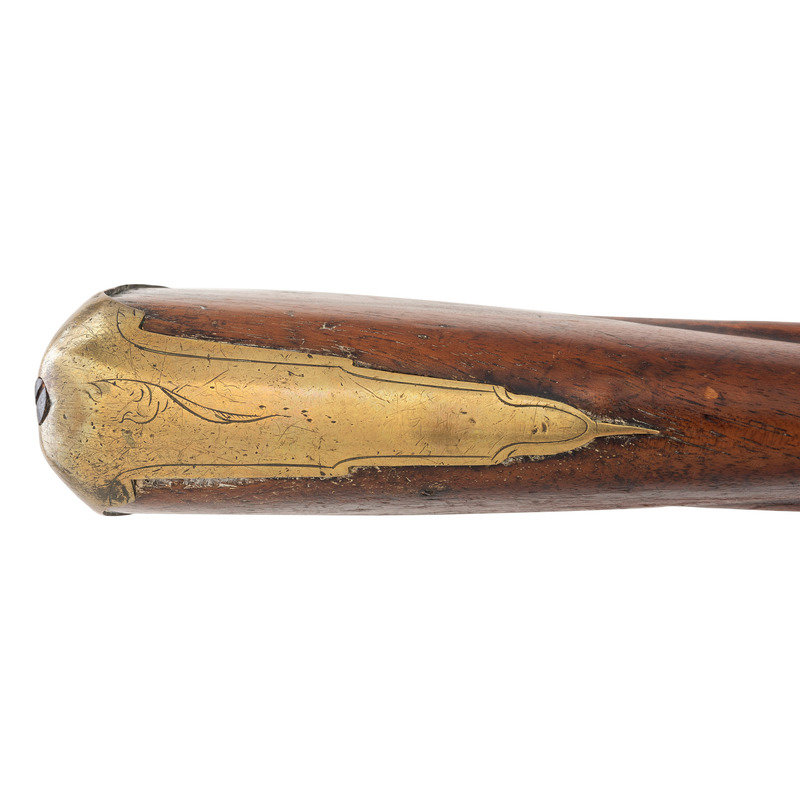
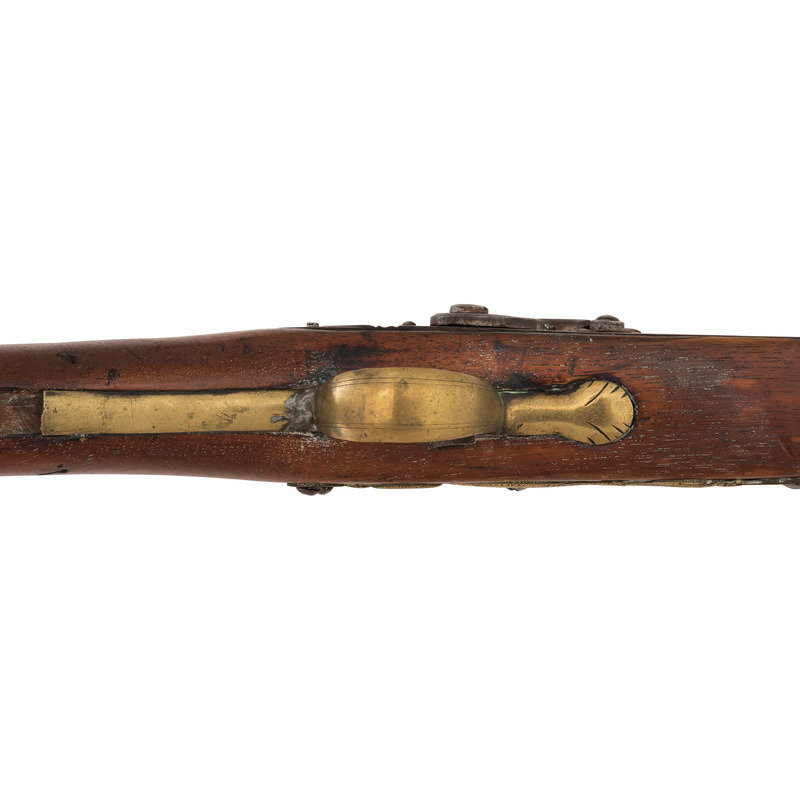
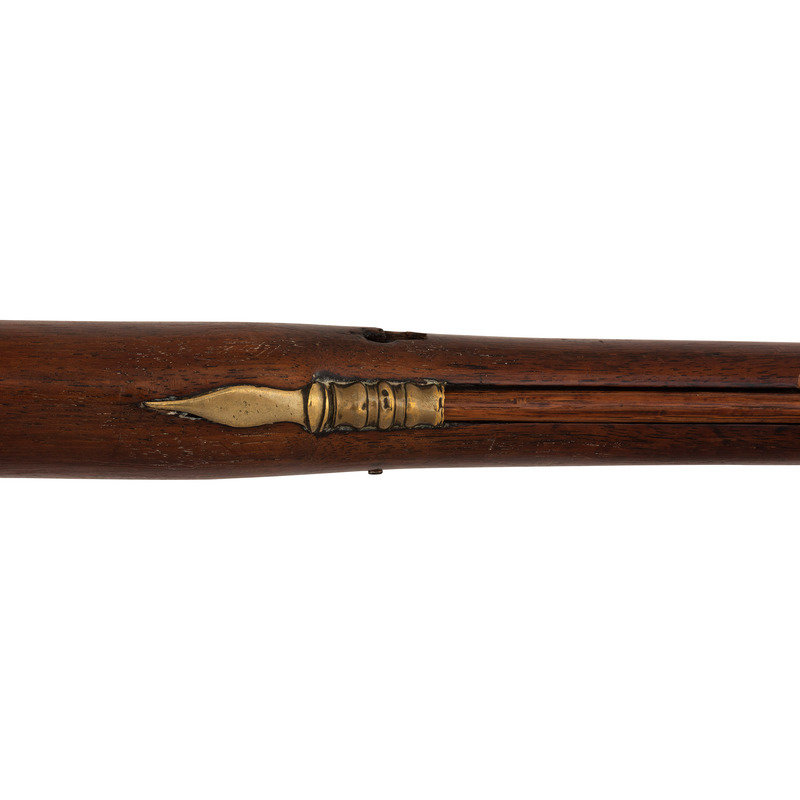
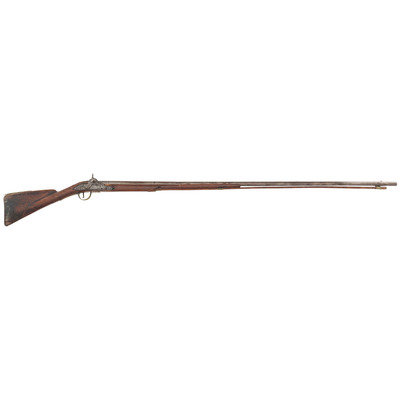
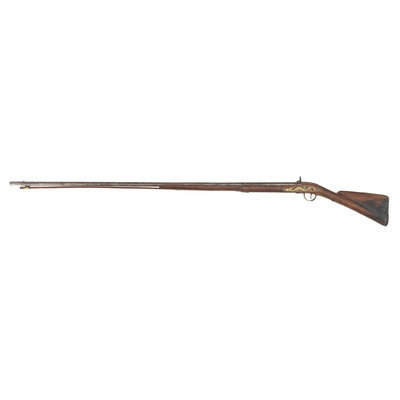
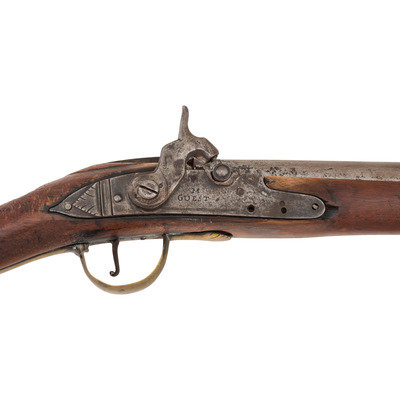
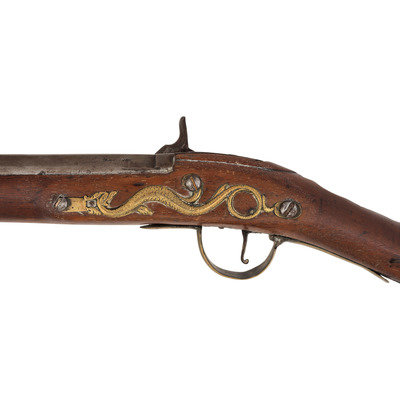
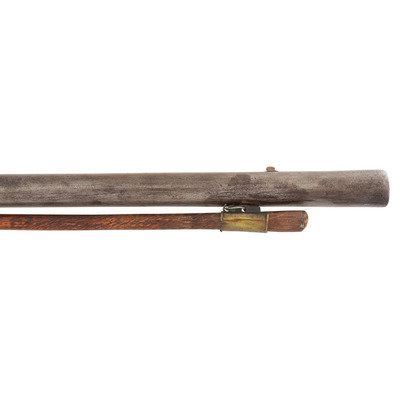
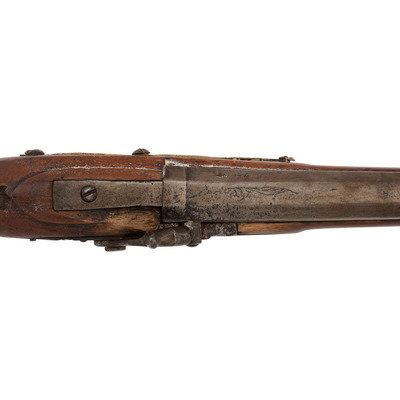
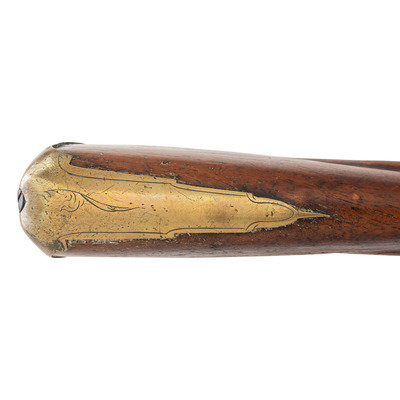
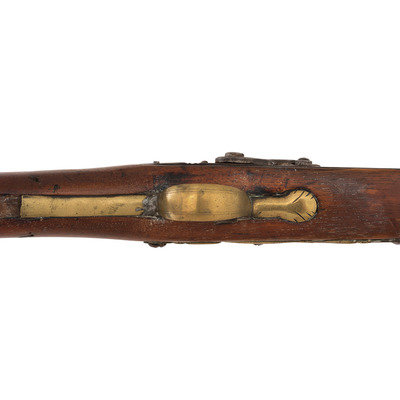
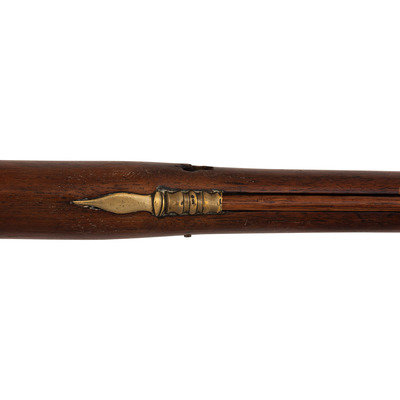
.69 caliber. 54.25" pinned three-stage octagon to round barrel. SN: NSN. Bright finish, brass furniture, walnut stock. Three screw, 6.75" flat flint lock with pronounced teat at tail is altered to percussion and is marked "M/GUEST and has a very crude percussion hammer and a drum bolster. Barrel with weak "{CROWN}/P" and "{CROWN}/V" proofs in an English style that could variously be described as early "Tower private proofs" or possibly Birmingham forgeries of London commercial proofs. The overall form of the gun is a synthesis of what would become classic trade gun features in the later part of the 18th century and that of a simplified British "Long Land" Pattern Brown Bess, with the raised carved apron around the trapezoidal breech plug tang, pronounced rail along the wrist and comb, the rudimentary palm swell at the entry pipe, an inlet in the wrist of the traditional acorn shaped escutcheon (now missing) and the long barrel length. Brass furniture includes an early variant of the three-screw serpent side plate, a long-tang brass buttplate, brass triggerguard, two corrugated ramrod pipes. Percussion alteration includes a very crude hammer with not all of the lock plate flintlock battery holes filled. Stock was cut back to half-stock configuration during the period of use, removing approximately 26" of wood. A brass pipe has been added to the upper barrel tenon nearest the muzzle. A small brass blade front sight is mounted 2.5" from the muzzle. The gun likely dates from the mid-18th century and had a working life long enough to be percussion altered circa the 1830s. A very interesting example of a very early trade gun. A search of Heer der Neue Stockel, as well as both Blackmore and Bailey's references on English gunmakers did not find an "M Guest", although Blackmore does list a London gunmaker Richard Guest who worked circa 1750 which would probably be correct time wise for this piece. It is also possible the name on the lock could be a lock maker rather than a gunmaker or even a retailer or trade name reference. While Mr. Ness' notes suggest that he felt the gun was of Dutch origin and it could be a Low Country interpretation of a British military musket as a trade fowler, this cataloger feels the gun is almost certainly of English origin.