Condition Report
Contact Information
Lot 8
Lot Description
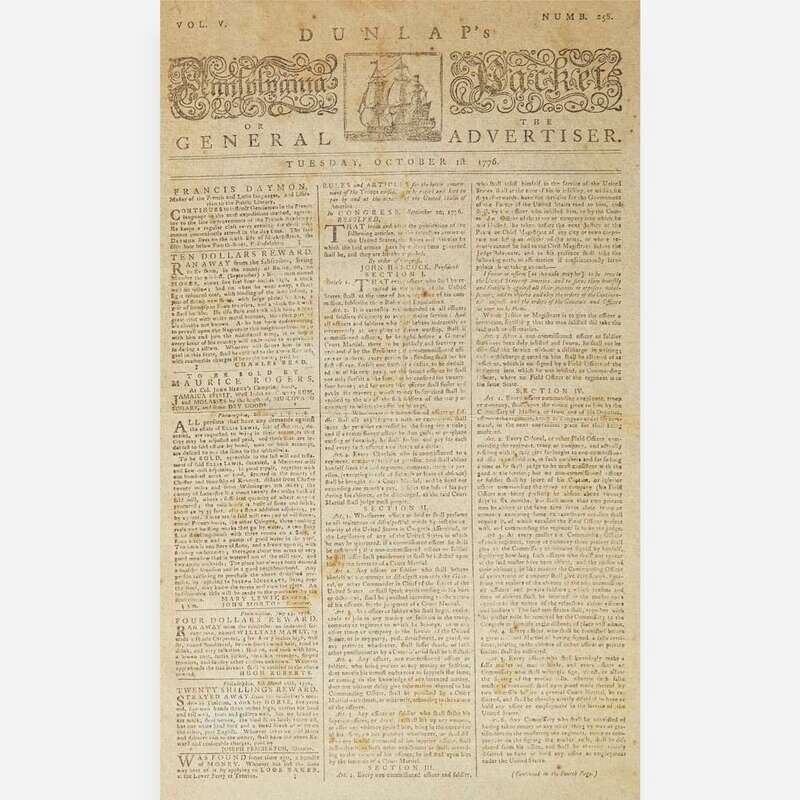
Congressional Regulations for the Management of the Continental Army
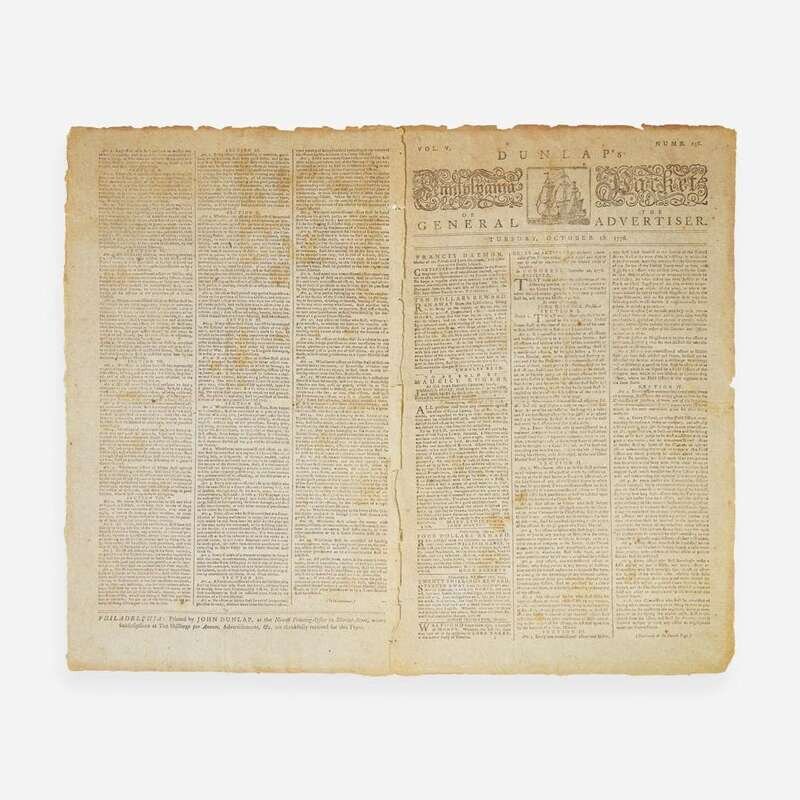
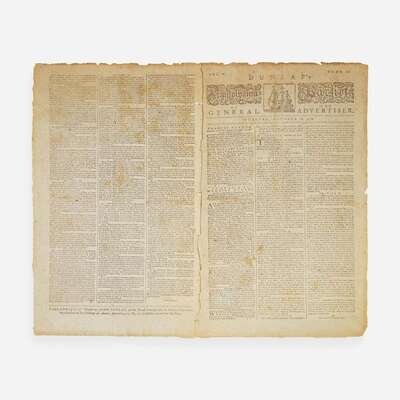
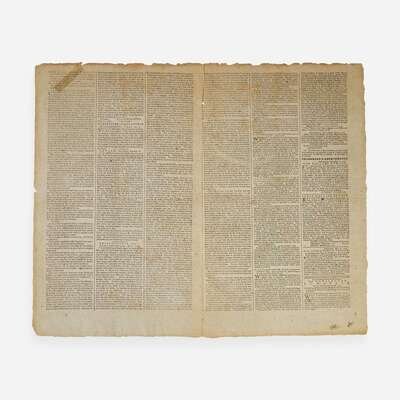
Philadelphia: Printed by John Dunlap, Tuesday, October 1, 1776. Vol. V, Numb. 258. Bifolium sheet, 16 7/8 x 10 5/8 in. (429 x 270 mm). Printed newspaper in three columns. Creasing from contemporary folds; likely disbound; scattered wear along edges, with sello tape repair in top corner of second page; scattered foxing; lightly toned along margins.
A Revolutionary War printing of John Dunlap's Pennsylvania Packet, featuring the September 20, 1776 Continental Congress resolution for the regulation of the Continental Army: "Rules and Articles for the better government of the Troops raised, or to be raised and kept in pay by and at the expence of the United States of America.", signed in type by John Hancock as President of Congress. The Resolution, partially-printed on the front page and the entirety of the last page, outlines the rules for the administration of the Continental Army, including the conduct to be followed by officers and soldiers, their oath of allegiance to the United States, and other regulations regarding munitions and rations. The Resolution outlines in great detail the behavior soldiers are to adhere to and the penalties for dueling, drinking, unauthorized leave of camp or a post, and interestingly, the penalties to be suffered by traitors, who, "knowingly harbour or protect an enemy, shall suffer death, or such other punishment as by a Court Martial shall be inflicted." This act was originally printed in 1775 under the title "Rules and Articles, for the Better Government of the Troops, Raised, or to be raised and kept in pay by and at the joint expence of the Thirteen United English Colonies of North-America," but was revised here to reflect America's newly declared independence. The resolution reflected Congress's effort to provide an organizational structure to the largely ragtag nature of the army.
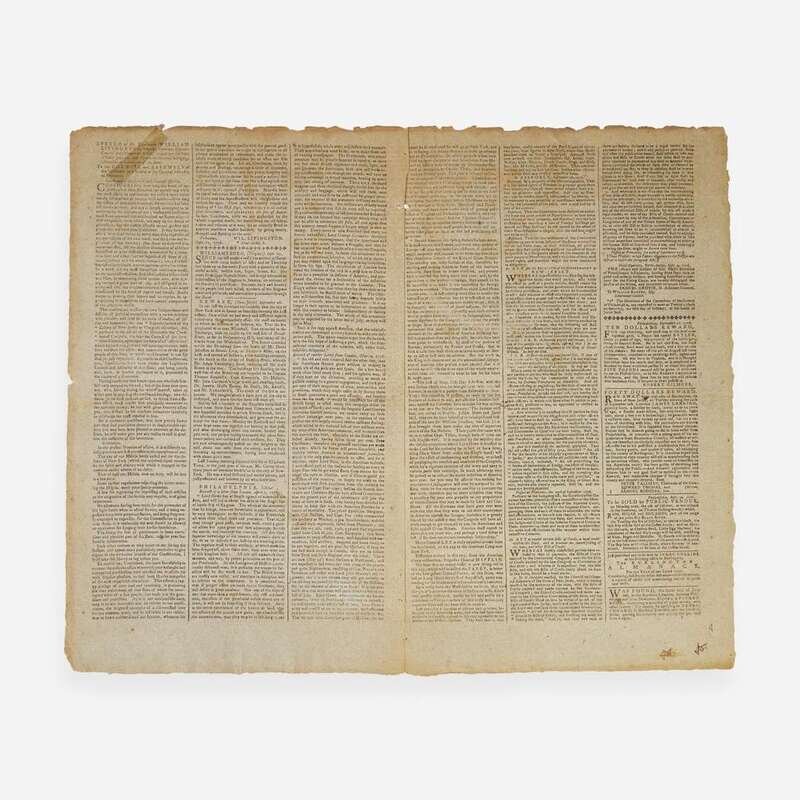
Another article of note prints New Jersey Governor William Livingston's September 11, 1776 speech to the New Jersey legislature. This was the first legislative session convened under New Jersey's newly ratified constitution, and was Livingston's first speech to them as the first Governor of the state of New Jersey. Livingston considers, "how the long hand of oppression had been stretched out against us," and how the colonies were "constrained to assert our own Independence and dissolve all political connection with a nation insatiate with plunder, and deaf to the voice of reason, of justice and humanity." He calls on the legislature to turn its attention to the war effort, including attending to the organization and pay of the militia, funding for light horses, as well as fixing a seat of government. He finishes his stirring address, "Gentlemen, while we are applauded by the whole impartial world, for demolishing the old fabric, rotten and ruinous as it was; let us unitedly strive to approve ourselves master builders, by giving beauty, strength and stability to the new." Over the next few months New Jersey would be the site of several important battles of the war, including the Battles of Trenton and Princeton.