Condition Report
Contact Information
Lot 157
Lot Description
General George Washington Makes Final Arrangements for an Attack on Manhattan
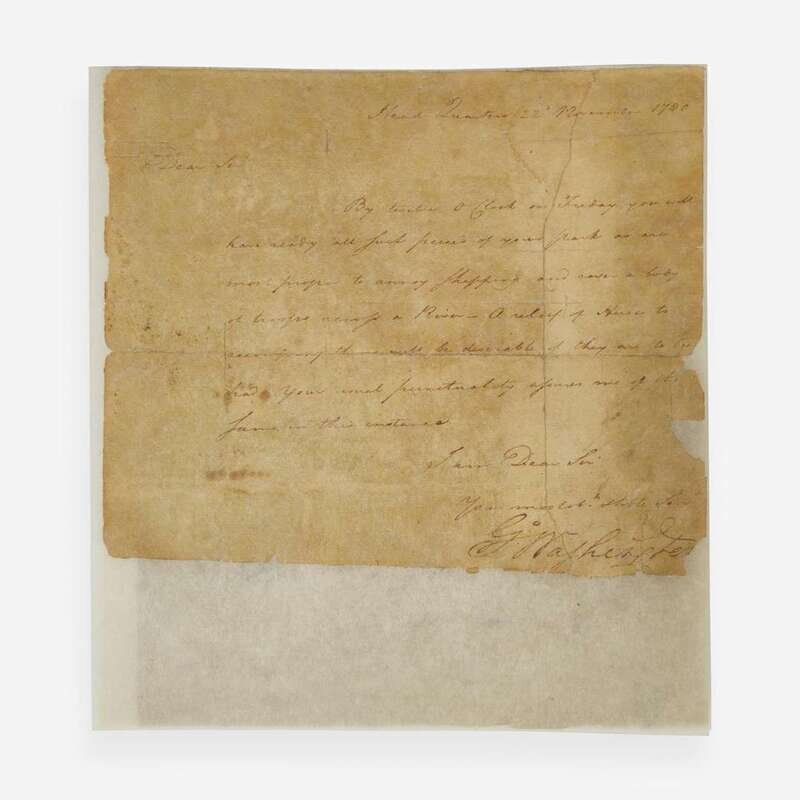
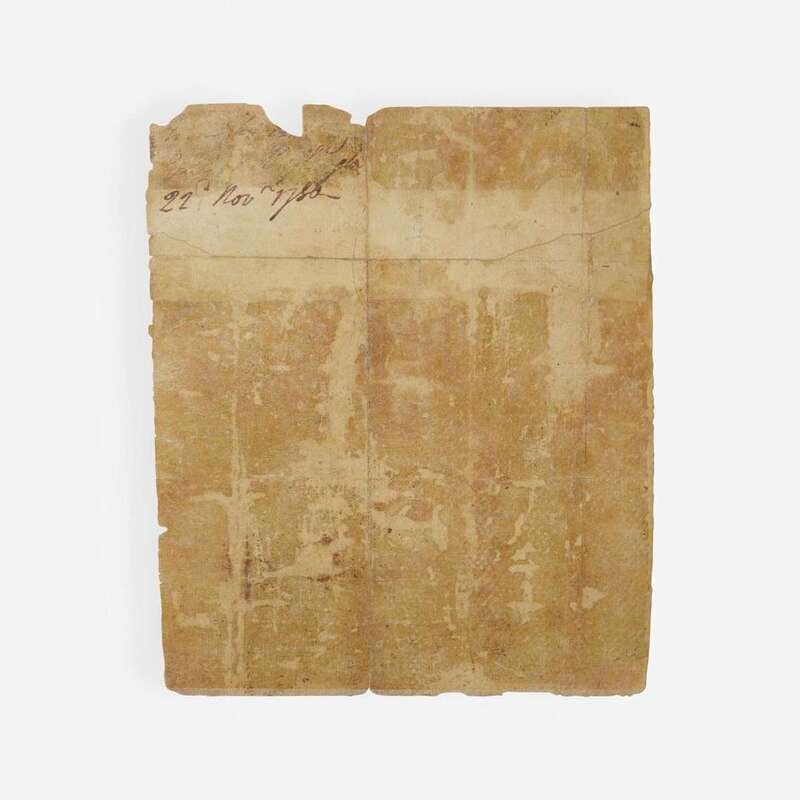
Head Quarters (Passaic, New Jersey), November 22, 1780. One sheet, 7 x 8 3/8 in. (178 x 213 mm). Manuscript letter in the hand of aide-de-camp Tench Tilghman, signed by General George Washington to Brigadier General Henry Knox concerning a planned attack on British posts on the northern end of Manhattan: "Dear Sir / By twelve o'Clock on Friday you will / have ready all such pieces of your park as are / most proper to annoy shipping and cover a body / of troops across a River--A relief of Horses to / accompany them will be desirable if they are to be / had. Your usual punctuality assures me of the / same in this instance. / I am Dear Sir / Your most obt & hble Servt. / Go: Washington."; docketed on verso; with accompanying sheet with old cataloguer's notes. Each sheet silked; creasing from old folds; wear along all edges; bottom of letter wanting; chip at bottom right corner affecting "n" in Washington; two discreet short closed tears traversing Washington's signature. A draft of this letter is printed in The Writings of George Washington from the Original Manuscript Sources, 1745-1799 (Volume 20, September 6, 1780-December 20, 1780, p. 386, edited by John C. Fitzpatrick).
While at his headquarters in Passaic, New Jersey, General George Washington hoped to make a final attack on British forces before his army's retirement to their winter encampment in New Windsor, New York. Realizing that a direct assault on their military headquarters in New York City would be disastrous, he instead made plans for a series of surprise attacks on British posts at Kingsbridge (the Bronx) and northern parts of Manhattan. Brigadier General Henry Knox, along with General Anthony Wayne, Colonel Timothy Pickering, and others were to lead a multi-pronged attack the night of Friday, November 24, crossing the Hudson River by boat under dark with a large regiment of troops mustered from the surrounding area, including West Point. Although the plan was set into motion, boats requisitioned, and troops summoned to their attack points, according to Colonel David Humphreys, who participated in the operation, it was aborted at the last minute due to, "the accidental intervention of some (British) vessels" who unexpectedly sailed up the Hudson. By midday on the 24th Washington issued directions to the several commanders calling back their troops, and in the following days made his final arrangements for the Army's winter encampment.