To request further details about this lot, please email fineart@freemansauction.com
Please email fineart@freemansauction.com for any additional information or questions you may have
Sale 6643
| New York
| New York
To request further details about this lot, please email fineart@freemansauction.com
Please email fineart@freemansauction.com for any additional information or questions you may have
Estimate$200,000 – $300,000
Provenance:
The Collection of Sonia Zaks, Chicago.
By familial descent to present owner.
Exhibited:
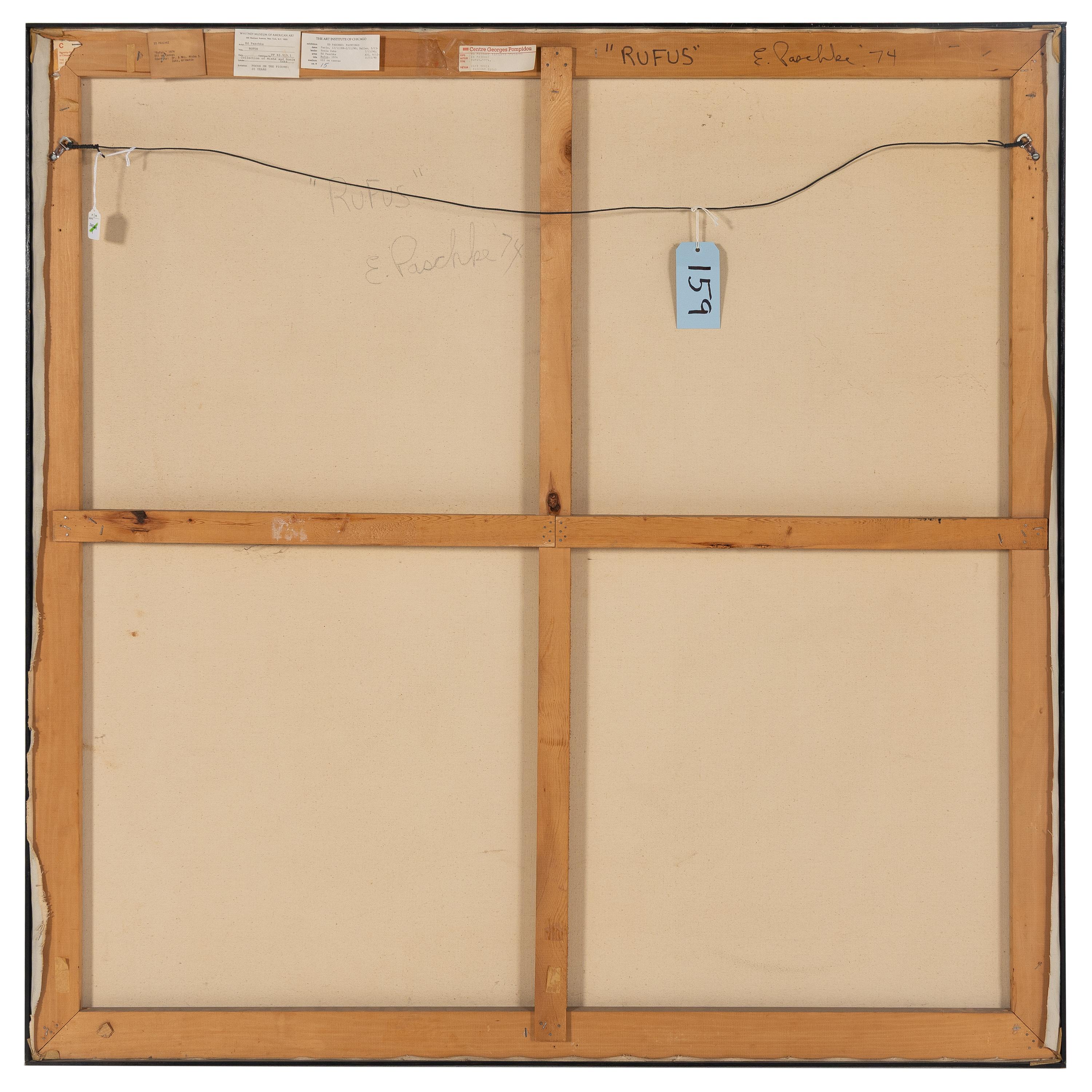
Chicago, The Art Institute of Chicago, Seventy-Fifth Exhibition by Artists of Chicago and Vicinity, December 14, 1974 - January 19, 1975, exhibition pamphlet, no. 63.
Chicago, The Renaissance Society at the University of Chicago, Ed Paschke: Selected Works 1967-1981, March 7 - April 18, 1982.
New York, Whitney Museum of American Art, Focus on the Figure: Twenty Years, April 14 - June 13, 1982.
Paris, Musée National d’art Moderne, Centre Georges Pompidou, Ed Paschke Retrospective, December 12, 1989 - February 11, 1990 (and traveling to Dallas, Dallas Museum of Art, May 13 - July 15, 1990; Chicago, Art Institute of Chicago, October 13, 1990 - January 2, 1991).
Literature:
The Renaissance Society at University of Chicago, Ed Paschke: Selected Works, 1967-1981, Chicago, 1982, p. 24, no. 20, illustrated p. 40.
Brooks Adams, "The Progress of Ed Paschke," Art in America, October 1982, p. 114, illustrated (front cover).
Neal Benezra, Ed Paschke, exhibition catalogue, New York, 1990, p. 58, no. 15, illustrated p. 124.
Lot Note:
A series of raucous and radical exhibitions at the Hyde Park Art Center in late 60s Chicago introduced the world to a brash and energetic band of School of the Art Institute of Chicago graduates who then went by the punny rock and roll group names of the Hairy Who?, the False Image, and the Non-Plussed Some, later becoming collectively known as the Chicago Imagists. Critically acclaimed for their unique brand of deeply personal and often psychologically charged pop art figuration, the Imagists drew from unconventional and disparate nonwestern and vernacular sources including Art Brut, Surrealism, comic books, and side show banners, and they were distinguished by irreverent humor, high key coloration, playful patterning, and fantastical graphic imagery. These shows propelled the members of the movement to overnight art star status. As the sands of time shifted into the seventies, no star shown brighter than that of Non-Plussed Some alum Ed Paschke (1939–2004). Paschke embraced the limelight and associated nightlife with gusto and charisma to match the blue-collar work ethic he employed in the studio, earning him the moniker “Mr. Chicago”, emphasizing his status as a man of the city— a man of the streets. Perhaps more than any of his intentionally low brow-leaning Imagist peers, Paschke gravitated towards the gritty, seedy, and disturbing sides of popular culture influences, favoring the infamous (Lee Harvey Oswald, Richard Speck, Al Capone) over the famous as subject matter. He frequently transmuted the grotesque to glamorous, just as often reversing the Ovidian metamorphoses and canonizing the sinners. This signature sensibility is on display most overly, powerfully, and successfully in Paschke’s most heralded series of paintings, his mid-70s icon-ifications of pimps, hustlers, pushers, prostitutes, and transvestites, sublimely shining a cinematic and voyeuristic spotlight on amalgamated denizens of the grimy gutters and dark corners of the urban underworld. These synthesized portraits of a motley cast of nocturnal characters, photorealistically documented through a grindhouse lens with an underground cartoon acidic animation overlay, these antiheroes subvert and seduce the viewer with the exhilaration of a risky ramble on the wild side of imagination.
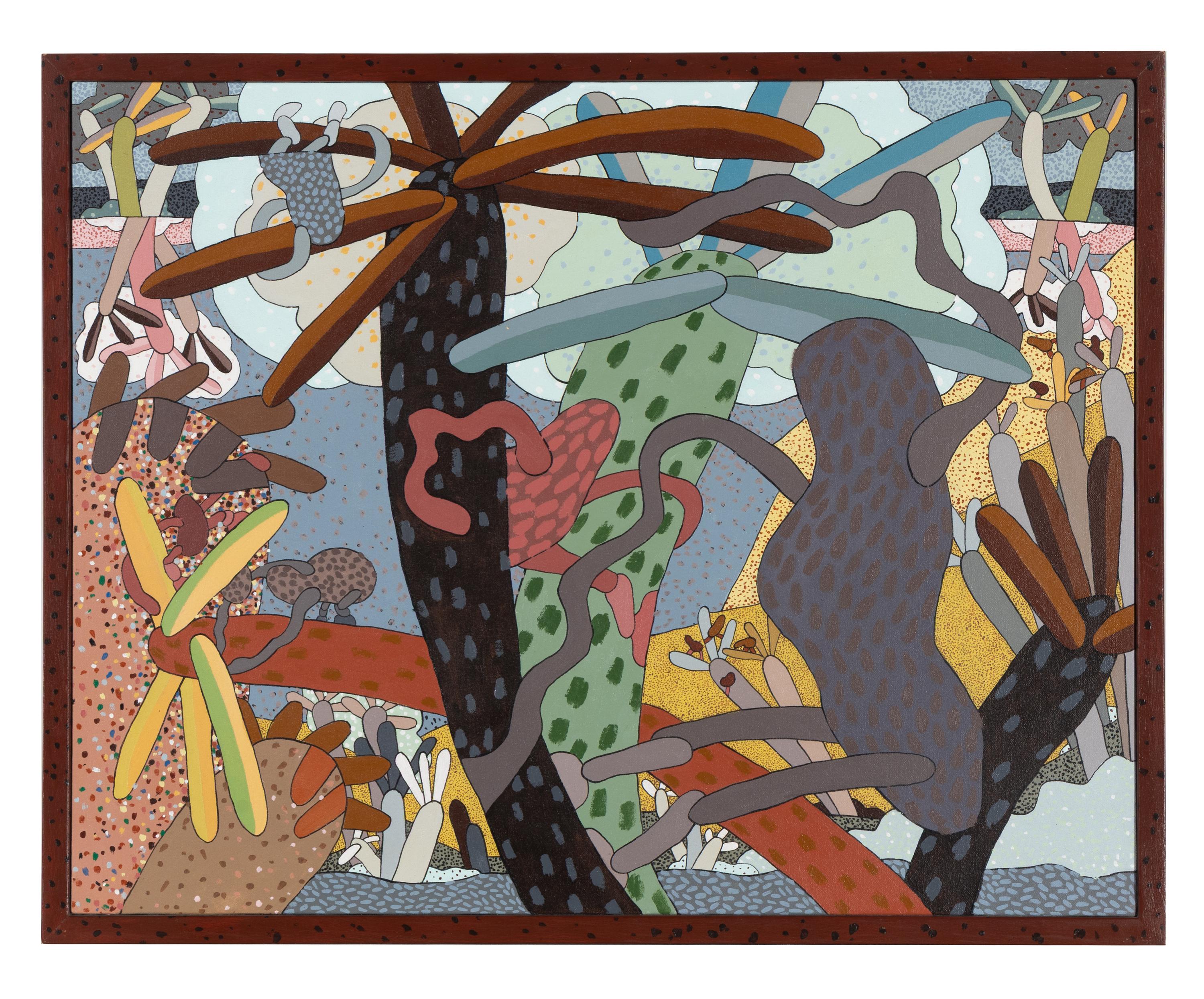
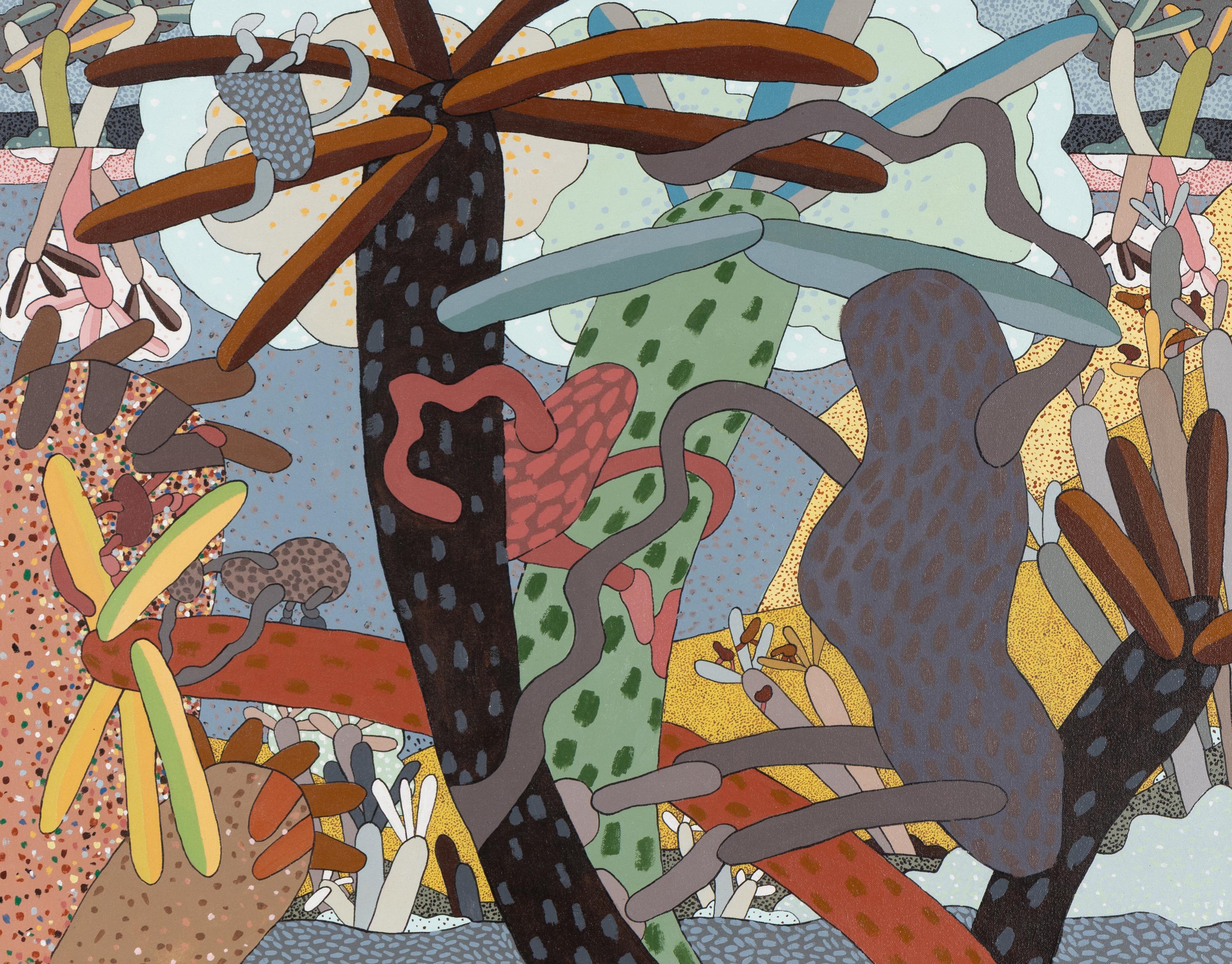
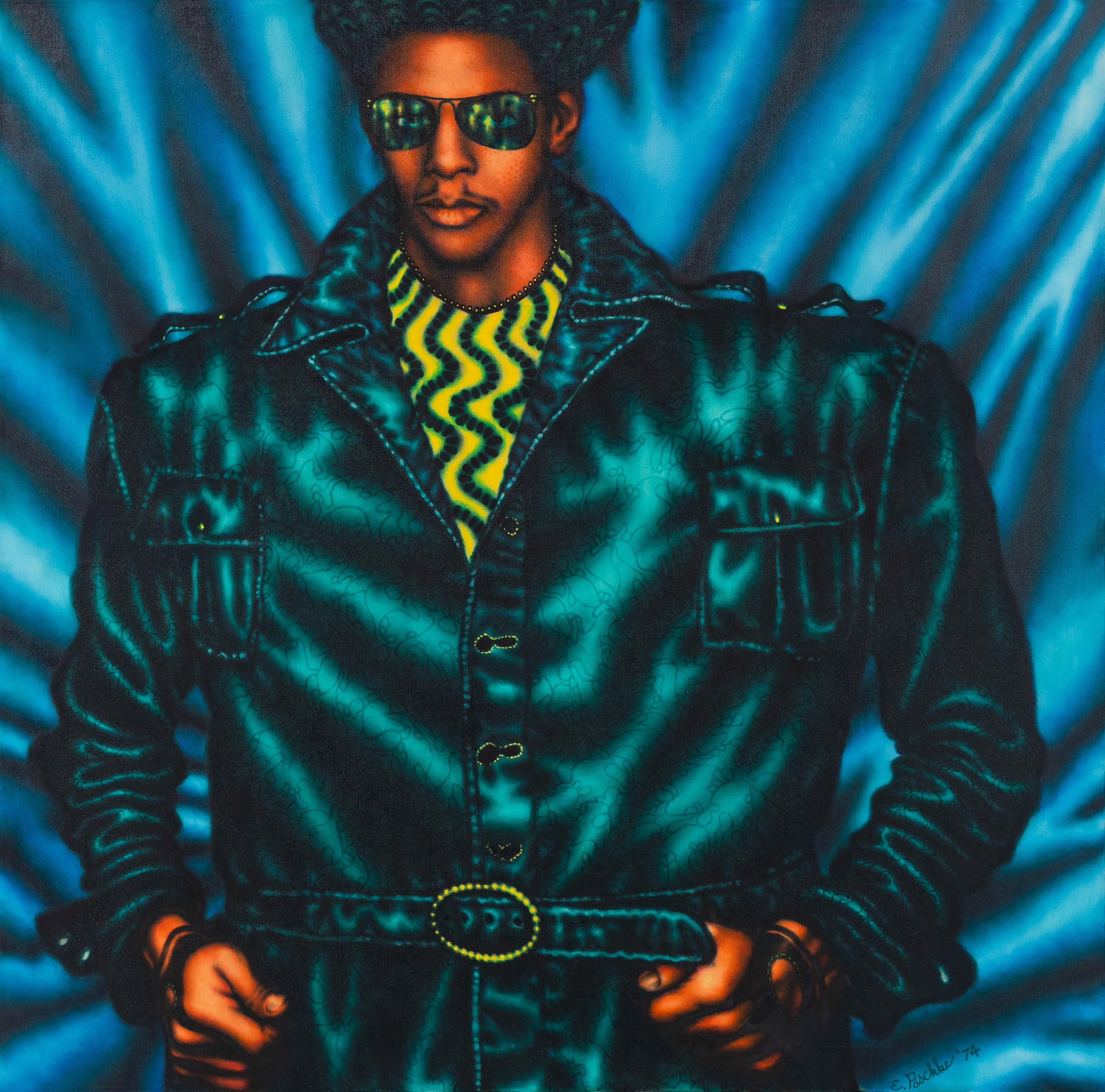
Arguably no work from this era exemplifies Paschke’s phenomenal thrill-harnessing painting prowess than Rufus from 1974. The eponymous Rufus’ menacing magnetism masterfully captures the transition from the internal fear that you might be the wrong place to the excitement of realizing you are in fact exactly where you need to be. Rendered with film noir chiaroscuro in three-quarter view, his shoulders impossibly broad, Rufus uncompromisingly confronts with a soulful stare through hypnotic tie-dyed sunglasses— aggressive yet alluring. A butterfly collared and bedazzled buckle-belted cool blue-black leather jacket with Superman hair highlights ripple across the figure’s wide frame—at once creature comfort, protective armor, and peacock adornment. Closer investigation reveals delicately detailed embellishments to the coat, with a network of tangled decoration echoing the effects of both the embroidery and tattoo needles. Fingerless gloved hands clenched into powerful fists rest on his hips, dignified while defensive— striking a pose while ready to strike a blow. The electric vibratory zig zag of Rufus’ yellow and green shirt peeks through the undulating coat, fixing our gaze while simultaneously directing it upward to the pyramidal capstone of his head. A psychedelic patterned afro colorfully crowns this street king, with a haunting halo of mood, myth and magic also breaking the figure free of the confines of the picture frame, propelling Rufus into a higher plane. Backlit behind is a starburst explosion of neon sky also evoking El Greco’s fabric folds, divinely illuminating the protagonist while further expanding the depth of the illusionistic space. Complex yet concise, the compelling contradictions are what make the painting so attractively authentic and vividly vulnerable. Rufus is both a beauty and a beast, a personified warning sign that dually promises a dangerously good time. We can’t look away from those piercing soulful eyes, even if we should: we’re charmed to death by raw vicious vitality.
Beyond the unparalleled formal and aesthetic attributes of the painting, it possesses a remarkable pedigree by way of provenance. The painting was first exhibited in Ed Paschke’s 1974 solo show at his first representing gallery, Deson Zaks, from which it was acquired by his gallerist and one of his biggest champions, Sonia Zaks, also a Chicago artworld powerhouse in her own right. It remained a crown jewel of Zaks’ illustrious collection for the rest of her life, with the exception of when it was on loan to several important museum exhibitions. The first of these significant institutional inclusions was the Seventy-Fifth Exhibition by Artists of Chicago and Vicinity at the Art Institute of Chicago. This juried show, often with heavily local influence, awarded museum purchase prizes to artists’ best output, a clear indication that, in submitting Rufus, Paschke himself as well as his gallerist considered the work to be among, if not, the, best he made that year. 1982 proved to be the next major moment for Rufus with it not only being a featured standout in Paschke’s retrospective at the University of Chicago’s Renaissance Society but also curated into the Whitney’s Focus on the Figure: Twenty Years as emblematic of pinnacle figurative painting from the previous two decades. The final feather in its cap for that calendar year was gracing the cover of the October issue of Art in America, illustrating the article the Progress of Ed Paschke. Rufus’ final exhibition inclusion was perhaps its most meaningful, being one of the showstoppers in Paschke’s international traveling retrospective first opening in 1989 at the Centre Georges Pompidou in Paris, before proceeding to the Dallas Museum of Art in 1990, and ultimately closing in poetic full circle fashion at the Art Institute of Chicago in 1991. Now 35 years later, Rufus again emerges to be viewed in public and to captivate audiences with that soulful stare, giving collectors a rare opportunity to acquire this spectacular masterpiece by Mr. Chicago for the first time in over 75 years.
Framed: 55 5/8 x 55 5/8 in.
Please contact fineart@freemansauction.com for a detailed condition report.
The physical condition of lots in our auctions can vary due to age, normal wear and tear, previous damage, and restoration/repair. All lots are sold "AS IS," in the condition they are in at the time of the auction, and we and the seller make no representation or warranty and assume no liability of any kind as to a lot's condition. Any reference to condition in a catalogue description or a condition report shall not amount to a full accounting of condition. Condition reports prepared by Freeman's staff are provided as a convenience and may be requested from the Department prior to bidding.
The absence of a posted condition report on the Freeman's website or in our catalogues should not be interpreted as commentary on an item's condition. Prospective buyers are responsible for inspecting a lot or sending their agent or conservator to inspect the lot on their behalf, and for ensuring that they have requested, received and understood any condition report provided by Freeman's.
Please email fineart@freemansauction.com for any additional information or questions you may have regarding this lot.