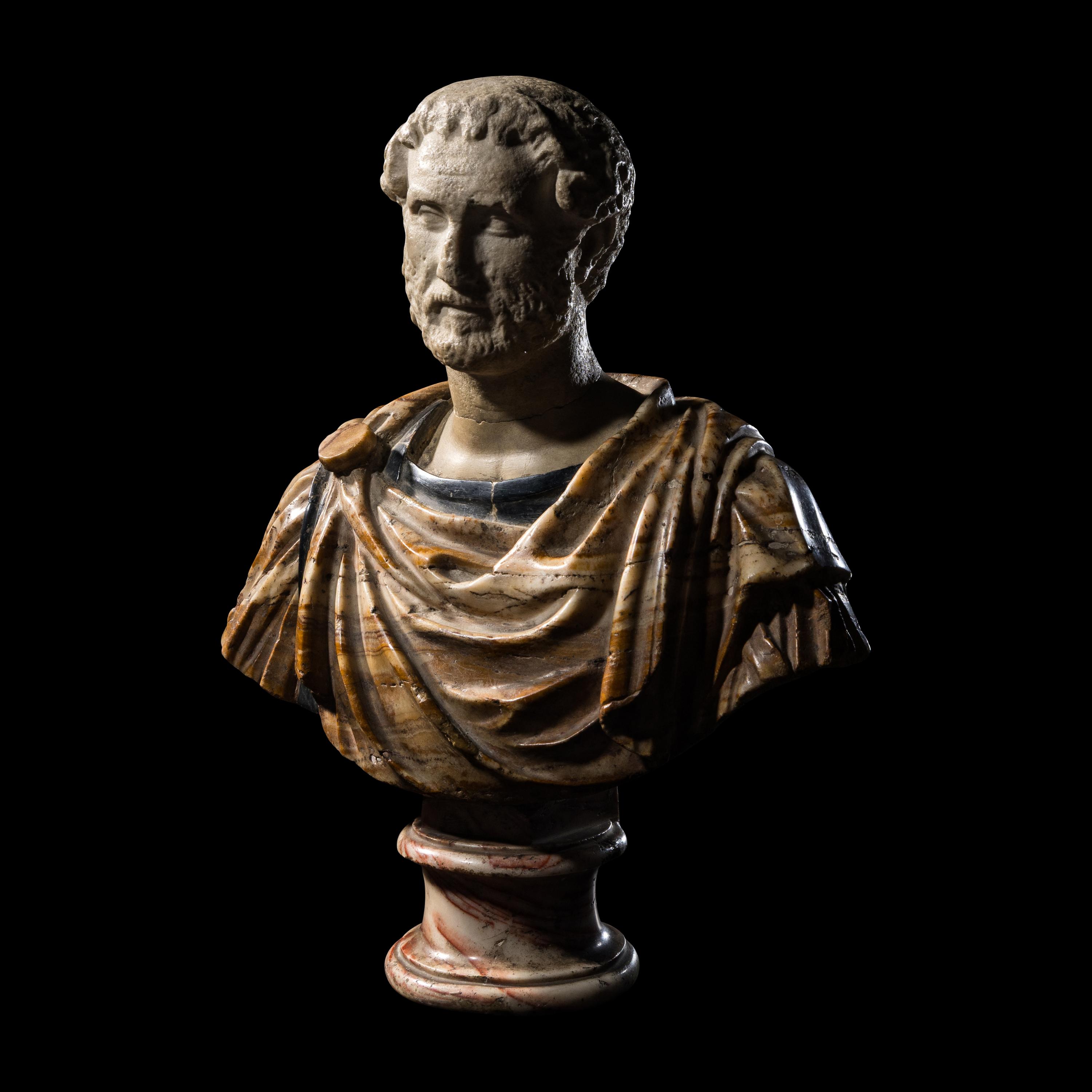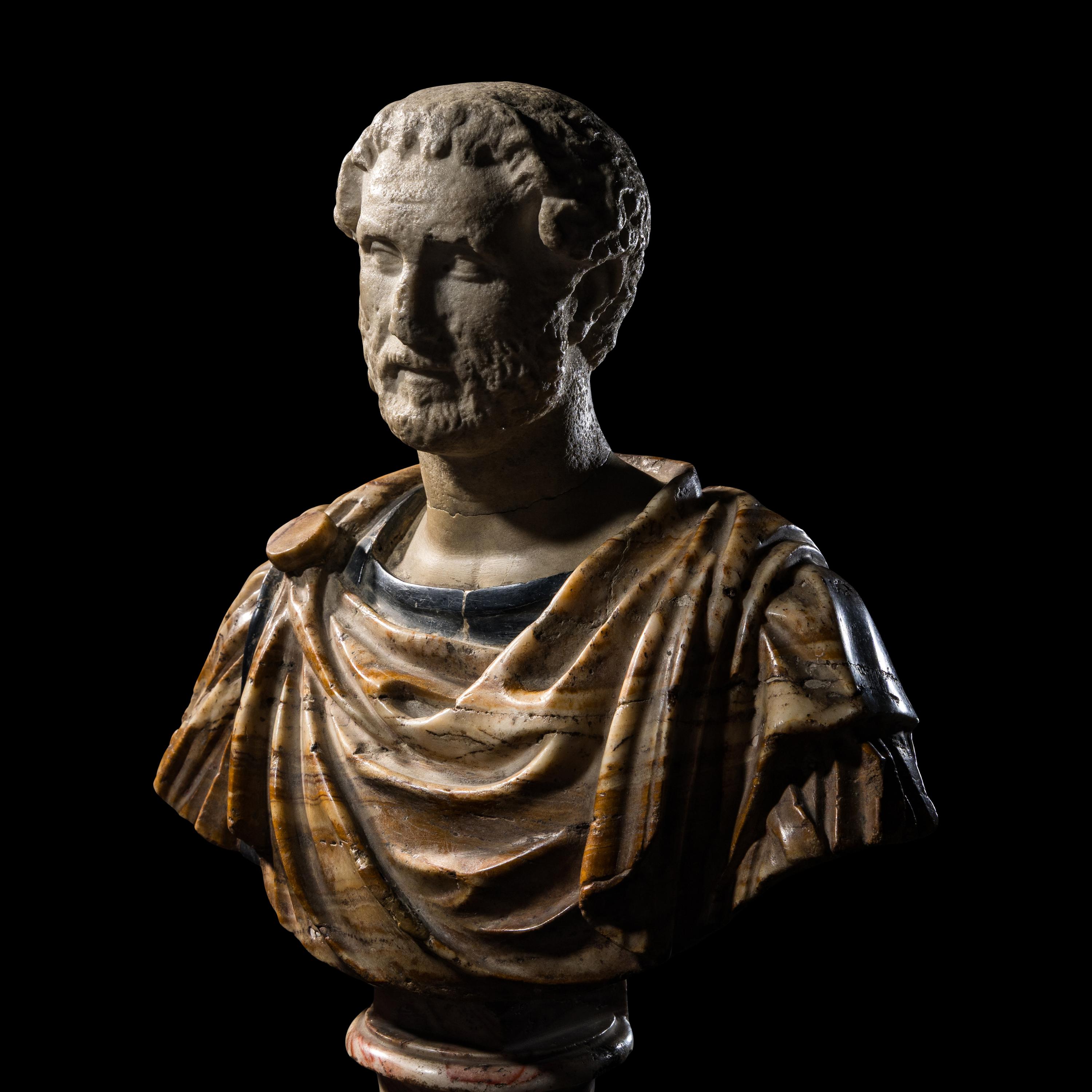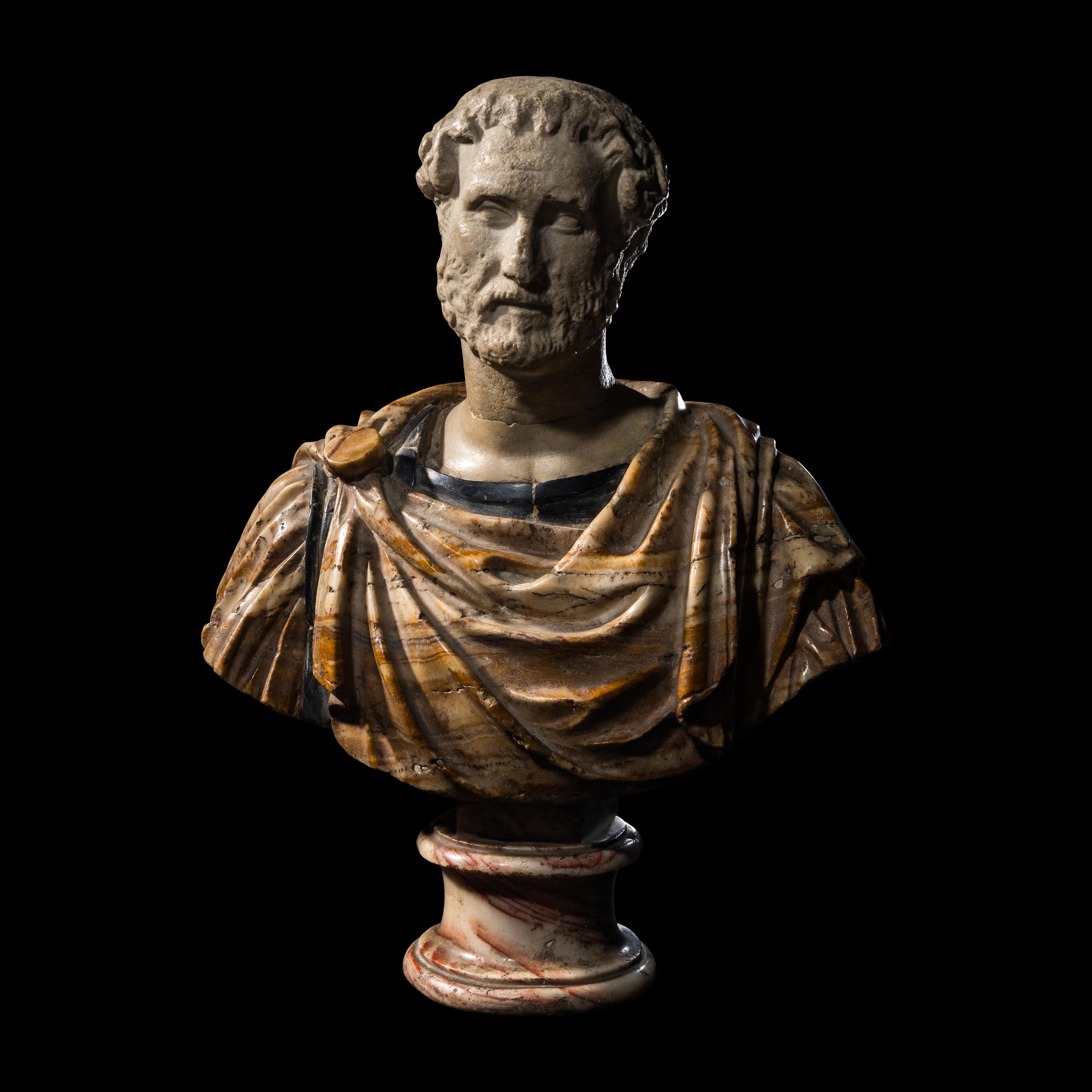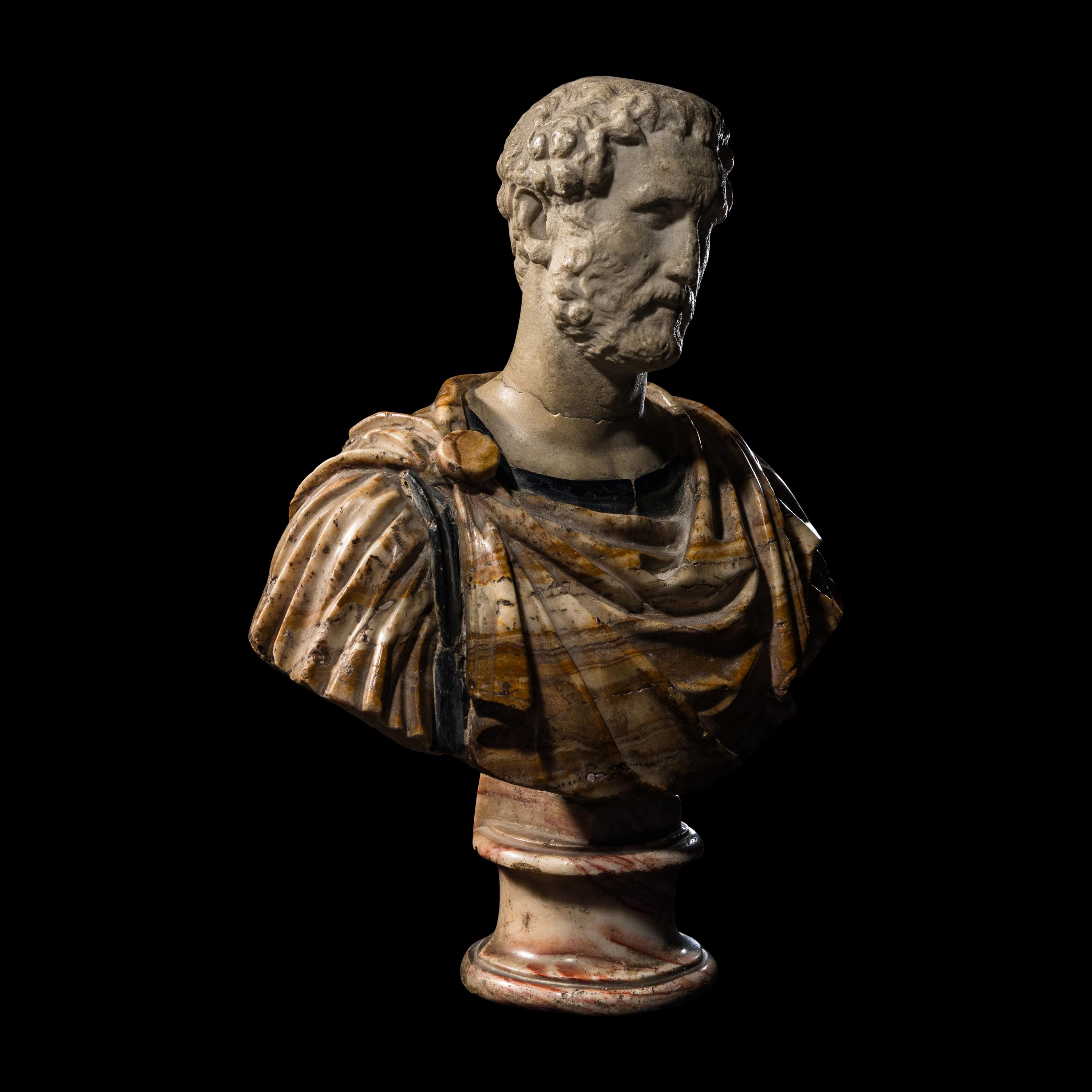
To request further details about this lot, please email Antiquities@freemansauction.com
Please email Antiquities@freemansauction.com for any additional information or questions you may have
Sale 6578
| Chicago
| Chicago
To request further details about this lot, please email Antiquities@freemansauction.com
Please email Antiquities@freemansauction.com for any additional information or questions you may have
Estimate$60,000 – $80,000
Provenance:
Gawain McKinley (1945-1996), London.
Christie's, London, Antiquities, 7 October 2010, Lot 161.
Published:
D. Del Bufalo, Precious Portraits: Small Precious Stone Sculptures of Imperial Rome, Turin, 2020, p. 99, no. 171.
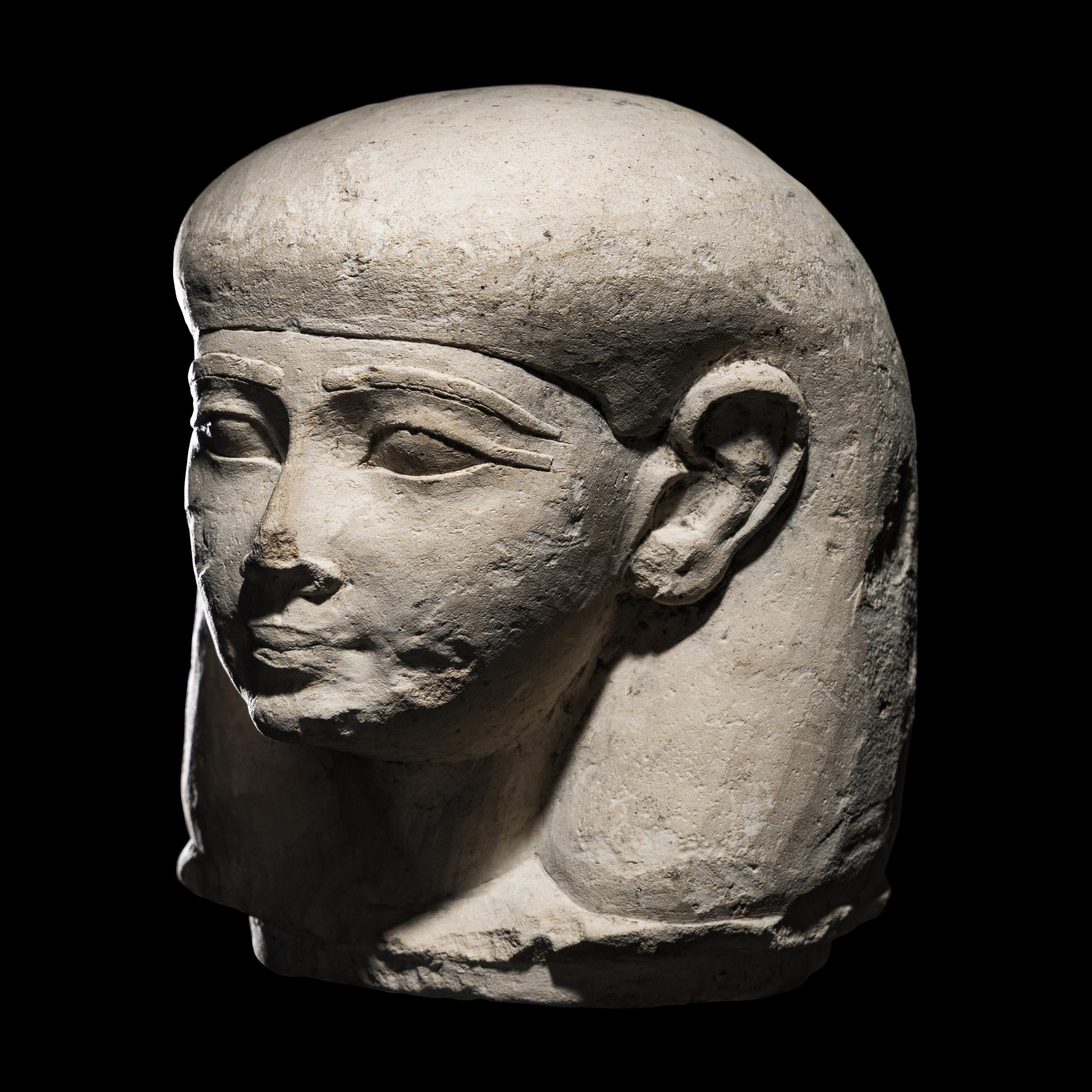
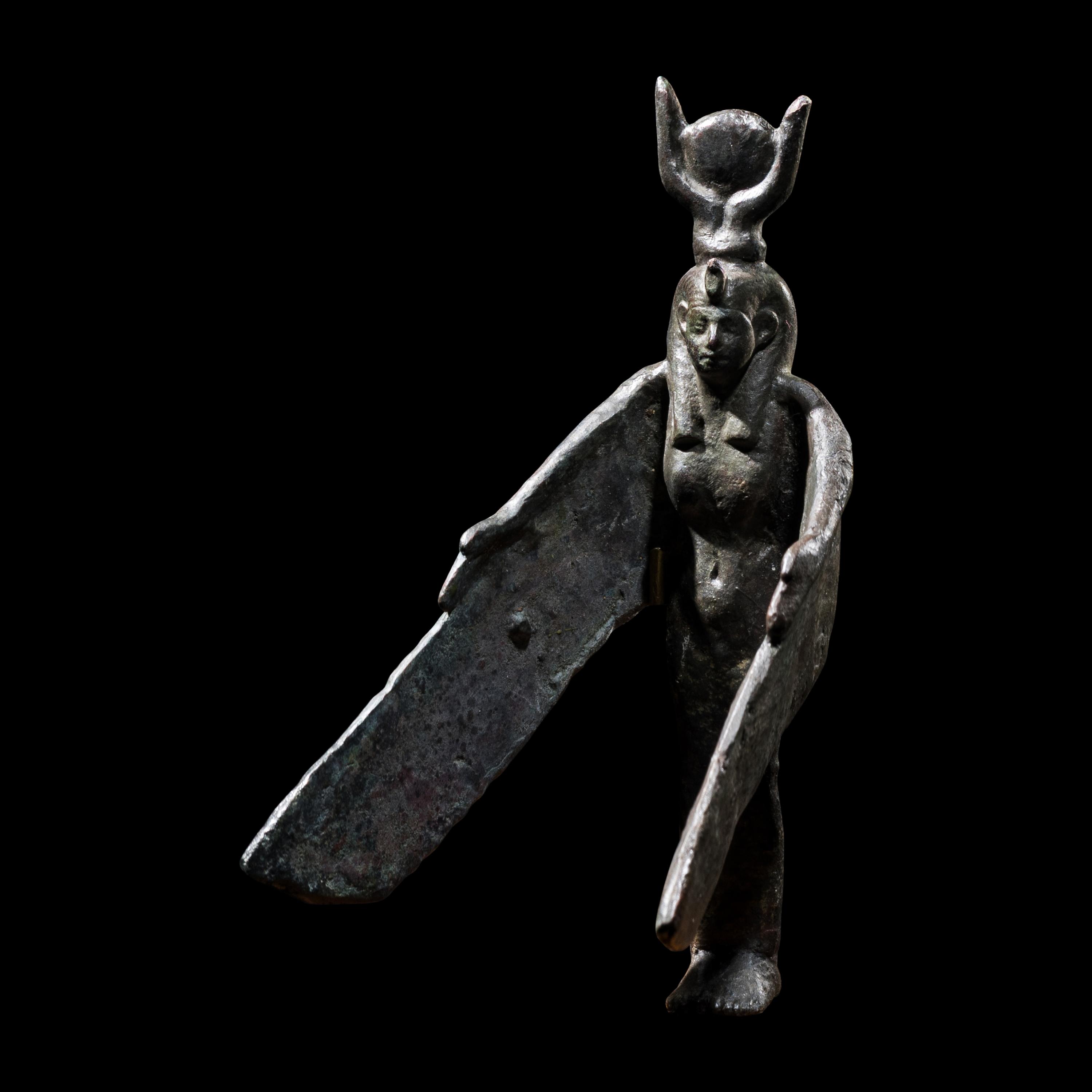
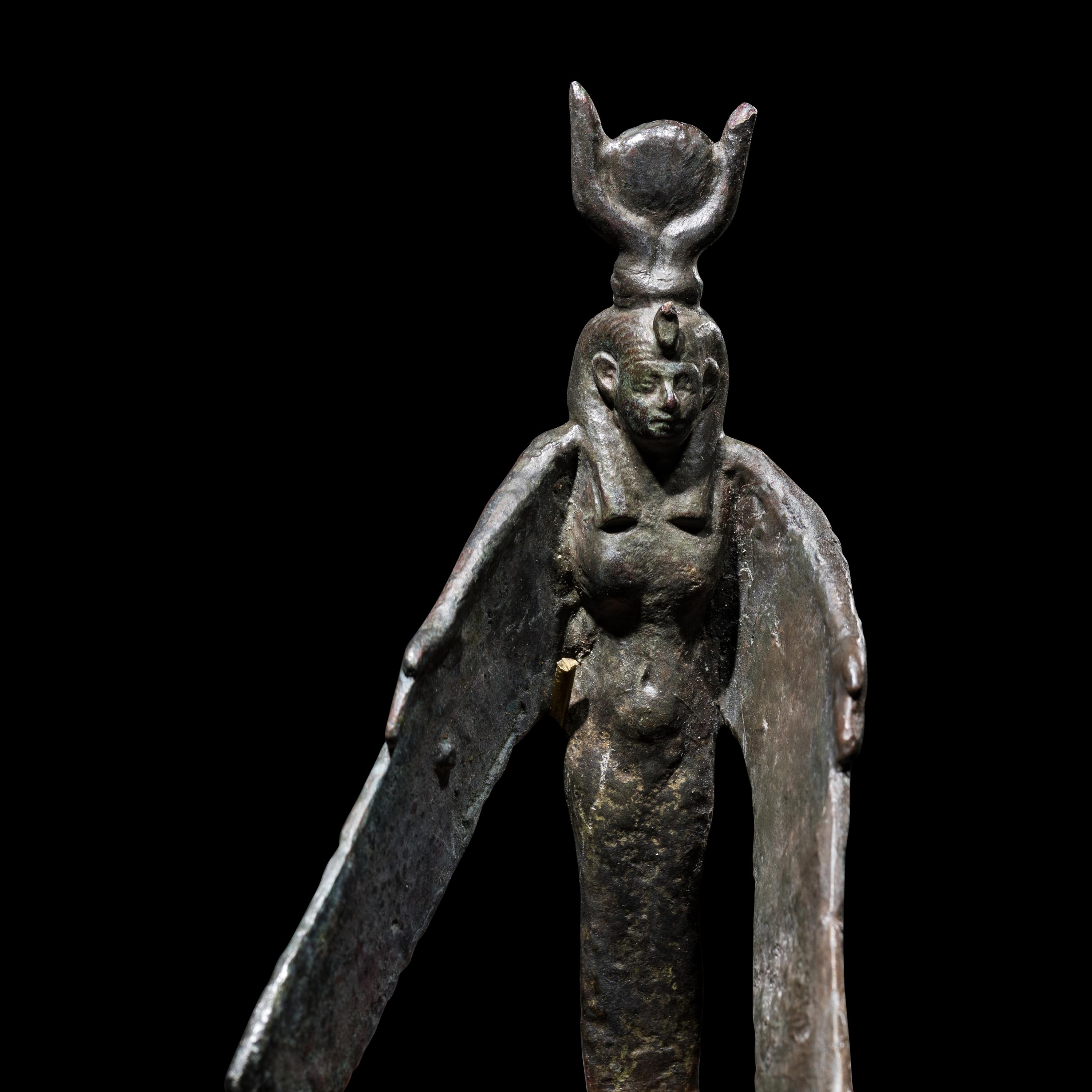
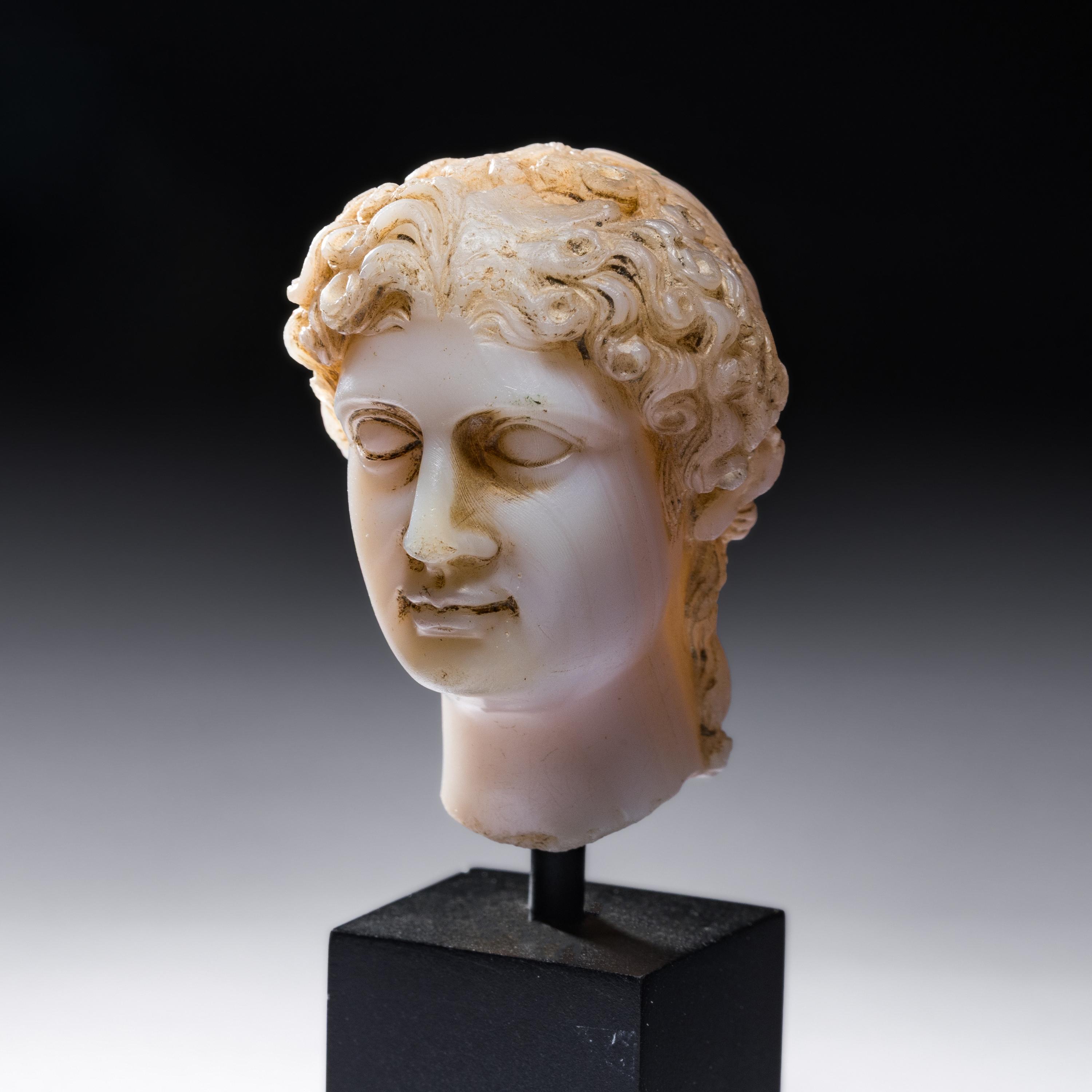
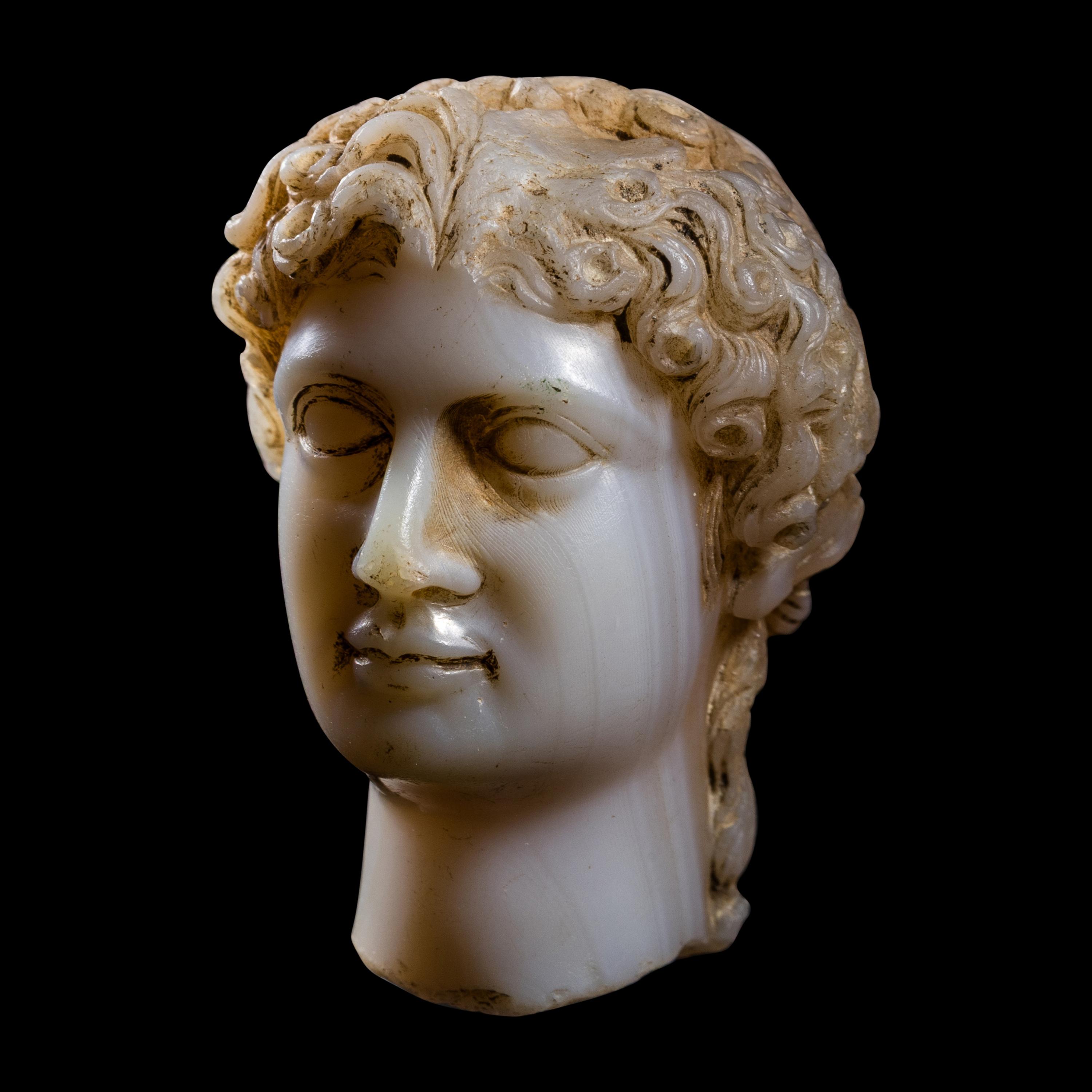
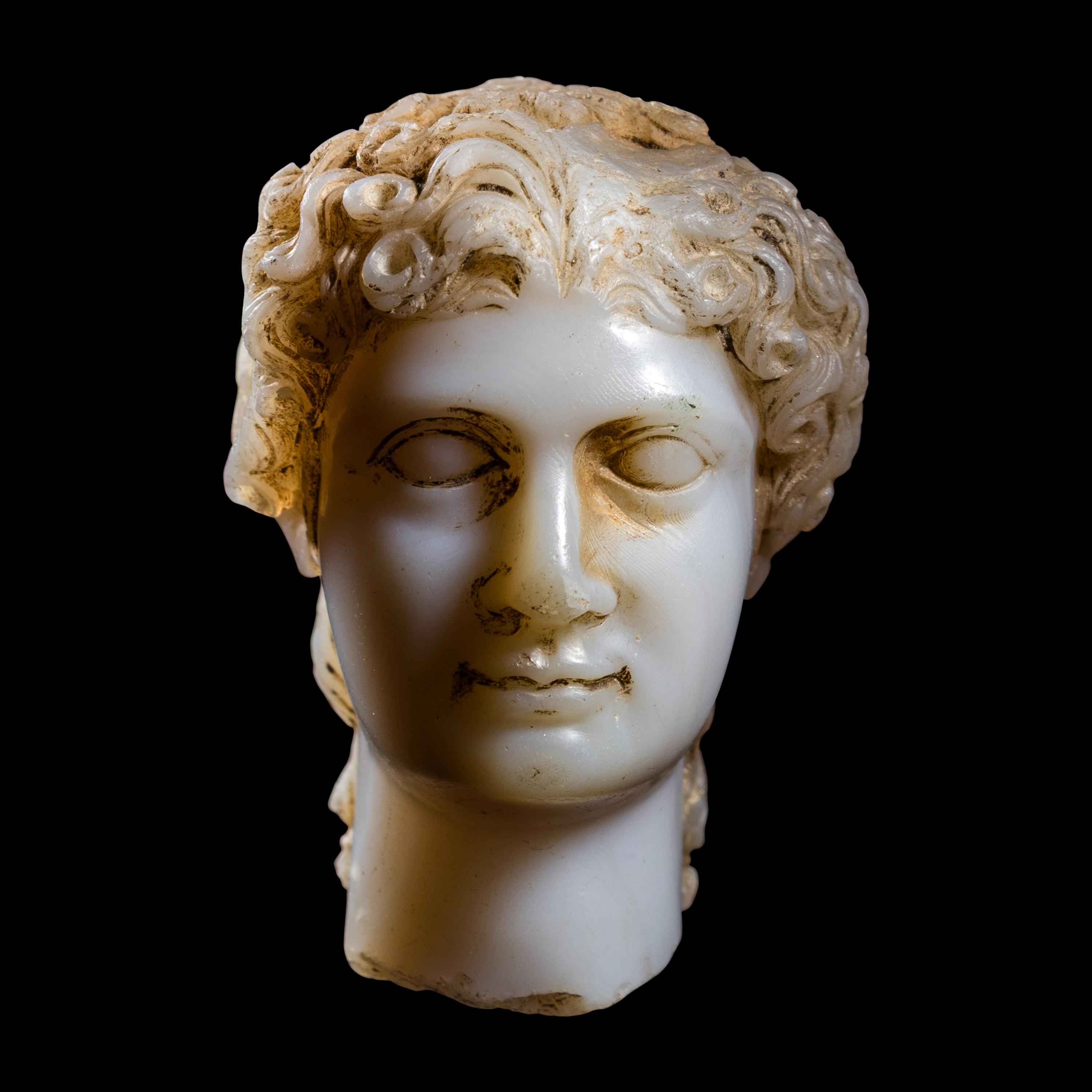
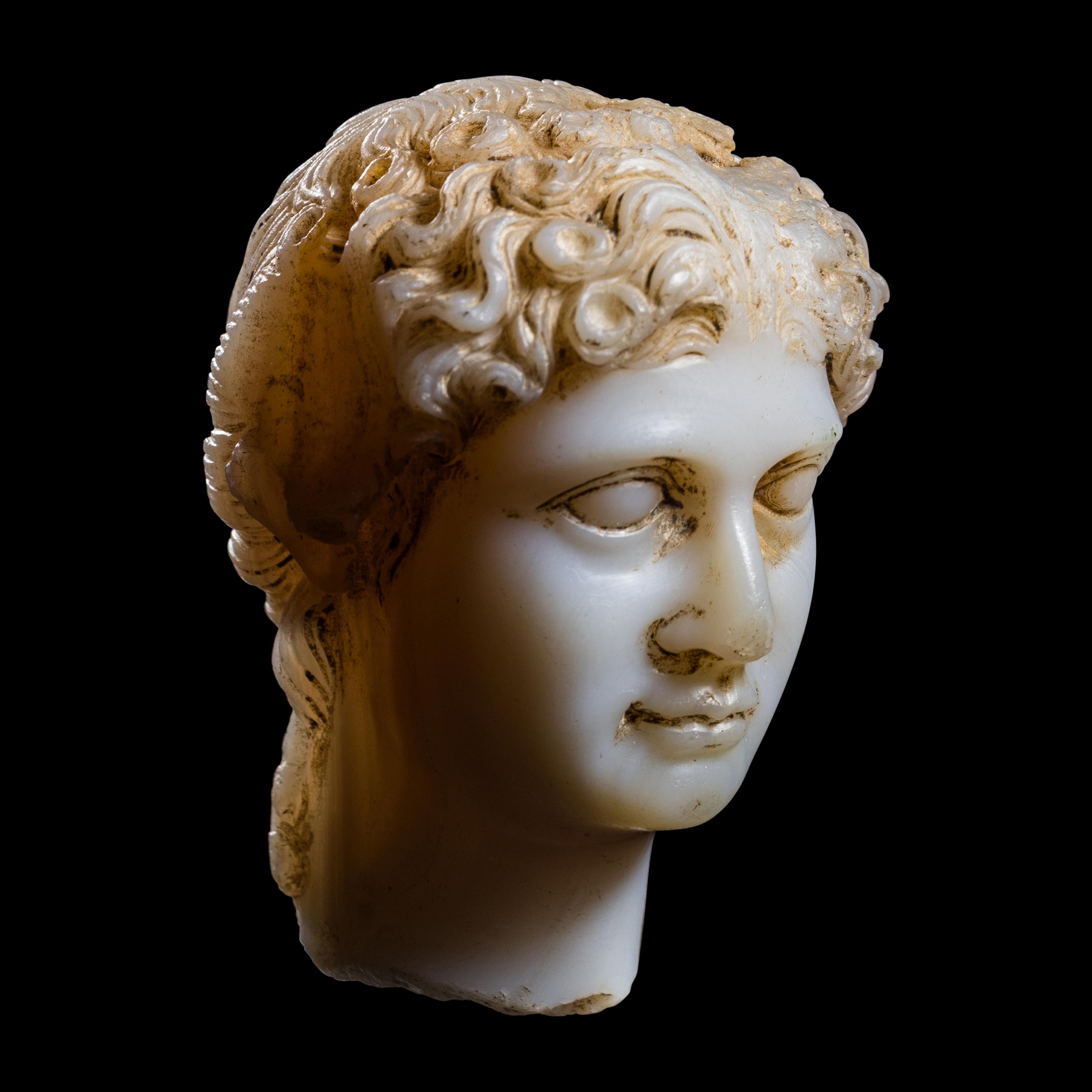
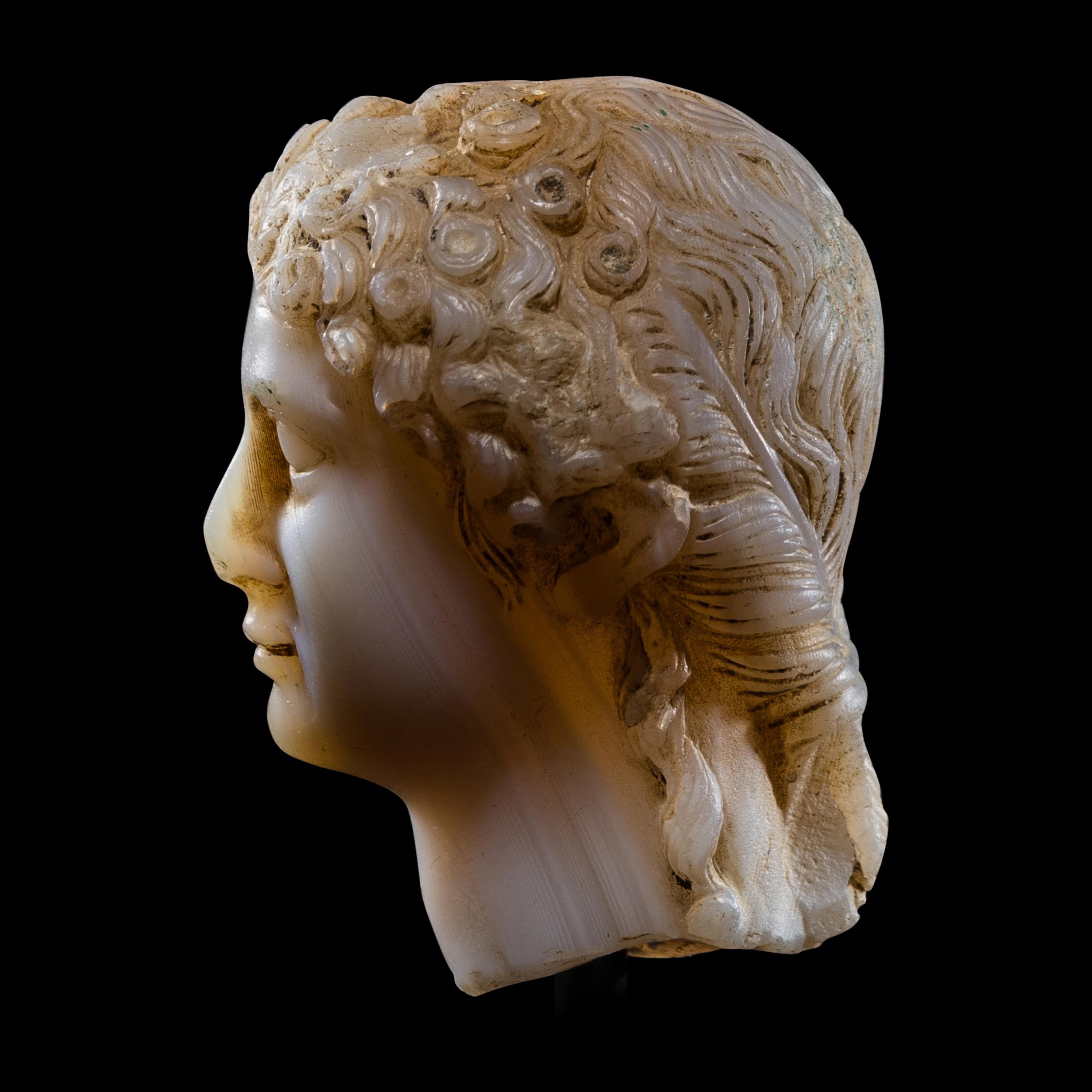
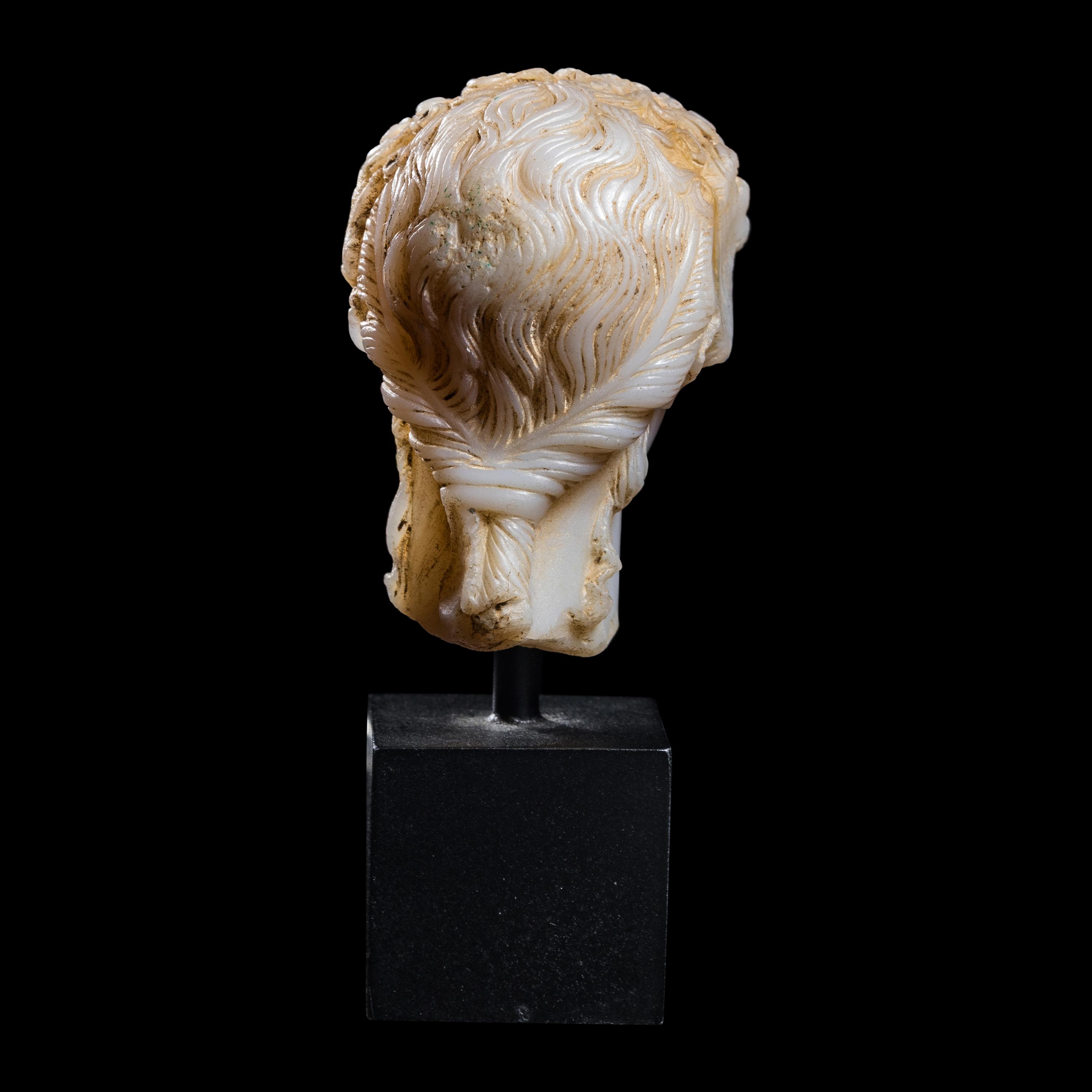
Carved in the round from a single piece of milky, translucent chalcedony, this miniature head presents a woman of the Julio-Claudian court with remarkable assurance. The face is a full oval, polished to a high finish that contrasts with the matte, finely engraved hair. Heavy-lidded, almond-shaped eyes, the eyeballs left smooth, sit beneath a softly modeled brow; the nose is straight, and the small mouth is closed over full lips. The hair is parted at the center and brushed to either side in rippling waves, framed at the forehead and temples by tiers of snail curls, each drilled at its center. At the back, long wavy strands are drawn down from the crown and gathered at the nape into a twisted, plaited queue, while loose locks fall behind the ears to either side of the long neck. At just 3.8 cm in height, the carving sustains a level of detail more often found in portraits many times its size.
Ovid, writing under Augustus, observed that Roman hairstyles were as countless as the acorns on an oak, with every new day adding another (Ovid, Ars Amatoria 3.149-152). Among the women of the imperial house, however, fashion served the dynasty. The present coiffure, with its central parting, waved hair and tiers of snail curls above the ears, corresponds closely to a chalcedony bust in the British Museum identified as Agrippina the Younger and dated A.D. 37-39. The museum notes that this style was copied as far afield as the mummy portraits of Roman Egypt. Agrippina shared it with her sisters, Drusilla and Julia Livilla, whom their brother Caligula honored together on the reverse of a sestertius struck in A.D. 37-38. The family likeness cultivated in their portraits has long complicated identifying individual sitters.
Portraits carved in the round from precious stones rank among the most refined luxuries of early Imperial Rome. Small heads in chalcedony, rock crystal and other hardstones were made from the reign of Augustus onward, and the J. Paul Getty Museum’s white chalcedony portrait of Antonia Minor, probably carved under Claudius, belongs to the same milieu. Such pieces were likely once set into statues of gold or silver. Dario Del Bufalo, whose corpus of some 450 precious portraits includes the present head, describes their use in household shrines, on crowns and scepters, in the decoration of homes and furniture, and as objects carried on the person. Her name may remain uncertain, but the stone, the scale and the finesse of the carving all point toward the workshops that served the imperial court.
For related examples see the British Museum, inv. no. 1907,0415.1 (W.-R. Megow, Kameen von Augustus bis Alexander Severus, Berlin, 1987, pp. 40, 301, pls. 19-20, no. D33); and the J. Paul Getty Museum, inv. no. 81.AN.101.
Height with stand 6.8 cm (2 5/8 inches).
The physical condition of lots in our auctions can vary due to age, normal wear and tear, previous damage, and restoration/repair. All lots are sold "AS IS," in the condition they are in at the time of the auction, and we and the seller make no representation or warranty and assume no liability of any kind as to a lot's condition. Any reference to condition in a catalogue description or a condition report shall not amount to a full accounting of condition. Condition reports prepared by Freeman's staff are provided as a convenience and may be requested from the Department prior to bidding.
The absence of a posted condition report on the Freeman's website or in our catalogues should not be interpreted as commentary on an item's condition. Prospective buyers are responsible for inspecting a lot or sending their agent or conservator to inspect the lot on their behalf, and for ensuring that they have requested, received and understood any condition report provided by Freeman's.
Please email Antiquities@freemansauction.com for any additional information or questions you may have regarding this lot.