To request further details about this lot, please email Antiquities@freemansauction.com
Please email Antiquities@freemansauction.com for any additional information or questions you may have
Sale 6578
| Chicago
| Chicago
To request further details about this lot, please email Antiquities@freemansauction.com
Please email Antiquities@freemansauction.com for any additional information or questions you may have
Estimate$20,000 – $30,000
Provenance:
Sotheby's, New York, Antiquities and Islamic Art, 12 June 2001, Lot 33.
Phoenix Ancient Art, New York, 2007 (Exotics of the Classical World, p. 84-85, no. 40).
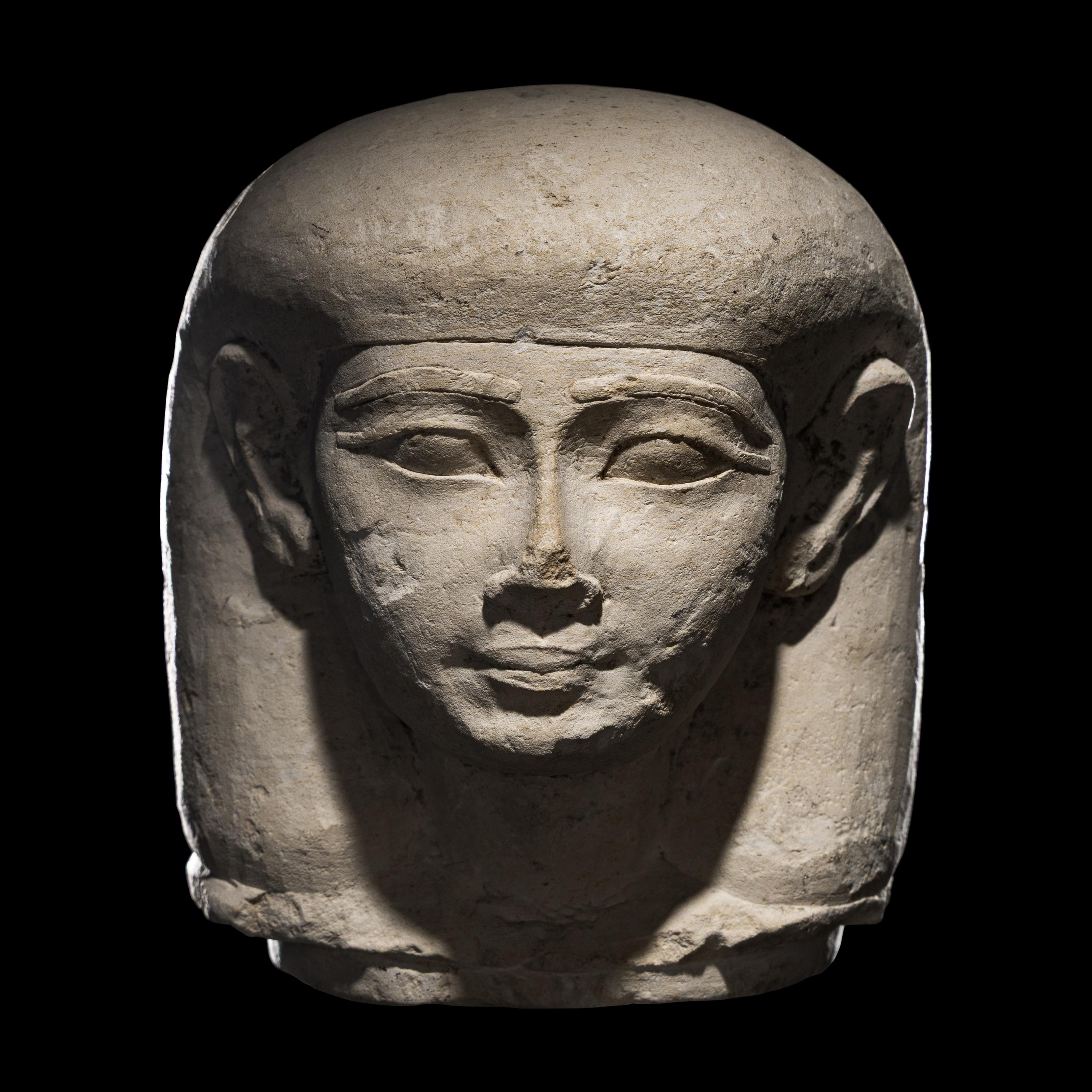
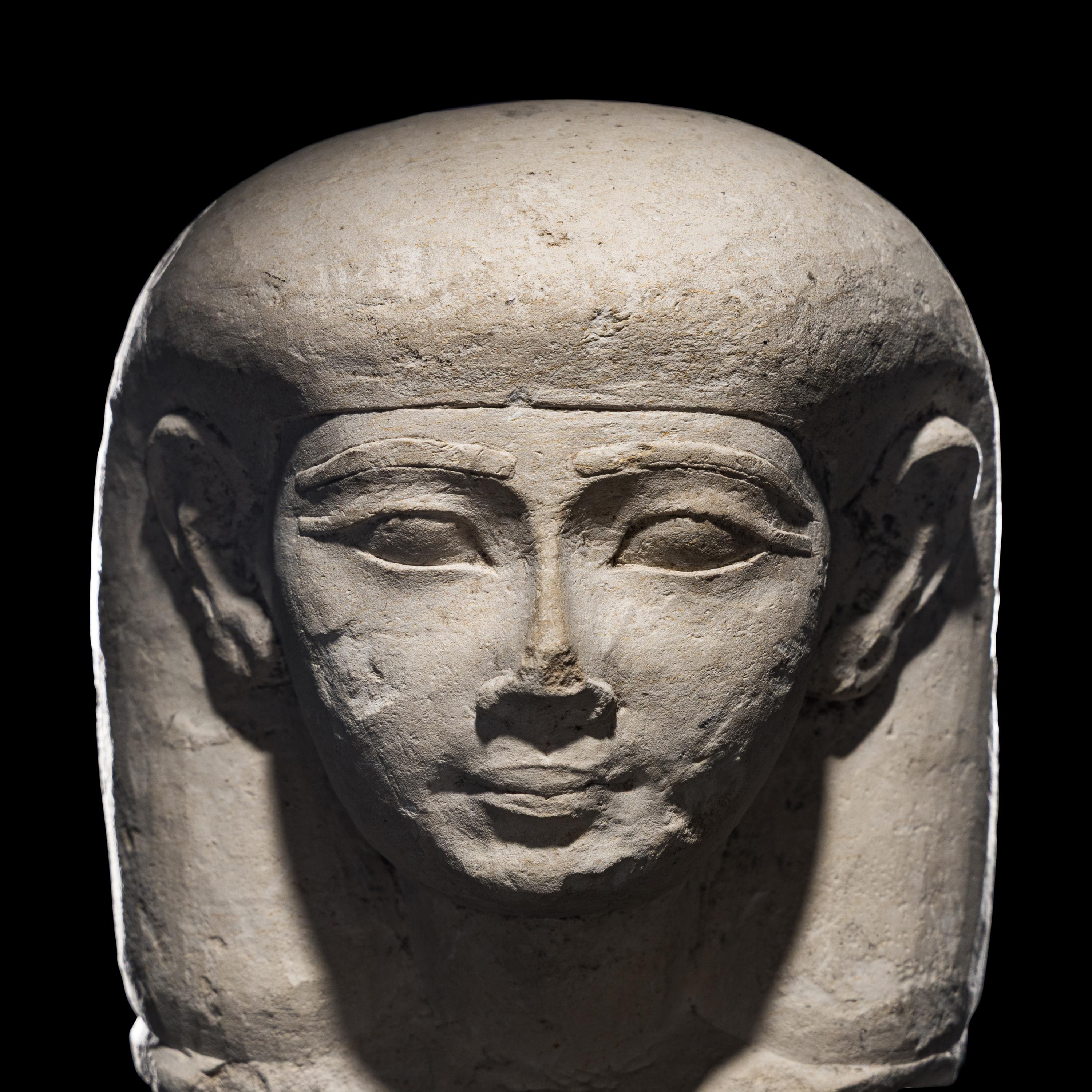
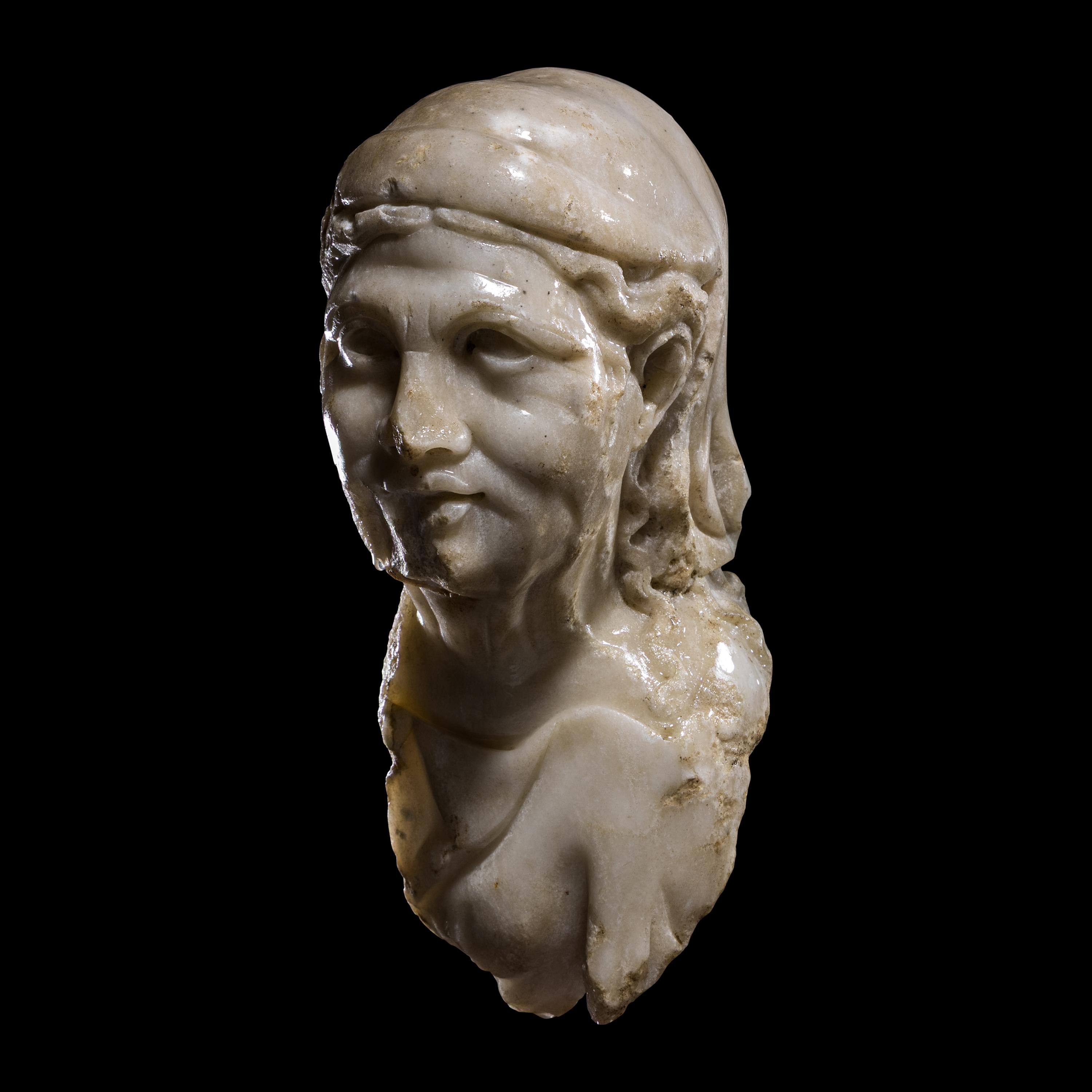
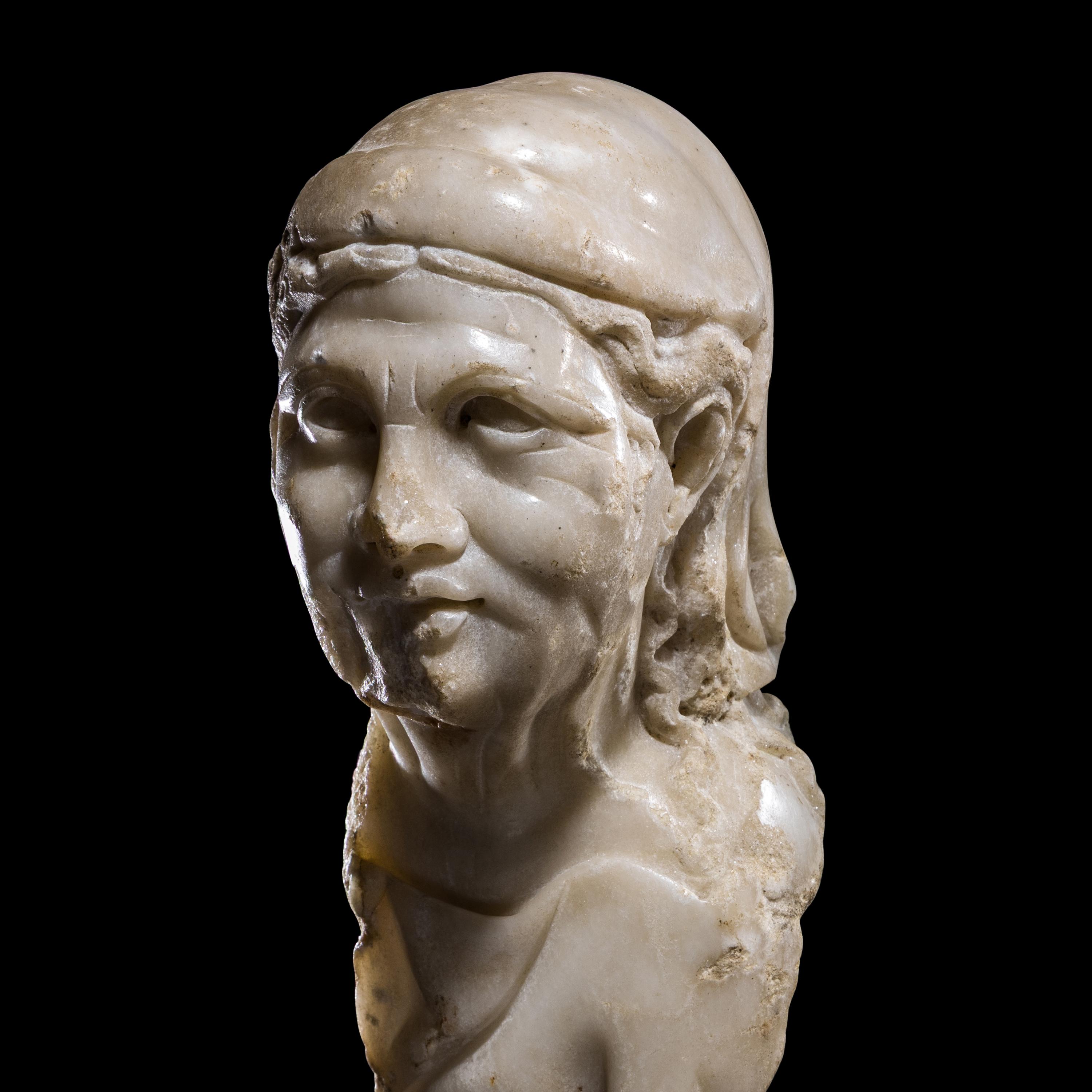
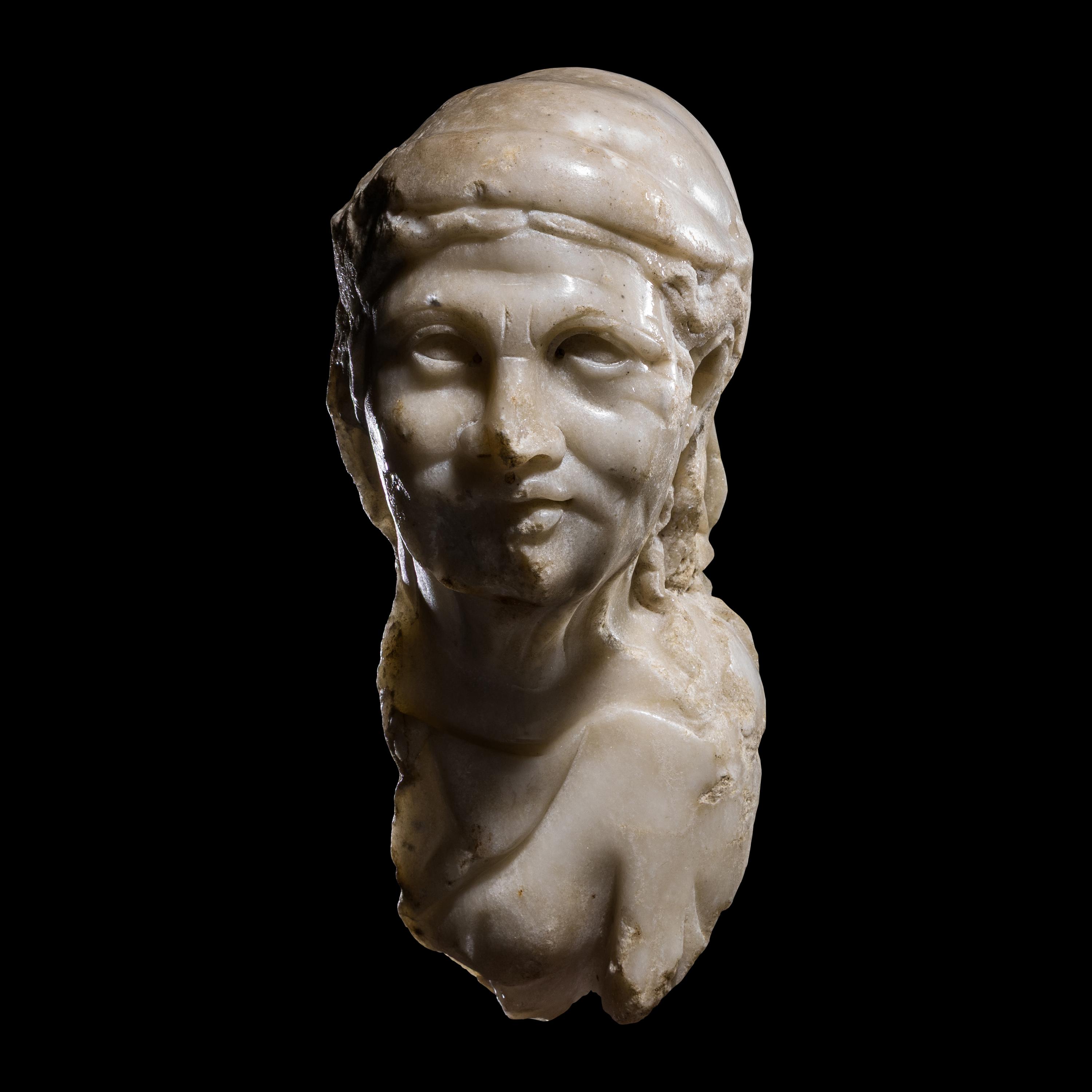
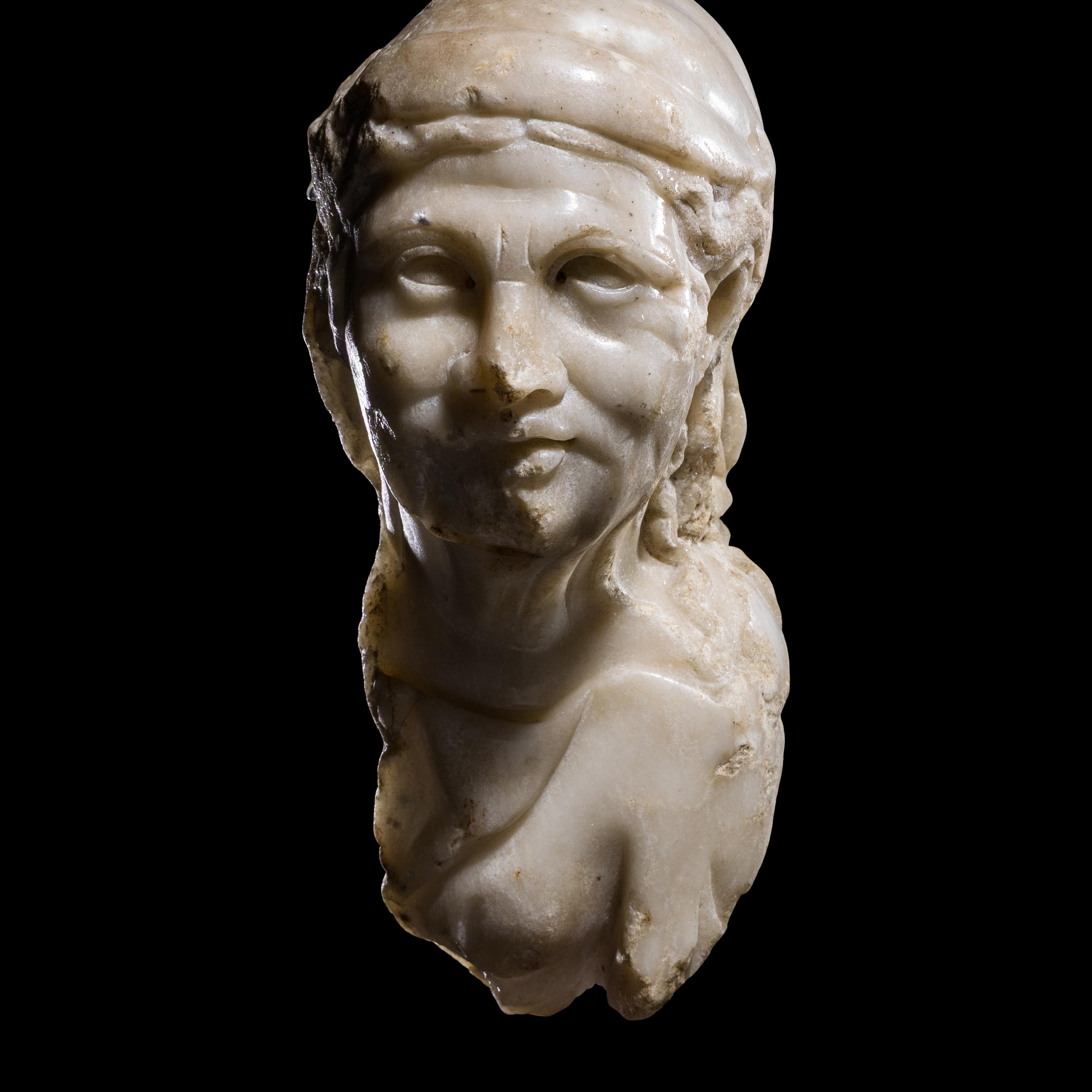
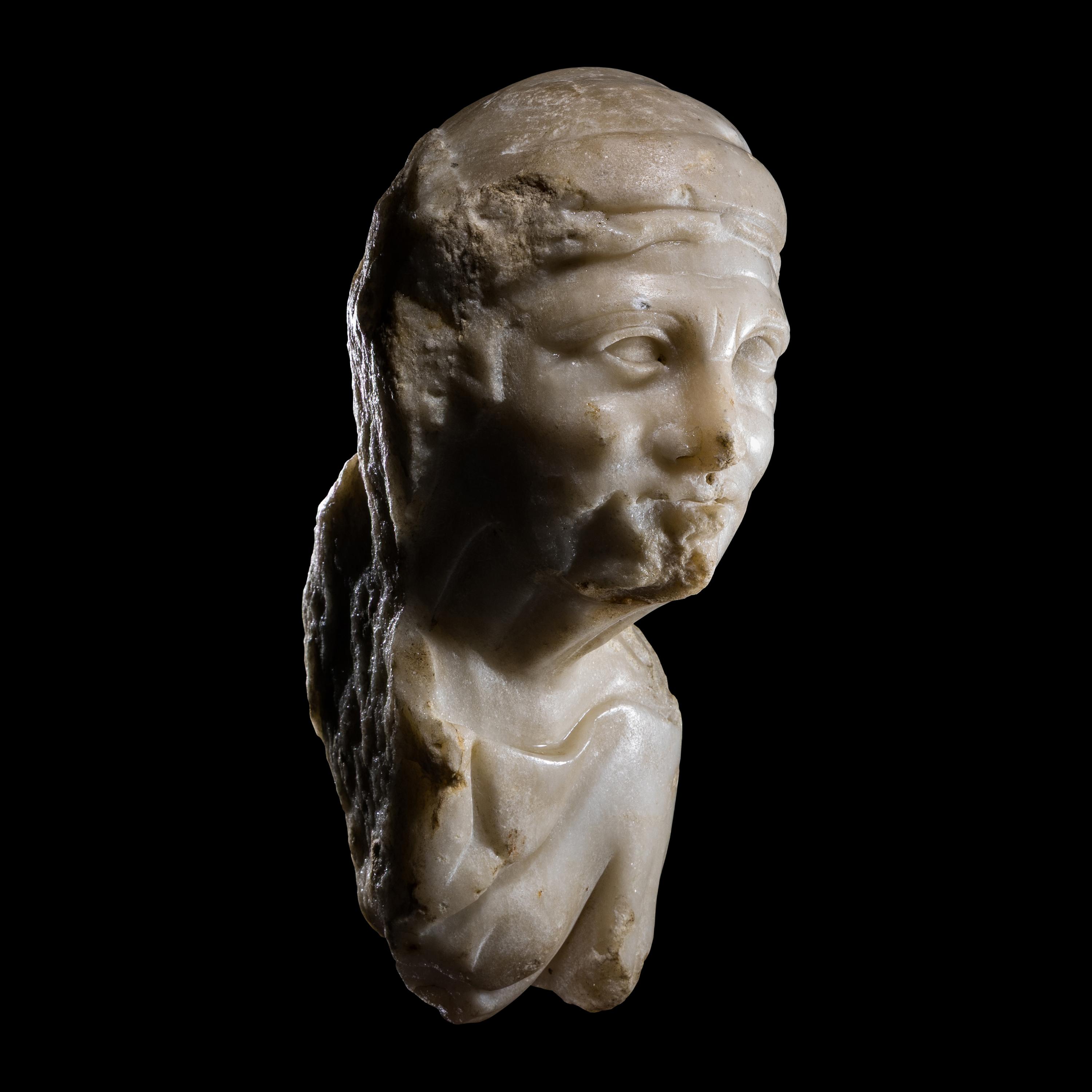
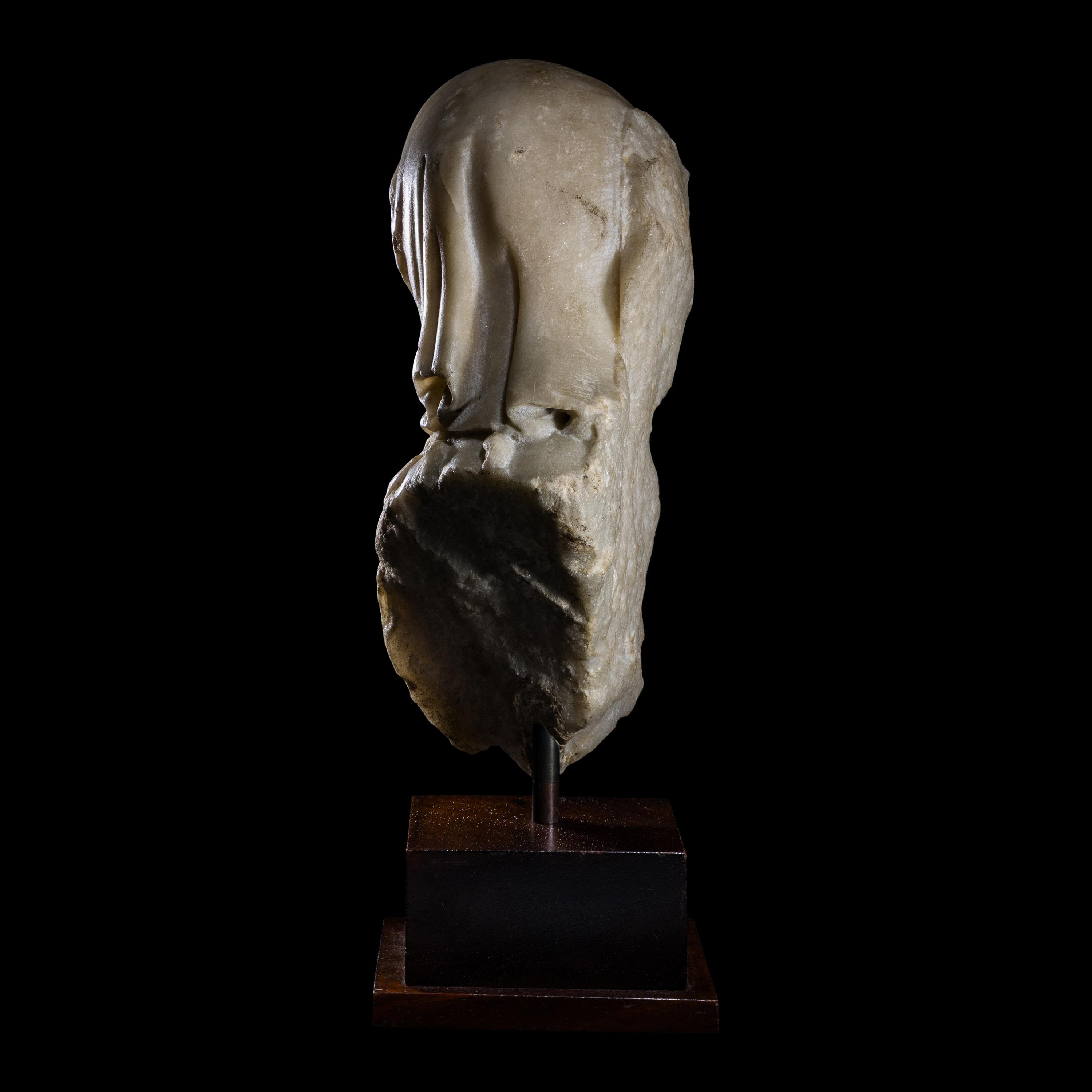
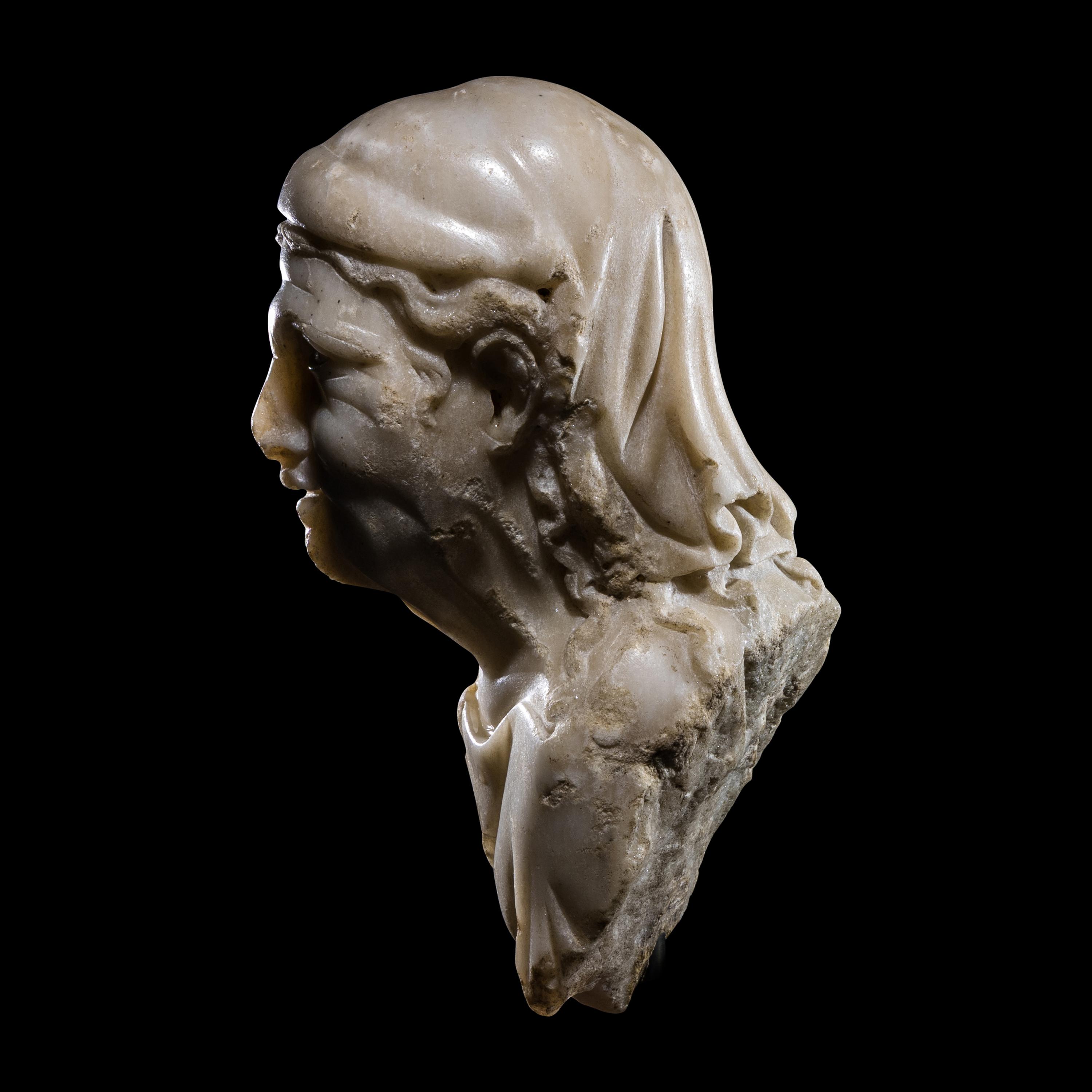
With deeply incised wrinkles, hooded eyes, and slack flesh sagging at the jowls and neck, this sculpted subject is not an idealized beauty or even a Roman matrona. While these characteristics might suggest the Hellenistic interest in age and non-ideal bodies, or even Roman verism, her role is more specifically identifiable. Beyond these distinct signs of aging, the square cloth she wears as a kerchief identifies her as a nursemaid, a crucial yet often overlooked figure in ancient life and mythology. Nursemaids, who served as midwives, servants, and childminders, were integral to ancient family life. They appear on Greek grave stelai as early as the late 5th century B.C., shown with new mothers and, more rarely, with women in labor (e.g., the marble lekythos of Theophante, Athens, National Archaeological Museum, Inv. no. 1055).
The distinctive square kerchief was introduced in the Roman period. The type is known from sculpture in the round, as in a famous example in London (British Museum, inv. no. 1952,0327.9). It was more commonly included in modest funerary reliefs showing family groups, closer to the earlier Greek examples (e.g., a fragmentary relief in Los Angeles, Los Angeles County Museum of Art, Inv. no. 47.6.9), and in virtuoso mythological sarcophagi. In the dramatic scenes of Medea and her children, and of Artemis and Apollo dispatching the children of Niobe, a kerchiefed nursemaid figures prominently, cradling the dying children, her age and stooped demeanor heightening the tragedy of both vignettes. With its high polish and evident sculptural skill, the present head might be seen as a rare example conceived in the round. Yet the abbreviated, more roughly worked edges at the proper right side and the slight associated asymmetries more probably indicate that it was part of a monumental sarcophagus. It was likely carved in high relief as part of the Medea cycle, with the devoted nursemaid sheltering her young charges as tragedy began to unfold.
For a similar example of a kerchiefed nursemaid on a Medea sarcophagus, see Berlin, Staatliche Museen, Antikensammlung, Inv. no. Sk 843 b.
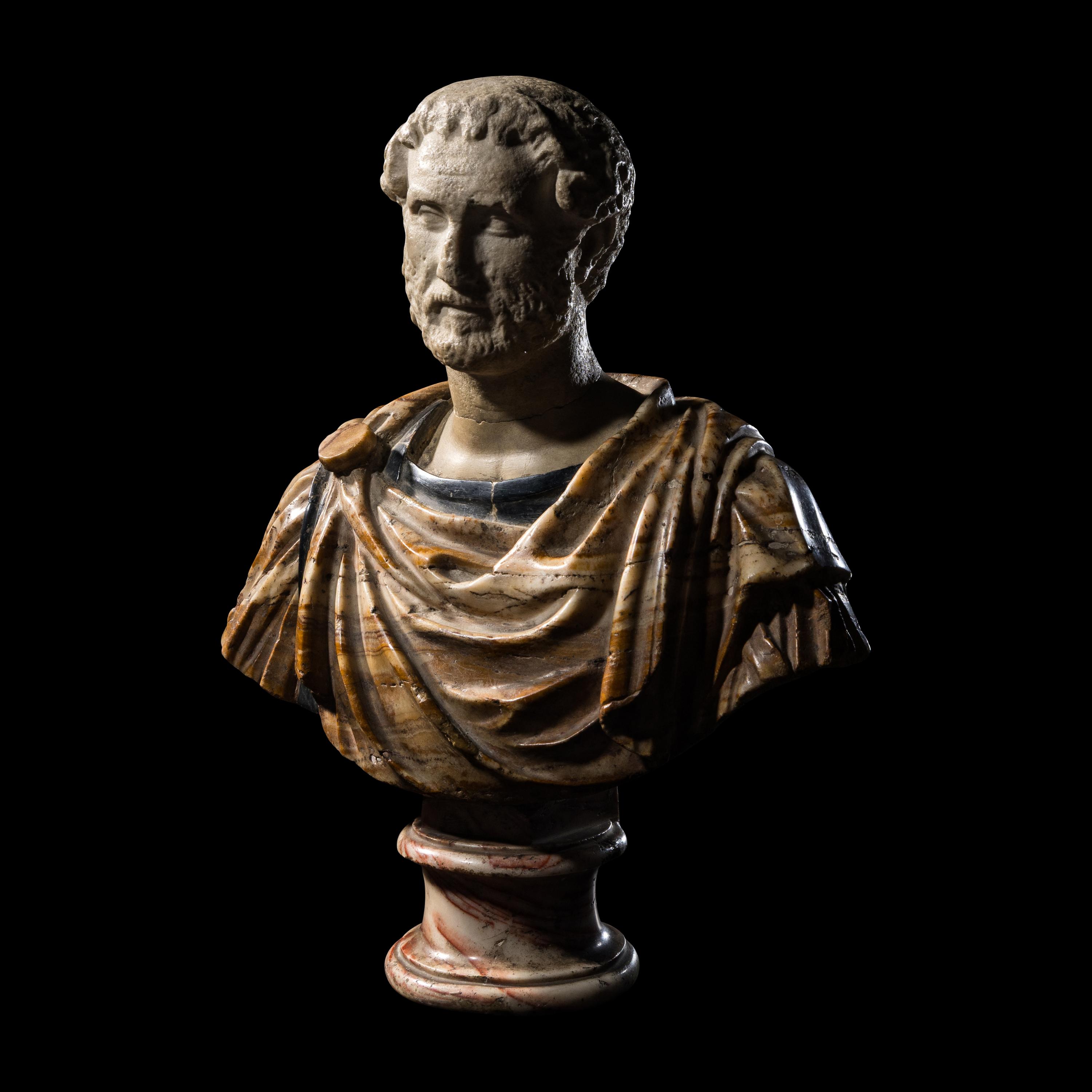
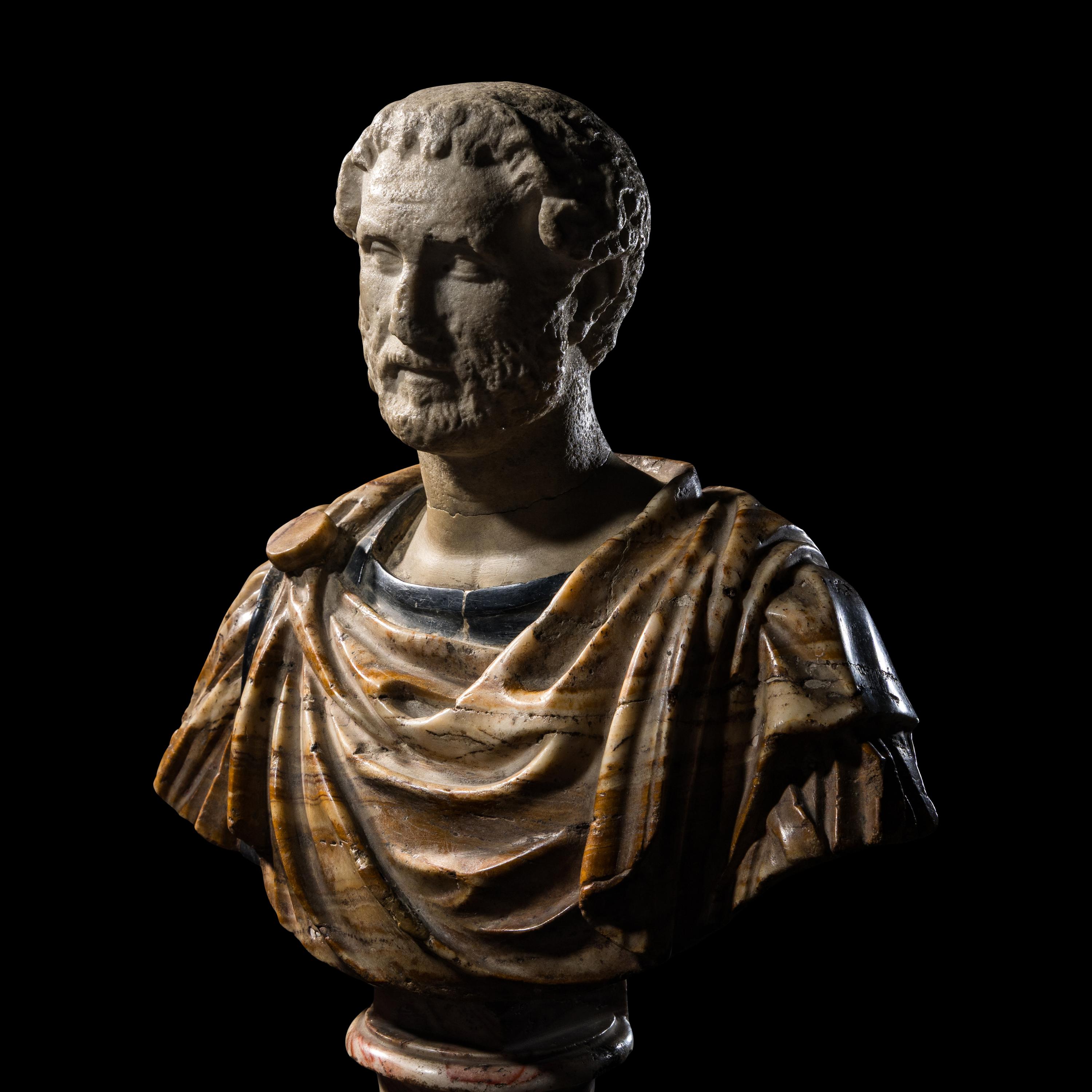
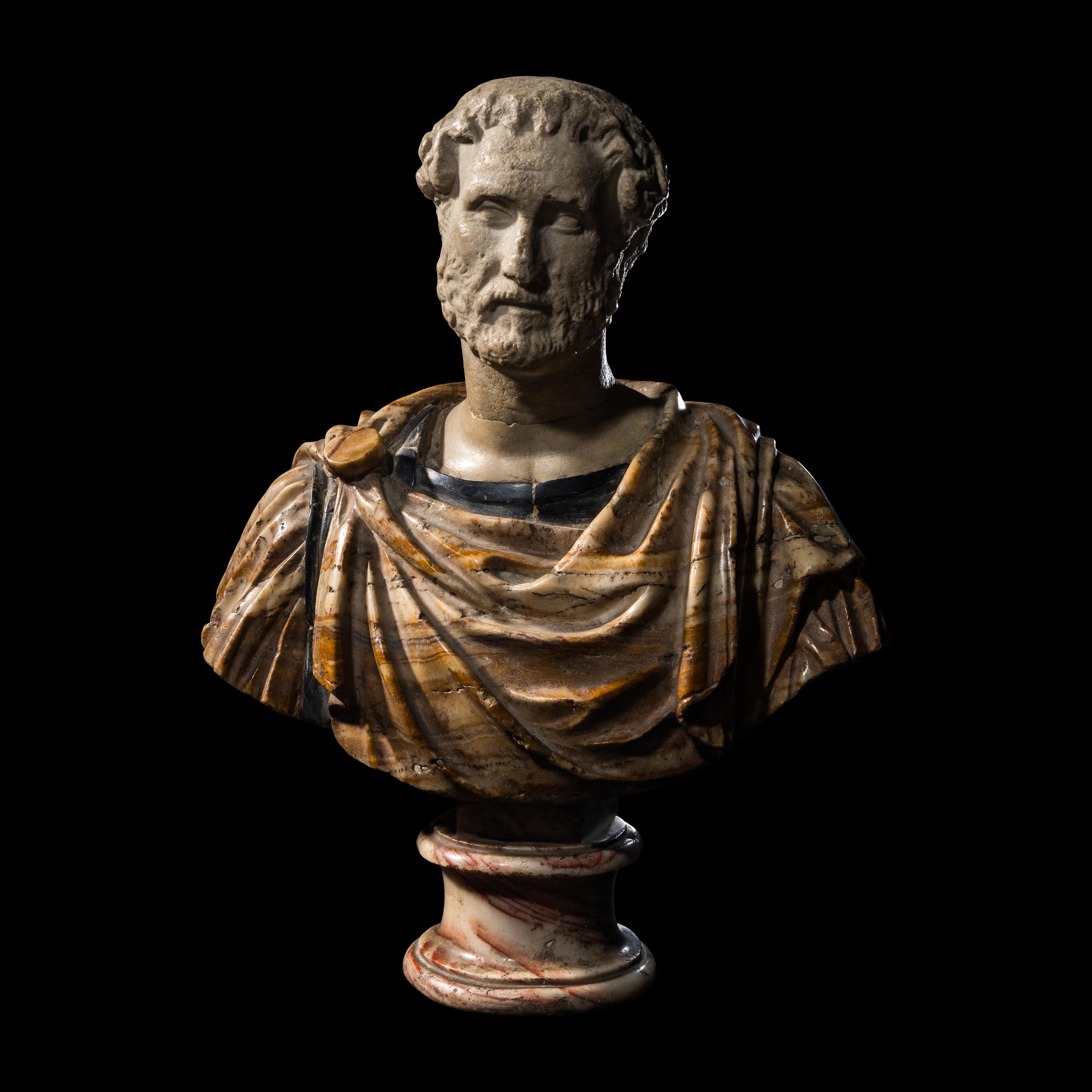
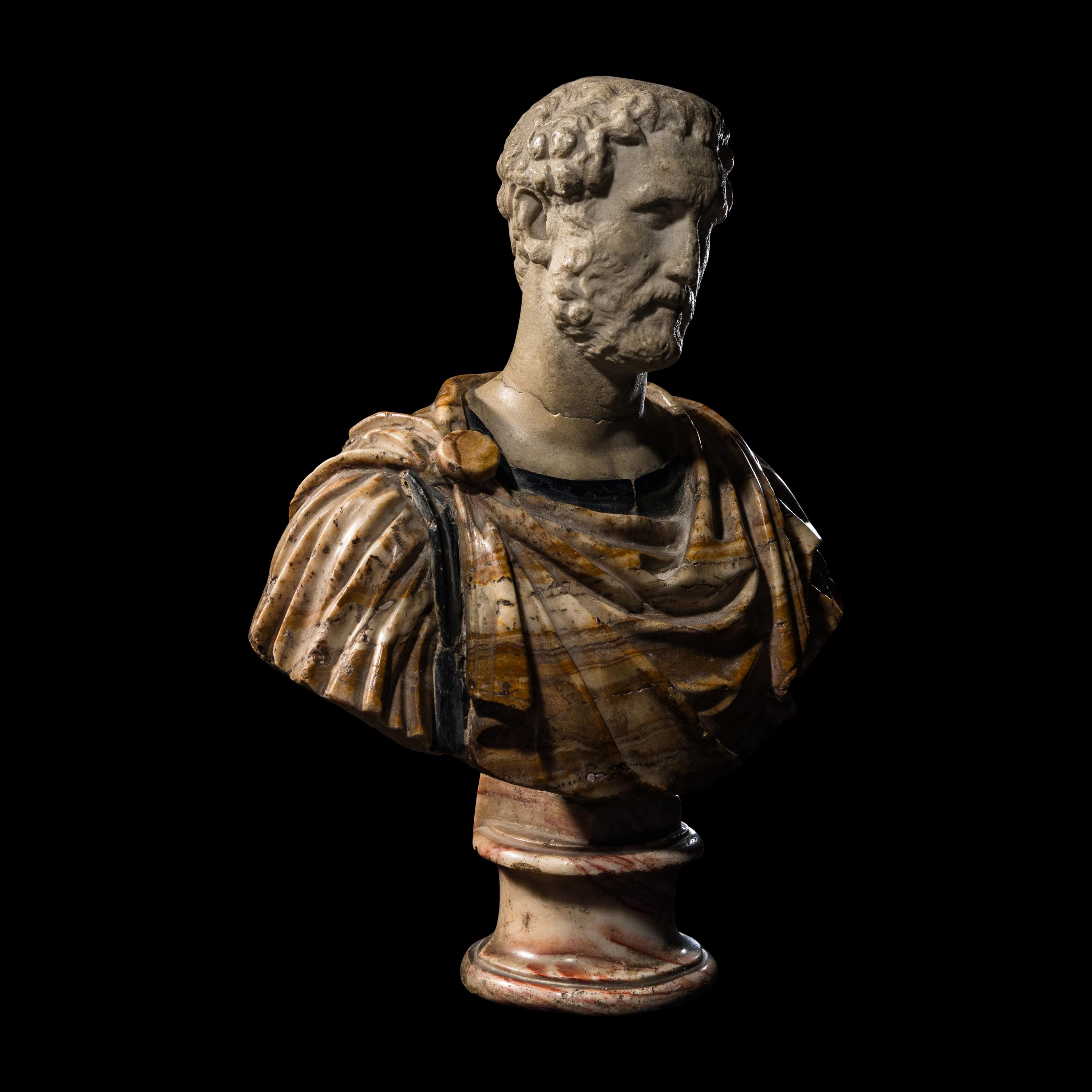
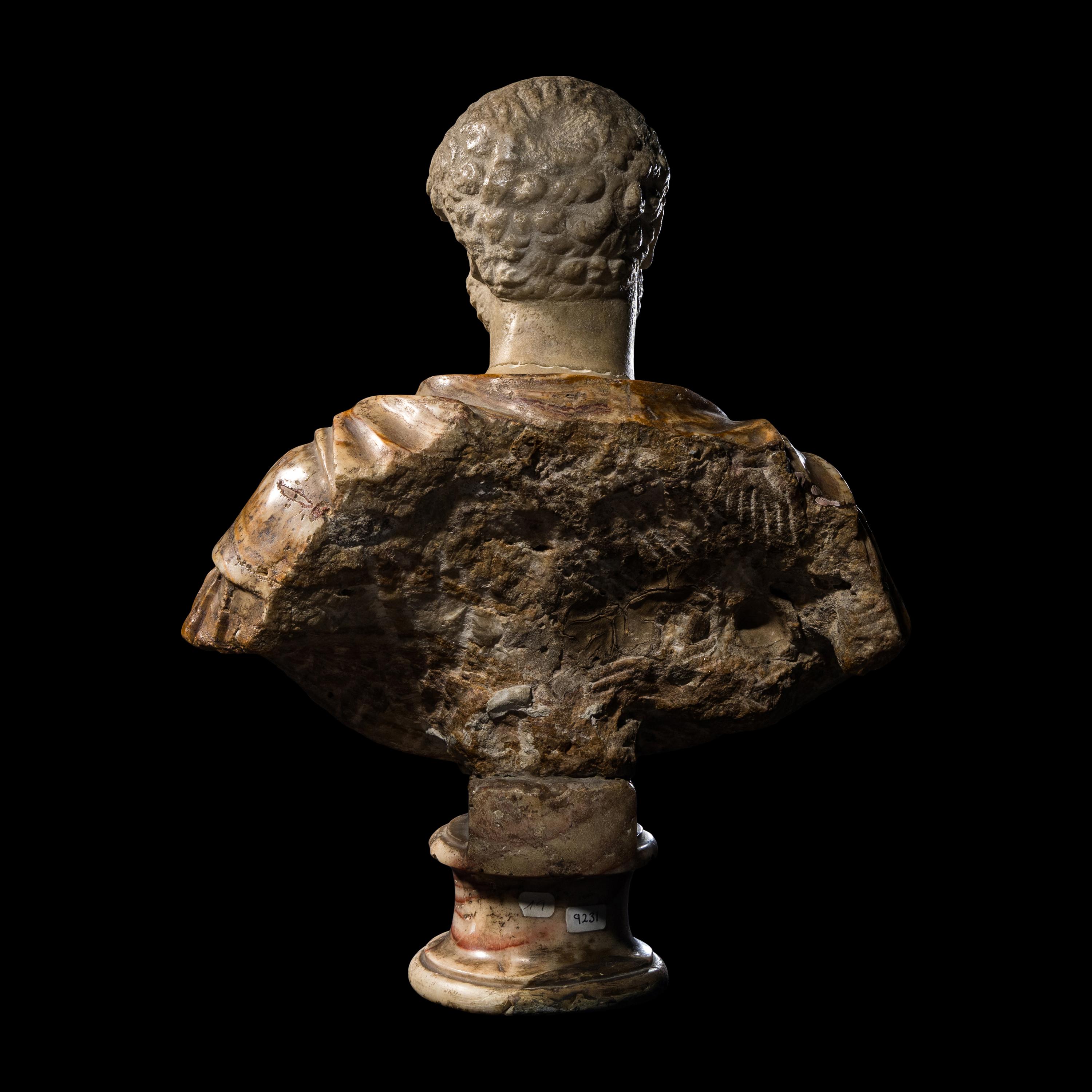
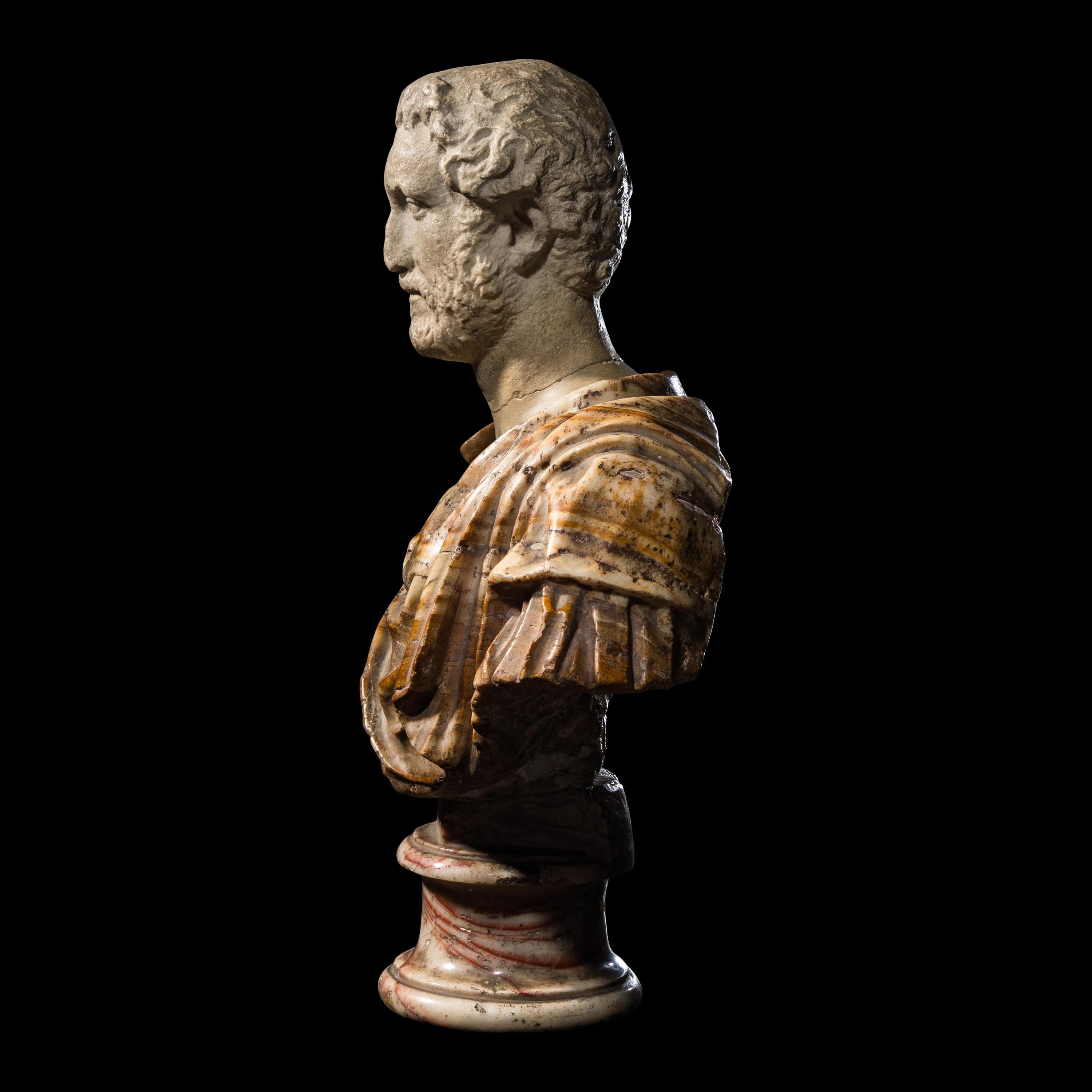
Height with stand 32 cm (12 5/8 inches).
The physical condition of lots in our auctions can vary due to age, normal wear and tear, previous damage, and restoration/repair. All lots are sold "AS IS," in the condition they are in at the time of the auction, and we and the seller make no representation or warranty and assume no liability of any kind as to a lot's condition. Any reference to condition in a catalogue description or a condition report shall not amount to a full accounting of condition. Condition reports prepared by Freeman's staff are provided as a convenience and may be requested from the Department prior to bidding.
The absence of a posted condition report on the Freeman's website or in our catalogues should not be interpreted as commentary on an item's condition. Prospective buyers are responsible for inspecting a lot or sending their agent or conservator to inspect the lot on their behalf, and for ensuring that they have requested, received and understood any condition report provided by Freeman's.
Please email Antiquities@freemansauction.com for any additional information or questions you may have regarding this lot.