To request further details about this lot, please email adriannewolkenberg@freemansauction.com
Please email adriannewolkenberg@freemansauction.com for any additional information or questions you may have
Sale 6494
| New York
| New York
To request further details about this lot, please email adriannewolkenberg@freemansauction.com
Please email adriannewolkenberg@freemansauction.com for any additional information or questions you may have
Estimate$250,000 – $400,000
We wish to thank Galina Tuluzakova for confirming the authenticity of the lot, and for her assistance with its cataloguing.
Provenance:
The Artist.
Acquired directly from the above in 1930.
William S. Stimmel, Pittsburgh, Pennsylvania.
By descent in the Stimmel Family Collection.
Lot Essay:
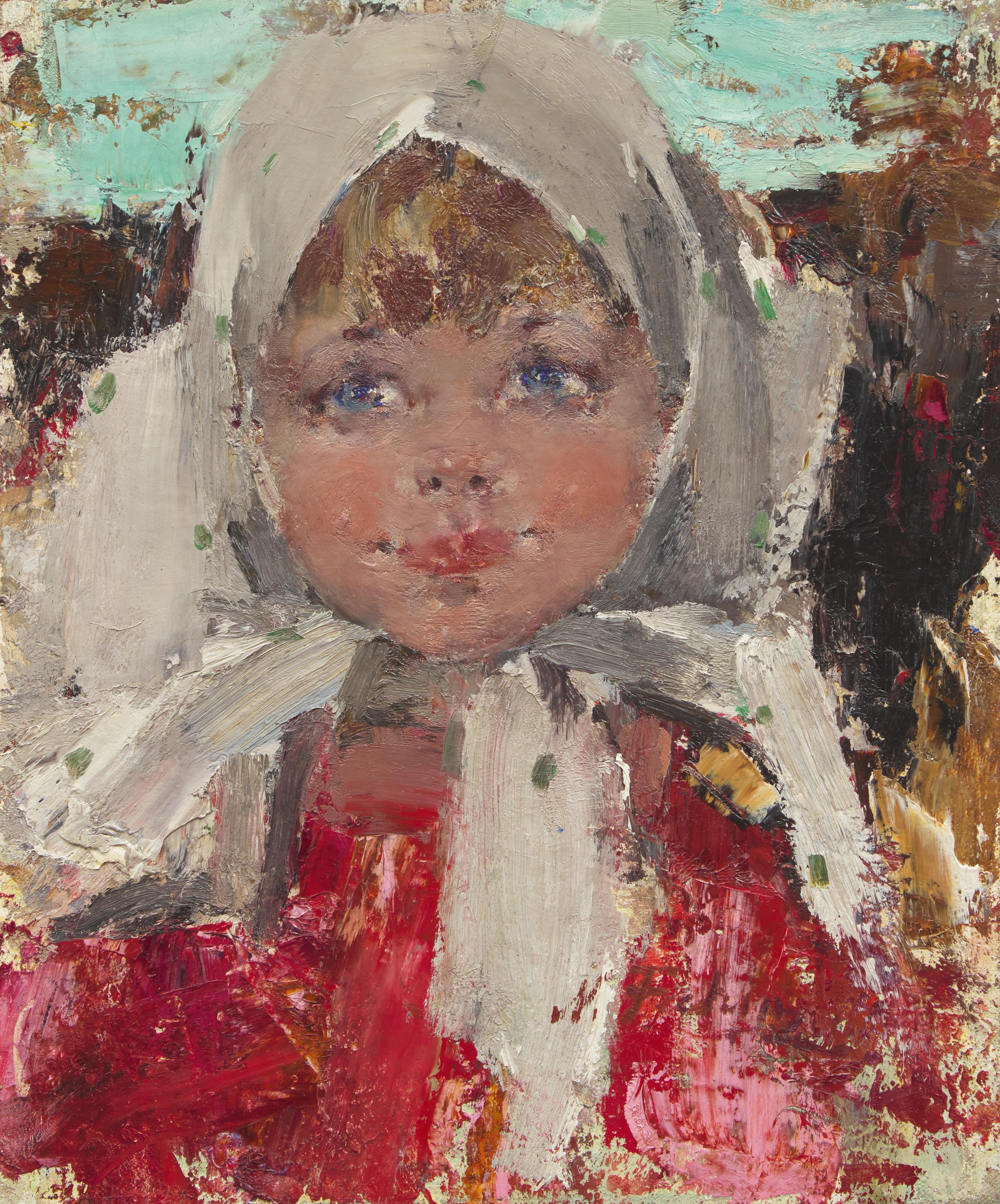
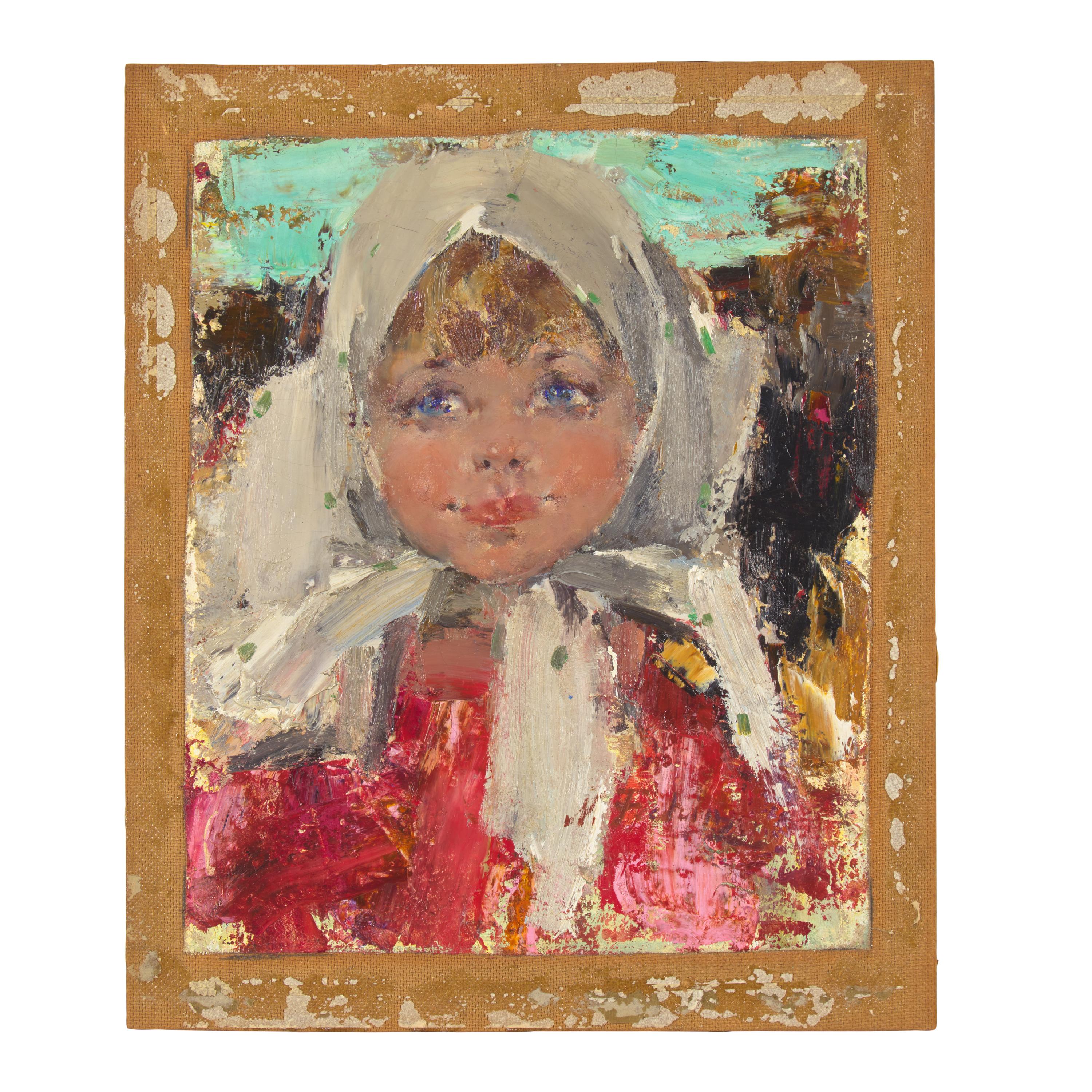
Though its hypnotizing painterly quality and exceptional provenance, Young Girl with White Headscarf stands among the most compelling examples of Nicolai Fechin’s mature production.
Executed at the height of his career, it encapsulates the artist’s then-already celebrated bravura, namely his unique ability to reconcile the rigorous training of the Russian academic tradition with a dazzling freedom of execution. Trained at the Imperial Academy of Arts in Saint Petersburg, Fechin absorbed a sophisticated synthesis of influences drawn from his principal teacher, Ilya Repin, who instilled in him a deep commitment to Russian realism and national identity, while also introducing him to the lighter palette and expressive brushwork associated with Impressionism.
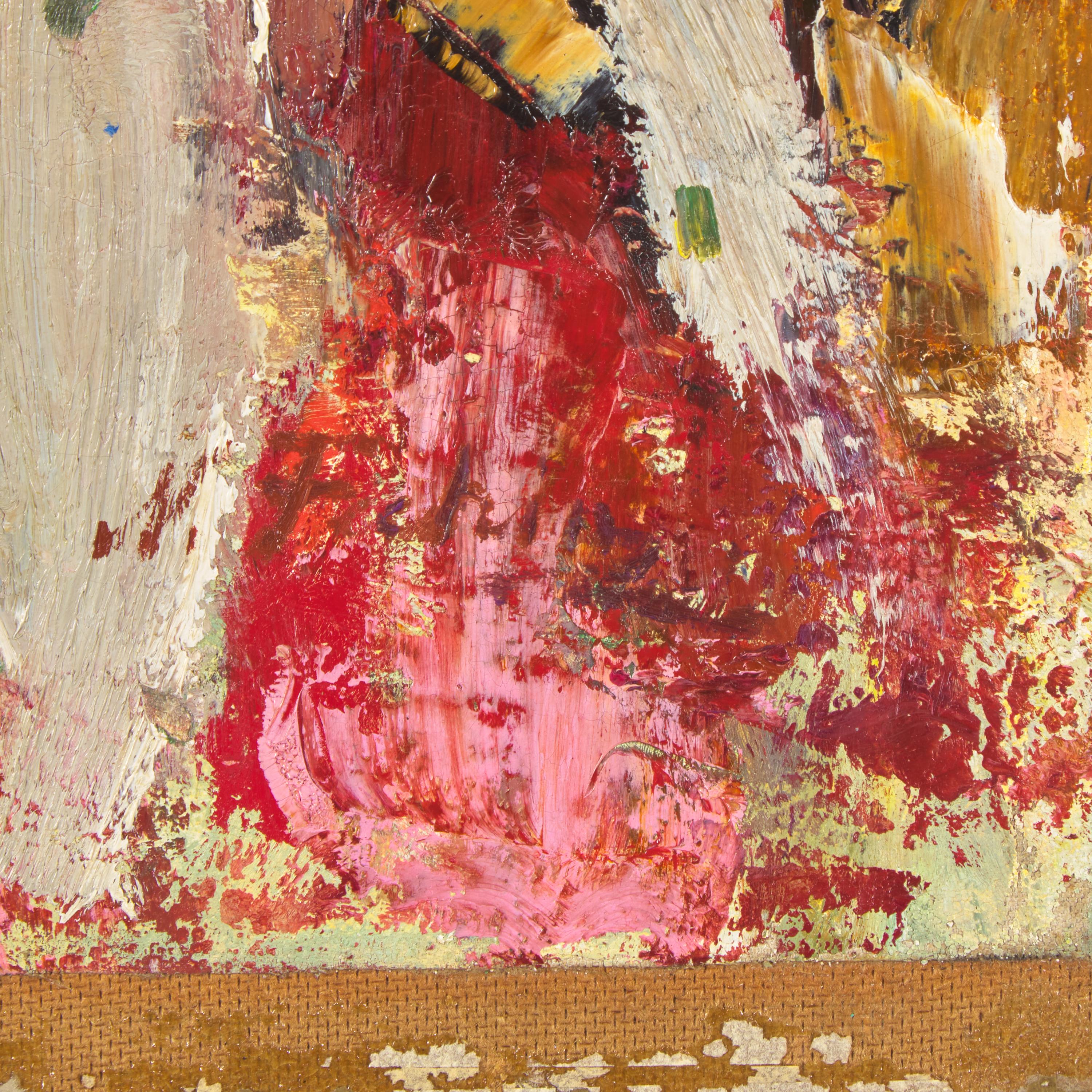
By as early as 1904, Fechin had turned almost exclusively to portraiture, the genre in which he would achieve his greatest successes, as exemplified here. The present work stands as a striking demonstration of the artist’s highly personal style, combining immediacy and vitality with exceptional draftsmanship. The sitter’s face emerges with remarkable softness and candor, in subtle contrast to the richly animated background: an explosive field of impasto where garments and surroundings dissolve into lavish, flamboyant, and energetic strokes. A luminous palette dominated by pure whites, warm browns, flashes of aquamarine, and deep reds, creates a composition of extraordinary chromatic intensity. The surface itself is alive with movement, each stroke appearing as fresh and spontaneous as if just laid onto the canvas, charging the work with a palpable sense of life.
Beyond its technical brilliance, the work carries a deeply personal resonance. The young sitter, with her luminous eyes and gently mischievous expression, bears a striking resemblance to the artist’s daughter Eya, his most cherished and frequently depicted model. This subtle parallel gives the painting an added intimacy as well as a quietly nostalgic quality that is evocative of Fechin’s native Russia. Painted after his emigration to the United States, a period marked by homesickness and fragile health, the work indeed suggests a longing for the world and cultural identity Fechin had left behind. Yet nothing in its execution betrays struggle or decline; on the contrary, it radiates warmth, vitality, and a profound sense of artistic confidence. These enduring qualities, deeply rooted in the artist’s Russian sensibility, are carried seamlessly into his American period, making this tender and engaging portrait all the more poignant.
The painting’s significance is further elevated by its unparalleled provenance, coming directly from the family of William S. Stimmel—Fechin’s most important early American patron. A discerning Pittsburgh-based collector, Stimmel began acquiring the artist’s works from 1910 at the Carnegie International exhibitions, assembling an ever-growing group that famously included Lady in Pink (Portrait of Natalia Podbelskaya), now a highlight of the Frye Art Museum. His support proved decisive: through his efforts, and those of fellow patron John Burnham, Fechin was able to emigrate to the United States on August 1st, 1923. Settling initially in New York, he quickly secured major portrait commissions while teaching at the Grand Central School of Art, and exhibiting at the National Academy of Design, where he was awarded the prestigious Thomas Proctor Prize for portraiture in 1924.
The present portrait was the very last painting acquired by Stimmel directly from the artist, and as such stands as a moving testament to a long-standing and deeply meaningful relationship between patron and painter that spread over decades. Preserved by descent within Stimmel’s family, the work retains an intimacy rarely encountered. Is gentle charm and emotional appeal echoes both the affection between artist and sitter, and the enduring bond between Fechin and the visionary man who helped shape his destiny.
Please email adriannewolkenberg@freemansauction.com to request a condition report and additional images.
The physical condition of lots in our auctions can vary due to age, normal wear and tear, previous damage, and restoration/repair. All lots are sold "AS IS," in the condition they are in at the time of the auction, and we and the seller make no representation or warranty and assume no liability of any kind as to a lot's condition. Any reference to condition in a catalogue description or a condition report shall not amount to a full accounting of condition. Condition reports prepared by Freeman's staff are provided as a convenience and may be requested from the Department prior to bidding.
The absence of a posted condition report on the Freeman's website or in our catalogues should not be interpreted as commentary on an item's condition. Prospective buyers are responsible for inspecting a lot or sending their agent or conservator to inspect the lot on their behalf, and for ensuring that they have requested, received and understood any condition report provided by Freeman's.
Please email adriannewolkenberg@freemansauction.com for any additional information or questions you may have regarding this lot.