
To request further details about this lot, please email adriannewolkenberg@freemansauction.com
Please email adriannewolkenberg@freemansauction.com for any additional information or questions you may have
Sale 6494
| New York
| New York
To request further details about this lot, please email adriannewolkenberg@freemansauction.com
Please email adriannewolkenberg@freemansauction.com for any additional information or questions you may have
Estimate$300,000 – $500,000
We wish to thank Dr. Rea Michalová, PhD and David Frank of the Trinity Art Research for confirming the authenticity of the present lot.
Provenance:
The Artist, Paris.
Acquired directly from the above in 1927-1928.
Collection of Mr. Bernard Davis, Philadelphia.
Acquired directly from the above, circa 1952.
Collection of Robert Sturgis Ingersoll, Philadelphia, Pennsylvania.
By descent in the Ingersoll family to the present owners.
Literature:
Georges Ribemont-Dessaignes, “Sima” in Cahiers d’Art, Paris, 1928, p. 175 (erranesouly listed as exhibited at the Aventinská mansarda, Prague).
Život 14 (Life), 1935–1936, p. 76 (erroneously illustrated with the Europa now in the Moravian Gallery, and identified as ‘Electricity’ in the collection of František Dvořáček)
Lot Essay:
Šíma is one of those painters, uncommon in our culture, who see the mysteriously grand, the cosmic. He discovers it not in the multiplicity or fullness of things, but in a few elements of narrow span, often a single chord … I do not know of another painter who has maintained with such purity and steadfastness this contemplative attitude which is more familiar through the poets than the painters. - Meyer Schapiro
Europa is a pivotal work in the career of Josef Šíma, one of the most prominent Czech painters of the twentieth century. Painted in Paris in the summer of 1927, it marks a decisive turning point in the artist’s career and creative expression, as well as in the entire Parisian avant-garde movement.
A CZECH IN PARIS
Born in 1891 in Jaroměř, near the present-day Polish border, Josef Šíma received his early training in Prague under the Symbolist painter Jan Preisler, before continuing his studies from 1913 at the Brno University of Technology. As the scholar Monique Faux has observed, Šíma’s engagement with the natural sciences, mathematics and physics "gave his poetic spirit a solid foundation and directed him towards scientific thinking, which he used as a powerful tool for structural reflection, refining it with his intuition." His formative years were interrupted by service on the front during the World War I, which would leave a lasting imprint on his intellectual and artistic outlook. By the end of 1920, Šíma relocated to France, and in the autumn of 1921 he settled in Paris, then the undisputed capital of the art world, where he would remain for the next five decades.
In the French capital, Šíma entered a vibrant intellectual milieu, forging lasting connections with figures such as Tristan Tzara, Le Corbusier, Piet Mondrian, Theo van Doesburg, František Kupka, Robert Delaunay, and Amédée Ozenfant. In 1922, he participated in the landmark Spring Exhibition of Devětsil, marking the beginning of a close and sustained collaboration with one of the most influential Post-War Czech groups. He was elected a full member the following year and served as its foreign correspondent, a role that allowed him to maintain vital intellectual and artistic ties with his native country while remaining actively engaged in the Parisian avant-garde.
Until 1927, Josef Šíma gravitated toward Surrealist circles, exhibiting in the Surrealist section of the Salon des Surindépendants. In 1926, he met André Breton in Paris through their mutual acquaintance Jean Arp. Although Breton invited Šíma to exhibit again in 1927, their relationship remained distant: Breton appears to have viewed Šíma’s quasi-mystical intensity with a degree of suspicion: an attitude that foreshadowed the broader opposition that would soon emerge between their respective circles and movements.
LE GRAND JEU
In 1927, Šíma co-founded Le Grand Jeu alongside the poets Roger Gilbert-Lecomte and René Daumal, following a decisive, almost revelatory meeting in June of that same year. The origins of the group, however, date back to 1922, when Gilbert-Lecomte, Daumal, along with Roger Vailland, and Robert Meyrat (then students at the lycée de Reims) formed an initiatory circle known as the “Simplistes.” Their aim was to strip away the artifices of Western civilization and recover a primordial, childlike state of perception. They engaged in experimental practices, including explorations of altered consciousness and extrasensory experience, seeking a lived form of poetry inspired by their idol, Arthur Rimbaud, that could lead to deeper collective knowledge.
A decisive figure in the group’s formation was Léon-Pierre Quint, who became their patron and, through his introduction to Richard Weiner, facilitated their pivotal encounter with Josef Šíma. Recalled by contemporaries as a “miracle Šíma,” this meeting marked the artist’s immediate and profound integration into the circle. He soon emerged as its central, unifying force and from October 1927 onward, the group convened weekly in his studio at Cour de Rohan in Paris, which became the nucleus of their activity. In his seminal text Ce que Devrait Être la Peinture, Roger Gilbert-Lecomte positioned Šíma at the forefront of modern painting; by 1930, he would place him alongside Pablo Picasso, Joan Miró, and André Masson, in deliberate opposition to Giorgio de Chirico, Salvador Dalí, and René Magritte.
Like their Surrealist contemporaries, the members of Le Grand Jeu explored dreams, sleep, memory, and the unconscious. Yet their ambitions reached further: they sought moments of sudden illumination and visionary exaltation capable of revealing the deeper reality of the visible world. Their guiding principle was “to turn everything and every moment into a question—question everything, reject everything, and at the same time accept everything.”
Under the artistic direction of Josef Šíma, the group organized exhibitions, the first of which resonated as far as Prague, where it was perceived as a luminous signal amid a spiritually fatigued bourgeois Paris. At the same time, the group published a short-lived journal (three issues in total), which embodied a dual aspiration: engaging with the avant-garde and, more fundamentally, sharing a commitment to transformation. Their aim was not to change art, but to change themselves. In this respect, they sought to surpass Dada, which, while having succeeded in liberating art from convention, had, in their view, failed to liberate the human being from the constraints of Western imperatives.
1927, A PIVOTAL YEAR
Following a period during which he devoted himself primarily to drawing and illustration, Šíma returned to painting in the Spring of 1927. Until then, Šíma’s work had been largely non-representational, reflecting the influence of Mondrian. However, his style underwent a decisive transformation following his encounter with the writer Pierre Jean Jouve, a reader of Sigmund Freud.
From this point onward, Šíma developed a radical transformation in his pictorial language marked by recurring symbolical motifs such as crystals, obelisks, trees, and eggs, through which he sought to translate his inner world and visionary experiences. A lifelong project began to emerge: that of the regeneration of the human spirit and the restoration of unity between man and the world. This symbolic system, developed in connection with Le Grand Jeu, remained central to his practice thereafter; he never abandoned it. Josef Šíma himself commented on this period, saying that it represented the beginning of finding the "definitive form" of his artistic work.
EUROPA
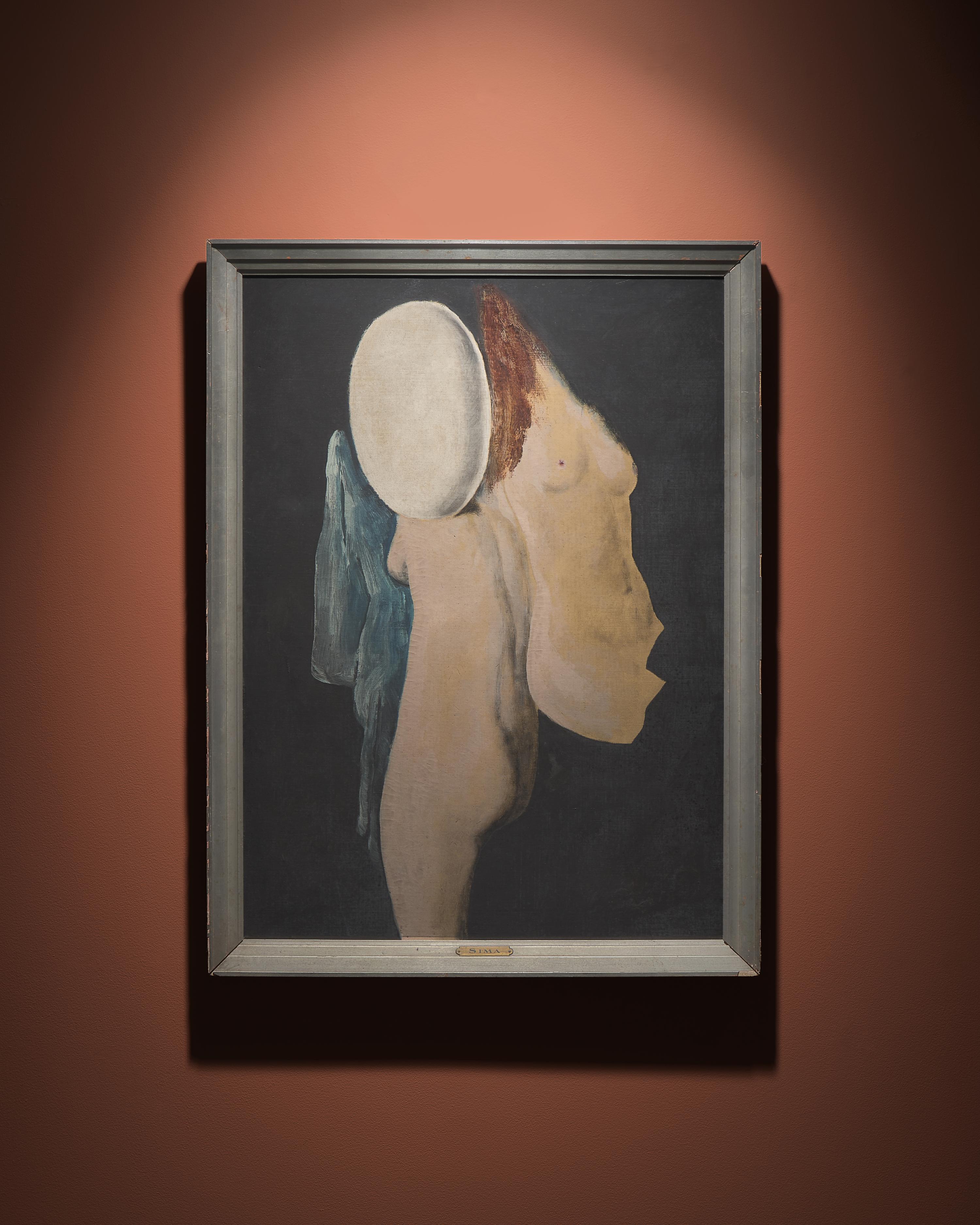
Europa represents the culmination of his imaginative exploration. With this painting, Šíma transports the viewer into an oneiric realm that escapes conscious experience and surpasses the limits of rational comprehension.
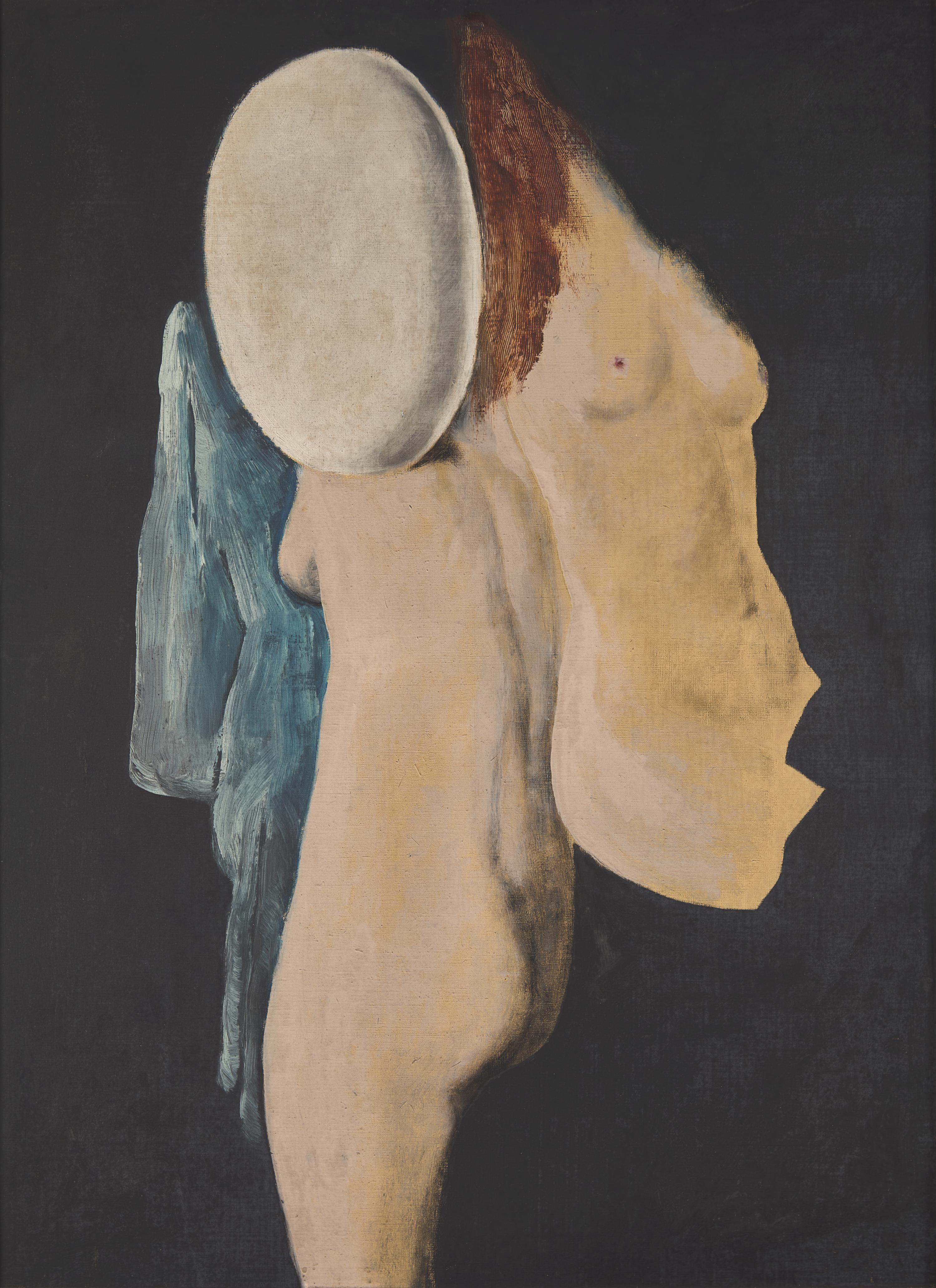
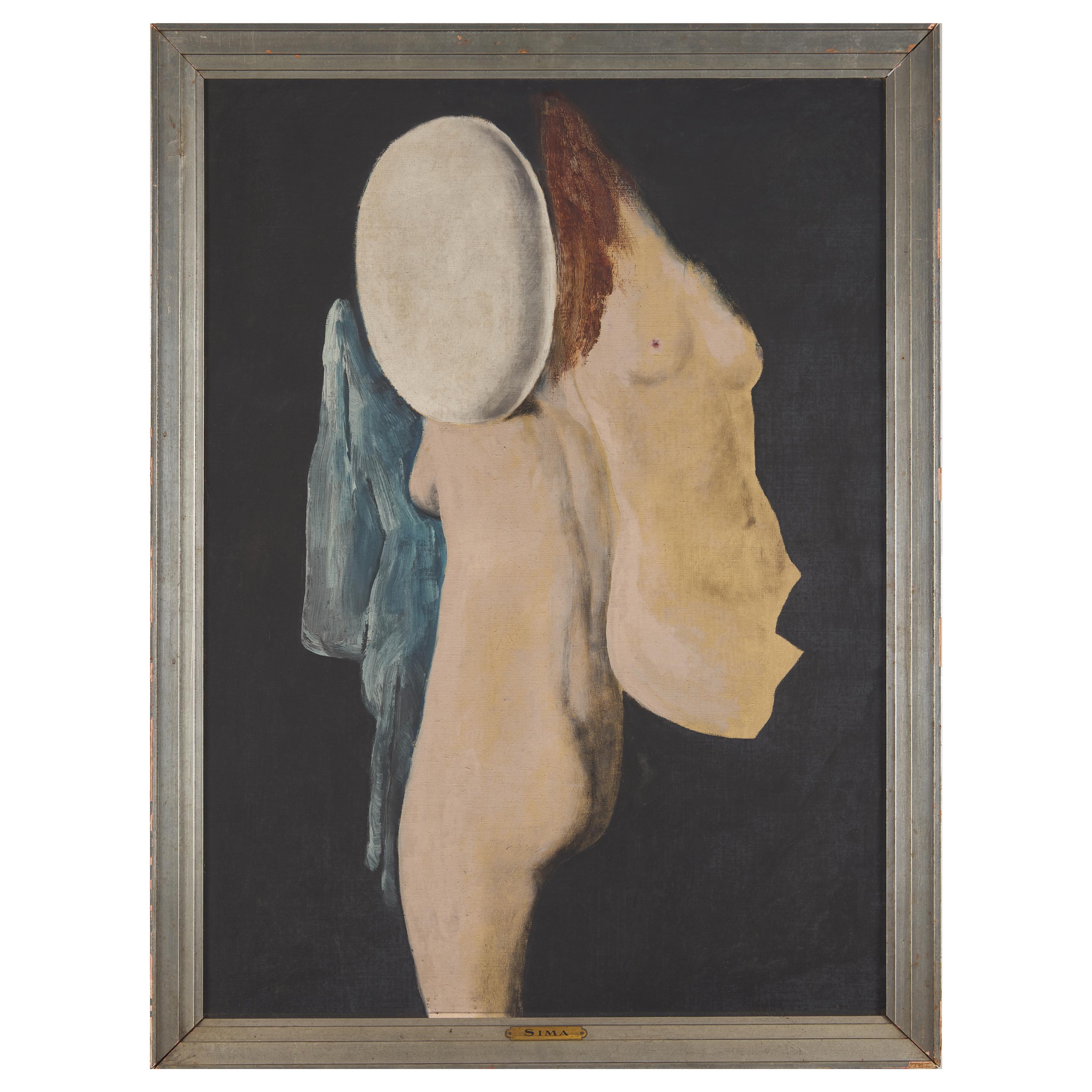
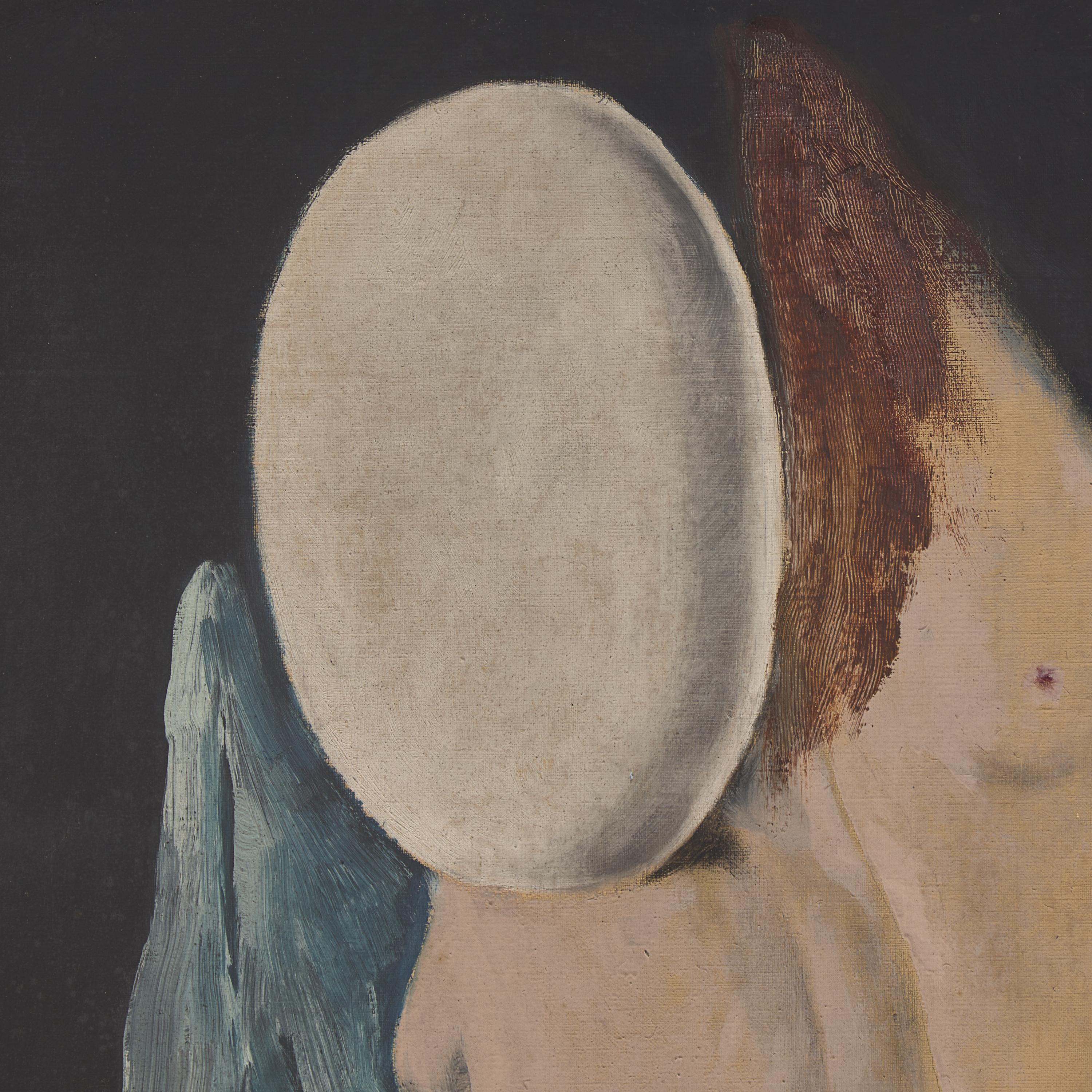
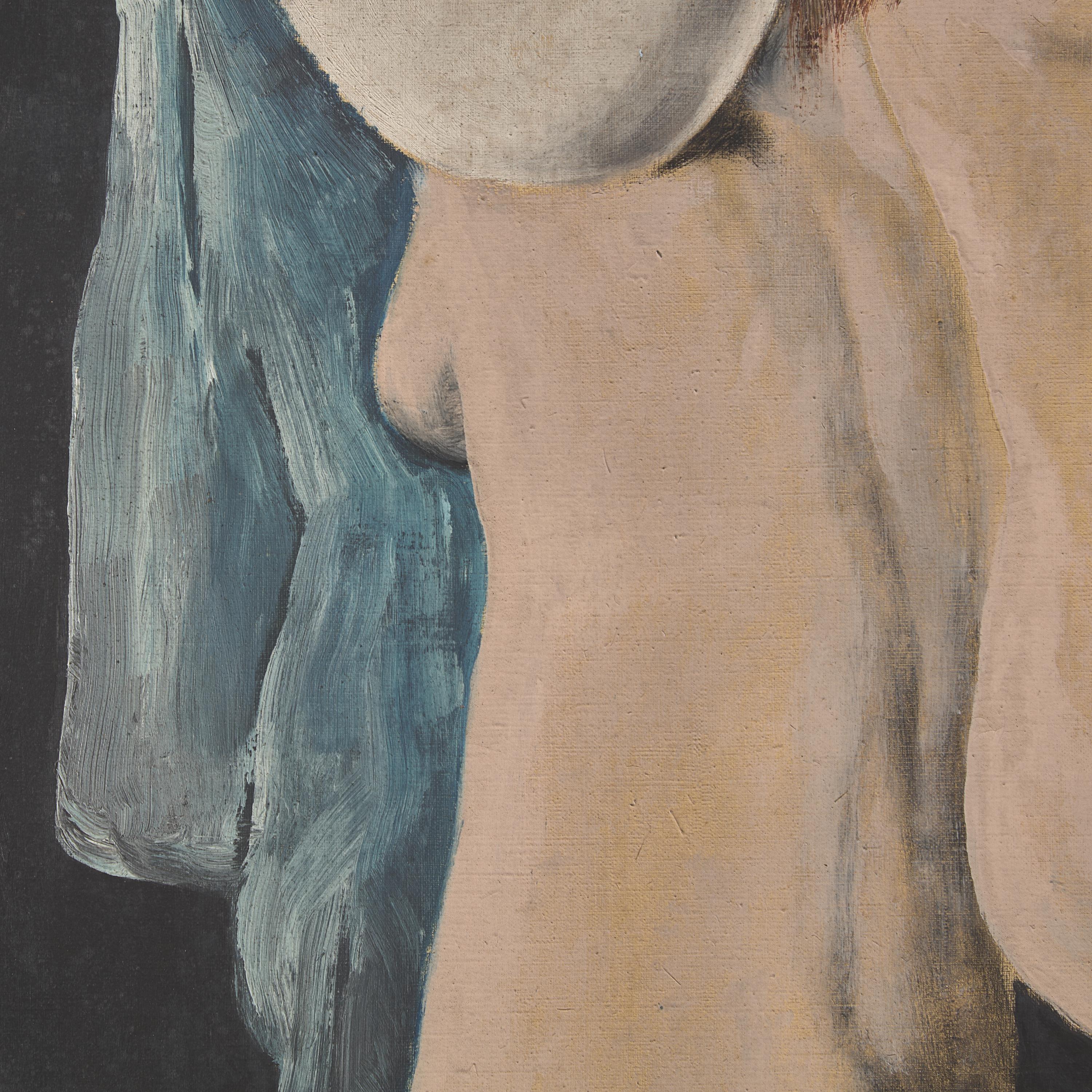
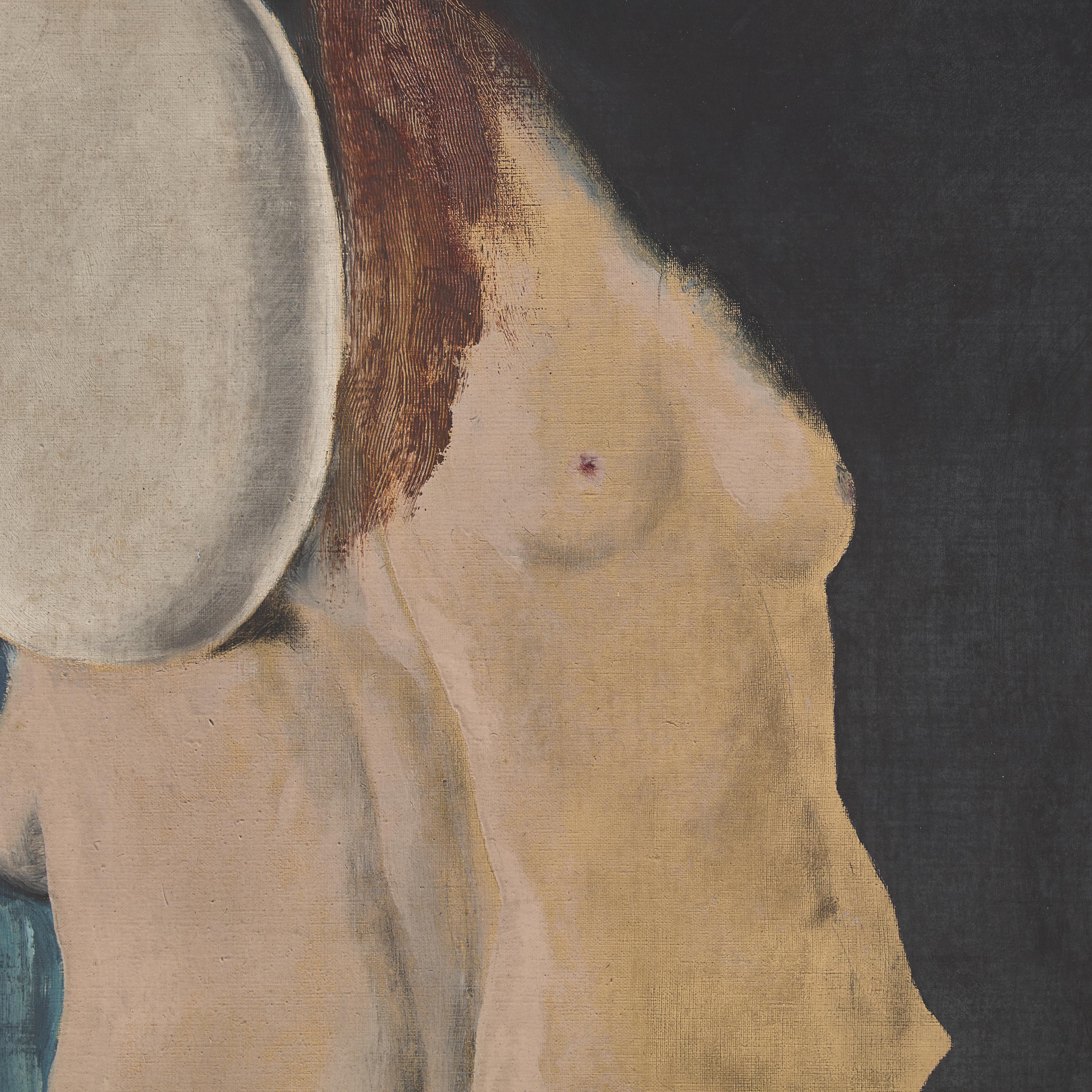
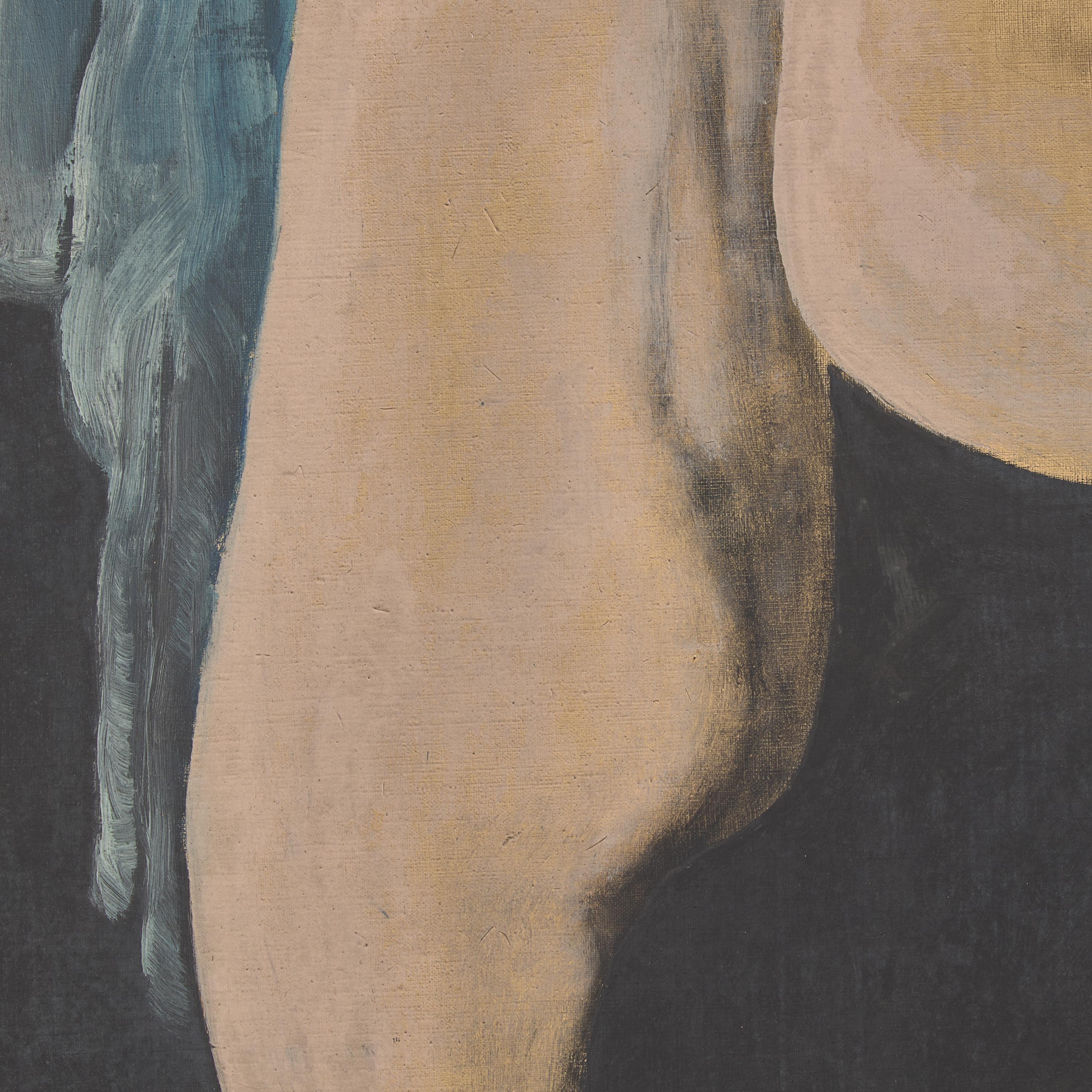
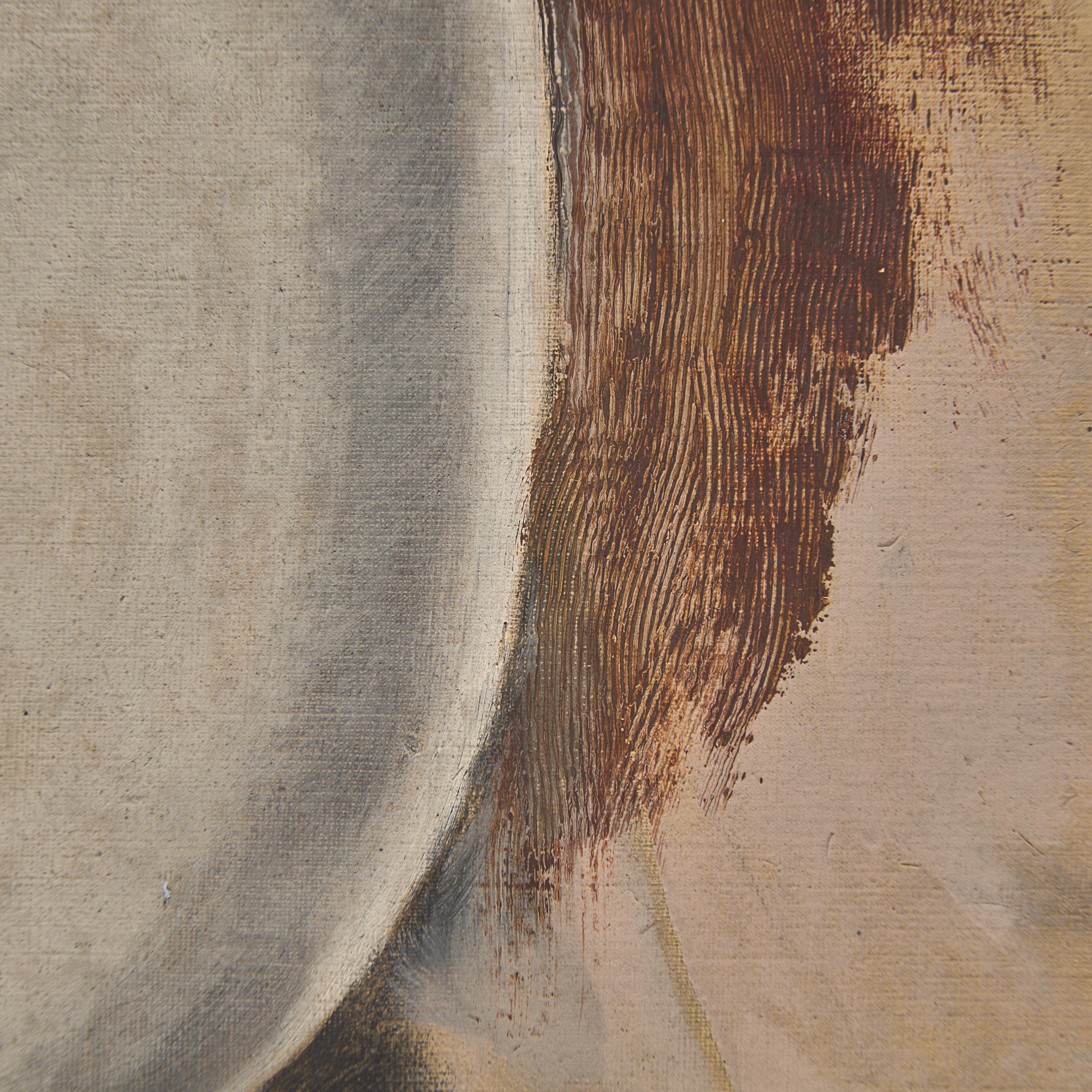
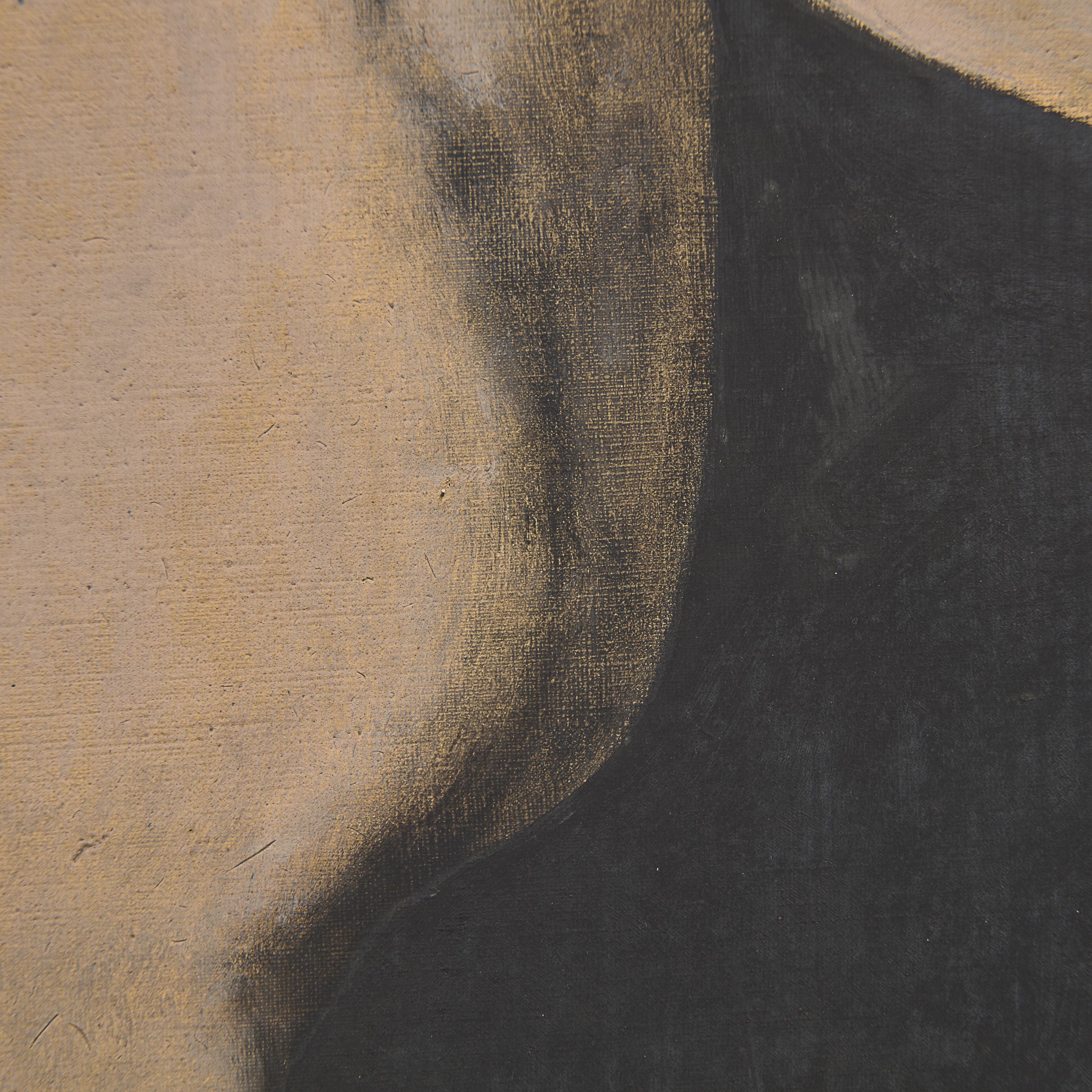
The composition presents two merging torsos inspired by Paleolithic statues. Suspended in levitation against a dark, indeterminate void evocative of the universe, one is partially flanked by a blue mantle and surmounted by a monumental egg. Though rendered with striking clarity, these forms float freely in space, untethered from the laws of logic or physics. In forging unexpected relationships between these elements, Šíma arrests the viewer, compelling a direct confrontation with meaning itself.
The floating bodies evoke independence, elevation, and the abolition of time and space. The egg, at once a symbol of life, immortality, and, on a cosmological level, the universe, evokes genesis, projecting the scene into the mythic instant of the world’s creation. Here, everything becomes a metaphor for origin, perpetual return and liberation. Europa operates as a reversion to a primordial time, a sacred moment when humanity existed in unity with nature and the cosmos, freely.
As Šíma confided to Richard Weiner, these forms were not invented but “received,” as if revealed to him. In contrast to the more explicitly Freudian symbolism of Surrealism, Šíma summons an imagery that seems already inscribed within us i.e. latent memories reawakened in flashes of revelation, as though recalling an origin we humans, have always known. The torsos and the egg should not be understood as conventional symbols, but rather as archetypal forms emerging from the depths of our shared human psyche, charged with a mythic resonance that should look and sound familiar to us. As Šíma himself suggested, such forms are not easy to reach, however. They demand a different mode of engagement, one that mobilizes reason alongside feeling, intuition, and imagination. In this sense, his imagery may be understood as a primordial language: the native tongue of the unconscious, apprehended most fully in premonitory dreams, and whose meaning can neither be totally translated nor understood.
THE COSMIC EGG
Europa occupies a central position within Josef Šíma’s celebrated series devoted to the motif of the egg, a form that emerged as a defining element of his visual language in the mid-1920s.
The egg first appears in 1926 in Šíma’s stage design for Le Bourreau du Pérou by Georges Ribemont-Dessaignes, and shortly thereafter in preparatory drawings for the album Paris in early 1927. It rapidly assumed a central role in a number of key compositions, often in conjunction with recurring motifs such as fragmented bodies, vegetal forms, or clouds.
For Šíma, the egg, much like the circle, initially functioned as a perfect, enigmatic form, almost primitive in its simplicity. By the late 1920s, however, it acquired a far richer symbolic resonance. As Marie-Hélène Popelard has observed, Šíma came to associate the egg with "living, embryonic, and chaotic matter." This conception aligns with the long-standing mythological and religious notion of the cosmic egg as a primordial source of life; the generative matrix from which existence itself emerges. The leading authority on Šíma, František Šmejkal, similarly identified the archetypal dimension of this motif, drawing parallels with Constantin Brâncuși’s The Beginning of the World (1924), in which the ovoid form becomes a universal symbol of origin.
This fascination with origins extended beyond the visual arts. In 1927, the cosmologist Georges Lemaître advanced his theory of the "homogeneous universe," describing a primordial state of matter as an indivisible concentration of energy sometimes referred to as a "cosmic egg." Such parallels reveal a broader intellectual climate in which art, science and philosophy converged around questions of genesis and becoming.
Within Europa, Šíma developed this symbolism further, conceiving the egg as a figure of unity, above all: from a single, enclosed form unfolds the multiplicity of existence. In its indivisible wholeness, it contains all potential—an origin that is at once singular and infinite.
A PRODUCT OF LITERATURE
Beyond the central motif of the cosmic egg, Europa stands as an enigmatic work featuring, first and foremost, two torsos. While earlier interpretations proposed a modern reimagining of Adam and Eve, more recent scholarship has convincingly identified the figures as two female bodies. This shift in reading foregrounds the work’s latent eroticism, in which the fragmented female form operates as both a vehicle of desire and its sublimation within Šíma’s poetic visual language.
Two key literary sources appear to have catalysed Šíma’s conception of this dual female imagery. The first is Le Nègre (1928) by Philippe Soupault, a surrealist novel centered on a Barcelona prostitute who calls herself Europe and is ultimately killed by the protagonist, Edgar Manning. The more explicitly sensual figure on the right of Šíma’s composition may be understood in relation to this character. This interpretation is further supported by a now-lost painting from 1927 (known through a black-and-white reproduction and formerly in the collection of Roger Vailland), in which a similarly posed torso appears within a nocturnal setting, accompanied by discarded drapery—details that closely parallel Soupault’s narrative.
A second literary point of reference may be found in The D.E. Trust: A History of Europe’s Destruction by Ilya Erenburg, published in Czech translation in 1924. Fragmentary, poetic and visionary in form, the text evokes a civilisation in decline while invoking the figure of Europa, the daughter of the Phoenician king abducted by Zeus in the guise of a bull. In Erenburg’s account, she emerges as a figure of profound ambiguity: at once radiant and debased, a duality that resonates strongly with Šíma’s composition here. Within this framework, the more restrained figure on the left may be read as an evocation of the mythological Europa, whose name was ultimately bestowed upon the Old continent itself. This interpretation is reinforced by formal parallels with Šíma’s cover design for the 1925 Czech edition of L’Autruche aux Yeux Clos by Georges Ribemont-Dessaignes. Conceived as a photomontage, the design juxtaposes a classical sculptural type reminiscent of the Aphrodite of Knidos, with a modern female figure, thus establishing a dialogue between antiquity and contemporaneity that finds a compelling and fully realized expression in Europa.
A MONSTRUOUS WORK
The significance of Europa within Josef Šíma’s oeuvre was recognised from the moment of its creation. The painting notably appears in a celebrated cartoon dated 24 December 1927 by Adolf Hoffmeister, depicting one of the earliest gatherings of the Le Grand Jeu at Šíma’s Paris studio. Wryly captioned Young Generation in the Embryotic State, the drawing captures Hoffmeister’s autumn visit to Paris and portrays figures such as Roger Vailland, Artür Harfaux, René Daumal and Roger Gilbert-Lecomte. Šíma himself is absent, evoked instead through the presence of Europa within the composition, accompanied by his dog seated in the foreground. In this context, the painting assumes a surrogate role, as though embodying the artist himself, and acting as a testament to his conception of painting as an autonomous visual poem.
Even when presented in Šíma’s one-man exhibition in Prague in March 1928, Europa was widely regarded as the keystone of the presentation. Within the exhibition, Europa stood out as its most enigmatic work, distinguished both by its striking visual qualities (namely the sensual interplay of pale, sculptural torsos and a monumental oval set against a deep black ground) and by the ambiguity of its title, which resists any immediate or literal correspondence with the scene depicted. The Czech poet and critic Karel Teige observed that "the monstrous, chimerical, mysterious, and bizarre forms of Šíma’s paintings are images of the negative of life: dreams…", situating the work firmly within the intellectual and aesthetic ambitions of the interwar avant-garde.
"THE REDISCOVERY OF THE CENTURY"
Until the emergence of Freeman’s version of Europa, the composition was known only through a single, presumed unique example, now held in the Moravian Gallery in Brno. This painting was formerly owned by the Prague publisher Otakar Storch-Marien, who acquired it directly from Josef Šíma’s studio in 1927 for display in the Aventinská Mansarda gallery, which he founded that same year with the aim of establishing a publicly accessible collection of Czech modern art.
The reappearance of a second version prompted curiosity, and speculations. Ultimately, it led to a months-long extensive technical and art-historical investigation at Trinity Art Research in Prague, under the supervision of Rea Michalová and conservator David Frank.
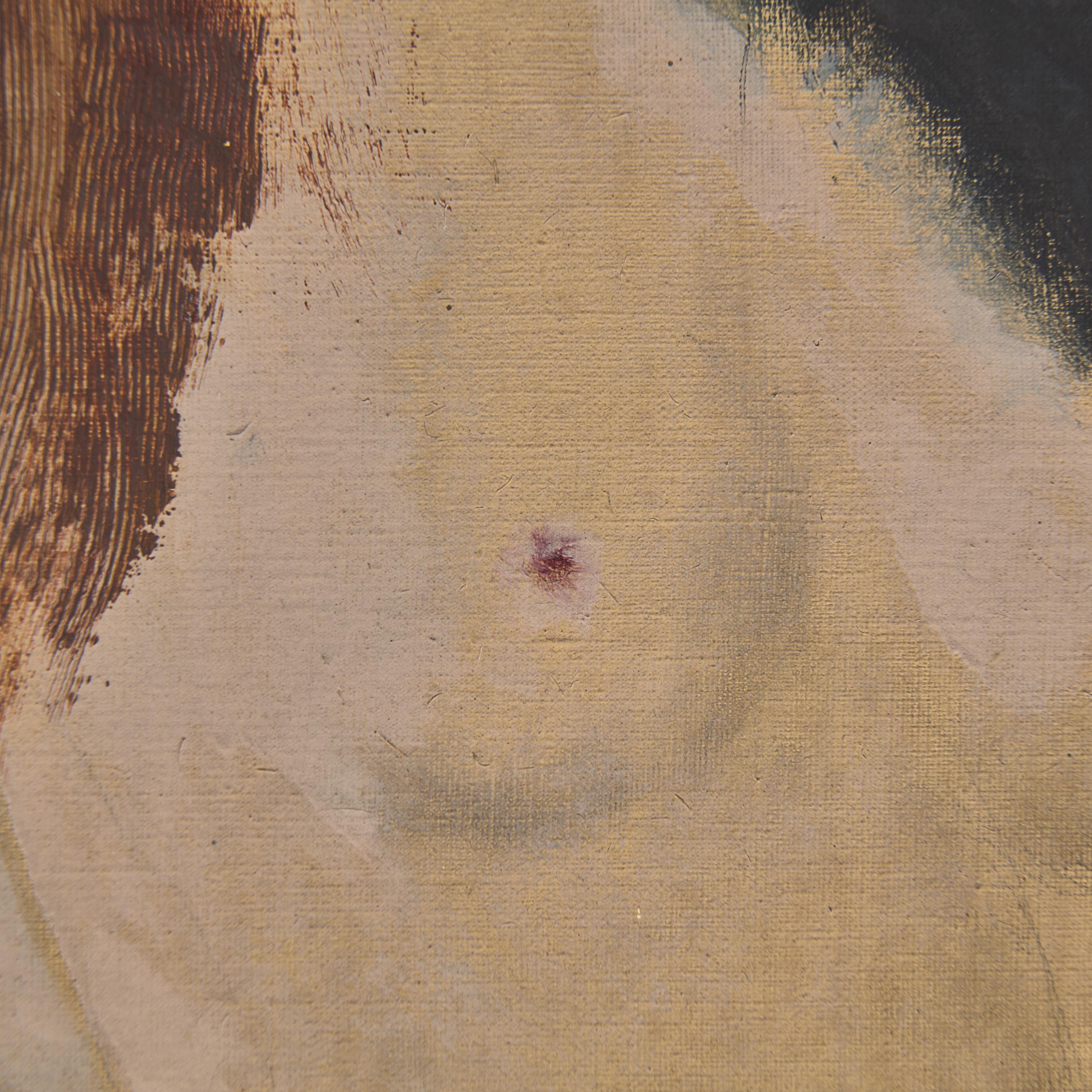
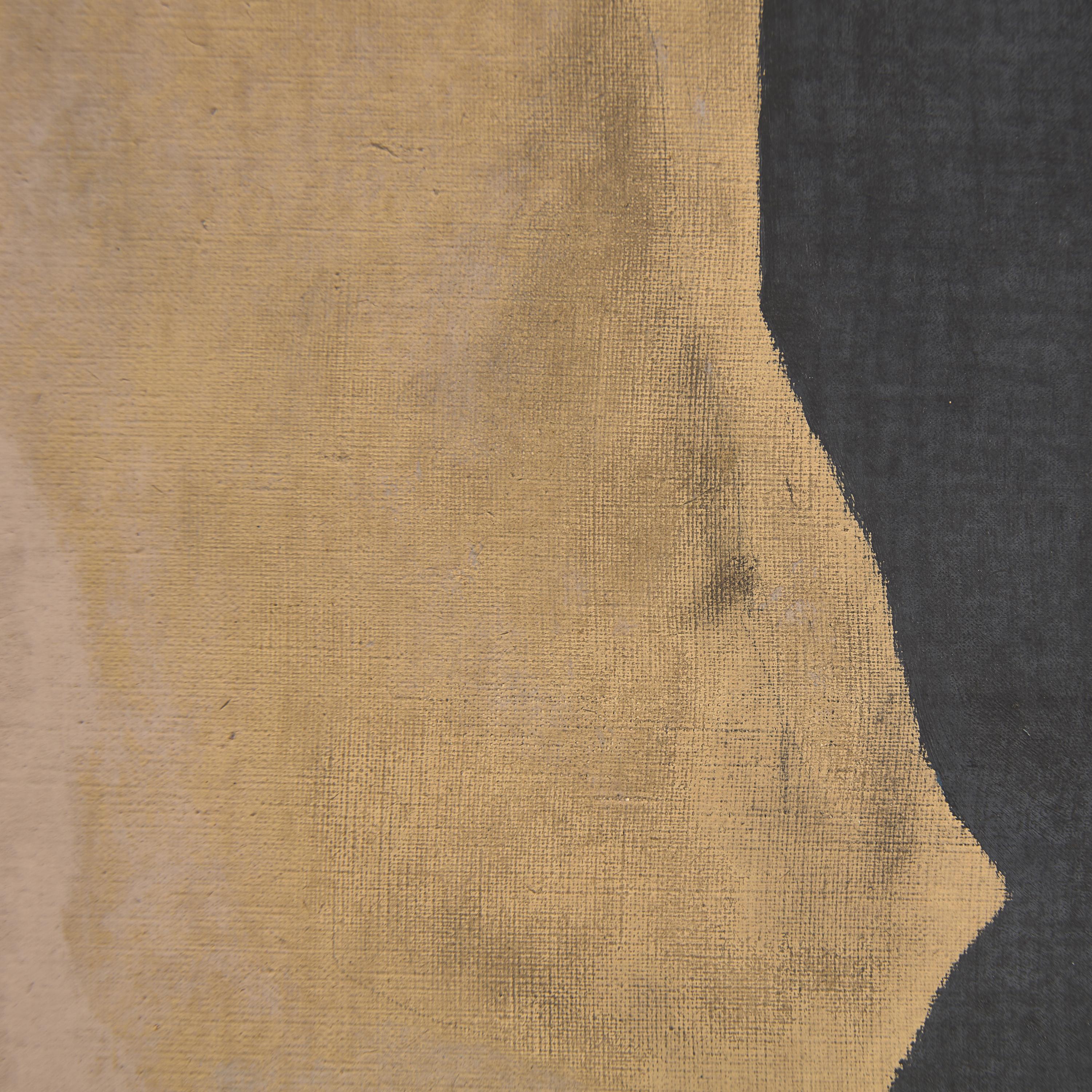
Advanced imaging methods, including X-radiography, ultraviolet luminescence, infrared reflectography, and high-intensity light analysis, revealed a highly controlled and sophisticated working process overall. Central to the authentication of the painting was Šíma’s distinctive and inimitable technique, characterized by a thin, restrained, watercolor-like handling of oil paint. Underneath, a minimal yet precise pencil underdrawing that defines the essential forms of the composition was visible. The resulting surface, marked by delicate transitions and refined anatomical rendering, produces an ethereal visual that is arguably, and exceptionally, difficult to channel.
Infrared imaging additionally revealed a previously obscured signature at bottom right, which the artist etches onto the paint layer with the bottom of his paint brush, while the painting’s untouched condition preserved its original material integrity. X-ray imaging also revealed pentimenti, including revisions to the upper-right background, providing insight into an evolving compositional process and strongly suggesting that the present work constitutes an original and possibly primary version: the prototype which would led to the Moravian’s version of Europa.
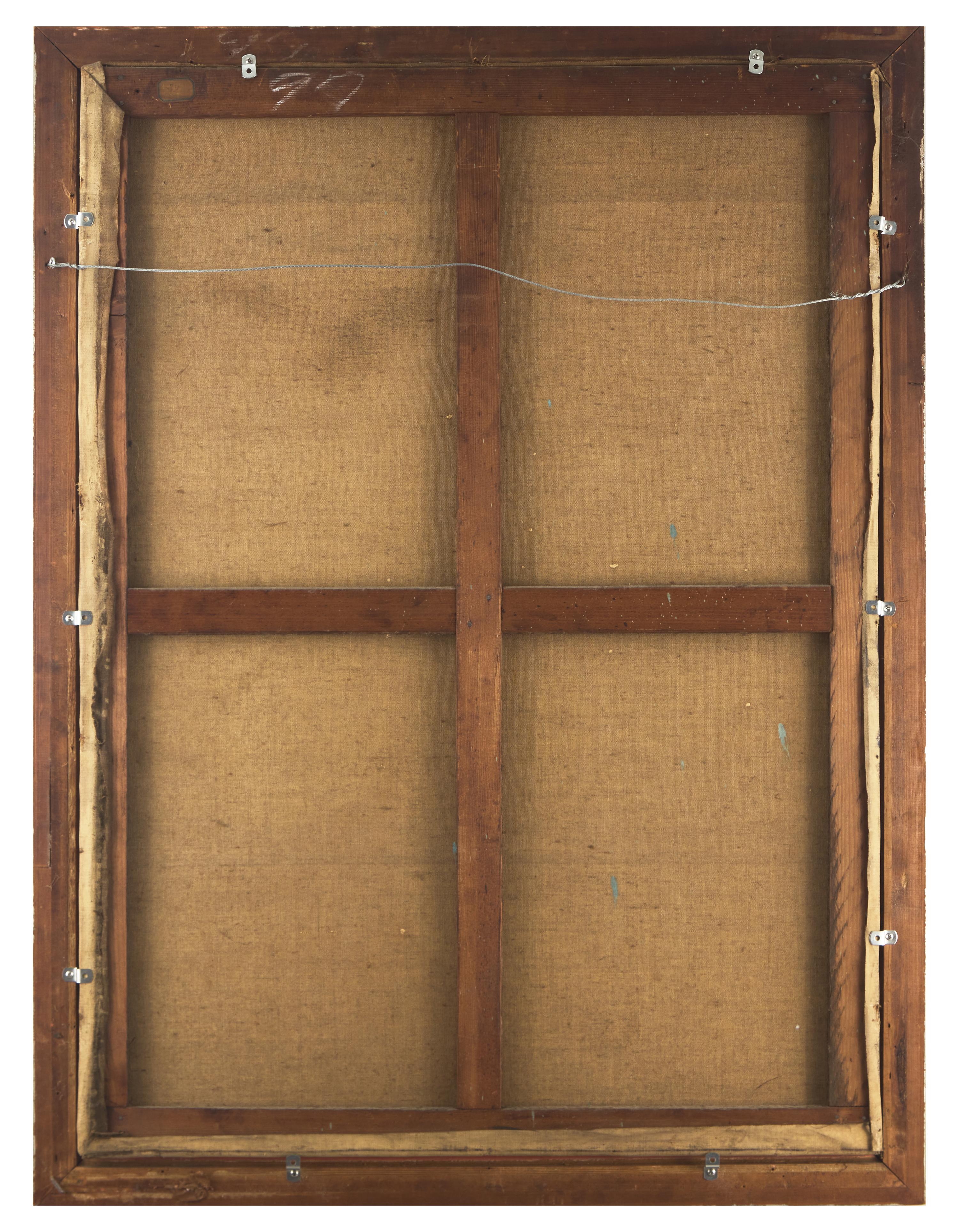
Alongside close physical comparison with key works by Josef Šíma from the same period—including M (Egg Balance MZ) (1927), Electricity (1927), Vampire (1928), and Portrait of Berenice Abbott (1928)— a direct, side-by-side examination was undertaken with the painting preserved in the Moravian Gallery in Brno. This rare opportunity for immediate visual confrontation proved decisive in establishing the present work’s attribution. The two compositions reveal striking material concordances: both employ identical pigments, notably lead white, and share the same type of canvas, ground preparation in a characteristic orange-terracotta tonality, and construction features such as a French stretcher, original tacking edges, and period nails. These technical affinities are entirely consistent with Šíma’s practice during his Parisian years in the late 1920s.
At the same time, the comparison underscores important distinctions that affirm the individuality of the present canvas. Differences in scale (our work being of larger dimensions) are accompanied by variations in proportion, the articulation of drapery, and the treatment of anatomy. Particularly notable is the modulation of light and shadow, most evident in the rendering of the egg, where subtle shifts in tonal handling produce a distinct atmospheric and symbolic effect.
As Michalová observed, the paintings appear as works of a single artist yet exist in “rare harmony,” each asserting its individuality through confident and non-derivative execution. She concludes: “Each work stands out as entirely unique, demonstrating confident artistic bravura without hesitation.”
THE IDEA OF A MASTERPIECE
The painting’s tracked historical records are equally compelling. Its first official trace dates back to the 1936 jubilee exhibition catalogue of Josef Šíma, held by
Umělecká beseda (Artistic Forum) in Prague. More than a checklist, this publication functioned as a working inventory of the artist’s oeuvre, recording parallel versions and their locations. Crucially, alongside the known Europa in Brno, the catalogue reveals: “Another larger canvas from the same year is in the Davis Collection in Philadelphia.” This confirms that Šíma himself openly acknowledged multiple versions of the composition: a fact long overlooked by modern scholarship.
Even more decisive is the painting’s inclusion in the avant-garde journal Cahiers d’Art in 1928, edited by Christian Zervos. The present work, clearly identifiable by its elongated format, is reproduced in this publication, providing early visual confirmation of its existence during the artist’s lifetime.
Taken together, these findings challenge the traditional notion of a single “masterpiece,” revealing instead a more complex and experimental creative process. Šíma conceived Europa not as a singular image, but as multiple, equally original works. Rather than copies, they represent parallel acts of creation: a powerful expression of artistic freedom within the Parisian avant-garde.
A PHILADELPHIA STORY
From its early years, Europa was closely associated with the city of Philadelphia.
Its first recorded owner was Bernard M. Davis, a Ukrainian-born collector who emigrated to the United States in 1913 and established himself in The City of Brotherly Love as a successful textile entrepreneur and designer. Initially engaged in artistic practice, Davis abandoned painting after concluding that his abilities did not match those of his peers and instead turned to collecting modern art. Known for his eccentric personality and visionary approach, he became an influential patron, particularly of lesser-known and Eastern European artists, a focus facilitated by his fluency in several Slavic languages. His activities extended beyond collecting: as founder of the Miami Museum of Modern Art in 1962, he played a significant role in promoting international modernism, introducing numerous artists to American audiences and fostering cross-cultural exchange.
Although the precise date of Davis’s acquisition of Europa remains uncertain, it is highly probable that he obtained the work shortly after its creation, likely directly from Šíma’s Paris studio at Cour de Rohan, a site that functioned as both a workspace and a cultural meeting point for the avant-garde circle associated with Le Grand Jeu.
Around 1952, when Davis sold his Rittenhouse Square apartment, the painting entered the collection of Robert Sturgis Ingersoll, Sr. (1891–1973). A prominent Philadelphia lawyer, philanthropist, and major figure in American cultural life, Ingersoll served as director of the Philadelphia Museum of Art from 1948 to 1964. He was known as a discerning and forward-looking collector, assembling a significant collection of European modern art, often acquiring works directly from artists and playing a crucial role in introducing them to American audiences.
His acquisition of Šíma’s Europa, at a time when the artist’s reputation had waned in Europe and was close to non-existent in the United States, reflects both his exceptional artistic sensitivity and his commitment to supporting overlooked figures within modernism.
CONCLUSION
With its iconic and enigmatic surrealist imagery, Josef Šíma’s Europa stands as the most significant achievement of the artist’s career.
The re-emergence of this extraordinary canvas constitutes a landmark moment, bringing to market a work of true museum caliber. Europa expands and sharpens our understanding of Šíma’s oeuvre, compelling a reevaluation of his artistic legacy. It affirms his place not simply as a major Czech modernist, but as one of the most singular and intellectually sophisticated voices in 20th Century art, which resonates loudly across both European and transatlantic contexts.
Europa's distinguished provenance further highlights the decisive role of visionary collectors in propelling Czech modern art onto the international stage. Much like the monumental egg in its composition, Europa becomes a symbol of creation; it contains the seeds of creativity and universality that every artist aspires to reach. Within its core lies the very potential to transcend borders and meanings, thus positioning Josef Šíma not merely as a national pride, but at the apex of a truly global art-historical narrative.
The unlined canvas in overall good condition. We notice several scattered small areas of surface loss, for instance, a u-shaped line, approx. 1 in. long at the top right; approx. 1/8 to 1/4 in. areas along the top edge; and two areas in the left black area. There are some surface scratches at bottom left, and some areas of rubbing as well. The work would likely benefit from a light cleaning. There is no evidence of inpainting as seen under UV light. Additional images available upon request.
The physical condition of lots in our auctions can vary due to age, normal wear and tear, previous damage, and restoration/repair. All lots are sold "AS IS," in the condition they are in at the time of the auction, and we and the seller make no representation or warranty and assume no liability of any kind as to a lot's condition. Any reference to condition in a catalogue description or a condition report shall not amount to a full accounting of condition. Condition reports prepared by Freeman's staff are provided as a convenience and may be requested from the Department prior to bidding.
The absence of a posted condition report on the Freeman's website or in our catalogues should not be interpreted as commentary on an item's condition. Prospective buyers are responsible for inspecting a lot or sending their agent or conservator to inspect the lot on their behalf, and for ensuring that they have requested, received and understood any condition report provided by Freeman's.
Please email adriannewolkenberg@freemansauction.com for any additional information or questions you may have regarding this lot.