To request further details about this lot, please email adriannewolkenberg@freemansauction.com
Please email adriannewolkenberg@freemansauction.com for any additional information or questions you may have
Sale 6494
| New York
| New York
To request further details about this lot, please email adriannewolkenberg@freemansauction.com
Please email adriannewolkenberg@freemansauction.com for any additional information or questions you may have
Estimate$80,000 – $120,000
We wish to thank Mme Marie-Anne Destrebecq-Martin for confirming the authenticity of the work, which will be added in the forthcoming Catalogue Raisonné of the artist's work.
Provenance:
Kaplan Gallery, London, the United Kingdom, by July 1959 (cat. no. 5).
Hammer Galleries, New York, New York (as Le Village en Automne).
Acquired directly from the above.
Private Collection, New Jersey.
Thence by descent in the family in 2002.
Private Collection, Pennsylvania.
Exhibited:
New York, Hammer Galleries, Henri Martin (1860-1943), February 20 - March 10, 1962, no. 1 (cover image of brochure).
Lot Essay:
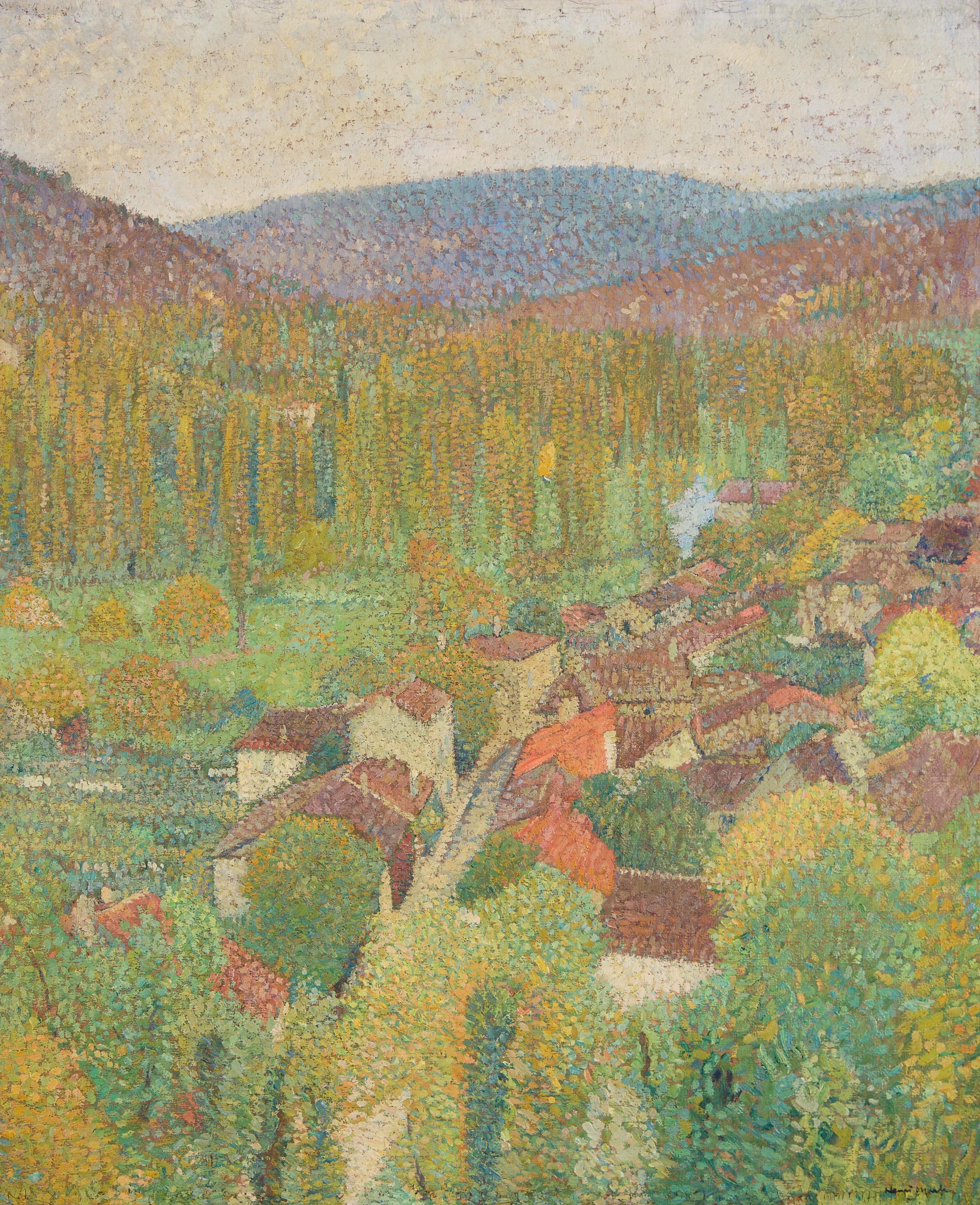
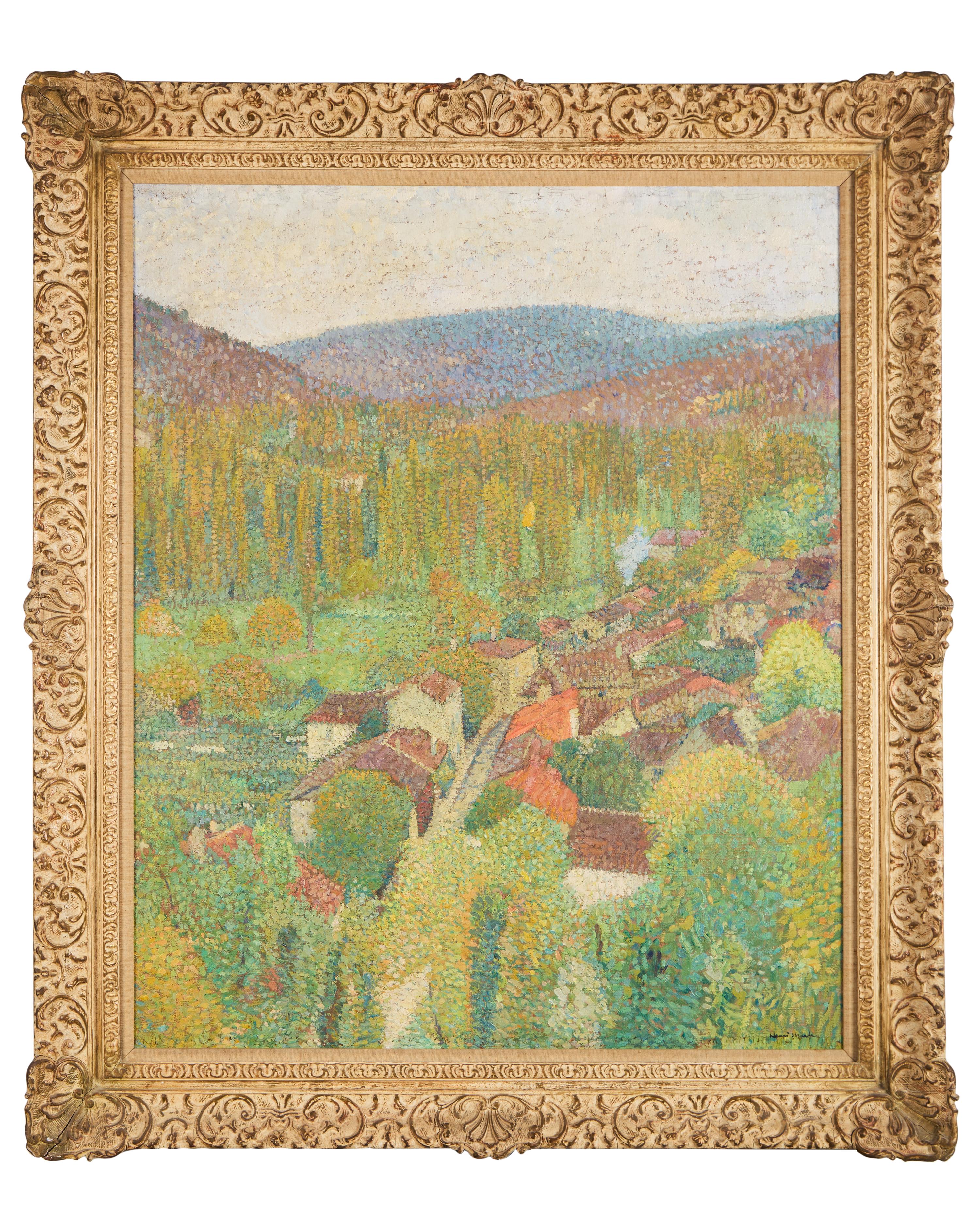
This luminous view of Labastide-du-Vert, painted in 1908, belongs to the mature work of Henri Martin. It corresponds to a moment when he was undertaking major decorative commissions, including his celebrated contributions to the Sorbonne, yet remained deeply anchored in the landscape of the Lot, his preferred subject and the cradle of his mature method.
Martin’s attachment to the village dates to 1900, when he and his family acquired the estate of Marquayrol, situated on the hills above Labastide-du-Vert, a small village in the Quercy countryside named after the Vert river. This move marked a decisive turning point in his career. Gradually abandoning Symbolist themes and literary references, Martin turned toward a direct and sustained engagement with nature. The rolling hills, the valley of the Vert, and the shifting light of the seasons offered him an inexhaustible field of study. Although Martin most often painted within the intimate confines of his estate, its gardens, pergolas, terraces, and fountains, he also sought broader perspectives on the surrounding landscape, as exemplified in the present work.
Painted en plein air from an elevated, almost bird’s-eye viewpoint (in fact from his son’s bedroom window), the village unfolds as a dense mosaic of rooftops, foliage, and winding paths. This panoramic vision recurs throughout his œuvre, explored across multiple formats, varying the angle, spatial construction, and atmospheric conditions. Each vantage point offered a renewed configuration of forms and colors, a fresh means of capturing what he perceived as the living fabric of the land.
The distant hills, tinged with mauve and blue, contrast with the tender greens and ochres of the valley, creating a chromatic harmony that is both structured and sensuous. What animates the composition above all is Martin’s distinctive handling of paint. The scene itself is one of stillness, a quiet village nestled within an enveloping nature. Yet the surface vibrates with life. Built up through a myriad of small, discrete touches, the landscape dissolves into a shimmering field of color. The accumulation of these touches conveys both the permanence of the village and the fleeting effects of atmosphere.
This bravura of pointillism, adopted empirically rather than theoretically, enabled Martin to translate the intensity of light he experienced directly in nature. As he himself observed, the brilliance and diffusion of natural light compelled him to render it through pointillé. His touch remains free, mobile, and deeply responsive. The dots are not mechanical but lyrical, creating subtle variations in hue that evoke the movement of air, the warmth of sunlight, and the density of vegetation.
Framed: 46 x 39 x 3 in.
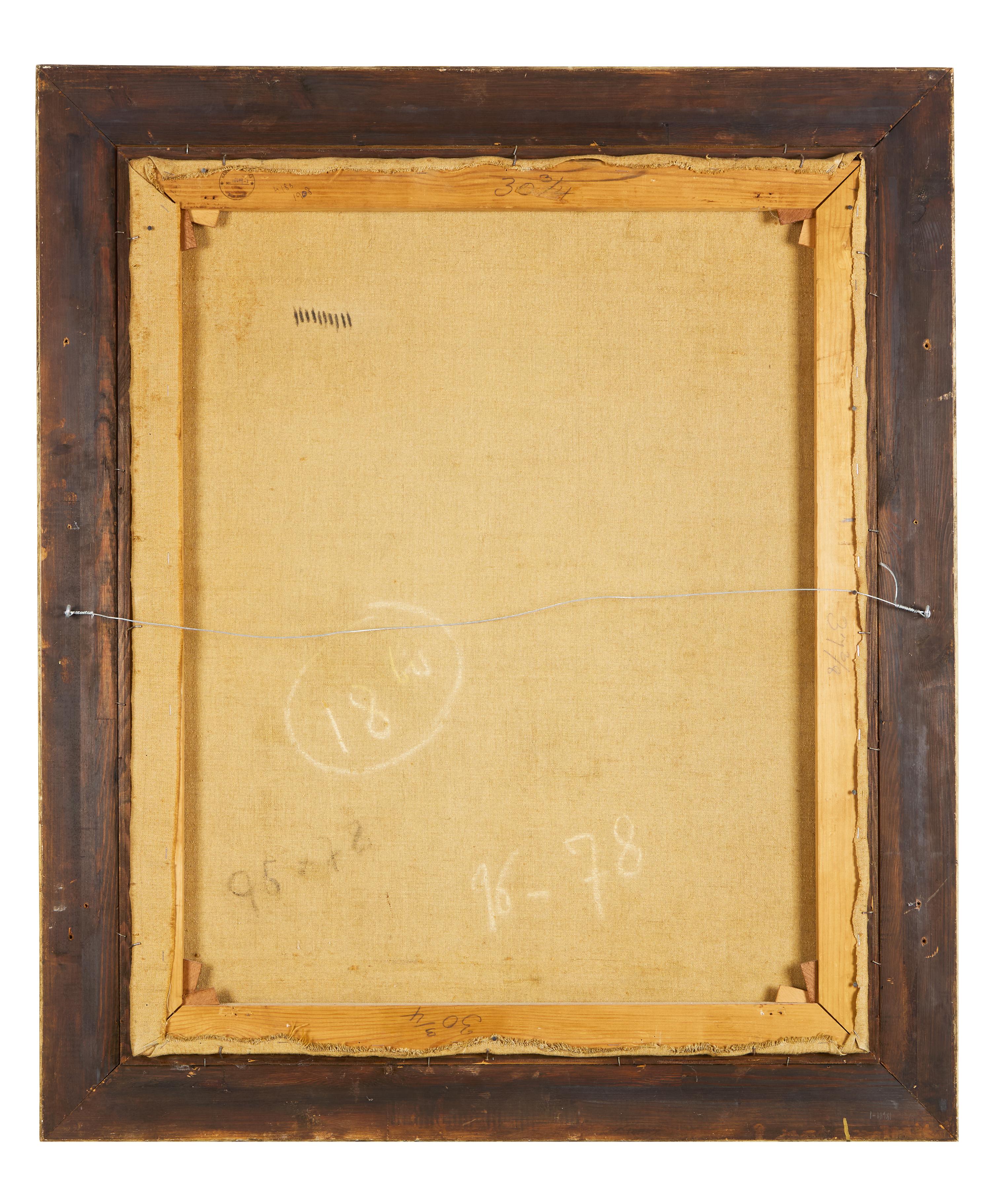
Please email adriannewolkenberg@freemansauction.com to request a condition report and additional images.
The physical condition of lots in our auctions can vary due to age, normal wear and tear, previous damage, and restoration/repair. All lots are sold "AS IS," in the condition they are in at the time of the auction, and we and the seller make no representation or warranty and assume no liability of any kind as to a lot's condition. Any reference to condition in a catalogue description or a condition report shall not amount to a full accounting of condition. Condition reports prepared by Freeman's staff are provided as a convenience and may be requested from the Department prior to bidding.
The absence of a posted condition report on the Freeman's website or in our catalogues should not be interpreted as commentary on an item's condition. Prospective buyers are responsible for inspecting a lot or sending their agent or conservator to inspect the lot on their behalf, and for ensuring that they have requested, received and understood any condition report provided by Freeman's.
Please email adriannewolkenberg@freemansauction.com for any additional information or questions you may have regarding this lot.