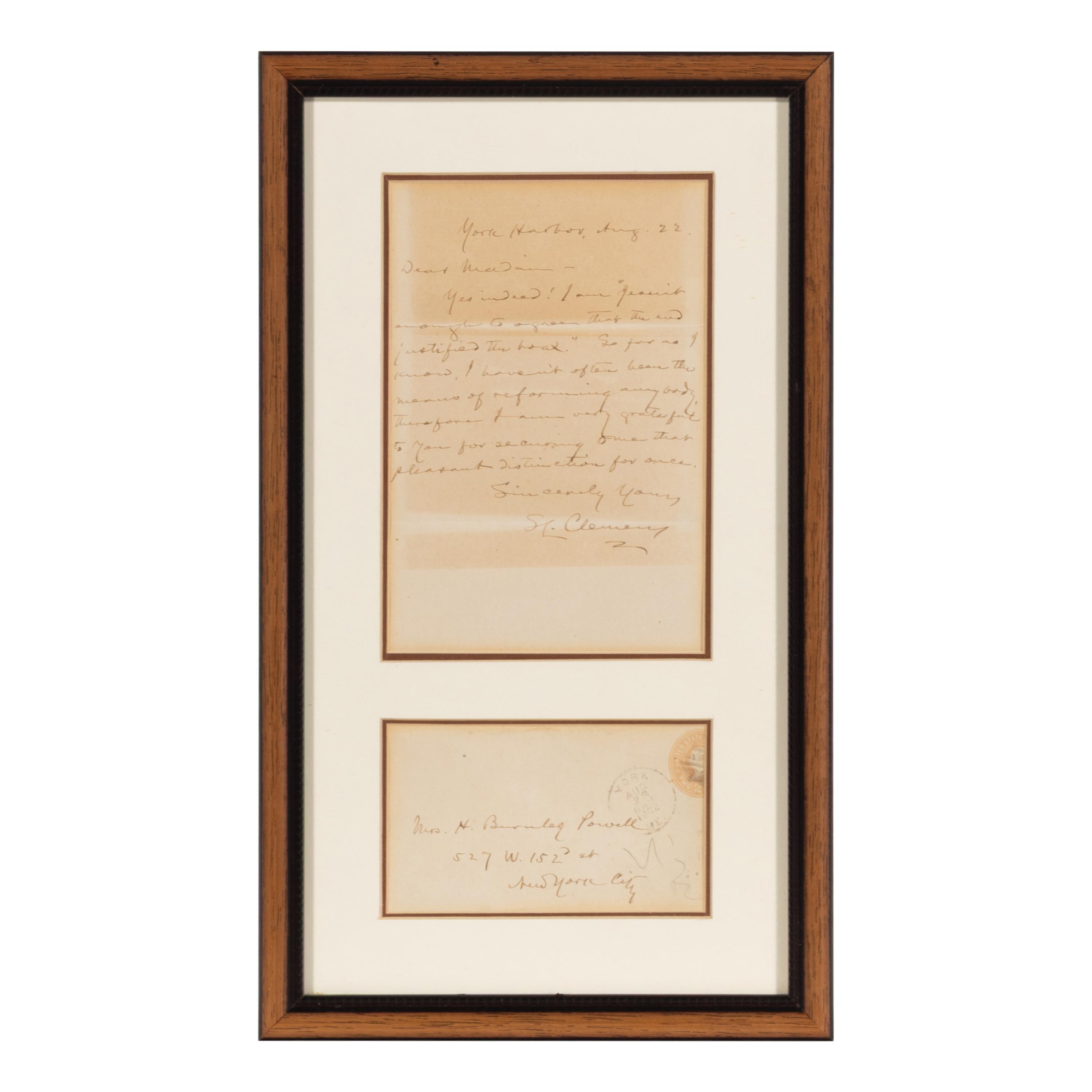
To request further details about this lot, please email booksmanuscripts@freemansauction.com
Please email booksmanuscripts@freemansauction.com for any additional information or questions you may have
Sale 6493
| Chicago
| Chicago
To request further details about this lot, please email booksmanuscripts@freemansauction.com
Please email booksmanuscripts@freemansauction.com for any additional information or questions you may have
Estimate$3,000 – $5,000
The physical condition of lots in our auctions can vary due to age, normal wear and tear, previous damage, and restoration/repair. All lots are sold "AS IS," in the condition they are in at the time of the auction, and we and the seller make no representation or warranty and assume no liability of any kind as to a lot's condition. Any reference to condition in a catalogue description or a condition report shall not amount to a full accounting of condition. Condition reports prepared by Freeman's staff are provided as a convenience and may be requested from the Department prior to bidding.
The absence of a posted condition report on the Freeman's website or in our catalogues should not be interpreted as commentary on an item's condition. Prospective buyers are responsible for inspecting a lot or sending their agent or conservator to inspect the lot on their behalf, and for ensuring that they have requested, received and understood any condition report provided by Freeman's.
Please email booksmanuscripts@freemansauction.com for any additional information or questions you may have regarding this lot.