To request further details about this lot, please email ataggart@freemansauction.com
Please email ataggart@freemansauction.com for any additional information or questions you may have
Sale 6489
| Philadelphia
| Philadelphia
To request further details about this lot, please email ataggart@freemansauction.com
Please email ataggart@freemansauction.com for any additional information or questions you may have
Estimate$30,000 – $50,000
Provenance:
Samuel T. Freeman & Co., Philadelphia, Pennsylvania,
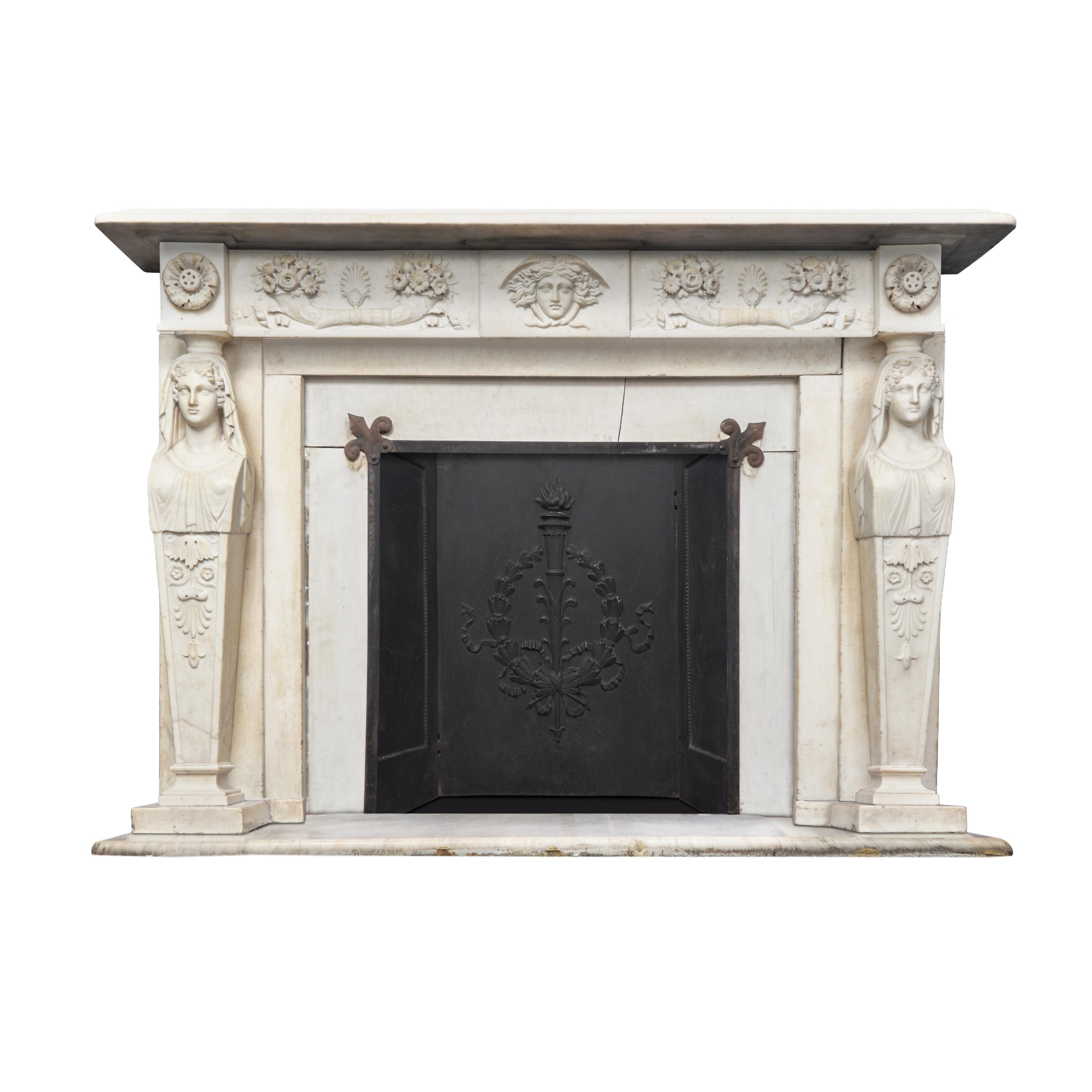
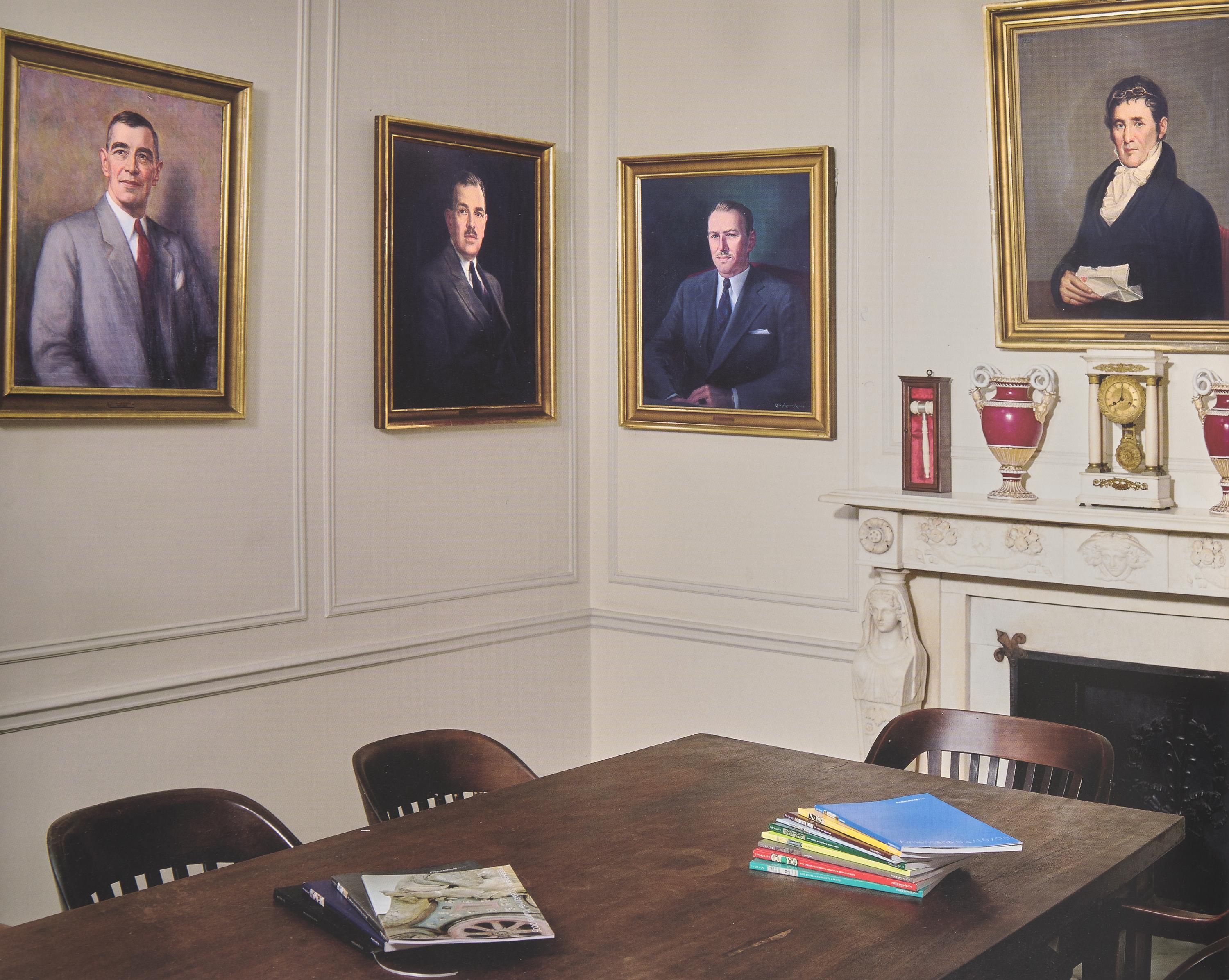
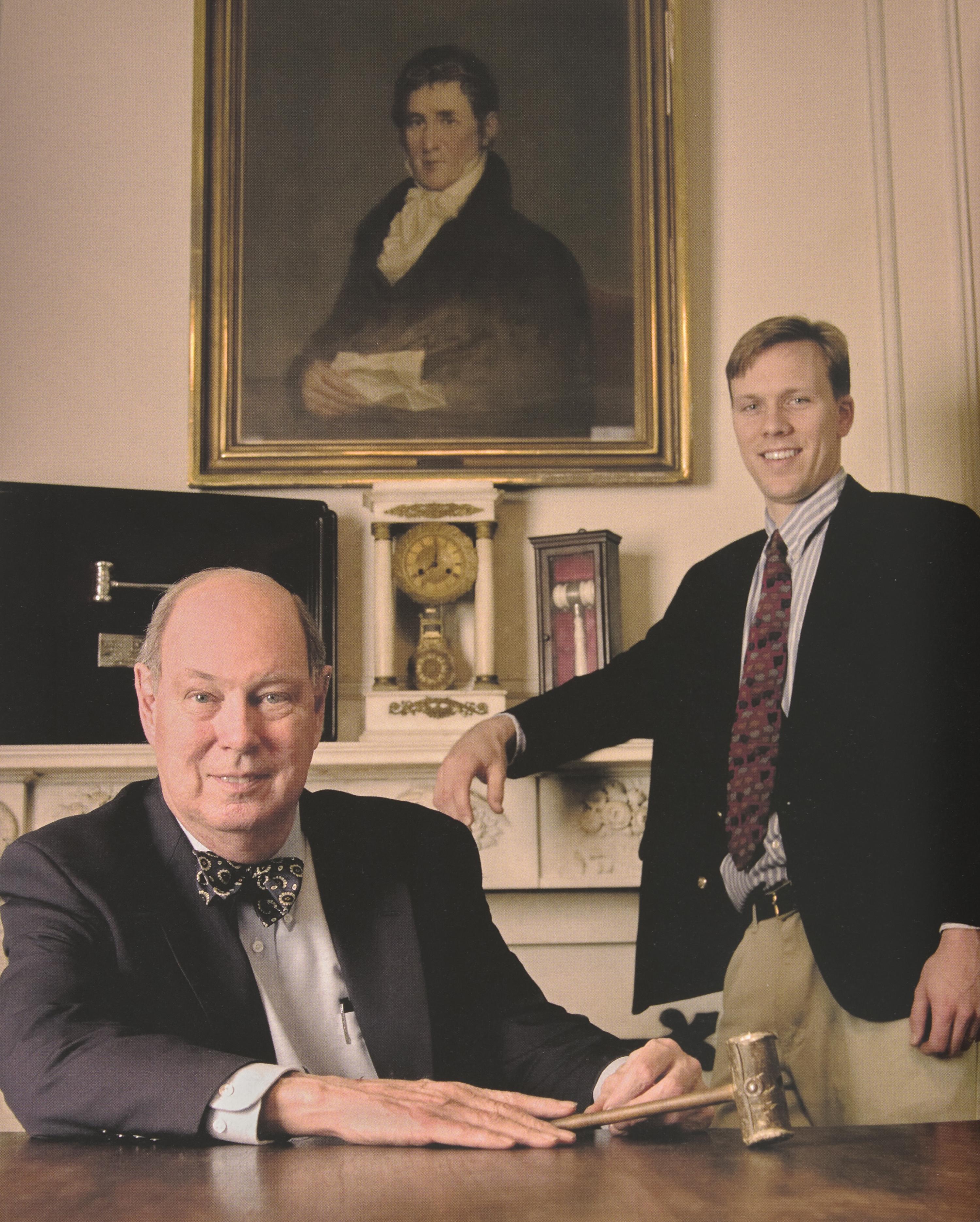
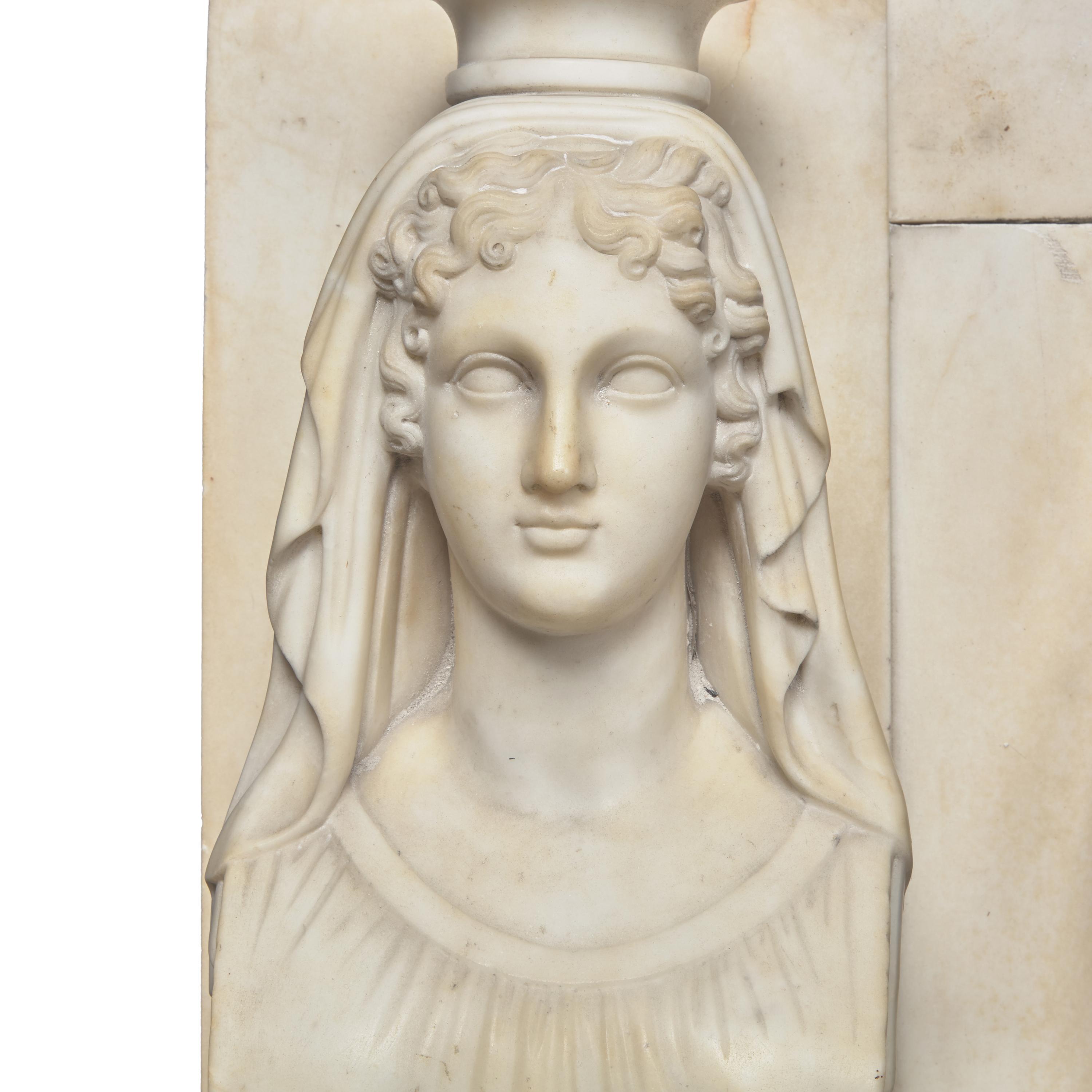
Until 2019, this mantel was installed in the boardroom of the historic 1923-1924 Samuel T. Freeman & Co. building, located at 1808 Chestnut Street. This structure is America's first purpose-built auction building. A photo showing the mantel in situ is found in Roland Arkell & Catherine Saunders-Watson, The Vendue Masters: Tales from Within the Walls of America's Oldest Auction House (Antique Collectors' Club, 2005), pg. VI.
According to Freeman's family tradition, this mantel was one of a pair that was originally ordered for Joseph Bonaparte's country estate, Point Breeze, located near Bordentown, New Jersey.
Note:
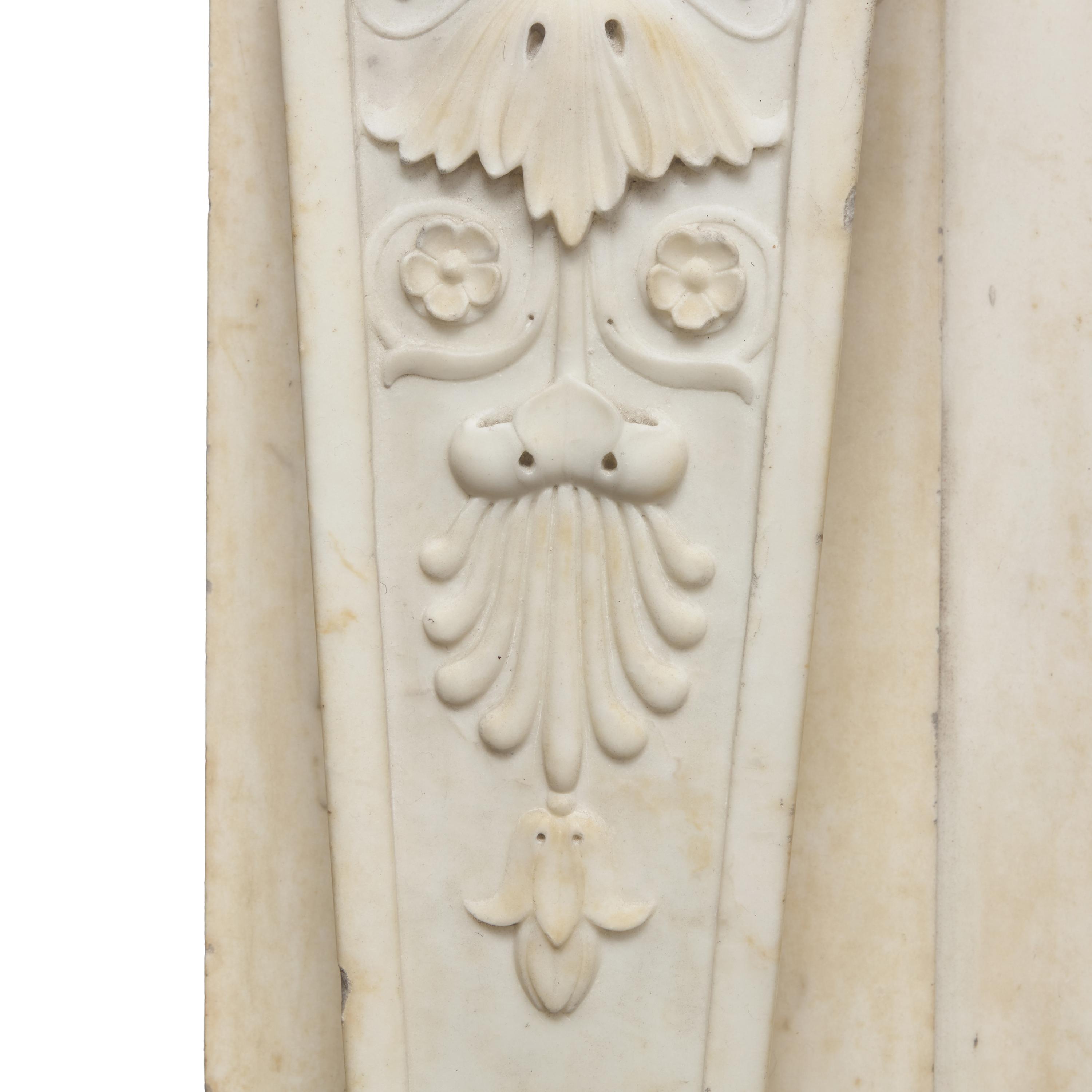
Joseph Bonaparte's large country home, Point Breeze, was built along the Delaware River near Bordentown, New Jersey, on the grounds of the former home built by Stephen Sayre (1736-1818). In 1820, Bonaparte's house was partially destroyed by fire, and he had it re-built as a more expansive dwelling. It is possible that this mantel, dated to the same period, was made for the new construction. These types of mantels, with carved caryatids and Neoclassical motifs, were widely fashionable during the Classical period, and examples were imported from Italy to the United States. Specifically, Thomas Appleton, an American consul in Livorno, Italy, supplemented his income by importing marble mantels and other objects to clients along the East Coast during the first two quarters of the 19th century. Wendy Cooper mentions Bonaparte's Point Breeze as a primary example of a house that incorporated such mantels. See Wendy A. Cooper, Classical Taste in America: 1800-1840 (Baltimore Museum of Art, 1993), pg. 47.
In Joseph Bonaparte en Amérique: 1815-1832 (Paris, 1893), author Georges Bertin describes a pair of white marble fireplaces installed in the great salon (translated from French), "It was in this vast drawing room—possessing an air of grandeur and even a slightly official aspect, with its six windows, its two tall white marble fireplaces (a gift from Cardinal Fesch), and its entrance facing the lake—an entrance overlooking a flight of six steps flanked by four columns, forming a charming portico topped by a balcony—it was in this very room that the ex-monarch delighted in receiving distinguished foreigners or compatriots passing through America who felt it their duty to come and pay him their respects. It was there that those scenes of noble emotion—restrained only by a tender dignity—unfolded; scenes that, on countless occasions, lent Point-Breeze the character of a true royal palace, and during which those present would, in their mind's eye, see rising behind the figure of the Count of Survilliers the shadow of the former King of Naples."
Regarding the pair of mantels, he elaborates (translated from French), "The monumental fireplaces—sent to his nephew by Cardinal Fesch (a method of heating then quite rare in America, where the local fuel supply encouraged the use of stoves)—were veritable works of art, by virtue of the majestic beauty of their lines and the richness of their carvings." See Georges Bertin, Joseph Bonaparte en Amérique: 1815-1832 (Paris, 1893), pgs. 89-90.
While the subject mantel may not be one of those gifted by Cardinal Fesch, the description illustrates the importance of incorporating elements from Europe in Bonaparte's grand house. On June 25th, 1847, Joseph Bonaparte's nephew, Joseph Lucien Bonaparte, who inherited Point Breeze following his uncle's permanent departure from America, sold off the contents of the house at auction with Anthony J. Bleecker Auctioneer. While the mantel is not listed in the auction catalogue, it is plausible that it was sold at this time, if not by the subsequent owner of Point Breeze, Hamilton Beckett, who had the house torn down in 1850.
Literature:
Roland Arkell & Catherine Saunders-Watson, The Vendue Masters: Tales from Within the Walls of America's Oldest Auction House (Antique Collectors' Club, 2005).
Georges Bertin, Joseph Bonaparte en Amérique: 1815-1832 (Paris, 1893).
Wendy A. Cooper, Classical Taste in America: 1800-1840 (Baltimore Museum of Art, 1993).
The physical condition of lots in our auctions can vary due to age, normal wear and tear, previous damage, and restoration/repair. All lots are sold "AS IS," in the condition they are in at the time of the auction, and we and the seller make no representation or warranty and assume no liability of any kind as to a lot's condition. Any reference to condition in a catalogue description or a condition report shall not amount to a full accounting of condition. Condition reports prepared by Freeman's staff are provided as a convenience and may be requested from the Department prior to bidding.
The absence of a posted condition report on the Freeman's website or in our catalogues should not be interpreted as commentary on an item's condition. Prospective buyers are responsible for inspecting a lot or sending their agent or conservator to inspect the lot on their behalf, and for ensuring that they have requested, received and understood any condition report provided by Freeman's.
Please email ataggart@freemansauction.com for any additional information or questions you may have regarding this lot.