Back
Fine Art from The Estate of Angela Gross Folk
|
- Sale 4979
Live
| Philadelphia
Sep 20 | 7:00 AM EDT
Live
| Philadelphia
Sale 4979
| Philadelphia
| Philadelphia
Estimate$12,000 – $18,000
The life of Charles Frederick Ramsey was filled with art early and throughout. Born in Pont-Aven, the famous medieval French village from which Gauguin and his followers would spread Modern Art, Ramsey was the son of Philadelphia still life and genre painter, Milne Ramsey. Although the two eventually grew apart, Ramsey studied extensively, both in America (he was enrolled at the Pennsylvania Academy of the Fine Arts where he studied under William Merritt Chase and Cecilia Beaux) and in Europe, where he studied on his own and later as the recipient of the Cresson Fellowship Award, which allowed him to meet and work under Jean-Paul Laurens and William Bouguereau.
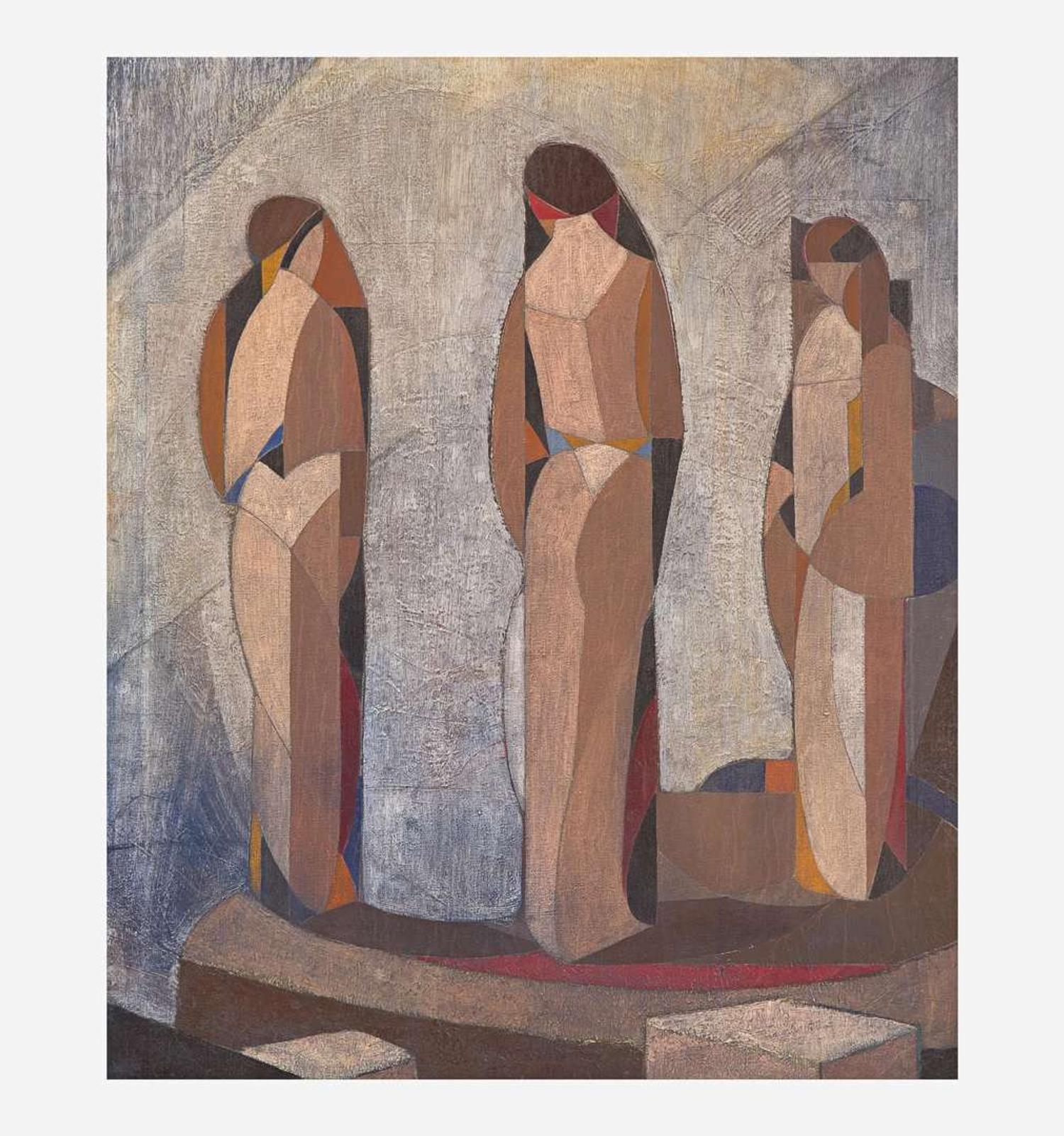
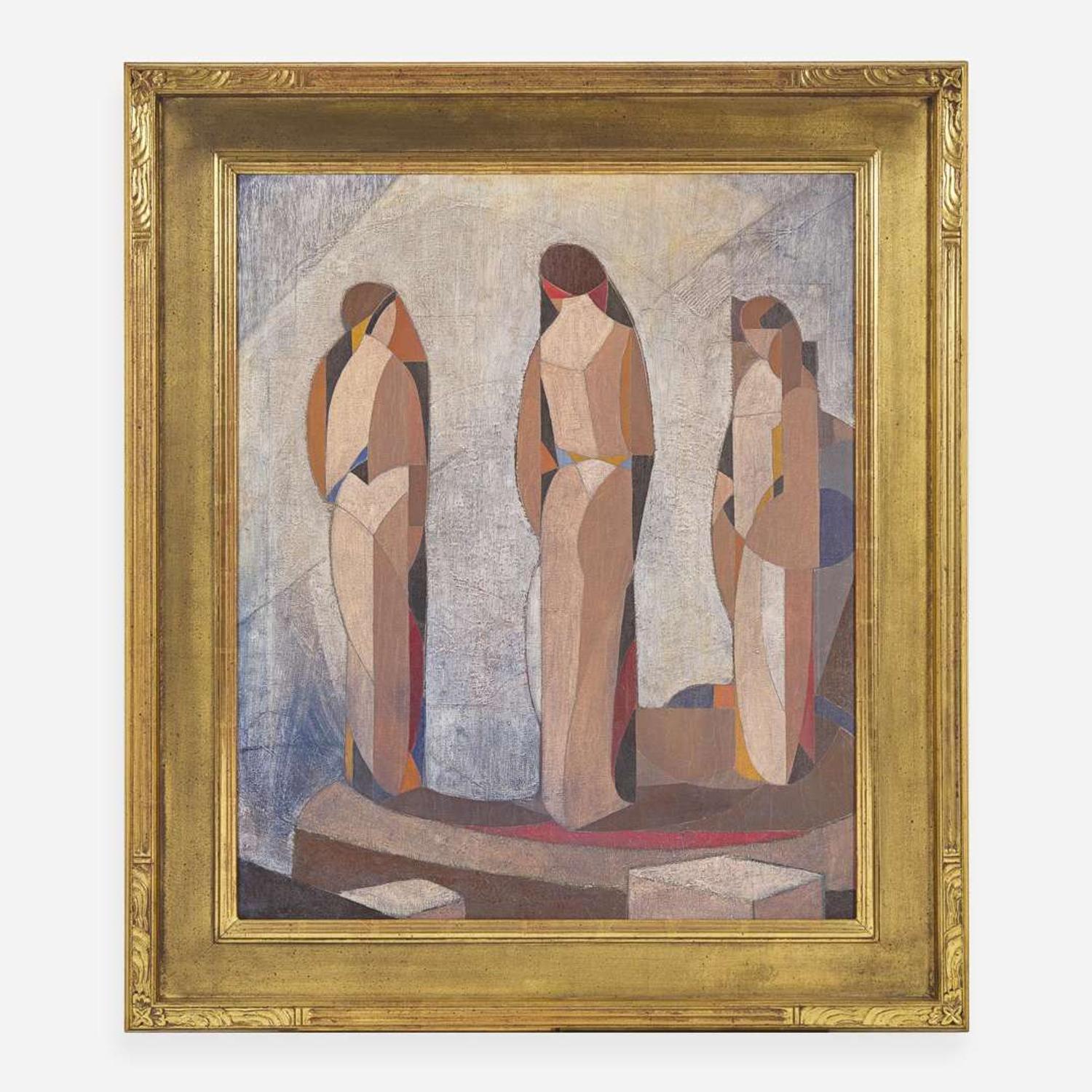
The group of Ramsey works from the Gross Folk Collection are reflective of the artist' much later style, which he developed in New Hope where he moved permanently in January of 1907. There, Ramsey developed a color abstraction theory which loosely echoed New York’s Synchromism avant-garde movement, and according to which color was the instrument necessary to obtain a perfectly balanced painting, just like a well-played note of music was the way to produce a symphony, thus drawing a parallel between color and music. In those years, Ramsey broke his canvases into flat planes and gradually placed bold hues of colors within precisely-defined geometric spaces, which he would spread in various shapes and sizes across the canvas so as to find the perfect combination–the one most pleasing to the eye.
The three works date from a period of intense fertility in Ramsey’s career, when the artist was influenced by the work of Charles Evans who, in turn, introduced Fernand Léger and Piet Mondrian to Ramsey. XXXVIII-2 and Cityscape display a very geometrical and colorful pattern that make it the true subject of the painting–a perfect blend of color and shapes arranged in harmonious proportions in order to obtain absolute harmony. While Chatter (Lot 61) still loosely hangs onto the figurative tradition, the other two lots focus on abstracted and flattened shapes, one meant to refer a known reality (Cityscape, Lot 63), the other conceived as a purely aesthetic exercise (XXXVIII-2, Lot 64).
Although many of Ramsey’s paintings were rarely exhibited outside of the New Hope colony, the last of the three works found praise in 1940 while on view at the Art Alliance of Philadelphia, prompting critic C.H. Bonte to write; "Among the various abstractions there is a glorious superiority to the group of four by C.F. Ramsey, identified only by Roman and other numerals. In their own way they are as agreeable to the eye and to those mental factors which determine aesthetic appreciation as time-toned tapestries." This sentiment still held some truth at the time of Ramsey’s death, as Charles Evans decided to include XXXVIII-2 in the 1951 Memorial Exhibition he held in his New Hope studio as a tribute to his late friend.
Property from the Estate of Angela Gross Folk, New Jersey.
To request further details about this lot, please email conditionreports@freemansauction.com
Please email conditionreports@freemansauction.com for any additional information or questions you may have
The wax-lined canvas in overall good condition, with no sign of inpainting as seen under UV light. With light craquelure (all stabilized) in the background in between the figures. The work would likely benefit from a very light clean.
To request additional information or access to more images, please contact Specialist Raphael Chatroux at rchatroux@freemansauction.com
Frame: 38 1/2 x 33 1/2 x 1 1/2 in.
The physical condition of lots in our auctions can vary due to age, normal wear and tear, previous damage, and restoration/repair. All lots are sold "AS IS," in the condition they are in at the time of the auction, and we and the seller make no representation or warranty and assume no liability of any kind as to a lot's condition. Any reference to condition in a catalogue description or a condition report shall not amount to a full accounting of condition. Condition reports prepared by Freeman's staff are provided as a convenience and may be requested from the Department prior to bidding.
The absence of a posted condition report on the Freeman's website or in our catalogues should not be interpreted as commentary on an item's condition. Prospective buyers are responsible for inspecting a lot or sending their agent or conservator to inspect the lot on their behalf, and for ensuring that they have requested, received and understood any condition report provided by Freeman's.
Please email for any additional information or questions you may have regarding this lot.