Made In Normandy | What is the School of Rouen?
Freeman’s October 27 sale of Impressionist and Modern Art features several artists and landscapes that spotlight the École de Rouen, one of the most distinctive regional expressions of French Impressionism and Post-Impressionism. But what exactly was this movement that links to Claude Monet and Camillo Pissarro?
IN THE FOOTSTEPS OF IMPRESSIONISM
Often overshadowed by the better-known Impressionist circles of Paris and Giverny, the École de Rouen nonetheless occupies an important place in the development of modern French painting.
Emerging in Normandy in the late nineteenth century, this loosely connected group of artists embraced the innovations of Impressionism and Post-Impressionism while developing a distinctive visual language rooted in the landscapes, architecture, and changing atmosphere of their native region. The term École de Rouen came into use in the late nineteenth century and was popularized by the critic Arsène Alexandre in the early twentieth century. Rather than describing a formal association with a fixed doctrine, it came to encompass several generations of painters united by their regional connections and their engagement with modern art, including artists such as Joseph Delattre, Léon-Jules Lemaître, Charles Angrand, and Charles Fréchon.
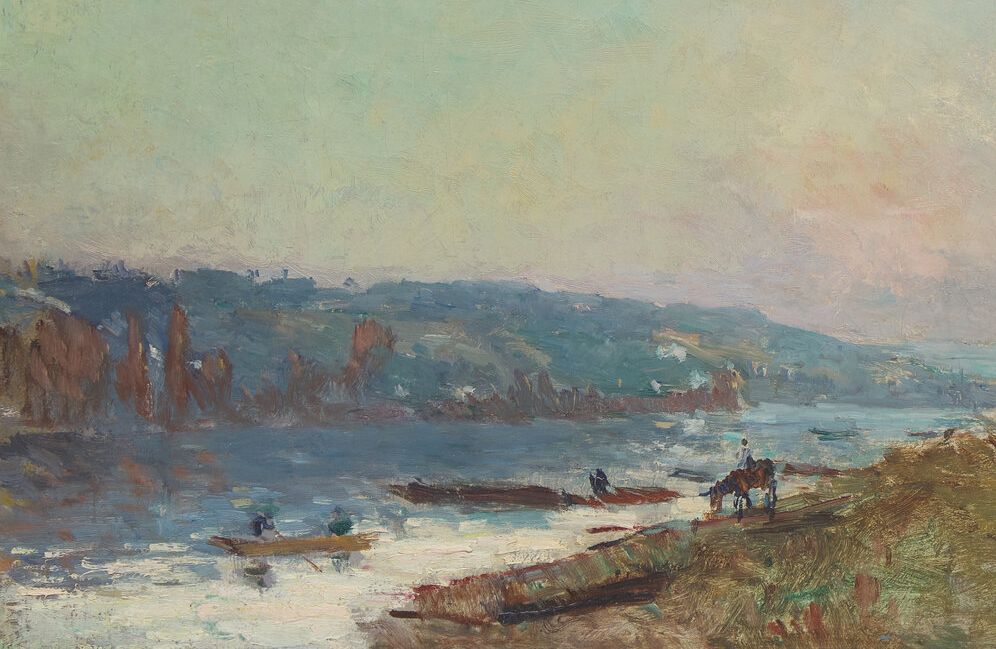
Lot 40 | Albert Lebourg (French, 1849-1928)La Seine à Saint Cloud, 1890oil on canvas
At the heart of their work was a shared interest in the effects of light and color on the everyday world. Their paintings frequently employed broken brushwork, luminous palettes, and an attention to fleeting atmospheric effects. Some explored the optical principles of Neo-Impressionism, applying small, distinct touches of color; others retained a more spontaneous, painterly approach.
What distinguishes the École de Rouen is precisely this diversity. Its artists did not simply imitate the Parisian Impressionists. They adapted the movement’s innovations to their own surroundings, capturing the particular character of Normandy's rivers, villages, and changing seasons.The Seine and its tributaries, the historic streets and churches of Rouen, and the surrounding Norman countryside provided an inexhaustible source of inspiration.
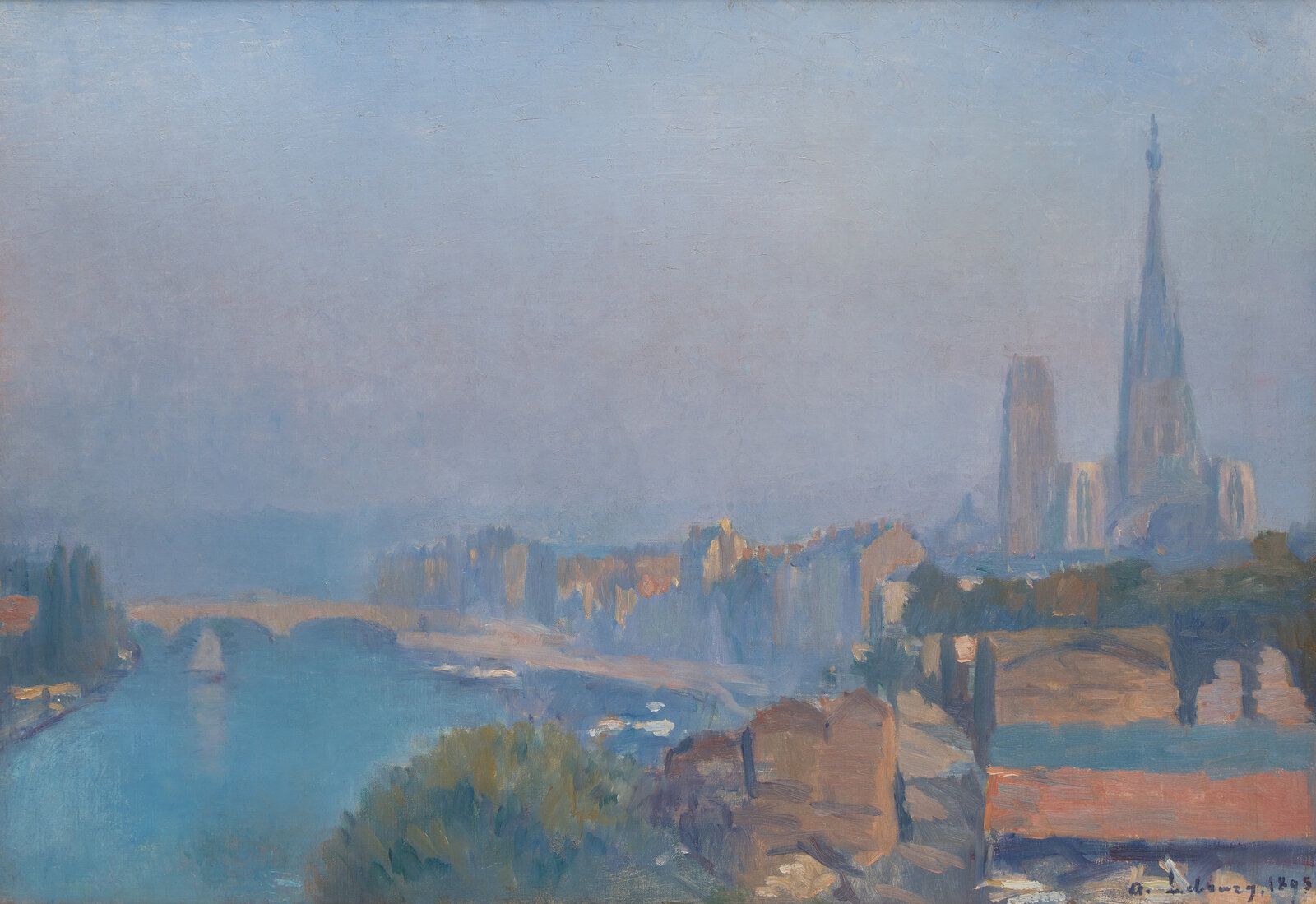
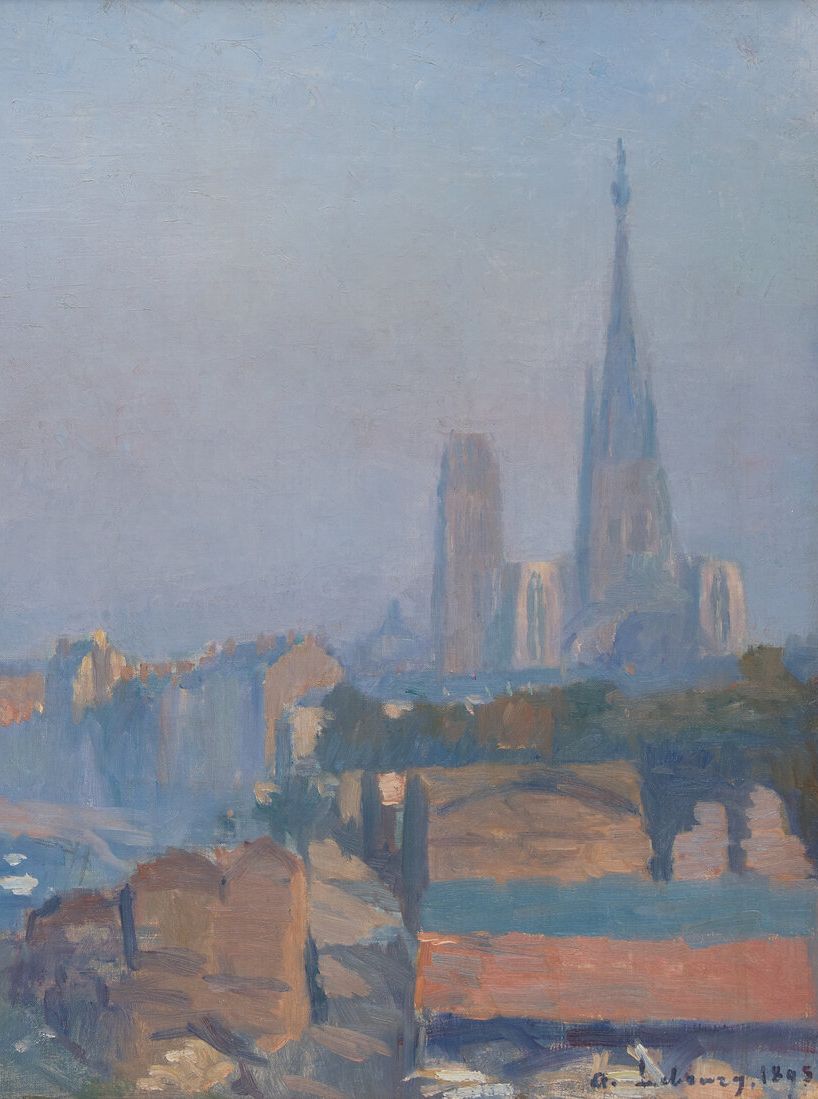
Lot 81 | Albert Lebourg (French, 1849-1928)Vue de la Cathédrale de Rouen depuis le Pont Corneille, 1895
ALBERT LEBOURG: THE POETRY OF THE RIVER
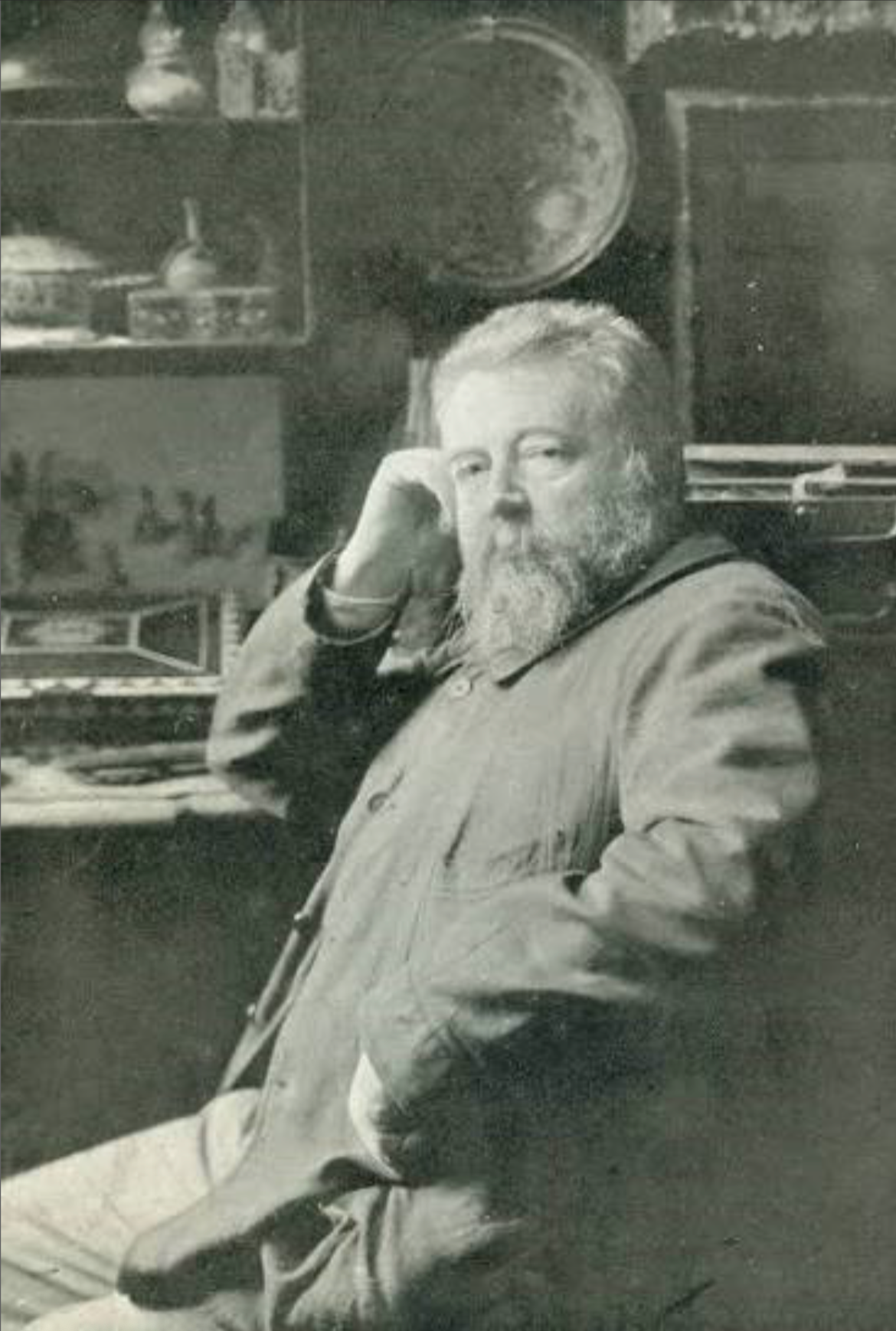
A central figure in this story is Albert Lebourg (1849–1928), who developed a highly personal interpretation of Impressionism through his sensitive depictions of rivers and landscapes. Although closely associated with Rouen, Lebourg also painted extensively elsewhere in France, including the environs of Paris and the valleys of Normandy. His work reflects a sustained fascination with water, sky, and the subtle transitions of natural light.
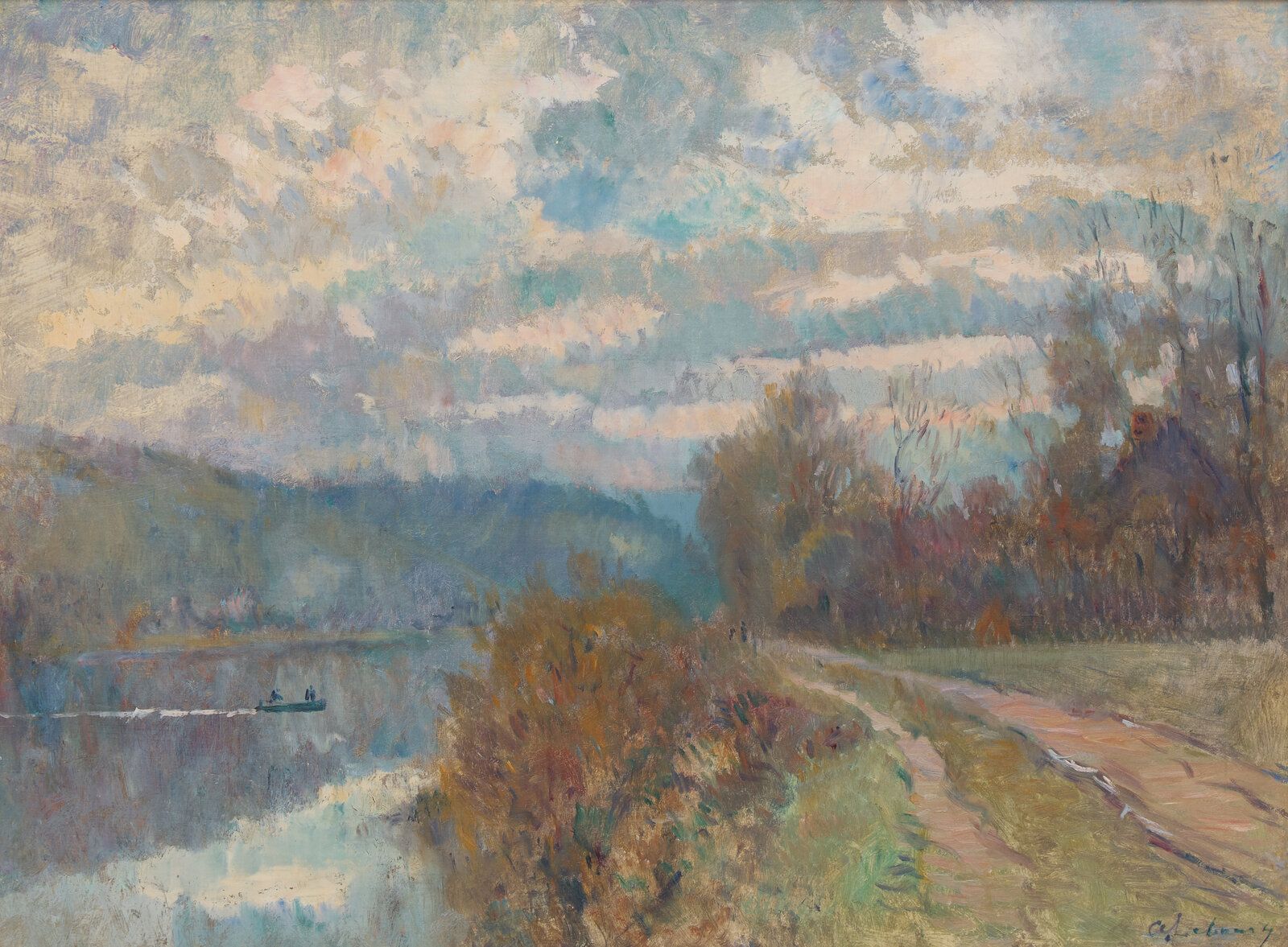
Lot 42 | Albert Lebourg (French, 1849-1928)Rivière et Chemin de Halage, c. 1900
Lebourg’s paintings are distinguished by their delicate tonal harmonies and fluid brushwork. Rather than emphasizing the monumental or the dramatic, he often found poetry in familiar landscapes: a riverbank, a towpath, a stretch of water beneath a clouded sky. His ability to convey the atmosphere of a place through nuanced color and relatively economical means is evident in the three paintings by Lebourg featured in Freeman’s upcoming 10/27 sale.
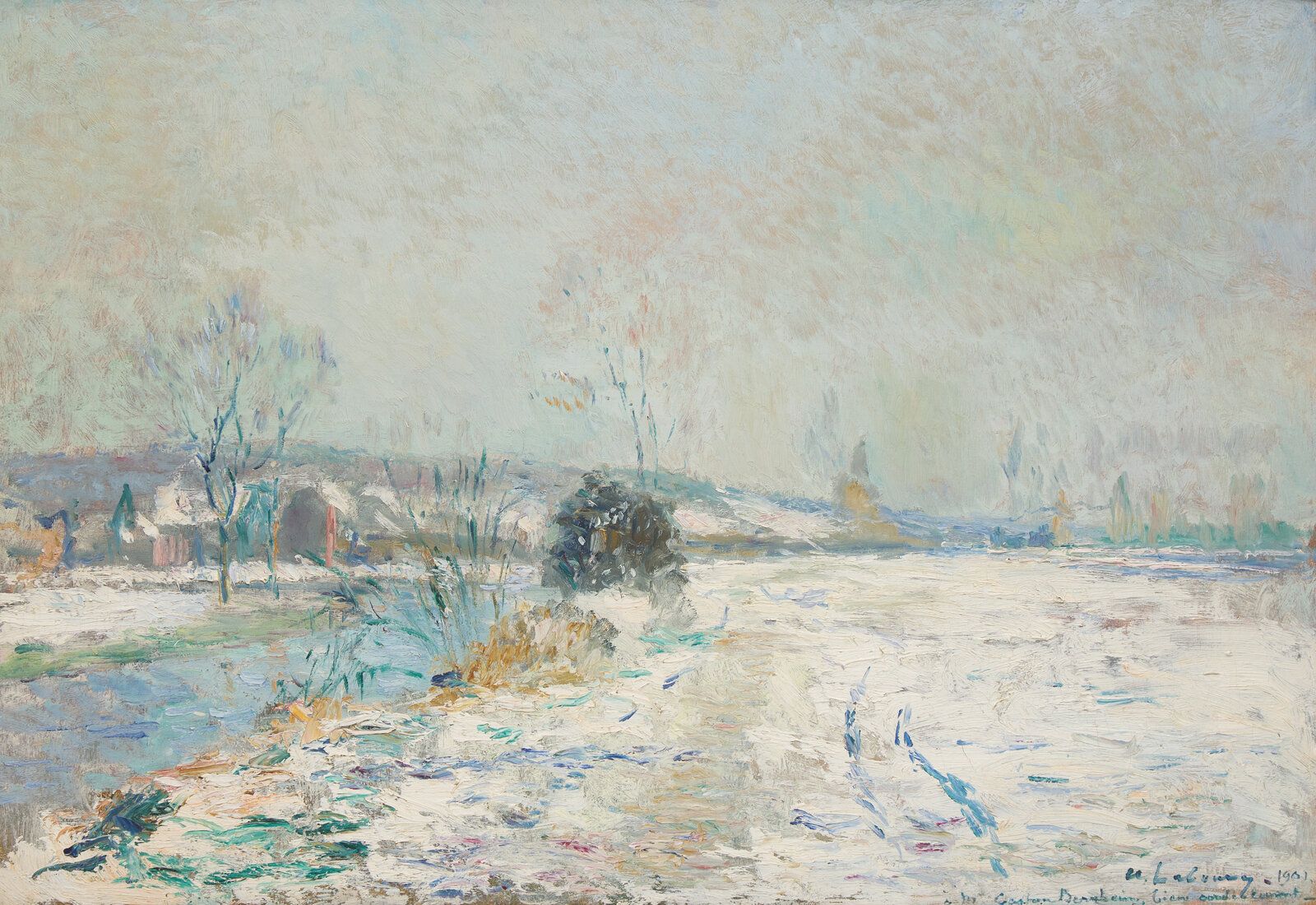
Lot 70 | Albert Lebourg (French, 1849-1928)Les bord de L'Iton à Hondouville, Effet de Neige, 1901
La Seine à Saint Cloud, dated 1890, and Rivière et Chemin de Halage, circa 1900 together demonstrate the enduring appeal of the river as both a motif and a vehicle for studying light. Les bords de l’Iton à Hondouville, Effet de Neige, dated 1901, turns to the Norman countryside in winter. The snow-covered landscape offers a different set of tonal challenges, inviting the artist to explore the subtle interplay of pale colors, reflected light, and the muted atmosphere of a winter day. Dedicated by Lebourg to the art dealer Gaston Bernheim, the painting also provides a glimpse into the professional relationships through which French Impressionist art circulated among artists, dealers, and collectors.
ROBERT ANTOINE PINCHON: A NEW GENERATION
If Lebourg represents the lyrical refinement of the Impressionist landscape, Robert Antoine Pinchon (1886–1943) demonstrates how the tradition evolved in the early twentieth century.
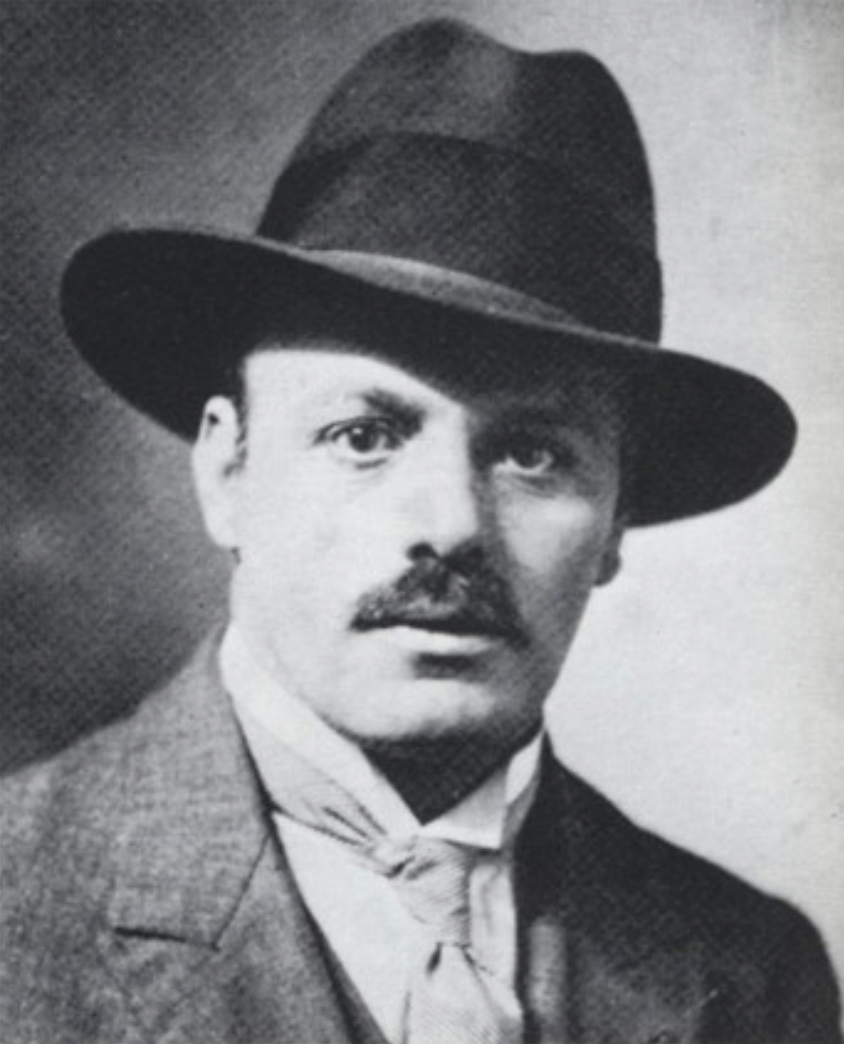
A leading figure of the École de Rouen’s second generation, Pinchon emerged at a moment when French painting was moving beyond Impressionism toward increasingly expressive uses of color and brushwork. Pinchon began to experiment with a stronger palettes and a more assertive handling of paint, in dialogue with the broader developments of Post-Impressionism and Fauvism. He was particularly celebrated for his landscapes, in which vibrant color and energetic brushwork brought renewed intensity to familiar Norman subjects. His approach retained the Impressionist interest in the visible world while allowing the act of painting itself to become more expressive.
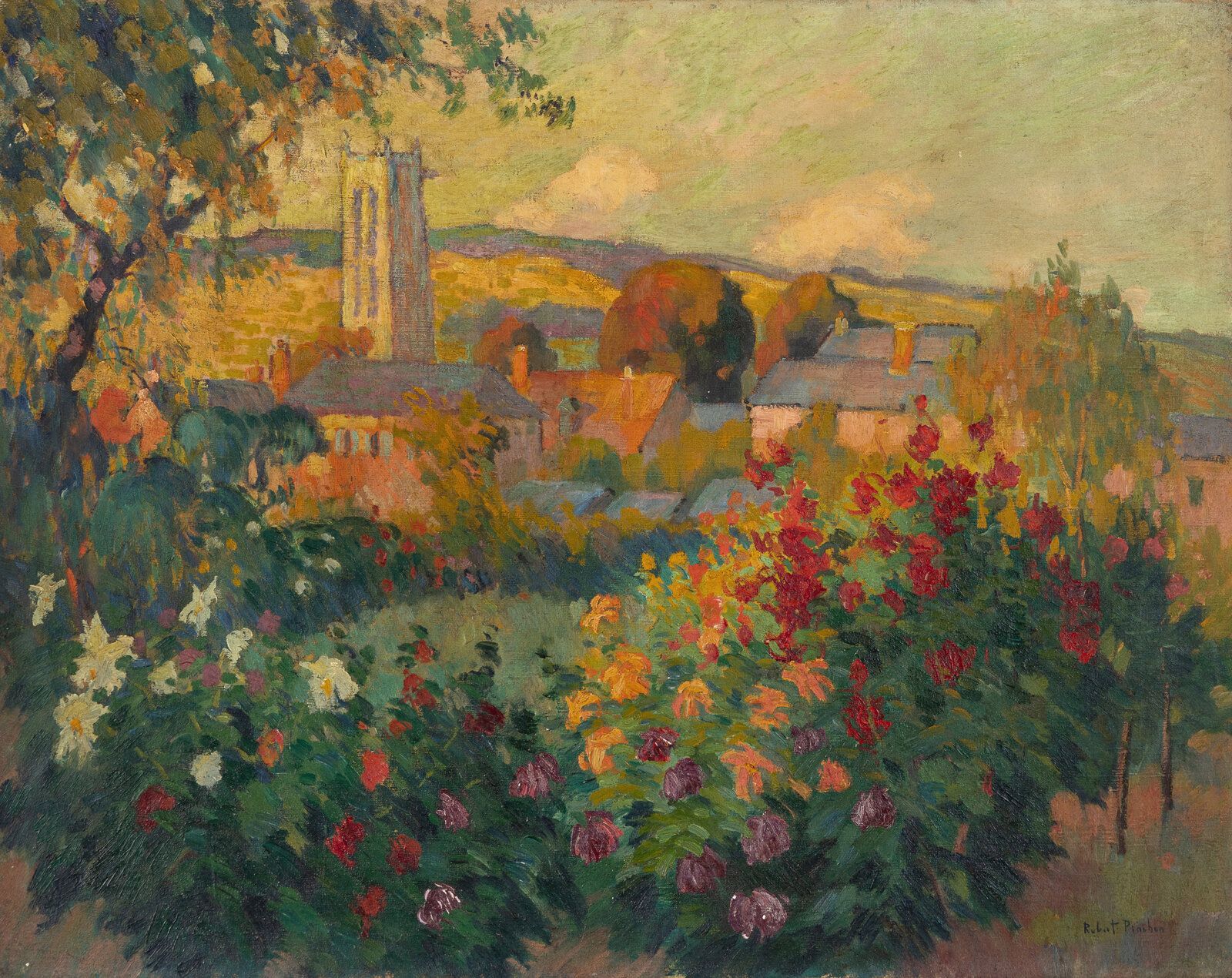
Lot 41 | Robert Antoine Pinchon (French, 1886-1943)La Tour Gothique de l'Église Saint Pierre de Carville à Darnétal
Freeman’s upcoming sale presents a compelling example of this approach in La Tour Gothique de l’Église Saint-Pierre de Carville à Darnétal. Freshly redsicovered, the painting depicts the historic tower of the Church of Saint-Pierre de Carville, situated in Darnétal, just northeast of Rouen. Dating to the early sixteenth century, the tower is an impressive example of Flamboyant Gothic architecture and a landmark of the region’s rich cultural heritage.
For Pinchon, the monument offered an opportunity to bring together two defining characteristics of the Rouen School: a deep attachment to the local landscape and a modern painter’s sensitivity to light and atmosphere. Rather than treating the tower as a purely architectural study, he approached it as a living part of its surroundings, where the enduring presence of history meets the changing conditions of the natural world.
The painting also highlights the continuity between generations of Norman artists. The first Rouen Impressionists had looked to the riverbanks, streets, and buildings of their region as subjects worthy of serious artistic investigation. Pinchon carried this tradition forward, demonstrating that local identity could remain a powerful source of inspiration even as modern painting continued to evolve.
