Jacques Adnet
The May 21 Design auction features a single-owner collection of nearly a dozen pieces by preeminent french 20th century furniture designer Jacques Adnet.
Originally trained as an architect, Jacques Adnet first came to prominence in the heyday of Paris’s Art Deco movement. He and his twin brother, Jean, established their first firm, J.J. Adnet, in Paris in 1916, and they exhibited in the 1925 Exposition Internationale des Arts Décoratifs et Industriels Modernes, where they gained notoriety–recognized for their vision and ability to stage areas as both furniture designers and interior decorators.
Despite their successful partnership, Jacques and Jean ultimately pursued separate careers: Jacques became Design Director at Compagnie des Arts Français (CAF), while Jean went on to become a sales manager at Les Galeries Lafayette. While at CAF, Jacques collaborated with numerous design luminaries, including Serge Mouille, Charlotte Perriand, Georges Jouve, and François Jourdain. Though Art Deco influences always surrounded his design, his furniture matured towards a restrained simplicity that would visually define his legacy.
Adnet's distinct pared-down aesthetic and exquisite craftsmanship garnered the attention of decorators and design houses. He was asked to design a variety of common rooms for luxury ocean liners, the Riviera Casino owner Frank Jay Gould’s mansion, the main meeting room in Paris for UNESCO’s international headquarters, and the French President’s studio. Throughout these prestigious commissions, he retained his vision and strove to create practical, useful pieces for everyday life, believing furniture should be functional and geometrically simple.
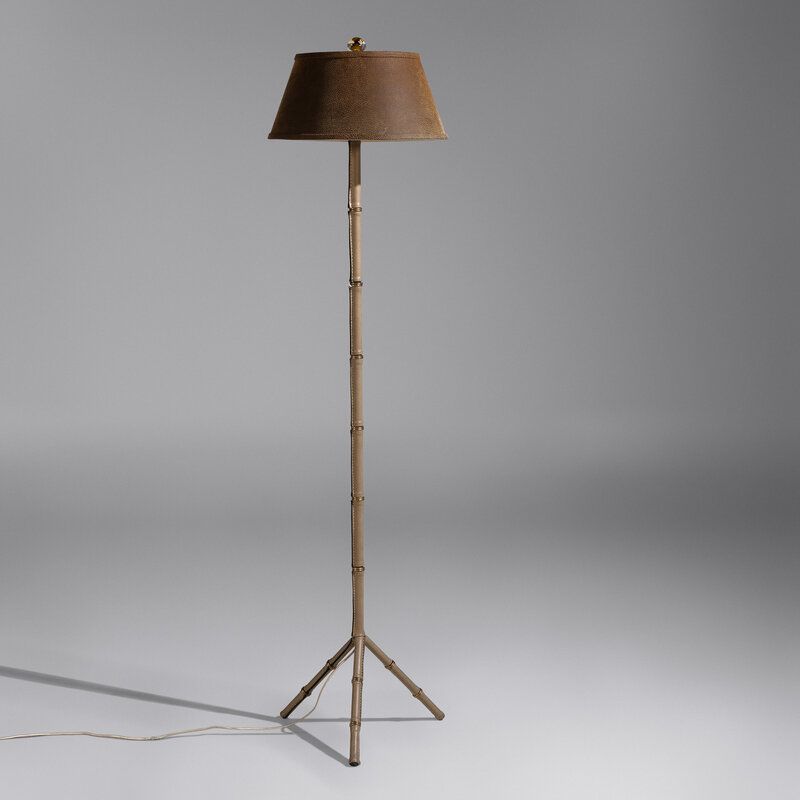
Adnet's most iconic designs feature hand-stitched leather wrapped on deceptively simple metal frames, and many of these were sold through the luxury powerhouse brand, Hermès. Though the collection on offer includes a range of Adnet's popular and lesser-known designs, each piece is a testament to his careful construction and reflects his unique take on luxury and commitment to simple, functional beauty.
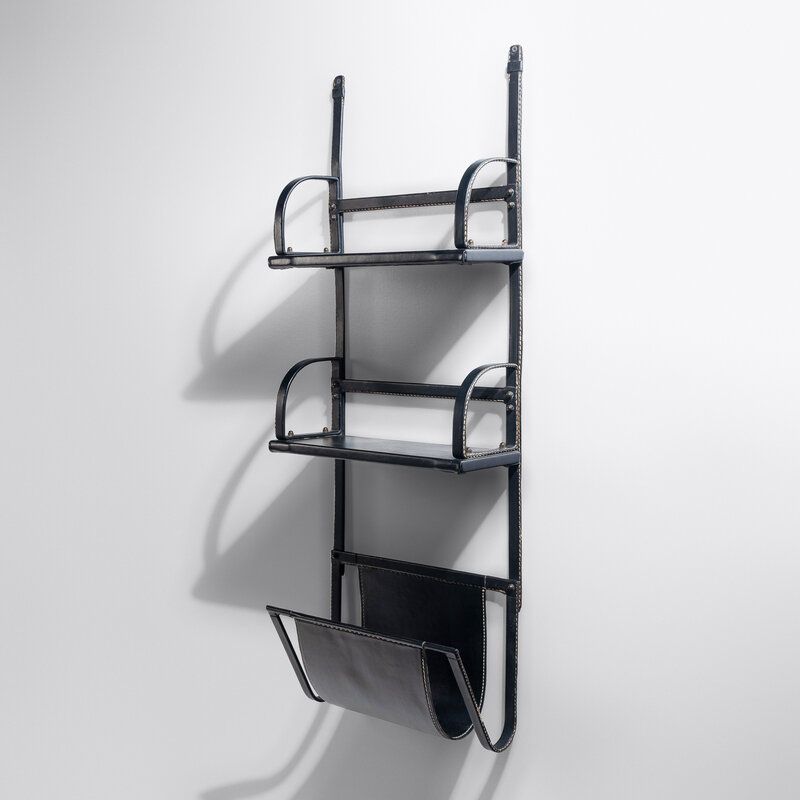
Amongst the more iconic designs is a circular mirror wrapped in a leather frame with an integrated, adjustable leather hanging strap. The piece’s buckles and straps emulate the fashionable styling of Hermès’ belts and handbags. A lesser known piece is a chic magazine rack (see page 32), whose leather-wrapped frame features an integrated loop handle for portability–a feature that is at once functional and also its most notable design feature.
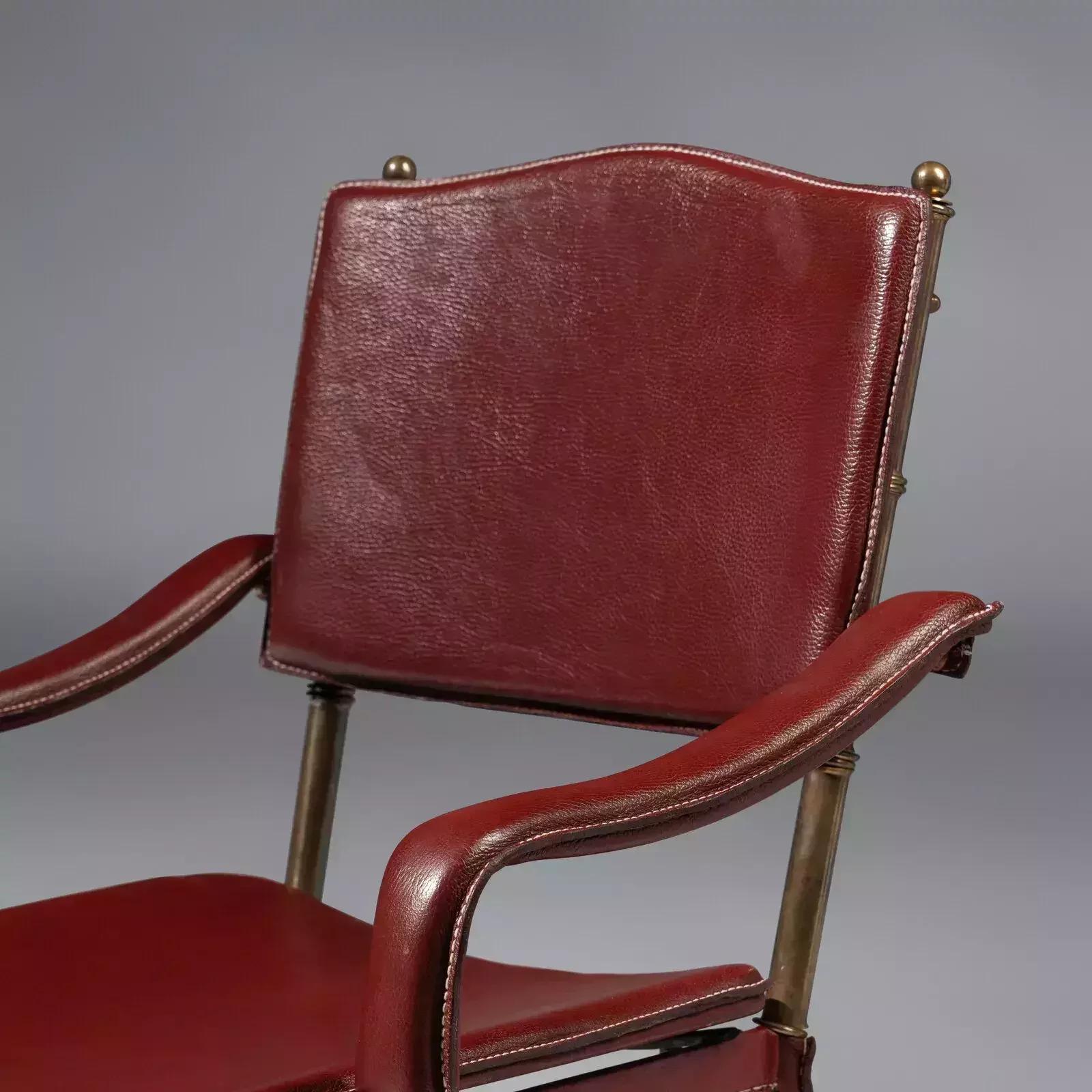
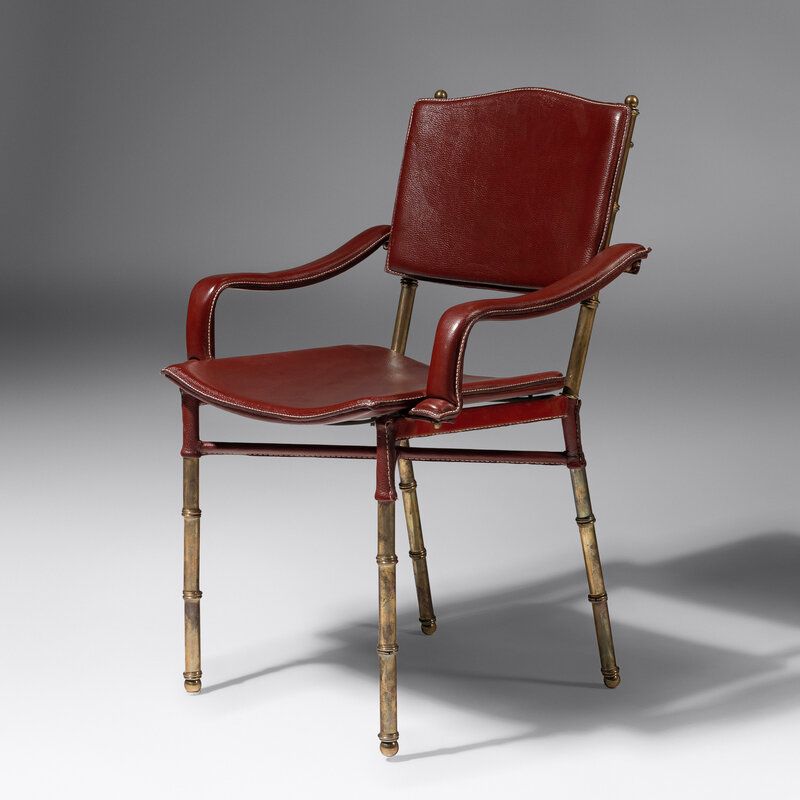
Perhaps the red leather and brass chair best epitomizes Adnet’s work from this period. The alluring warmth of the leather is accented with exquisite exposed stitching in a contrasting cream tone celebrating the fabrication. Featuring a simple frame and a restrained use of curved elements, the unexpected faux-bamboo brass legs give the chair a hint of attentive exoticism.
Though heavily focused on the work of Adnet, the collection also includes works by other European masters of design, including Piero Fornasetti, Alessandro Pianon, Gio Ponti, and Napoleone Martinuzzi, among others.
Featured Images:
Lot 9 | Jacques Adnet (French, 1900-1984) Leather Covered Mounted Shelf, c. 1960 France | Estimate: $3,000 - $5,000
Lot 1 | Jacques Adnet (French, 1900-1984) Saddle Stitched Leather Armchair, c. 1950 France | Estimate: $5,000 - $7,000