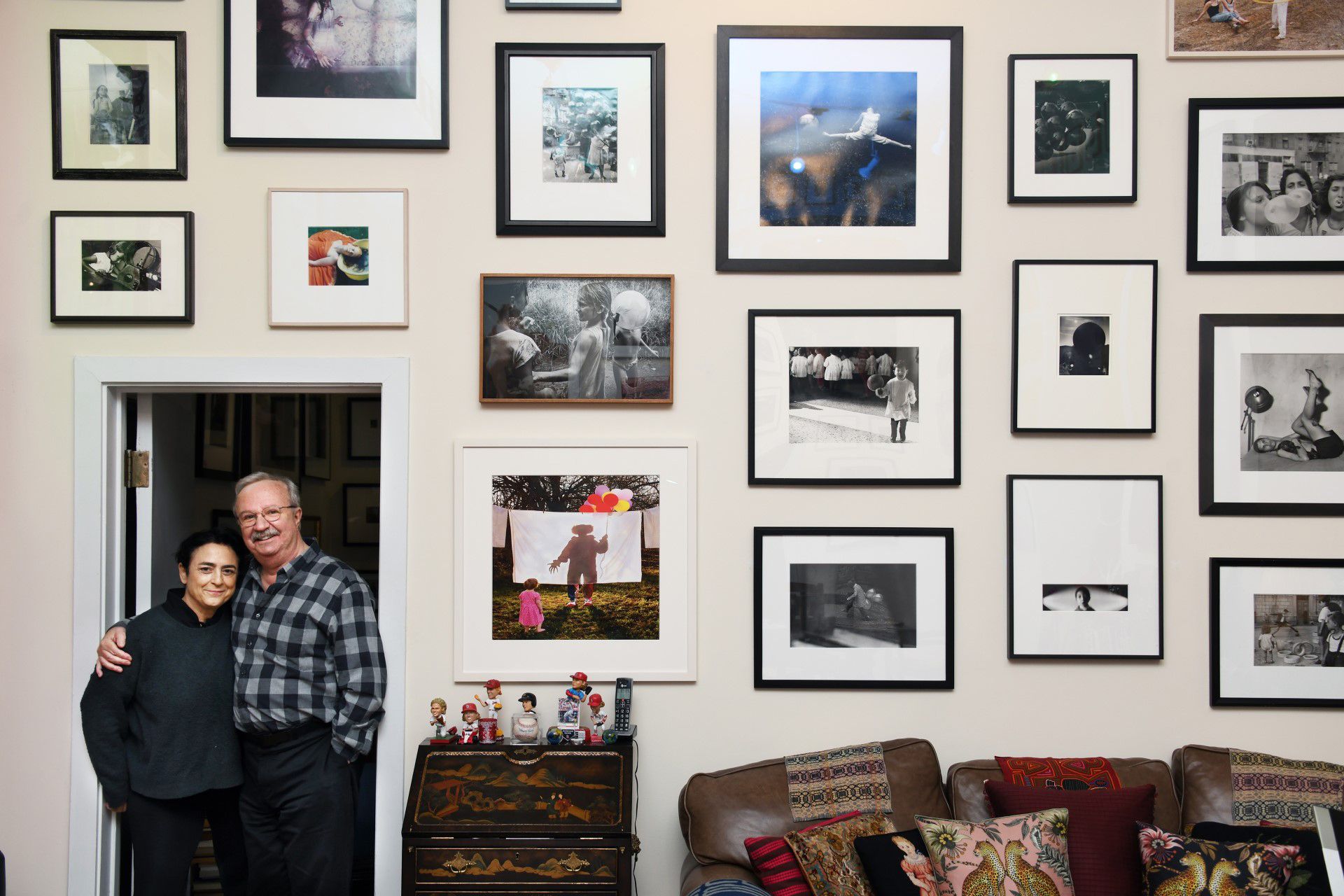
Interview: Joe Baio in Conversation with Laura Paterson
Hindman is thrilled to present Joe Baio in conversation with Hindman’s Director and Senior Specialist of Photographs Laura Paterson. Ahead of our New York auction Forever Young: Photographs from the Joe Baio Collection, hear Joe speak about his experience with collecting, how he got his start with photography, and this showstopping collection coming up to the auction block.
Laura Paterson:
Hello, Joe. What prompted you to start collecting photographs?
Joe Baio:
When I had my children, and even before that, I was a casual photographer. As they got older, I spent perhaps obsessive amounts of time taking pictures of them. We would go on vacation, and I would take 115 rolls of film and, shoot them, so to speak.
At a certain point, of course, they would say, "That's enough, Dad, put the camera down. We're on vacation." From there, I took a bunch of courses at ICP, including, if you can believe it, seminars with Sally Mann, Nan Goldin and Larry Fink, the only area, the only art form that a complete rank amateur can actually rub elbows with a master. Which they were.
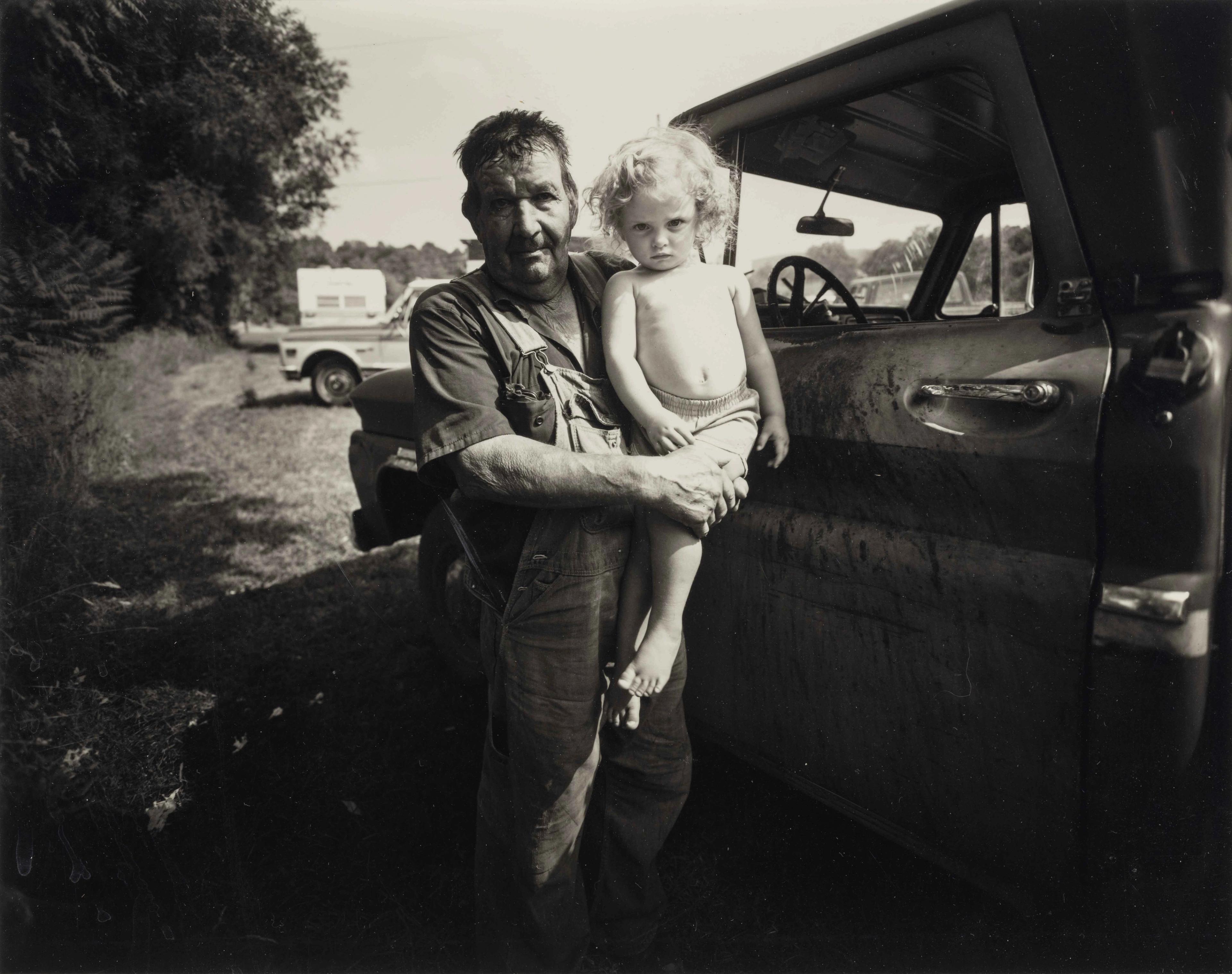
Lot 34 | Sally Mann (born 1951) | Tobacco Spit, 1987 | Estimate: $5,000 - $7,000
It's a little less so now that they make money, but back then, this was 1988 and '89, it was a very different era. So, seeing these amazing photographers and them showing the work, and Sally Mann in particular laying out five or six examples of, let's say, Emmett, the last time he modeled nude, showing how she didn't get it, she didn't get it, she didn't get it, over a two-year period. And then, the hand of God reached in and created that remarkable picture, where his finger's just barely touching the water, the sky is perfect, the trees are behaving, and his gaze is magnificent. I, of course, would've accepted any one of the earlier ones with great joy.
So, I caught on that these folks know what they're doing, (laughs). And it got to be a bug. I'm a bit obsessive; obviously, any collector is. So, I started collecting and really, you don't start as a collector, you start as kind of an acquirer. I didn't have any grand scheme or plan. In fact, I know that one of the things that you've been interested in is what's the first thing I ever bought? I'm jumping to it. It was a portfolio, not a single picture.
I saw Sally Mann's show, Immediate Family, 1989, while I was taking the course. I remember walking through, saying, "This is the most remarkable thing I've ever seen." I did not buy anything because I was afraid, and they were expensive, $3,000 each. So, (laughs) of course, I should have bought the whole show.
This is what got me started. And you start by buying a certain number of things; that started in 1989. By 1994, I think, I considered myself a collector because I had more pictures that I could hang. That was sort of my own internal definition of ... that's when you're collecting when you can't even see them all. And from '94 on, it just took off like a rocket ship and has been a great source of joy for me.
LP:
What are you looking for now when you're collecting? What attracts you?
JB:
Well, the thing about collecting is, now there's a big body of work that I have, and it's all related to childhood and adolescence, family. But there are all these sub-themes that are running through. You know that when I hang the work, we take it down every year, and put up a new hang. I have all these sub-themes. And it could be geographic, Eastern photography; it could be emotional, sheer joy. It could be water. It could be anything: athletes, kids in trouble. I have an endless supply of alternatives.
So, with this body of work that I have, I'm sort of looking for things that will supplement and make the collection more playful, more interesting to me, and give me more opportunities. But ultimately, the image itself has to wrestle me to the ground.
LP:
Like the Heath.
JB:
That's right, Dave Heath is a good example. But really, it's almost true for everything I've ever gotten, you know? At some point, it takes my breath away.
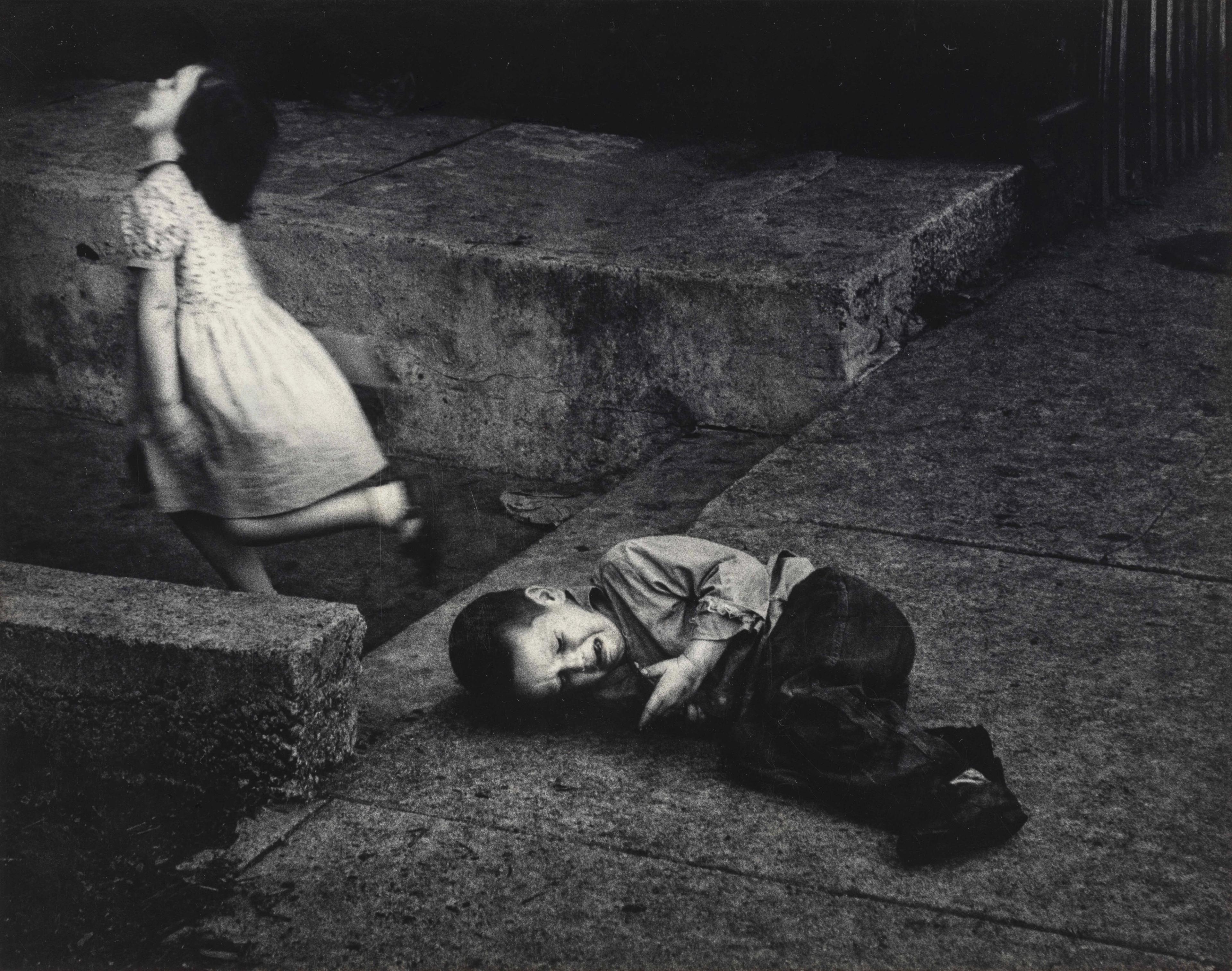
Lot 28 | Dave Heath (1931-2016) | Vengeful Sister, Chicago, 1956 | Estimate: $10,000 - $15,000
JB:
I don't buy things instantaneously, I usually let them marinate a bit. My first big fair was AIPAD in 1998. I remember just being absorbed. I bought 14 pieces. I remember every piece; I remember how I felt when I saw it.
It's an idea of building something. And that way, when I hang, if I have an upcoming theme of sports, and I don't think about that as I'm looking. But when I see an image and it's Roy DeCaravain a playground, kids in a playground, that one might be oh, my goodness.
Now, the image has to be commanding of my attention and my feelings. After that, I think about, does it fit? You would think that limits the amount that you would collect; it actually is expanding the possibilities and it's just so much fun.
LP:
Do you find yourself gravitating towards more contemporary photography versus historical photography?
JB:
No. No, not really. It could depend on the fair, right? There was a New York fair that just happened, and it was predominantly contemporary. So, that sort of puts you in the mood. I also thought it was a good show.
But I have a lot of vintage and traditional work and street photography and studio photography, and some unknown.
But for the most part, my tastes are very broad, and I'm open to being surprised, a big part of what I like.
LP:
Yes. The curious collector. That's nice. My next question is what prompted you to sell this group of photographs from your larger collection?
JB:
Well, as you know, I've been doing this for quite a while and I have probably more photographs than I will need, (laughs). It's not about "need", it's about love. So I had to make a decision: am I a collector or a collected? In other words, (laughs), am I done? Because I can keep doing this forever, and you must identify what it is that you love and want to continue to do. I have seven aspects of collecting, but one of them obviously is buying work and adding it to the collection. Did I want to stop that? Because at a certain point that can happen.
I didn't want to stop. I loved the collecting aspect of it. So, by selling this group, I'm creating the means to continue the hunt, the search, and wrestling the picture down to the ground and putting it in my collection. I'm sort of going to be net neutral.
So, what goes out will come back in, in a different form, because that's a great part of the fun. Every picture that's in this sale I have already had up, sometimes multiple times, in the decades that we've been doing hangs. And I take pictures of the pictures as they're hanging. So, I still have them all.
Once you owned one of these it has a special place. They’re still part of-
LP:
Still part of the chain of ownership.
JB:
That's right. All part of the chain. And anytime I see another version of it, or even mine, it echoes in whatever I've already had, another source of joy. So, it stays with me even when it's gone, and it provides the means to keep this crazy passion going.
LP:
Yes, your children will support you.
JB:
Yes. That's the idea, (laughs).
LP:
Wonderful, we’ve almost come to the end of my questions. I wondered if you had any favorites in the selection that you're quite sorry to part with?
JB:
You had told me before you were going to ask me that, so I went through the catalog with that in mind. And every time I turned the page, I was, "Oh! Oh." "That one? Oh, no." I've had sales in the past, in part because of a divorce, so that was a painful separation. But I do understand that this is all temporary. And in that sense, yes, the pang would be there. Every photographer who has a work that's in the sale, has another work that's still in the collection. So, I didn't say goodbye to Robert Frank.
I'm not saying goodbye by any means to Justine Kurland, although I'm selling one piece I just acquired, 32, from her Girl Pictures series, which I'm going to hang around the upper floor of my apartment.
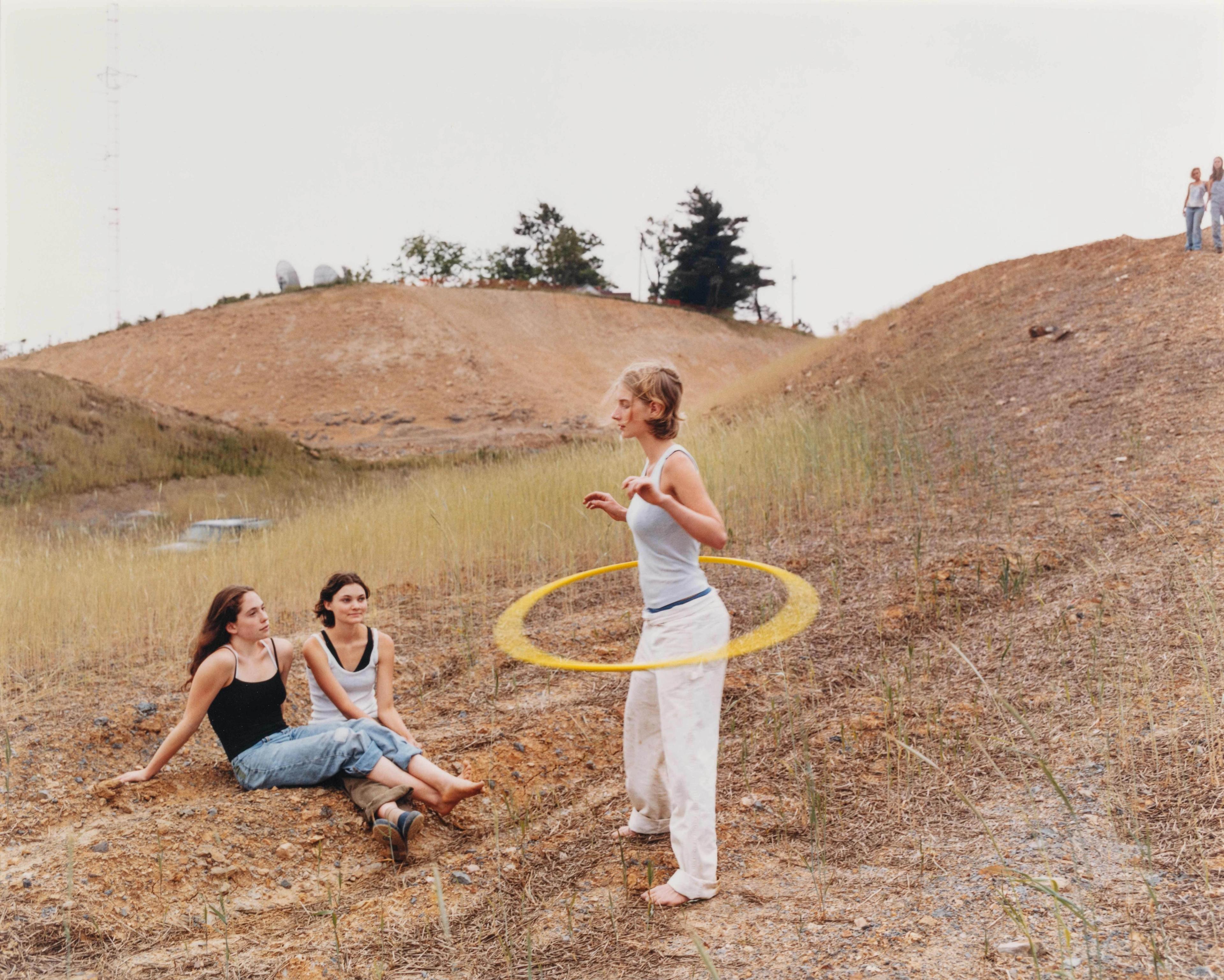
Lot 82 | Justine Kurland (1969) | Hula Girls, Christianburg, Virginia, 2000 | Estimate: $1,500 - $2,000
That's true of every photographer except one: Outerbridge. I only had one of his works; it is such a quirky, unusual, and remarkable photograph. Everything about it, (laughs), the pose, the background ... It's just wild, and intriguing that that photographer, who really is unique in the pantheon of photographers.
LP:
Very interesting guy.
JB:
He was a very interesting guy and really, an experimental photographer in lots of ways, and yet also, he did advertising and other stuff. I mean, just a really fascinating person. So, he's the only one that I don't technically own anymore, so I'll probably be on the lookout for Outerbridge going forward; we'll see. But everybody else is still part of the family.
LP:
My final question is you've been collecting for decades now, and you know the ropes, and you have a very particular sensibility. Do you have any advice that you'd give to someone who's starting out on the journey of collecting photography?
JB:
Sure, I try to keep it simple. I work at a law firm and I'm starting up talks for young collectors, people who want to do something - they don't necessarily know what - and I'm going to talk to them about opportunities, the benefits, et cetera, et cetera.
A couple of things that I would say as sort of a base: number one, don't even think of yourself as a collector et, if you're really just starting. It's too vast. I mean, you could be intimidated by somebody who has 6,000 prints, or 500, or 200, and an extreme focus.
Relax. You have walls, you want beautiful things on the walls? Start with that. Figure out what you like, what you love, and then go about it.
Now, you must learn how to go about it, and that's where the fear factor is. You must recognize all these impediments to your collecting, and kind of let loose. For example, "Well, boy, if I spend $3,000 on this, how much will I get later? What is it worth? Are they going to make another copy?"
Think of a beautiful work of art that you're going to live with for a long time. And maybe you won't. Maybe your tastes will change. But for now, this thing has taken your breath away.
Think of it as it brings me as much joy as Starbucks coffee and croissants every day. You've paid for the $3,000 picture in one year. Now it's free, right? Now you have this beautiful thing that you live with. Are you getting $10 of joy a day out of it? Then it's free, basically.
So, don't worry about resale and they can make another one and maybe somebody else has it. That's an important thing for you to eliminate. And, the fear of, "Am I getting ripped off? It's too intimidating. I don't know what I'm doing." You don't have to know what you're doing. It's a relatively modest beginning, keep it as such, and proceed as the emotions and as your pocketbook allows you. I started with this one portfolio, and who knew?
LP:
What was it?
JB:
(laughs). It wasn't even childhood or adolescence. It was a Double Elephant portfolio of Ralph Gibson.
LP:
Ah. Fascinating.
JB:
... my partner was involved with Double Elephant, and he said, "Look, there’s this thing, you get 15 pictures, you can put them up. And then in a couple of years, you can donate them, and they'll be worth more." So, it truly is free. So, I said, "Oh, that sounds interesting."
And I did donate the Ralph Gibson one, but the next one was a Larry Fink... and I couldn't donate it. That was a good sign for me. I wanted to keep it. So, that one and a Mary Ellen Mark one, I kept them. And then I realized, "Well, I don't need that part of it. I'm just going to now start collecting." And then I went to auctions, and of course, I'm not suggesting any young collector go directly to auctions, but I kind of did that early. I don't know why, even before gallery visits.
LP:
Although if it's a decent auction specialist, they're quite a good touchstone on what people should be looking at and whether it's a "good buy". So, people shouldn't necessarily be afraid of auctions.
JB:
No. They're not. My fear always was, "Okay", I'd look around the room, and that was when everybody was in the room. Which was a scary moment; you'd see Larry Miller, Howard Greenberg, Barry Singer from ...
LP:
These are big gallerists.
JB:
... the West Coast.
LP:
Yes. All the big people.
JB:
Yeah, they were all in there, right? Now I'm raising my stupid little paddle, and I know more than they do? That could be a thought. And then I thought to myself, "Well, no, they have to be able to sell it for a lot more, because they're trying to make money. I just want the thing." So, I had room, in a sense. And one of the pieces that I won really changed my collection. It was in 1990... when did I buy that? '99. It was an Atget, from the Tristan Tzara collection.
LP:
Oh, I remember that so well.
JB:
A stunning picture. The Organ-grinder, right?
LP:
Yeah. Those prints were extraordinary.
JB:
Just gorgeous. Well, this was one of four. I think they found one more since then, that he himself had printed, that is Atget. And it was in the collection of Tristan Tzara. It had this unbelievable provenance of one of the founders of surrealism, with a surrealist without even knowing he was, Atget.
It was the first one up. I bid. I had a number that I wouldn't go above. My hands were trembling. I had never spent anywhere near the amount of money that I was going to spend on this, but I was obsessed. I went to that number; someone else bid one more time, and normally, I'm disciplined in auctions, and I said, "All right, let's do it one more and see what happens." My heart beating, I raised my paddle. And after the auctioneer tried to squeeze a little bit more out of the room, there was nothing to be squeezed and I got it.
And I felt joyous! I really thought I was going to feel frightened, or "Oh, my God, what have I done?" And it was fantastic. 10 years later, I sold it for 10 times what I bought. Now, that was not the goal; it's never the goal, for me. I'm not looking down the road for what I can get. But that was a happy accident, which the picture gave me great joy.
LP:
And I think it is a vindication of taste, and faith.
JB:
Like for example, this upcoming sale, (laughs). If it sells, God bless America. If it doesn't sell, what is the consequence? I still own it. I still own the thing I love. So, the way I'm looking at this auction coming up, I hope it's very successful, for all of us.
LP:
Me too!
JB:
(laughs) If some don't sell and they stay in their happy home, I'll probably put them up in the next hang, just to celebrate.
LP:
That's a great idea.
JB:
That will be its own section: things I was able to maintain.
LP:
Well, Joe, thank you so much for your time, I have no more questions. Looking forward to a successful sale.