Imperial Majesty: The “Nine Dragons” Vase
By Ben Farina, SVP, International Representative, Asian Art
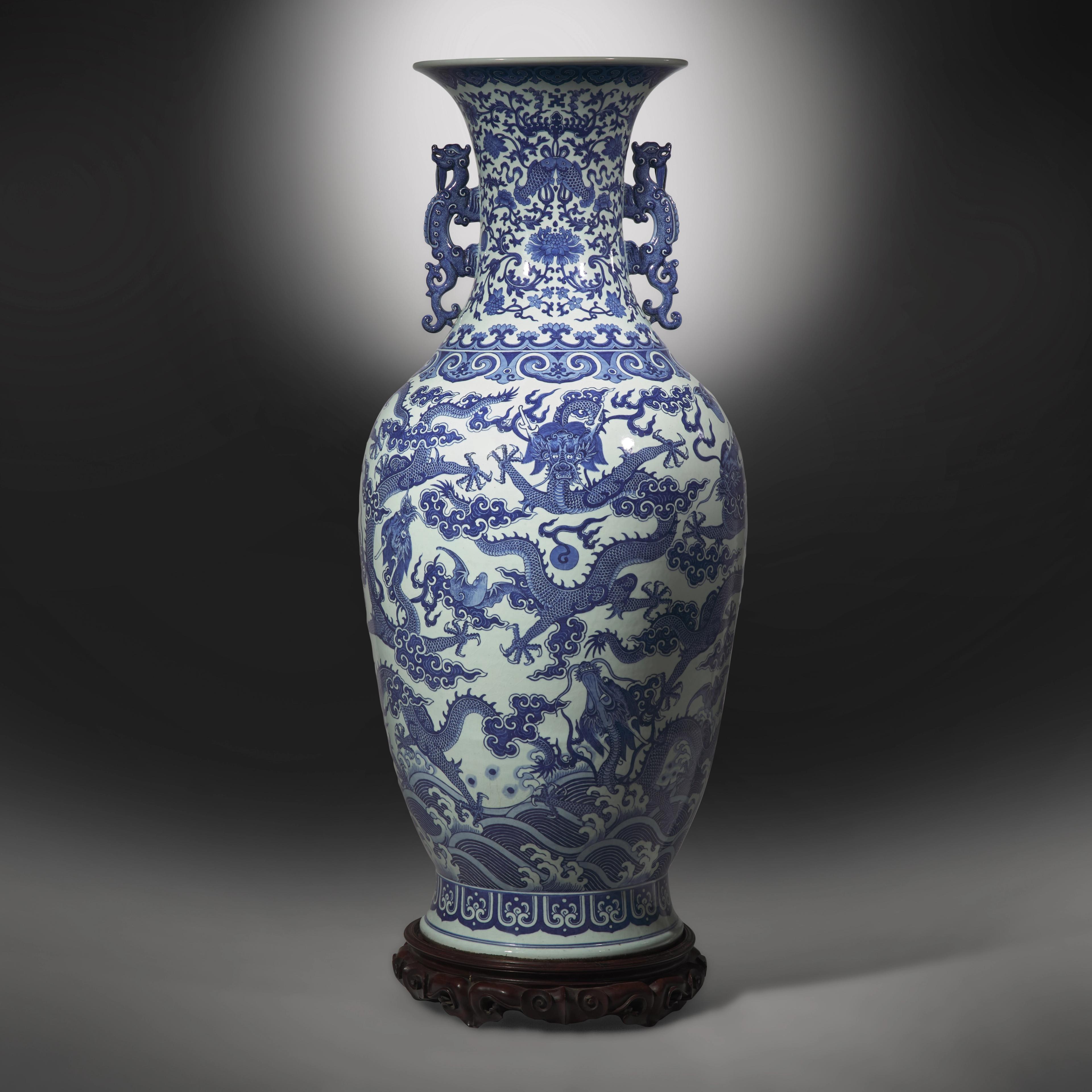
On September 18th Freeman’s is honored to present a magnificent and very rare monumental Chinese blue and white “Nine Dragons” vase published by Yamanaka & Company, Inc., in their 1943 catalogue, and cherished in the collection of The Honorable Robert C. Shelton Jr., and his descendants for over 50 years.
While unmarked, the dramatic scale (50 inches in height) and decorative motifs strongly indicate an Imperial commission, likely dating from the late 18th to the first part of the 19th century. No directly comparable Qing Dynasty vases of this size and exceptionalquality have yet been located.
TO BE OFFERED SEPTEMBER 18, NEW YORK
A Magnificent, Monumental, and Extremely Rare Chinese Blue and White “Nine Dragon” Vase, Qing Dynasty, Jiaqing/Daoguang Period
Estimate: $40,000 – 60,000
Propert from the collection of Robert C. Shelton, Jr
The motif of nine dragons has long symbolized the Emperor and his sons in Chinese culture. It is also reflected in the saying, Long sheng jiu zi,ge bu xiangtong ("The dragon has nine sons, and none are alike"), which recognizes that each childpossesses distinct talents and abilities. This motif has been embodied in monumental ceramic form since at least the late 14th century, illustrated by the famed Nine Dragon wall in the Palace compound of the Prince of Dai, son of the Ming dynasty Hongwu Emperor, Datong (Pingcheng). Such screen walls inspired the only two other surviving imperially commissioned, architectural screens of grand scale in Beijing during the 18th century. The first created for the former Imperial gardens in Beihai Park, circa 1756, the other erected in the first part of the 1770s before the “retirement" palace for the Qianlong Emperor (The Palace of Tranquil Longevity, Ningshou Quan Gong).
The treatment of the central five-clawed dragon on the present vase is very similar to those seen on Imperial moonflasks from the Qianlong period, where the depiction of an enlarged frontal dragon symbolizes the emperor and beneath it is a smaller, five-clawed dragon rising out of breaking waves, representing the heir-apparent looking up at the larger dragon. This motif is generally known as ‘The Emperor instructing the Crown Prince,’ or ‘The Eastern dragon teaching his son’ (Canglong jiaozi), and it appears on only a small number of Imperial porcelains. While the dragons on the present vase are all of similar scale, the subsidiary dragons emerging from the waves and looking up to the central dragon imply this subject, which was particularly popular from the Yongzheng through Daoguang periods.
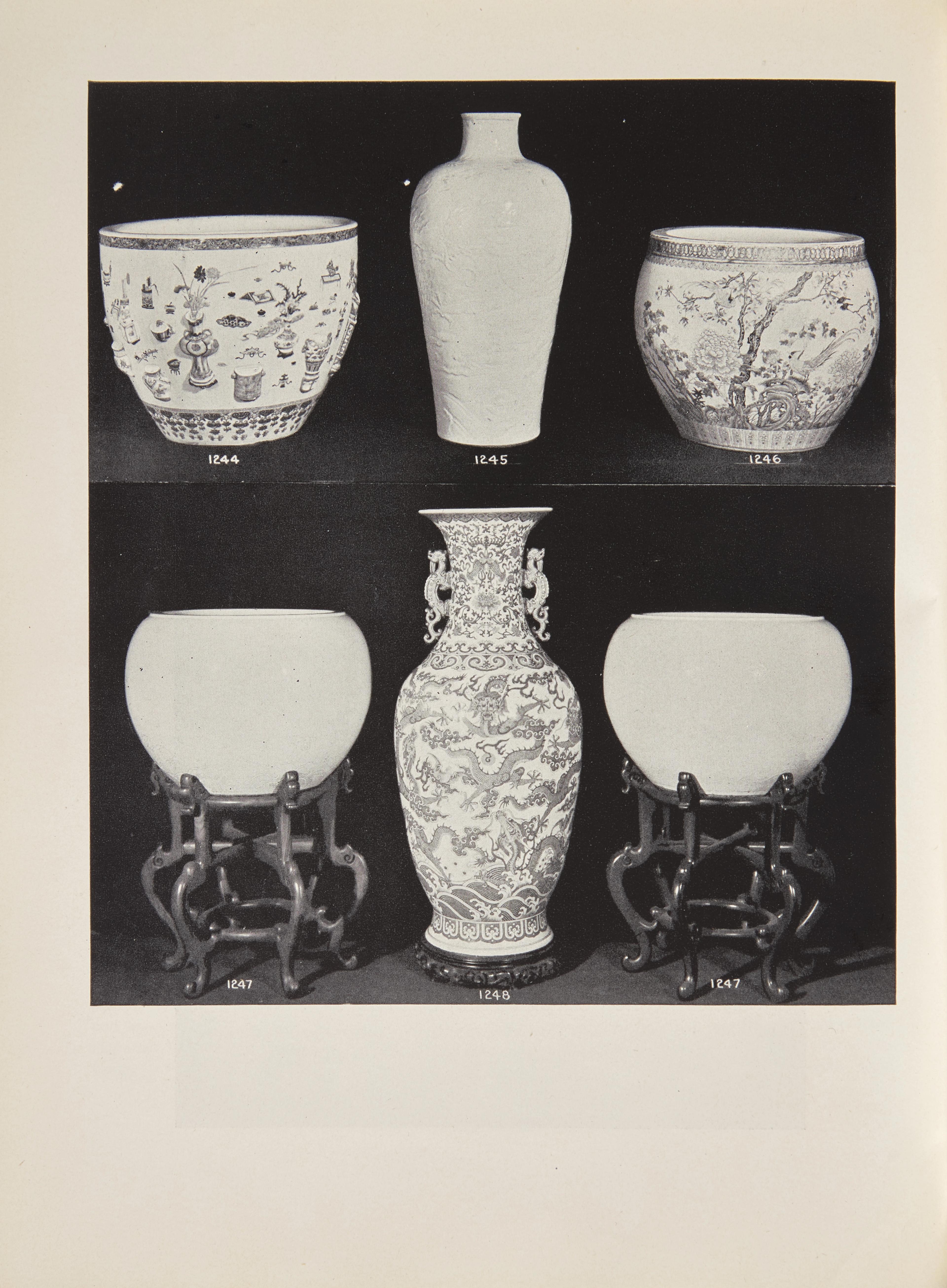
The “Nine Dragon” Vase published by Yamanaka & Company, Inc., in their 1943 catalogue as item 1248
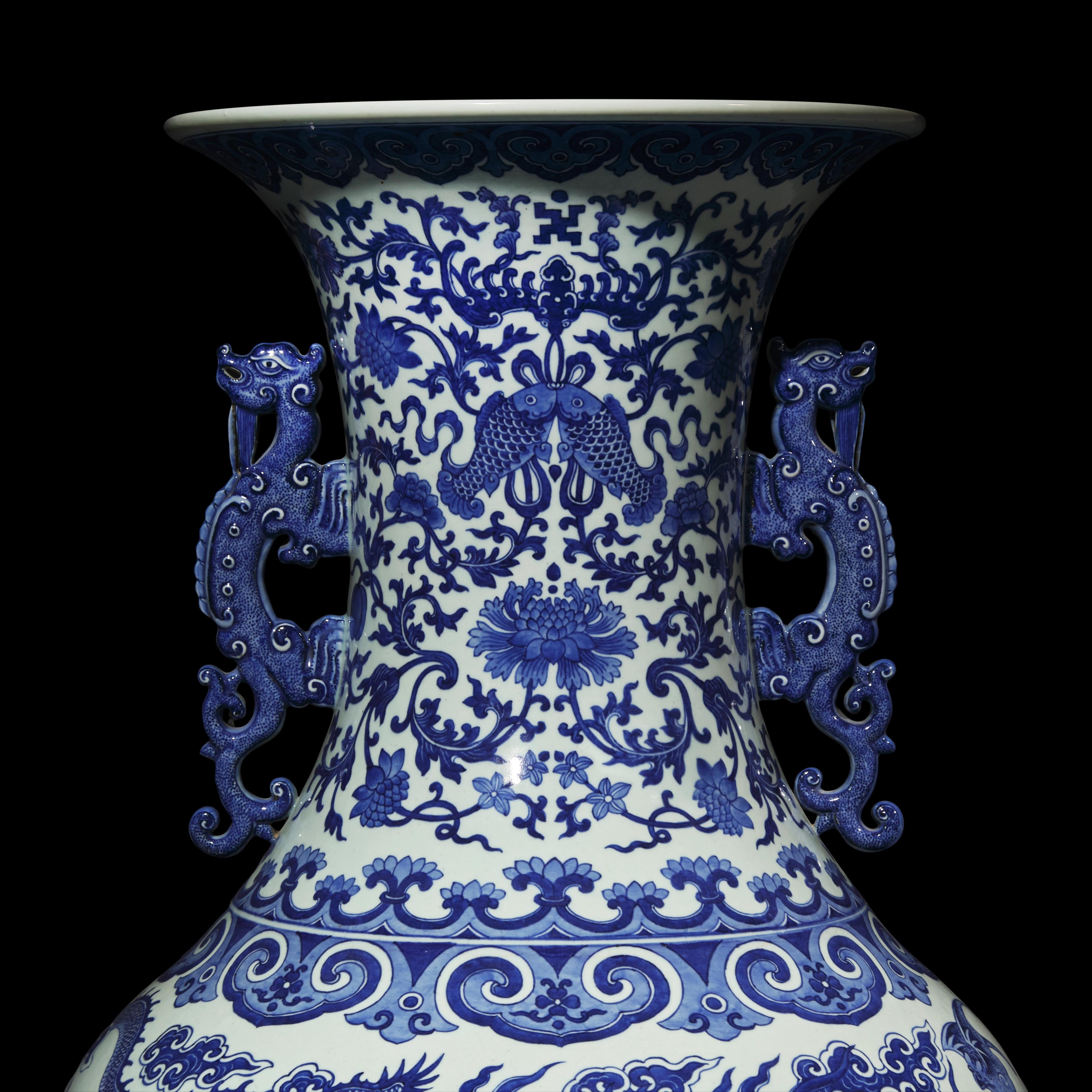
The stylized archaistic treatment of the dragon handles was also found on large vases of exceptional quality, often unmarked, from the Qianlong through Daoguang periods, as were the disposition of decorative motifs on the neck, such as the composite pendant surrounded by symmetrical floral scrolls, and the ruyi-head border to the lip. The wan symbol signifies "ten thousand," or limitless abundance; the descending bat (fu dao) represents the arrival of good fortune and blessings; the twin fish (shuang yu) symbolize harmony and wealth; the peony (mudan) embodies prosperity and honor; and the melon vine, with its abundant seeds, conveys a wish for many children. Together they form a powerful visual message of great happiness and abundance.
INQUIRIES: benfarina@freemansauction.com
VIEWING: September 14 – 17
32 E 67th Street, New York, NY