Iconography of adornment
What can fabric and jewelry tell us about the sitter, even though their identity remains unknown?
In 16th-century Italian Renaissance portraiture, clothing, jewelry, and hairstyles were important indicators of social class, wealth, and marital status. Lavinia Fontana rose to prominence in Bologna in part through her ability to depict sumptuous fabrics and jewelry in remarkable detail. Her portraits of noblewomen reflect both the wealth of their families and the social conventions governing dress, including the sumptuary laws that regulated what women could wear according to their rank.
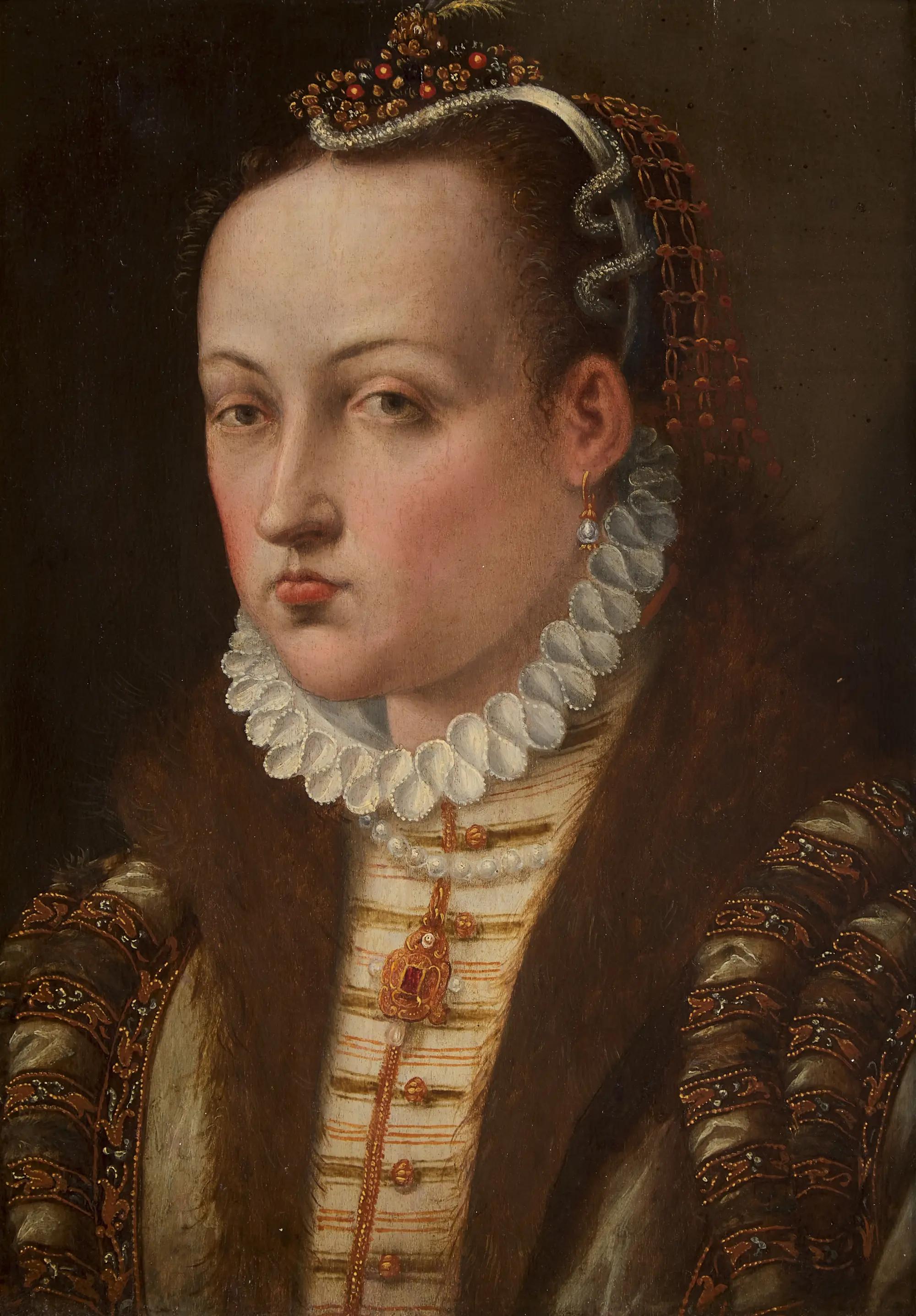
The present portrait offers a striking display of the sitter’s status. Her hair is drawn tightly back to emphasize a high, rounded forehead, adorned with an elaborate headdress featuring woven latticework, coral beads, and a central cluster of gems. Beneath her prominent white ruff, she wears a delicate pearl choker and a pendant with a large, table-cut or cabochon red gemstone, likely a ruby or spinel, set in an elaborate gold frame and pearls. Pearls, associated with purity and marital fidelity, were especially popular in portraits of women, while rubies and spinels could signify passion, fertility, and marital bonds. Although her identity is unknown, the combination of precious stones and pearls suggests considerable wealth and may possibly indicate her marital status.
Her clothing is a further visual indicator of her family’s wealth. The courtly winter costume is composed of a heavy, dark gown with a soft brown fur collar reveals a cream-colored silk bodice decorated with intricate gold braid and orange-red stitching. The voluminous sleeves, constructed from richly patterned silk and bound with metallic threads, demonstrate the expense and craftsmanship associated with elite dress. In Renaissance Italy, luxury furs were costly commodities and visible markers of aristocratic privilege.
Framing her face is a white, accordion-pleated linen or lace ruff, a fashionable accessory that became increasingly elaborate during the late 16th and into the 17th century. Together, the sitter’s carefully arranged hair, fine fabrics, fur, and jewelry present an image of refinement and prosperity, reflecting the importance of appearance and material display in Italian Renaissance society.