A World of Wonder: The Fantastical Art of Chico da Silva
As Silva explained in 1966, he imagined “the fish and the birds in motion” before developing their colors. Over the course of his career, he worked on diverse surfaces, from walls, paper, and board to canvas, as well as cloth, plywood, and household objects.
By: Melissa Flack, Cataloguer, Fine Art
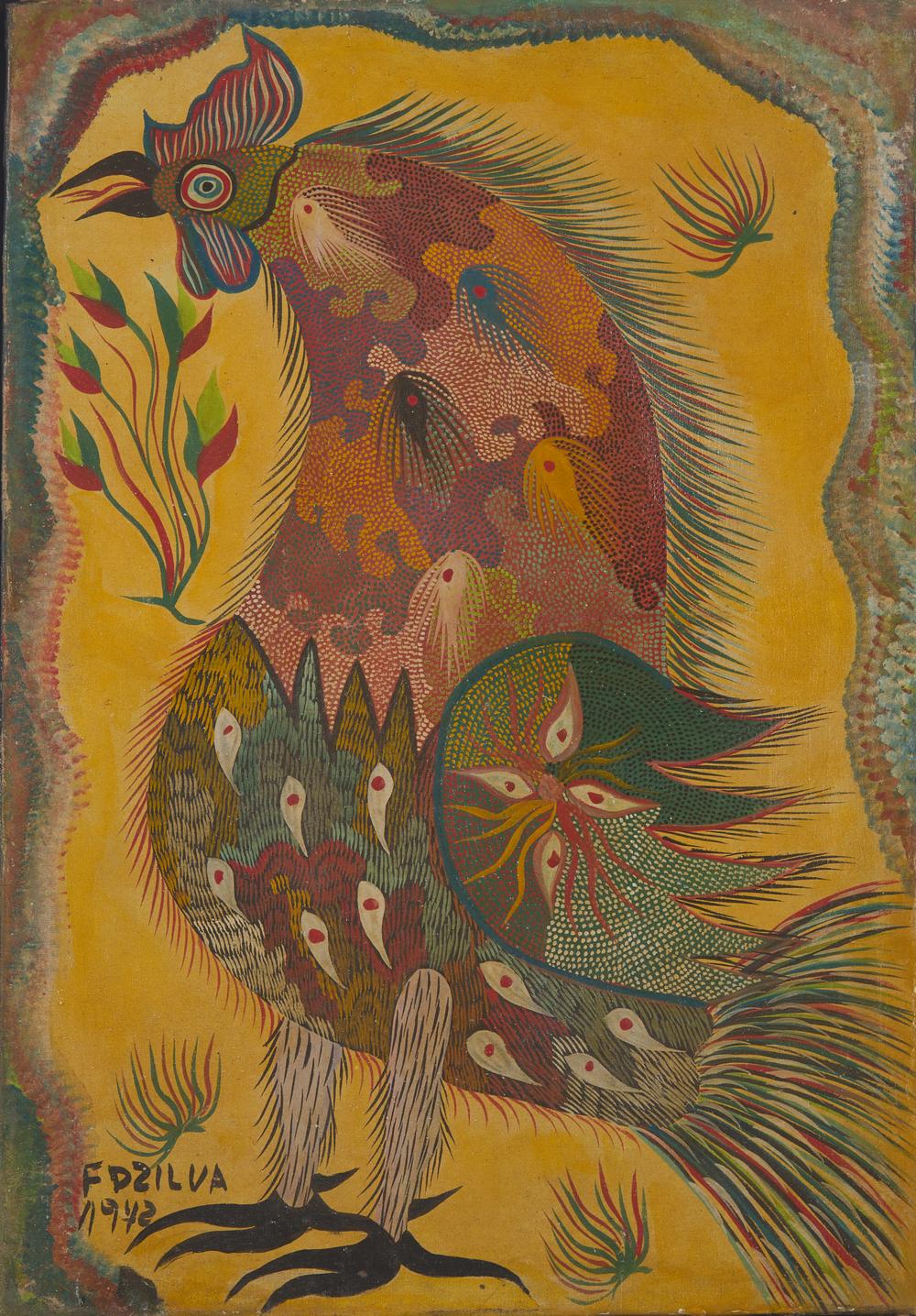
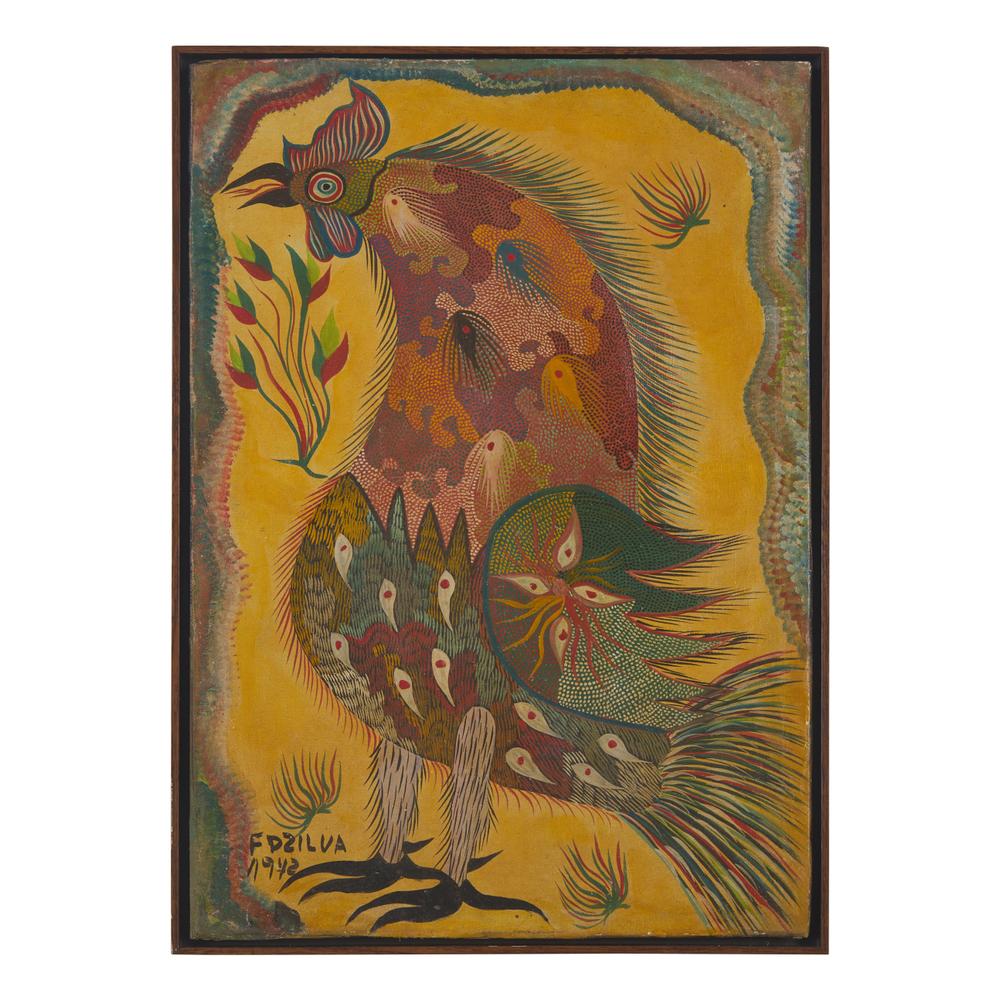
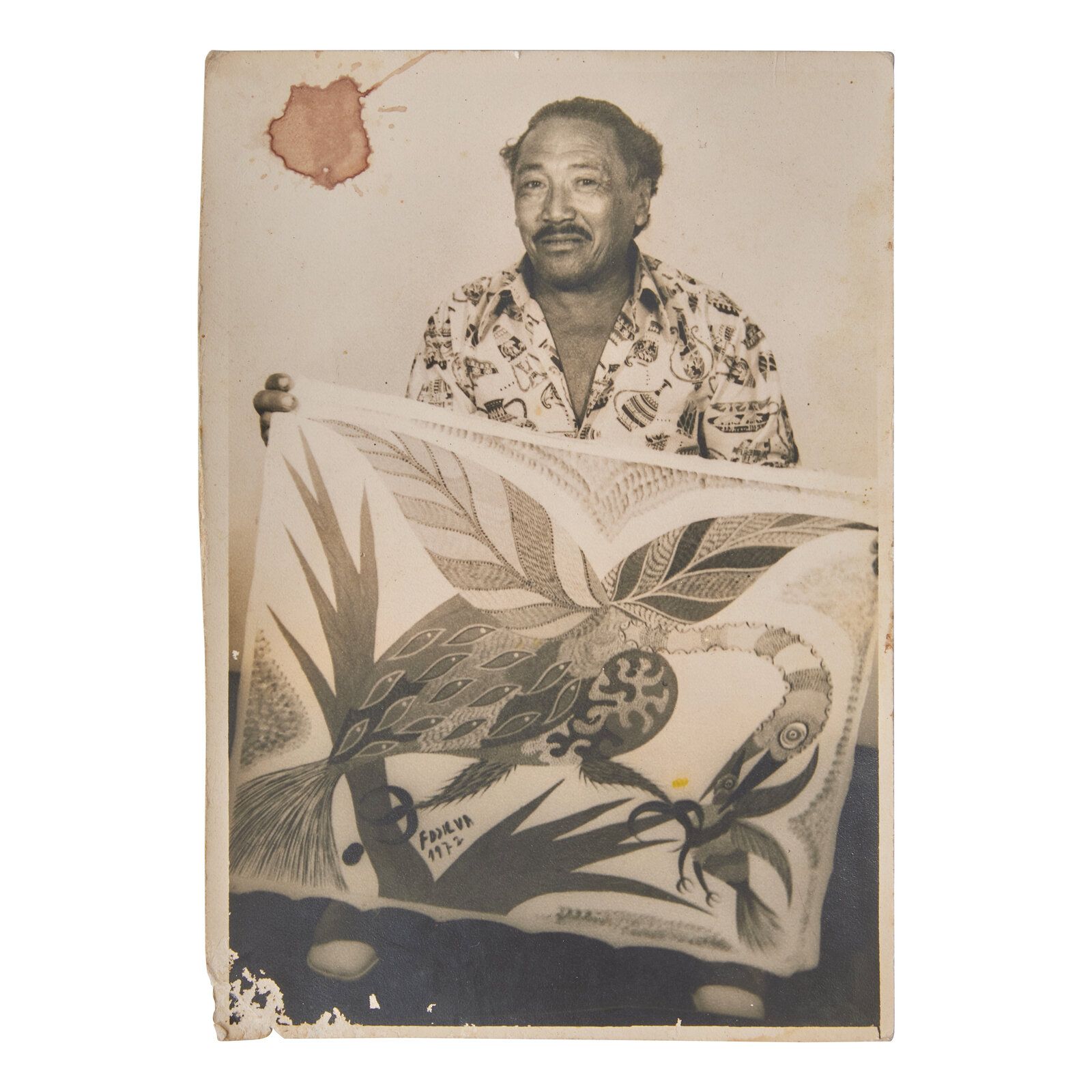
Francisco Domingos da Silva, known as Chico da Silva, was a self-taught Brazilian artist whose work emerged from the popular culture of Fortaleza, Ceará. Illiterate throughout his life, Silva began drawing around 1937 with charcoal, chalk, and fragments of brick on the whitewashed walls of dwellings at Praia Formosa, a neighborhood along Fortaleza’s waterfront. He subsequently transferred his imagery to paper and board, working primarily in gouache and tempera before turning to acrylic and, later, oil on canvas. His early works were signed “F. D. Silva,” frequently accompanied by a thumbprint.
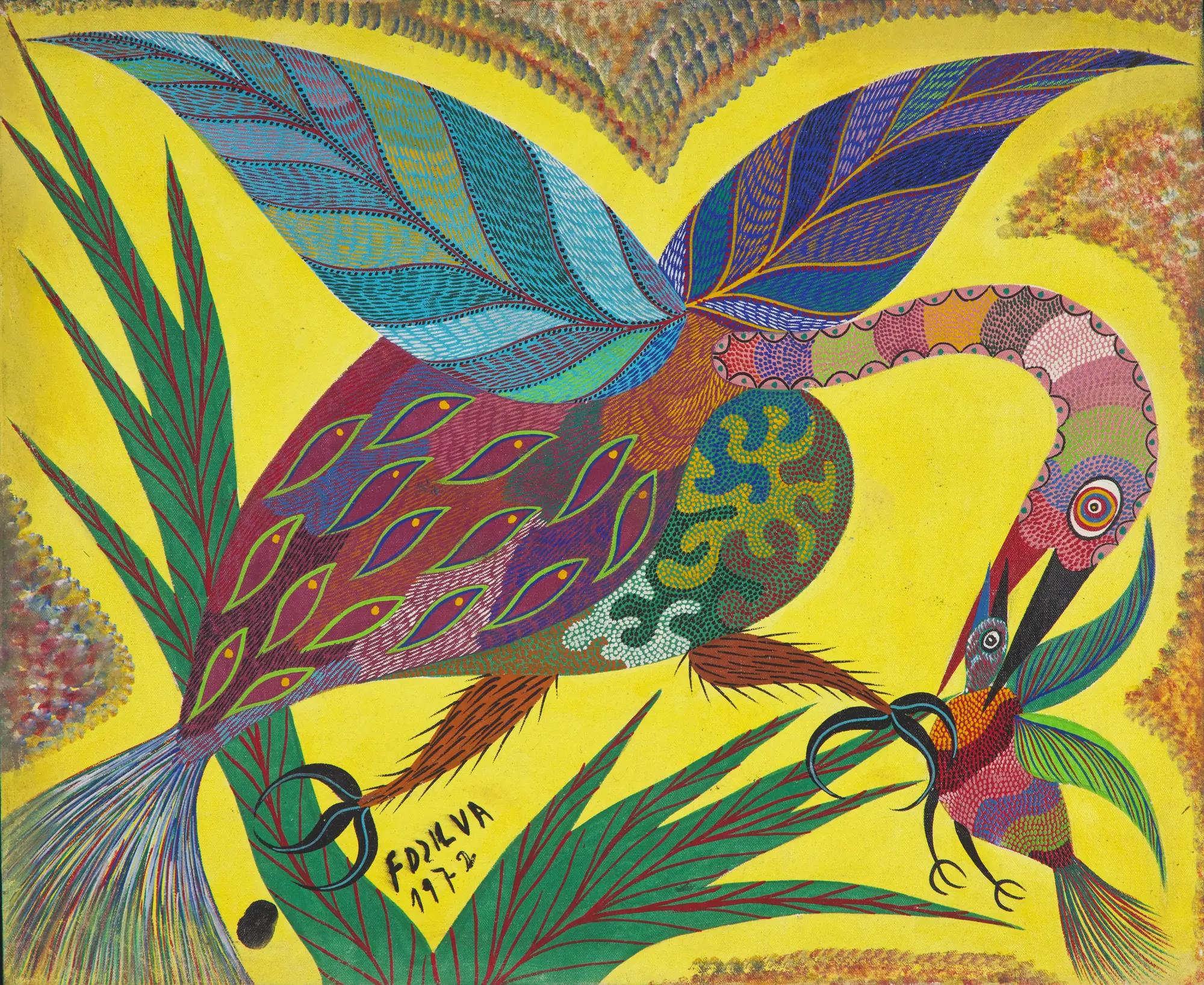
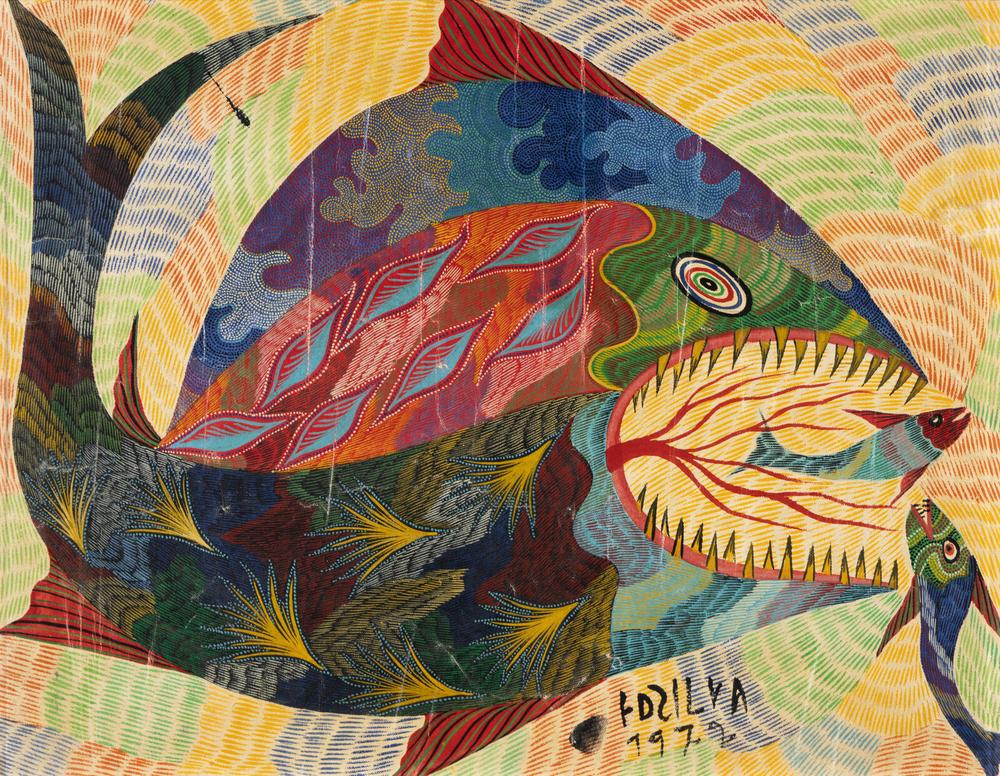
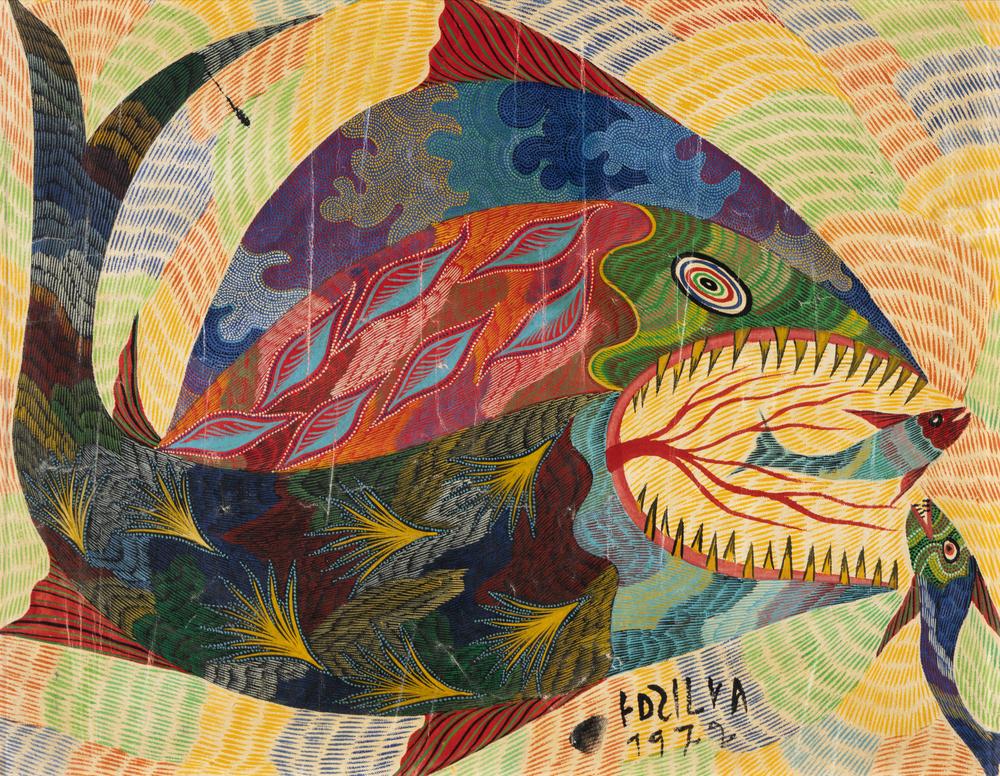
Lot 78 | Chico da Silva (Brazilian, 1910-1985) Untitled, 1972 | Estimate $10,000 – $15,000
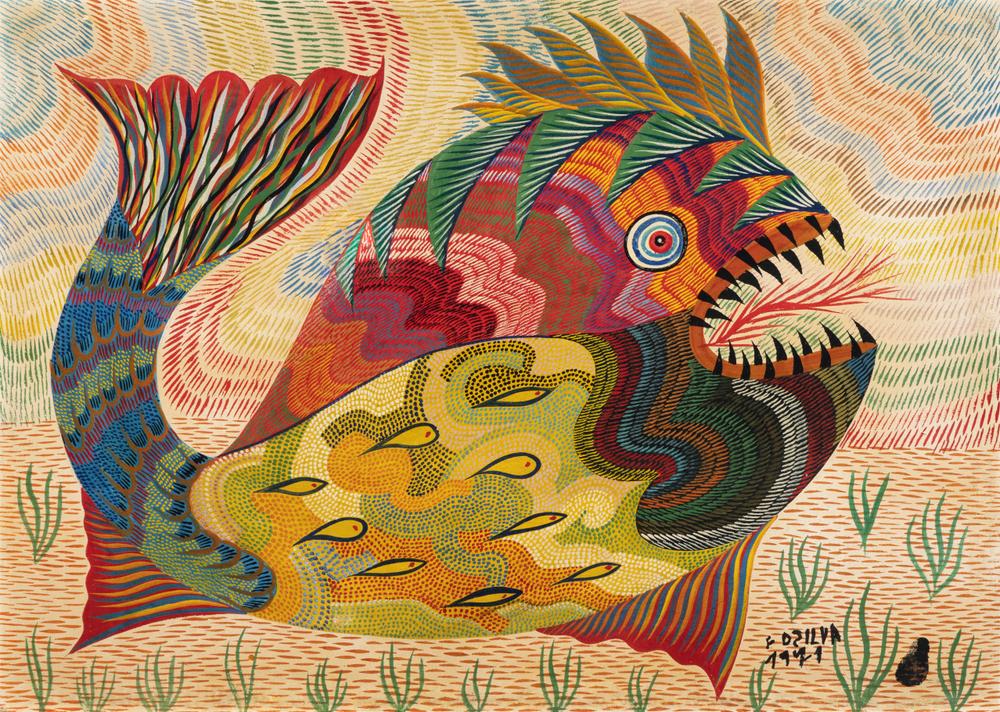
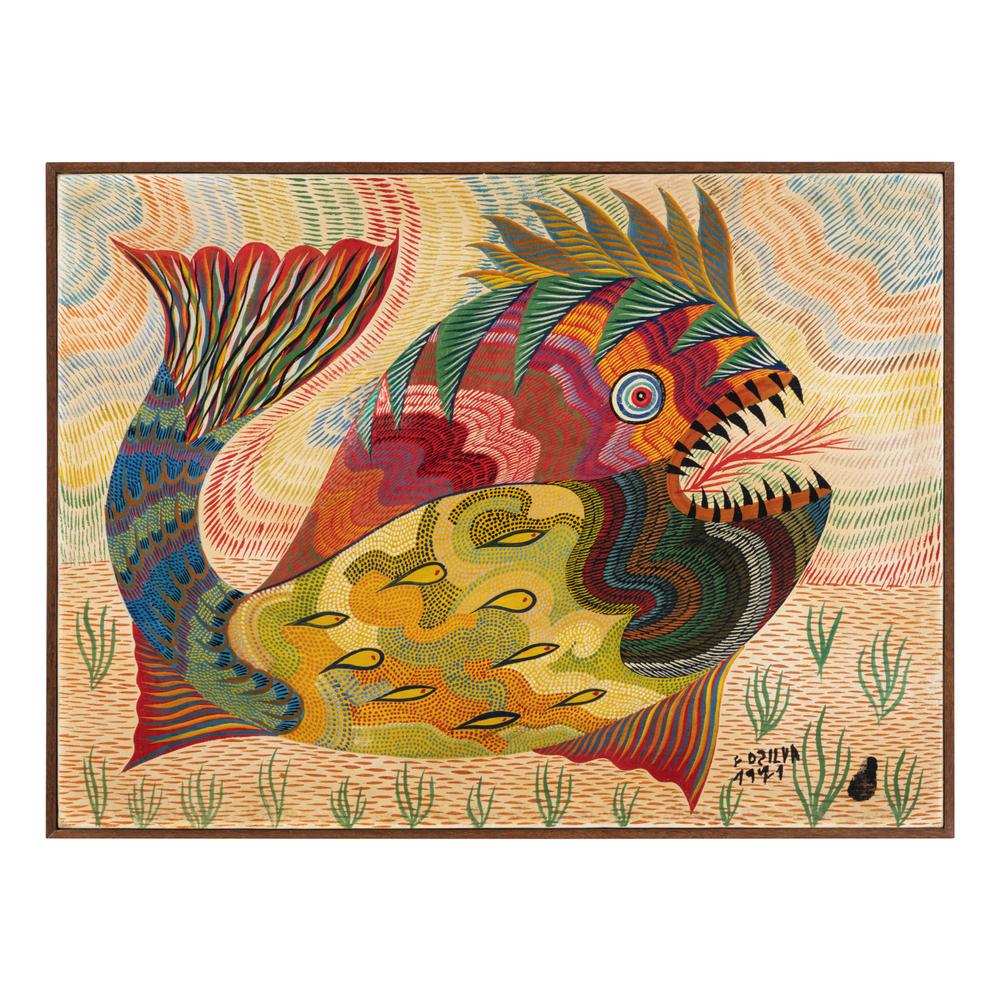
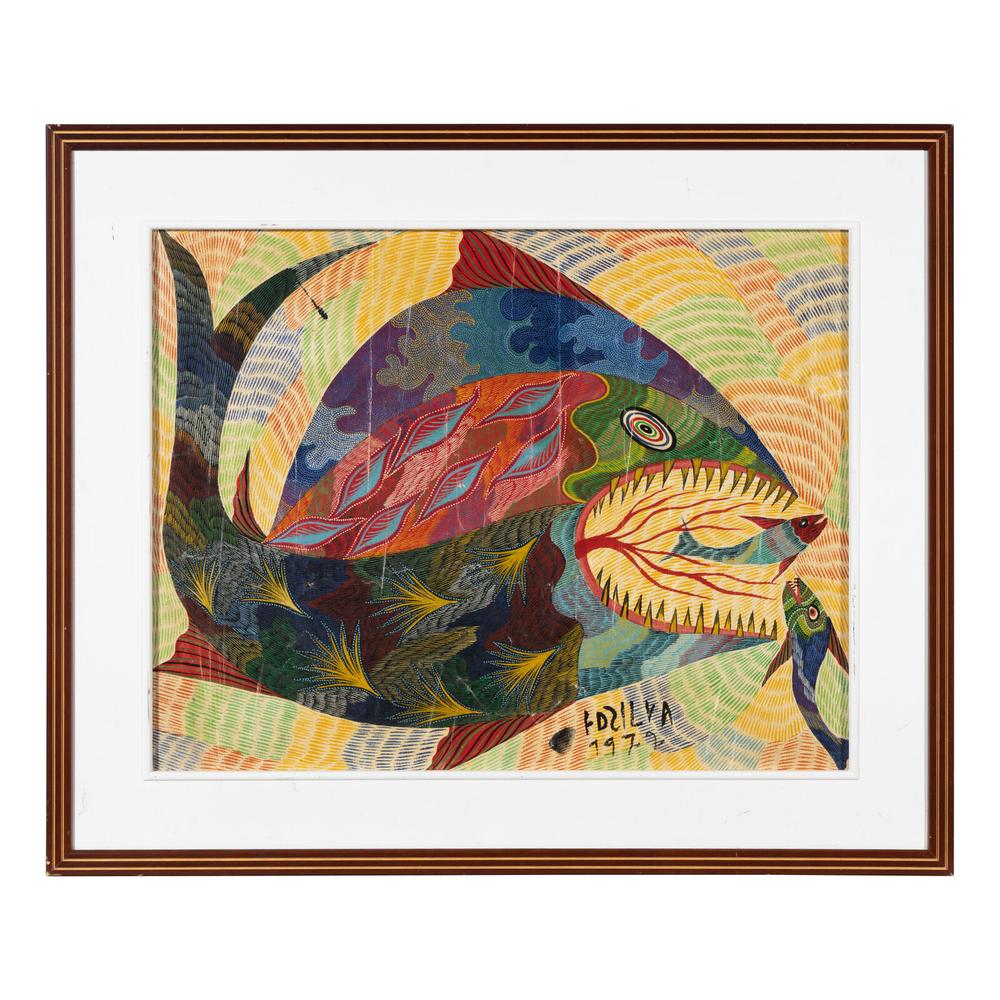
Silva developed a repertoire of fantastical, whimsical creatures and hybrid forms, including dragons, birds, snakes, and flying fish. These motifs recur throughout his oeuvre, rendered in saturated, flat areas of color and organized within densely populated compositions. His working process was direct and intuitive; he typically worked without preliminary studies, building compositions through rapidly applied fields of color and distinctive stippling produced by loading his brush with multiple pigments. As Silva explained in 1966, he imagined “the fish and the birds in motion” before developing their colors. Over the course of his career, he worked on diverse surfaces, from walls, paper, and board to canvas, as well as cloth, plywood, and household objects.
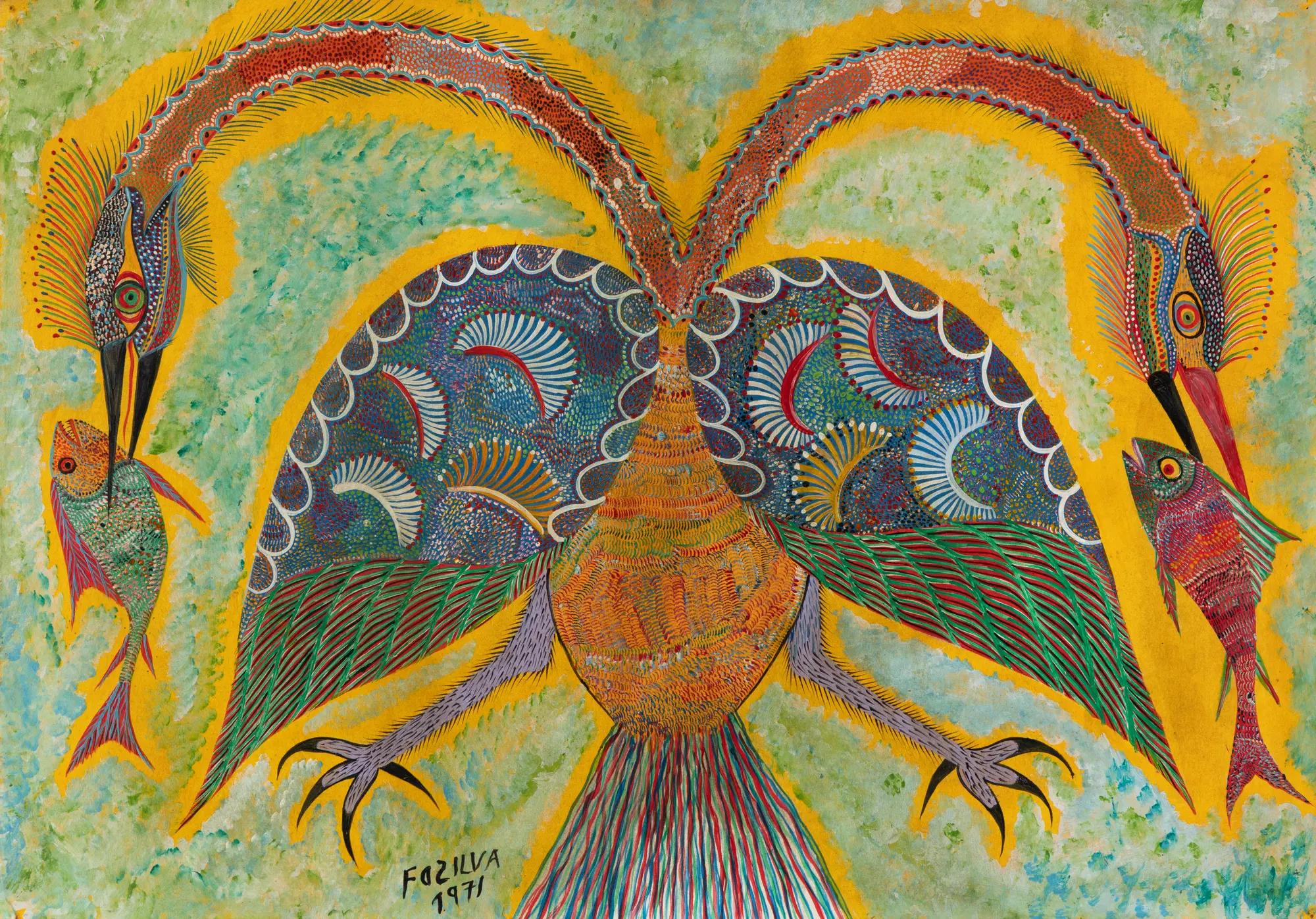
Lot 80 | Chico da Silva (Pirambu School) (Brazilian, 1910-1985) Untitled, 1971 | Estimate $8,000 – $12,000
The immediacy of Silva’s process and his highly personal imagery distinguish his work within twentieth-century Brazilian art. Drawing upon vernacular traditions and his own fantastical imagination rather than academic conventions, he developed a visual language that occupies a compelling space between popular, folk, and self-taught art. His paintings, with their vibrant colors and teeming cast of imaginary creatures, transform the picture plane into an exuberant world of perpetual movement. Today, his paintings are held in major public collections, including Tate, the Museu de Arte do Rio, and the Museu de Arte da Universidade Federal do Ceará.