Condition Report
Contact Information
Auction Specialist
Lot 523
Sale 960 - American Historical Ephemera & Photography
Nov 15, 2021
11:00AM ET
Live / Cincinnati
Own a similar item?
Estimate
$400 -
600
Price Realized
$625
Sold prices are inclusive of Buyer’s Premium
Lot Description
[CIVIL WAR - NAVY]. A group of 2 documents related to the Battle of Baton Rouge and its aftermath, comprising:
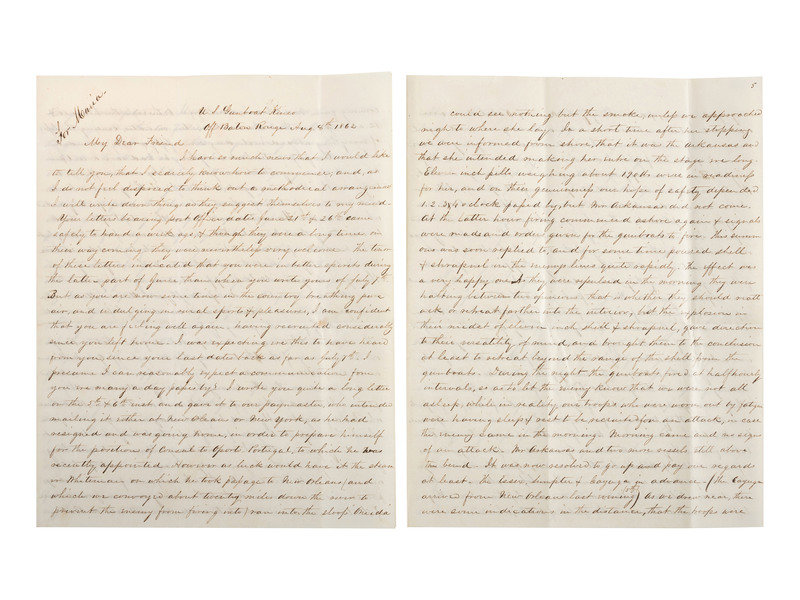
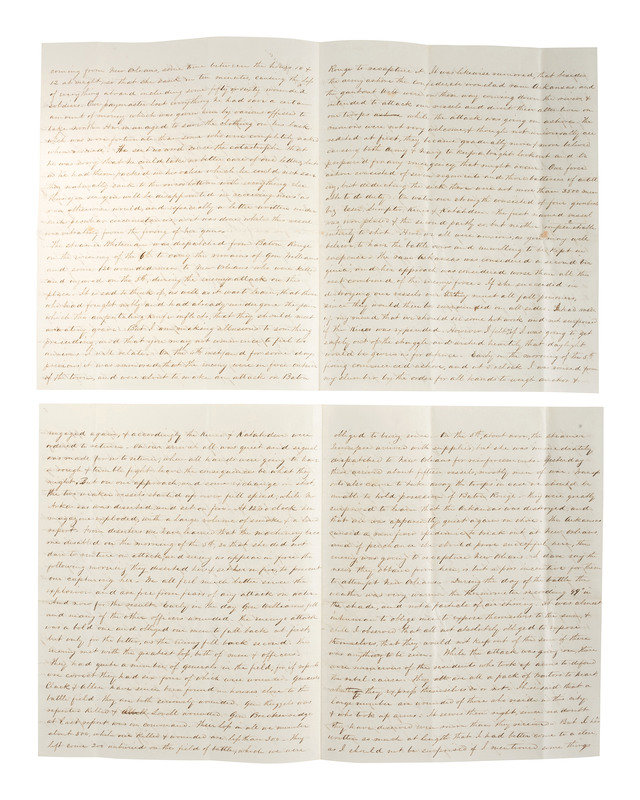
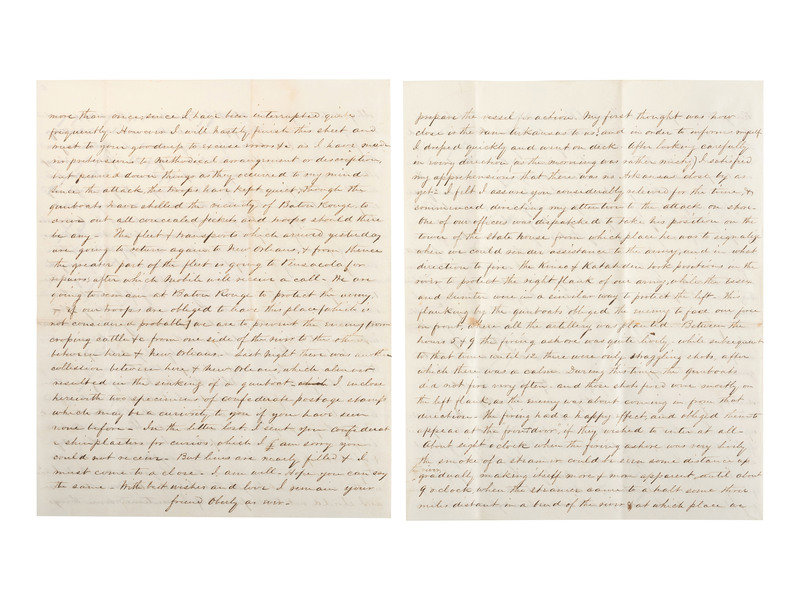
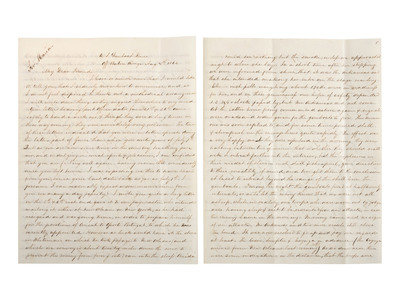
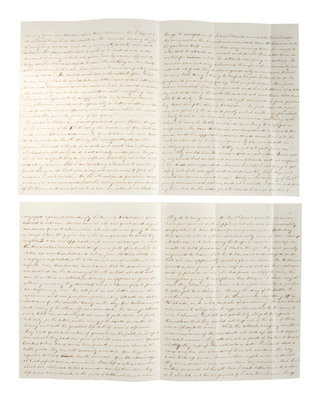
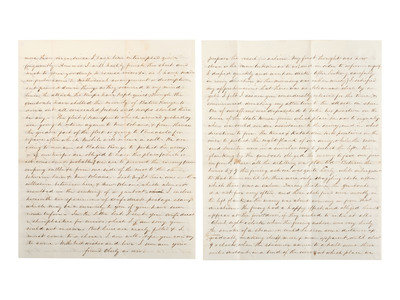
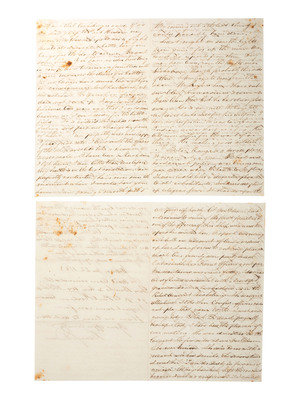
Autograph letter signed "friend Oberly as ever" to “My Dear Friend,” [his fiancée, Anna Maria Woodford of New Haven, CT], from onboard the U.S. Gunboat Kineo off Baton Rouge, 8 August 1862. 8 pp., 7 3/4 x 9 3/4 in. (creasing at folds, small spot near center fold). Naval Surgeon Aaron Shimer Oberly (1837-1918) pens an exhaustively precise and detailed account of the Battle of Baton Rouge, in which the Army and Navy combined forces to foil the Confederacy’s attempt to retake Baton Rouge. Oberly graduated from Yale Medical School and entered the Navy shortly thereafter. He rose to the rank of Chief Surgeon with the Adriatic Squadron until forced by health issues to retire in 1889. He and Woodford were married in 1866. A marvelous letter with far too much good content to represent fully through excepted quotes.
[With:]
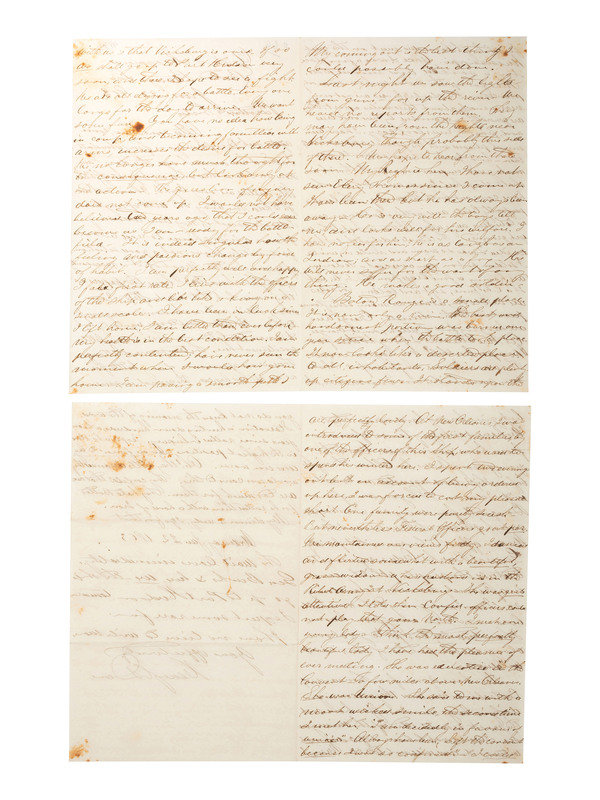
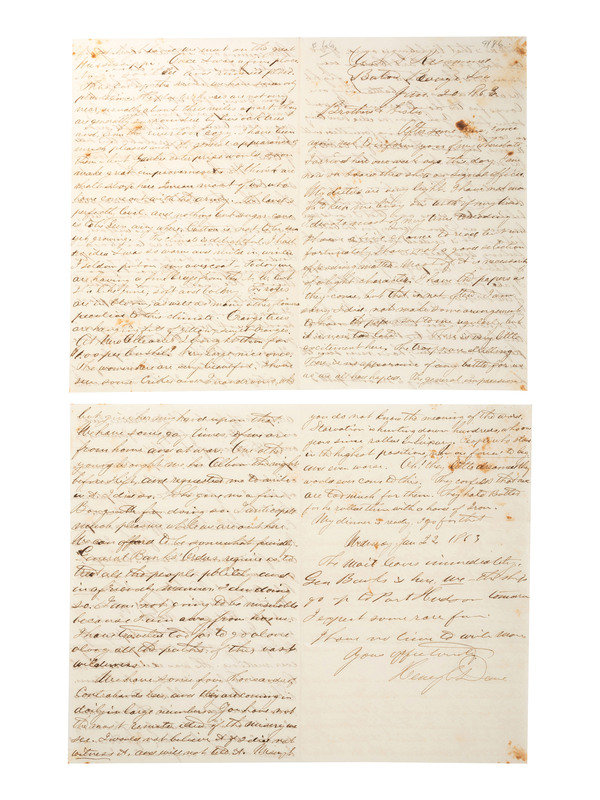
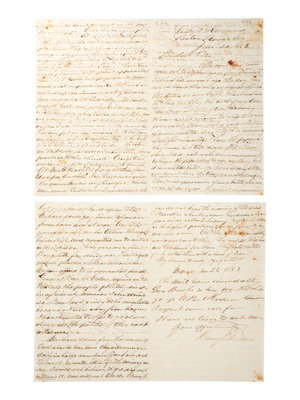
Autograph letter signed "Henry C. Dane," 3rd Massachusetts Cavalry, as Signal Officer on board the Richmond, to “Brothers and Sister,” USS Richmond, Baton Rouge, LA, 20 June 1863. 7 pp., 8vo, 20 June 1863, In part: “The general impression with us is that we have Vicksburg. If so, we shall go up to Port Hudson very soon, and there I hope to see a fight. . . . You have no idea how being in camp, and becoming familiar with arms, increases the desire for battle. We no longer have much thought for the consequences, but look only at the action—the question of injury does not come up.” Describes Baton Rouge as a burnt ruin, one year after the battle took place. “General Banks’ orders require us to treat all the people politely and in a friendly manner. . . . There are some four thousands of Contrabands here, and they are coming in daily in large numbers. You have not the most remote idea of the misery we see. . . . Starvation is hunting down hundreds, who one year since rolled in luxury. People who stood in the highest positions now are forced to beg. . . . Wednesday Jan. 22, 1863: The mail leaves immediately. Gen Banks is here, we—the ship[--]go to Port Hudson tomorrow. I expect some rare fun.” The Richmond apparently reached Port Hudson, LA, sometime after the beginning of the siege of Port Hudson, LA, which lasted, remarkably, from 22 May to 9 July 1863. Notwithstanding its duration, the siege did not result in surrender, which occurred only after Vicksburg had fallen.
The Richard B. Cohen Civil War Collection