

Condition Report
Contact Information
Auction Specialist
Lot 510
Sale 960 - American Historical Ephemera & Photography
Nov 15, 2021
11:00AM ET
Live / Cincinnati
Own a similar item?
Estimate
$15,000 -
25,000
Price Realized
$34,375
Sold prices are inclusive of Buyer’s Premium
Lot Description
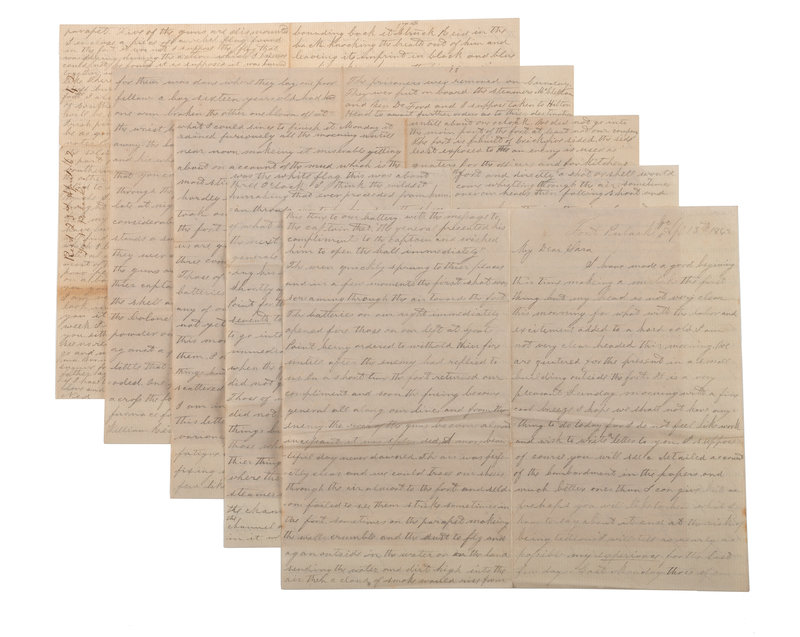
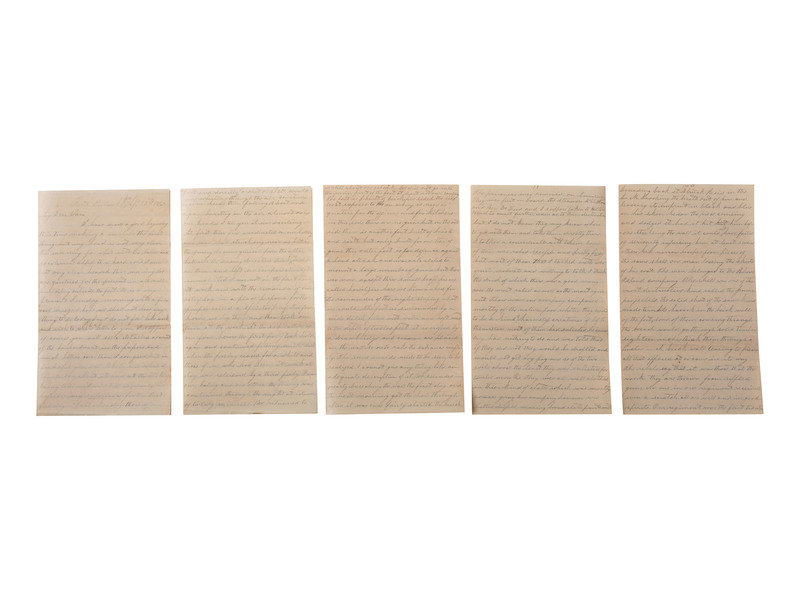
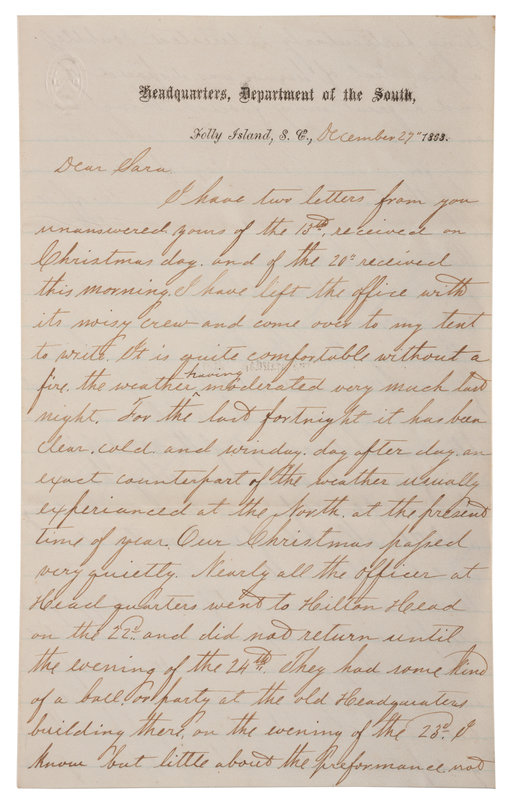
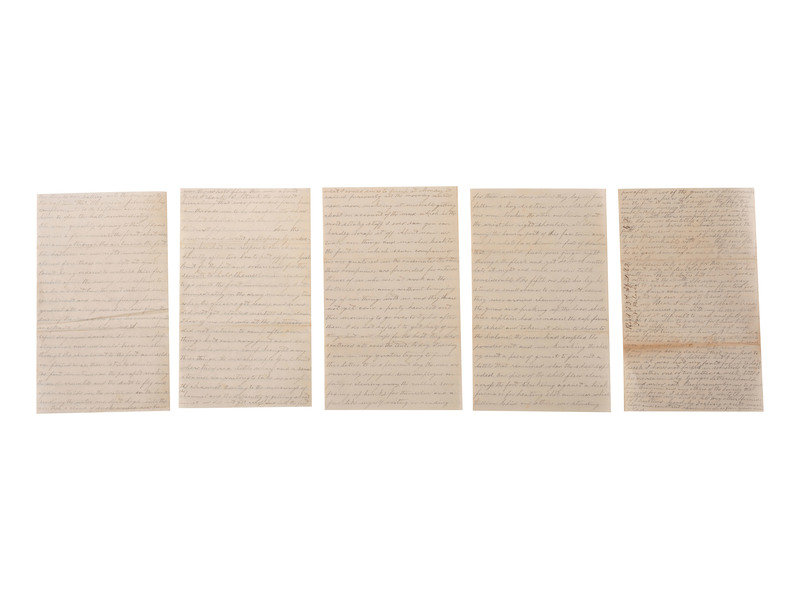
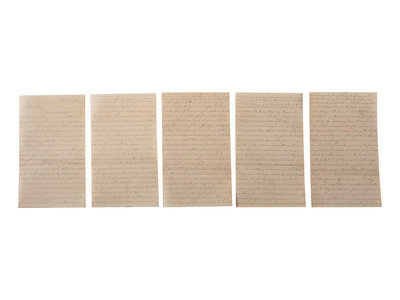
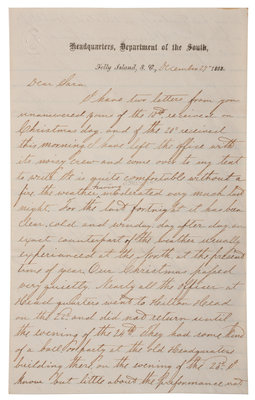
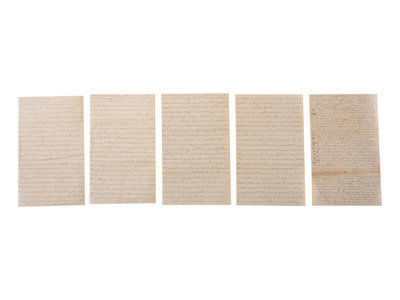
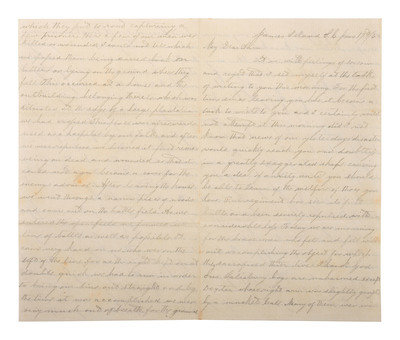
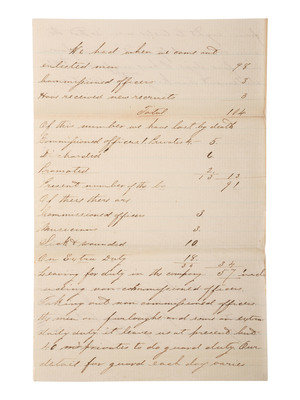
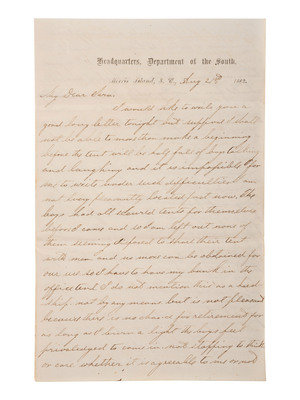
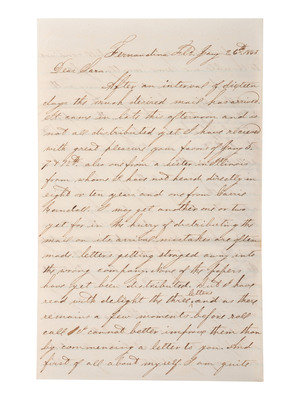
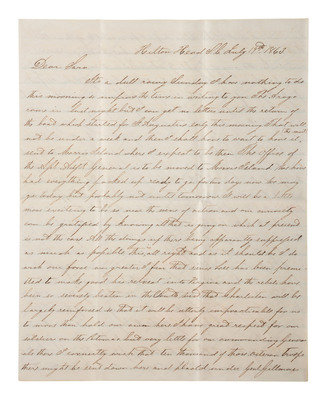
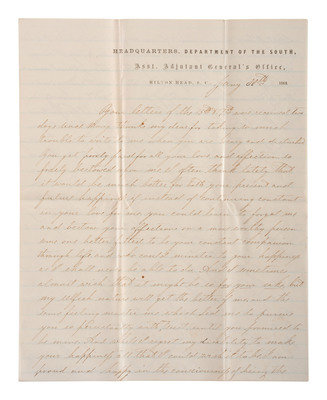
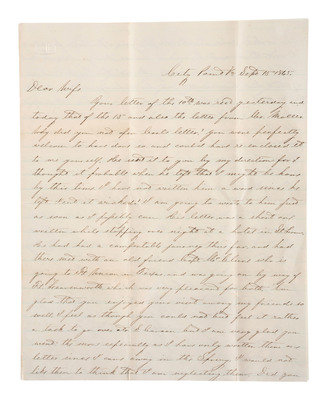
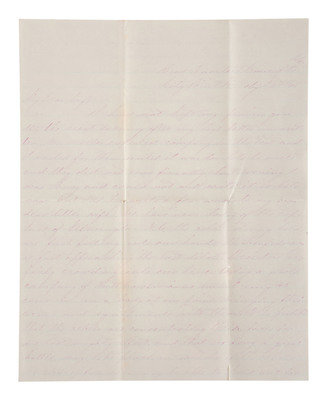
[CIVIL WAR]. War-date letters of Corporal Edwin J. Barden, 7th Regiment Connecticut Volunteer Infantry, combat soldier and later clerk at Headquarters Department of the South, Headquarters X Corps, and Headquarters US Army, Office of Chief Commissary.
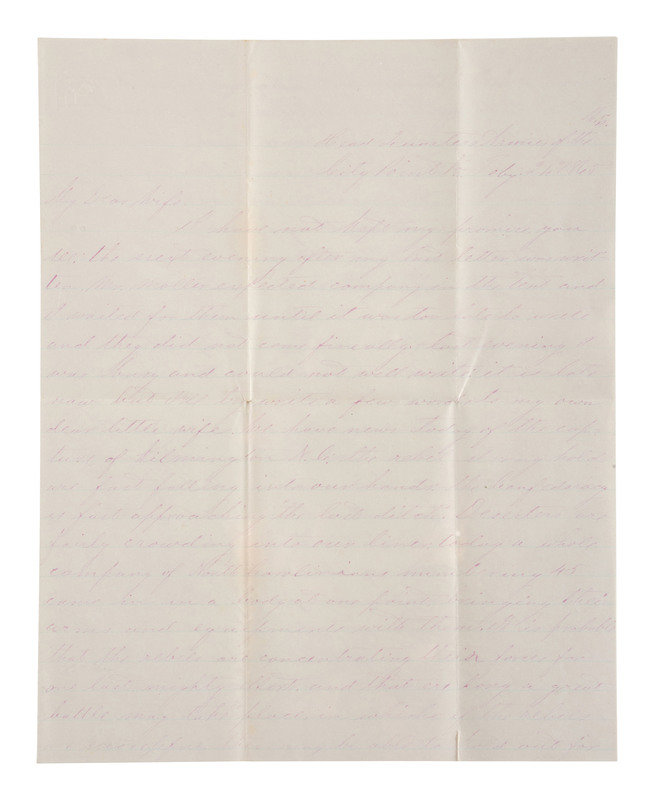
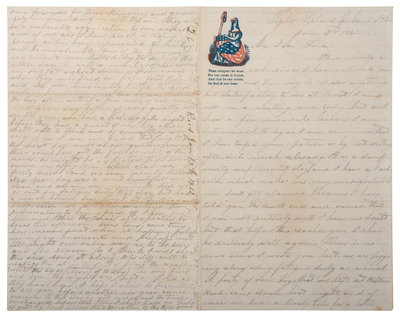
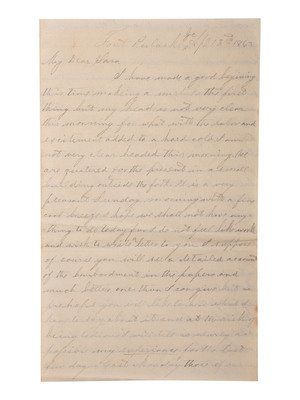
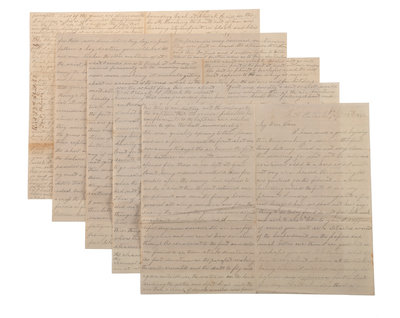
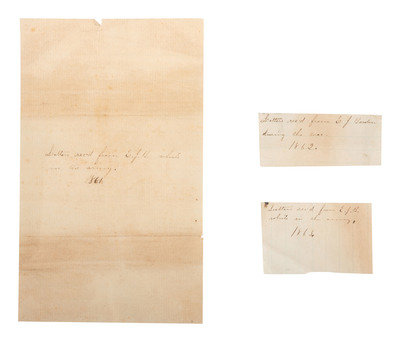
Archive of 237 letters written by Corporal Edwin Janes Barden (1835-1902), 7th Regiment Connecticut Volunteer Infantry and later a civilian clerk. A prolific and descriptive writer, Barden’s letters range from 1-22pp, most approx. 4-10pp, with regular entries throughout his 4 years’ service. He was an eyewitness to significant events as they unfolded in the Department of the South and later in the Army of the James. References to Battle of Port Royal, capture of Fort Pulaski, Battle of Secessionville, Battle of Pocotaligo, Assault on Fort Wagner, Siege of Fort Wagner, operations against Charleston, Battle of Olustee, Fort Darling/Battle of Drewry’s Bluff, Siege of Petersburg, Deep Bottom, Battle of Fair Oaks, capture of Fort Fisher, and more. References to dozens of regiments and discussion of commanders most notably Quincy A. Gillmore, Alfred H. Terry, Benjamin F. Butler, and Ulysses S. Grant. Pencil, ink, and red pen utilized with handwriting easily legible. Condition generally good, expected toning and folds, some letters faded but still legible. Various places, 1861-1865.
A LETTER ARCHIVE OF THIS SIZE FROM A SINGLE SOLDIER IS RARELY SEEN AT AUCTION.
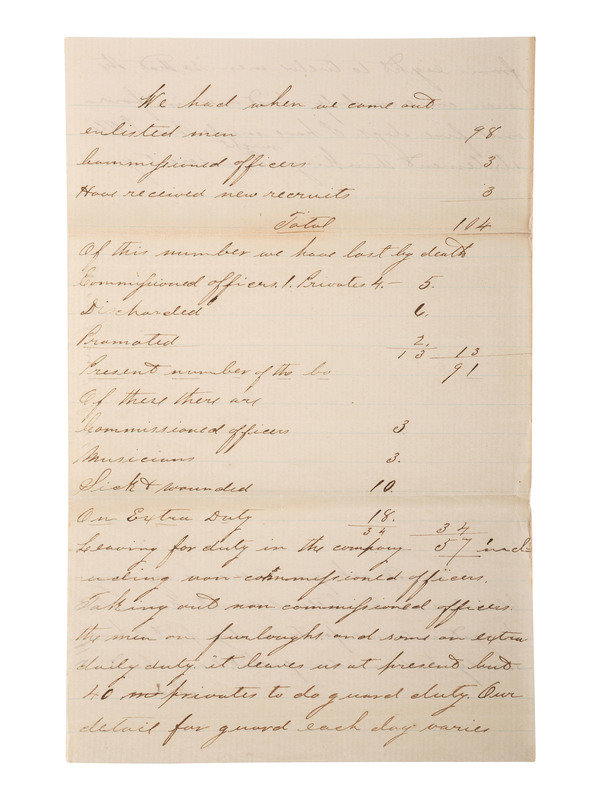
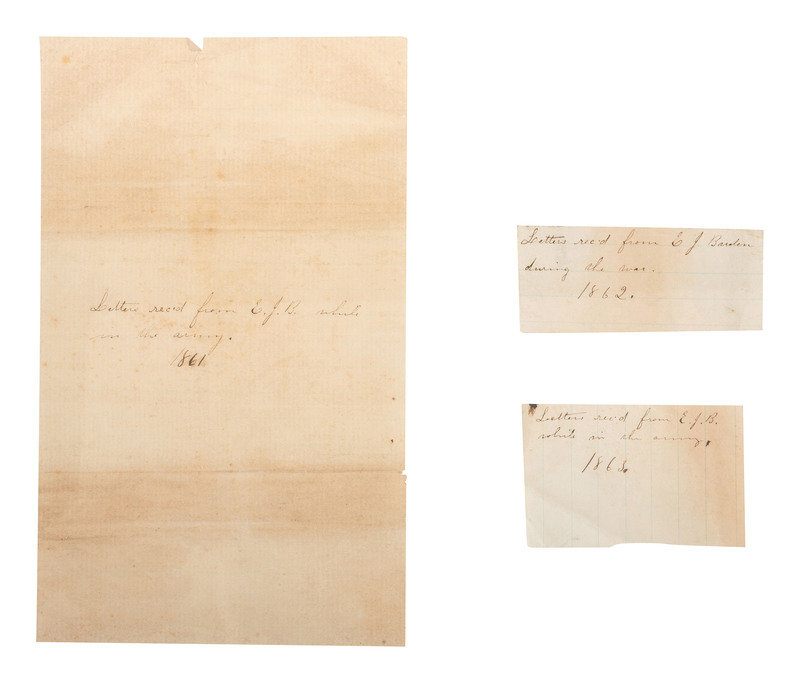
HDS indicates that Edwin J. Barden of Canaan, CT, enlisted on 9/3/1861 as a corporal with the 7th Connecticut, Co. G., organized at New Haven under Colonel Alfred H. Terry. Upon departure with the regiment, Barden commenced this correspondence with his new fiancée, Sarah Maria Jones (1837-1917). “Sara” remained home near Salisbury, CT, carefully numbering and dating each letter as she received it from “Ned.” Though some letters are missing, the collection constitutes nearly the entirety of Barden’s correspondence to Sara. A fervent Union man, Barden’s correspondence displays the expected disdain for southerners and Copperheads. He also though expresses an intense distaste for a Union military hierarchy which allowed commissioned officers to mistreat non-commissioned officers and enlisted men with seeming impunity. He seems generally unimpressed with the US Navy, and, though staunchly against slavery himself, does not believe the war’s focus should be on an immediate end to slavery. Well-written and immensely detailed, Barden’s correspondence provides a two-tiered view of the hardships of war - first through his own experience as a soldier on the front lines and later as a clerk operating near the powerful generals who commanded the Union’s war effort.
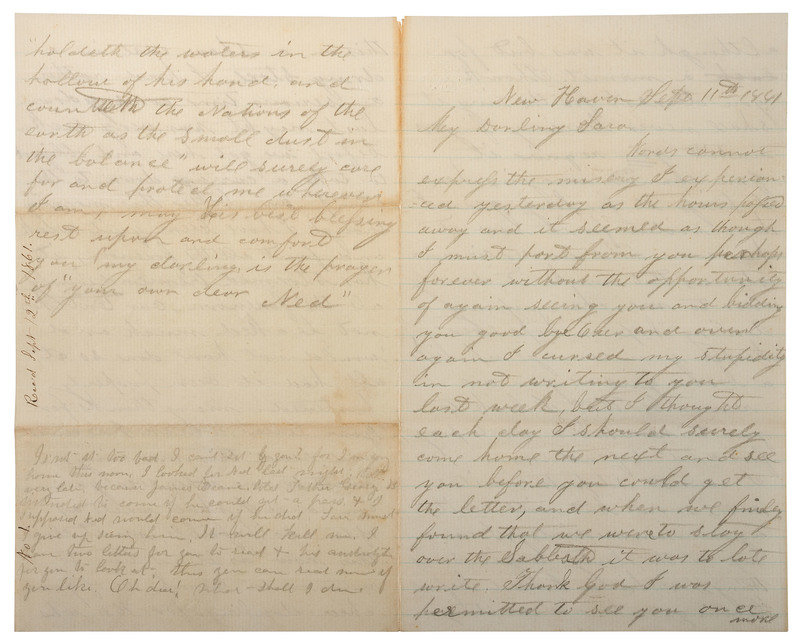
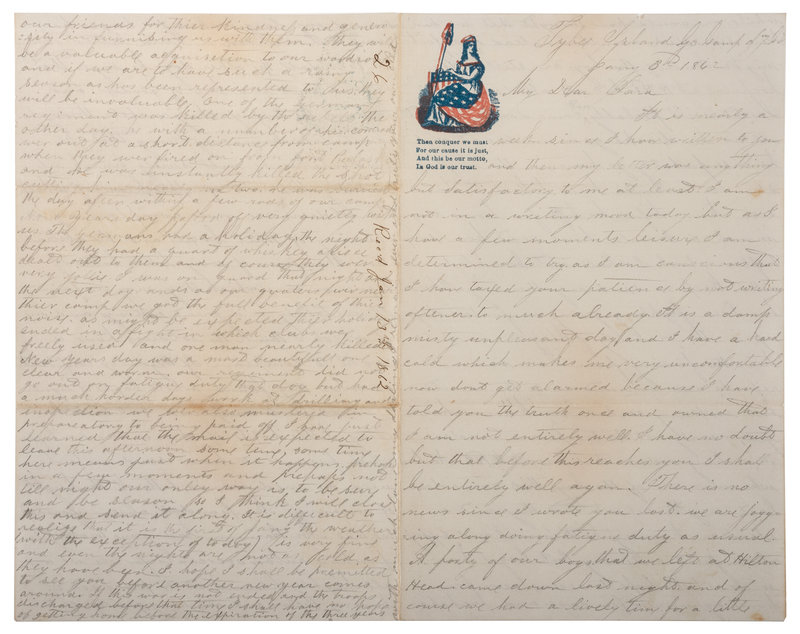
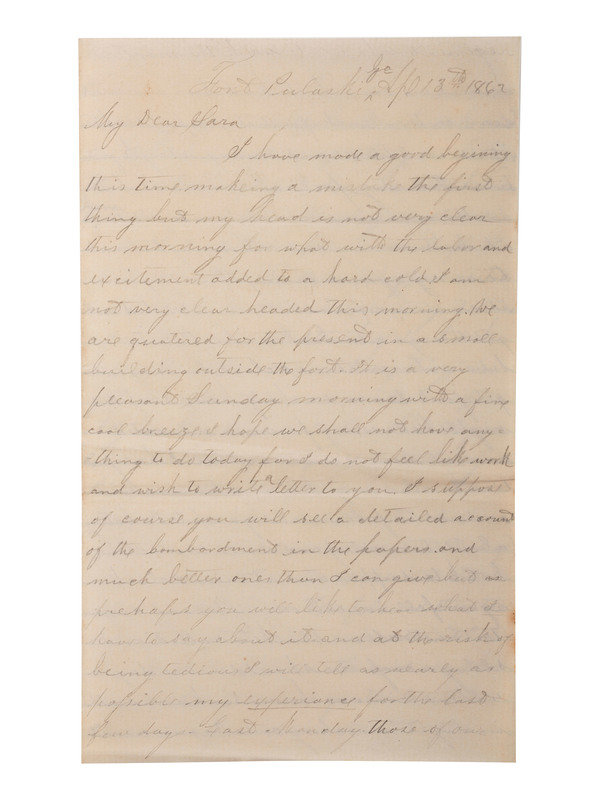
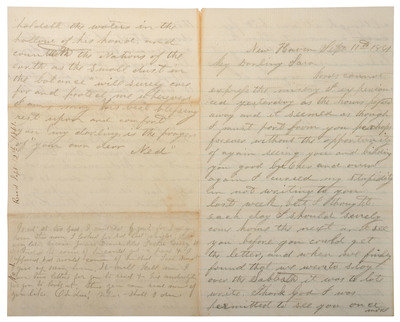
Letter “No. 1,” “Rec’d Sept 12th 1861” was written from New Haven, CT, on September 11th. By September 21, 1861, Barden has arrived in Washington, D.C. where the regiment sets up camp and begins drills and preparation for deployment to the front. His first taste of conflict comes during the Battle of Port Royal, November 3-7, 1861, one of the earliest amphibious operations in the Civil War: “Our gun boats engaged the enemy works on shore yesterday afternoon and I have seen my first war. But at such a distance that onley the smoke and sounds off the fireing was perceptible.” Barden’s introduction to the true horrors of war would wait as the regiment soon moved to Tybee Island where it was engaged in fatigue duty building batteries for the forthcoming assault on Fort Pulaski. He writes on on December 21, 1861: “Uncle Sam means to make me earn my bread by the sweat of my brow. I have shoveled dirt in the trenches and rolled logs and lifted heavy gun carriages until my hands are as still and hard as stone masons.” Throughout the remaining days of 1861 and into 1862, Barden provides detailed descriptions of events near Pulaski, construction of the works, and of “sloops of war” and gunboats arriving with men and materials. The long-anticipated bombardment and capture of Fort Pulaski commenced on April 10, 1862, with Barden noting on April 12th: “Our regiment had the honor of being the first to enter and take possession.” On April 13th he writes a 20pp letter describing the events leading up to and following the taking of the fort, describing in particular his experience as part of Battery Halleck which launched mortar fire at Pulaski until the surrender.
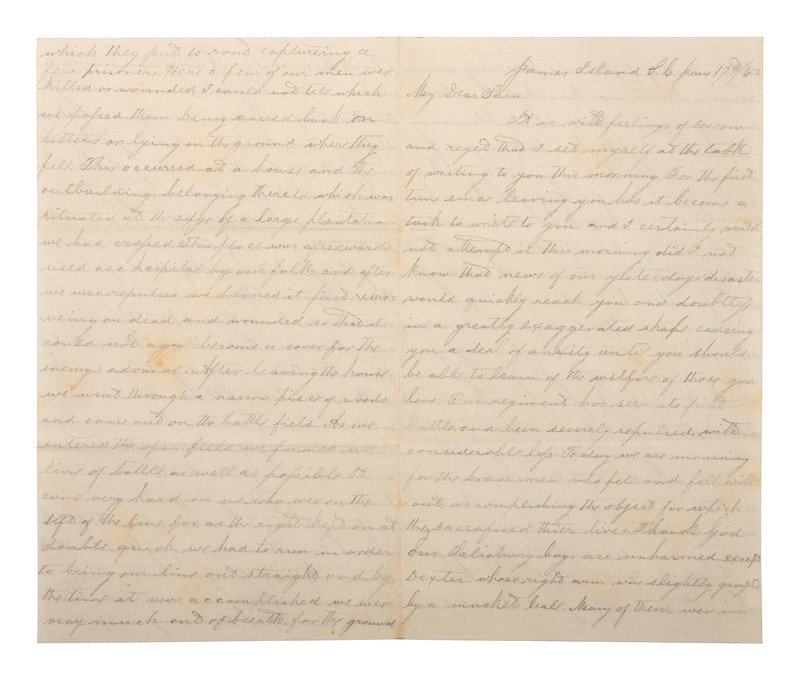
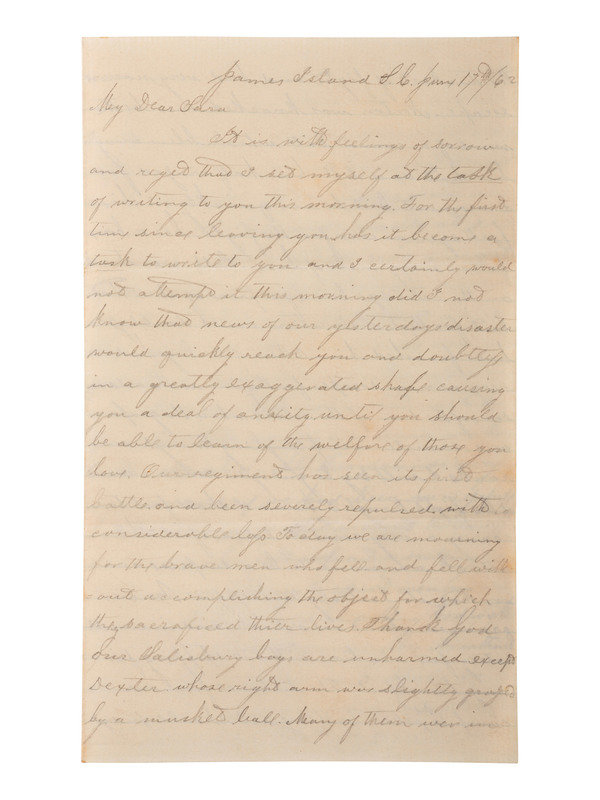
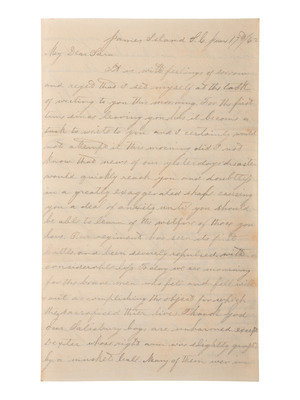
Two months later Barden would detail his experience with close combat at the Battle of Secessionville, a Union defeat in which the 7th CT advanced before becoming mired in marsh while under fire. Writing on June 17, 1862, the day after the battle, Barden provides a 15pp account of the defeat: “My Dear Sara, …our regiment has seen its first battle. And been severely repulsed. With considerable loss. Today we are mourning for the brave men who fell and fell without accomplishing the object for which they sacrifice their lives.” He describes the approach through the marsh and blistering rebel fire: ”Musketry. Grape. canister and scrapnell. Came plunging through our ranks making a clean sweep wherever they struck. As we neared the fort our left came upon a marsh which at high tide must be covered three or four feet deep. The bank. As lined with fallen trees and brush purposely placed there to obstruct advance. A howitzer was placed so that its fire completely raked this bank so that many who sought protection there. Met the fate they wer trying to avoid…we sank in the mud nearly knee deep and it was worse and worse the further we went….” Barden is dismayed at how the attack was commanded, noting that “I believe we can drive them out of that and every other strong hold they possess, but it cannot be done sending regiment after regiment into such a den as that with orders not to fire a gun and expect them to carry by assault works that can onley be taken by siege.”
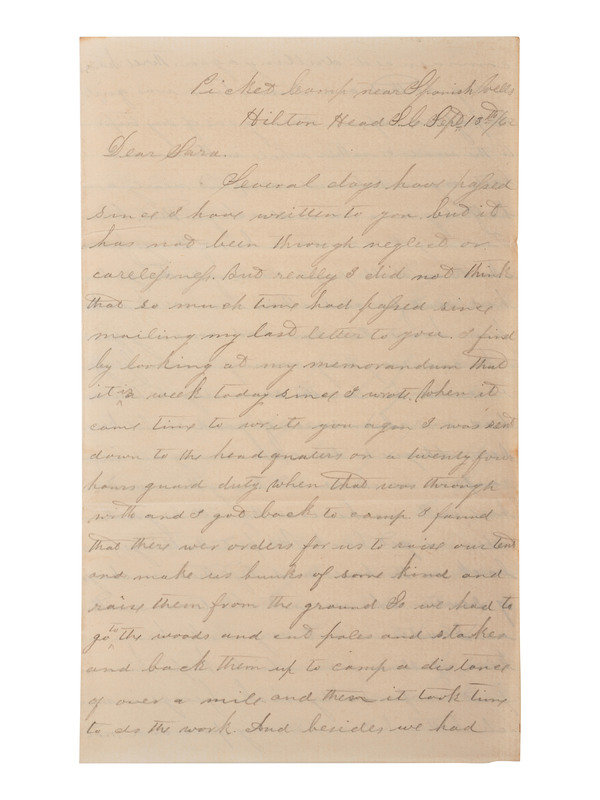
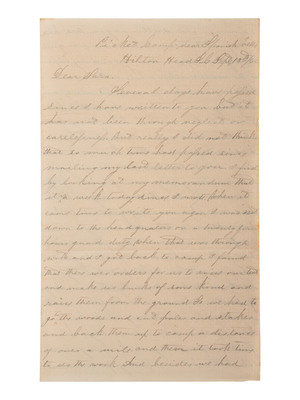
Displeasure with the officers commanding his regiment is evident again in his letter of August 14, 1862, written from Camp Hitchcock, Hilton Head Island: “I have never to you or any one else written that our officers wer anything but the very best. And our treatment by them all that could be desired. Nevertheless such is very far from being fact…The hardships. Deprivations. And dangers of a soldiers live are very far from being the most objectionable things in it for me….it is no slight thing I can assure you to be in utter subjection to an unprincipled little upstart not yet out of his teens who delights in showing his authority by punishing in some ignominious way any one he happens to dislike who crosses his path. I tell you my dear our young men at home would be still more loth to enlist than they are now if they onley knew the whole and how they are likely to be treated by those who they expect to see to and care for them and their interests.” His lack of faith extends even to top leadership. He writes on September 23, 1862, with news of an expected expedition to St. John’s Bluff, Florida: ”Scarcely a man of us has any faith in the expedition. Not that we doubt our ability to take the battery, but we think it is not of importance enough to pay for the loss of live that it would probably cost…We do not think the whole state of Florida worth one good Union soldiers life. It is also thought that General Terry who has command in that section wants to put a feather in his own cap, and get the name of having done some great thing. Whether it is of any real benefit to the country or not…And that does not tend to inspirit us much for I have no confidence at all in his ability to plan or carry out any very extensive movements.”
Writing one month later from Hilton Head, Barden provides Sara with an 8pp description of the Battle of Pocotaligo which occurred on October 22, 1862. Though he himself had fallen back from the regiment as the battle waged, Barden relays the actions of the 7th CT through the battle and its aftermath. Months later, still disheartened with his superior officers 18 months into his enlistment, Barden opted to take the most unusual step of requesting a reduction in ranks. On February 21, 1863, Barden considers the possibility of promotion telling Sara, “I am satisfied that I am not fit to be an officer. I have but little taste for military anyway and have not enough of the tyrant in my nature (thank God) to qualify me for a good officer. Another thing. I have never saught the favor of the officers. and have never conducted myself in a manor to gain their good will. I am to fond of expressing my likes and dislikes. and whenever anything has gone contrary to what I thought right. I have not failed to express my opinion freely… I cannot stoop to court favor with a man whome I utterly despise. and will not though I wer to remain in the army all my life. The paltry position of Corporal. which I have held since we came out. I am bound to get rid of I have a note now in my portfolio written last evening to Capt. Mills and which I am waiting an opportunity to hand him. requesting him to relieve me from the position. if he refuses I shall appeal to the Colonel and if neither of them will grant my request I shall do something for which they will reduce me as a punishment…. I can do my duty as a private soldier with clear conscience. And what neede I care for aught else.” Notably, Barden’s request was denied.
Not all senior officers were viewed as tyrants, however. One man who met with Barden’s heartiest approval and respect was General Quincy Gillmore, an engineer and mastermind of artillery and siege strategy. Gillmore features most prominently of all commanders referenced in the collection, and Barden’s estimation of him remains high throughout the war. “Ben Butler is the most unmitigated humbug in the military I know of…He will do very well as a military governor of some captured province, but is utterly unfit to command in the field…General Gillmore has more military talent in his little finger, than ever existed in the whole Butler family.” After Gillmore’s transfer from the X Corps in June 1864, Barden would lament his departure: ”Gen. Gillmore is one of the best. bravest. and most able generals that we have. He is true steel. Void of political ambition. And only desirous of winning fame in the legitimate way that every soldier should. In the line of his profession. We felt bad to lose him. I can assure you.”
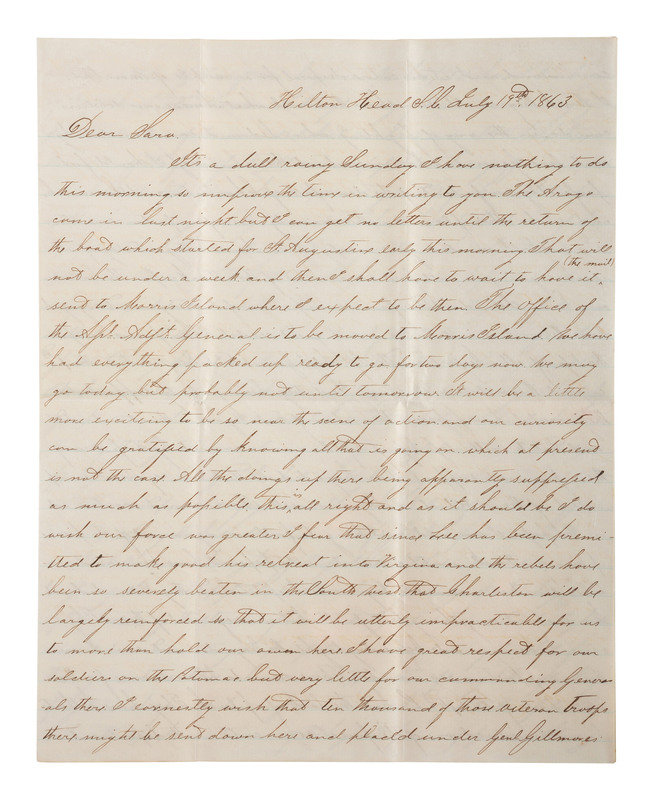
By late June 1863, Barden’s circumstances had changed significantly. He was back at Hilton Head Island, but this time thanks to a friend who “ment to do me a favor when he got me ordered here for duty” Barden finds himself working as a clerk in the Assistant Adjutant Generals Office. Barden works in a small building near General Gillmore’s headquarters and likes his new role in comparison with company duty. From his vantage point he can sit upon the piazza in front of the building and “look out upon the bay” where he sees steamers, sailing vessels, ironclads, and on Jul 15, 1863, he spies a hospital ship unloading wounded from the attack on Fort Wagner. Though he can learn little of the fight, he is told that “’the 7th Conn covered themselves with glory.’ Had they been supported by the regiments ordered to do so they would have gone into the fort. would have captured it. As it was their support failed them. Leaving them exposed to a deadly cross fire.” Four days later, he again ventures to the wharf hoping to ascertain the situation at Morris Island. “I was not prepared for the news I learned,” he writes. “And the sight which greeted my eyes as she neared the dock. Another desperate fight for the possession of Ft. Wagner took place last night. The works were again stormed by our forces, and as I learn the rebels driven out of them. but such a destructive fire was opened upon them by Fort Sumpter. and battery Bee. on Cummings Point. that it was found impossible to remain in them…Our loss when compared with the number engaged has been terrible…No correct, or authentic account of the battle can be had. As nearly as I can learn the attack was made late in the evening. The regiments engaged suffered severely. The 54th Mass. (colored) lost it is said nearly six hundred men. They are said to have fought bravely. Their Colonel was killed. His name was R.G. Shaw…. Some think we have achieved a partial success. But I fear nothing commensurate with our loss….”
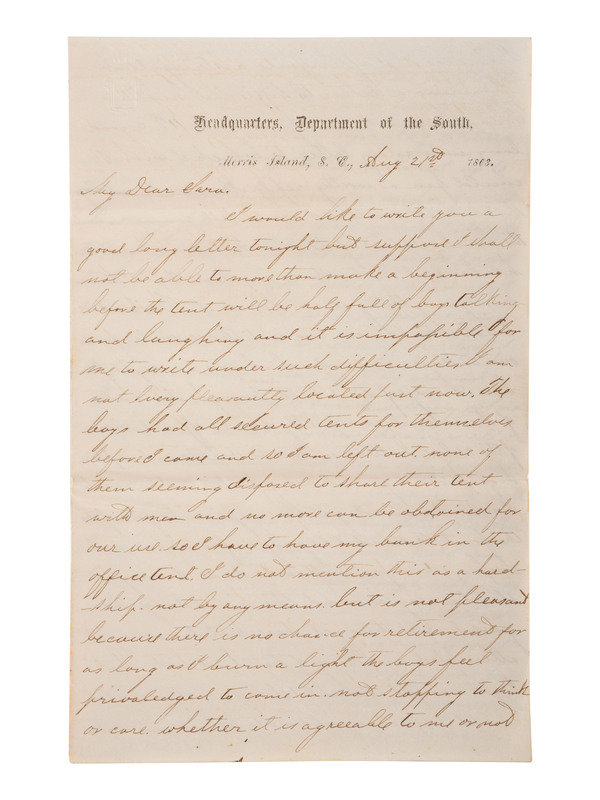
Writing from Morris Island on August 12, 1863, Barden is witness to the large-scale efforts underway in Charleston Harbor to finally take Ft. Wagner and move against other rebel fortifications. “While I am writing the sound of bombardment reaches my ears. While by stepping outside the tent I can see the sky light up almost momentarily b the flashes from the heavy guns and can trace the course of the mortar shells through the air by the streak of light made by the burning fuse. There is much more fire tonight that there was last or during the day….” Continuing his letter on Aug 14 he writes: “From the bluffs and the landing Secessionville can be plainly seen. ..The situation of Ft. Johnson is plainly seen. Ft. Sumter is in plain sight. Ft. Wagner. Gregg. Moultre. And Battery B. are not to be seen. The bluffs rising higher towards the north end of the island in their direction. Our fleet lies just abrest of us perhaps a couple miles from shore. At low tide the turrets of the lost ‘Keokuk’ are visible between us and the fleet. Why in the world Admiral DuPont should allow the rebels to take off her guns unless he was perfectly willing and to do the rebels a favor I cannot see….The spires of Charleston can be seen over the tops of intervening trees. It is said that it is three miles distant. And also that General Beauregard has once or twice sent word to Genl. Gillmore that unless he left the island at a certain time he would shell his camps. To which Genl. Gillmore replied that if he attempted it. he would burn Charleston. I do not know that the report is true.” Barden’s letters continue to describe in detail the scenes unfolding near the Headquarters, Department of the South, on Morris Island. His tent is situated “almost between” the tents of General Gillmore and Admiral Dahlgren, though “the Admiral does not spend much time on shore.” As engineers and soldiers work feverishly, Barden’s regiment is now all employed in the batteries, manning the guns. He writes on August 28: “The rebels have filled the ground with torpedoes. Between fort Wagner and our works. The Engineers have dug out several in excavating the approaches to the Fort. I am told that to one of them a dead negro was attached by a cord in such a manner that in the attempt to move the negro the torpedo would be exploded. Fortunately the infernal machine was found by the workmen before the negro was discovered. And the hellish design of chivalric inventor frustrated. This story was told to me by one of the Engineers. I have not heard it contradicted.”
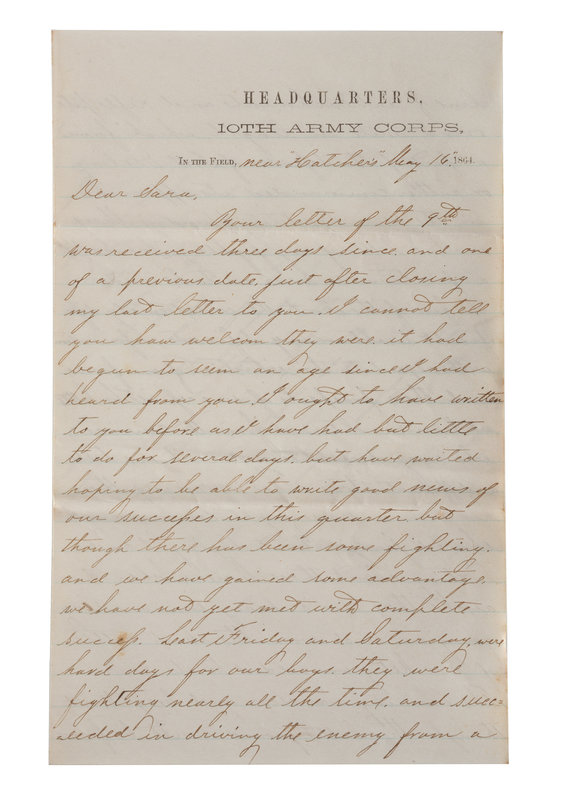
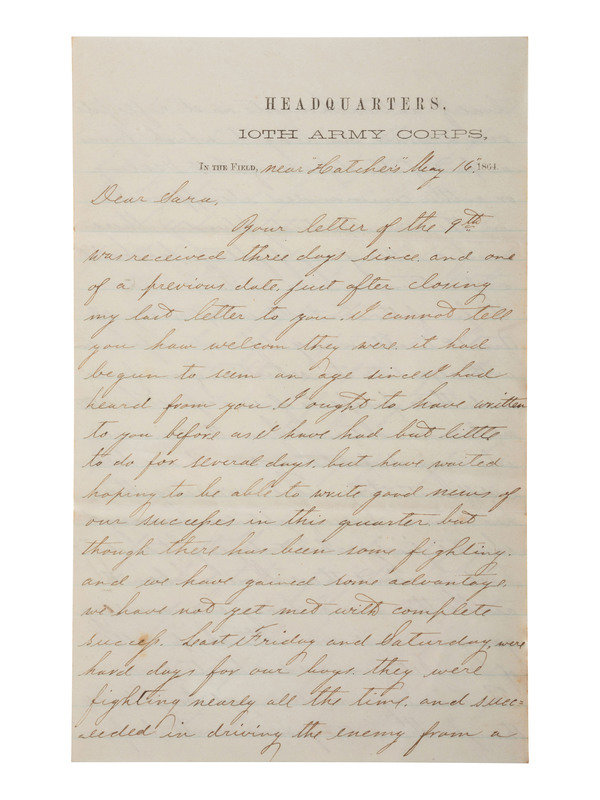
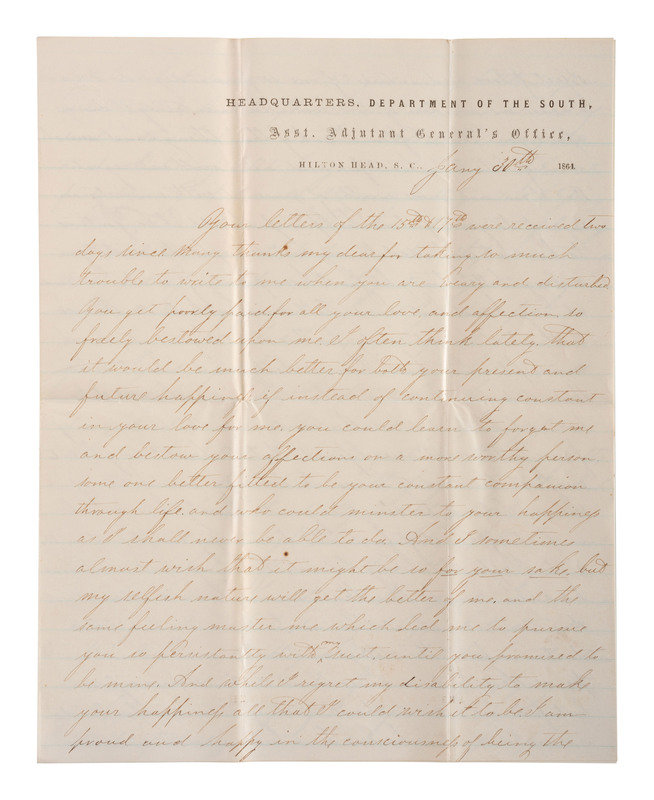
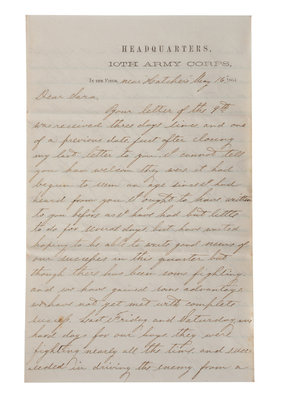
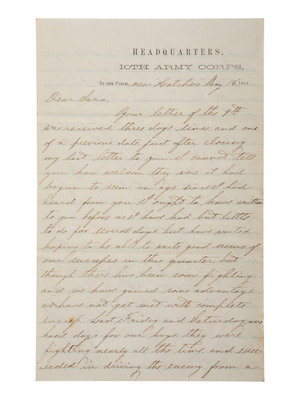
Barden’s workload increases steadily following the capture of Forts Wagner and Gregg. He writes on February 5th, 1864, that he works arrives at the office about 8:30 AM and seldom leaves before 10 or 11 at night. Barden chooses not to request a furlough, deeming it “not advisable,” and tell Sara that hopes to finish out his 3-year enlistment to return home to stay. Between April 25 and May 10, 1864, Barden moves north with the 10th Army Corps arriving in Virginia “within about fifteen miles of Richmond.” Now detailed for clerk duty at X Corps Headquarters, Barden states that there has been considerable fighting. While “In the field, near ‘Hatcher’s’ May 16, 1864,” Barden writes of the disastrous news from Fort Darling: “Today has been a sad day for us. The rebels largely reinforced. fell upon us at daylight, in such overwhelming numbers. as to drive us from the hard earned vantage ground we had taken from them on Friday and Saturday. Their attempts to crush us out. by hurling upon us a vastly superior force, has failed. Desperately contesting every foot of ground we have retired from the bloody field. bringing off our wounded preventing the broken. and shattered fragments of our regiments from falling into the enemies hands. and not allowing the defeat to become a rout. We are this evening behind our intrenchments, and are doubtless secure. I have no doubt of our ability to hold our present position. The rebels took advantage of a dense fog this morning to approach within easy range of our forces. and daylight found them strongly posted. with artillery all in position all along our front. They at once charged and as I learn were twice repulsed with great slaughter. but some regiments on our flank gave way. the rebels opened a cross fire upon us. and flesh and blood could stand it no longer. We were obliged to retreat. The 7th Regt. was in the center. or nearly so. as I learn. they held their ground as long as it was possible for men to do so until. their ammunition expended. and overwhelmed by superior numbers they were obliged to retreat. They have suffered severly. but it is utterly impossible to form any estimate of their loss. Many are probably taken prisoners.”
As days pass Barden is able to write less frequently, noting that he is working from morning until as late as 1am. He does not wish to complain, aware that his regiment is under near constant fire now. After a June 2 attack on the picket line, Barden is markedly feeling the weight of the war and their losses: “The regiment must be pretty nearly used up….we have been so roughly used by the rebels. Of late. That I have lost all confidence…While writing I can hear the dull, sullen roar of distant guns. Which must come from where Grant is fighting. …Our recent reverses do not give affairs a very promising look…I think the present time, the most critical of any since the war commenced. Everything seems to hang upon Grant’s success. I have much confidence in his ability, and patriotism, but he has fearful, and tremendous odds to contend with…The rebels are fighting with an energy and determination. Which. Had it been shown by our own armies, would long ago have swept the last rebel out of the Confederacy.”
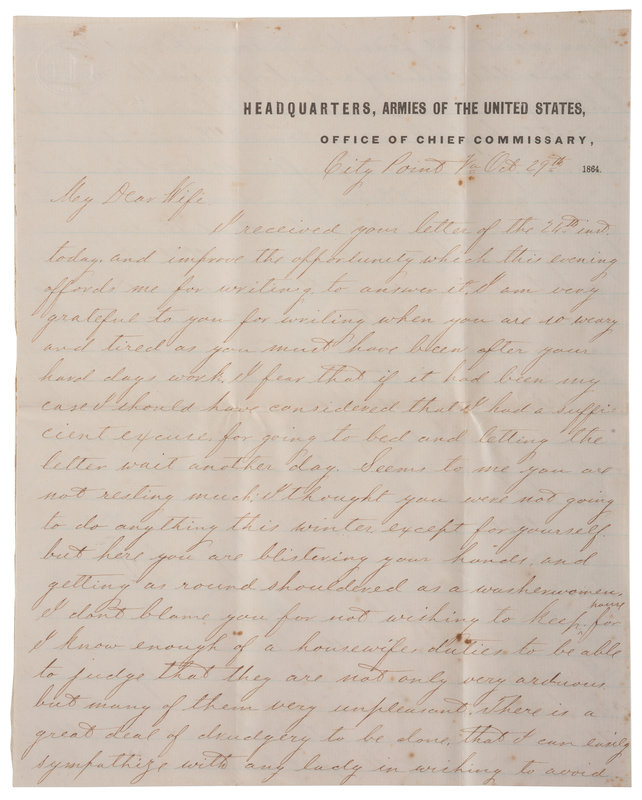
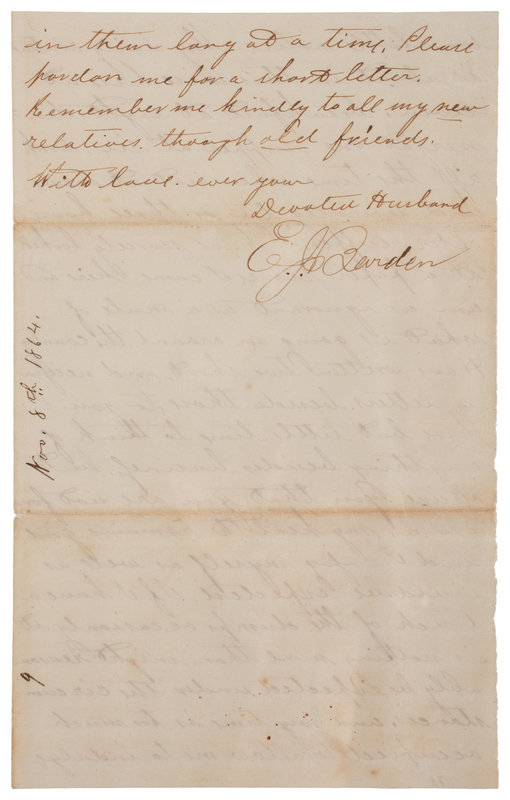
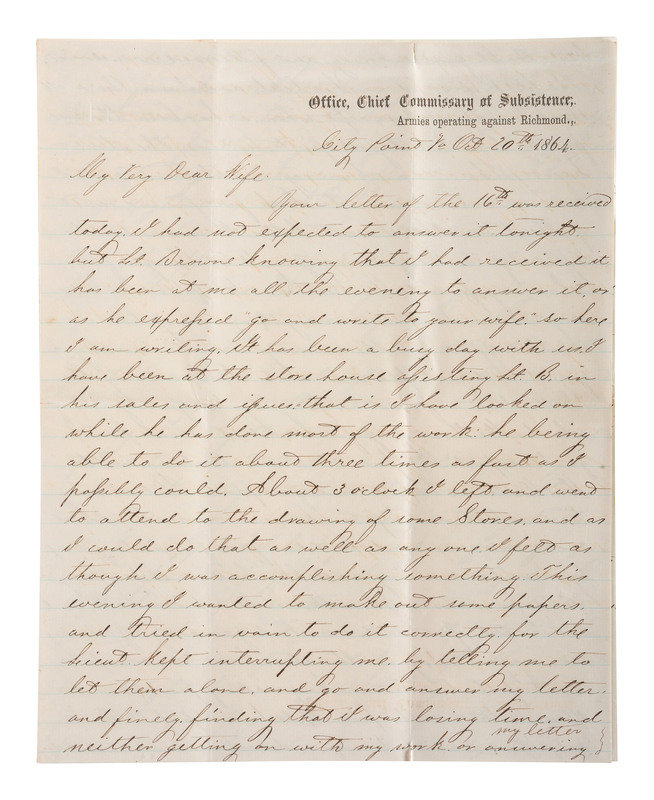
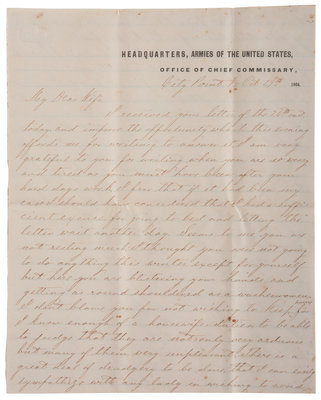
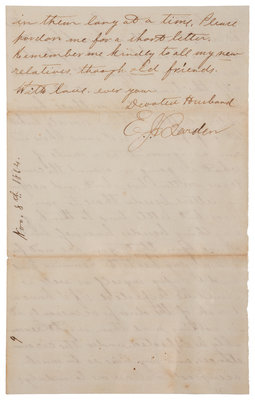
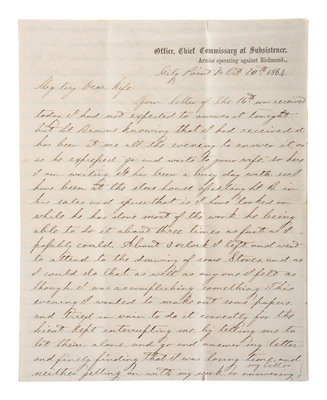
Barden decided not to re-enlist at the expiration of his service and mustered out on 12 September 1864. Returning home for the first time in 3 years, he marries Sara on October 5, 1864, in Lakeville, CT. Determined to continue to serve the Union in some capacity, however, he becomes a civilian clerk with the “Office, Chief Commissary of Subsistence, Armies operating against Richmond.” Now based at General Grant’s headquarters in City Point, Virginia, Barden works for a lieutenant writing correspondence and assisting in the store house making sales of provisions to officers. From this position Barden encounters notables from Washington, DC, and senior officers, including General Grant himself. On October 20, 1864, Grant comes into the store to weigh himself. “He is a very unpretending appearing man, has a very slight stoop in his shoulders,” Barden tells Sara. One month later on November 25, Grant returns to weigh himself. This time Barden notes the number on the scale: “his weight is 140 ½ lbs.”
As the fall of 1864 turns into January 1865, and after a quick end-of-year visit home, Barden remains in the commissary working long hours. Though no longer in the field he remains a witness to the constant whir of activity at Army headquarters. On February 1, 1865, he witnesses “three of the leading rebels” coming from General Grant’s quarters, adding that “they are on a peace mission, and at present are waiting to hear from Washington wither word of their being here has been sent.” As Fort Anderson and Wilmington fall, Barden senses that the end is near. Deserters are “fairly crowding into our lines” he writes on February 24th, 1865.
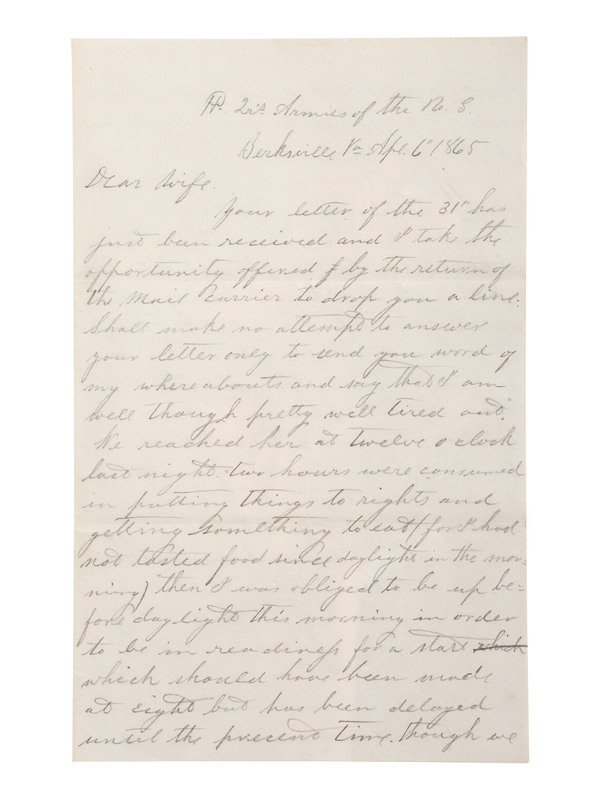
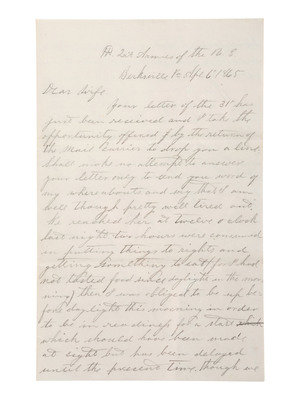
On April 2, 1865, Barden notes that he had received orders to leave City Point and join Gen. Grant at his headquarters at the front. After working feverishly to pack the stores and traveling to the front, he occupied the remains of what had been a small house inside rebel entrenchments just days before. He is approximately a mile and half from the line of battle at Petersburg, and he hears heavy firing. On April 6th, he is expecting to go to the rear “as a fight is expected within three or four miles of us this evening. Gen. Grant went out to Gen. Sheridens last night and has not yet returned. Lee is nearly surrounded by our forces, and it is thought that he will be brought to bay, and perhaps a final struggle of the rebellion will take place near here. This is the junction of the Southside and Danville R.R.’s.”
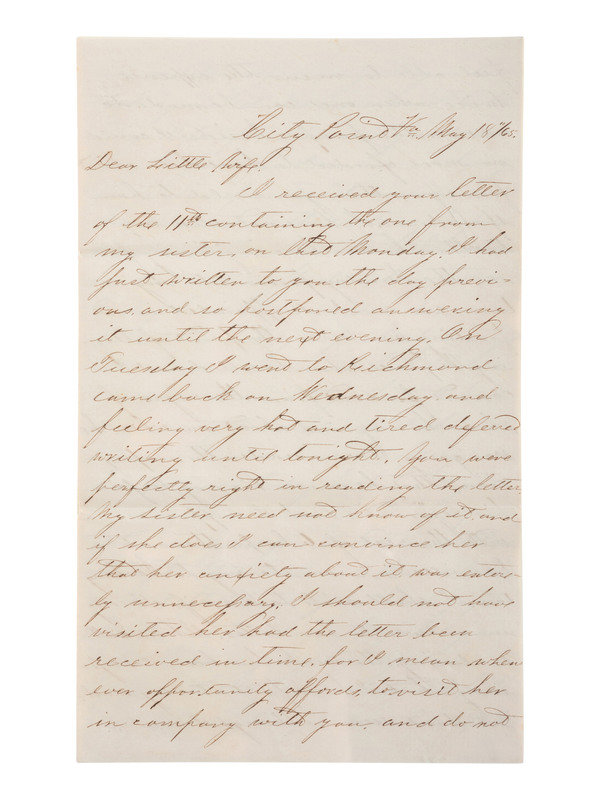
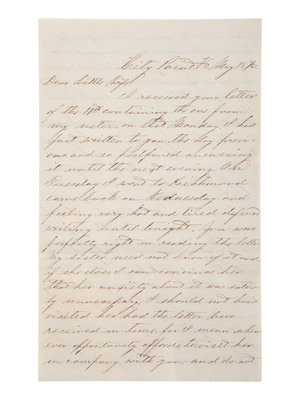
The remaining letters in the archive come after Grant’s army has captured Richmond. Barden appears to have been granted leave following Lee’s surrender. His letters home resume from City Point on May 10, 1865, with his letters of May 18 and 19 providing a detailed first-hand account of the city of Richmond. He writes extensively about the infamous Libby Prison, which he was able to tour. In the city center, he was “not prepared to see such an extensive destruction of property” noting that Main Street was “now one mass of ruins for nearly a mile in length.” He visited the Capitol building “and took a seat in the Speaker’s chair of the house of representatives.”
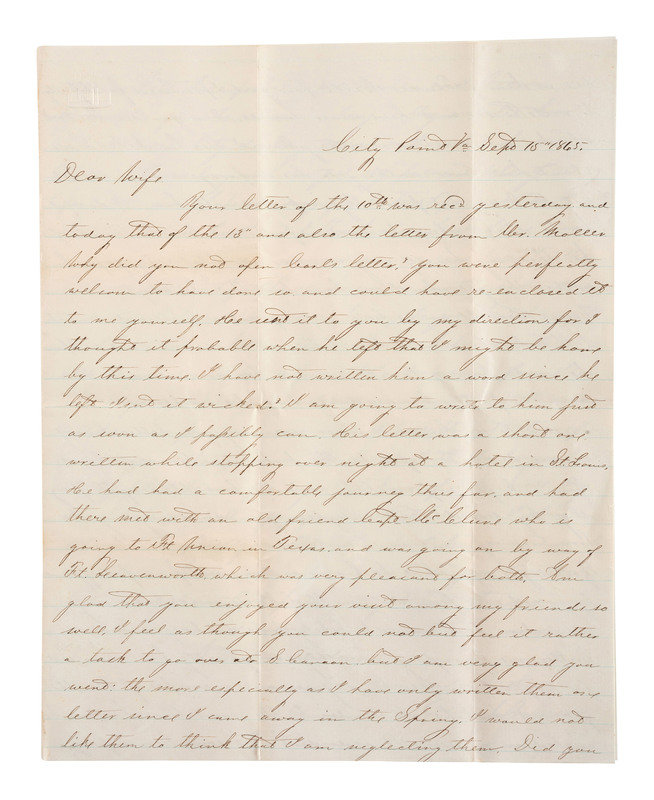
Still working in the storehouse, he remarks upon the changes at City Point, once “the base of supplies of one of the greatest Armies of the age, it is fast subsiding into the quiet of a second rate Military post.” Working, though much less so, Barden sees the regiments mustering out and passing through and he is tasked with supplying them with rations. This includes ex-rebels who have taken the oath of allegiance. He continues trips to places once teaming with soldiers and scenes of battles. His greatest “troubles” now are dealing with soldiers awaiting discharge and attempts at stealing whiskey from the storehouse. By August 6th, 1865, City Point is “pretty much abandoned now by all but negroes.” The last letter in the collection dates to Sept 15, 1865.
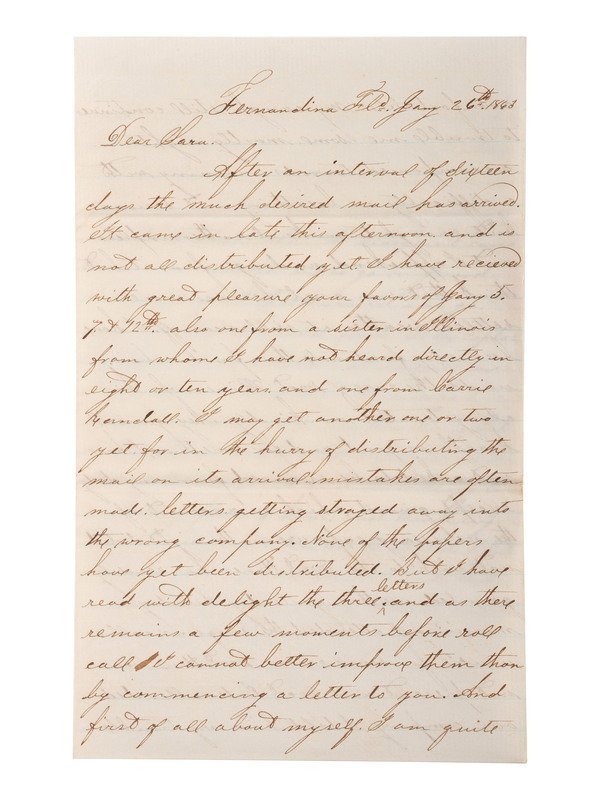
Beyond warfare, Barden’s letters are laden with descriptions of the sights, sounds, and culture he experiences in each destination. He describes encounters with formerly enslaved men and women, and the plantations and plantation owners now in the path of advancing Union armies. In August 1862 he is encamped at “Spanish Wells” and “Brainards plantation” on Hilton Head, where formerly enslaved men, women, and children remain. Upon “hearing that a negro meeting was in progress in a house a few rods distant I determined to go for I have always had a great desire to attend one….There wer perhaps twenty five men and women present in a little room in one of the cabins…. They were singing ‘A charge to keep I have’ after the hymn one of the brethren made a prayer. Then an old man arose and made some remarks and led in singing another hymn. After the hymn a prayer and the meeting was ended by shaking hands all around. Much was said that I could not understand but I could not but be seriously impressed with the air of apparent faith. And sincerity of these ignorant people. And have no doubt that they could learn me many a lesson of faith. Hope. And patience.” In 1863, while at Camp Starr in Fernandina, Florida, Barden attended the negro Sabbath school, describing how he tried to teach the children ages 4 to 10 their catechism and letters. He notes that there were more than 100 African Americans present in all, all ages 4-30, and that the classes were too large due to a want of teachers. Though “there are three or four lady teachers,” among them the wives of the chaplain and colonel, Barden states that most of the teachers are volunteers from his regiment. While still in Florida Barden visits St. Augustine, describing the historic fort, and on May 24, he writes of attending Catholic Church “out of curiosity.” The “catholic service is in Latin and of course utterly unintelligible,” he declared. Adding then that the sermon which was preached by a Spaniard was likewise unintelligible.
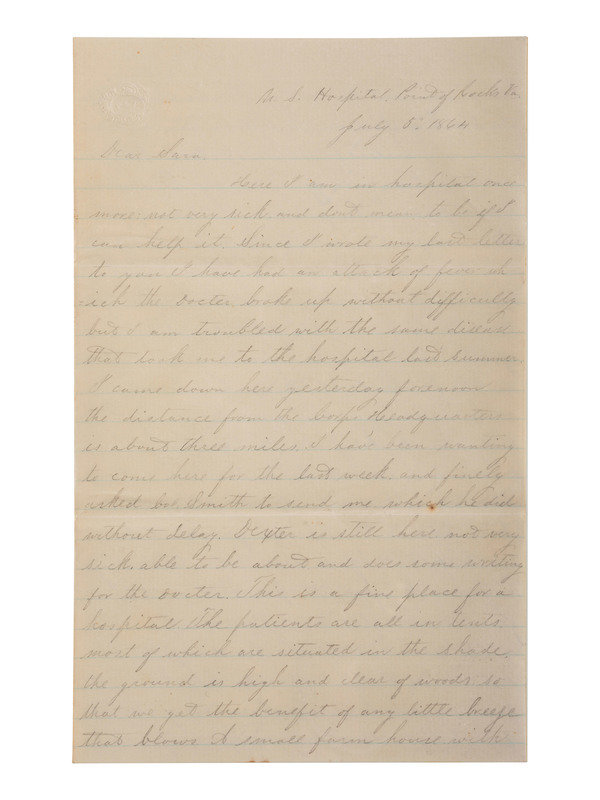
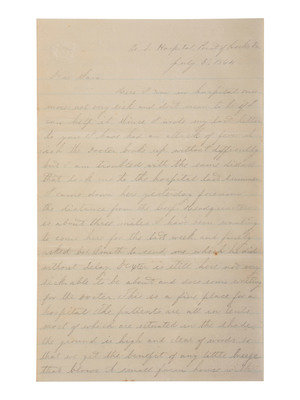
Likely owing to his time in the Southern states, Barden was afflicted with ill-health, an ailment he says at one point was diagnosed by a doctor as malaria. Several times during his enlistment he is confined to the hospital. It is during one of these stays at Point of Rocks, VA, in July 1864, that Barden encounters a particularly notable caretaker. With patients still just in tents, Barden tells Sara of the good work being carried out by both the Sanitary and Christian Commissions for the sick and wounded soldiers. He mentions two women who work at the hospital. One is Miss J.B. Morse “who writes frequent articles for the papers. Over the signature of J.B.M….The other lady is Miss [Clara] Barton. And is older. Not exceeding thirty though I should think.”
Throughout his enlistment and civil service, Barden remained a devoted and prolific scribe. His incredible archive of letters offers a thorough and valuable eyewitness perspective on the war which far exceeds the confines of a catalog description.
Barden is buried at Arlington National Cemetery.
Barden is buried at Arlington National Cemetery.
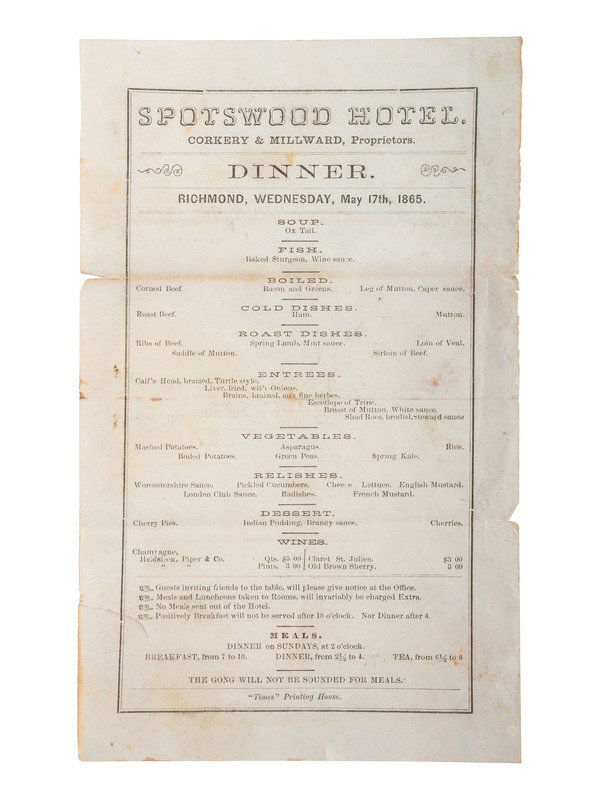
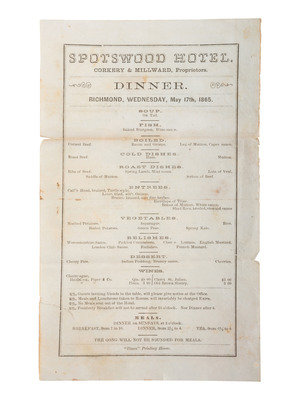
[With:] “Spotswood Hotel,” Richmond, Virginia, dinner menu for May 17, 1865. Referenced in Barden’s letter of May 19, 1865: “The Spotswood is a large, fine five story brown stone, front building, much worn and dilapidated inside, and sadly in need of rejuvenating. In the hands of an enterprising Northern man, it might easily be made a first class hotel. In the hands of its present proprietor it is hardly a fourth rate house, where one is charged extortinate prices, for very ordinary accommodations. I had three meals there. My supper and breakfast were no better than we have had at our mess. The dinner was the only meal that made any pretence to respectability.”
Archive descended directly in the family to current consignor, a 5th generation military officer.