Condition Report
Contact Information
Auction Specialist
Lot 507
Sale 960 - American Historical Ephemera & Photography
Nov 15, 2021
11:00AM ET
Live / Cincinnati
Own a similar item?
Estimate
$600 -
800
Price Realized
$594
Sold prices are inclusive of Buyer’s Premium
Lot Description
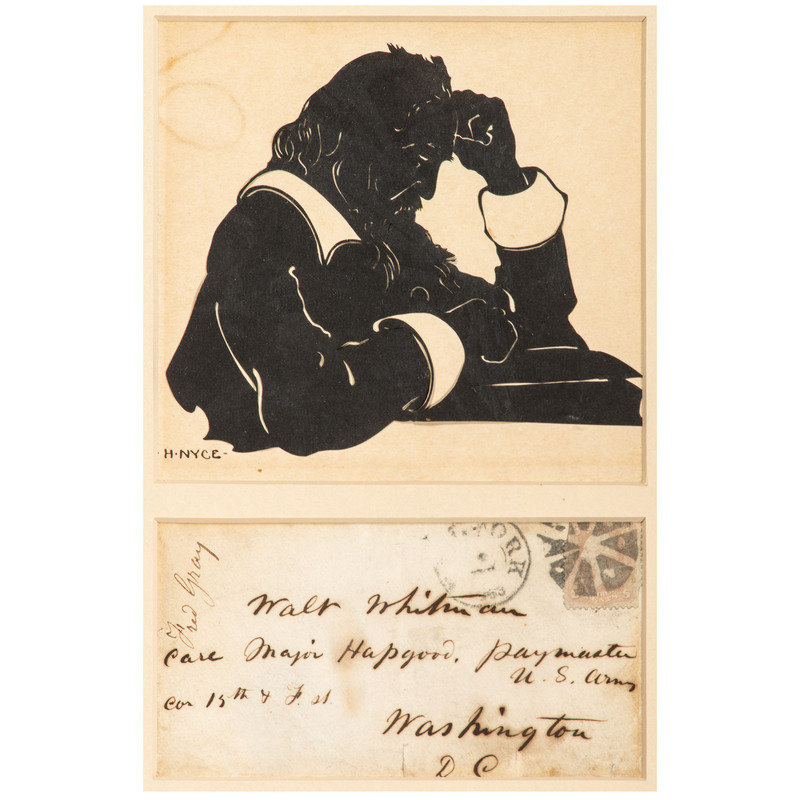
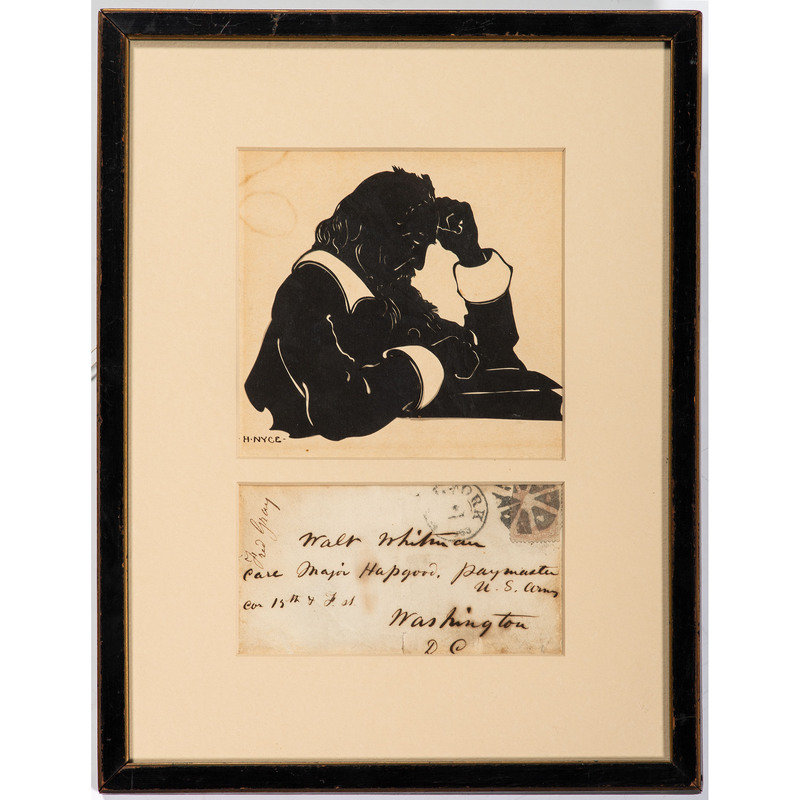
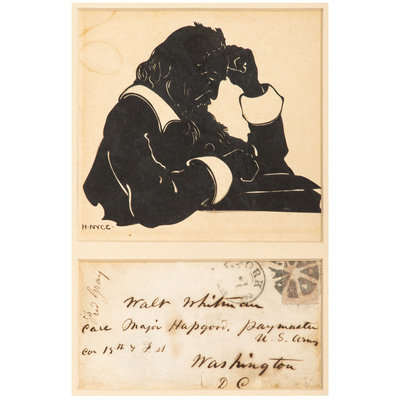
[WHITMAN, Walt (1819-1892)]. GRAY, Fred (1834-1891). Civil War-era postcard addressed to Walt Whitman. Washington, DC, 1863.
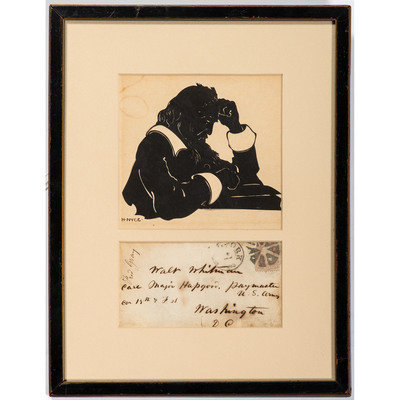
5 1/8 x 2 3/4 in. (visible area) postcard mailed from Fred Gray in 1863 to Walt Whitman care of US Army Paymaster Major Hapgood.
[With:] 5 1/8 x 5 in. papercut silhouette (visible area) of Whitman, mount signed "H.NYCE-" (possibly cut off from mat). Matted and framed together with postcard, 9 3/4 x 12 3/4 in.
At the start of the Civil War, Whitman published the patriotic pro-Union poem Beat! Beat! Drums! and his brother George had joined the cause, sending him frequent and vivid letters. After a trip to the front, Whitman relocated to Washington, DC where he assisted his friend Charley Eldridge part-time in the paymaster's office while also volunteering as a nurse in the army hospitals.
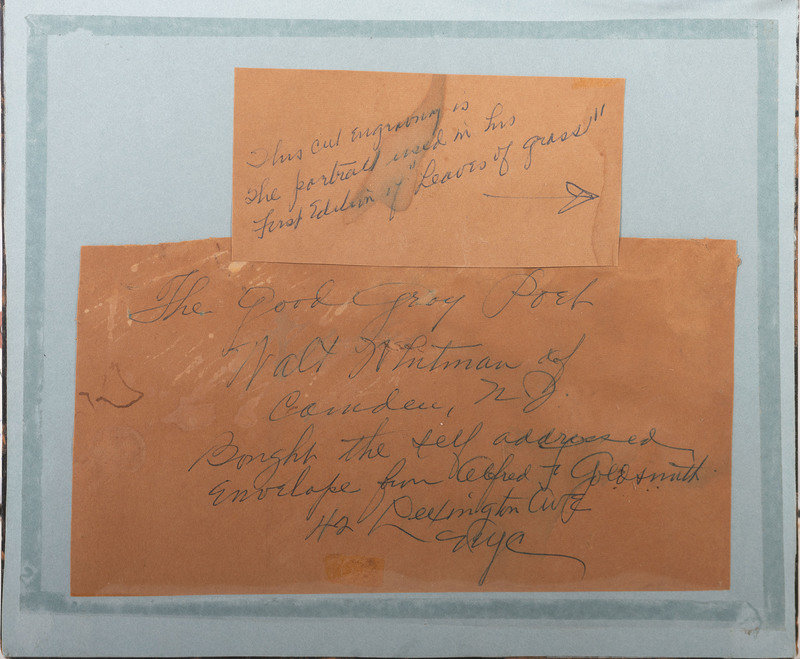
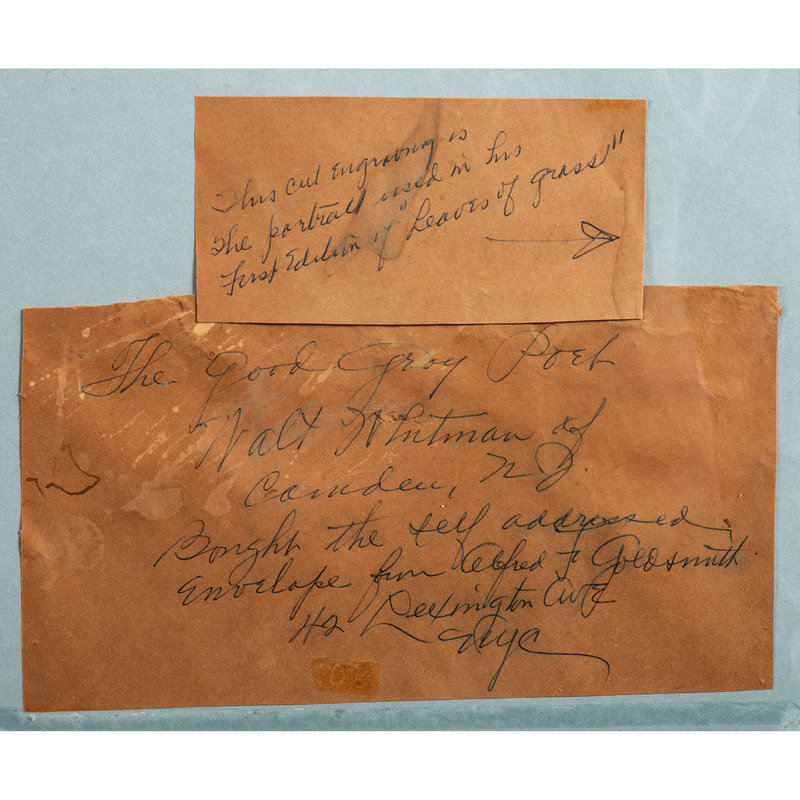
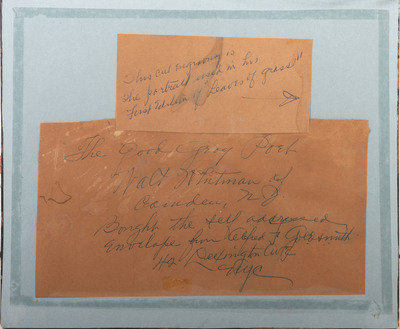
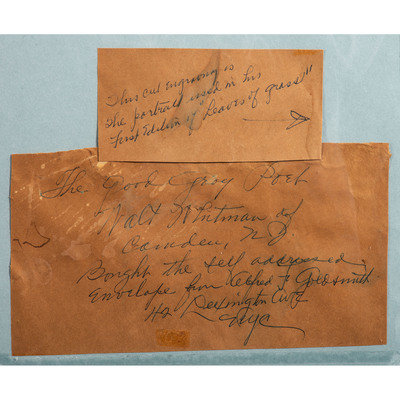
A note on the verso relates that the papercut was used in his first edition of Leaves of Grass, however, the only plate used in that edition was a steel engraved frontispiece of the poet at age 37. Here, Whitman is very much the "The Good Gray Poet," with a long beard and aged features. Though it is possible that it was used for a later edition of Leaves or another Whitman publication, it remains unidentified.
In the Walt Whitman Archive is a letter from John F.S. (Fred) Gray written to Whitman (whitmanarchive.org). In the letter Gray alludes to an incident at Pfaff's Beer Cellar in midtown Manhattan. Based on German Rathskellers, Pfaff's was located in an arched-ceiling room that ran under the sidewalks and streets of the city, and to access it one had to walk down stairs. In part because of his excellent selection of wines and food, Pfaff soon had a dedicated clientele that has been described as the first Bohemians in America, led ;by Henry Clapp, the "King of Bohemia." This included intellectuals, utopianists, playwrights, novelists, poets, artists, actors and others. Some who frequented this establishment - many long forgotten - included Elihu Vedder, Ada Clare, Adah Isaacs Menken, George Arnold, Marie Stevens, Bayard Taylor, Fitz Hugh Ludlow, John Brougham, Edwin Booth, Artemus Ward . Here also was "Fred Gray's Association," described as "a loose confederation of young men who seemed anxious to explore new possibilities of male-male affection." (flashbak.com and others) This, of course, earned Pfaff's the moniker as the first Gay Bar. However, a number of these young "explorers," eventually married and lived relatively average lives when they matured a bit. Others probably were gay, Fred Gray among them, although he mentions a daughter in the letter to Whitman. Gray was a captain in the 20th New York Infantry and later became an assistant to General John Wool. He seems to have been stationed in New Orleans.
In the Walt Whitman Archive is a letter from John F.S. (Fred) Gray written to Whitman (whitmanarchive.org). In the letter Gray alludes to an incident at Pfaff's Beer Cellar in midtown Manhattan. Based on German Rathskellers, Pfaff's was located in an arched-ceiling room that ran under the sidewalks and streets of the city, and to access it one had to walk down stairs. In part because of his excellent selection of wines and food, Pfaff soon had a dedicated clientele that has been described as the first Bohemians in America, led ;by Henry Clapp, the "King of Bohemia." This included intellectuals, utopianists, playwrights, novelists, poets, artists, actors and others. Some who frequented this establishment - many long forgotten - included Elihu Vedder, Ada Clare, Adah Isaacs Menken, George Arnold, Marie Stevens, Bayard Taylor, Fitz Hugh Ludlow, John Brougham, Edwin Booth, Artemus Ward . Here also was "Fred Gray's Association," described as "a loose confederation of young men who seemed anxious to explore new possibilities of male-male affection." (flashbak.com and others) This, of course, earned Pfaff's the moniker as the first Gay Bar. However, a number of these young "explorers," eventually married and lived relatively average lives when they matured a bit. Others probably were gay, Fred Gray among them, although he mentions a daughter in the letter to Whitman. Gray was a captain in the 20th New York Infantry and later became an assistant to General John Wool. He seems to have been stationed in New Orleans.