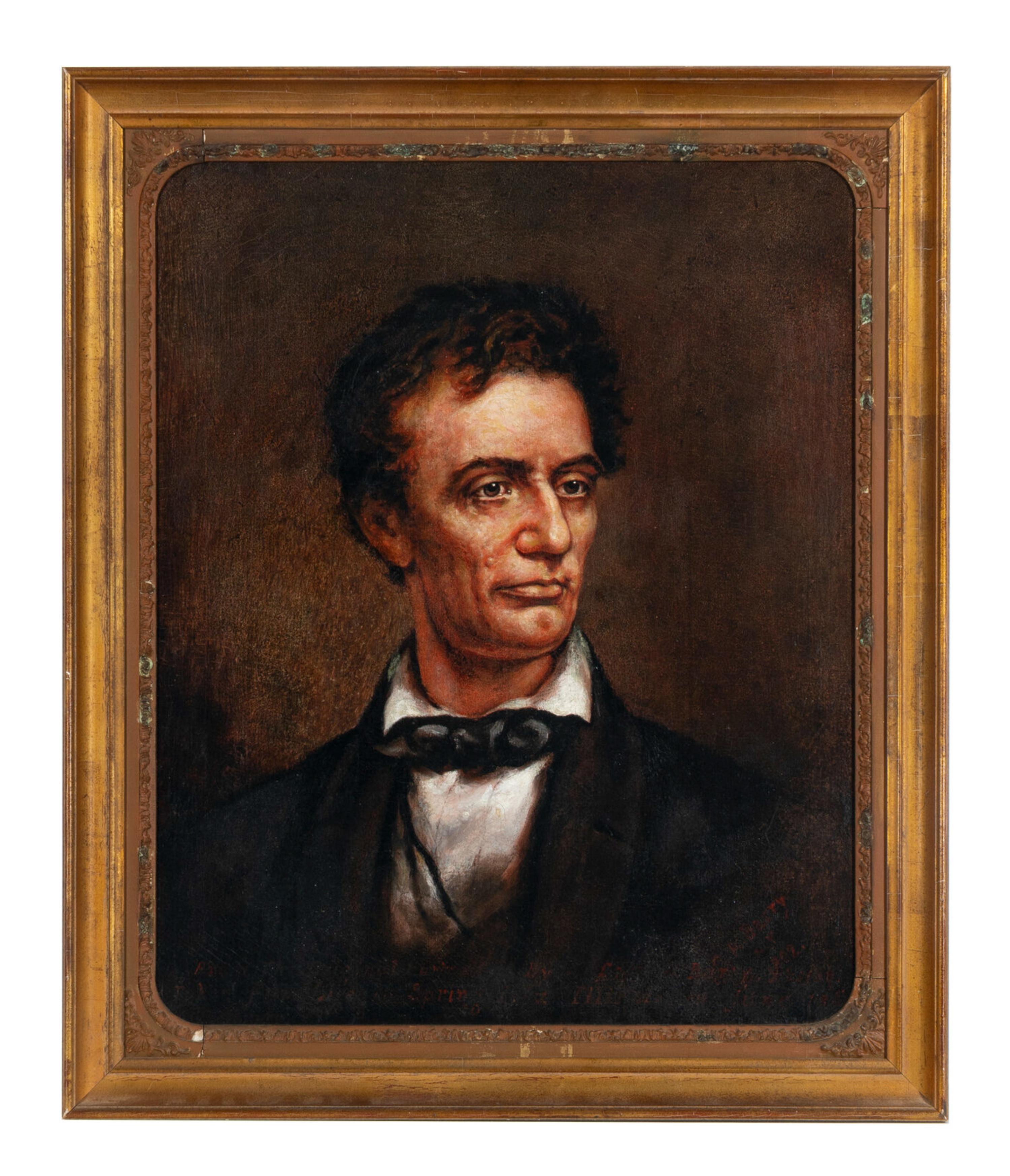
Charles Alfred Barry
(American, 1830-1892)
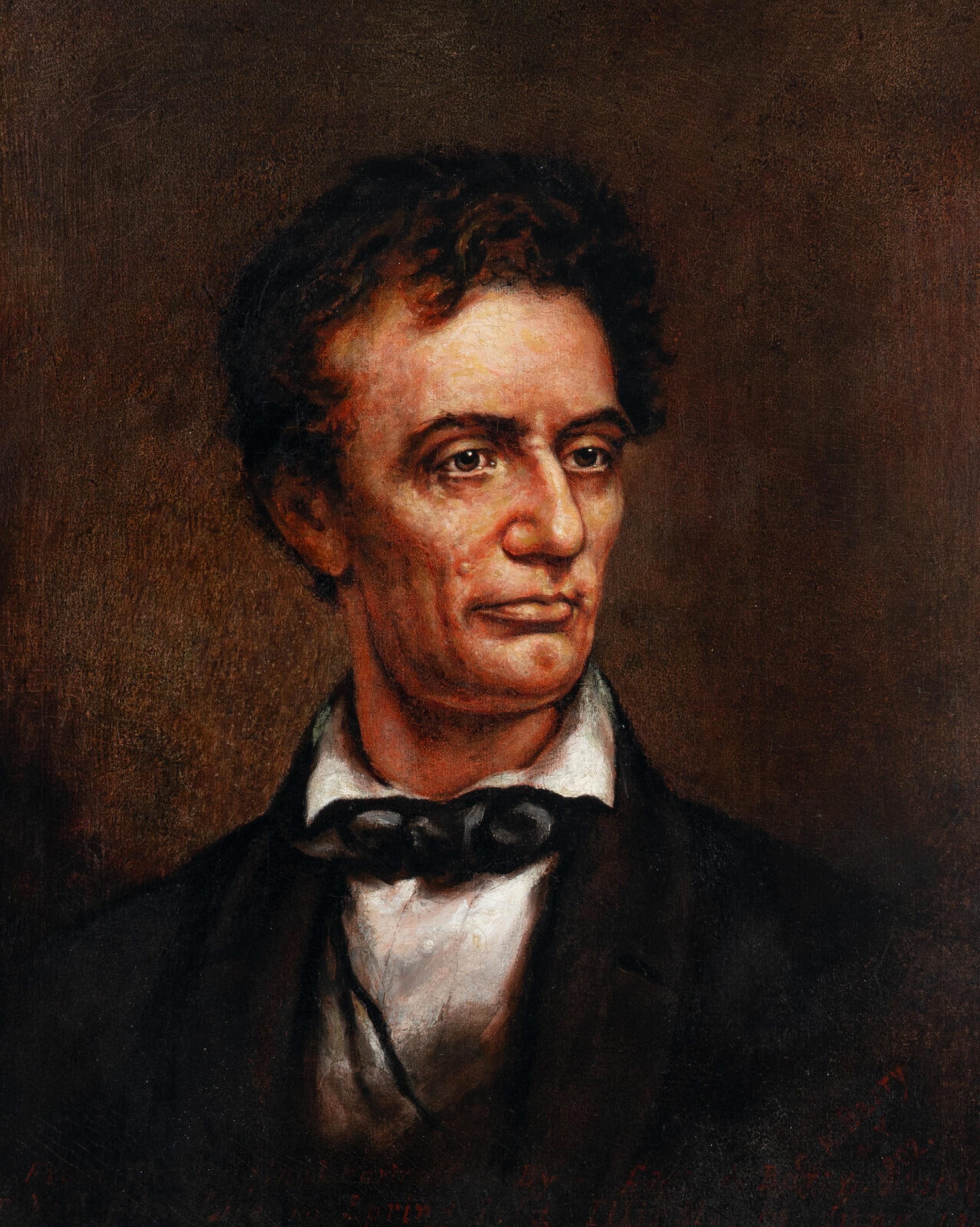
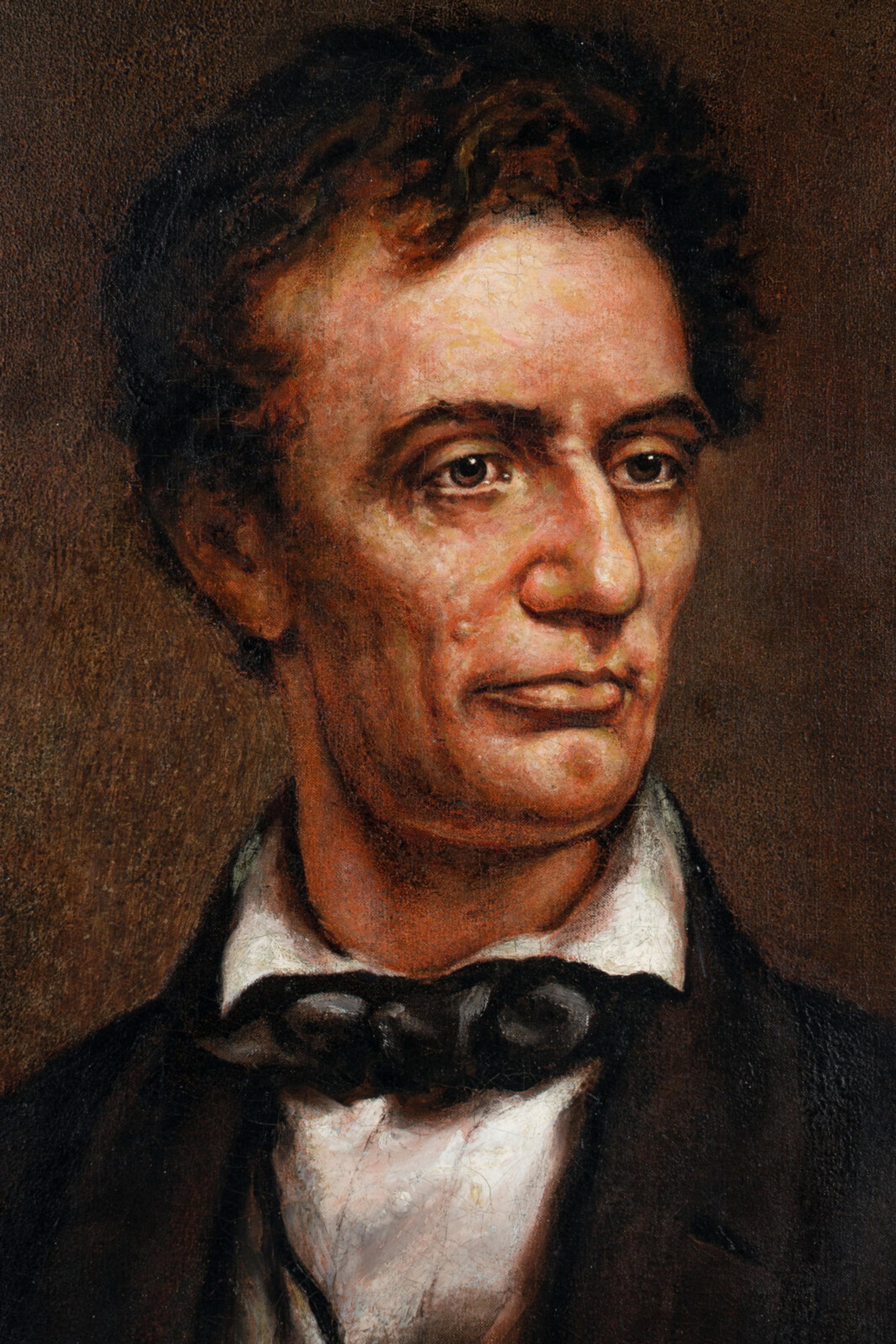
Abraham Lincoln: The Greek God, 1892
oil on canvas, framed
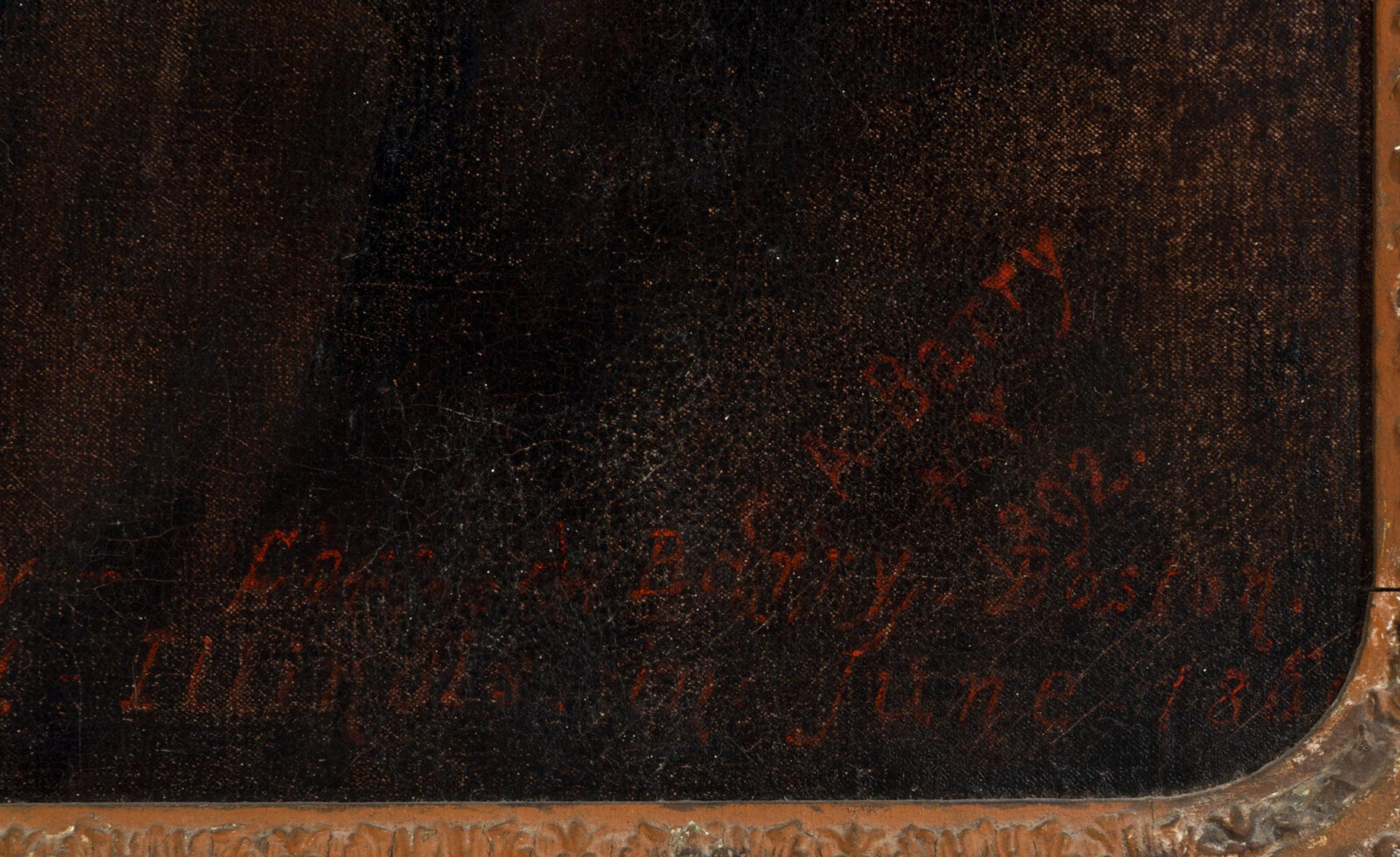
signed and dated, C.A. Barry, N.Y. (lower right)
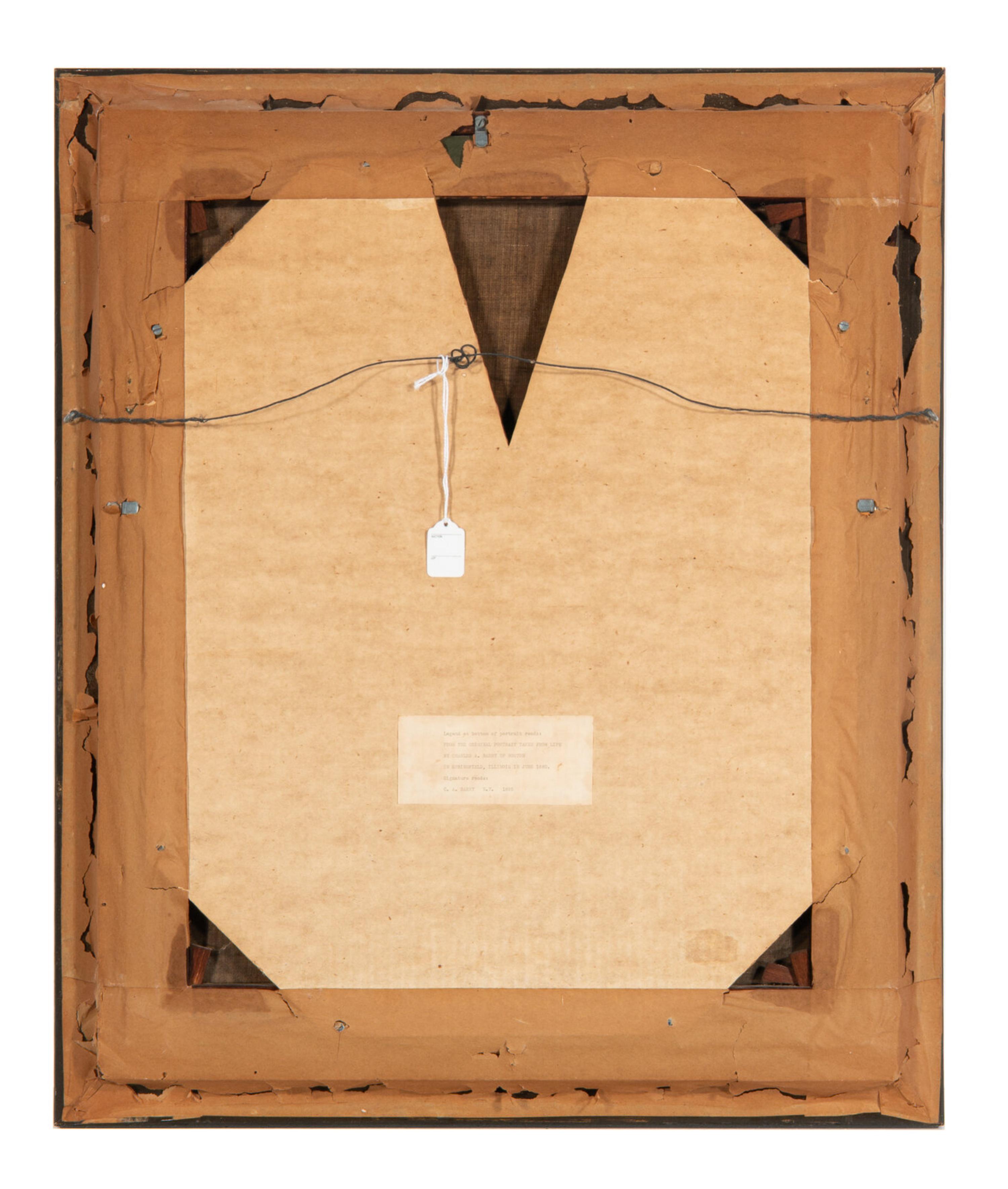
titled From the original portrait taken from life by Charles A. Barry of Boston in Springfield, Illinois, June 1860
27 x 21 in. (sight), 29 x 24 in. (canvas), 32 x 26 3/4 in. (frame). Minor touch-ups to left side of face, shoulder.
PROVENANCE:
The artist;
By descent in the family;
Althea White Barry (1858–1927), daughter of the artist;
By descent to her son, Dana Somes (1885–1927);
By descent to Priscilla Washburn Somes Hardy (1913–2003);
Given by her to her son, John Somes Hardy (1935–2019);
By descent to the present owner, Stephen Hardy
EXHIBITED:
Abraham Lincoln School in Boston
LITERATURE OF PARENT IMAGE:
Harold Holzer, Gabor S. Boritt, and Mark E. Neely Jr., The Lincoln Image: Abraham Lincoln and the Popular Print, Urbana and Chicago, 2001, pp.50-56, illustrated
LOT NOTE:
"EVEN MY ENEMIES MUST DECLARE THAT TO BE A TRUE LIKENESS OF OLD-ABE.": ONE OF TWO RENDERINGS BY THE ARTIST WHO TOOK LINCOLN'S FIRST PORTRAIT.
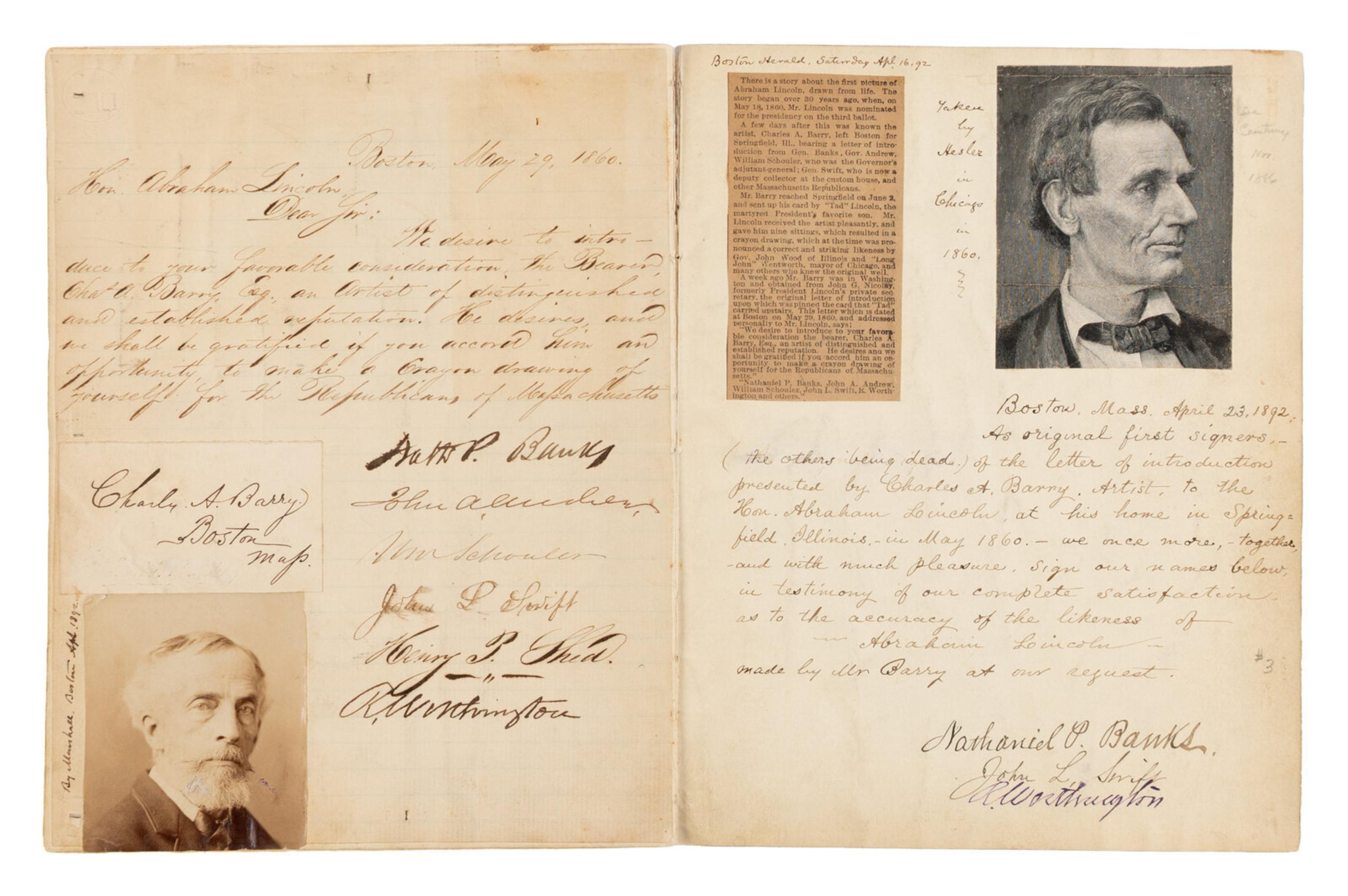
Thirteen days after Abraham Lincoln accepted the Republican nomination to the presidency, a group of prominent Massachusetts Republicans including governor Nathaniel P. Banks, John Andrew, William Schouler, John P. Swift, Henry P. Shea, and Roland Worthington drafted a letter of introduction (included here) on behalf of artist Charles A. Barry to the nominee, requesting that Lincoln sit for a crayon drawing that could be used by the Massachusetts Republican Party to promote their candidate.
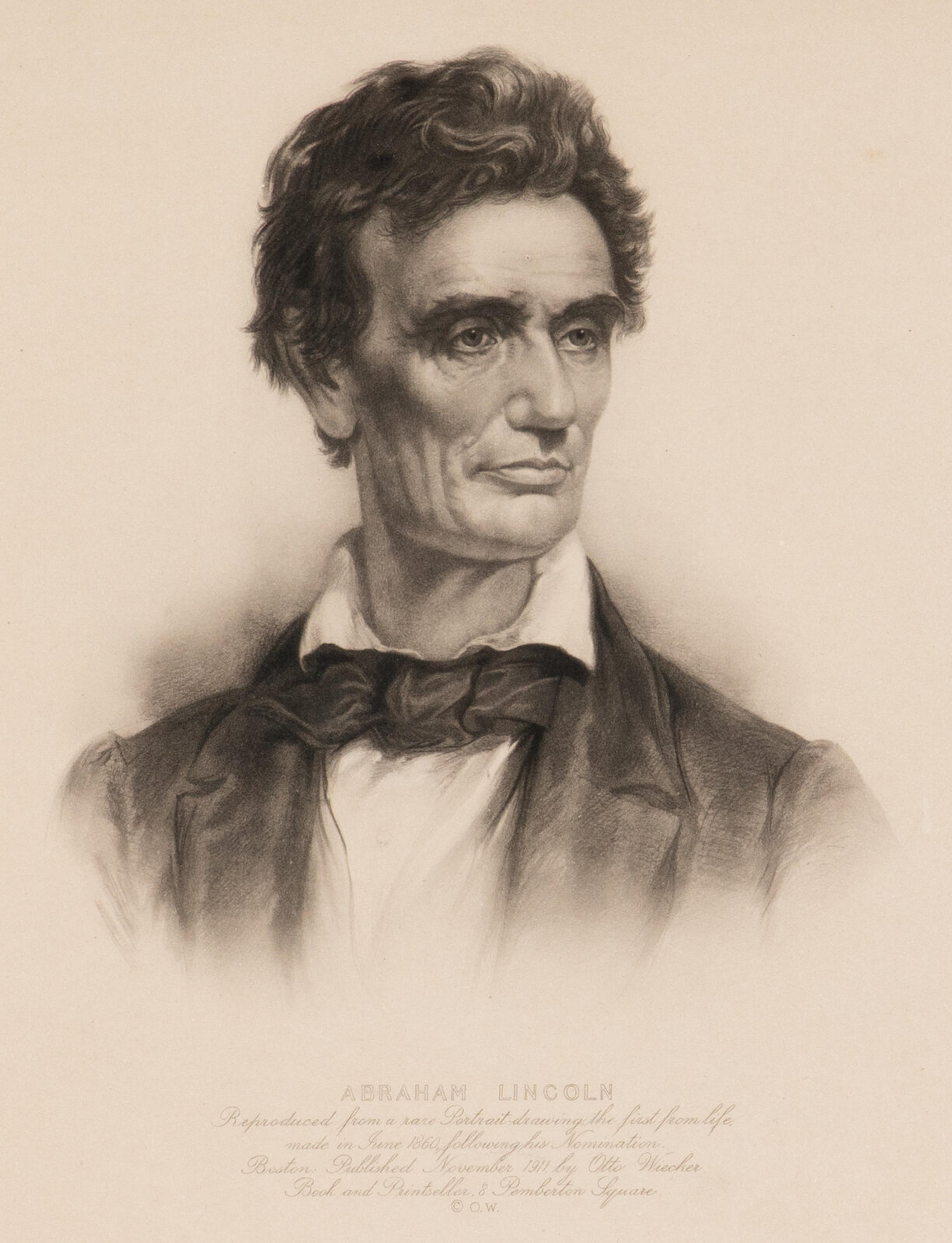
Barry, a public school drawing teacher, was suggested to the Massachusetts Republicans by a Boston lithographer, and his work was deemed sufficiently impressive to secure him the commission; indeed, this would mark the first time Abraham Lincoln ever sat for a formal portrait. According to Barry, after reading the letter of introduction, Lincoln said, "They want my head, do they? Well if you can get it you may have it, that is, if you are able to take it off while I am on the jump. But no quills in my nose. I've had enough of that, and don't fasten me to the chair." Perhaps in an attempt to sabotage the obligation Lincoln offered to sit at "seven o'clock sharp," assuming that a Bostonian would never be able to rouse himself that early, but Barry surprised him by arriving to Lincoln's office on time and, by the morning sunlight, proceeded to draw the future president's portrait. "I worked faithfully upon the portrait, studying every feature most carefully for ten days, and was more than fully rewarded for my labor when Mr. Lincoln, pointing to the picture, said: 'Even my enemies must declare that to be a true likeness of 'Old Abe.'" (Boston Evening Transcript, 2 May 1892, p.7).
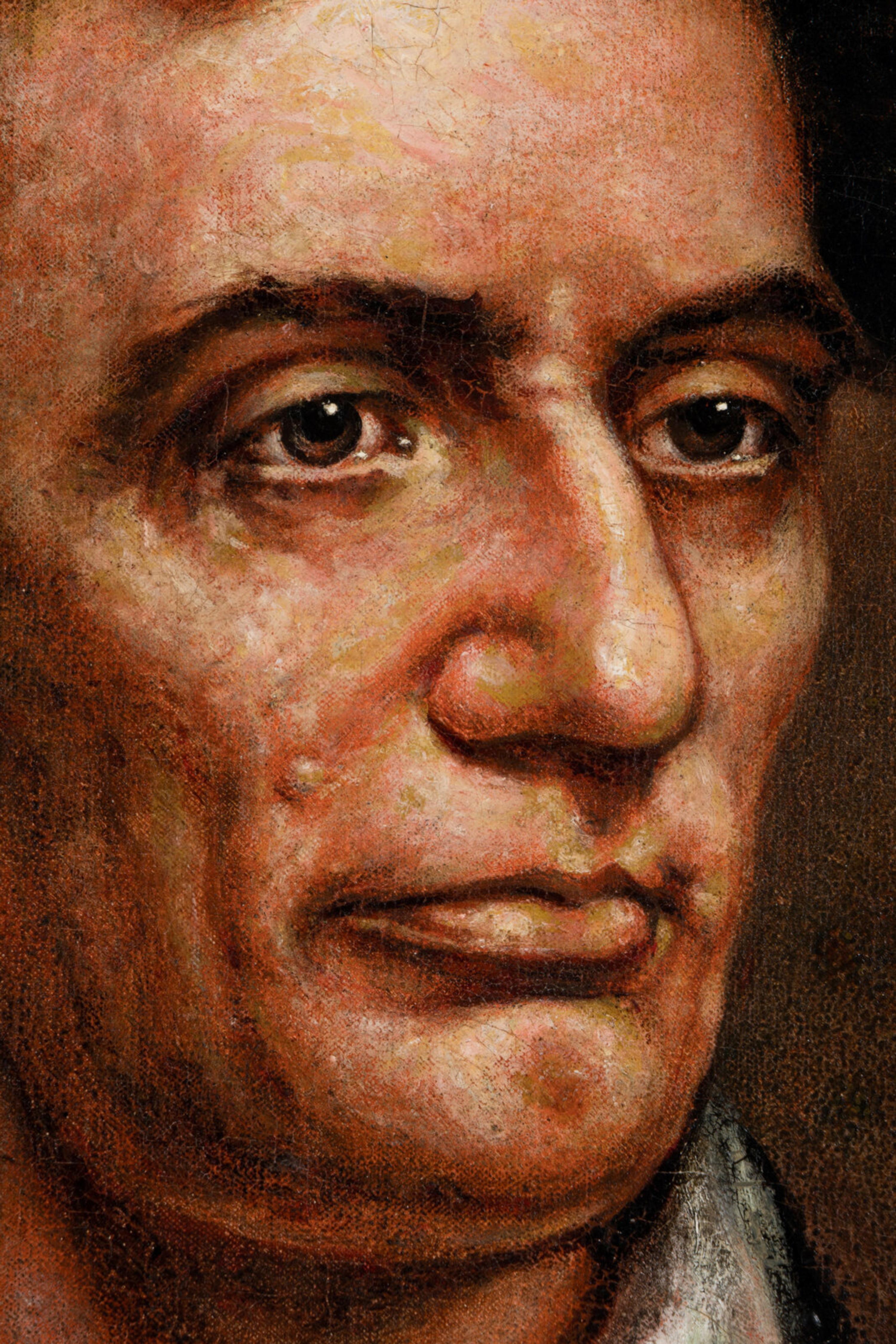
As the first artist to sit down and create a "from life" portrait of Abraham Lincoln, Barry was particularly struck by his eyes, writing, "They were not remarkable for constant brightness - on the contrary were dreamy and melancholy... I have seen the eyes of Webster and Choate...but I have never seen in all the wanderings of a varied life, such eyes as Lincoln had." (Wilson, Intimate Memories of Lincoln, pp.308-310).
The artist described Lincoln's head as "Jacksonian in shape," and Barry's resulting portrait certainly echoes those of the seventh president, who still enjoyed a high measure of esteem in the memories of many Americans. The resemblance was remarked upon by a Boston art critic during the crayon portrait's first display in the city: "There is apparently enough of the General Jackson firmness to please the most ardent admirer..." Lithographer Joseph E. Baker was commissioned to create copies for distribution; however, the print's high asking price of three dollars and the early breaking of the lithographic stone during the printing process ended any prospects of long-term financial gain for Barry. Fewer than a dozen examples of the original large-folio lithographs are believed to survive today.
Owing to the print’s distinctly “Byronic” character, many institutions have catalogued the study under the sobriquet The Greek God. The original drawing later entered the collection of Boston socialite Esther A. Hilton.
In his old age, Barry tried again at profiting from his original image of Lincoln, this time deciding to recreate the president's likeness in oil paint rather than crayon. Despite Lincoln's image best remembered with his famous beard, the artist himself preferred Lincoln's face without it, writing that "it was ill advice that caused the growing of whiskers upon Lincoln's face, for they utterly destroyed the harmony of its features and added not a little to the melancholy of its countenance when in repose." The eyes which Barry had so admired now appeared in full color as he remembered them, and arrangements were made to have a new photogravure produced by printer Christopher Klackner. In a June 1892 article published in The Phrenological Journal it was predicted that the oil painting of Lincoln "will undoubtedly be considered the standard portrait of the illustrious Lincoln, as its colors are in close imitation of the natural ones, and all the features of the face have been studied again and again by the artist from his original notes and sketches made in 1860." In the same article discussing both the crayon drawing and the oil painting, Barry himself considered this oil rendition to be the superior of the two. Upon Barry's death on 3 May 1892, however, plans to publish his new portrait of President Lincoln were scrapped.
Years after creating the original crayon portrait, Barry gave a fine word description of Lincoln's physical appearance as he remembered him during that fateful summer of 1860: "How vividly it all comes back to me as I write. The lonely room, the great bony figure with its long arms, and legs that seemed to be continully twisting themselves together; the long wiry neck, the narrow chest, the uncombed hair, the cavernous sockets beneath the high forehead, the bushy eyebrows hanging like curtains over the bright, dreamy eyes, the awkward speech, the pronounced truthfulness and patience; and lastly, the sure feeling in his heart that coming events whatever they might be, would come to him and to the American people straight from the hand of God" (Lincoln Lore, Number 1471, September 1960, p.3).
The original crayon portrait was bequeathed to the Memorial Hall Library of Andover, Massachusetts, by George Henry Torr upon his death in 1914. The portrait's true origin was unknown to the library at the time of the bequest, and it wasn't until 1947, when librarian Miriam Putnam found an article in the Christian Science Monitor by Horace Reynolds titled "Lincoln's First Portrait," that its true origins were revealed. In this article, Reynolds outlines the portrait's history and closes with the statement, "No one knows where the crayon drawing is today." A photograph of the original lithograph, as provided by Barry's daughter-in-law, was recognized by Putnam as being the spitting image of the portrait in the Memorial Hall Library, and during a ceremony covered in the 6 March 1947 issue of the Andover Townsman, Kate Barry paid a visit to the 1860 portrait, accompanied by Miriam Putnam.
Barry's 1892 oil painting was bequeathed to his daughter, Althea White Barry, who loaned it to the Abraham Lincoln School in Boston until shortly before her death in 1927, when it was passed on to her son, architect and chairman of the Boston Zoning Board, Dana Somes. Upon his death in 1953, it was passed on to his descendants, where it has remained ever since.
[With:] Autograph letter signed, introducing Barry to ("Hon. Abraham Lincoln"), Boston, 29 May 1860. 1p., 8vo (10 x 7 3/4 in., ), on U.S. Congress lined stationery, embossed in upper left, some toning, old folds, mounted on album stock. SIGNED BY THE 24TH AND 25TH GOVERNORS OF MASSACHUSETTS, and 4 other Republicans of Massachusetts. Affixed to the same letter is a clipped signature of Barry and an albumen of the artist in 1892. Ownership stamp on the verso of Barry's grandson, Dana Somes. Mounted on the conjugate album leaf is an autograph letter signed by three of the original signers of the above and dated 23 April 1892, attesting to the complete satisfaction as to the accuracy of the likeness of Abraham Lincoln.
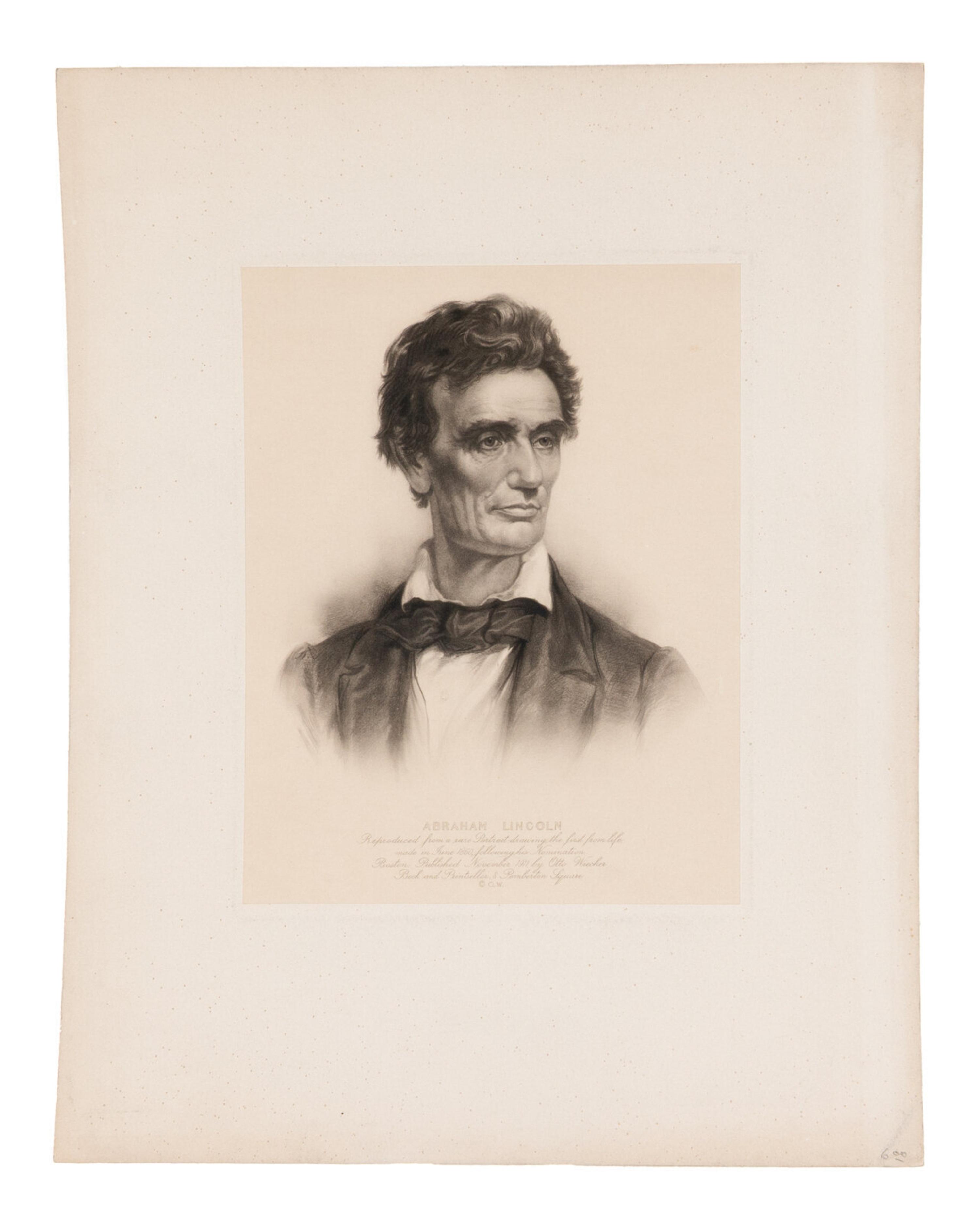
[Also with:] A steel-engraving of Lincoln "reproduced from a rare Portrait-drawing, the first from life made June 1860, following his Nomination." Boston: Otto Wiecker, 1911.
This lot is located in Chicago.