Condition Report
Contact Information
Lot 35
Sale 6560 - The Fathers and Saviors of Our Country: A Presidential Sale
Mar 26, 2026
10:00AM CT
Live / Chicago
Own a similar item?
Estimate
$4,000 -
6,000
Price Realized
$3,200
Sold prices are inclusive of Buyer’s Premium
Lot Description
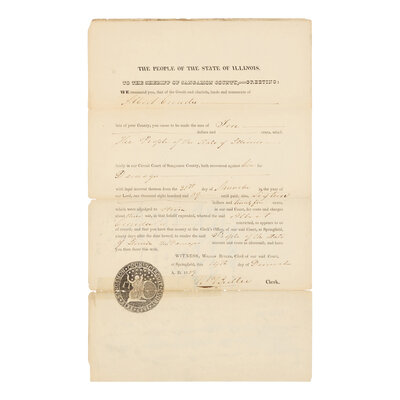
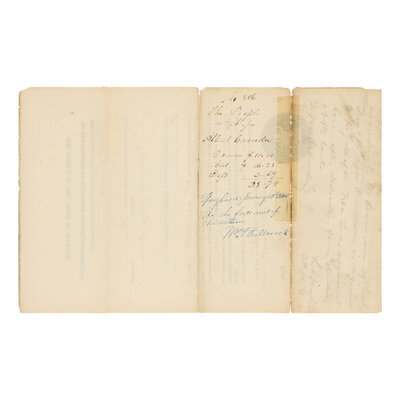
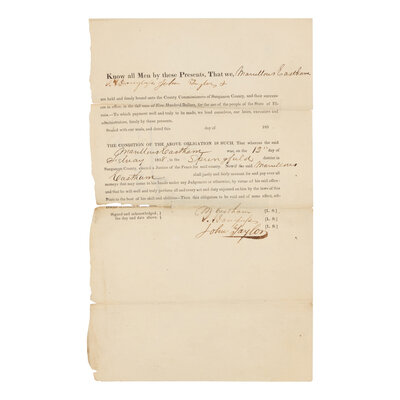
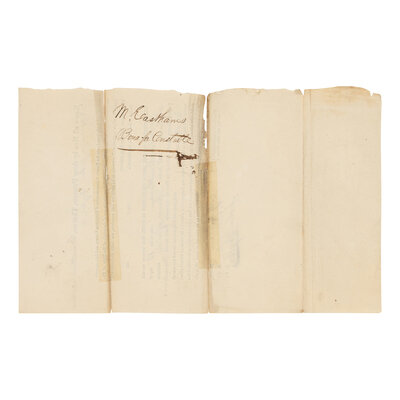
DOUGLAS, Stephen Arnold (1813-1861). A group of 14 documents and letters relating to Douglas's legal and political career, ca 1834-1857, comprising:
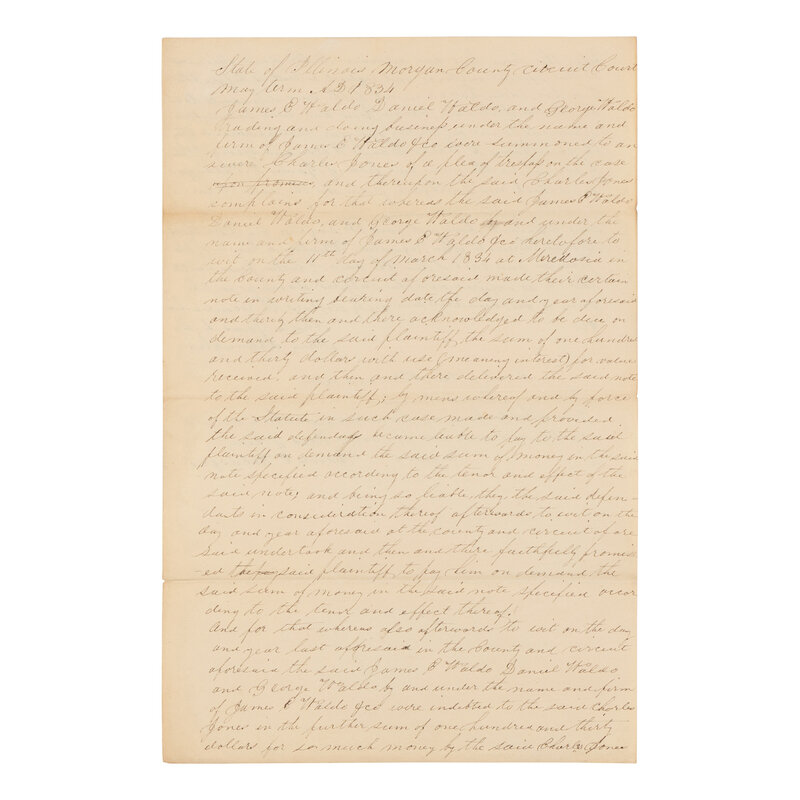
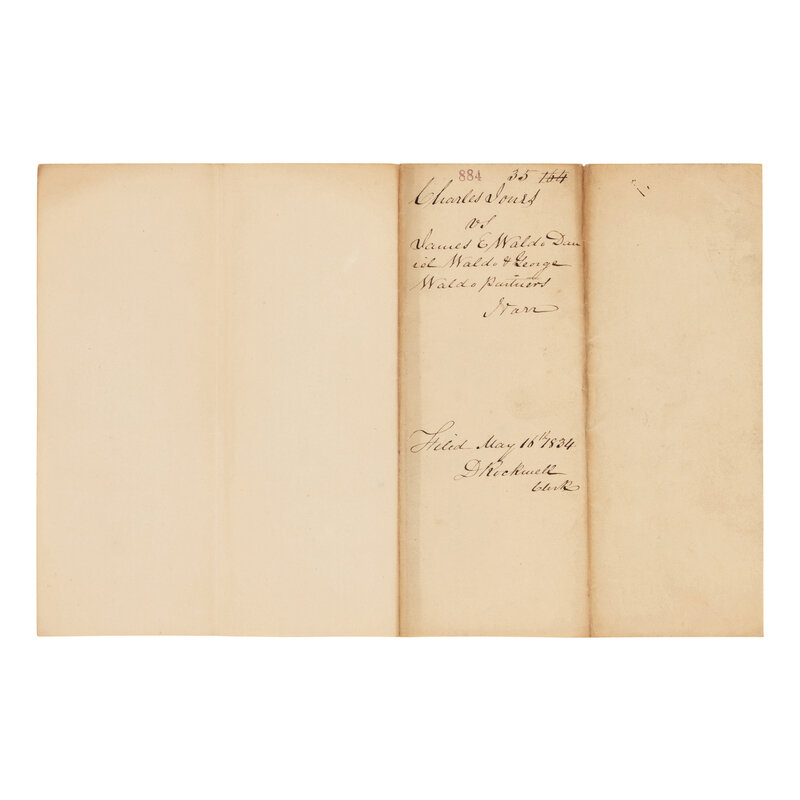
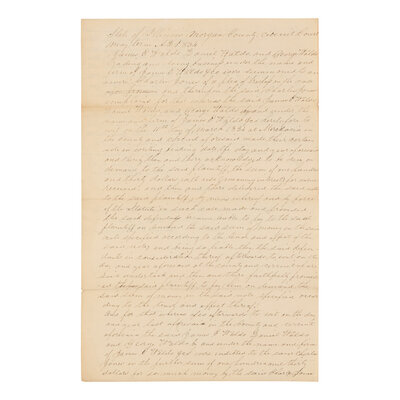
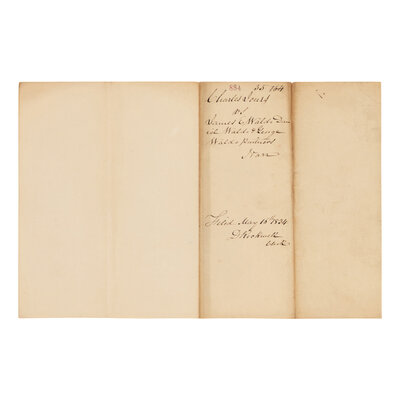
1) Autograph legal document signed by Stephen Douglas ("S.A. Douglas") in the case of Jones v. Waldo, Springfield, 6 May 1834. 2pp., folio (305 x 197 mm).
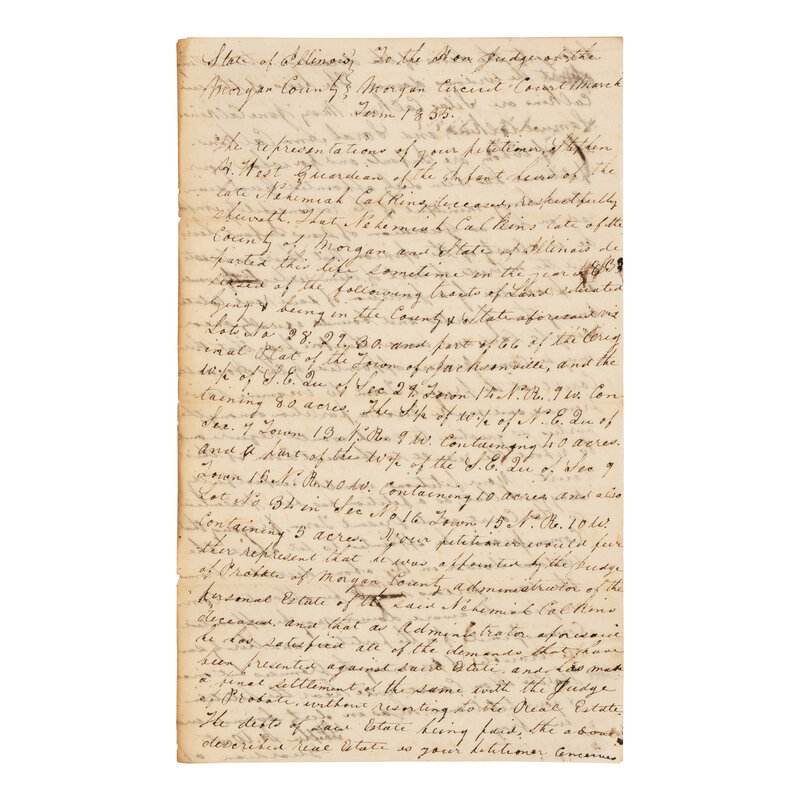
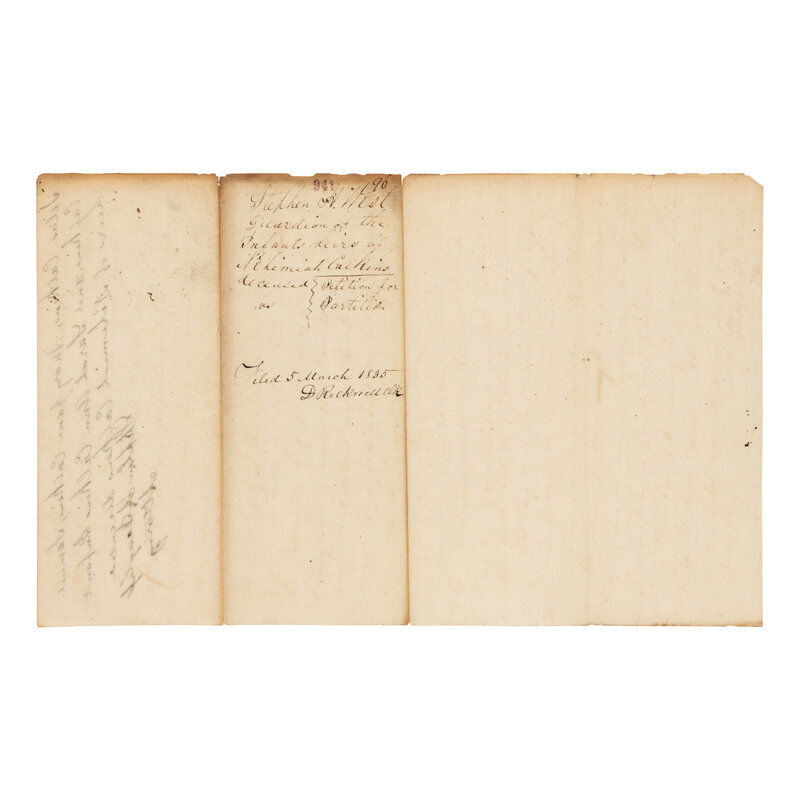
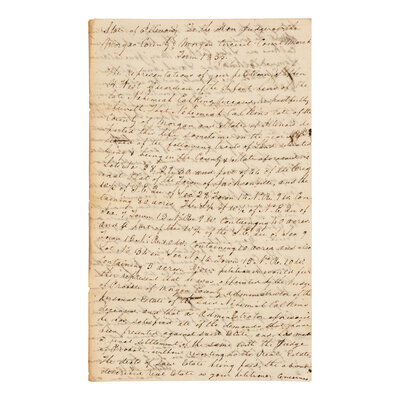
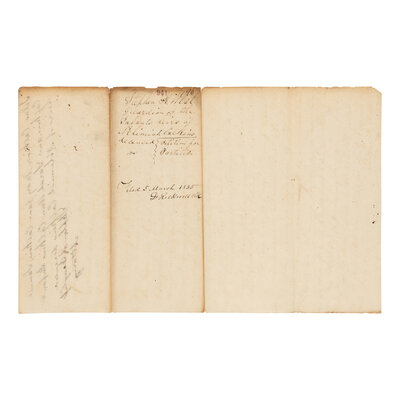
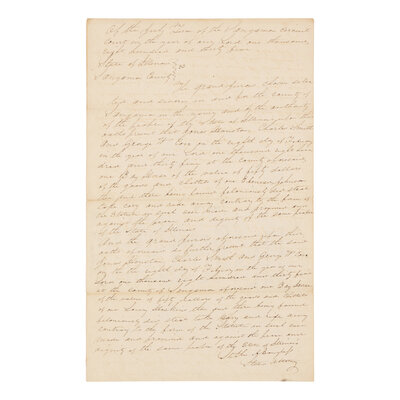
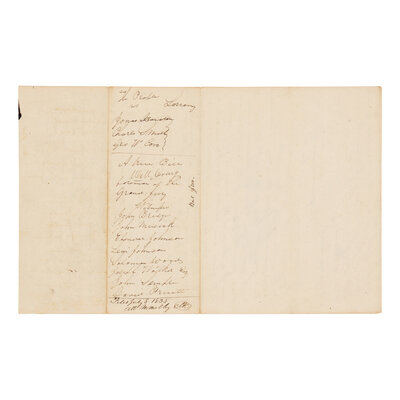
2) Autograph legal document signed by Stephen Douglas ("Stephen A. Douglas") as Illinois State's Attorney, Springfield, 5 March 1835. 3pp., folio (318 x 191 mm).
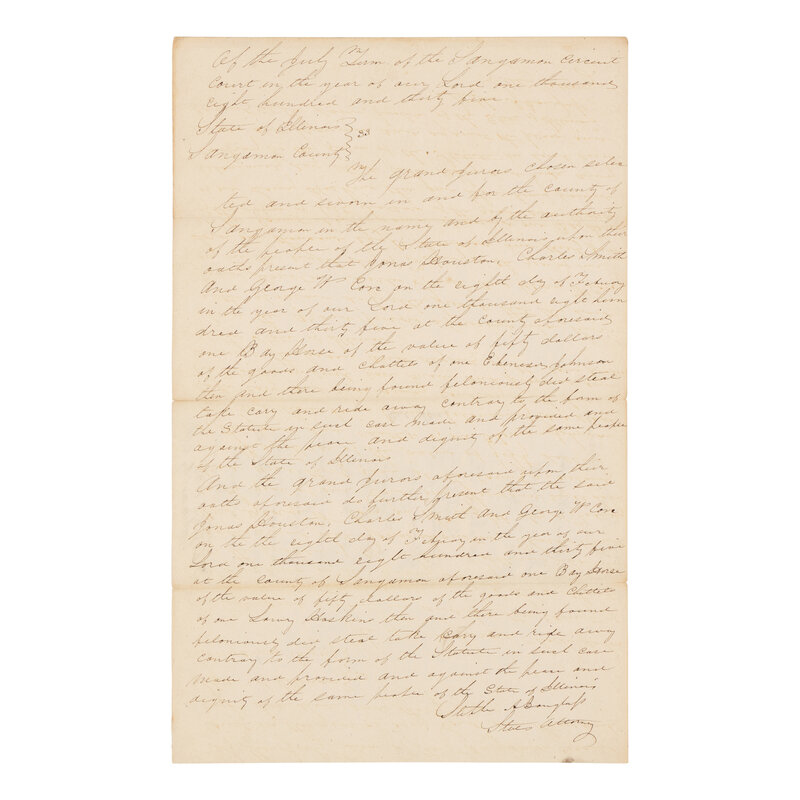
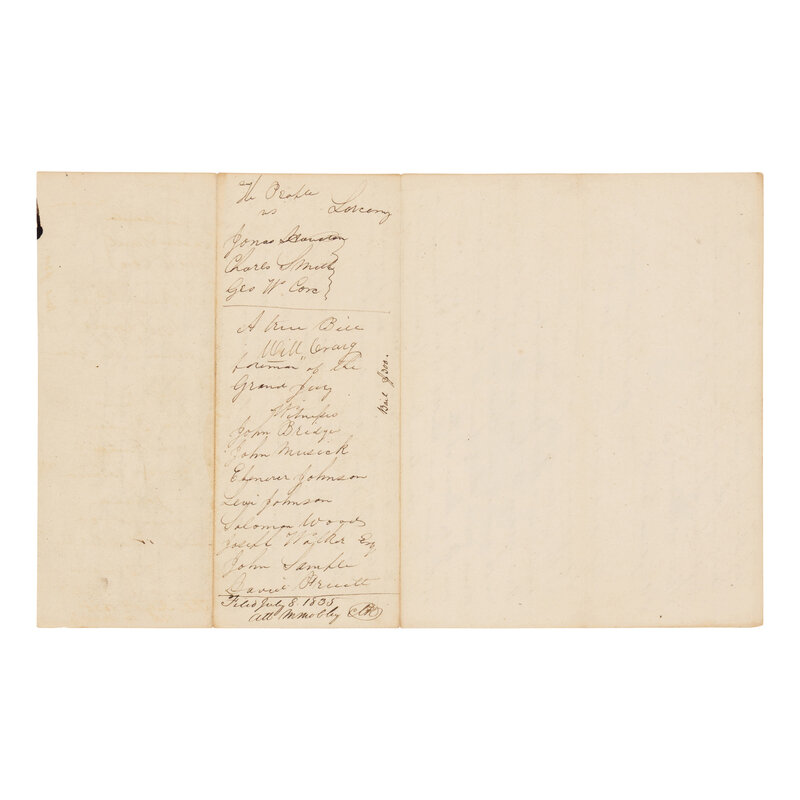
3) Autograph legal document signed by Stephen Douglas ("Stephen A. Douglas") as Illinois State's Attorney, Springfield, 8 July 1835. 1p., folio (318 x 203 mm).
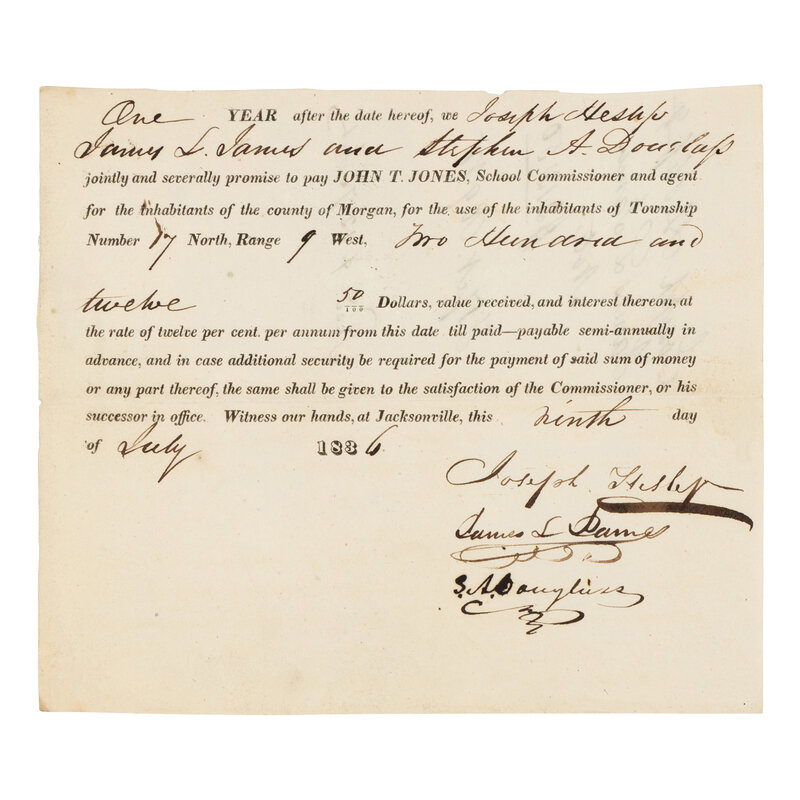
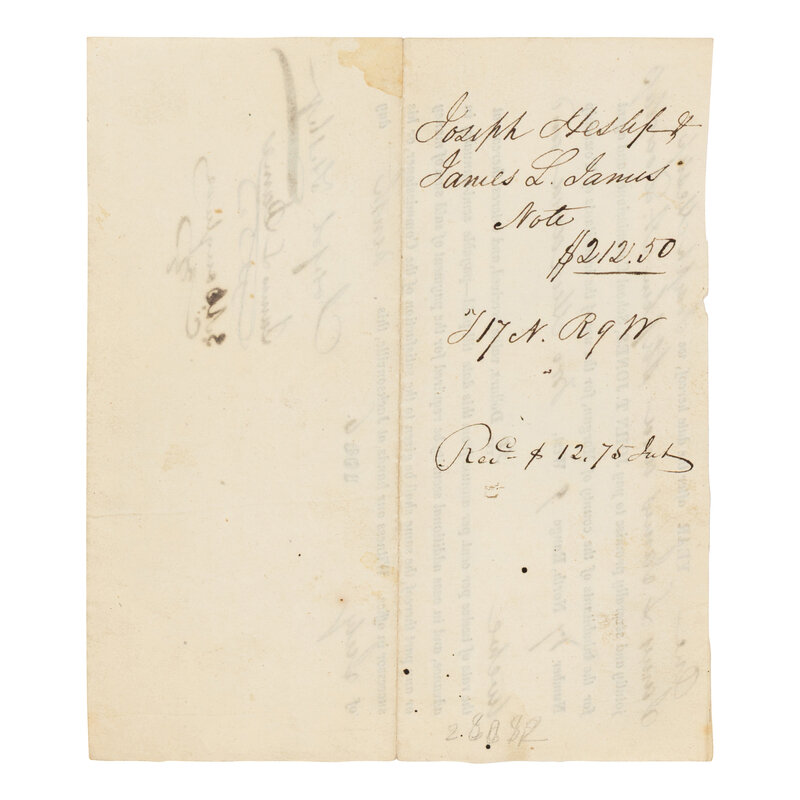
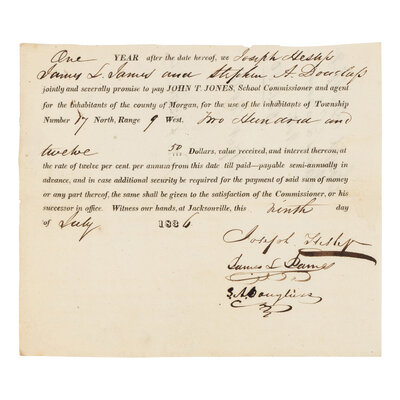
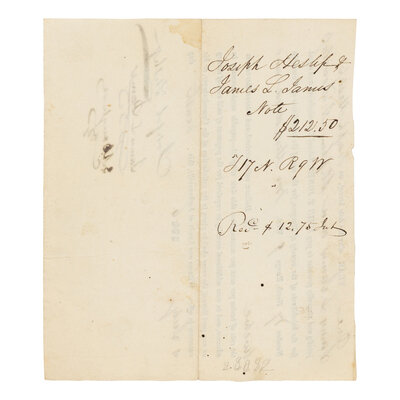
4) Partially-printed legal document and promissory note signed by Stephen Douglas ("S.A. Douglas") and issued to John T. Jones, Jacksonville, Illinois, 9 July 1836. 1p. (165 x 191 mm).
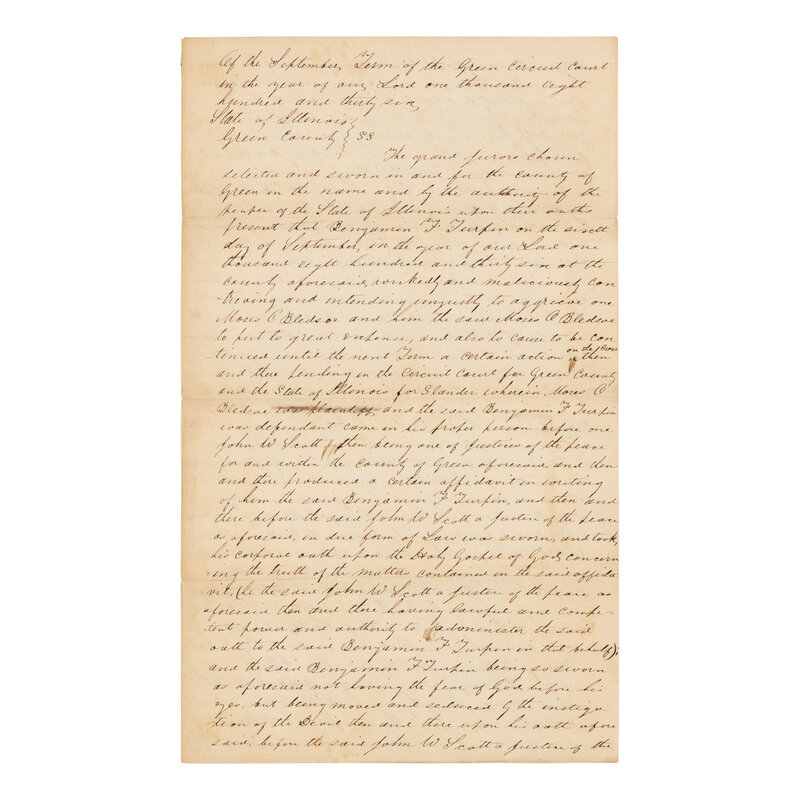
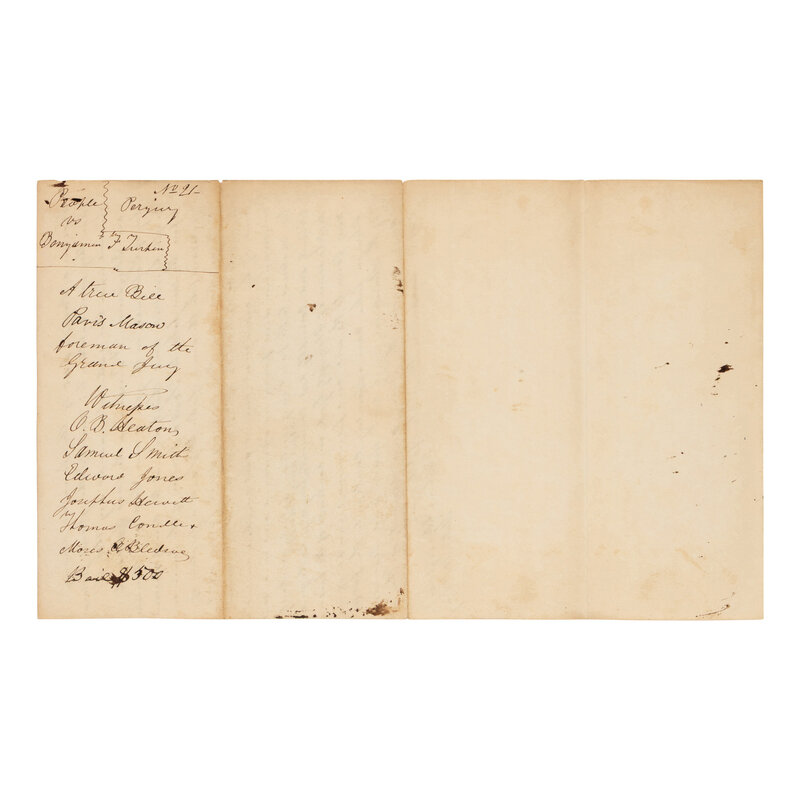
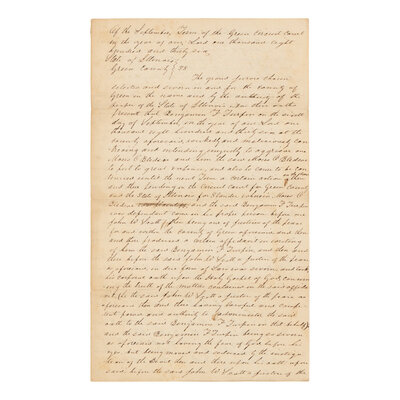
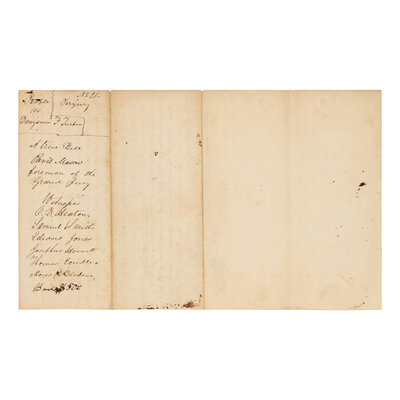
5) Autograph legal document signed by Stephen Douglas ("Stephen A. Douglas") regarding the case of People v. B. Turpin, Green County, Illinois, 6 September 1836. 3pp., folio (330 x 197 mm).
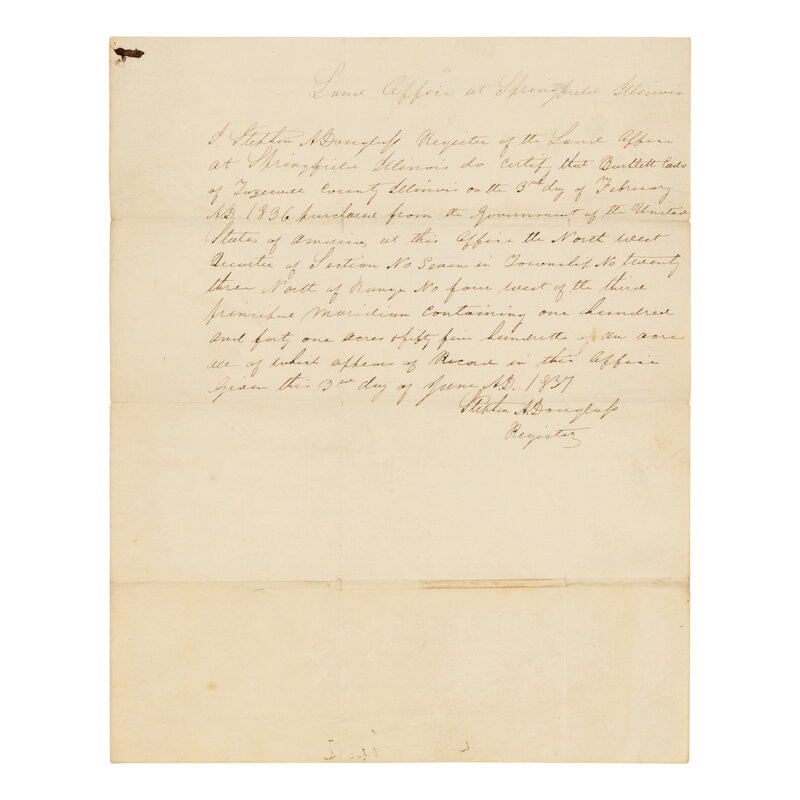
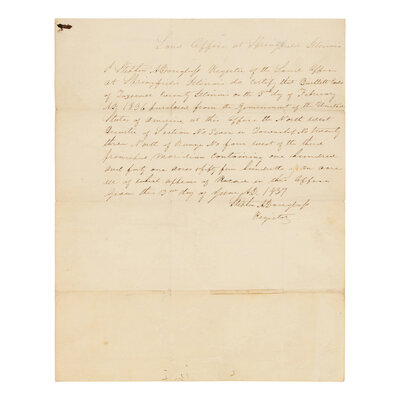
6) Autograph legal document signed by Stephen Douglas ("Stephen A. Douglas") regarding recertification of a land purchase, Springfield, 3 June 1837. 1p., 4to (248 x 197 mm).
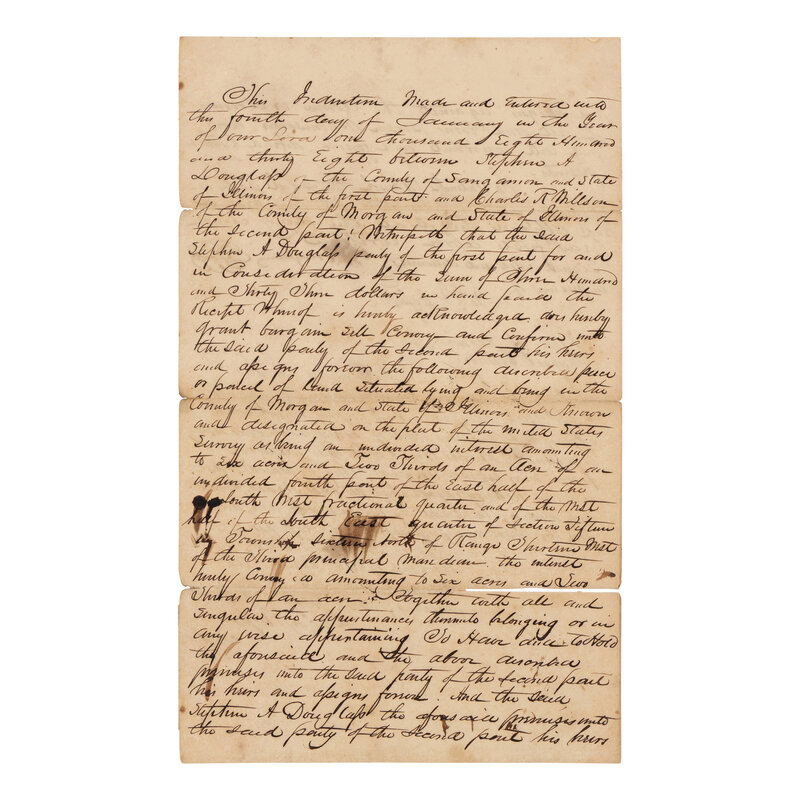
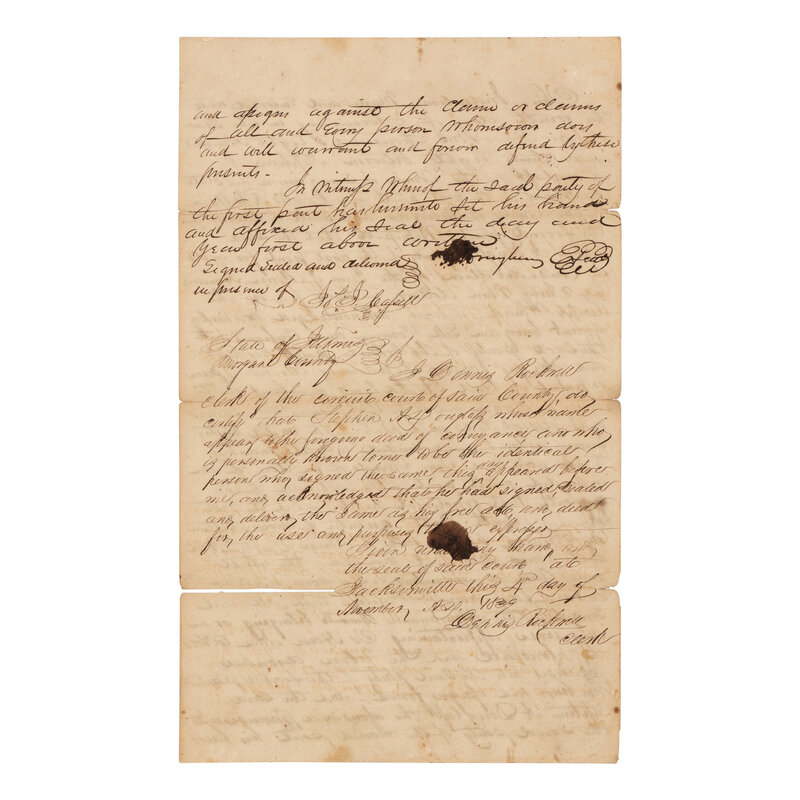
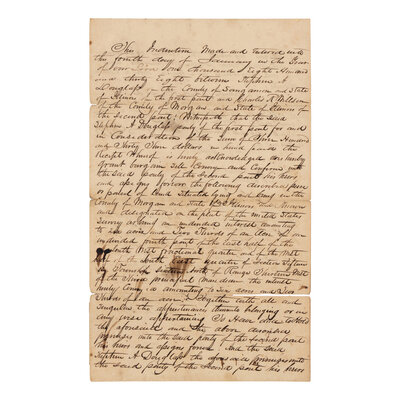
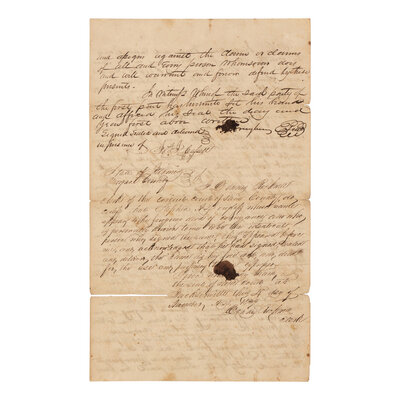
7) Autograph legal document signed by Stephen Douglas ("Stephen Douglas") deeding lots to Charles R. Millson, [Springfield], 4 January 1838. 2pp., folio (311 x 191 mm).
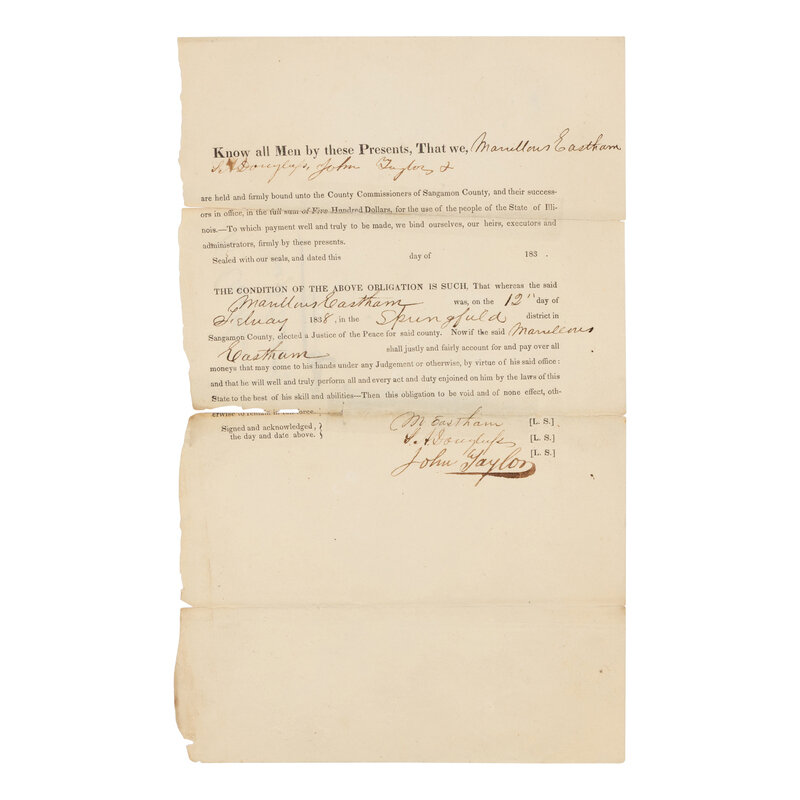
8) Partially-printed legal document signed by Stephen Douglas ("S.A. Dougas") regarding a bond for Marvellous Eastham, Springfield, 12 February 1838. 1p., folio (318 x 197 mm), tape repair to separation at center, partial marginal losses to left side.
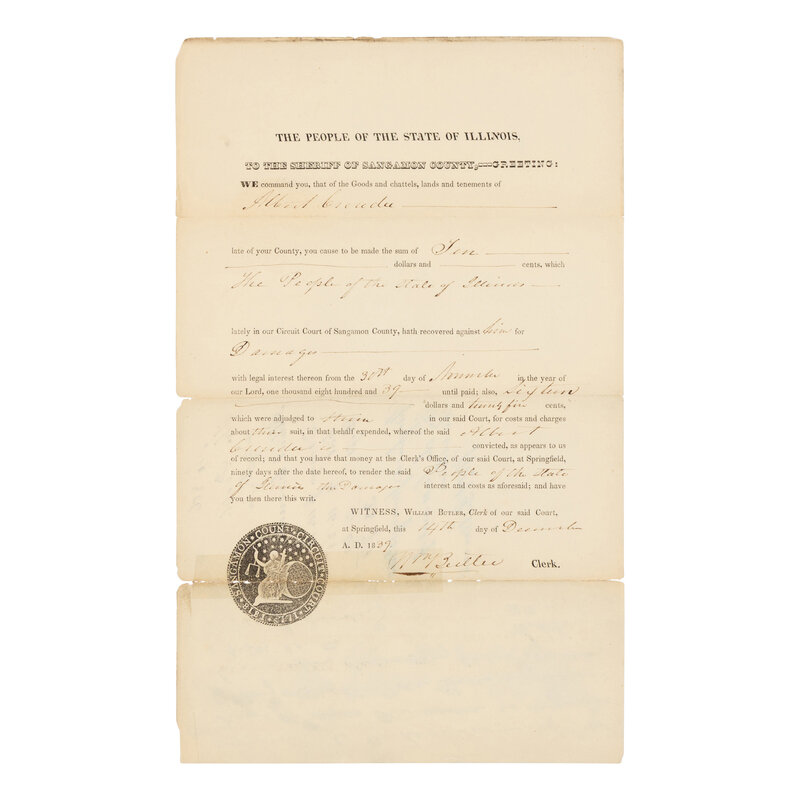
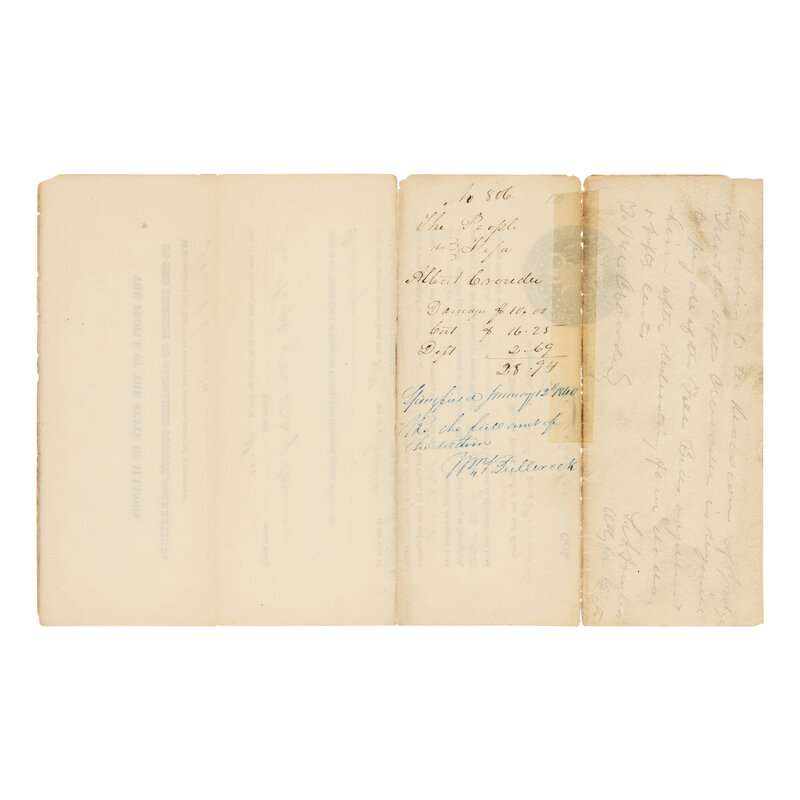
9) Partially-engraved legal document completed in the hand of Stephen Douglas and signed ("S.A. Douglas") on verso addressed to the Sheriff of Sangamon County, [Springfield], 12 January 1840. 1p., folio (304 x 197 mm), tape repair over separation along fold.
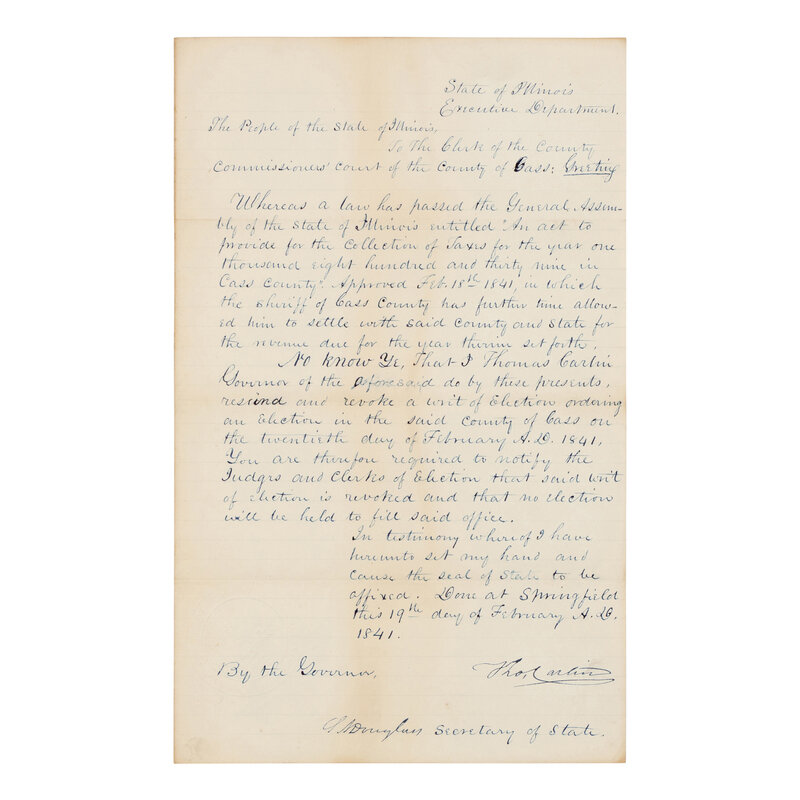
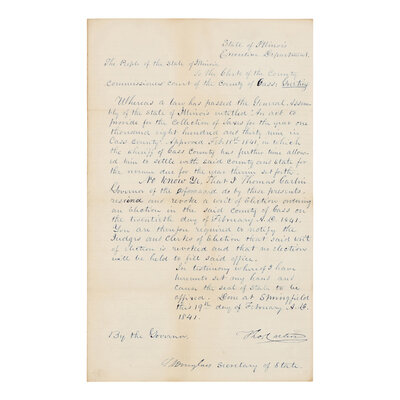
10) Autograph legal document signed by Stephen Douglas as Secretary of State ("S.A. Douglas) relating to tax collection in the State of Illinois, blind-stamped with the official seal of the State of Illinois, Springfield, 19 February 1841. 1p., folio (318 x 197 mm).
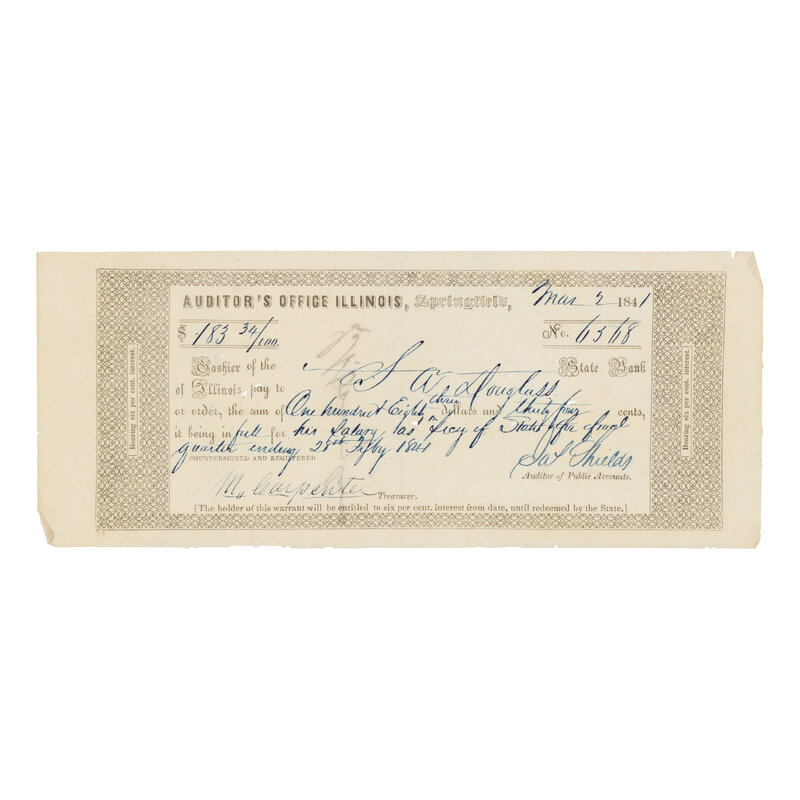
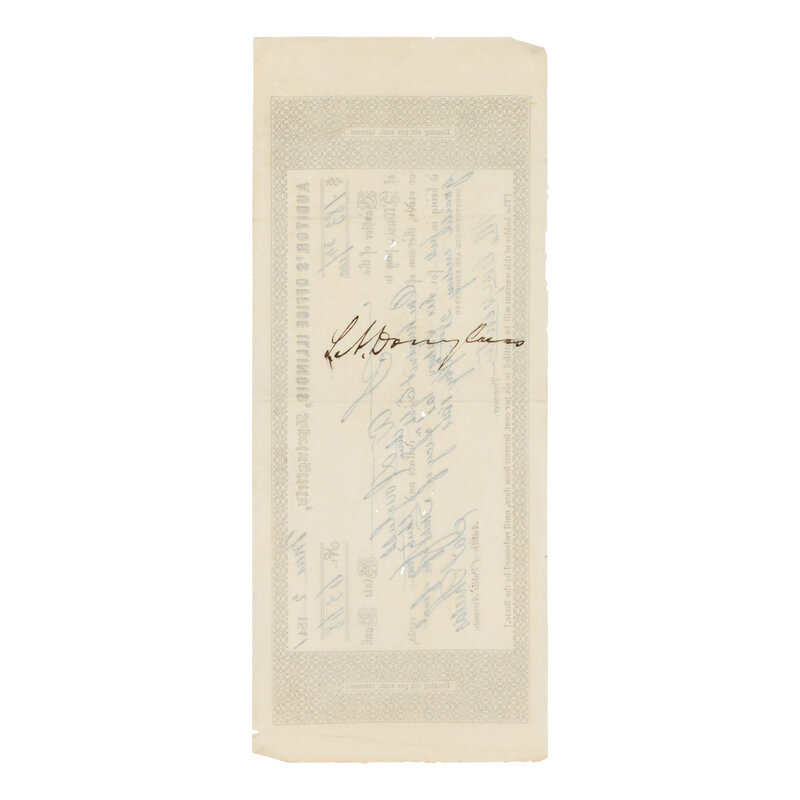
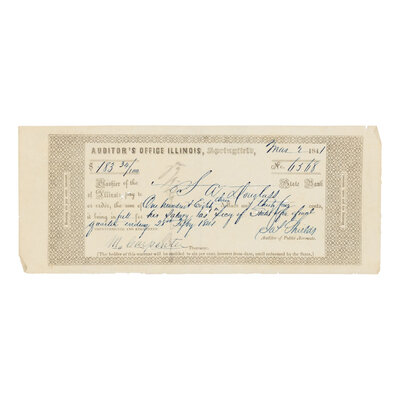
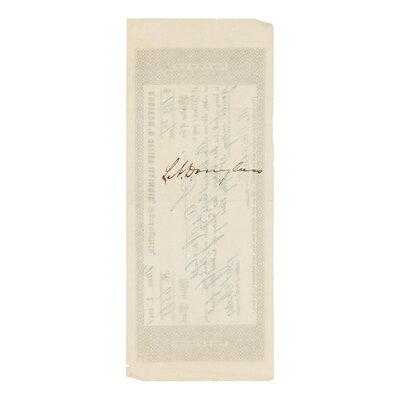
11) Partially engraved check from the Auditor's Office of Illinois endorsed on verso by Stephen Douglas ("S.A. Douglas"), Springfield, 2 March 1841. 1p., oblong 16mo (216 x 89 mm).
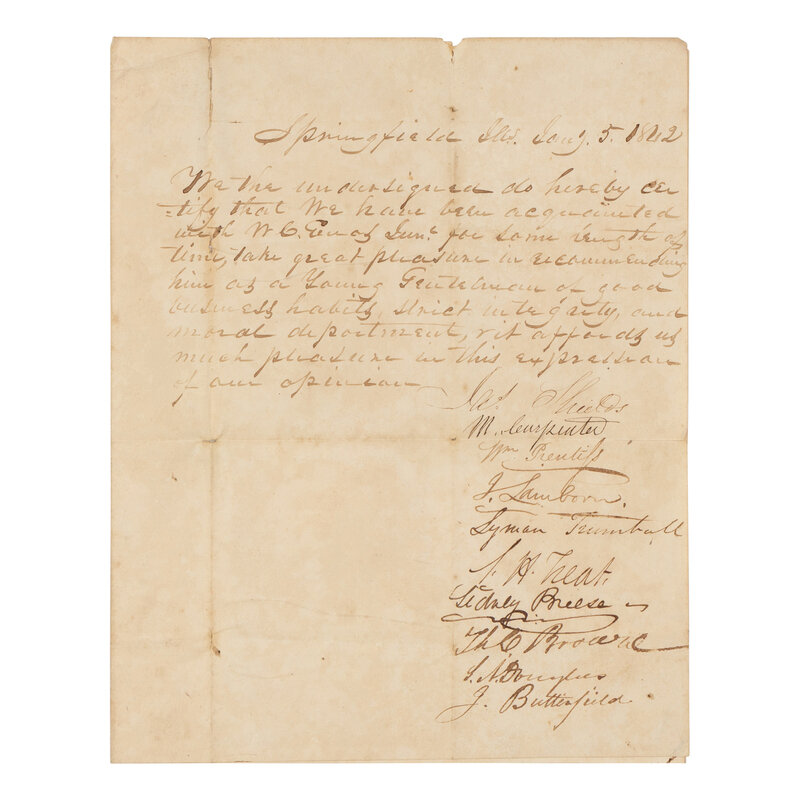
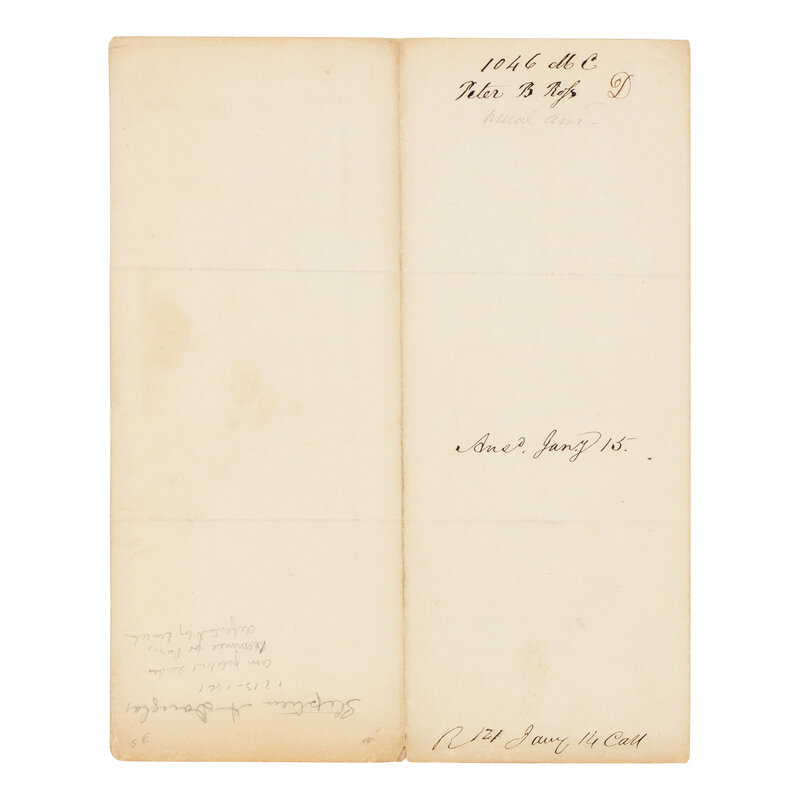
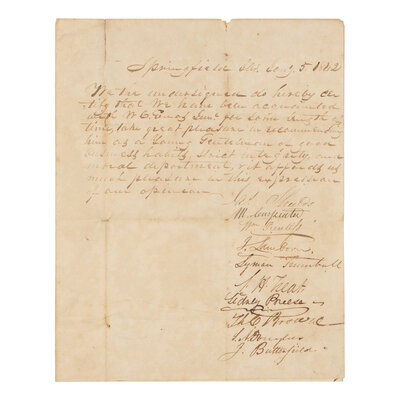
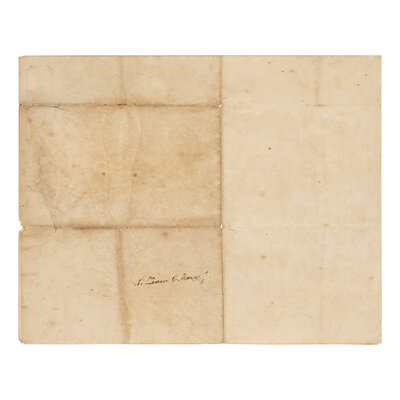
12) Autograph endorsement signed by Stephen Douglas ("S.A. Douglas") for W.C. Enos, Springfield, 5 January 1842. 1p., 4to (248 x 197 mm). Signed by 8 others, including Justin Butterfield, Sidney Breese, Lyman Trumbull, and others.
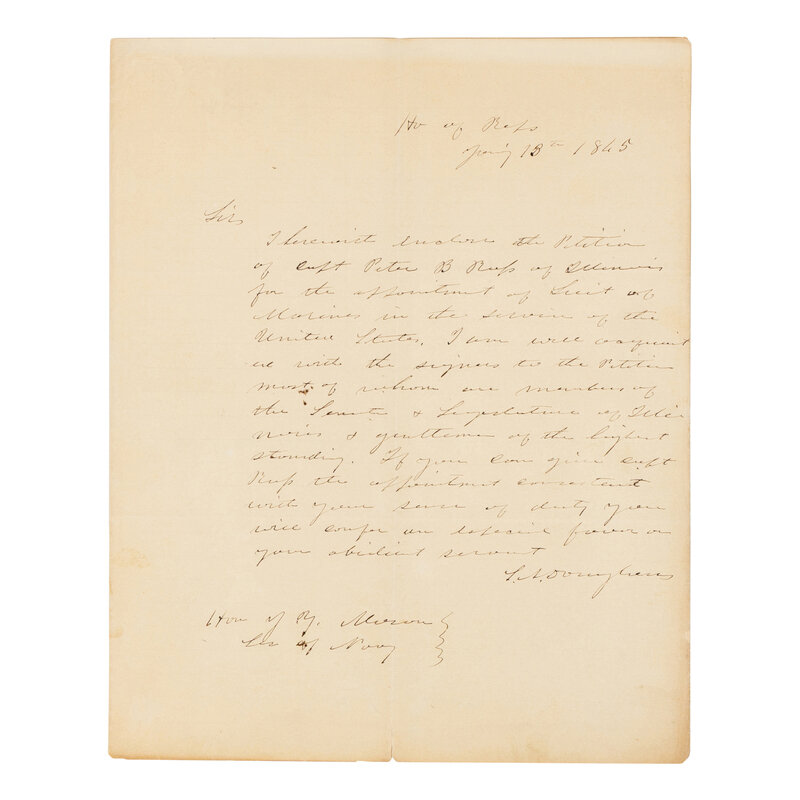
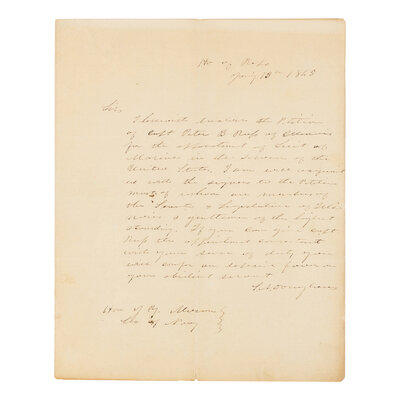
13) Autograph letter signed by Stephen Douglas ("S.A. Douglas") to J.Y. Mason, Washington, D.C., 18 January 1845. 1p., 4to (254 x 203 mm).
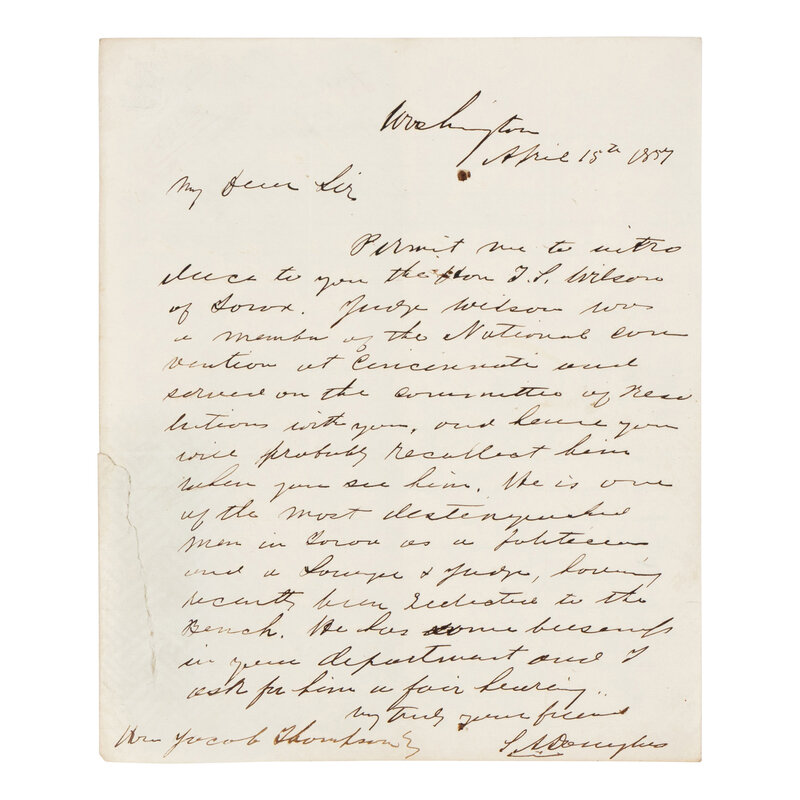
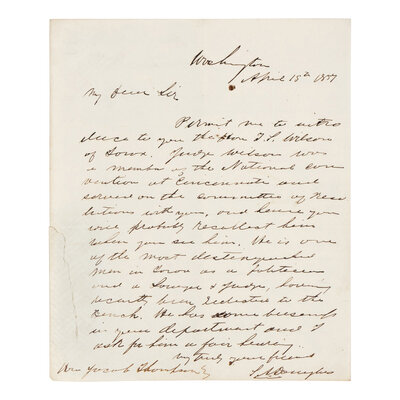
14) Autograph letter signed ("S.A. Douglas") to Jacob Thompson, Washington, D.C., 15 April 1857. 1p., 4to (8 x 6 1/2 in.; 203 x 165 mm). Partial repaired separation.
Of all of the political figures with whom Abraham Lincoln interacted, few are as inextricably tied to his memory as Stephen Douglas. Born in Vermont, he moved to Illinois in 1833 to establish a legal practice. He was elected to the Illinois House of Representatives as a Democrat in 1836, where he first met Abraham Lincoln. Six years later, he was elected to the United States House of Representatives.
A close ally of presidents James K. Polk and Millard Fillmore, Douglas established himself early on as a reliable pro-slavery voice in Congress. He supported the annexation of Texas as well as the Mexican-American War and was one of four northern Democrats to vote against the Wilmot Proposal, which would have banned slavery in any territories ceded by Mexico at the war's end. He was elected to the United States Senate in 1847.
After winning the 1858 Republican nomination for the Senate from Illinois, Abraham Lincoln delivered his famous "House Divided" speech and prepared for a hard-fought campaign against Douglas, who continued to oppose any meddling whatsoever with the institution of slavery. Lincoln and his campaign team began following Douglas across the state, delivering campaign speeches immediately after him, until he finally agreed to a series of debates with Lincoln, which are now remembered as the Lincoln-Douglas Debates. Despite voter turnout exceeding that of the 1856 presidential election, Lincoln was defeated, and Douglas retained his seat. Two years later, they would face off again, this time for the presidency. Lincoln ultimately won, with Douglas carrying only Missouri, and every state won by John C. Breckinridge ultimately seceding from the Union only a few months later.
Despite his defeat, Douglas actively campaigned against secession, joining several committees that sought to prevent a break-up of the Union. During Lincoln's inaugural address on 4 March 1861, Douglas stood behind his former opponent with Lincoln's hat in hand, saying at the time that "If I can't be the President, at the least I can hold his hat." Two months later, Douglas contracted typhoid fever and ultimately died of it on 3 June, coincidentally the same day that the Battle of Philippi took place. Secretary of War Simon Cameron issued a circular to Union troops mourning his death, describing Douglas as "a great statesman...a man who nobly discarded party for his country."
This lot is located in Chicago.