Condition Report
Contact Information
Lot 358
Sale 6485 - Native American Art
Apr 10, 2026
9:00AM CT
Live / Chicago
Own a similar item?
Estimate
$4,000 -
6,000
Price Realized
$2,560
Sold prices are inclusive of Buyer’s Premium
Lot Description
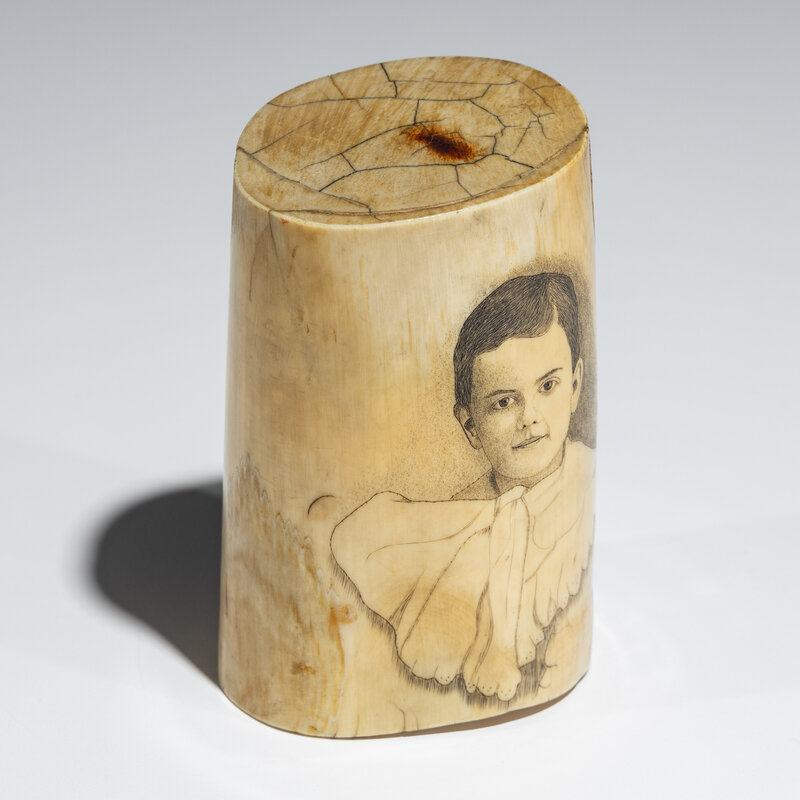
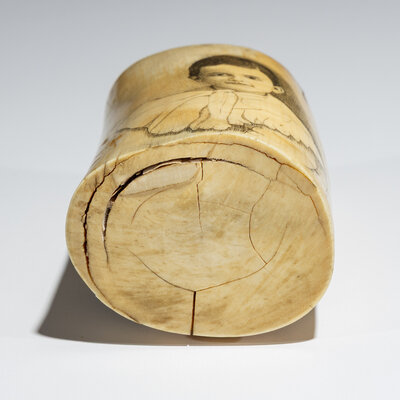
Happy Jack Angokwazhuk, Attributed
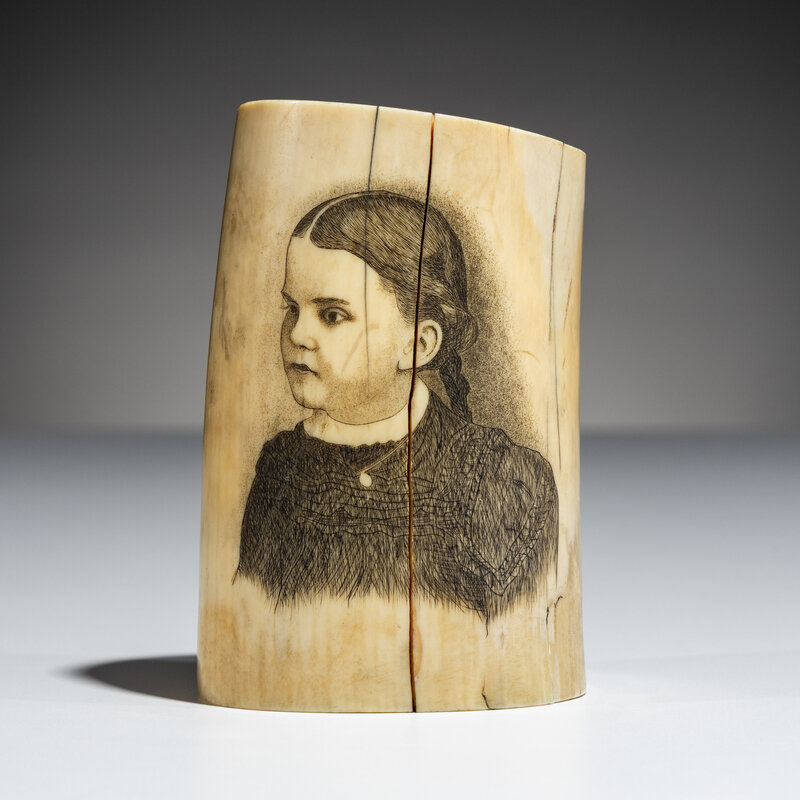
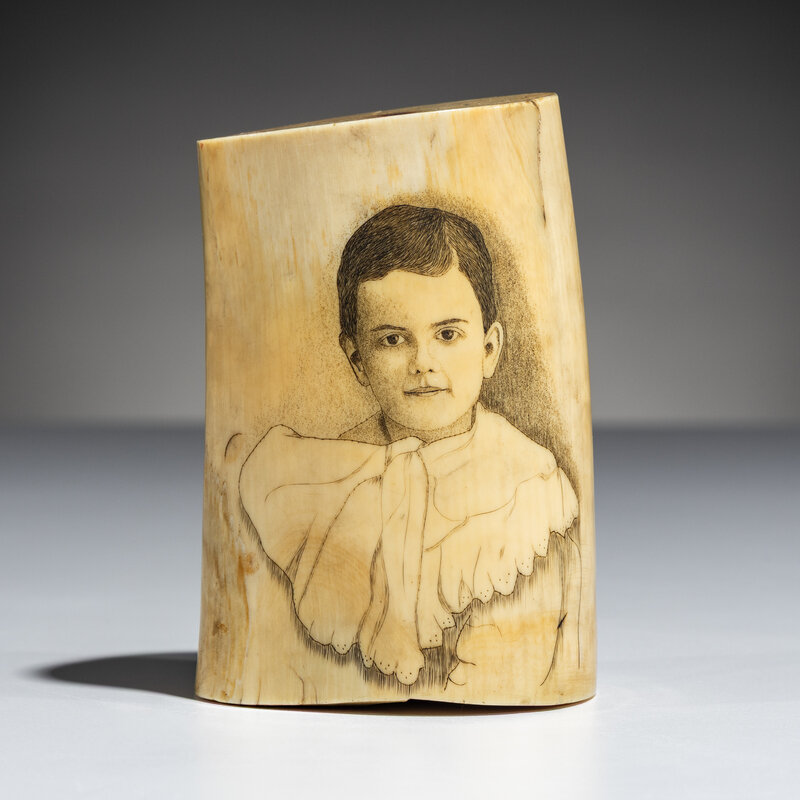
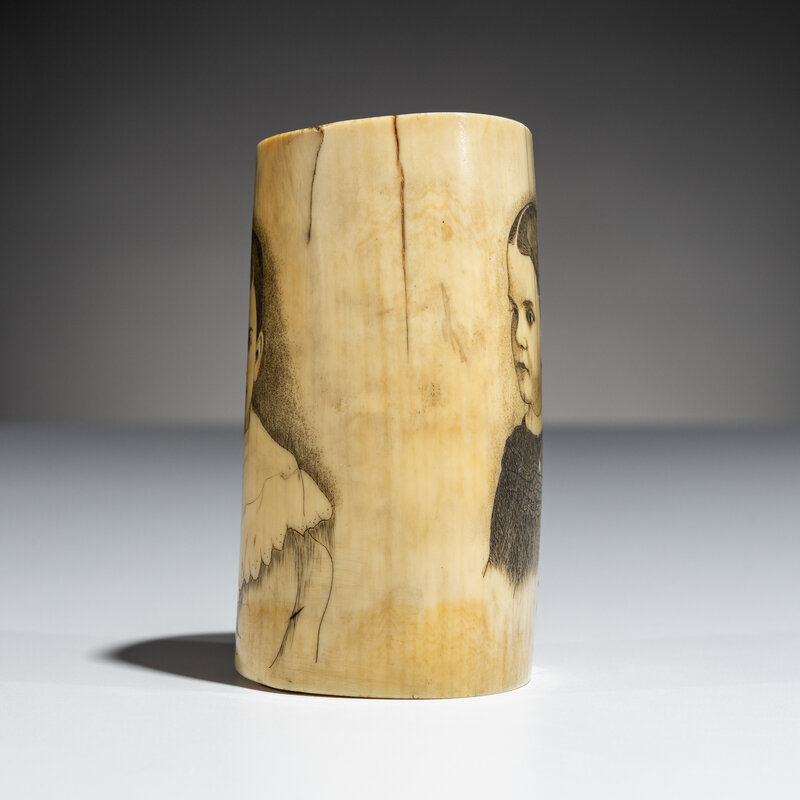
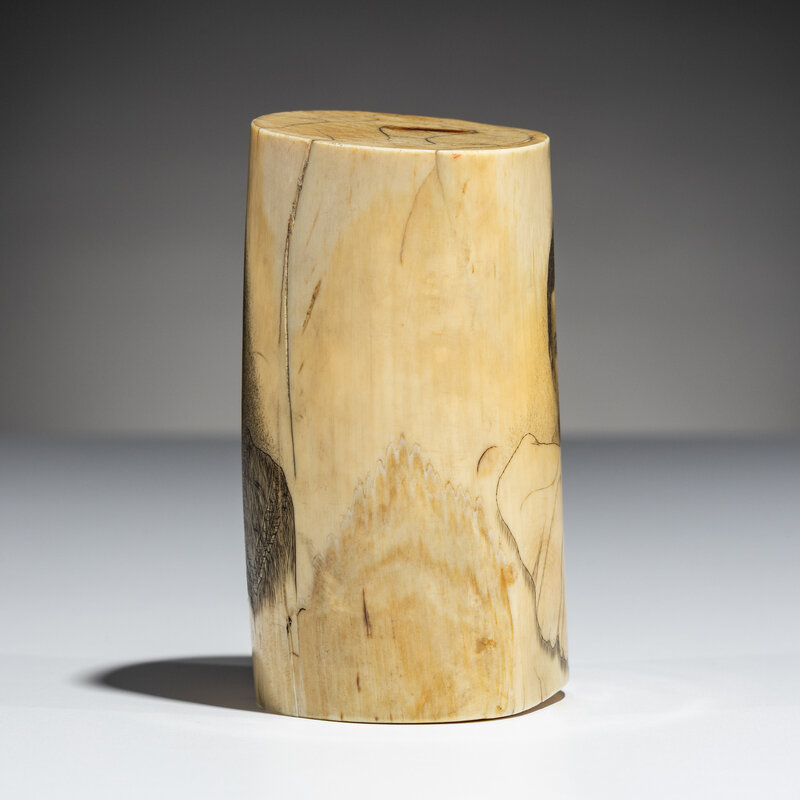
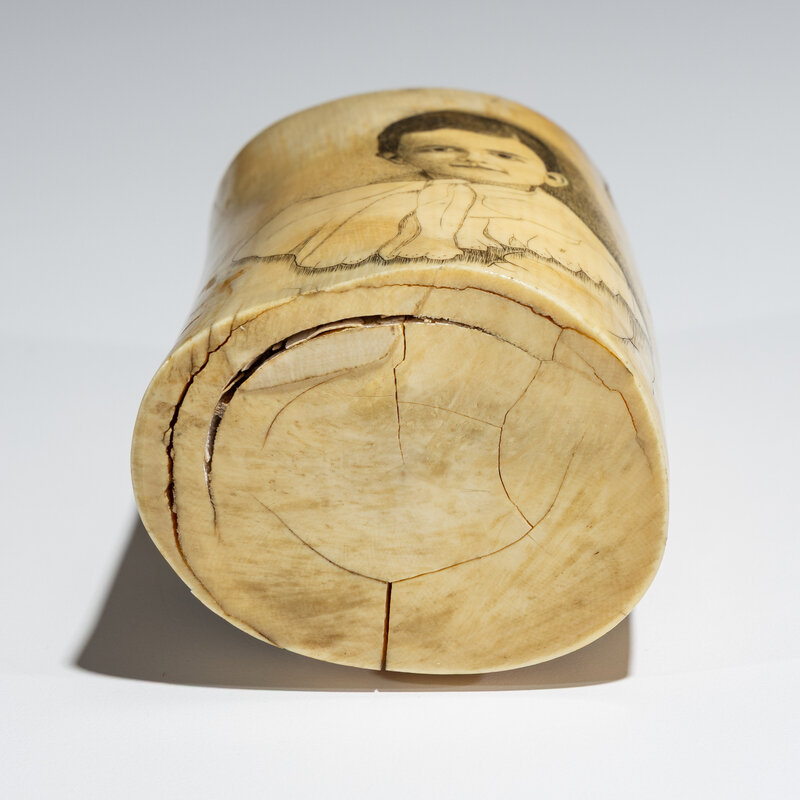
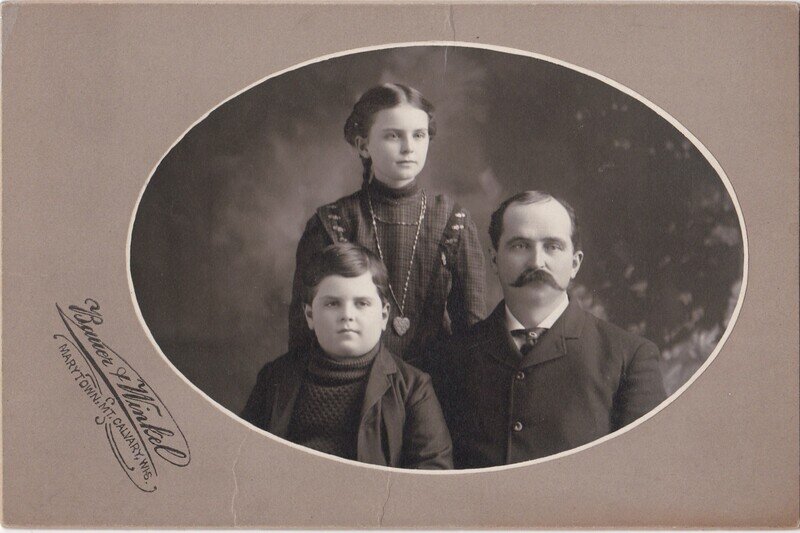
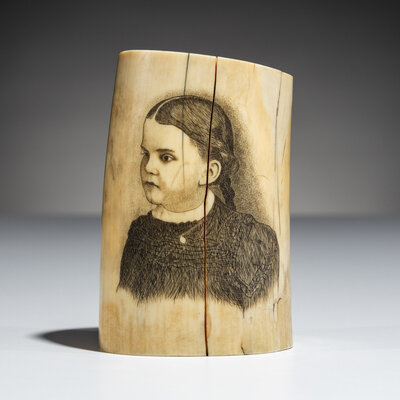
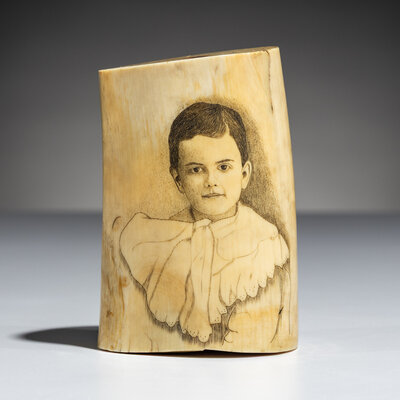
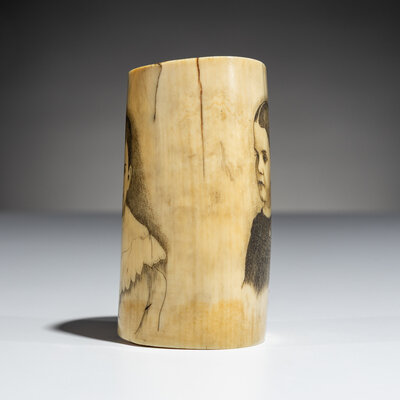
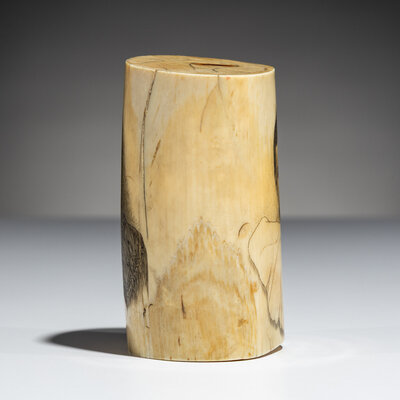
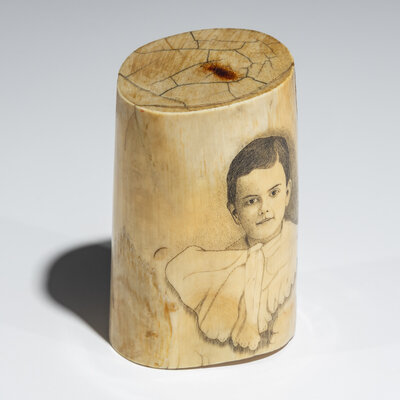
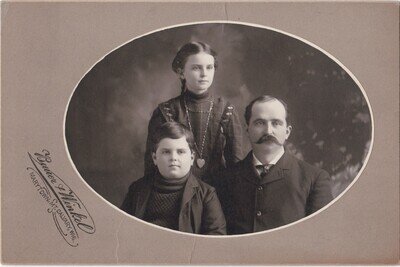
scrimshawed with two portraits of a young boy and girl; included is a photograph by Bauer and Winkel depicting the children with their father, likely the source for these portraits
height 4-1/8 inches x diameter 2-1/2 inches
From the collection of Father Edward F. Sippel of Fond du Lac, Wisconsin, inherited from his mother, Della (Beau) Sippel, daughter of John Louis Beau.
Beau’s wife died in 1895 shortly after the birth of their son, Johnny. The children, Della and the infant Johnny, were subsequently raised by relatives in Calvary, Wisconsin. During this period, Beau spent approximately thirteen years in Nome, Alaska, where he operated the Beau Mercantile during the gold rush era.
In 1933, Della reclaimed her father’s remaining personal effects from his bankrupt estate, preserving a small group of artifacts and photographs related to his ventures in Alaska. One scrimshaw in the collection is based on a February 1904 photograph depicting Beau with his children, Della and Johnny.
"Happy Jack, the most celebrated Eskimo of early-day Nome, Alaska... [He] had led the way to a new and lucrative industry by combining Eskimo craftsmanship and native materials with American fads of the day ...cribbage boards, gavels, cane and umbrella handles, watch fobs and the like.
Happy Jack's talents had already been nurtured aboard whaling ships, where he was exposed, as few Eskimos had been, to non-native ideas in the folk arts. He eagerly combined Yankee scrimshanders' techniques and ideas with his own. No doubt the sailors' scrimshaw... inspired Happy Jack's remarkable portraiture on ivory, his greatest accomplishment, but he carried it to heights rarely surpassed by even the best scrimshander" (Dorothy Ray Jean 1984: 32).
For similar examples of portraiture by Happy Jack, see: Ray, Dorothy Jean. American Indian Art Magazine 10, no. 1 (Winter 1984: 32–47)
This lot is located in Chicago.
(Iñupiaq, 1873-1918)
Double Scrimshawed Portrait of Della and Johnny Beau
ca 1904
ca 1904
scrimshawed with two portraits of a young boy and girl; included is a photograph by Bauer and Winkel depicting the children with their father, likely the source for these portraits
height 4-1/8 inches x diameter 2-1/2 inches
From the collection of Father Edward F. Sippel of Fond du Lac, Wisconsin, inherited from his mother, Della (Beau) Sippel, daughter of John Louis Beau.
Beau’s wife died in 1895 shortly after the birth of their son, Johnny. The children, Della and the infant Johnny, were subsequently raised by relatives in Calvary, Wisconsin. During this period, Beau spent approximately thirteen years in Nome, Alaska, where he operated the Beau Mercantile during the gold rush era.
In 1933, Della reclaimed her father’s remaining personal effects from his bankrupt estate, preserving a small group of artifacts and photographs related to his ventures in Alaska. One scrimshaw in the collection is based on a February 1904 photograph depicting Beau with his children, Della and Johnny.
"Happy Jack, the most celebrated Eskimo of early-day Nome, Alaska... [He] had led the way to a new and lucrative industry by combining Eskimo craftsmanship and native materials with American fads of the day ...cribbage boards, gavels, cane and umbrella handles, watch fobs and the like.
Happy Jack's talents had already been nurtured aboard whaling ships, where he was exposed, as few Eskimos had been, to non-native ideas in the folk arts. He eagerly combined Yankee scrimshanders' techniques and ideas with his own. No doubt the sailors' scrimshaw... inspired Happy Jack's remarkable portraiture on ivory, his greatest accomplishment, but he carried it to heights rarely surpassed by even the best scrimshander" (Dorothy Ray Jean 1984: 32).
For similar examples of portraiture by Happy Jack, see: Ray, Dorothy Jean. American Indian Art Magazine 10, no. 1 (Winter 1984: 32–47)
This lot is located in Chicago.