Condition Report
Contact Information
Lot 103
Sale 6465 - Printed and Manuscript Americana
Jan 29, 2026
10:00AM ET
Live / Philadelphia
Own a similar item?
Estimate
$12,000 -
18,000
Price Realized
$12,000
Sold prices are inclusive of Buyer’s Premium
Lot Description
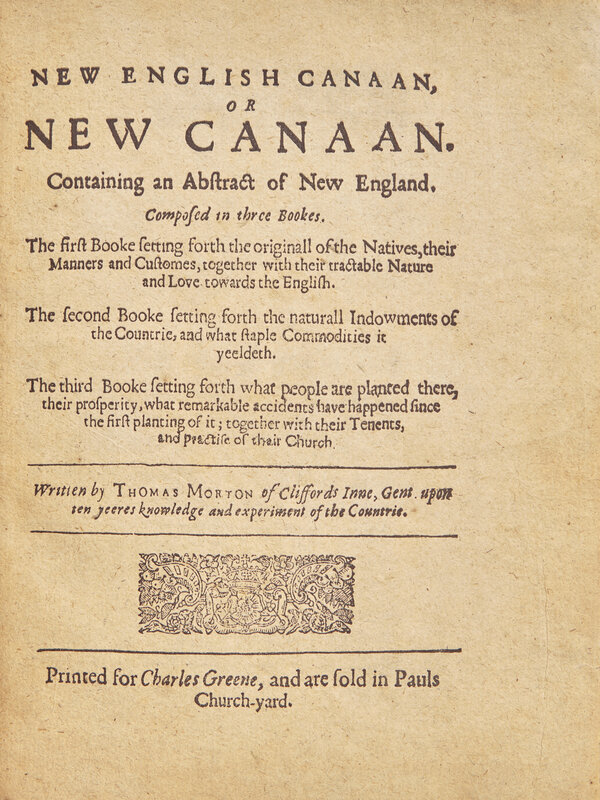
[New England] Morton, Thomas. New English Canaan, or New Canaan. Containing an Abstract of New England. Composed in three Bookes...
America's First Banned Book
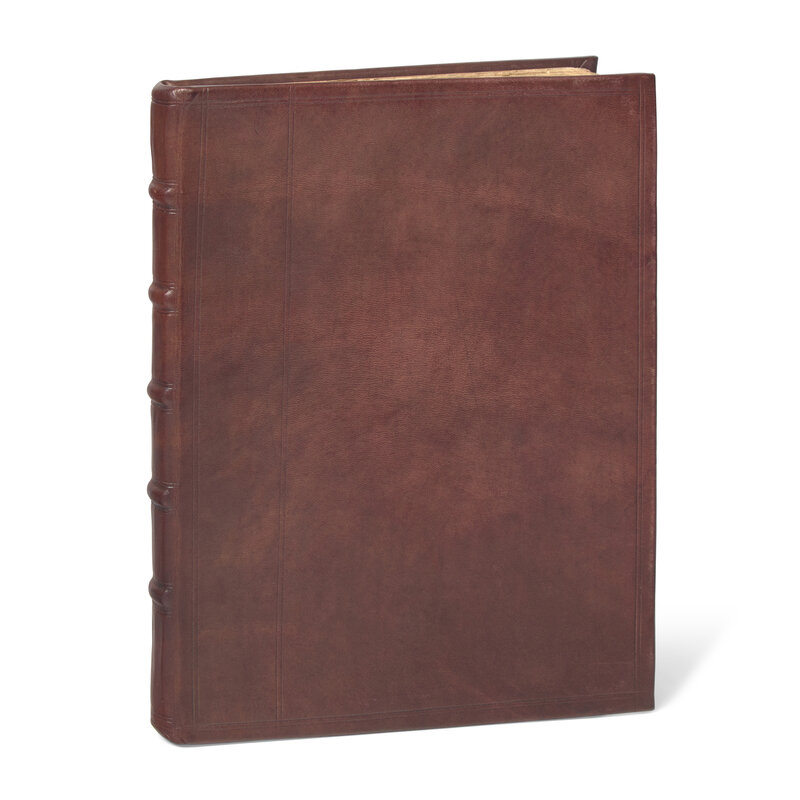
(Amsterdam: Jacob Frederick Stam, 1637). First edition. 4to. 188, (3) pp.; title-page expertly supplied in facsimile. With woodcut initials, woodcut head- and tail-pieces, as well as typographic tail-pieces. Bound to style in full brown calf, ruled in blind; all edges untrimmed; intermittent wear along text edges; scattered creasing and toning; scattered contemporary marginalia; horizontal tear traversing upper portion of R1; in quarter brown morocco slip case. Church 437; ESTC S110060; Sabin 51028; Streeter Sale 2:616; Vail, Old Frontier 90
Rare and very wide-margined first edition of America's first banned book: Thomas Morton's lively anti-Puritan tract, containing important early descriptions of New England society and Native American life.
Thomas Morton, deemed the "Lord of Misrule" by Plymouth colony governor William Bradford, first visited America briefly in 1622, where he bristled at the conservative governing Puritan elite. Returning in 1624 as a senior partner of a Crown-sponsored trading venture with Captain Richard Wollaston, he began trading with the region's indigenous tribes, and soon flaunted Plymouth Colony laws by selling them liquor and guns. Later, while Wollaston was away in Virginia, Morton upended his colony of Mount Wollaston and created a new utopian community called Mount Ma-re, later known as Merrymount (in what is now Quincy, Massachusetts). In contrast to the rigidly structured and pleasure denying Puritan community, Morton's colony was leaderless and had no hierarchies, allowing Natives and colonists to freely mingle and cohabitate, and with religious freedom widely practiced. In 1627, Morton erected a May Pole in the town square, and invited colonists and Indians alike to join him in a day of festive drinking and dancing. His Puritan neighbors were scandalized by this, and after he repeated the event the following year, Governor Bradford had Morton arrested. Exiled to an island off the coast of Maine, Morton soon found his way back to England, where in 1633, he first unsuccessfully attempted to published the above work (it was entered to the London publisher Charles Greene in the Stationer's Register on November 18, 1633). It was hindered by agents of New England who were alarmed by Morton's satiric denunciation of Puritan government and zealotry, and what he deemed their hypocrisy, especially in their dismal treatment of Native Americans.
Four years later, in 1637, Morton successfully published the work in Amsterdam, and English officials quickly attempted to seize every copy to prevent its message from being spread. Unfortunately for them, copies soon found their way to New England, where Puritan reaction was swift. The government quickly banned the work from its colony, making it considered the first banned book in America. Despite this, Morton soon returned to New England during the English Civil War, and was arrested as an agitator and put on trial for sedition. With his health failing, he was granted clemency, and died in Maine, in 1647.
This is one of only about 30 or less known extant copies. According to RBH, this is only the fifth copy to come to auction since 2000.
This lot is located in Philadelphia.