Condition Report
Contact Information
Auction Specialist
Lot 11
Sale 6431 - American Historical Ephemera & Early Photography Online
Lots Open
Nov 11, 2025
Lots Close
Nov 24, 2025
Timed Online / Cincinnati
Own a similar item?
Estimate
$300 -
500
Price Realized
$183
Sold prices are inclusive of Buyer’s Premium
Lot Description
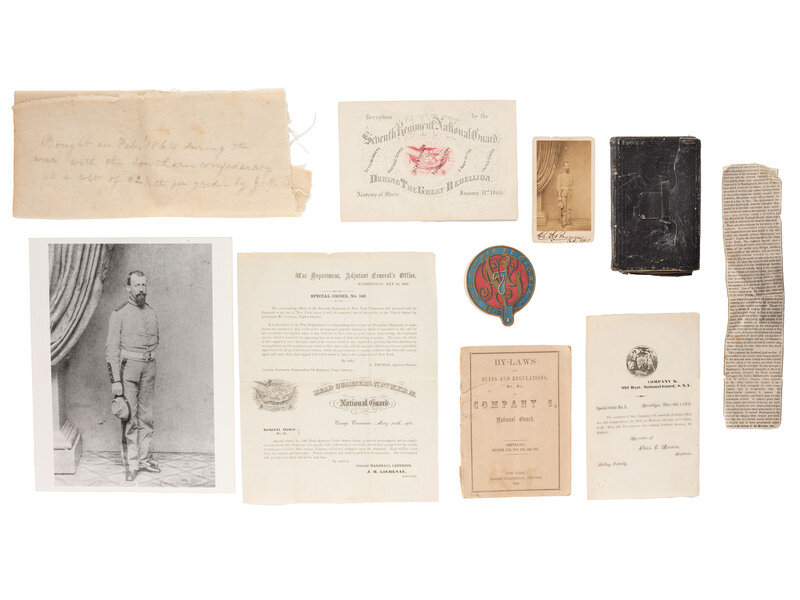
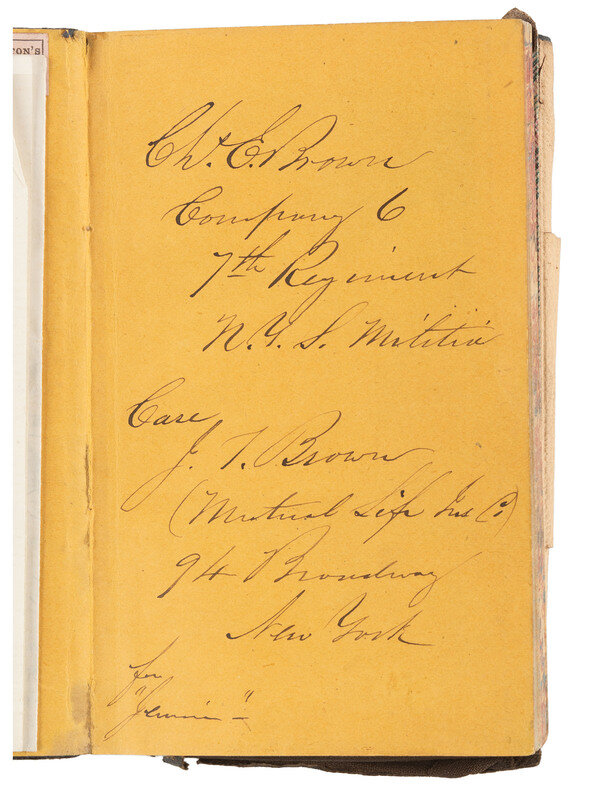
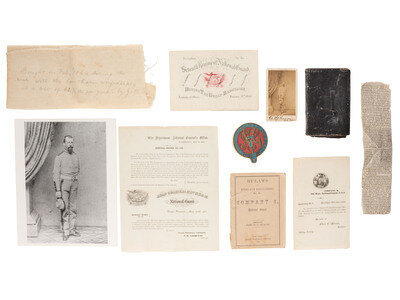
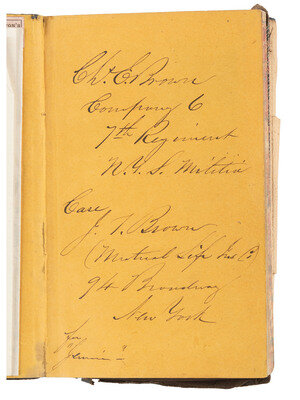
[CIVIL WAR]. Archive identified to Charles E. Brown, Co. 6, 7th New York State Militia.
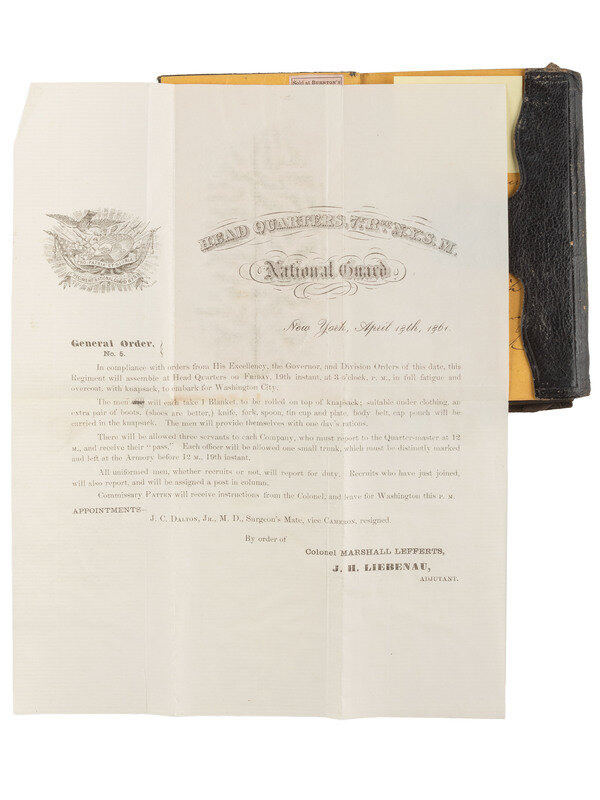
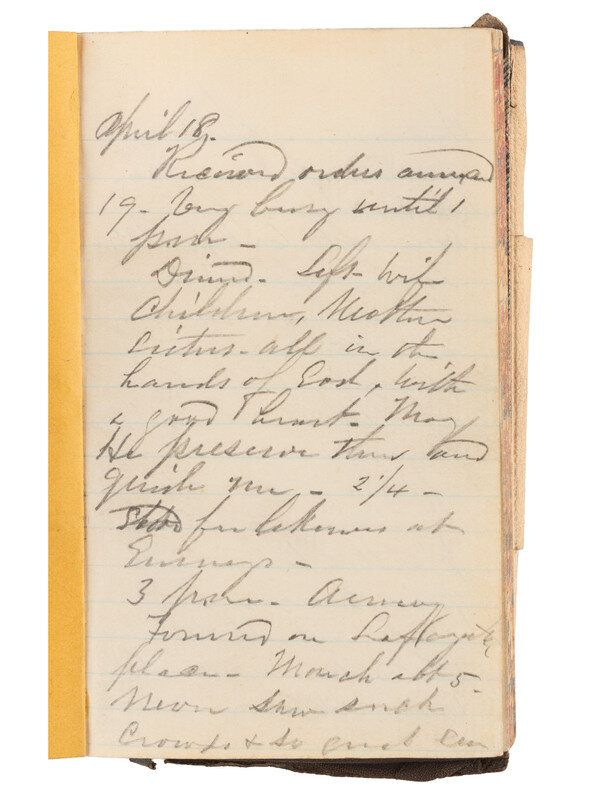
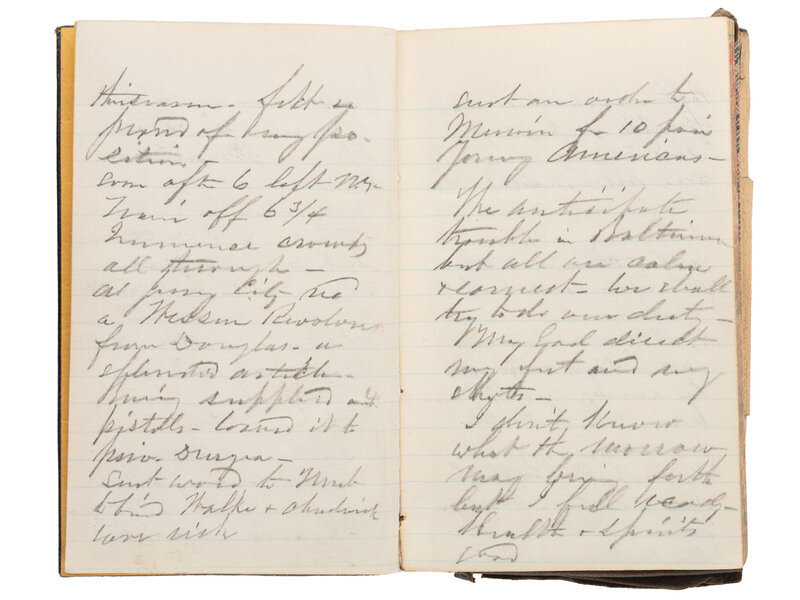
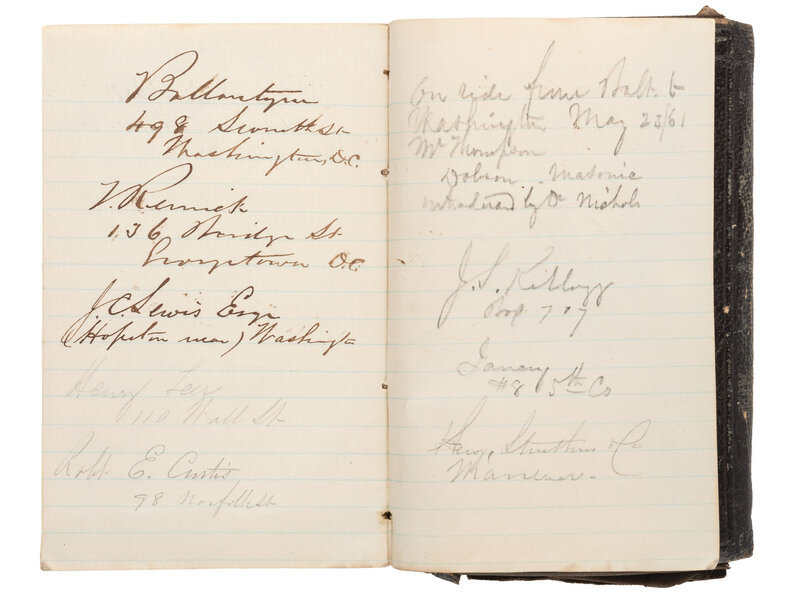
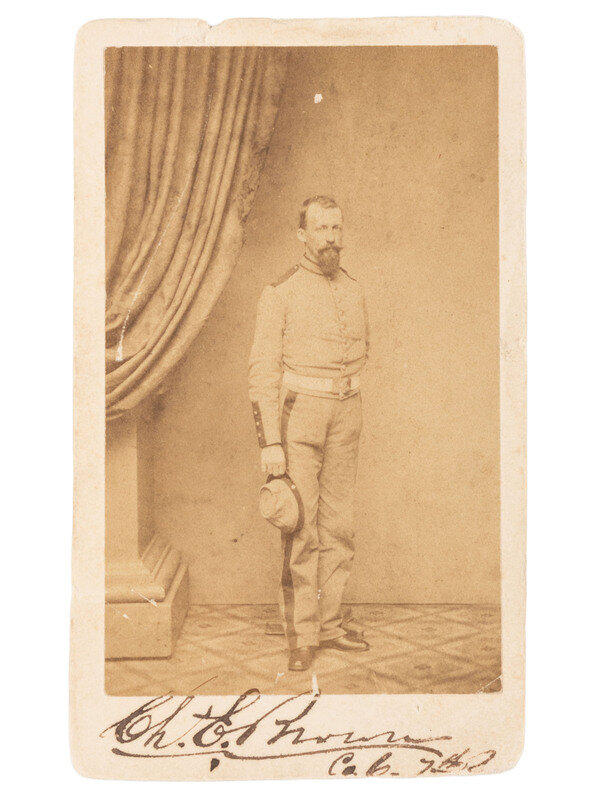
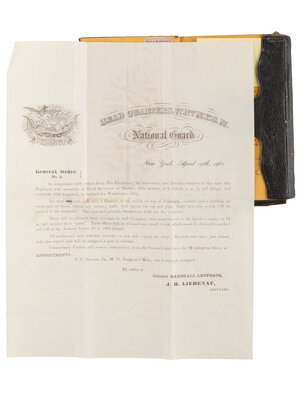
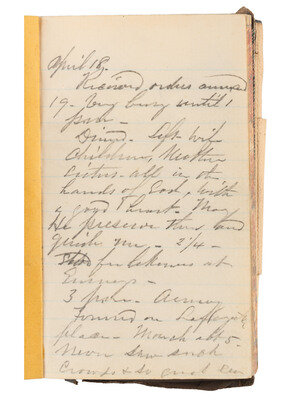
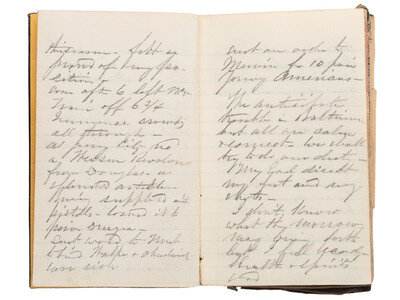
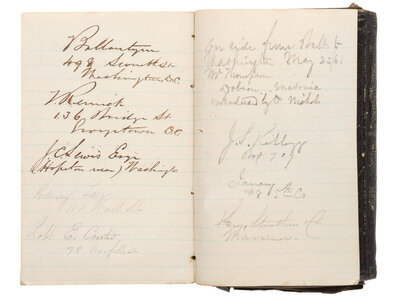
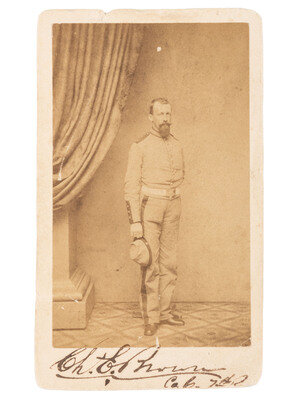
Group highlighted by: leather-bound soldier's diary, approx. 3 1/2 x 5 1/4 in., identified to "Chs. E. Brown / Company C / 7th Regiment / N.Y.S. Militia," 13 pp with entries dated 18-27 April 1861, +7pp additional notes, with 19 April 1861 mustering order attached to diary left front cover. -- Full standing portrait CDV of uniformed soldier, inscribed by Brown below image on mount "Chs. E. Brown / Co. C / 7th R." No backmark.
[With:] Printed order bearing the "Excelsior" state seal of New York, Company K, 23d Regt. National Guard, S.N.Y. "Special Order No.2," Brooklyn, 3 December 1862. Order instructing members of the company to gather for drill. Signed in type by Captain Chas. E. Brown. -- 2-part mustering out order, "War Department, Adjutant General's Office, Washington, May 30, 1861." Special Order, No.146, and "Head Quarters, 7t. Rgt. N.Y.S.M., National Guard, Camp Cameron, May 30th, 1861." General Order, No. 22." -- "By-Laws and Rules and Regulations, &c, &c., of Company 6, National Guard." New York: Robert Craighead, Printer, 1860. 54pp, approx. 4 1/4 x 6 in. -- 7th NY National Guard Reunion Memorabilia, including a card announcing a 7th NY reception at the Academy of Music, 31 January 1866, and a corresponding circular trefoil, approx. 2 3/4 in. dia., which lists music and the program, which included an oration by Maj. Gen. John A. Dix. -- Fragment of Civil War-era linen, approx. 10 1/4 x 14 1/4 in., with penciled inscription on cloth "Bought in Feb. 1864 during the war with the Southern Confederacy at a cost of 62 1/2 cts. Per yard - by J.M. E[?]." -- Photocopies of documents in National Archives related to Brown's service including muster rolls and pension papers.
Charles Brown's diary covers the the brief, but consequential, period during which the regiment left New York at the onset of the war to assure the safety of President Lincoln and the nation's capital from Confederate forces. Brown describes preparations for departure, and his journey to DC: (April 19) "Immense crowds all the way through to jersey City. Got a Wesson revolver from Douglas...We anticipate in trouble but all are calm & earnest - we shall try to do our duty." (April 24) 24th Wednesday...Troops expected from Nr [North] Evy. order to pack knp. Roll overcoat & take three days rations and be ready at a minits notice....Hed quarters. 7th troops & naval men all in line 25 minutes. False alarm. 11 Dismissed. 4 am routed and formed for march...I was one of 24 scouts hat went ahead. Hard work but exciting... marched all day & all night over to the 'junctions.' Excessively fatiguing but very few fell out. (April 26) The event of today was parading in front of the capitol, before the President...."
According to the Regimental History of the 7th New York:
"This famous regiment of New York city dates its origin from
April, 1806, when Cos. A, B, C and D, were organized at the
time of the excitement created by the British firing on
American vessels off Sandy Hook.
At the beginning of 1861 it was known as one of the best
appointed and drilled militia regiments then in existence. It
was composed of excellent material, all its members being young
men engaged in active business pursuits in the metropolis, and
was the first New York regiment to leave for the front.
Its departure for Washington, April 19, 1861, was attended by
scenes of great excitement and enthusiasm, its line of march
through the streets of New York being a perfect ovation.
Speaking of the National Guard regiments furnished by New York,
Col.Fox, in his Regimental Losses in the Civil War, says:
Of these troops, the 7th regiment, National Guard -- or 7th
Militia, as it was called -- was particularly conspicuous by
the surprising celerity with which it went to the front in time
of need; by its superior drill and equipment; and by the high
standard of personal character which marked its rank and file.
When the war broke out it was among the very first to take the
field, leaving New York with 991 officers and men, and by its
timely arrival at Washington contributed largely to the relief
of the threatened capital. This, its first enlistment, was for
30 days.
It volunteered again in May,1862, for three months; and again
in June, 1863, for one month. But the 7th rendered a far
greater and more valuable service to the country by the large
number of efficient and well-drilled soldiers, which went from
its ranks to accept commissions in the new volunteer regiments."
Estate of David O'Reilly, Old Bridge, New Jersey
This lot is located in Cincinnati.