Condition Report
Contact Information
Auction Specialist
Lot 61
Sale 6425 - American Historical Ephemera and Early Photography, including The Larry Ness Collection of Native American Photography
Part I - Lots 1-222
Oct 23, 2025
10:00AM ET
Part II - Lots 223-376
Oct 24, 2025
10:00AM ET
Live / Cincinnati
Own a similar item?
Estimate
$800 -
1,000
Lot Description
[CIVIL WAR]. Pair of letters from Alfred E. Waldo, 35th Massachusetts Infantry, DOW, detailing the Battle of Fredericksburg and aftermath.
2 letters, including:
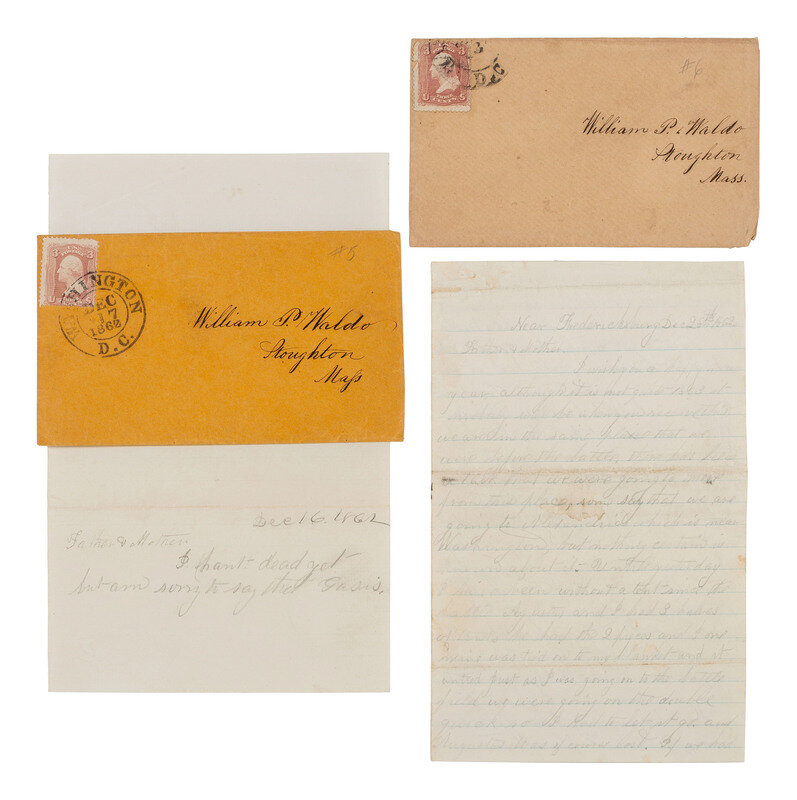
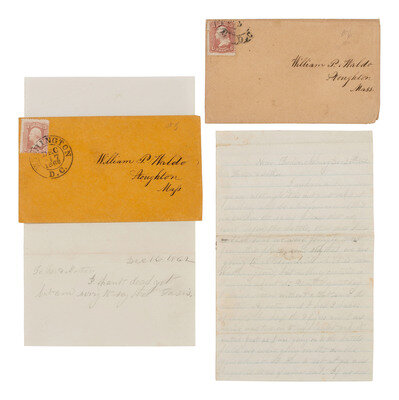
One page, 5 x 8 in., creased along old folds. Accompanied by cover cancelled at Washington, DC and addressed to William P. Waldo of Stoughton, MA.
In this first letter, dated 16 December 1862, Waldo succinctly reports grim news: his friend and tent mate "Gus" has passed. He writes only, "Father & Mother, I hant [sic] dead yet but am sorry to say that Gus is."
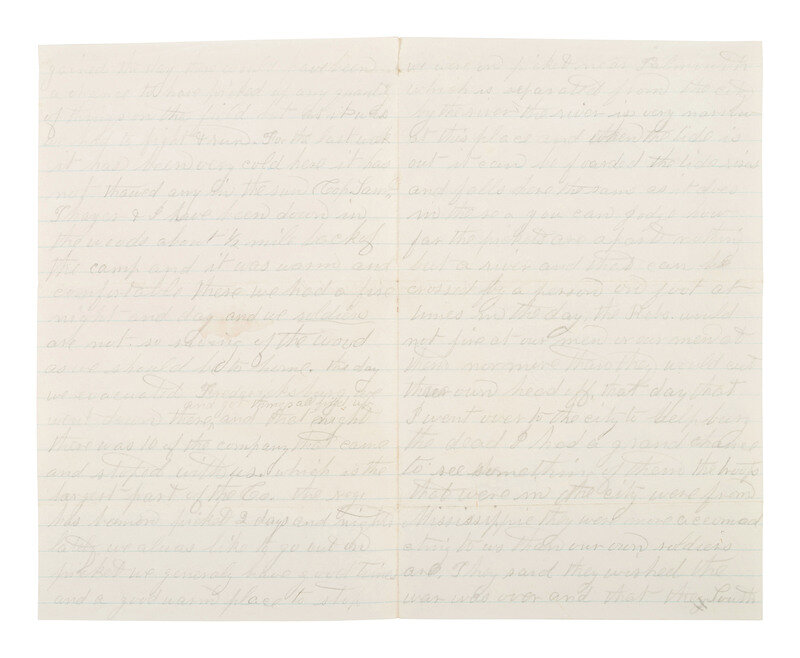
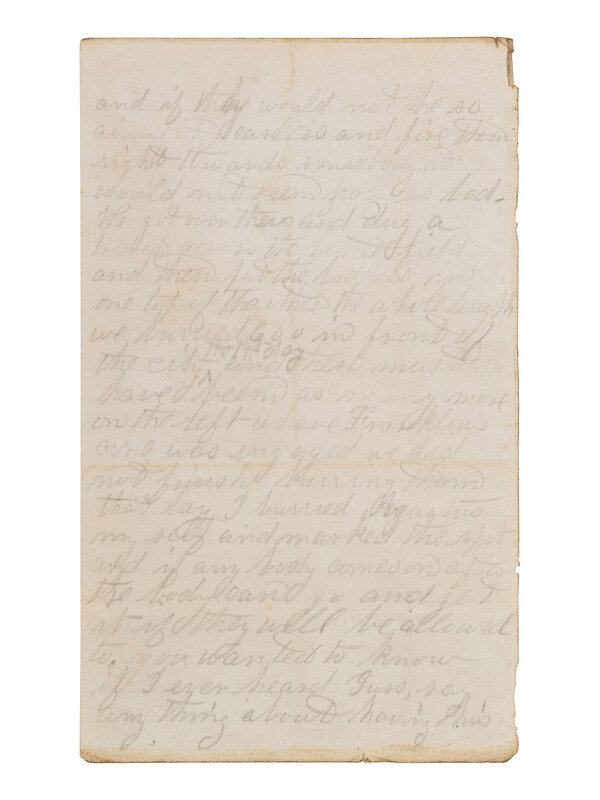
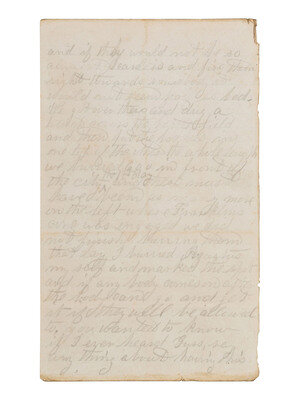
6 pages, 4 3/4 x 7 1/2 in., on bifolium with one smaller, disbound leaf. Accompanied by cover cancelled at Washington, DC and addressed to William P. Waldo of Stoughton, MA.
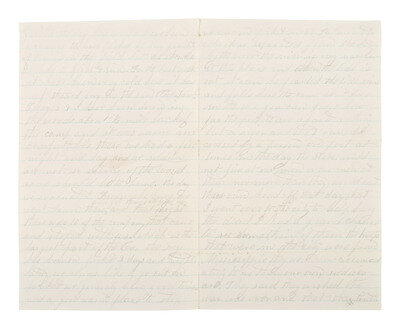
In this second letter, dated 28 December 1862, Waldo goes into further detail about the events of the preceding days. He describes how he lost his piece of the tent he shared with Augustus "Gus," in the fray of battle as they "had to fight & run."
He describes picket duty at Falmouth in the aftermath of the battle, writing: "The Rebs would not fire at our men or our men at them no more than they would cut their own head off that day that I went over tot he city to help bury the dead. I had a grand chance to see something of them. The troops that were in the city were from Mississippie [sic]. They were more accomodating [sic] to us than our own soldiers are."
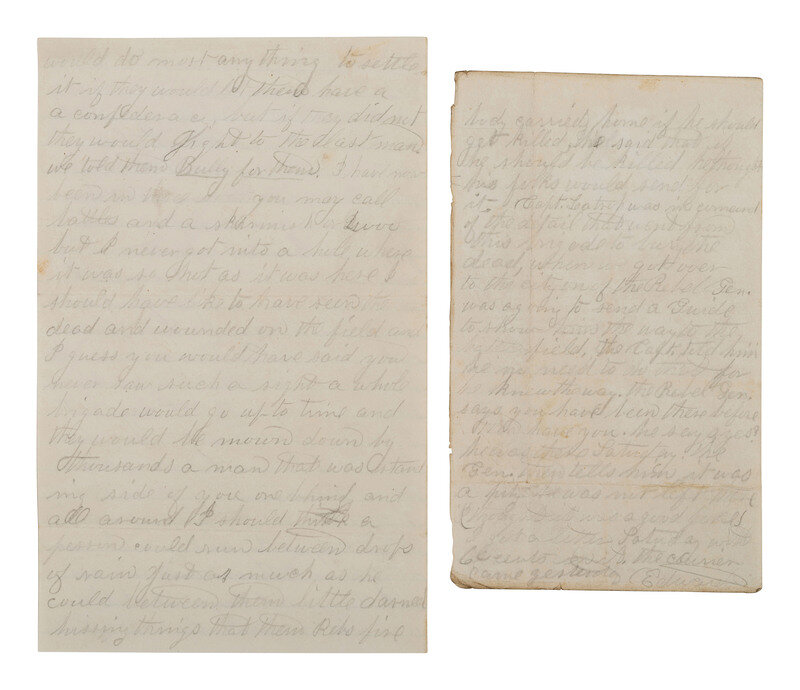
He was even able to learn the mindset and motivation of the recently victorious "rebs," through conversation. He writes: "They said they wished the war was over and that the South would do most anything to settle it if they would let them have a confederacy, but if they did not they would fight to the last man. We told them Bully for them."
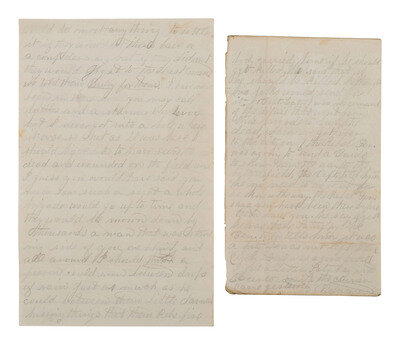
In contemplating his service thus far, Waldo ranks his recent confrontation with the enemy as the worst, reflecting: "I have now been in three what you may call battles and a skirmish or two but I never got into a hole where it was so hot as it was here I should have like to have seen the dead and wounded on the field and I guess you would have said you never saw such a sight. A whole brigade would go up to time and they would be mown down by thousands...I should think a person could run between drops of rain just as much as he could between them little darned hissing things that them Rebs fire and if they would not be so almighty careless and fire them right towards somebody it would not seem half as bad."
He then describes an interesting conversation between Captain Lathrop and an unidentified Confederate general, in which the latter is trying to find the battlefield and the captain responds that he can show him the way since he knows where it is. The general asks the captain if he has been there before and the captain replies that he was there on Saturday. Waldo writes, "The Gen. then tells him it was a pity he was not left there. I thought it was a good joke."
Alfred Edward Waldo enlisted as a private less than a year before he wrote these letters home to the farm in Stoughton. He was mustered into Company E of the 35th Massachusetts Infantry Regiment, and as such went on from Fredericksburg to Newport News, VA in the early part of 1863, and thence reinforced General Grant's troops in Vicksburg for four weeks in the summer until that city surrendered on 4 July. Waldo engaged with his regiment at Spotsylvania, where he was severely wounded on 18 May 1864. He would succumb to his wounds the following month, on 7 June at Armory Square Hospital in Washington, DC. Waldo is buried in Arlington National Cemetery.