Condition Report
Contact Information
Auction Specialist
Lot 59
Sale 6425 - American Historical Ephemera and Early Photography, including The Larry Ness Collection of Native American Photography
Part I - Lots 1-222
Oct 23, 2025
10:00AM ET
Part II - Lots 223-376
Oct 24, 2025
10:00AM ET
Live / Cincinnati
Own a similar item?
Estimate
$5,000 -
7,000
Price Realized
$5,400
Sold prices are inclusive of Buyer’s Premium
Lot Description
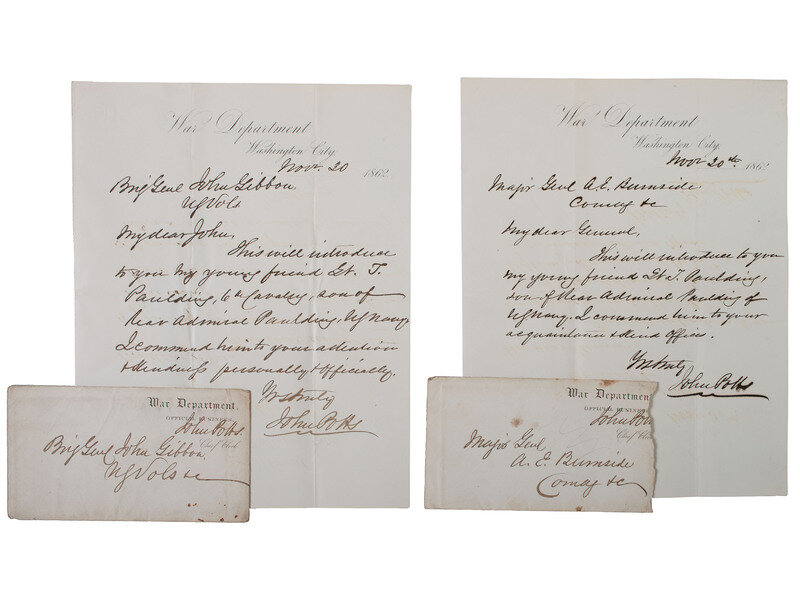
[CIVIL WAR]. War-date letters and diary of Capt. Tattnall Paulding (1840-1907), 6th US Cavalry, POW Battle of Fairfield, incl. Gettysburg Campaign and Libby Prison content.
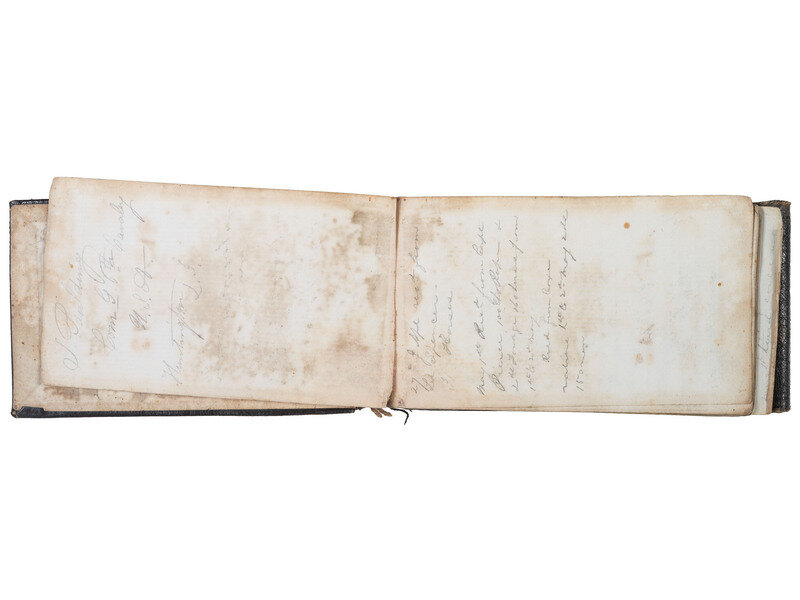
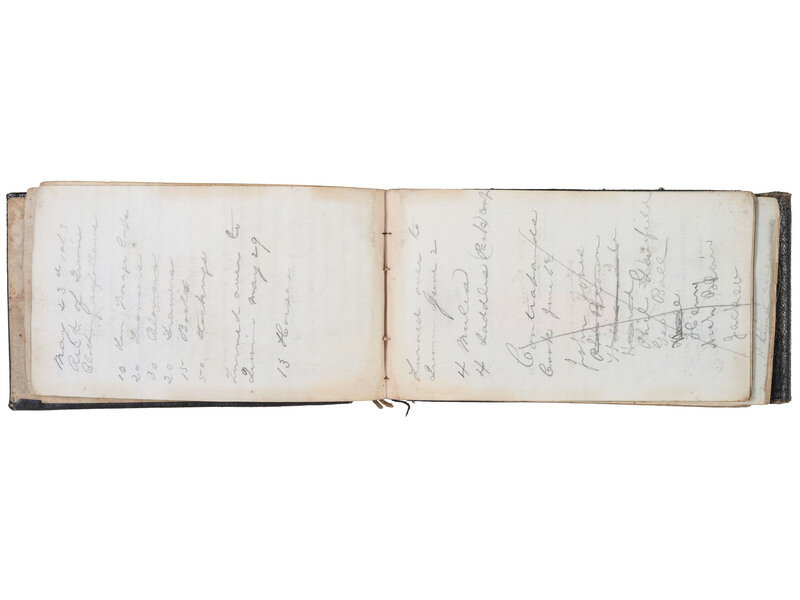
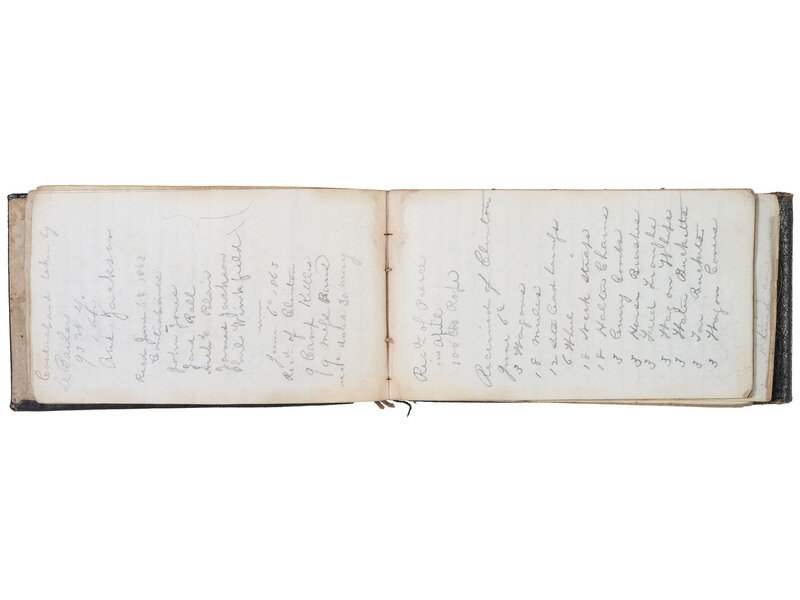
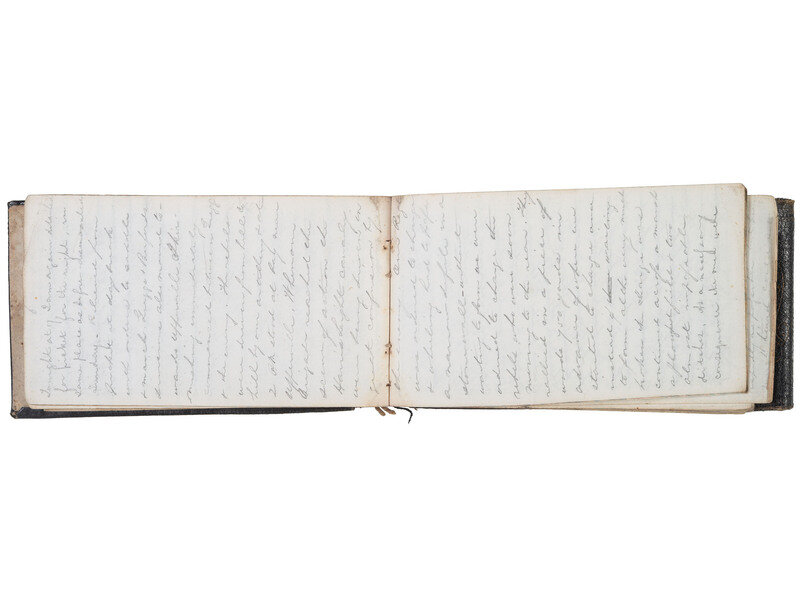
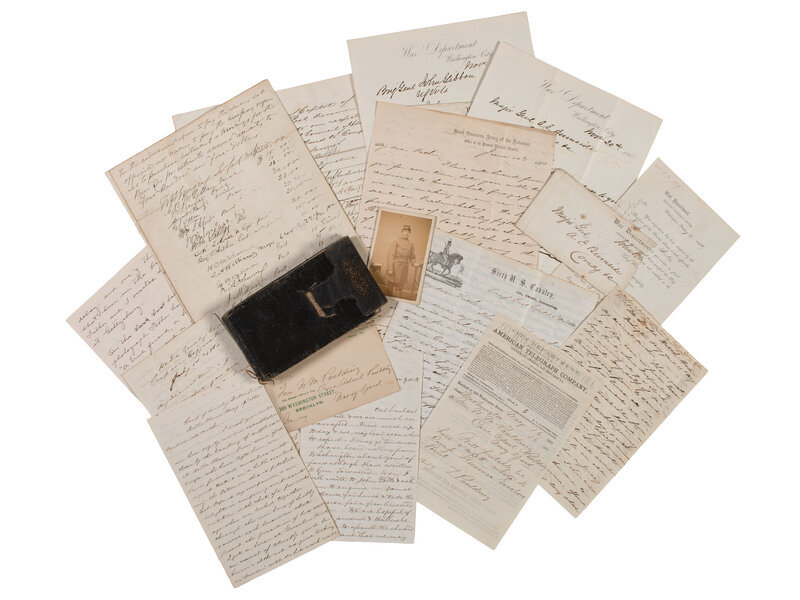
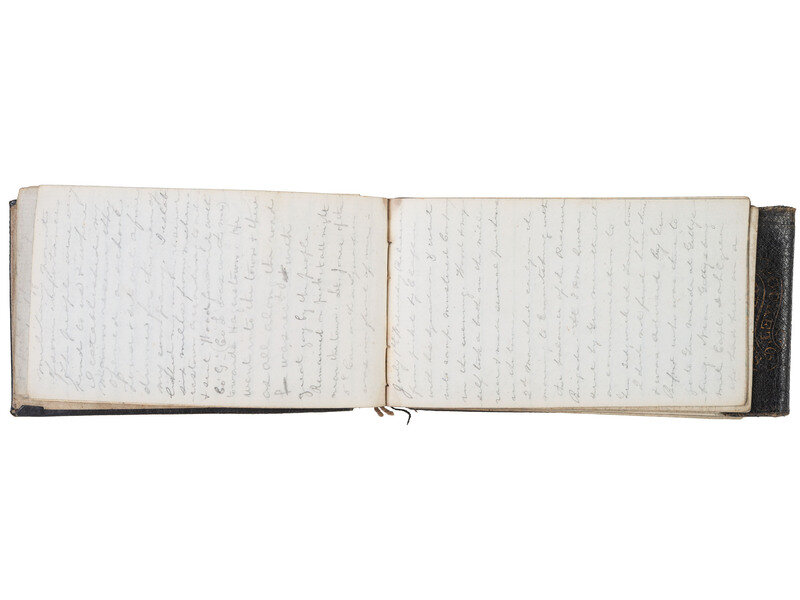
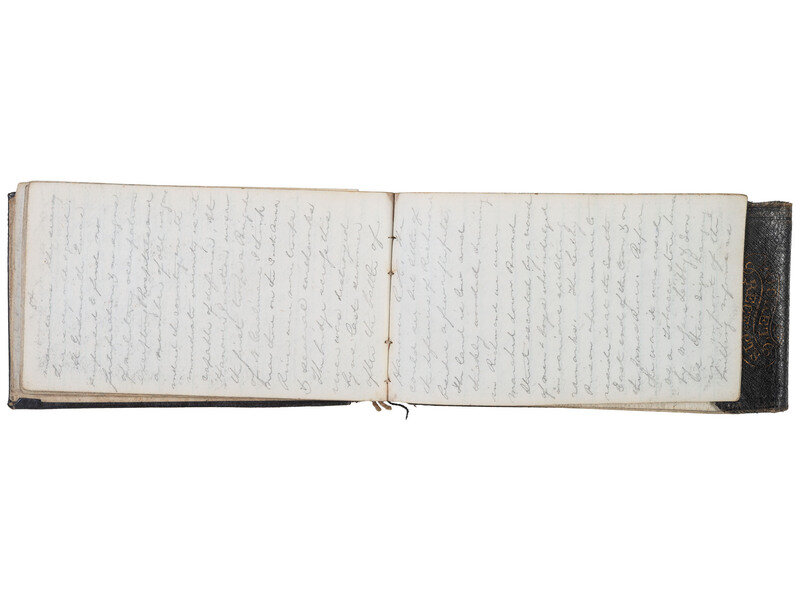
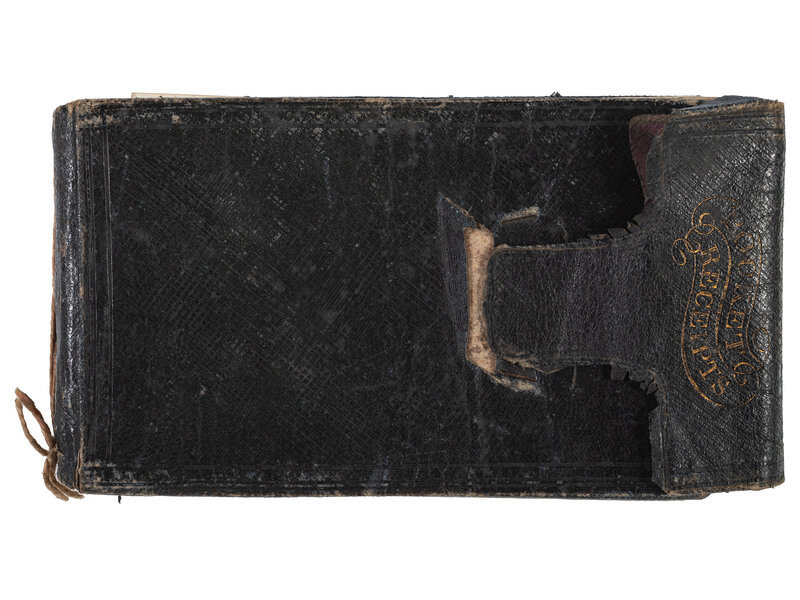
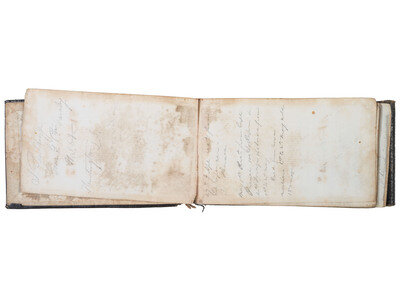
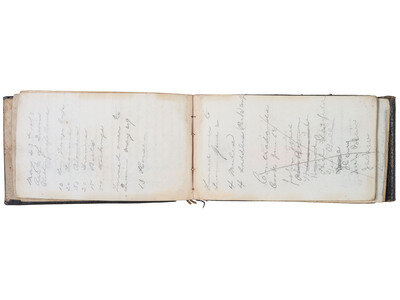
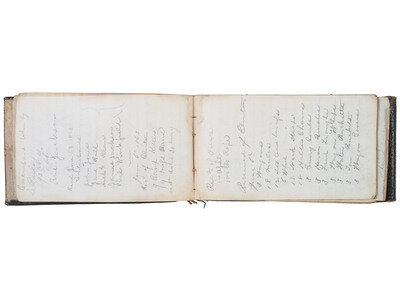
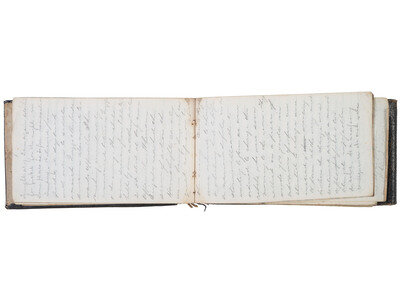
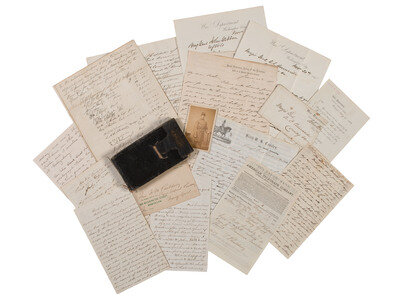
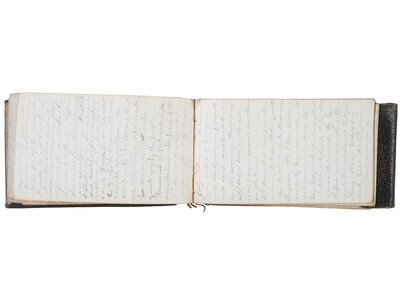
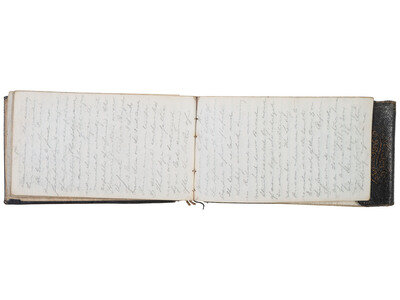
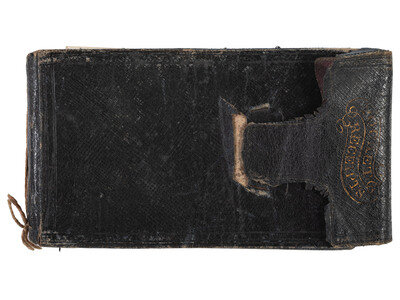
Important archive related to the Civil War service of Tattnall Paulding, son of Rear Admiral Hiram Paulding and grandson of Captain John Paulding, one of the captors of Major John Andre during the Revolutionary War. Archive highlighted by a war-date diary describing Tattnall Paulding's capture and nine month internment at Libby Prison, 14 June 1863 - ca 1865[?], 6 x 3 1/4 in., approx. 115pp (worn, several loose pages, pencil faint in portions), identified to "T. Paulding / Com. G 6th Cavalry / U.S.A. / Huntington L.I." Also included in the archive is a group of 45 war-date letters, telegrams, and documents, and an inscribed CDV of Paulding's friend Lt. Christian Balder, 6th U.S. Cavalry, KIA Battle of Fairfield. Documents and correspondence span March 1861 - May 1866. Majority of correspondence from Tattnall Paulding to family members, with a small amount of additional correspondence from Rear Admiral Hiram Paulding and other officers. Tattnall Paulding's diary and letters provide battle content from multiple engagements alongside a fascinating POW account, all written in a highly descriptive and educated manner by an officer from a prominent military family.
Originally organized as the Third Cavalry less than a month after the bombardment of Fort Sumter, in August 1861 the regiment was re-designated the 6th U.S. Cavalry. "The Fighting Sixth" was assigned to the Army of the Potomac where the regiment experienced heavy fighting throughout 1862 and into 1863. Paulding's diary begins on 14 June 1863 with his arrival at Manassas Junction, and provides detailed descriptions for action at Middleburg (June 19) and Upperville (June 21). He writes of Upperville, in small part: "...without waiting to form we were ordered to charge the rebels who were who were soon moving to the rear. They rallied in a piece of woods 750 yards in advance of where we started to charge and instead of waiting to form altho very much broken the charge was continued across a marsh a ploughed field & two almost impassable ditches. As a necessary consequence the men were scattered far & wide and the horses much blown when we reached the point in the woods behind which the rebels rallied...." From there the 6th moved towards impending action at Gettysburg. On 2 July, Paulding describes being sent from Emmitsburg with a communication to Gen. Sedgwick at Taneytown, and from there encountering Capt. Dahlgren who had intercepted a Confederate courier. Paulding's capture occurred the following day, a sequence of events recorded in his extensive entry from 3 July. He writes of the initial order to capture a large wagon train that had been camped at Fairfield, and of the heroic actions of his friend Lt. Christian Balder. He then continues: "My men were scattered through the field on the right of the road or on the left as we were now going, and being pursued by the mounted foe were soon captured. I was mounted and finding it impossible to get away with my horse I left him...and climbing the fence took it on foot through the field pursued by half a dozen of the enemy's mounted men. They were soon on each side of me & being much blown by hard running & seeing no possibility of escape I surrendered to a man who was vociferously demanding my surrender & who at once robbed me of my field glass...." Subsequent entries in the diary describe Paulding's march to Libby Prison, providing detailed accounts of conditions, rations, prisoner health, the towns through which they passed, interactions with Confederate soldiers, southern civilians, and more. His group arrived in Richmond on 18 July: "...we were marched down Broad Street escorted by a crowd of men and boys who indulged in various exulting remarks...[Libby Prison] is a 3 story building with numerous windows out of which dozens of heads were looking at us as we approached. All were marched into the lower room of the building & then out on the street again by rank a thorough search being made of each & canteens haversacks blankets stationery knives & amts of money exceeding $20.00 taken away...." Later diary entries provide a fascinating glimpse into prison life, including interesting escapes and Paulding's own exchange. Additional notations, seemingly unrelated to Paulding's time at Libby Prison, are also found within the diary, including notes identifying "contrabands" taken during his service.
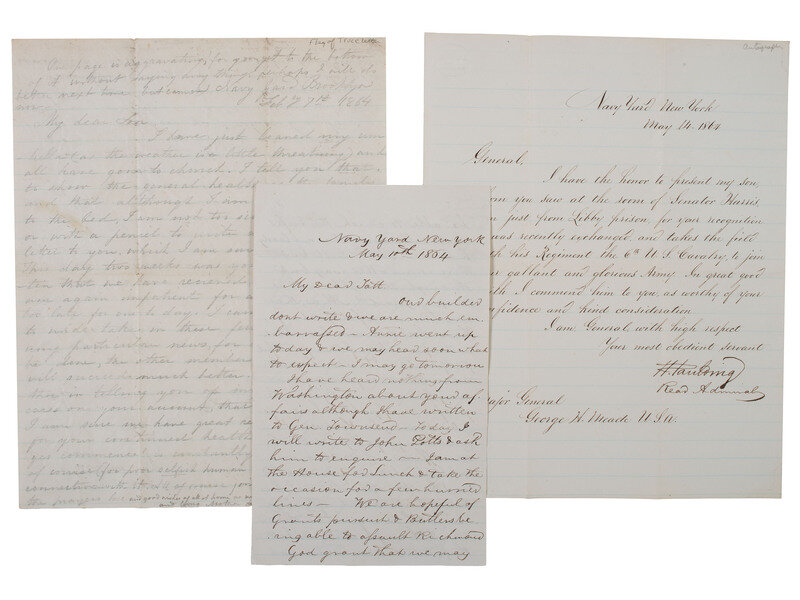
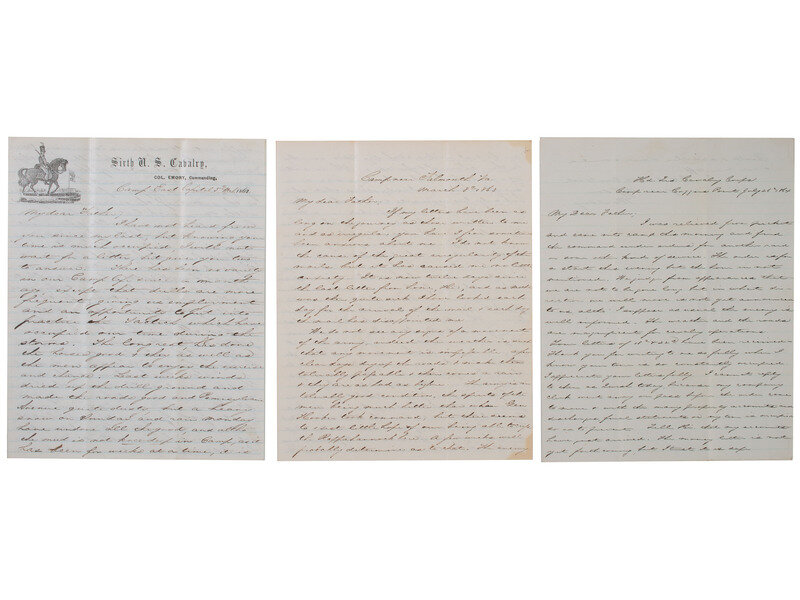
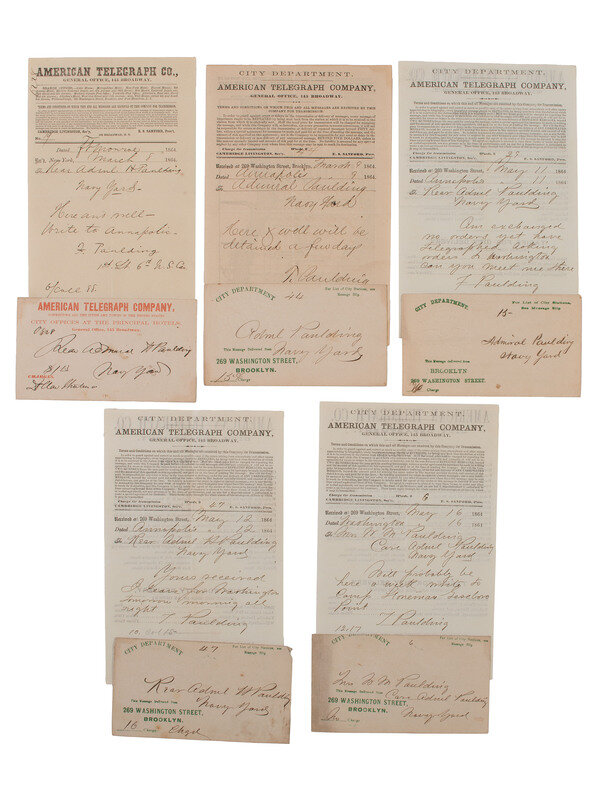
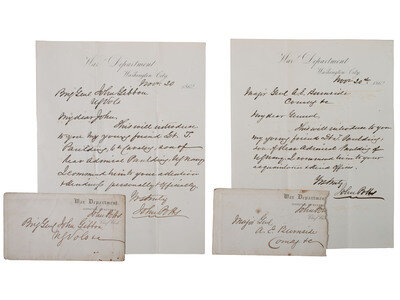
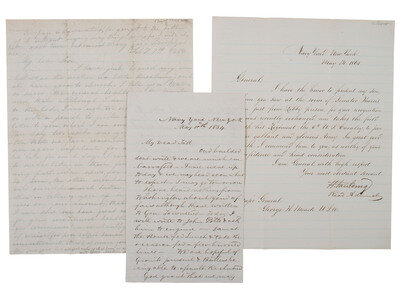
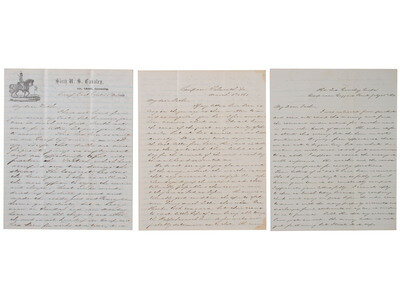
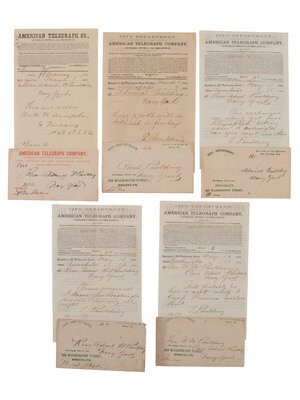
Correspondence includes, in part: 28 letters written by Tattnall Paulding to his mother, father, sisters, and brother while serving as father's secretary in the early days of the war and while serving with the 6th U.S. Cavalry. -- Two AlsS sent to Rear Admiral Paulding following the Battle of Fairfield, alerting him that his son is well, though now a prisoner. Asst. Surgeon William Notson of the 6th U.S. Cav. writes from Fairfield: "Your son is well. After the severe fight our regiment had with two brigades of the rebels near this place ...I met Lt. Paulding, like myself, a prisoner. He was uninjured....I promised your son to write to you, as soon as possible." -- Two ALsS from Rear Admiral Hiram Paulding, then serving as commandant of the New York Navy Yard, to Tattnall while his son was imprisoned. In a 7 February 1864 letter he writes of his anxiety on his son's behalf and inquires as to news of exchanges. On 10 May 1864 he writes that he was written to "Gen. Townsend" about Tattnall's affairs and shares news of the Navy Yard. -- Three telegrams from Tattnall to his father at the Navy Yard, sent after he was paroled, though not yet exchanged. Telegraphing from Fort Monroe, 8 March 1864, Tattnall assures his father "Here and Well. Write to Annapolis" and three days later "Am exchanged no orders yet have telegraphed asking orders to Washington. Can meet you there." -- An ALS from Rear Admiral Hiram Paulding to General Meade, 14 May 1864, stating "I have the honor to present my son, whom you saw at the room of Senator Harris, then just from Libby Prison, for your recognition. He was recently exchanged, and takes the field with his Regiment the 6th U.S. cavalry, to join your gallant and glorious Army...." -- Tattnall Paulding ALS in which he tenders his resignation from the 6th Cavalry, and the response from the War Department, Adjutant General's Office, Washington, 17 May 1866, indicating that the president has accepted his resignation effective 1 July 1866.
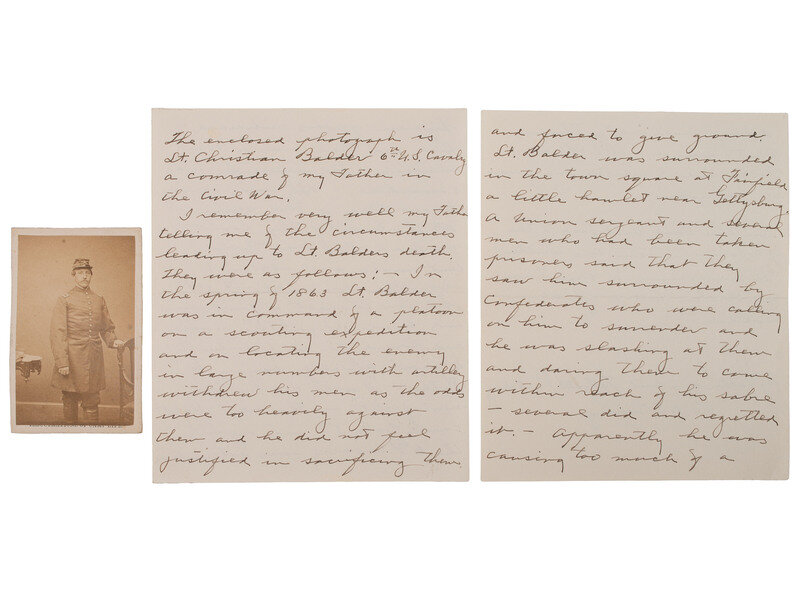
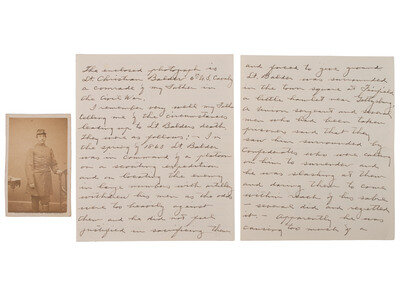
[With:] CDV of a uniformed soldier inscribed on verso by Tattnall Paulding, "Lt. C. Balder / 6th US Cavry / Killed in action at / Fairfield Pa July 3 1863 / A true friend a high / toned gentleman / & a gallant soldier." Accompanied by an undated 4pp letter in the hand of John Paulding (1878-1960), son of Tattnall Paulding, detailing the "circumstances leading up to Lt. Balder's death" as relayed to John by his father. John Paulding writes that Balder was shot in the back by a Confederate soldier, and that he visited Balder's grave at Gettysburg with his father.
HDS indicates Tattnall Paulding enlisted on 5/14/1861 as a 1st Lieut. and was commissioned into US Regular Army 3rd Cavalry. He transferred out on 8/3/1861 and into US Regular Army 6th Cavalry. Promotions: Capt 7/3/1863 by Brevet (Gettysburg, PA), Capt 10/20/1864, Lt Colonel 11/11/1865 by Brevet, Colonel 11/11/1865 by Brevet. Paulding distinguished himself through the campaigns of 1862, Stoneman’s Raid and the Battle of Brandy Station. Although only a lieutenant, Paulding commanded a squadron during the Gettysburg Campaign, and led his squadron during the Battle of Fairfield on July 3, 1863, commanding companies A and G. Although a disastrous defeat for his outnumbered regiment, Paulding received a brevet promotion to captain for “gallant and meritorious service” during the battle. Following his release from Libby Prison, he was promoted to captain and assigned to operate the Mounted Recruiting Service station in New York City upon his release.
See also Lots 11, 12, 13.
Property from the James Milgram, M.D., Collection of Ephemeral Americana and Historical Documents
This lot is located in Cincinnati.