


Condition Report
Contact Information
Auction Specialist
Lot 104
Sale 6417 - Fine Printed Books & Manuscripts, Including Americana
Sep 10, 2025
10:00AM ET
Live / Philadelphia
Own a similar item?
Estimate
$500 -
800
Price Realized
$960
Sold prices are inclusive of Buyer’s Premium
Lot Description
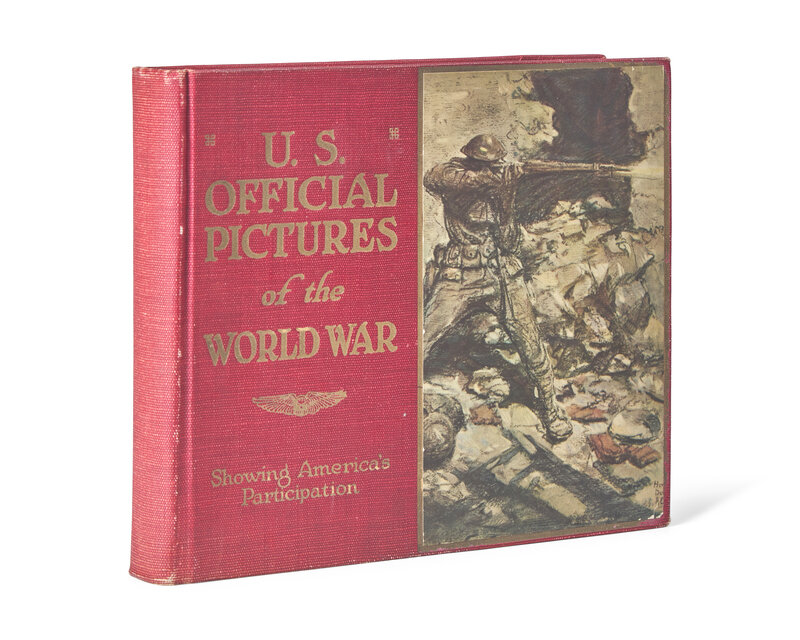
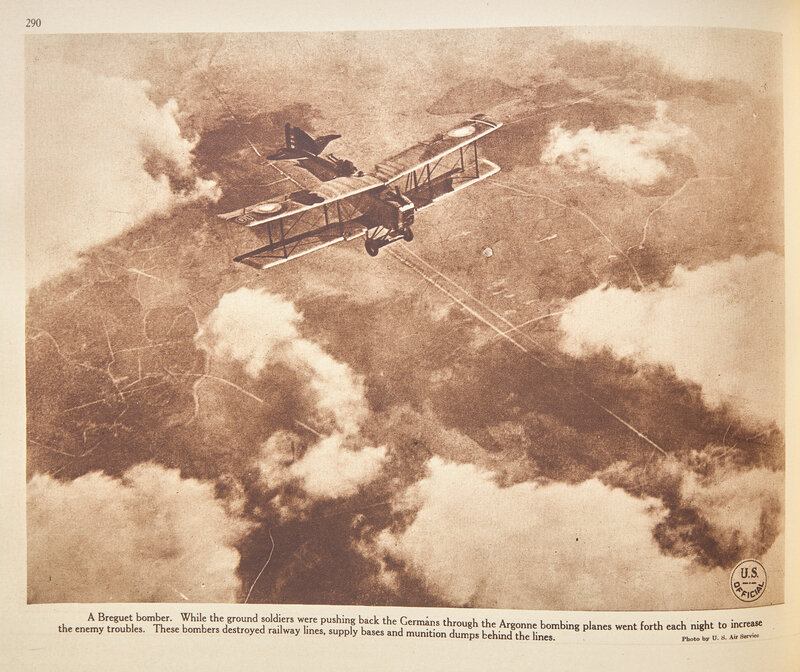
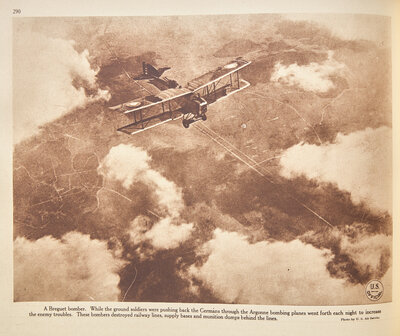
[Black Sun Press] [Crosby, Harry] Moore, William E., and James Russell. U.S. Official Pictures of the World War...
Harry Crosby's Copy
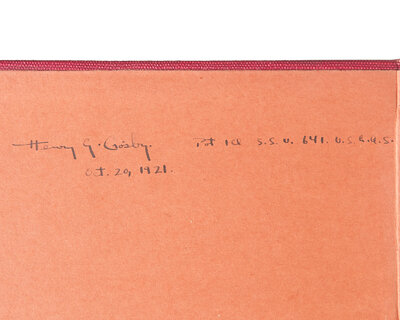
Washington, D.C.: Pictorial Bureau, 1920. First edition. From the library of Harry Crosby, and inscribed by him on front paste-down: "Henry G. Crosby. Oct. 20, 1921 Pvt 1cl S.S.U. 641. U.S.A.A.S." Oblong 4to. Profusely illustrated with photographic reproductions. Publisher's red cloth, stamped in gilt, pictorial paper cover label. Woodward 237
Black Sun Press co-founder Harry Crosby's copy of this comprehensive pictorial record of World War I. At 19 years old, Crosby volunteered to serve in the American Ambulance Service, arriving in France in July 1917. Following the United States's entrance to the war, he enlisted in the U.S. Army and was attached to the 120th French Division. He saw action at the Front during the Second Battle of Verdun, and barely escaped death when a mortar shell hit his ambulance, vaporizing it but leaving him miraculously unscathed. This near-death experience had a profound effect on him, causing a spiritual awakening and obsession with death and waste that would continue throughout his life, causing him to annually celebrate his "death day". Crosby described this moment in a letter to his mother ten years later, "Ten years ago today on the hills of Verdun and the red sun setting back of the hills and the River Meuse and the black shells spouting up in columns and the roar of the barrage and Spud was wounded and the ride down and the metamorphose from boy into man on November 22, 1917 I shall never never forget..." (Wolff, Black Sun, p. 53). Crosby continued to work on the Front for the remainder of the war, and was awarded the Croix de Guerre for his heroics at the Battle of the Orme, where he and his section, working day and night, carried over 2,000 wounded soldiers off the battlefield. At war's end he returned home a hero, but alienated. He subsequently enrolled at Harvard, and graduated in 1921, the year he inscribed this book.