Condition Report
Contact Information
Auction Specialist
Lot 527
Sale 6319 - American Historical Ephemera and Early Photography
May 1, 2025
10:00AM ET
Live / Cincinnati
Own a similar item?
Estimate
$700 -
1,000
Price Realized
$2,160
Sold prices are inclusive of Buyer’s Premium
Lot Description
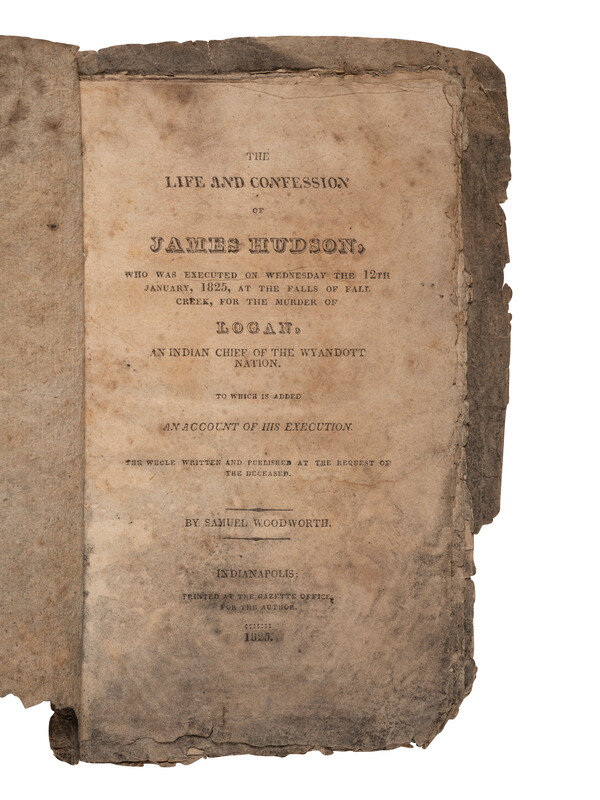
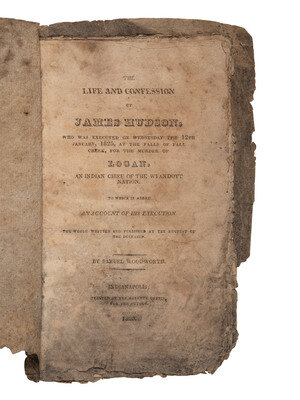
[WESTERN AMERICANA]. Scarce pamphlet related to the 1824 murder of nine Native Americans in Indiana, and the execution of the white perpetrators.
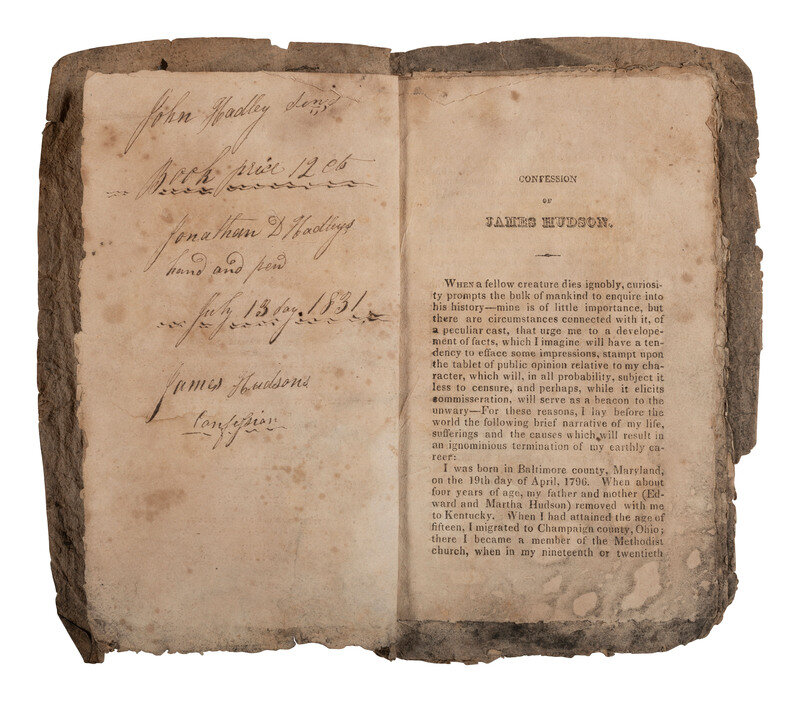
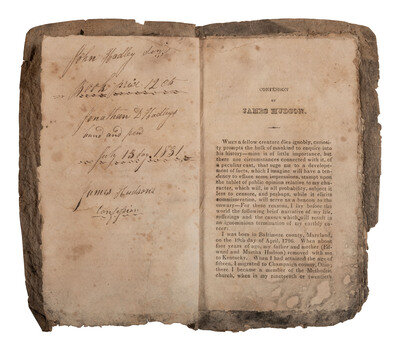
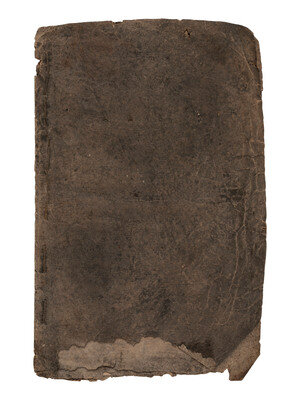
WOODWORTH, Samuel. "The Life and Confession of James Hudson: Who Was Executed on Wednesday the 12th January, 1825, at the Falls of Fall Creek, for the Murder of Logan, an Indian chief of the Wyandott [sic] Nation. To Which is Added an Account of his Execution. The Whole Written and Published at the Request of the Deceased." Indianapolis: Printed at the Gazette Office for the Author, 1825. 24pp, with crude paper wrappers and hand-stitched binding (heavy wear, especially to wrappers, dampstaining, mold residue, text remains legible). Approx. 5 1/2 x 8 3/4 in. wrappers, pamphlet measuring approx. 4 3/4 x 8 1/4 in. Inscribed opposite first page: "John Hadley Sind / Book price 12 cts / Jonathan D. Hadleys / hand and pen / July 13 day 1831 / James Hudsons / Confession."
An exceptionally scarce pamphlet apparently compiled by Samuel Woodworth for the proprietors of the Indianapolis Gazette, Indianapolis's first newspaper (est. 1822), and printed at the Gazette's offices. The pamphlet documents the "Fall Creek Massacre," when in March 1824 nine Seneca and Miami men, women, and children living near Fall Creek in Madison County, Indiana, were murdered, apparently without provocation, by six white men in the area, and the subsequent response from the white community. News of the crime spread quickly, and white settlers feared retribution from Native Americans still living in the area. Meanwhile, Indian Agent John Johnston took immediate action, apprehending the murderers and reporting the case to both the Governor of Indiana and the Secretary of War, John C. Calhoun. Approximately a year later, the perpetrators were tried, convicted, and ordered for execution. Perpetrator James Hudson's (1796-1825) confession is recorded in the pamphlet (though likely authored in part by Woodworth), followed by a narrative of his imprisonment, escape from jail, recapture, and execution. An appendix gives the text of Phebe Hudson's farewell letter to her husband and his reply, recorded the day before his 12 January 1825 execution.
The July 1831 inscription contained within the pamphlet may be in the hand of Jonathan D. Hadley (1810-1872), an Ohio-born Quaker. Quaker Meeting Records locate Hadley at a Whitewater [Indiana] Monthly Meeting in the fall of 1831, and Indiana state marriage records show Hadley was married in Wayne, Indiana, in December 1831.
The Fall Creek Massacre represents a significant event in America's frontier history. As the Indiana Historical Bureau notes: "During the many years of frontier hostilities between Native Americans and white settlers, Indian victims of settler violence and their families were rarely accorded the remedies of the American judicial system. More often, Indian agents like John Johnston offered gifts, supplies, and other goods to the Indians as remuneration for the actions of settlers against the Indians. / However, as remarkable as the executions of the white Madison County settlers may have been, IHB staff cannot confirm that these executions were the first wherein white settlers were hanged for murdering Indians. Nor has staff been able to locate any information to suggest that this particular case and its outcome established any precedent for future Indian encounters with American settlers and the American justice system." Still, the trial and execution of James Hudson and others marked one of the rare times that Native Americans obtained justice in a grievance against white men in the Northwest Territory.
OCLC locates no member libraries with this item in print form.
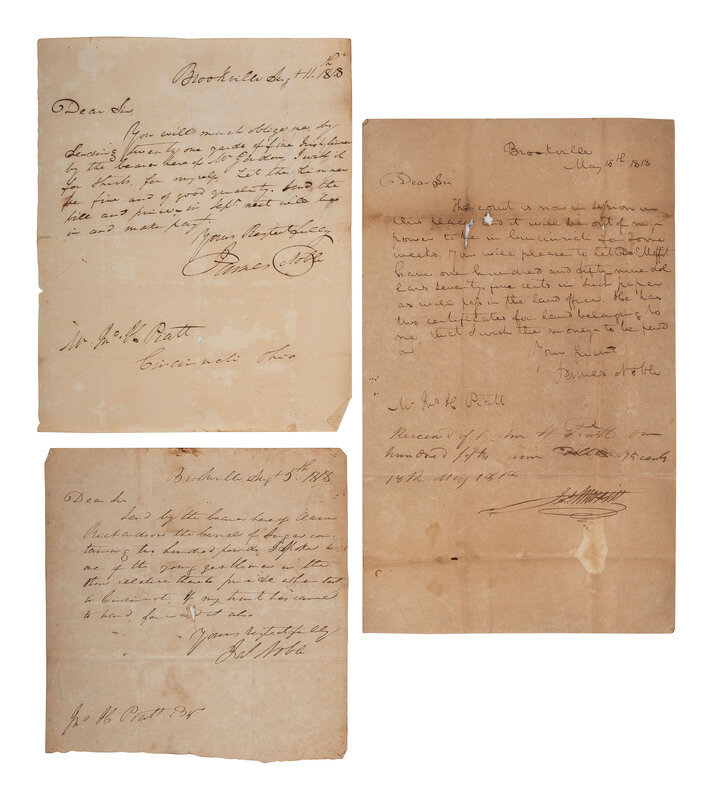
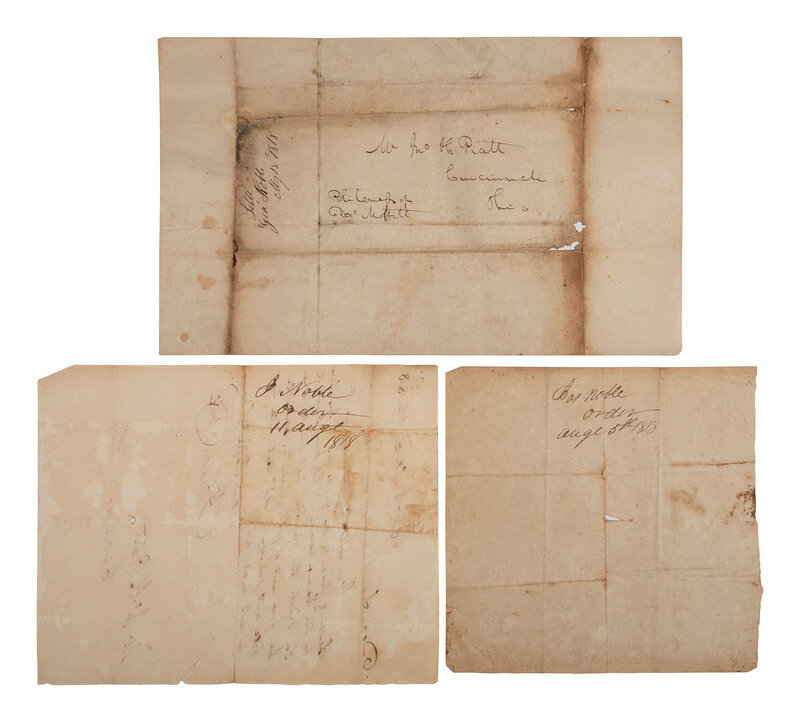
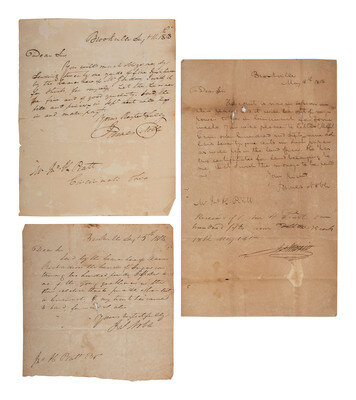
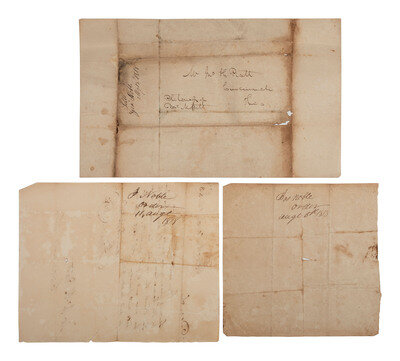
[With:] NOBLE, James (1785-1831). A group of 3 autograph letters signed ("Jas. Noble" and "James Noble") by Indiana politician James Noble, who served as the first U.S. Senator from the state of Indiana (1816-1831), and was appointed as a special prosecutor to assist the local attorneys who were trying the case against the Fall Creek Massacre murderers. All three letters date to 1818, prior to the massacre, and are signed by Noble while serving as U.S. Senator.
This lot is located in Cincinnati.